I knew Todd was different the moment I met him, but I had no idea how unusual he was until his mom let it be known, moments after I met her, that we would be able to have relations if I so desired. She wasn’t shy, or coy, but she avoided giving me extra looks when she knew her son was looking. Those penetrating looks informed me that all she needed was a thumbs-up to start the proceedings. If Todd’s mom had admirable or attractive qualities, my humility wouldn’t permit me to write such a thing, but there were reasons that a 40-something female made it clear that her intentions with her son’s 20-year-old friend were less than honorable, and most of them had more to do with her marketability than mine.
 Her frayed, yellow T-shirt said something crude on it. Her hairdo led observers to believe she spent quite a bit of money on oils, and a considerable amount of time curling. I wasn’t able to determine if either of these enhancements were natural or not, but judging by her overall appearance, my educated guess was that the woman hadn’t darkened the door of a beauty salon since Mikhail Gorbachev stepped down as general secretary. She also wore a what-are-you-looking-at? expression that led me to think an apology might be necessary, until it could be determined that this was her natural facial expression.
Todd’s mom was the first parent I met who didn’t have puritanical notions about underage drinking, smoking pot, and premarital sex. She was a proverbial free spirit, open in her disregard for the conventions of our constrained society. In other words, Todd’s mom was the first cool parent I ever met, so cool that she offered to drink and smoke with us as soon as she was off work.
After she extended that invitation, and Todd gauged my reaction to it, Todd’s mom shot me another extra look, over Todd’s shoulder that said, “If we do this, those pants of yours will be coming off!” No full-grown woman had been that attracted to me at that point in my life, so her extra looks were quite a turn-on, even though there were things going on with her that my young mind could not yet process.
She also said snarky, bitter things that slipped beyond the definition of cool to a dreaded arena few can escape of trying too hard. I’m sure that cynical bitterness did not lead her to name her only-begotten son Todd, and I do not believe that his mom’s near palpable hatred of men had anything to do with her sentencing her son to a life of misery with the moniker. I’m sure she just liked the sound of the name.
My already skewed impressions of Todd were altered after I met his mom, as I knew that a parent’s influence over a child is profound. Our outlooks on life are structured by our parents of course, and I knew Todd was no different.
Parents teach us how to interact in the world, our outlook on the world, and for most of our first eighteen years they are our world. Parents can even affect our world by choosing our name. Most people don’t consider it plausible that a name can curse a child. Even a person with an odd, one-syllable sound attached to their identity is not cursed, they might say. A child can go onto achieve great things as an adult, in spite of their name. The illustrious career of Aldous Huxley is but one example. They can gain acceptance among their peers, they can be happy, and they can escape anything put before them. A name is a trivial concern in the grand scheme of things. Even the most vocal contrarians would have to admit that some names might cripple a child, such as those that rhyme with embarrassing body functions, but seldom will a parent intentionally set out to hinder their offspring in such a manner.
And then there’s Todd. Naming a child Todd might not seem cruel, on the surface, as it’s a rather common name in American society today that dates back to medieval England. It means “fox”, as in “clever or cunning”. Chances are everyone knows at least one Todd, and most don’t presume that the name boxes the recipient of such a name into any sort of predestination. They might consider the notion irrational, but most of those who say such things aren’t named Todd.
✽✽✽
Long before I met Todd’s mother, I thought he was an idiot. That assessment was unfair, of course, because I based it on the sound of his name. When I learned that Todd couldn’t tie his own shoes, however, I considered that a bit of a stretch beyond that initial assessment.
 This revelation occurred soon after Todd asked his girlfriend, my girlfriend’s best friend Tracy, to tie his shoes. I joked that I considered this an excellent domination technique that I might explore the next time I was around my girlfriend. I intended that joke to be over the top humor, but they didn’t see it that way. If Todd considered it funny, he didn’t show it. He feared Tracy in the manner a lamb fears a border collie, and Tracy wasn’t even smiling politely. I started telling them that I was merely joining in on a joke that Todd started by asking Tracy to tie his shoes, but Tracy had a “don’t-go-there!” glare on. My initial thought was that her glare had more to do with the domination theme of my jest, and I felt some remorse for saying that, considering that my girlfriend was Tracy’s best friend.
That remorse ended for me when I convinced them I was joking, but the cloud continued to loom over us. I soon realized that that glare had less to do with my joke and more to do with a storm that gathered in the silence that followed. I began to feel trapped, as if I’d tripped a tripwire that would reveal domination techniques, or some sort of sexual peccadillo I didn’t care to explore with them. Their pregnant silence, combined with the looks they shared, suggested they were ready to share if I was ready to hear it, but I feared I might have placed them in the uncomfortable position of having to reveal a whole bunch of unusual details about their relationship. The glare and the weighted silence were such that I was considering the idea that they could lead to some sort of physical altercation between Todd and I, until he finally broke down and told me the reason he asked Tracy to tie his shoes. He never learned how to tie them.
“Come on!” I said, “You’re 19!” I was a naïve 20-year-old, and I was not difficult to fool. I didn’t know the extent of it at the time, of course, but I sensed a certain susceptibility that I was always trying to defeat. Even with that acknowledgement, I thought the idea they were trying to sell me that Todd didn’t know how to tie his own shoes was a ridiculous effort on their part.
Todd did not willingly reveal his story. I had to prompt the revelation, after I tired of the confusing, silent tension.
“So, if you don’t know how to tie your shoes,” I said, believing the shoes were symbolic of a Pandora’s Box that I would regret ever opening, “why would you buy tennis shoes that have laces?”
The answer to this question involved a “funny story”. It involved a loving mother purchasing Velcro and slip-on shoes for her son throughout his youth. The funny story occurred when Todd entered his first shoe store all by himself, seeking to break the shackles of a mother’s hold with the first paycheck he earned. The shoe store attendant tied Todd’s shoes for him, in the store, and Todd walked around the store saying, “I’ll take them” with the pride so many young people experience with their first, individual purchase. “I was so proud of myself that I wore those shoes out of the store,” Todd continued. “The clerk said that was just fine, as he would be able to use the UPC symbol on the box to complete the purchase. I wore them for so long that day that when I went home and got ready for bed, I began to take them off as a matter of routine. That’s when I realized that once I untied the shoes, I would never be able to wear them again without assistance. And since I knew I couldn’t get my jeans over my shoes, I wound up sleeping with my jeans and shoes on.”
I was the only one in the room not laughing.
“It was sort of like buying a sweater with a stain on it,” Todd said to expound on the funny story, “but you don’t see the stain until you get home.”
Call it a defense mechanism, or societal conditioning, but I was always on the lookout for juicy tidbits to use when the going got rough. There are some juicy tidbits that you just can’t use. The idea that a grown man cannot tie his own shoes automatically goes into the I-cant-wait-to-use-this, comedic gold file. I write the word automatically, because when you’ve been fighting in the jungles of Teenageboyistan as long as I had to that point, you have an internal macros system that already knows how to file such information. Some juicy tidbits, however, go beyond the typical malleable information one can tease into mockery and ridicule. If it were just about Todd’s inability to tie his own shoes, my automated system already knew how to file such information, but the idea that his mom’s neglect enabled him to continue drove a spike in what I considered comedy gold.
Even when Todd later participated in a round-of-insults against me, I couldn’t say, “What are you talking about? You can’t even tie your own shoes.” As painful as it was to withhold, it just felt too easy and too insulting. Once I learned the backstory that just sapped it of all the fun. Plus, what would I say when Todd sat silent, staggering on the ropes, with everyone waiting for me to deliver that haymaker? “Yeah, his mom continued to purchase slip-ons and Velcro for her boy, in spite of his teachers’ instructions.” Yeah, no, a joke like that turns those expectant smiles upside down and upends all good-natured attempts to beclown.
In the moment, though, while Tracy tied his shoes, I found myself trapped between not wanting to pursue the matter and demanding an answer to a question that I did not want to ask.
“How did you get out of the first grade without tying your shoes at least once?” I asked. “Don’t Kindergarten teachers have to check that box on a report card before they advance you to the next grade?”
The number one rule trial lawyers learn is never ask a question when you don’t know the answer. Implied in that rule is the idea that there are certain questions you don’t want answered. While immersed in all the tales of Todd’s mom protecting her son, and thus preventing him from learning was my realization that I should’ve paid far more attention to Tracy’s don’t-go-there glare. Thus, for a time, I flipped the switch of my curiosity into the off position, and I kept that switch off for much of my friendship with Todd. I even defended him against the ridicule from those who train themselves to go after weakest member of the herd, until I later learned of Todd’s lifelong fear of cotton.
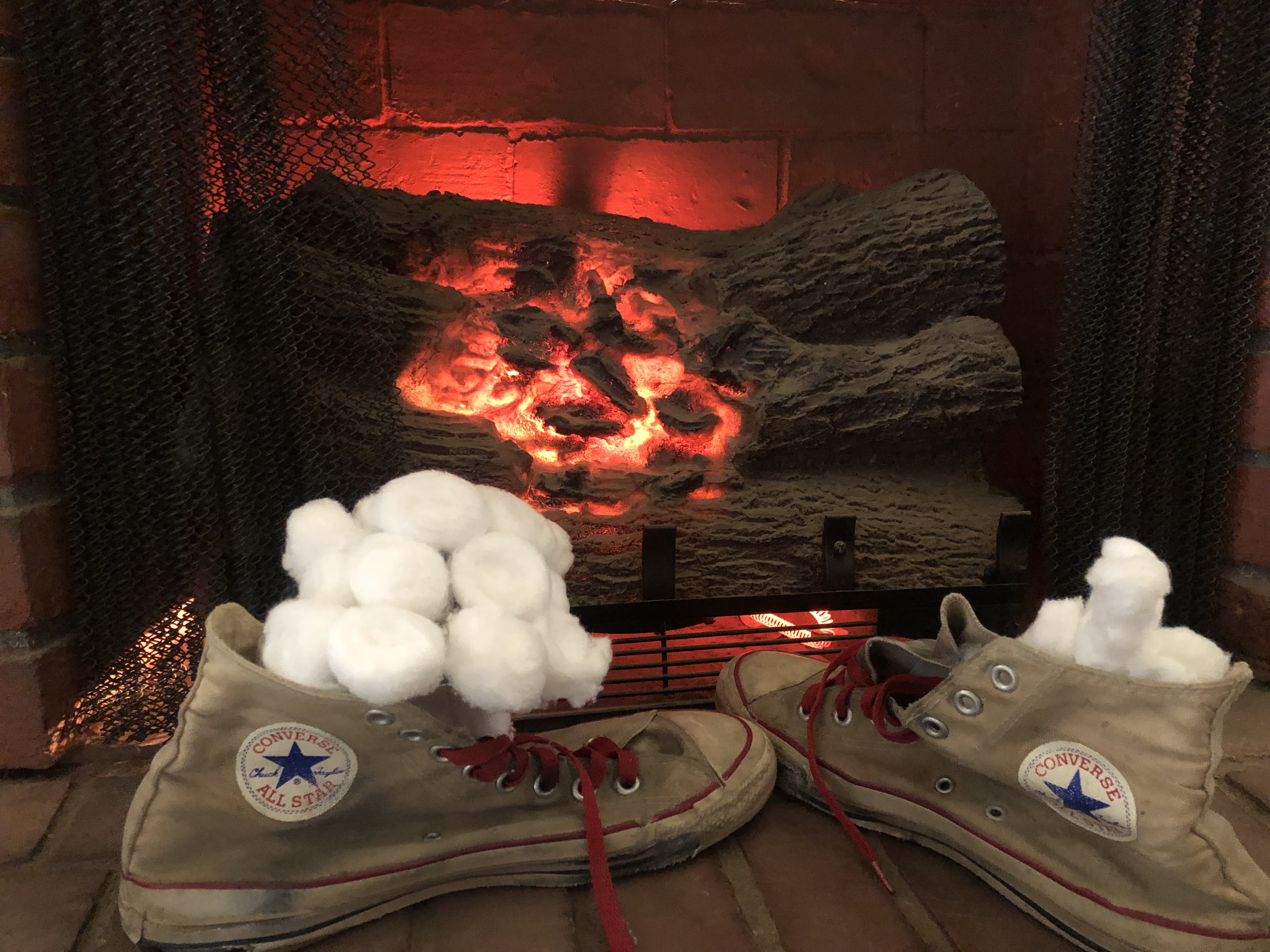
“Oh, c’mon!” I said. I was naïve as I stated, and I had some difficulty coming to grips with certain characteristics I learned about the various Todds I’d met in life, but I now had to deal with the idea that one of them was afraid of cotton. Cotton! It was the second such hurdle our friendship would have to traverse, and Todd and I had to work through the fundamentals of his fear. We established the fact that Todd had no fear of towels, for example, and he wasn’t afraid of the 50 percent of my shirt that wasn’t polyester. It was cotton balls that he feared, cotton balls, like the ones aspirin companies use to keep the pills in place that terrified him.
“It’s what they call an inexplicable fears,” Todd explained, as if that was a suitable explanation. “The type of fears that cannot be explained,” he added, as if I needed the definition.
The fear was also, I would soon learn, a type of fear that called for a strong woman to step in and defend. “Who has inexplicable fears?” Tracy asked rhetorically. “I’ll say it, everyone!” she answered. “That’s what most fears are, an irrational, emotional reaction. Can you explain your irrational fears?”
“Yes!” I said. “Yes, I believe I can! I have an irrational fear of heights, but I fear falling more than I fear being high up. Whether it’s a learned behavior or primal instinct, I’ve learned that hitting the ground at a high rate of speed hurts and it could damage something that I enjoy using. I’m not just talking about reproductive organs here either. I’m talking about arms, legs, and brain matter, and if you have a problem with that, you’ll have to take it up with my brain, because my brain is the epicenter of self-preservation, and that brain has learned over the years and through the many mistakes I’ve made to use the emotion of fear to prevent me from harming myself. And I think my brain has been doing a damn fine job thus far, so thanks brain.”
The silence that followed that, and the faces of my opponents, suggested that I weakened them with body blows, and all I had to do now was deliver my haymaker.
“I can accept the premise that most fears are irrational, and they provoke emotions that can be inexplicable, or as you say, difficult to explain, but if you are arguing that my fear of falling and Todd’s fear of cotton should be placed on equal ground, someone is going to have to explain to me how a brain I can only assume is equipped with all the same tools as mine, and is as undamaged as mine is, can convince a grown man that a ball of cotton presents a danger equivalent to falling from a great height.”
I wasn’t sure if the silence that followed was because they didn’t know what to say, but I decided I didn’t have to pound the point home with another haymaker I planned to use that described my numerous experiences with paraplegics who ended up that way as a result of falling. I didn’t need to recount the number of fatalities that resulted from falls, and I didn’t need to compare those grim statistics to the statistics that listed the number of people maimed or killed as a result of an incident with a cotton ball. I had no need to go into that, because I made my point. I wasn’t the type to engage in verbal touchdown dances anyway, because I knew that doing so would only make Todd look bad in front of his girlfriend. Thus, I was fully prepared to allow the matter to die at that moment, no harm no foul, until I remembered that I had an aspirin bottle in my bathroom cabinet.
I was old enough to know that I should refrain from making a man look bad in front of his girlfriend, if I wanted to remain friends with that man, but I was still young enough to follow my impulses.
I hoped that I hadn’t fallen prey to my typical routine of throwing the cotton ball out the minute I opened an aspirin bottle, and I was excited when I saw I hadn’t. I smiled anxiously at the billowy white ball when I saw it. I knew it was bound to be an obnoxious moment, and I knew Todd’s feelings would be hurt, but at 20-years-old, those considerations take a back seat to the prospect of having a moment that could prove hilarious to the point of being historic.
I was so anxious to get that cotton ball out of the bottle that I spilled the bottle and scattered aspirin all over my bathroom counter. I didn’t even bother to pick them up. I thought timing was of the essence, and I knew that I could always pick the tablets up later.
I raced toward Todd and Tracy with the cotton ball dangling from my fingertips. “Ooga booga!” I said. Ooga booga were not words I typically used to strike fear into the subjects of my cruelty, but I felt they captured the perfect hybrid of comedy and horror. I would later attach all sorts of brilliant thoughts to my decision to use those words. I would tell people about the decisions I made to accompany this moment with the perfect ooga booga face, and I would walk my listeners through my moment frame by frame to capture my thoughts in the moment. In reality, the choices I made at the time were all impulsive.
“Dude! Dude, don’t! For the love of God don’t!” Todd said leaning back against Tracy, clutching her in a position that approached fetal.
Todd was the first “Dude!” I ever met. Todd spread the word across the spectrum of grammar. He could use it as a noun, verb and transitory verb, adjective, in an introductory declaration, and as ending punctuation in an interrogatory sentence. I would meet many “Dudes!” later, and I would call them “dudes” in a derogatory fashion, but Todd was the first.
In the brief moments preceding “Ooga booga!” I thought about Todd’s vulnerable confession that he had an inexplicable fear of cotton, and in my real-world concepts that was B.S. My reaction to it was equivalent to my first time I heard someone say they feared clowns. Over time, these coulrophobics convinced me that their fear of clowns was a bona fide and documented terror that would not go away. They also, eventually, convinced me that it was not just a means of garnering attention or sympathy. I doubted that this sidonglobophobic, those who fear cotton balls, could win me over as easily.
My first experience with a coulrophobic involved her saying, “I don’t know why I fear clowns. I just do. They’re creepy.” That didn’t do it for me, especially since such confessions seemed to conveniently follow Cosmo Kramer’s hilarious portrayal of coulrophobia in the series Seinfeld.
I remained skeptical, until another coulrophobic added, “They are creepy, but there is something familiar to their creepy vibe, something that reminds me of a time when I was a little girl, and I thought they were a different species who lived in carnivals. I enjoyed their antics onstage when I was a very young girl, but I’m not sure if that laughter was based on the idea that they weren’t near me, or if I was relieved to learn that they were supposed to be funny and not evil, or as evil as I imagined. Whatever the case, I was just as afraid of them the next time they were near me, as a little girl. People who dress as clowns all say they’re all about the fun, but they have to know that part of their allure involves the fear children have of them. I think this subtle distinction between the imagined horror children experience when they encounter a person with a painted face. A painted face doesn’t make sense to a kid. We have expectations of the face. Nose, eyes, mouth. They are all congruent and make sense in size when compared to the rest of the face, but when someone exaggerates the size of all the above, voluntarily, it doesn’t make sense. “Why?” is the question we ask, and our parents tell us that it’s supposed to be funny. “Ok, it’s not funny, so what else do you have?” Then you feel trapped, and further confused when you see all your friends and everyone your age laughing. I realized that I was the only one who didn’t get it, at some point, but I was still so confused and scared by the confusion over why someone would exaggerate the size of their facial features, and their feet, for humor. When I see them now, it brings all that creepy familiarity back, to this day.”
That explanation provided me more insight into the mind of a coulrophobic, but I wasn’t convinced on the spot. Those words familiar creepiness stuck with me, however, and the idea of familiar fears touched a core. I had familiar fears, we all do, but we might not ever know we have them until something effectively taps into them.
The movie The Blair Witch Project, for example, effectively tapped one of my familiar/creepy nerves. The reactions to that movie divided were evenly among the people I knew, and that fact confused me. I didn’t understand how the naysayers missed the horror I experienced. They thought I was being silly, in the same manner I initially thought those who feared clowns were either silly or faking it. The Blair Witch Project recalled moments in my childhood when I camped out in a forest, however, when I would imagine what populated the trees around me. Those dark scenes in the movie were so real to me that I could almost smell the burning wood in the theater. Those moments on the screen carried me back to a time in my life when I considered the unimaginable real.
When I posed that all of these theories to another coulrophobic I met, she said, “Like a cancer sufferer, I think my fear of clowns was in remission for much of my life. I feared them as a kid. As I grew older, I kept those fears at bay with the notion that they were nothing more than irrational childish fears, but as with your experience with The Blair Witch Project, I never experienced a trigger, until I saw the movie for Stephen King’s It. That movie triggered that old fear in a way I have not been able to shake since. I didn’t like clowns in the intervening years, as they’ve always unnerved me a little, but I didn’t go out of my way to avoid them in the manner I do now. The movie It, and more specifically its character Pennywise, caused a recurrence of that fear that I believe was exacerbated by my otherwise rational, adult mind.”
Even with my newfound understanding of coulrophobia, I didn’t draw any correlations between it and Todd’s case of sidonglobophobia. I didn’t bother looking into this with any depth in other words. I didn’t consider the notion that Todd might have had some traumatic experience he associated with cotton balls, and I didn’t consider sidonglobophobia a real thing. I just decided Todd’s fear of cotton balls was a little freaky, and I considered it my comedic obligation to put that freakishness on display for all to enjoy.
My “ooga booga!” moment revealed the exact opposite of what I expected. Todd’s fear of cotton balls was as real, and as freakishly familiar to him as the fears others had of clowns, and as I had a camping out in the dark woods. For him it was a vein-straightening fear and a terror so deep and real that it caused him to clutch his girlfriend as if his life depended on it. If I furthered my joke and moved to put it on his skin, I sensed that he might shriek.
Even after Todd’s humiliating reaction, I maintained that I was just trying to be funny, and that made it all right with me. That immediate reaction did subside somewhat when I considered the idea that I might be assigning my mindset to his actions and reactions. Yet, those who met Todd’s mother knew that his upbringing had to be, at the very least, unusual, and his unusual fears might have resulted from those unusual circumstances that altered what might have otherwise been normal thought patterns. I realized that this moment I so enjoyed might have opened some dark caverns in Todd’s soul, freeing up archived fears that he might spent the next twenty-five years recounting on psychiatrist’s couch.
Regardless the amount of reflection I would put into this moment, or the ultimate effect it had on Todd, I had to deal with the fact that my ooga booga moment brought my party to a crashing halt. Most in attendance were now staring, with sympathy, at Todd, and they were staring at me in scorn with the same intensity. Some of the females said some awful things to me, and then they insisted that their boyfriends take them away. I ruined my own party, but I also ruined Todd in the eyes of those who were there, or so I thought. I had my moment, the moment I sought when I remembered I had a cotton ball in my medicine cabinet, but the partygoers obviously didn’t appreciate the moment in the manner I thought they would.
The partygoers probably thought I was trying to ruin Todd, but Todd and I were good friends. We established a healthy bond with one another, and anytime I developed a strong bond with a fella, I tried to ruin him, and he tried to ruin me right back. It was my definition, based on cultural and societal conditioning, of a healthy male friendship. Todd was my friend, and the worst charge one could make against me was that I used a good friend as a comedic foil.
If my moment did consist of my effort to ruin Todd, I was woefully unsuccessful. For the girls who loved Todd before ooga booga, appeared to love him even more after it. Years later, the only explanation I can come up with is that he displayed a quality young girls find most endearing, vulnerability.
He also had those eyes, the crystal-blue kind that made women swoon. “Could one call them dreamy?” I asked.
“Dreamy?” one woman asked. “I don’t know if I’d use the term dreamy, but they definitely make him more attractive.”
Todd also had that hair, the same oiled and curled hair his mother had, only more natural blonde. It was a little dirty and somewhat unkempt, but he fit the mold of one who could get away with such a look. That look even seemed to work to his advantage with some women, in the sense that it might have added to this endearing element of vulnerability he had.
Todd’s most glaring vulnerability was that he was not very bright, and even though most self-respecting women won’t admit it, they love the not-very-bright. They might not want to settle down with the not-very-bright, since the ones we choose to marry are such a deep reflection on us. When it comes to befriending or defending someone, though, their compassionate instincts kick in. In our little shared space of the world, something happened to shake all of my little theories up. I don’t know if it was the fallout from “Ooga Booga” or what, but Todd began to experience inexplicable success in the dating world.
I don’t know if his subsequent girlfriends wanted to convince Todd that everyone was wrong about him, or if they sought the opposite, but they began spending so much time defending and befriending him that they eventually became attracted to him in a way that we found inexplicable.
“That is all so ridiculous!” one of them said when I posed all of my theories about why she, and all her friends, wanted to date him. That reaction was so ubiquitous among our female co-workers, that it requires notation, but the time I spent around Todd informed me that if a guy has all the ingredients listed above, the eyes, the hair, and an air of vulnerability about him, and he has a way of making a woman feel smarter on top of all that, he’s bound to land permanent residence on “hotty” isle. As long as that guy doesn’t say or do anything to tarnish his presentation, and Todd never did anything to diminish his presentation.
One measure of a man is how many women he is able to attract. If that were the lone measure, most men would list Todd as a man among boys. I don’t know many men who would want to follow Todd’s blueprint for landing women, but when such discussions arise among young men looking to become players, I inform them that I’ve witnessed one successful formula firsthand. I’m as in the dark on this topic as they are, I tell them, but I’ve witnessed a real-life asterisk in the equation for them to consider. I tell them about how Todd could work a room of women without effort. I tell them how I saw the man move from one woman to another without leaving any of them upset in the aftermath. He had one-night stands with a woman who was not his girlfriend, and I saw those two girls begin yelling at one another, screaming insults and threats over a breakroom table, without considering the role the Todd –the man who sat between them– played in the situation. When these fights would erupt between the scorned women, Todd would play peacemaker, and he would do everything a man could do to prevent them from harming one another. Then, when the smoke cleared, he would begin hoping, with all sincerity, that they could all be friends again. The most annoying aspect of my Todd testimonial arrives when I attempt to convey the idea that Todd did all this without considering the true import of his actions.
Most people who hear Todd’s tale believe he had a carefully orchestrated plan for achieving success. I’ve tried to explain the anomaly Todd was to these people, and they naturally assume that he was smarter and craftier than I suspect. There was no plan, I tell them, for he did not accentuate certain aspects of his personality to appeal to women, and he did not work on his faults. As far as I know, he did not develop schemes and plot paths to take that would attract more women. At one point in the arguments I’ve had with people on this matter, we reach a bottom line. “Bottom line, you’re jealous,” they all say in numerous ways, “if he had as much success with women as you suggest, he obviously had more success than you, and he must’ve been craftier and smarter than you.”
“He did have as much success as I detailed, it was far greater than mine, and I was jealous,” I tell them, “but he wasn’t craftier or smarter, he was just Todd.”
No research, I know of, concludes that giving a child a relatively normal name like Todd, Gil, or Ned affects them in any way. There is no sociological evidence to suggest that the Todds, Gils, or Neds, of the world, live different from anyone else. If you’ve ever known one of these unfortunate, possibly cursed individuals, however, you know there is a fundamental difference about them that they will spend most of their lives trying to overcome. Something about those odd, one-syllable sound of their name affects their identity so much that it affects their existence. They don’t all become square pegs in a round-hole world of more pleasing sounding names, some of them are exceptions to the rule, some of them are just Todd, but the preconceived notions most of us have of such sounds grease their slide to the outer layer.