Unconventional Thinking vs. Conventional Facts


Raymond Skiles was a dumb guy. We both were. A dumb guy can be a state of mind in most cases as opposed to a quantitative or qualitative characteristic. The first question dumb guys ask themselves is what are you going to do about it? Raymond and I both spent our early adult years trying to educate ourselves, in various ways, to try to catch up to those who were more engaged in school. We shared so many characteristics at one point in our lives that some called us similar, but in our quest for more knowledge, we fell prey to some bizarre ideas. At one point on the timeline, however, differences emerged. 

These differences that emerged can be explained in one simple scenario. If a used car salesman, skilled in the art of persuasion, approached us, we would both enter into that transaction believing that we were now smart enough to outdo a used car salesman at his game. Over time, I learned that I was not that man. There were no specific incidents that led to clarity in this arena, but I eventually realized that I wasn’t half as bright or crafty as I thought I was. I realized that while I might now know more than the average person does about James Joyce, Fyodor Dostoevsky, and the history of United States Presidents that knowledge doesn’t do me any good the moment a guy in polyester leapt out from behind his balloons saying, “What do I have to do to get you into a car today?” I developed a technique that works for me. I run away.

Raymond Skiles, on the other hand, knew a thing or two about the techniques used car salesmen employed on unsuspecting customers. By reading alternative websites that warn potential clients about the tactics used car salesmen employ, Raymond thought he knew them, and that he could use that knowledge to defeat them at their game. “You just have to know who they are,” he once informed me. “Once you know what he eats for breakfast, who he calls his family, and if he’s stepping out on his wife, you got him where he lives.”

Whereas I recognized the limits of my intelligence the moment I set foot on a car lot, Raymond considered it a challenge and a mark of his intelligence to outdo the salesman on his home turf. I might overestimate the craftiness of the average used car salesman, but if they are half as skilled in the art of persuasion as I fear they are, they will learn who Raymond is and flip the focus of their negotiations to an arena Raymond finds more pleasing. They might even compliment the knowledge Raymond has accumulated on their industry. They might then take a more honest and direct approach in their negotiations with him, and Raymond might end up paying more for the car than he intended.

The time I spent with Raymond Skiles before and after our divergence taught me a number of things about the differences between unconventional thinking and following traditional or conventional norms, but the most prominent was that unconventional thinking is far more seductive. The purveyors of unconventional information seduce us with the idea that they have different knowledge, as it pertains to having more knowledge than those who did more with their traditional education in school than “dumb guys” did. The seeds of this seduction sprout among “dumb guys” when we decide that anyone who believes what “they tell you” is a sucker. 

When we hear conventional knowledge, we consider the source and frame it accordingly, and then we fact check it. When we hear unconventional ideas, however, we have an instinctive, emotional attachment to them. Some part of us wants these ideas to be so true that we put our skepticism aside to embrace them, another part of us believes that unconventional knowledge is the result of healthy skepticism and therefore thoroughly vetted.

Former dumb guys learn over time, and through trial and error, that we must make a concerted effort to avoid falling prey to the allure of unconventional information. We want to have more knowledge, even if it is different and relatively inconsequential, but as we all know quantity does not always equal quality. There are only so many facts on a given issue, and most of them fall into constructs that are comparatively boring. Alternative, unconventional avenues are so intriguing and sexy because they make us feel intelligent for arriving at a take on an issue that our peers haven’t considered before.

We’ve all witnessed the effect this can have on people. “Where did you hear that?” they ask us, after we drop what they consider a surprising amount of intellect on them, or “I’ve never heard that before.” The tone of their voice, and the slight bit of awe on their face, can prove so intoxicating to dumb guys who didn’t do well in school that we spend the rest of our lives chasing that dragon. Surprising information also allows purveyors of unconventional information to dismiss much of the traditional knowledge our peers attained. Some of these arguments are worth pursuing, but in my experience, most of them provide nothing more than provocative distractions and obfuscations from the core argument.

Finding out, later, that many of my intoxicating, alternative theories, based on unconventional information were wrong, provided another break between Raymond’s way of thinking and mine, and I began placing more importance on being correct over provocative. Conventional information, reported by conventional outlets, is not always true either of course, but in my experience, their batting average is far superior to the alternative outlets. Some don’t put as much value in this results-oriented approach, and they tend to place greater value in avoiding the word naïve, a label they attach to suckers who believe everything “they tell you”.

In our discussions on a wide variety of topics, Raymond and I also found many differences between how we arrive at a conclusion. We both seek primary source information, corroborating evidence, and perhaps some opinion pieces to bolster our conclusions. At some point, however, I am “easily satisfied” with my findings, whereas Raymond digs deeper. Raymond can feel when the subject is a piece is crud, and Raymond knows how a piece of crud thinks. He seeks explanations that detail the piece of crud’s motives in a way Raymond can understand. In Raymond’s search for absolute objectivity, he accidentally trips over a critical line between objectivity and subjectivity. He finds subjective speculation regarding the motives of the piece of crud that fit with his theories on the subject in question, and he uses them to develop theories that end up mostly autobiographical.

Those autobiographical details helped me explain the anatomy of Raymond’s thought process, and why he didn’t follow me down the more traditional trail. Raymond was born and raised with three sisters. For reasons endemic to her own upbringing, his mother always believed the girl. His dad was a generally passive man who generally deferred to the mother when the dysfunction of the day arose, in part because she broke him down for “always believing the boy”. Raymond’s father went along to get along, and he basically left Raymond to fend for himself. Though Raymond grew up saying he was telling the truth 100% of the time, the law of averages suggest that he had to be right some of the times. Nobody believed him. This not only led Raymond to the lifelong notion that everyone was against him and plotting against him, as his sisters were, daily, but it led the adult Raymond Skiles to not only question every authority figure in his life, but think they were against him. Knowing this didn’t necessarily lead me to sympathize with Raymond, but it did help me understand his mindset better.

Alien Information

Police officers, working a beat, have a modus operandi (M.O.) they bring to their job, “Believe none of what you hear and half of what you see.” This is the ideal mindset for a law enforcement official to have when investigating suspected criminal matters. Is this M.O. ideal for a consumer of news, an employee who learns information regarding their employer, or a friend listening to another friend tell a story?

A high profile media personality once suggested that skepticism of the press undermines their authority, but the vaunted role the press plays in our republic should require them to combat constant, intense scrutiny, skepticism, and cynicism that makes them uncomfortable. Members of the media should conduct themselves in a manner that welcomes that from their audience and defeats it with a performance that leads to a solid record they can point to whenever anyone questions them. Wouldn’t members of the media say the same thing about the subjects they cover?

There is a tipping point, however, when a healthy sense of skepticism creeps into a form of cynicism that believes “none of what I hear and half of what I see.” Such cynicism opens holes in the thought process that invites other information to fill it.

As someone with an incurable passion for the wide spectrum of thought regarding human behavior, and a peculiar crush on the extreme, I have had a number of friends introduce me to a wide array of alternative ideas. They introduce me to various definitions of human psychology through astrology, numerology, and witchcraft. Raymond Skiles introduced me to the idea that aliens from other planets could teach us a lot about ourselves.

Raymond provided me with a collection of transmitted (or transmuted) messages that these superior beings sent to us. As I read through the information he found, I found that the theme of these messages was that the bullet points of my philosophy were wrong. I found them somewhat humorous, but before I could entirely dismiss them, I learned that Raymond considered these messages proof that I was wrong. Although he didn’t say this exactly, the import of his responses was that he could not understand how I could argue against statements made by superior life forms.

The first question this skeptic would love to ask authors of human psychology, by way of alien scripture, is why do we assume that aliens from another planet are of a superior intellect? The collective thought, in certain quarters of human authority, suggests that not only is there intelligent life out there, but they’re more intelligent than earthlings can conceive. Even though we have no concrete proof that life exists outside our planet, at this point in our explorations of space, it would be foolish to think that the only lifeforms in the vast universe are those that live on Earth. If other lifeforms exist, however, we don’t know what form they take. (We assume they are humanoid in form and that they’re here for our water, but if they’re intelligent beyond our comprehension why haven’t they been able to develop a synthetic substitute for water, or an artificial way to preserve or increase their supply?) We also don’t know what concerns alien life forms have, or how they think, but we assume that all creatures share the same concerns. The one crucial nugget of information missing in these theories is that we know less than nothing about aliens. If we had some substantial proof that they exist, we could say we know nothing about them, but we don’t even know if they exist yet. With that in mind, any theories of alien intellectual superiority can only be rooted in the human inferiority complex.

What would be the point of worshiping a deity who had a level of intelligence equal to our own, and what would be the point of reporting on the transmissions from space if the aliens were not of a superior intellect who could teach us a lot about our way of life? My takeaway from this friend’s collection of transmitted (or transmuted) messages was that most of the alien transmissions, submitted for the reader’s pleasure, have an agenda that suspiciously aligns with the author of the work.

The next time an alien transmits a message that suggests humans are of equal or superior intellect, “We are in awe of the capabilities of your iPhone, and we have not found a way of replicating that technology in our labs,” will be the first time I take an alien transmission seriously. The next time an alien transmits a message that has something to do with a compliment regarding human technology in agricultural techniques, “We find the techniques developed by Monsanto awe-inspiring”, will be the first time I re-read an author’s interpretation of an alien transmission. One would think that a complex being would know that the best way to persuade another being is to surround their criticisms with some compliments. Even if they have no emotions, in the manner most sci-fi movies depict them, it would only be logical for them to suggest that our life form managed to get some things right. What readers receive from aliens, instead, are warnings about our dystopian nature that suspiciously align with human politics.

What If?

“Your problem is you have no room for if,” Raymond told me one day. “Numerous wonderful and beautiful people have brought us where we are today by asking if questions, but you put a big old lid on if and lock it up.”

“I’ve cleared an entire warehouse out for if,” I said. “Give me an if! How about I give you an if?” I continued. “What if I told you that there was incontrovertible proof that your favorite conspiracy theory was wrong? Let’s say they discovered previously unknown security tape that showed your favorite victim of the justice system pulling the trigger. I’m not saying he’s guilty, but have you ever considered that mind-blowing prospect before?”

The ifs and what ifs of unconventional information are so interesting that it’s challenging to read them and say, “That’s just wrong.” We pursue their angles, the speculative ideas regarding motive, and the idea that the purveyor of such knowledge is fighting against the man, or the status quo. Concerned parties watching such scenarios play out, might want to caution someone like Raymond from relying too much on these alternative sources of information. We might want to tell him that doing so could lead him to being vulnerable to half-truths and greater confusion.

When we try to caution them, however, they tell us that they’ve done massive amounts of research on this subject, and they say, “Most people don’t know the truth. I know I didn’t,” as Raymond does before launching into one of his speculative theories. There are enough outlets of information out there now to feed the confirmation bias of any researcher. Decent writers have ideas about the world, some are insightful and meaningful, some are not. Writers gifted in the art of persuasion learn how to manipulate their readers into believe they arrived at the idea themselves. The idea becomes theirs to the point that they develop a level of personal intimacy for it. 

Once they arrive at the point that the idea is theirs, they evaluate “their” ideas in a manner similar to the approach a fan takes to an athlete. If a fan “knows” that an athlete is a quality player on the fan’s team, they develop a special bond with that athlete that is difficult to shake. Even if that athlete proves to underperform for years, that fan’s relationship will continue. Disciples of alternative knowledge have a similar relationship to purveyors of such information, as they often fail to focus on results in a similar manner. How many of their favorite outlets provide straight, verifiable points that pass peer review? How many of them can point to a verifiable track record of their assertions, as opposed to providing the anecdotal evidence that they promote? How many of their messages devolve into speculation regarding motives that no one can refute? How many of us are skeptical enough of the information that seems so right it has to be true?

Those of us who ascribed to unconventional thoughts at one point in our lives began to spot these plot holes for what they were, and we came to the uncomfortable conclusion that just because the information we hear is unconventional, alternative, and “what your father doesn’t want you to know” does not mean that they’re correct.

I no longer buy a book of unconventional thinking, or befriend an unconventional thinker, with the hope of having them change my mind on a subject. If their ideas persuade me to change my mind, that’s gravy, but I have learned that such thoughts are often best used to challenge my current worldview, and/or bolster my arguments as I attempt to defeat them. I do not then write this with the intent of changing anyone else’s mind. I do enjoy, however, taking the conventional standpoint and melding it with the unconventional to arrive at what I consider a hybrid of the truth, until I can use that to arrive at the truth.

FOBF: The Fear of Being Foolish

Most people hate being wrong, but we have to be willing to concede that we’re going to be wrong some of the times. What we cannot abide is the idea that we might be wrong so often that somebody will consider us a fool. How many rhetorical devices, tactics, and persuasive techniques have we developed over the years to avoid being called a fool? One thing we know is that people who believe in nouns (people, places, and things) are more vulnerable to this charge, and we seek foolproof status. Due to the fact that most alternative thoughts are rarely shown to be substantially incorrect, unconventional thinkers are shielded against ever being called a fool. On the off chance that they are incorrect, they might make slight adjustments in their presentation to incorporate the newfound facts, but most of them just move on.

“They just move on?” we asked Raymond after he told us about all of the conspiracy theories his parents believed in.  

“They do,” he said with a smile. “They just move on to the next one.”   

“So, when the rest of us are proven wrong, we have to deal with the ramifications that come our way, but when your parents are wrong, they just move onto the next conspiracy theory? How do they do that?”

“They just do,” Raymond said.

Raymond informed us that when the millennium neared, his parents were prophets of doom. They could be seen handing out pamphlets and grain pellets at their church. They believed something would happen on 9/9/99, and when it didn’t, they moved onto the millennium scare. When nothing scary happened on 1/1/2000, they suggested that we all miscalculated the Aztec calendar, and that the day of doom awaited us sometime in the near future. He said they listed a specific date, based on specific criteria, but he didn’t remember the exact date, because he knew they would just move on after that date passed. He knew they would just move onto the next date of doom to some day in the all too near future.

We knew how much Raymond loved his parents, so it was a little surprising to see him lay them out like that, but we figured that it was the “if you think I’m crazy, you should hear my parents” defense. We’ve all faced similar but different charges, but we never found introducing an exaggeration of this sort to thwart a characterization particularly effective. The listener might think, maybe you’re not as crazy as your parents, but you’re still crazy.

We also associate crazy with wrong. There are exceptions of course, as the misunderstood genius stereotype suggests, but more often than not we associate crazy with the type of mind that has a fundamental misunderstanding with how the system works. If this association holds water, perhaps Raymond was saying, “if you think I’m wrong, you should hear how wrong my parents were”. My statements and predictions are a little nebulous in nature, he may have said to draw the distinctions, but my parents were certifiably wrong, and after being so wrong so many times, they plot-pointed out the next date of doom, passing out pamphlets and grain pellets.

We don’t know what drives common, every day people to partake in doom-saying, but it probably has something to do with the idea that the track record of alternative, unconventional information is somehow immune to criticism. It is foolproof, because the alternative is believing in what the ever elusive “they” tell you.

If in the course of Raymond’s parents trying to warn us about a current date of doom in the all too near future, we were to call them out on their track record, they might turn the tables on us, “How can you be so sure that it won’t happen this time?” 

We can’t be sure, of course, because we are insecure beings who falter in the face of certitude. We’ve also watched too many movies where no one believed the sexy actor who knew something no one else in the production did, and we don’t want to be the overweight, unattractive character actor who didn’t believe them. They frame their questions in a probing, “Who do you think you are?” manner that asks us how many times we’ve been wrong before, and if we’re willing to wager that we know more about this than their list of experts do.

Dumb guys, like Raymond and I, fell prey to believing far too many alternative, unconventional, and conspiracy theories were so relieved to read some psychologists write that we must all make a concerted effort to avoid falling prey to this type of seduction, because it suggests that we’re all susceptible to their siren call. Our grades in school haunt us to this day, and we will use any excuse we can find to declare that we’re not as dumb as we thought we were. When someone comes along and basically writes up a siren call that is so alluring that we must proactively keep our susceptibility in the “off” position, it lends credence to the “shame on you for fooling me” portion of the idiom. As long as we remain in that “off” position long enough to prevent the shame of it doubling back on us in the future. Though the psychologists’ conclusions do not absolve us of the idea that we once believed a wide variety of crazy theories and loony conspiracy theories, we do find some comfort in numbers.

Maintaining this “off” position is not easy, and it is not our intent to suggest that we woke up one day deciding that we were no longer going to believe alternative ideas loaded with unconventional information that can lead to conspiracy theories. It isn’t any easier for us to avoid their interesting and thought-provoking theories, but we put forth constant and diligent effort to defeat our susceptibility in this arena. Tune out, turn off, and defeat is the credo we use anytime we encounter sexy, enticing pieces that lead to emotional reactions. Current and future stories such as those are as difficult to ignore as all the previous ones were, but after mentally charting all of their hypothetical guesses, based on alternative thinking that many considered unconventional, we were finally able to break the leash.

Scorpio Man III: Everything Has Changed


“The axis of the Earth has changed,” NASA stated in a NASA blog post, and they remind us that there is, was, and always will be a thirteenth constellation called Ophiucus. NASA declared that these recent findings require a change in date ranges in the astrological signs, as we know them. They label this a correction. I declare it a miracle, the 9/26/2016 miracle, because it has brought about an end to my suffering. As of that date, I no longer have to worry about some nosy busybody badgering me for my date of birth, and I no longer have to lie when they do. I am no longer a man born under the sign ruled by Mars the god of war and Pluto the god of the underworld. The prejudicial preconceptions people have of those born under the Scorpio ecliptic no longer apply to me. I no longer have to endure those who claim to sense a murderous, dark force within me, and I no longer have to endure the Scorpio Man Evolvement courses to keep those inclinations at bay. I no longer have to partake in Ms. Edgeworth’s in-group sessions, nor do I have to take the pharmaceuticals or participate in the Emotional Support Animal program that Ms. Maria Edgeworth prescribed to help me deal with the emotional trauma I’ve dealt with as a result. It’s all over for me now, as of 9/26/2016, a day that shall live in infamy for me, for the realignment of the stars declare me a perfectly balanced specimen of a man, a man of partnership, equality, justice, and objectivity man. By the powers vested in NASA, I am free now. I am Libra Man.

I don’t know if the annual Scorpio Man entries on this topic, over the last three years, appeared contrived. They weren’t. After discovering the dark powers that drive me, I decided to post a complaint about the prejudicial treatment I endured from those who insist that men born when the Sun was in the Scorpio ecliptic are the incarnation of a dark force. My intention, in that first testimonial, was to try to change minds about men born under the sign of Scorpio, and to try to spread awareness that I hoped might lead to a national conversation on the matter. The second testimonial was an unplanned report on the progress I made to that point in my Scorpio Man Evolvement courses. After rereading that second installment, I gather that some might assume I enjoyed the process. To those people I ask, have you ever heard of the Stockholm syndrome? For those who haven’t, it involves the idea that one develops feelings of trust, and in some cases affection for their captors. In writing such a thing, I do not intend to minimize those who are actually kidnapped, or in any way held against their will, but I harbored some feelings of being unable to escape my plight while appreciating the efforts my captors put forth to set me free.

Every time I entered Mrs. Edgeworth’s office I did so voluntarily, and I followed my girlfriend, Faith Anderson’s wishes to do so. I felt trapped by this idea that I wanted people to like me, and from what I could see, they didn’t. Some were even afraid of me. I understand that some people might fear any grown man, while alone with them in an elevator, but I am not a tall man, nor am I larger than the average male. I don’t know if these reactions to me subsided and I missed it, or if my Scorpio Man characteristics flared as I aged, but prior to this recent phenomenon, I’ve never tried to intimidate another person my whole life. Even when it served a purpose, I’ve never been able to intimidate people. It might be my fair skin, or my baby blue eyes, but no one considered me an intimidating presence before the last couple of years. I intended this testimonial to be a laundry list of complaints regarding the lack of progress I made to that point in the Scorpio Man Evolvement, but the tiny, little NASA miracle rendered all of those complaints moot. I feel for those few who continue to endure the plight of the Scorpio Man, and I have empathy for those forced to endure the toxic climate created over the last 2,000 years, but I am no longer one of them, and I officially bid them adieu.

As an industrious, self-driven man, I don’t often admit despair, but a feeling of powerless overwhelmed me in the last couple of years. The forces that sought to ostracize, impugn, and relegate others to some sort of generalization can be so powerful that it is difficult for the subject to defeat internally and otherwise.

My Natural Psychologist, Ms. Maria Edgeworth informed me that my progress toward the enlightenment that awaited me in second stage of Scorpio Evolution, The Eagle Totem stage, was exemplary.

As these testimonials illustrate, she said that to me many times. The last time she said it to me, I said, “If this is progress, then you’ll have to define the word for me.” I informed her that I felt great about myself, and her suggestions of progress, while in our sessions, “but the minute I walk out that door, it’s one step forward two steps back.” I told her that young children and women continue to flee when I exposed myself to their opinions. Then the lovely Faith dumped me based on my inability to confront my pre-existing limitations, and she stated that my failure to transmute and evolve past them suggested that I had not made the commitments necessary for spiritual growth.

What I didn’t tell Ms. Edgeworth, because I couldn’t summon the courage to say it to her, or anyone else, was that I saw Faith with someone else days later, and I suspected that the true nature of our breakup was more self-serving than Faith would ever admit. Regardless why we broke up, I found myself feeling as alone as I did the day I started the evolvement courses and their subsequent group sessions.

Ms. Edgeworth considered our breakup a traumatic episode that could impede my progress, and she suggested that I might need temporary, emotional, and external support to give me the strength necessary to get back on the road to progress. Ms. Edgeworth prescribed what she called an Emotional Support Animal (ESA). I heard of the ESA program, I saw dogs in airports and restaurants, and I knew about their attachments to the program, but I told her that I was skeptical about that program in general. She countered with scientific data, and I said “I’m sure it works for those in desperate need, but I am not in desperate need.”

“How would we characterize our relationship with pets?” Mrs. Edgeworth asked me. “There are some elements of that relationship that are very complex, but if we break it down to its simplest constructs, they’re our friends. I wouldn’t want to limit anyone’s definition of what a pet is, as my Gordon has provided my life so much more than mere companionship. He’s my friend. To a person like you, who has never had a relationship with a pet, I think someone like Gordon might fulfill some of your more basic needs, even if only temporarily.”

Call me superficial, excessively male, or whatever you want, but I’ve always had such a difficult time arguing with Ms. Edgeworth, because of her beauty. Not only was she one of the more attractive women I’ve ever met, but she was having a great day on that Tuesday. I don’t know if it was the moisturizers she used, or if she had a great workout the day before, but her skin was glistening more than usual on that morning. She was having a great hair day, and the cardigan sweater she wore contrasted her olive skin so well that if she ever sat for a painting, I would tell her to wear that sweater for the sitting.  

Although Ms. Edgeworth knew that she didn’t have to put forth much effort to get average fellas like me to bend to her will, she  provided me further details of the success of this program. She pulled up a webpage on her iPad that documented first person testimonials of the benefits the ESA program provided those suffering from what Ms. Edgeworth called similar, post-traumatic stress disorders (PTSDs). While I read the testimonials on that webpage, she added, “I have been doing so much research on this program, and I encourage you to do the same,” she said. “When you do, you’ll see that it’s such a valuable resource to those suffering in the manner you are. I love the program so much that I put my own dog in it.

“Gordon is a 173-pound Newfoundland,” she continued, “so his size might intimidate some, but he is just about the sweetest dog I’ve ever met, and I’ve had dogs, as companions, since I was about twelve.” She paused here. She spoke in the manner she always did when she was about to open a wound. “I think the companionship Gordon could provide you will prove beneficial. I suggest you try him out for a weekend. You can take him places now. The laws in this state have changed. I’m sure you’ve seen dogs in airports and restaurants. You’ve said sitting alone in restaurants makes you feel lonely, and now that you and Faith have broken up I think Gordon can help you. You try it out. Just for a weekend. You tell me what you think.”

I deferred to Ms. Edgeworth’s abilities as a Natural Psychologist, and I fell under the spell of her smile, her eyes, and that skin, but I had no idea the expense involved until she handed me the breakdown. The state changed their laws, as she suggested, but these new ESA laws required the prospective participant write a therapy letter that required a mental health professional evaluation. The law also required that each individual patient purchase an ESA test. An ESA travel kit is also required, regardless if the prospective participant plans to travel or not, and this includes the registration card and a survival guide. On top of that, I had to pay Ms. Edgeworth’s rental fees, and I had to pay for the high-priced food that Gordon eats. Ms. Edgeworth was kind enough to provide the necessary evaluation of my therapy letter at her customary hourly fee, and she said she could provide the various other products I would need at her price structure. I probably should’ve been more skeptical when she placed the bill before me, but I was in such a desperate place at that time in my life that I considered Gordon a light at the end of my dark, lonely tunnel.

I wasn’t sure what to expect of Gordon, but when I met him days later, I was giddy. The thought that the sanctioned companionship of this dog might help me progress through mental health channels was such that I thought he might change my life.

As Ms. Edgeworth warned, Gordon’s size was intimidating, but his almost comically sad face and the very sweet disposition countered that. I laughed when I saw him. “This is silly,” I said laughing. “You were right, he is enormous, but he looks harmless too. But, this just seems so silly.”

“Is it silly?” she asked, “or is it so silly that it could work?” She paused here. “We’ve tried everything else, who are we to say that the companionship, and the responsibility inherent in sustaining a pet on a daily basis might help you achieve some level of distance from self that provides healing properties.”

“Maybe,” I said, looking Gordon in the eyes. I laughed again, “But it still seems so silly. I mean look at him. He’s an oaf.”

“An oaf?” she asked. She laughed with me. “He does have oafish qualities, but he’s a beautiful oaf, you have to admit that. Look at him. Tell me he’s not beautiful.” 

We were laughing throughout this exchange, adding a bit here and there in rounds, until Ms. Edgeworth turned serious.

“All jokes aside, if you give yourself permission to love my beautiful beast, Gordon can teach you a lot about love, and the general idea of love. Loving him will remind you of the general idea of love, just to love something, and he might help you revive those feelings of completion that your relationship with Faith Anderson provided.”

“Okay, but,” I said, “but, I can’t express to you how much this is not me. I have no problem with dogs, the idea that people love them, or anything of that nature, but I am not a dog guy. I am not a cat guy, a goldfish guy, or a pet guy in general. My family had a couple of dogs when I was young, but I never bonded with them the way kids do. That’s not normal. I know it’s not normal, and I knew it then. It’s not that I have a problem with animals. I don’t loathe them, and I am not afraid of them. They are just not for me.”

“The first thing we’ll have to do is establish a link,” she said to proactively end our discussion. “Gordon needs to establish a harmonious balance with anyone with whom he is going to work, and he does this with a lick to the face.” Ms. Edgeworth wasn’t looking as good as she had that Tuesday, but she was always on. She wasn’t one of those who rely on makeup, but she knew how to use makeup to accentuate as opposed to coverup blemishes, which I didn’t know if she had any. Regardless, the woman was always persuasive, and she used her persuasive manipulation to ending my indecisiveness.  

“That is the primary reason I’ve never had anything more than a passing relationship with a dog,” I said. “I understand the need to link. I do, but a lick to the face? I’ve fed dogs special treats in the foyer of their home, per their owners’ instructions, I’ve avoided eye contact with them until shaking hands with them, and I’ve pet numerous dogs until they were comfortable enough with me to leave me alone. But, but, I’ve never been keen on licks to the face.

The very idea of anyone, or anything, licking my face repulses me, and I have had to restrain myself on those rare occasions when a friend’s dog would sneak in a lick of my arm or leg. It’s just a leg or an arm, I think to coach myself down, but I am unable to control my emotions when a dog licks me in the face. I’ve lost control, I’ve yelled things, and I probably made a fool out of myself, but it’s very traumatic to me. I don’t know if I have some deep-rooted psychological issue, or if it’s just so disgusting to me that I can’t control my reaction, but I consider a lick to the face an affront every bit as personal as a slap to the face.

I told Ms. Edgeworth this, all of it, and it confused her. Even after all of our counselling sessions, the facts of my being confused this woman. She informed me that to Gordon, a lick was the equivalent to a handshake, and that the two of us wouldn’t be able to work together, unless I allowed Gordon at least one lick. I don’t know if the dilemma at hand absorbed me, but I swear I saw a plea in Gordon’s face, as she said this.

“If your aversion to licking is that intense,” Ms. Edgeworth said, “he does have one alternative. You can allow him to sniff either your crotch or your backside.”

“No, I cannot permit that.”

“It’s up to you, of course, but we have to find a way for the two of you to bond, on Gordon’s terms of course.” She cut me off with the tail end, before I could list my reasons why that was unacceptable to me too. 

Faced with this alternative, I decided to let Gordon lick my face. As traumatic as a lick might be to me, I thought it might prove less traumatic than voluntarily placing my crotch in front of the dog. I’ve never tried to get a dog to sniff my crotch before, but I suspected that it would require numerous attempts as the dog likely wouldn’t know what I was trying to do at first. As a person who never owned a dog before, I also wondered if they ever smelled something in a human’s anus or crotch that they found so unattractive that they didn’t want to progress. After everything I’d been through with mothers fearing me because of my Scorpio aura, and Faith rejecting me, I didn’t think my fragile ego could take another rejection, especially one coming from a dog.

As I neared Gordon, the humiliation of physically begging Gordon to lick me was such that I thought I made the wrong choice. Gordon and I looked each other in the eye for a second, before I could twist a cheek for him to lick, and I swear I saw a ‘what are we doing here?’ look on his face. How does a person get a dog to lick them on the face, I wondered. How do we clue him into what we’re doing here, and is he purposely not licking me, because he doesn’t like something about me? It felt like a rejection, when Gordon didn’t immediately lick my cheek, and I nearly backed out with a ‘this is just too stupid’ reaction. I wondered if I should move my cheek closer to him, or pet him.

“He doesn’t know what you’re doing,” Mrs. Edgeworth said. “He isn’t … here,” she said grabbing my head and positioning it better. Gordon still didn’t lick. She placed me into a third position, and I couldn’t help but think Ms. Edgeworth was either enjoying this, or documenting it for a joke later.  

When finally Gordon licked me, a part of me expected a spiritual connection to develop, but this was no simple swipe of a tongue. This full-fledged, pore-penetrating lick led me to believe I may have lost some layers of skin in the process. The tongue on this massive beast was the width of four of my fingers put together. My recollections of this lick occur in slow motion, and I imagined that it took a full five seconds, though I know it only lasted a second. The saliva of the Newfoundland is renowned for its near-gelatinous quality, but what I felt on my face reminded me of the congealed substance that the alien in the movie Alien had dripping from its mouth. I immediately moved to scrub my face raw to rid myself of what I assumed might disfigure my face, but Ms. Edgeworth stopped me.

“Don’t wipe it off yet,” Ms. Edgeworth said. “Not until he looks away, anyway,” she cautioned.

Gordon’s sad eyes stayed on me for an elongated period, until he looked at Ms. Edgeworth. I took that occasion to begin wiping it off, and I was in the process of sprinting to the bathroom to begin scrubbing when she squealed:

“He likes you.” Whatever she saw in Gordon’s face affirmed her hope we would get along, and she was giddy. She was clapping. “You’re in!” I heard her say before I closed the bathroom door behind me.

When Ms. Edgeworth convinced me that the initial lick was often all Gordon needed, and that he wasn’t a licker, I retained Gordon’s services for the next weekend. I signed up for a night shift on Friday, the day shift on Saturday, and a short day shift on Sunday.

I was a little skeptical, seeing as how I was, in essence, paying Ms. Edgeworth to babysit her dog for a weekend while she engaged in an active social life, but the next Scorpio Man group session I attended before my first session with Gordon quelled those fears. One Scorpio Man sang the praises of ESA program in general, and Gordon in particular. He said that Gordon was a loving dog who sought constant companionship, and he said that feeding, watering, and walking Gordon also provided a sense of responsibility that distracted him from his pain in life. Another man, a short, overweight fella echoed those sentiments and said everyone’s affection for Gordon in a city park, helped him deal with his fear of crowds. A final Scorpio Man, from Ms. Edgeworth’s sessions, stood up and detailed for the group how Gordon gave him the courage to make a clean break from organized religion. I wasn’t sure how valid these claims were, but I sensed that these men believed what they were saying. I couldn’t help but feel awed by such claims, and I looked forward to witnessing my own progress in this regard.

When Gordon began whimpering at my table, in a Denny’s, that first night, I tore off a bite of my sandwich and fed it to him. When he whimpered more, I gave him another, larger one. I thought the dog was begging in a rather aggressive manner, and even though I considered him a nice dog with a sweet disposition, he intimidated me too. As the dog continued to wolf down all of the food I gave him, I began calculating how much it would cost me to keep this enormous dog fed when he finally stopped the embarrassing whimpering, and began walking around in small, tight circles. I thought he was searching for a comfortable place to rest.

I’ve never owned a pet as an adult, as I said, and I never paid much attention to those who did. If a conversation about dogs arose among my friends, I would tune them out until they switched subjects. I write this to illustrate how foreign a dog’s characteristics and routines are to me. If the others in the restaurant knew these patterns of behavior better than I did, and they said nothing, it was on them when Gordon proceeded to arch his back and lower his bottom to dispense extraneous nutrients. I, honestly, didn’t know what was going on, until it was too late.

I wouldn’t call the sounds the other patrons at Denny’s made shrieks or screams, but they made sounds of disgust when Gordon began responding to his biological needs after I failed to do so. After those sounds ended, the giggles of younger people at a nearby table were the only sounds to hear. I was embarrassed when I saw the source of the commotion, but what could I do? How does one stop a dog, once they’ve started the process? I was so embarrassed, looking out on the patrons, and I decided to pretend that nothing out of the ordinary happened.

Two patrons stood up, their meal half-eaten, and left the restaurant without paying.

“Excuse me sir,” the server said. “I believe your dog has gone to the bathroom on our carpet.”

“I know,” I said. “And I’m sorry. I am sorry!” I called the latter out to the remaining patrons.

“Ok, but we’re going to have to ask you to clean it up,” he said.

I showed the server the evaluation that Ms. Edgeworth provided in my therapy letter. I showed him Gordon’s registration card, and I informed him that I didn’t think cleaning up after Gordon would be conducive to my therapeutic progress. “I’m a man born under the astrological sign of the Scorpio, during Pluto’s once-in-a-lifetime transiting influence.” I said. I thought that would bring clarity to our discussion.

The server gave me that look that I detailed in my first testimonial, and I could feel my therapy begin to regress under the weight of that look.

“You brought the dog in sir,” the server concluded. “It’s your responsibility to clean up after it.”

“I am sorry,” I said, “but I can’t. I am sorry!” I called the latter out to the patrons.”

The server consulted his manager, who promptly left the stand at the front of the restaurant, went to the bathroom to retrieve some toilet paper, and scooped up Gordon’s offense.

I informed Ms. Maria Edgeworth how much stress that whole ordeal caused me, and she decided that we needed to explore the benefits of her Eastern Medicine cabinet. We tried this before, of course, and I was dubious about their medicinal properties. I also informed her that I considered them too expensive for my budget.

“I understand,” Ms. Maria Edgeworth said, “but at this point, a better question may be can you afford not to?”

Ms. Edgeworth was an excellent Natural Psychologist. She administered to my needs, throughout the years of our professional relationship, in a manner that suggested that she cared about me, as a person. She listened to everything I had to say, she offered me advice, and she was a patient steward of my life. I write this disclaimer, based on her reaction to my claim that Gordon did me more harm than good. Her claim that I needed to pursue the pharmacology of Eastern Medicine was so, how should I say this, urgent. She even allowed me to pay her in installments, on a timetable, and she never did before. She placed me on a timetable for taking these drugs, saying that I needed to do something to help me get past the trauma Faith’s breakup caused me. The prospect of doing nothing, and its probable effect on my progress prompted me to say that I would do some research on that which she prescribed. I didn’t even want to do that, but I was in pain, and I wanted that to end as quickly as possible.

I had that itemized list of medicines before me, off to the left of my laptop. I was involved in research on the medicinal properties of the drugs on that list, and I had already checked three off as medicine I considered conducive to progress. As a person who lives paycheck-to-paycheck, with various other bills and whatnot, I calculated that I would not even be able to make the installments Ms. Edgeworth set up for me without making some sacrifices. I thought I would have to cancel my most expensive streaming service, and I went to my company’s website to see if they had overtime available. They did, and I entered the amount of hours I thought I would need, and all I had to do was click the enter button and my next two weekends would be gone. I was reluctant to hit that button, of course, as I enjoyed my weekends, but I knew it had to do something. With the blinking cursor in the blank, I surfed around on the net through all of the news websites I normally read, and that’s when I stumbled upon the miracle.

It started with a simple, little link on one of those news aggregators. The link to this story read, “NASA changed all of the Astrological Signs, and I’m a Crab Now.” I read this article with all of the interest I read any news article. The article didn’t move me in anyway, at first. I read three to four other articles, as I do on otherwise boring evenings, until I started thinking about the import of the article, and how it might apply to me. It didn’t seem to apply to me, and it did at the same time. My confusion was such that I surfed back to the article, and I couldn’t find it. Then I did, and I reread it about four or five times. The confusion slowly progressed to some feelings of euphoria, which were just as confusing. It seemed odd that after 3,000 years of study that everything could just change like that. It seemed so arbitrary. It seemed like a spoof.

I’ve fallen for so many online stories before that I learned to seek out primary sources. I went up to the title of the article. I wanted to make sure it wasn’t a piece from The Onion, or some other spoof news site. I went to an independent search engine and entered the words, “NASA changes Astrology”. I took a deep breath, I hit enter, and one of the first posts listed was a link on the previous article from a kid’s site called NASASpacePlace. It appeared as a kiddie information page will, but it also appeared to confirm the declarations made by what I worried might be spoof pieces. Rereading this, and reading again that it was from NASA, I realized that it was a page designed for kids, but various lines on the site suggested that it was from NASA. I clicked on links on the page and searched the various authoritative names listed on the site to verify that they worked for NASA. As excited as I was, I tried to remain skeptical. I tried to determine how anyone could consider this anything but primary source information. I watched YouTube discussions on the matter. I watched news clips from local and national broadcasts. By the time I read this information, it was days old, and several outlets had secondary information on it. 

That idea that this piece was from NASA should’ve been sufficient. After everything I had been through, however, I couldn’t achieve a sense of confirmation that brought me peace, until I had overwhelming evidence of the fact that everything had changed.

I felt free. I felt peaceful and fair-minded. I clicked out of my company’s website without signing up for overtime, and I kept my streaming service. I felt like a balanced man who seeks the cooperation his fellow men and women are more than willing to offer. I felt more diplomatic, and gracious. I felt like a social man who no longer needed the accompaniment of a dog in a Denny’s restaurant. I felt like a Libra man.

Here are the facts I attained from exhaustive searches, for those suffering from anything close to what I’ve experienced. NASA decided to do the math on the astronomy put forth by the Babylonians, and they discovered that there are 13 constellations in the original zodiac, and that the Babylonians arbitrarily left 13th constellation, Ophiucus, off because they already created a 12-month calendar, and they apparently didn’t want to go through the messy details of correcting that error. Other sites confirmed the fact that NASA, and the astrology community as a whole, have known about the Ophiuchus constellation, and arbitrary calculations of the Babylonians for years. I enter this for the sole purpose of refuting the use of the term discovered, as if the use of that term pertains to something that they just found to be true. They didn’t recently find it, most of the articles detail, they’ve known about it for decades. They also detailed that:

“The sky has shifted because the Earth’s axis (North Pole) doesn’t point in quite the same direction that it once did.

“The constellations are different sizes and shapes,” NASA furthered. “So the Sun spends different lengths of time lined up with each one. The line from Earth through the Sun points to Virgo for 45 days, but it points to Scorpius for only 7 days. To make a tidy match with their 12-month calendar, the Babylonians ignored the fact that the Sun actually moves through 13 constellations, not 12. Then they assigned each of those 12 constellations equal amounts of time. Besides the 12 familiar constellations of the zodiac, the Sun is also aligned with Ophiuchus for about 18 days each year.”

“What took them so long?” I whispered to myself. Why did NASA decide to come forward with this information now? How long did they wait? When did the Earth’s shift become apparent? At what point did the manipulation of the Babylonians become mathematically apparent and how long was NASA sitting on this information? I’m speculating here, but something tells me that one of the reasons that NASA listed the excuse that “Astronomy is not Astrology” is that they knew the chaos this would cause so many people. Something tells me that the men and women of NASA sat around boardrooms trying to figure out a way to reveal their findings, but they didn’t have the courage to come out with this information sooner. If they had come out with this sooner, and the article said they knew about this error 3,000 years ago, they could’ve eased my suffering a lot sooner.

One answer I found is that we live on, and I quote, “a wobbly earth”.

“This wobble, a phenomenon called precession, has altered the position of the constellations we see today.”

This begs the question, what defines a person? Some say parents are the individuals who best help define a person, and that extended family and friends are almost as influential. Other suggest that class and the location of one’s maturity are other mitigating factors, as in a person born in Saint Louis is probably going to view the world in a fundamentally different way than a person born ten hours away in small town, Kansas. Those who I listened to for too many years said, in a roundabout manner, that a person born under the Sagittarius ecliptic, for example, is going to be the same whether they were born in the depths of poverty, in a third world country, or in the richest cities of the richest nations on earth, until, apparently, the Earth wobbles.

One of the unfortunate characteristics of the Libra Man that I’ve known for so long is that we do hold grudges. As a newfound Libra Man, I would like to direct my first official grudge at the Babylonians. They developed the 12-month calendar, and they wanted their constellations to match that calendar, so they arbitrarily picked a constellation, Ophiuchus, to leave off and thus match that calendar. I’m quite sure that if they knew that this calendar, and its accompanying listing of the Sun’s movement, would last 3,000 years, they might have reconsidered leaving one constellation out, but my question is why did it take so long for modern man to make this correction? Do those who decided to wait have any sympathy for those Scorpio Men who have suffered for so long? We’ve been through personal and financial hell because of their delay, to prove that the Mars the god of war and Pluto the god of the underworld didn’t rule us, and that no dark forces ruled some part of our nature.

I don’t care what it is, any time something earth shattering of this nature arises true believers will say something to account for these changes. They say that they knew all along, that there are different kinds of astrology, and that it’s more a reading of relationships between stars, planets and other heavenly bodies than it is a direct reading of a person’s nature through the stars. It was for this reason that Ms. Edgeworth proclaimed that I was making a mistake by firing her, and “that would be only be fully realized over time.”

“Did you read the latest NASASpacePlace post?” I asked her over the phone. She said she had. “Then you know,” I said with less confidence. “Everything has changed.”

“Nothing has changed,” she said, adding my name to the tail end of that sentence. “NASA works from a Sidereal Zodiac, which is different from the Tropical Zodiac that you and I have been working from in your therapy. The Tropical Zodiac has not changed. There is a huge difference between Astronomy and Astrology. Astronomers have known about the differences between the two studies and the 13th constellation since about 100 B.C. It’s been rumored for a year that NASA would be evaluating the findings of astronomers from the Minnesota Planetarium Society found regarding the moon’s gravitational pull on Earth, and the affect it had on the alignment of the stars.”

“Okay,” I said. “Why didn’t you tell the rest of us? Why did you lead some of us to believe that astrology was based, in part, on a science consistent with astronomy?”

“As I’ve always said,” she said. Before I list what Ms. Edgeworth added here, let me add that she didn’t always say what she said here. As a student of modern politics, I’ve always been suspicious of the as I’ve always said line, because it’s a line politicians use when they’ve never said such things. It’s their preferred way of covering for the fact that they’ve always been inconsistent or vague on an issue, until that issue proved detrimental to their campaign, their tenure in office, or their party’s position on an issue. Saying as I’ve always said is the politician’s method of trying to convince everyone to forget that they’ve never been clear on the issue in question. I don’t think Ms. Edgeworth was lying to me, but I do think there was a touch of desperation in her attempts to persuade me. She also concluded the next paragraph by saying my name, and whenever I hear someone say my name in a repetitive manner, I suspect that they are trying to make a deep, personal connection to help me avoid the central theme of our discussion. 

“Astrology is geocentric,” was her answer. “It involves the children of earth, and the mother of nature, and the dramatic effects of her seasons. It’s also been in place since Ptolemy first made calculations on the Zodiac for Tropical, or Western astrology. This strain of the zodiac is not affected by NASA’s recalibration.”

“Then why have a number of publications decided to publish new star dates based on NASA’s findings?” I asked. “And before you dismiss the publications, let me add that I’ve seen these publications sitting in your waiting area.”

When she answered this question, I thought again, about what a beautiful woman Ms. Edgeworth is. Ms. Edgeworth is a very smart person, with a rich vocabulary, and a person who should have received an honorary degree in persuasion, but she is also extremely beautiful. The reason the latter mattered to me so much is that in my plight to find happiness, I believed everything she said. And before you crush me under your heel for blindly believing the beautiful, let me ask you how many of you blindly believe the beautiful in movies, TV shows, and ad campaigns? If they found some schlub to air their wares, how many of you would say, but he’s a little chubby, and he needs a shave? How many provocateurs have been able to convince us to summarily dismiss another provocateur because he’s fat, or maybe he should put the ding dongs down before he goes on the air? I’ve heard professional broadcasters dismiss complaints about them always seeking out beautiful correspondents by saying, “It’s a visual medium.”

We not only believe them, we want to believe them, because some part of us wants to be them, or be with them. I believed every proclamation, every diagnosis, and every prescription she provided for what ailed me, because I wanted to believe her. I also thought about the urgency she displayed when the experiment with Gordon fell through, and how quickly she tried to get me on pharmaceuticals, with a scheduled payment timetable. Our relationship was such that I had no reason to be skeptical, but I couldn’t help but think that she knew I, and all of her clientele, would read this NASA report, and that that report might do some damage to her business. I knew I was regarding Mrs. Edgeworth in a manner that might’ve been unfair, but while she spoke, I considered the idea that she wanted me to pay her as much money as I could before I heard about this NASA report.

Even as I was considering Mrs. Edgeworth’s actions in the most cynical manner possible, I didn’t want to believe any of it. I wanted to believe she was so beautiful that she knew a secret password, or handshake, to the world of beautiful women, as she had with my ex-girlfriend Faith. I thought she could tell me something I missed. I began to wonder, as she continued to answered my question, if her appearance had been bland, and she was slightly overweight, if I would’ve spent years, and as much money as I had, in our professional relationship. She did answer every question I had, sort of. She answered me bold in some areas, but in others, she deflected, obfuscated, and outright avoided my question.

“I’ve decided to go another way,” I said when she finally finished.

“Okay, I understand,” she said, “but I want you to understand that it is possible that not only will we lose any progress we’ve made together, but you might regress.”

“I understand that,” I said, “and I appreciate all that you’ve done for me, but I think it’s in my best interests to pursue other avenues.”

“I-I’m sorry to hear that,” she said, again mentioning my name. She sounded so sad. There were tears in her voice. She sounded like a jilted lover, and that hurt. That hurt me. My resolve, in the silence that followed, nearly broke. I wanted to be happy, but I also wanted her to be happy. She was, is, and always will be a nice person, and this hold she had on me was difficult to break.

I knew I never had unusual inclinations to murder, a dark side if you will, and these feelings have now been borne out. I knew that that designation was not correct when it came to me. I believed that it was as unfair as suggesting that all Italians have fiery tempers, and all Irish drink massive amounts of beer, but the people around me believed these things about the Scorpion Man, and they convinced me that I needed to expunge something from my being.

I contemplated suing NASA for the delays they had in coming forth with this information that cost me thousands of dollars. I asked a lawyer friend of mine what he thought, and he said, “Well, I would not take such a case, but if you really want to pursue this, and I would recommend that you do not, I will set you up with another lawyer who specializes in these types of cases. My concern is that whatever money you have left, after your episode, will probably be gone after this lawsuit is over, and I highly doubt you’ll be satisfied with the result.” I told him it might be worth it, however, just to go through the discovery phase of a trial to learn what information NASA had and when. When did they discover the purposeful error on the part of the Babylonians, and when did they decide to make this information public? How much money have I, and others, spent in the interim, trying to convince the world that while all of us have dark sides, the dark side of the supposed Scorpio Man is no more prominent than any others?

I decided not to pursue a case and focus all of my attention on the idea that I’m free now. I don’t care what excuses Astrologists conjure up. I know nothing about Astronomy and Astrology, and I honestly don’t care. My desperation to be something better led me to believe in something I now consider exposed as an arbitrary study. Writers of horoscopes may not uniquely tailor them to apply to every individual reading them, as the Forer Effect suggests, and Astrology might have some science to it, but I am free of those concerns. I no longer have to lie about the Sun’s positioning at the time of my birth. I can feel comfortable, for the first time in my life, about my celestial phenomenon in relation to my Sun’s positioning. I feel free to look people in the eye again. I no longer have to endure expensive and intensive Scorpio Evolvement sessions, and Ms. Maria Edgeworth’s group sessions with those of us suffering from Male Scorpion debilities. I have been able to fire Ms. Maria Edgeworth, and all of her expensive and extensive treatments, and the stars now consider me a man of balance, a Libra Man, thanks to NASA. I do have some empathy for those few who are still under the Scorpio classification, though they have narrowed Scorpio date range to less than a week, November 23 to November 29. This is largely a good thing, as I don’t wish any of the confusion and the feelings of inferiority on any other man, but I am no longer one of them. I am Libra Man.

If you enjoyed this article, you might enjoy the stories that led up to it:

Scorpio Man

Scorpio Man II

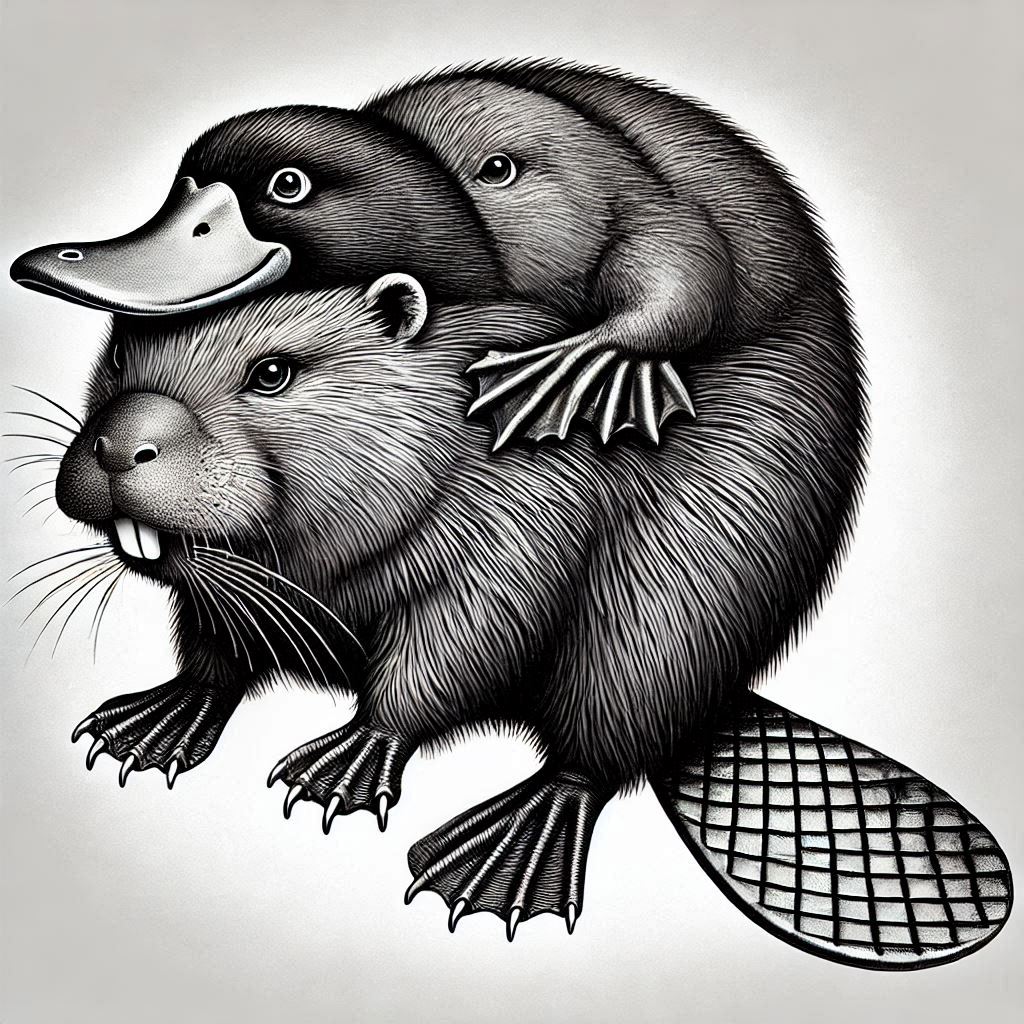
Platypus People


“Did you know that your friend’s dad is an infidel?” my friend’s mom whisper-shouted at me when she opened the door. She had her angry face on. Mrs. Finnegan was not quite right in her normal state, but when I saw that look on her face, I knew something was brewing in the Finnegan household. I could’ve just walked away, I see that now, but I was a good kid. When you’re a good kid, a vital definition of your being comes from other kid’s parents. I was so far down this road that the thought of walking away didn’t even cross my mind. I just considered it my lot in life to endure whatever was going on beyond that door. Even though her angry expression put me on edge, I was accustomed to the greeting. Mrs. Finnegan greeted me this way whenever she had a topic that we needed to discuss before she would permit me to hang out with her son. I called it her headline hello.  

“Hey, it’s mister cigarette smoker!” she said to introduce me to the Finnegan family discussion of another day, one that involved regarding my smoking habits. “It’s the heavy metal dude!” she said to introduce me to another discussion we were going to have about my decision to wear a denim jacket, a t-shirt of whatever band I was listening to at the time, and jeans. She called my ensemble ‘the heavy metal dude gear’ in that discussion. I was fair game for these family discussions, Mrs. Finnegan said, because I had such a huge influence on her beloved son, and the state of my home required that I receive further guidance. 

The “Your friend’s dad is an infidel” greeting informed me that the Finnegan family discussion of the day would involve her husband’s recent business trip to Las Vegas in which “he happened to get himself some [girl]”. I substitute the word ‘girl’ here for your reading pleasure, in place of the more provocative word that Mrs. Finnegan used to describe the other party in Greg Finnegan’s act of infidelity. 

Mrs. Finnegan was a religious woman who rarely ever used profanity or vulgarity. She reserved those words for moments when she needed to severely wound the subject of her scorn, with a ‘Look what you’ve made me do,’ plea in her voice to further subject the subject of her scorn to greater shame, ‘I’m using profanity now.’

I would hear Francis Finnegan use vulgar words on this afternoon, but it wasn’t as shocking to me as hearing that initial misuse of the word infidel. As a self-described word nerd, Mrs. Finnegan prided herself on proper word usage, in even the most casual conversations. I was into it too. I was so into using proper words that she informed me on another occasion, half-joking, that I was her apprentice. She enjoyed teaching me, and I was her eager student. In the beginning, I viewed her assessment of our roles in that light. As the years went by, however, I began to believe she said that to relieve whatever guilt she may have felt for correcting every other word that came out of my mouth. It could prove exhausting at times. There were times when I was almost afraid to open my mouth around her, lest she correct me, but I did enjoy our respective roles in this relationship. 

I figured that the emotional turmoil of this moment might have caused the faux pas, but her diction was so proper and refined that I didn’t consider her capable of such a slip. Even during the most tumultuous Finnegan family discussions, the woman managed to mind her rules of usage well. Thus, when she made the error of attributing the word infidel to her husband’s act of infidelity, I assumed she intended to pique the interest of the listener in the manner her sparse use of profanity and vulgarity could. Either that or she was providing herself a respite from the rules to creatively conflate the incorrect use of the word, and the correct one, with an implicit suggestion that not only had her husband violated his vows to her, but his vows to God.   

My friend James was seated on the couch, next to his father, when I entered the Finnegan home. The two of them were a portrait of shame. They sat in the manner a Beagle sits in the corner of the room after making a mess on the carpet. 

James mouthed a quick ‘Hi!’ to me, as I walked by him, and he pumped his head up to accentuate that greeting. He then resumed the shamed position of looking down at the carpet. 

“Mr. Finnegan decided to go out to Las Vegas and get him some [girl]!” Mrs. Finnegan said to open the proceedings when I entered the living room. I did not have enough time to sit when she said that. When I did, I sat as slow as the tension in the room allowed. “Tell him Greg,” she added. 

“France, I don’t think we should be airing our dirty laundry in front of outsiders,” Mr. Finnegan complained. The idea that he had been crying was obvious. His eyes were rimmed red and moist. He did not look up at Francis, or me, with his complaint. He, like James, remained fixated on the carpet. 

France was the name Mrs. Finnegan grew up with, and she hated it. Only her immediate family members addressed her with such familiarity. She had very few adult friends, but to those people she was Frances. To everyone else, she was Mrs. Finnegan. She may have permitted others to call her less formal names, but I never heard it. Mrs. Finnegan was not one to permit informalities. 

“NO!” Mrs. Finnegan yelled at her husband. That yell was so forceful that had the room contained an actual Beagle, it would have scampered from it, regardless if it were the subject of her scorn. “No, he has to learn,” she said pointing at me, while looking at her husband. “Just like your son needs to learn, just like every man needs to learn the evil of their ways.” 

A visual display followed that verbal one. It was carried into the living room by the Finnegan’s dutiful daughter. The daughter appeared as removed from this family discussion as she had the prior ones. She was more of an observer of the goings on in the Finnegan home than a participant, in my brief experiences with Finnegan family discussions. She rarely offered an opinion, unless it backed up her mother’s assessments and characterizations, and she was never the subject of her mother’s scorn. She was the dutiful daughter, and she walked into the room, carrying the display, in that vein. She carefully positioned it on the living room table and pulled out its legs, so it could stand. She then lit all of the candles in the display and sat next to her mother when it was complete. 

Mrs. Finnegan allowed the display of Greg Finnegan’s shame to rest on the living room table for a moment without comment. The display was a multi-tiered, wood framed, structure with open compartments that allowed for wallet-sized photos. The structure of the frame was a triangle, but anyone who looked around the Finnegan family home could see evidence of Mrs. Finnegan’s fondness for pyramids. Greg Finnegan purchased the triangle to feed into her obsession, but it did not have the full dimensions of a pyramid. When the daughter pulled its legs out, however, the frame rested at an angle. At that angle, the frame took on the appearance of one-fourths of a pyramid. 

Before this discussion began, Mrs. Finnegan somehow managed to secure enough photos of the “harlot, slut, home wrecker” to fill each of the open compartments in the pyramid with unique photos of woman. Each photo had a small votive candle before it to give the shrine of Greg Finnegan’s shame an almost holy vibe. 

“It’s the pyramid of shame,” Mrs. Finnegan informed me with a confrontational smile. “It was Greg’s gift to me on my birthday. Isn’t it lovely? I’m thinking of placing it in our bedroom. I’m thinking of placing it in a just such a position that if Greg is ever forced to sex me again-” Except she did not say sex. She uttered the word, the big one, the queen mother of dirty words, the “F-dash-dash-dash” word. “-he can look at those pictures while he’s [sexing] me. Do you think that will help your performance honey?” she asked her husband. 

As we sat through that uncomfortable comment, the question of how far Mrs. Finnegan might go with her characterizations of her husband’s weekend was mercifully interrupted by a knock at the door. For obvious reasons, we did not see an individual approach the door, so the knock startled us. The construction of the Finnegan duplex was such that when the drapes were open the inhabitants could see the knocker if they were facing in that direction, but we were all looking at the carpet before us. The knocker was Andy, the third participant in the adventure James and I planned for the evening. 

“Welcome to the home of Greg Finnegan, adulterer and infidel,” Mrs. Finnegan said after leaping to her feet to beat everyone to the door. No one was racing her to the door. We were scared and shamed into staring at the carpet. “Come on in,” she said stepping back to allow Andy’s entrance. 

Andy turned around, walked back down the steps, got in his car, and drove away. Just like that, Andy escaped what I felt compelled to endure. Andy didn’t respond to Mrs. Finnegan’s greeting in anyway. He didn’t go out of his way to show any signs of respect or disrespect. He just turned and left.

I didn’t know we could do that, I thought. I turned to watch him walk away, and I turned even more to see him step off the Finnegan patio. I realized he was actually leaving, and my mouth fell open. I didn’t know we could do that.

Andy left, because he knew what Mrs. Finnegan’s headline hellos entailed. He knew what he was in for, and I did too. To my mind, his departure was not only inexplicably bold, it was so unprecedented that it set a precedent for me. I didn’t know we could do that. 

“How could you do that?” I asked him later. 

“I didn’t want to go through all that all over again,” he said. 

“Well, of course,” I said. “Who would?” 

Andy further explained his reaction, but the gist of it was that he just didn’t want to have to sit through another Finnegan family discussion. His impulsive reaction was so simple that if he laid it all out before me, I would’ve countered that he never would’ve been able to pull it off. I’m sure he would’ve asked why, and I don’t know what I would’ve said, but it would’ve involved the inherent respect and fear we have of other people’s parents. Andy and I were good kids, and good kids consider it a testament to their character to maintain model status around other people’s parents, so I didn’t think Andy would be able to be so bold. When Andy did it, and Mrs. Finnegan did nothing more than close the door, I realized that I would have to do a much better job of considering my options in life. 

After Andy left and Mrs. Finnegan sat back down, she encouraged Mr. Finnegan to begin the confessional phase of the Finnegan family discussion, a phase that required Mr. Finnegan to provide explicit details of what he did, I wasn’t there to hear it. I was imagining that Andy impulsive reaction to Mrs. Finnegan’s headline hello so emboldened me that I just stood up and followed him to his car. Just like that. Just like he did. I imagined the two of us driving away, laughing at the lunatics we left behind. I imagined calling the Finnegans platypus people at one point in our round of jokes, and how that might end Andy’s laughter, until I said: 

“What is a platypus, but an animal that defies categorization. One study informs the world of science that they should fall into a specific category, until more exploration reveals that the duck-billed mammal does something to contradict all of their previous assessments. Comprehensive study of the animal creates more questions than answers, until even the most seasoned naturalist throws their hands up in the air in futility. “Experts in psychology might think they have a decent hold on human classifications,” I would add,“but imagine what one day in the Finnegan family home could do to them. 

“At its introduction, naturalists considered the platypus another well-played hoax on the naturalist community, I would add. “I say another well-played hoax because it happened. Some enterprising naturalists stitched together body parts of various parts of dead animals to lead the scientific community to believe that the hoaxer discovered an entirely new species. Thus, when someone introduced the platypus, the scientists who received it believed it was but another elaborate hoax of taxidermy. 

“Those who guarded themselves against falling for future hoaxes, even had a tough time believing the platypus was an actual species when they saw one live,” I would add. 

Even after this afternoon concluded, and I had all the sordid details of this Finnegan Family as Platypus People story to tell, I wondered if anyone would believe me. My penchant for stitching facts together with exaggerated details to try to weave them together for an exceptional story might come back to haunt me. They might not even believe the story if Andy stuck around to corroborate the details of it, and they might not even believe it if they saw it live, I realized while Mr. Finnegan continued to offer me explicit details of his weekend. My audience might think they’re the subjects of an elaborate hoax. 

“He already confessed all of this to his children,” Mrs. Finnegan said to interrupt Mr. Finnegan’s confession, “and he will be offering detailed confessions to the mailman, a traveling salesman, and whomever happens to darken our door this evening.”

After Mr. Finnegan’s continued confession failed to meet Mrs. Finnegan’s requirements, she interrupted him again to ask a series of questions that further explored the humiliating details of Mr. Finnegan’s weekend, details he would not reveal without prompting. When that finally concluded, she forced us to acknowledge the primary reason the Finnegans married in the first place. 

“No one would play with Mr. Finnegan’s [reproductive organ],” she said, except she didn’t say reproductive organ. 

“He was lonely,” she said with tones of derision. “Mr. eighty dollars an hour consultant fee, and Mr. professional student with eight degrees would be nothing without me, because he was nothing when he met me. He was a lonely, little man who had nothing to do but play with, except his little computer products, designs, and his little reproductive organ when no one else would.” 

“That’s enough France,” Greg said standing. He stood to bolster his claim that he’d had enough, and that he was prepared to leave, but he couldn’t and Mrs. Finnegan knew that. 

“Do you play with your reproductive organ?” Mrs. Finnegan asked me, undeterred by Greg’s pleas. “Do you masturbate? Because that’s where it all starts. It all starts with young men, and their pornographic material, imagining that someday someone will want to come along and want to play with it.” 

I had no idea how this family discussion would play out, of course, but I could see Mrs. Finnegan’s confrontational demeanor building. She was a confrontational person, and I never saw her attempt to restrain herself, but this display of resentment and hostility was unprecedented for her, as far as I was concerned. She was all but spitting these questions out between bared teeth, and her nostrils flared in a manner of disgust that suggested her hostility was directed at me. 

“You think it’s about love?” she asked me, aghast at a comment I never made. She had a huge smile on her face when she asked that question, and that smile might have been more alarming than the way she asked all those previous embarrassing questions. Seeing that smile surround those angry teeth led me to wonder if she was losing control of her facilities. 

“You think every couple has a story of dating, that hallowed first kiss, and love?” she continued. “Go watch a gawdamned love conquers all movie if you want all that and once it’s over, you come to Mrs. Finnegan with your questions, and I’ll introduce you to some reality. I’ll tell you tales of young men, grown men, who marry because they’re desperate to find someone to play with their reproductive organ. Isn’t that right Mr. Finnegan?” she called after Mr. Finnegan, as he finally mustered up the courage to begin walking away from her. When he wouldn’t answer, or even turn to acknowledge her question, Mrs. Finnegan watched him leave, she looked at me, and then she tore off after him. 

Mrs. Finnegan was a deliberate woman who appeared to consider her motions before moving as carefully as the words she used to express herself, so to see this otherwise sedate woman move so quickly was a little startling, troubling, and in retrospect foreboding. 

Pushing a grown man down a flight of stairs is not the feat of strength that some might consider it. We didn’t see it, but we figured that he must have been off balance when she did it, resulting from his refusal to turn and face her in his path to the basement. She was screaming things at him from behind, and her intensity grew with each scream until we could no longer understand the words coming out of her mouth. Mr. Finnegan continued to refuse to turn around and face her, but he should’ve suspected that his wife’s intensity would lead to a conclusion against which he should guard himself. Thus, when she pushed him, he was in no position to defend himself or lessen the impact of falling down a flight of about twenty steps. 

When we ran to the top of the stairs –after the sounds of him hitting the stairs shook the house in such a manner that all three of us instinctually put a hand on the armrests of the furniture we sat in to brace ourselves– we witnessed her haul her six-foot-five, two-hundred-pound husband upstairs by his hair, one-handed.”

Mrs. Finnegan’s final scream, that which proceeded her pushing her husband down the stairs, led us to believe that whatever frayed vestige of sanity she clung to for much of her life just snapped. I couldn’t understand what Mrs. Finnegan screamed as she pulled him up the stairs by his hair, but I wasn’t sure if that was because the screams of her children, and her husband, drowned out those shrieks. 

“France!” I heard Greg scream in pain. “France, for God’s sakes!” he screamed repeatedly. 

When I saw Mrs. Finnegan’s contorted facial expression, it transfixed me. In their attempts to either help her, or break her hold on Mr. Finnegan’s hair, her children blocked most of my view of her face. I bobbed and weaved to see more. I didn’t know why my need to see her face drove me to such embarrassing lengths, but I all but shouted at those obstructing my view of it to move out of the way. 

I’ve witnessed rage a couple of times, prior to Mrs. Finnegan’s, but I couldn’t remember seeing it so vacant before. This almost unconscious display of rage was one that those who aren’t employed in various levels of civil service might see once in a lifetime.

Her body blocked any view we might have had of Mr. Finnegan, but I assumed that he was back stepping the stairs to relieve some of the pain of having his hair pulled in such a manner. We could also guess he was putting his hand on the handrail in a manner that assisted her in pulling him up. Regardless the details of the moment, it was still an impressive display of strength fueled by a scary visage of rage. 

She was in such a state that when she was finally atop the stairs, standing in the kitchen with her children trying to calm her, she couldn’t form intelligible words. Her lips were moving but no sound was coming out, and when that initial brief spell ended, the self-described word nerd could only manage gibberish, the same gibberish that proceeded her pushing her husband down the stairs, and all moments between. She later suggested that that gibberish resulted from being overcome by spirits. Once she escaped that state, she stated that the gibberish we all heard was her speaking in tongues. She believed that divine intervention prevented her from further harming her husband, in the manner divine intervention once prevented Abraham from harming his son Isaac in the Biblical narrative. I believed it too, in the heat of the moment, but I would later learn that I just witnessed my first psychotic episode. 

I don’t know what happened in the aftermath of this incident, as I never entered their home again. I do know that the Finnegan marriage survived it, and I’m sure that Mrs. Finnegan still believes that divine intervention played a role. I’m also sure that if anyone doubted her assessment, they would be greeted at the door with a “Welcome to the home of the divine intervention!” headline hello to introduce them to that Finnegan family discussion of the day. If those future visitors were to ask me for advice on this matter, I would advise them to consider their options before entering.