Why So Insidious?


“Why so serious?” – The Dark Knight, Christopher and Jonathon Nolan 

Why so cynical? Cynicism is truth. Cynicism is real. Scene: The cynical character confronts an optimistic, positive one. The positive character has no reply. Why does he just sit there and take it? The underlying truth is finally coming out, and the positive character just can’t handle it. We favor the cynical character, because, “He’s just being real with us.” He’s gritty, she’s so dark, and the cynical are no longer afraid to speak truth to power. The truth is that your precious, little world is awful, your neighbor is trash, and you’re probably no better. Cynicism is alarming, scary, hilarious, and so insidious.

“Harmful but enticing: seductive.” – Merriam-Webster.com’s definition of insidious.

Why so insidious? Want to write a best-seller? Bring the pain (muderporn). We readers crave a taste, a dose, and a heaping forkful of the worst elements of the worst moments of another’s life. We don’t want it too familiar, of course, yet we enjoy watching it from a distance. We may not bring it up in polite company, but if someone else does, we join in, and it’s difficult for us to hide the excitement in our voice. 

Why so violent? Violent narratives require a generous portion of brutality, but the most successful writers define it by clever and intelligent means. Undefined brutality is fine if we’re writing a mob narrative, or a historical recount of the Ku Klux Klan or Nazi, Germany, because they come backloaded with such a brutally violent history, but if we’re going to write about serial killers, we need to employ some level of poetry, symbolism, or some other form of intellect in their acts for it suggests the killer (and their writer) is surprisingly intellectual. In the cat-and-mouse game with the police, writers use law enforcement officials to define the serial killer’s intellect. “He’s obviously incredibly intelligent,” they will say at the outset, and at some point, in the chase, they say, “He’s too smart to fall for that.” If the writer can combine the killer’s savage sense of brutality with some ode to Geoffrey Chaucer, Dante Alighieri, Shakespeare, and/or Biblical references, it illustrates a shocking intellect that will lead to best-sellers, ratings, and clickbait. 

I’ve created fictional characters with whom I developed a mostly platonic relationship, and the answer to the question of what I was going to do with them didn’t involve whether or not they were going to commit violence, but how much? 

“We might develop a crush on non-violent stories,” I said to explain this predilection, “but if we’re going to fall head-over-heels in love, there has to be some violence involved, or at least the threat thereof.” 

Why so awful? We want to read/watch about awful people doing awful things to one another, with a dash of humor thrown in to further define, or even slightly contradict, their awfulness. At some point in the timeline, the awful writers began adding clever humor to add an element of the casual and the common place to their violence, and we loved it. If it’s not love we experience, it’s some complicated adherent. We’ll repeat a clever and humorous line with a chuckle. We might even knowingly invite such seductive characters into our home. We’ve all seen movies of enraged violent people, and it just doesn’t connect the way the calm, clever killers do. Look at our favorite performances, most of them involve actors portraying the most awful characters imaginable with a little bit of flair. The message to writers is clear: if you want gain, bring the pain, and it doesn’t hurt to add a little levity to their refrain. 

Why so artistic? Does art reflect society, or does society reflect art? Is society as evil as artists of modernity want us to believe, or do we interpret their attempts as beautiful works of art? Those who aren’t afraid to expose us to the truth of what’s going on in their neighborhood receive special accolades. Their exposes might be dark and negative but that’s their truth. Is it truth, or is it an embellishment intended to generate sales? I can see you, with your fingers poised above your keyboard, ready to defend your favorite book, movie, or TV show. Your reply will include something regarding how I can’t understand the plight of someone who might not experience the comfortable lifestyle I do. I’m not saying you’re wrong, but would you be so defensive if we were discussing a positive, uplifting narrative? “There’s nothing wrong with light-hearted fare, of course,” you might say, “but there’s no question that gritty, dark, and cynical are definitely more artistic.”

Why do repetitive? We love violence in our art, and we identify with cynicism as truth, but what is that truth? As we work our way through controversial, provocative portrayals of the truth, we often hear, see, and learn the same reportage, fictional and otherwise, over and over. How many times do we have to hear, watch, and read the same cynical exposés on the same institutions before we accept their portrayals as truth? How many otherwise beloved and trusted institutions in our society are the most corrupt in these narratives? There’s the member of the civil service, the man of religion, or military man you thought you could trust who turns out the most corrupt among them in our controversial and cutting edge stories. This trope is almost as repetitive as the all families are dysfunctional trope. We all understand that an author needs to introduce conflict, be it external or internal, but these tropes are repeated so often that most of us can pick out the good guys and bad guys in an ensemble narrative before the actors have read one word of the script. Through sales, we’ve encouraged storytellers to evolve to nothing but hardcore, unapologetic cynicism to appeals to our worldview. 

Why so dark, angry, and hopeless? To paraphrase a line from Cool Hand Luke, “That’s the way he wants it,” and we want it dark, cynical, negative, hateful, and violent. Most of us have no violent tendencies. We never have, and we never will. Yet, we won’t read a book, watch a movie, TV show, or play a video game that doesn’t involve at least some hint of violence? What does that say about us? If we are of a stable mind that isn’t easily influenced, I don’t think it says much, but is it human nature to think that the ultimate, or final, truth about human nature is that it’s awful, nasty, and we’re all headed for dark, gritty truth?

Why no happy endings? It wasn’t too long ago that the market demanded a happy ending, no manner how dark and gritty a fictional piece was. We enjoyed watching awful people doing awful things to each other, but we all knew that some over-the-top, big, sloppy happy ending was coming. We knew the movie would end with someone drinking an exotic, adult beverage with a tiny umbrella in it, in front of an impossibly white, sandy beach? Everyone knew that somehow, someway, it would all end happy for the players involved. It became a long-running joke. Those who concern themselves with such things say that there wasn’t one particular movie that brought an end to this, but a series of thematically complex narratives of the late 60’s early 70’s that challenged the whole idea of the necessity of happy endings in movies. If this is true, it was a long, insidious arc that led us to demand that our stories end in despair for the purpose of being true, while illuminating us about the despair around the world. When we watch happy endings now, they seem so anticlimactic that movie makers have responded by leaving one last hint that the bad guy/monster might might still be alive somewhere.  

“If you want a happy ending go Disney or some other manufacturer of dreams, cause you ain’t gonna find it here.”

I come at this from an advantageous position, because I led a sheltered life until I was about fifteen. I received a lot of grief for believing that most of humanity was good, and I still do, but when I was young and impressionable, my worldview encountered a special brand of the-world-is-junk, and a dose of everyone is a piece of junk. “You shouldn’t trust anyone outside your home,” they instructed me, “and you should probably be skeptical of them.” The contrast to everything I knew and believed couldn’t have been more shocking if it was delivered with defibrillator paddles. I initially considered their skeptical cynicism a romantic notion, and I was angry that my authority figures shielded me from the truth for so long. The more I learned this outlook, the more I embraced it, acclimated to it, and I accepted it as truth. The repetition was such that I knew if I didn’t adjust and assimilate, I would be nothing more than a naïveté who would eventually meet my demise as a result of some proverbial pack of wolves who would take advantage of it. As with all constant and repetitive messaging, it eventually reached a tipping point for me. Looking back, I probably needed that dose of cynicism to round out my wide-eyed optimism, but when the “theys” in my inner-circle continued pouring gasoline on this fire, I realized that, like uplifting positivism, there’s a point of diminishing returns of too much cynicism too. “Just because it’s awful, negative, and cynical doesn’t always mean it’s true,” I began telling my “theys” after I hit that tipping point. I don’t know if that revelation proved as shocking to them as their revelations did me, but they couldn’t come up with anything to counter it. 

When we seek the truth, we often get bounced around a bit, until we eventually find it nestled somewhere in the in-between. Are we more cynical or optimistic, or are we somewhere in-between, and what’s in the in-between? 

As the new saying goes, “If you ever want to know where you stand are as a culture, look to the major marketing firms.” They pour millions into researching human nature and the zeitgeist for the purpose of appealing to us in their marketing campaigns? When they create advertisements for their clients do they seek a truth, or something we generally perceive to be true? Marketing departments don’t necessarily seek to tell us the truth, but their extensive studies find a truth that we consider true enough to move products, and they have obviously reached the conclusion that our outlook is pretty bleak. They understand that times are tough, but their client is here to help. If we just purchase their new and improved product, we’ll find our days and nights bigger, brighter, and more productive, because we’ll have more time to do what we always wanted to do. They pay attention to our intricacies, and they’re saying that we have a negative, cynical and all hope is lost mentality. It’s The Beatles, “It’s getting better all the time. It couldn’t get much worse.” It’s Dickens’ “It was the best of times. It was the worst of times.” It’s the in-between.

I haven’t poured tons of money into extensive research on humanity, but I think we could all use a healthy dose of something else, and it doesn’t have to be uplifting. It can’t be, because uplifting is cringe, but it could be something different. It could be something dotted with refreshing honesty without being overly cynical. It can also be something other than the college thesis paper, or dissertations, writers insert into every song we hear, and every TV show and movie we watch. When I watch these over-the-top insertions, I can’t help but think, “Hows about we just go for entertainment, so we can forget the serious, deep, and the meaningful for just a moment?” 

Wishing and Baseball


“I wish my son was more aggressive at the plate,” a friend of mine said.

You wish your son was more aggressive? I could go through the list of pseudo-humorous things I wish I had, but you know that joke. I want things, and I need things, but I’d feel foolish suggesting that I wish something were true, because I know that that someone would turn on me and say, “Well, go get it!”

This has always been one of my least favorite responses because it’s obnoxious, tedious (because everyone says it) and true. Yet, who is more tedious and obnoxious, the person who says, “Go get it!” or the person who sits down and whines and wishes?   

Wishing is for small children and people who find genies in a bottle. For the rest of us, it’s a waste of breath, unless we’re going to “Go get it!” A couple of years ago, I wished my kid wouldn’t strike out so often. I wanted him to do better, so we went out to the backyard, then we left the comfy confines of home to open baseball diamonds and batting cages to go get it. Did we get better? We did, because we did it so often that it happened. 

Prior to all that, my kid was shocked and devastated by the fact that he wasn’t the athlete he thought he was, and aren’t we all? Our delusional dreams and projected images of greatness eventually, and painfully, hit a controversial wall called reality. I label the wall controversial, because soon after I told my kid he wasn’t better than he thought, I knew that would get me in trouble with positive reinforcement crowd. After I introduced him to the reality of the situation, we set about getting him better. The latter, needless to say, doesn’t happen after one, two, or three twenty-minute sessions. This is a time-consuming, frustrating, and eventually rewarding process.

I’m the type of guy who thinks, perhaps unreasonably at times, that everything is my fault. If I can’t access a website, for example, I think it’s my fault. It might have more to do with the site’s administrator, but that doesn’t stop me from thinking that I did something wrong. When my son struck out so often, I knew it was partly my fault. The kid was so young that he didn’t know how to do things himself. He had to be taught, and I wasn’t teaching him. I forced him to endure mind-numbing hours of hitting, fielding, and pitching so often that he begged for it to be over. He wanted to play Mario Odyssey, watch YouTube, and do anything and everything he could find that was less taxing. We called our workouts forty, forty forty. Forty hits, forty ground balls, or pop-ups, and forty swings. After doing this for years, when I now see a kid on a baseball field have trouble with the fundamentals of baseball, I can tell just how much time their dad has spent helping them get it.

My job, and your job, if you wish it to be true, is to source the problem and correct it. Baseball is a game, and ten and unders are going to make a ton of mistakes. If they make the same mistakes, over and over in a manner that cries out for resolution, I see it as my job to find a way to help him fix it. If you don’t have the time to personally see to it that the error is corrected, do you have the money to hire an instructor, and if neither of those avenues are available to you, what can you do to try to make it happen, other than sitting in the stands, wishing it were true.  

Some of us are visual learners, some are auditory, and others are reading and writing learners. If your goal is to help your child learn how to play baseball, there’s no avenue better than just doing it so many times that he learns how to do it. It’s what psychologists call Kinesthetic Learning, or what the rest of us call doing it. 

It’s possible for a kid to learn another way, I suppose, but I’ve never explored it. What’s the best way to learn Math, swimming, bowling, or baseball? They have to do it so often that they learn. Malcolm Gladwell suggest we can do anything to a decent level of prowess by investing 10,000 hours into doing it. It sounds so obnoxiously simple that it can’t be the solution, so we read books on it, watch YouTube videos, and invest in some sort of professional tutoring. All of these elements are instructive and can be used to supplement doing, but it’s so obvious that it hardly seems worthy of mentioning that nothing beats doing something so often that we do it better. 

***

Once our kid learns and earns a certain level of prowess, how do we take them to the next level? 

“If you want your kid to advance, get him into a select league,” they say, and they’re right. But, and there’s always a but, a kid learns by doing. We can say he might get better playing a higher level competition, but what if he’s not having fun at the next level? My son is currently on a team composed almost entirely of his friends from school. On this team, my son plays, and he strengthens his relationships with his friends while playing. He looks forward to games, and he has a lot of fun playing in them. That’s far more important to me than advancing him to the next level with the hope that it will strengthen his abilities in such a way that he might continue to play baseball in high school, college, and the Majors. This is the dream, but is it their dream or ours? When we take a look at the numbers, we know that the chances of him playing beyond high school are minimal, and while looking at those numbers we need to ask ourselves who are we really aiming to please? Are we seeking a way for him to be the exception to these ratios for his eventual happiness, or are we looking to satisfy our dream of one day being one of those parents who have front row tickets to our kid’s first major league start? If we follow the plan of making sure he’s having fun, we’ll turn down that invitation for a select league to keep him in a league where he’s having the most fun. We also do this to prepare for the day when he meets the extent of his talent and ability, and our dreams come to a crashing halt. When this happens, we want to look at our son and say, “Well, we had a lot of fun along the way.” 

Last season, a kid named Jimmy received an invitation to advance to a select team over my son. My vicarious impulse was jealousy. I thought my son was better, but I’m biased. Jimmy was, at least, comparable to my son in talent. Flash forward a couple games into this season and Jimmy is not playing on that select team. He’s sitting on the bench. I have no idea if this is a commentary on Jimmy’s ability, compared to the rest of the team, but bottom line, he’s sitting on the bench, and if he’s not playing, he’s not learning, and he’s not advancing. But playing at a higher level lifts all boats. The classic example, in another sport, is Sidney Crosby. Crosby was the youngest brother always playing with his older brothers and their friends. Crosby needed to be better just to compete with them. Crosby became better, and he became so good that he was a first pick in the NHL Draft, and he became one of the best players in the NHL. Crosby, however, was playing against them, as opposed to riding the bench. My guess is this kid named Jimmy is experiencing some next-level play in practice, but nothing beats doing it in a game.  

The select teams also requires a greater commitment to baseball, and I don’t think this commitment will be advantageous. Right now, my son plays a number of sports and he is learning the art of taekwondo. If he commits more of his time to baseball, he will have to sacrifice those other sports. Why would we do this? He has a lot of fun doing all that other stuff too. I think playing those sports, and learning the art of taekwondo, provides him a well-rounded learning experience, and if he chooses a sport to focus on at some point, that will be a decision for him to make. Right now, he’s just having fun, and I see no reason to advance the needle. 

As with everything else in life, there are no easy answers, but there is one easy question. What are we doing with our free-time? Instead of watching the latest docu-drama on Netflix, or flipping through our phone for the next twenty minutes, why don’t we take a trip into the backyard and flip the ball around with our kid for twenty minutes a day, three-to-four times a week for a couple years. 

Baseball is baseball. It’s a sport, and some observe that the obsessive devotion to sports and games is trivial compared to all of the other, more important activities in life. If you think that, you’re right in general terms, but what are you currently doing with them that is so much more vital and crucial to their life? And what were your plans when you held them in your arms that day in the delivery room? Did you plan on letting them watch YouTube for another hour, so you could have a little more “me” time? What we’re talking about when we talk about baseball, soccer, flag football, or whatever ten and unders can do for a couple hours when they’ve not gaming, is committing to something so thoroughly that they develop a discipline, and a character-defining devotion. We’re talking about developing a discipline and a devotion to something they might remember, and they won’t remember conquering Mario Odyssey or flipping through various YouTube influencers. They will remember the days they spent playing sports with others, and the countless hours they spent playing in the backyard with you. It takes a level of commitment, a discipline, and devotion from both of you if you wish want him to get better, or more confident, the next time he steps on a baseball diamond, and that may prove trivial in the grand scheme of life to everyone in the world except for the two of you. 

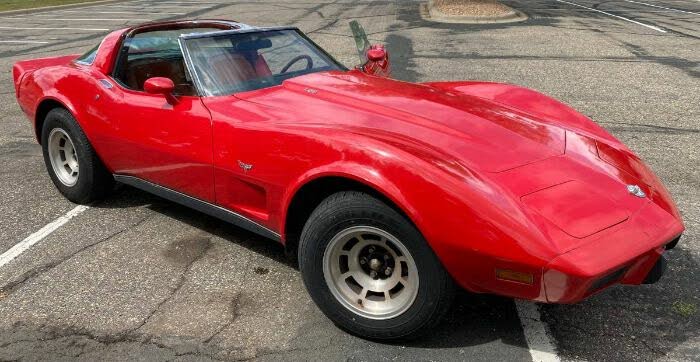
The Phallic Car Trope: A Comedy


Quick. Guy pulls up next to you in a sports car. This beautiful machine is widely regarded as one of the fastest cars on the road, and it’s loud. This car, with its modified muffler, is so loud, you can’t hear anything your wife says in the passenger seat. Quick, what do you think of this Fast and Furious wannabe?

Small penis, right? The guy who selected this automobile to drive around in, and then he modified his muffler to draw extra attention to himself, must have a minuscule member. It’s such an automatic association that it’s almost reflexive now. Guy buys a top of the line sports car, we know it’s all about the hoo hoo. It’s one plus one equals two to us now. It’s the joke we’ve heard and told so often that everyone over the age of 25 knows it when they see that car. In order for a joke to be funny, truly funny, there has to be an element of truth in it, and we all find this joke funny, because we know that knock knock jokes can be kind of funny, but if we want to be hilarious, we have to hit people where they live.

The general premise of the scenario confuses us. Why would a man, average age 29 and above, with, presumably, a full-time job, a wife and kids, and a mortgage to pay plunk down an extra forty to fifty thousand for a method of transportation? Even most irresponsible men, in such financial situations, dont plunk such money down in cash. They take out a five-year loan with interest or they lease. Regardless, it creates a financial burden on the family that might require little Timmy or Tammy to take out their own loans for college. Why would this man do that to his family? If we know the man, and we know his concerns, it seems so impossible that he would take such an irresponsible risk. We dig for answers, and if we dig deep enough, we arrive at the size of his Gerald (I knew a guy named Gerald, and I didn’t think much of him). We don’t know if it’s true with our friend, but if it is, it’s so sad it’s funny. If his wife drives the final dagger into his humiliation and forces him to return it and pay the penalties for early cancellation of the contract, it’s funny, but is it so funny that it’s hilarious, and if it is hilarious, is it because it’s so sad or so true, or some hybrid of both?

Who cares, it’s funny? Who cares, because men who drive those obnoxiously loud and fast things around are so annoying that we don’t mind it when others take shots at them. We love this joke so much that the minute a comedian starts talking about some ass face in an obnoxiously loud and fast car, we cannot wait until he gets to the joke at the bottom of the barrel involving that guy’s low hanging fruit.

This association gets repeated so often that we now call it a trope, the phallic car trope, and we repeat it with such confidence, that some of us believe it’s 100% true, 100% of the time. We see some guy in a brand new, modified Charger, and we know the size of his Herbie is smaller than what medical science declares average size. Then, when we drop that joke, we do it as if no one’s ever heard it before.

“That thing is an incredible combination of design and engineering!” we say in appreciation of another’s car, not their willy.

“Yeah, you know why he bought it don’t you?” they say with a knowing snicker.

“So, you mean to tell me that if he had a 5.5-to-6 schwanzstucker, at the very least, he might have preferred a more moderately priced sedan?”  

I don’t own one of these obnoxiously loud and fast vehicles, and I’m not here to defend those who do. They annoy me as much as you, and when I hear them drive by my home, jostling my innards, I think that the driver probably has something ridiculous ticking inside. I don’t seethe at them though, like some of you. We all know who you are, and the jokes you tell about his purple-helmet warrior of love running around in your head, with a whole lot of exclamation points to follow. You mean it too, and you mean it mean. I’ve heard you. I know the jokes, and I’ve seen the faces you make when you tell the joke. Me, I don’t think that way, because I knew some gearheads growing up. I called two of them my best friends. They grew up loving everything loud and fast, loud music, fast cars. They started out loving fast bikes, then loud and fast motorbikes, and then cars, and they loved tinkering with them. They spent way too much of their youth modifying, tinkering, and souping them up, to make them louder and faster than anyone else has ever seen or heard, but I can tell you that for them, it wasn’t about the hoo hoo.

One of these gearheads, a kid named Mark, was absolutely crazed at a very young age. Mark raced his whole life, with whatever he could find, because he had what the screenwriter of Days of Thunder called, “A need for speed.” He had little-to-no natural ability. He couldn’t throw, he couldn’t catch, and I used to cream him in foot races. So, I thought he compensated for all that by manipulating the greatest technology his fellow man developed to be faster through mechanical know how. I never looked below his 39th parallel, but other friends informed me that Mark wasn’t compensating for a lack of natural, athletic ability. He was, they said, compensating for his underdeveloped mushroom head. Okay, but he was nine at the time.

He and I snickered at pee pee and wee wee jokes when we were nine, but we loved the well-timed good fart joke, or any joke that contained the words poop or diarrhea in it. You remember that song, “Diarrhea pfft pfft, diarrhea pfft pfft! When you’re running down the gutter, with a piece of bread and butter, diarrhea pfft pfft, diarrhea pfft pfft! When you’re sliding into home, and your pants are full of foam, diarrhea pfft pfft, diarrhea pfft pfft! When your stomach’s feeling wavy, ‘cause it’s making anus gravy diarrhea pfft pfft, diarrhea pfft pfft!” That was one of our favorite songs for far too many years, and if you tell that joke now, to a nine-year-old, their squealing laughter will tell you that some jokes never die. 

The yoinker is little more than a front tail that dispenses waste to a nine-year-old. Pee is funny, but jokes about the length, the girth, or whatever they might see in showers and bathrooms? They’re not there yet. They’re nine, and most nine-year-olds, with monitored viewing habits, don’t even understand how the size of an organ might benefit one over another. They just don’t think that way, not yet. So, you’re telling me that Mark, or any other nine-year-old, would want, or need, to have a faster big wheel, bicycle, or motorized product to compensate for this deficiency? I can almost guarantee this wasn’t a conscious, or subconscious, concern of Mark’s. He was keyed into speed and racing, as opposed to football, Star Wars, or Lego, because he was just wired different. We’re all wired different, and some of that wiring makes so little sense to us that we grow up making jokes to explain it.

I wanted to win when I was nine. I wanted to win in everything I did. I wanted to win at football, basketball, parcheesi, and I wanted to beat other kids in races. Mark, and this is key to understanding the mentality, didn’t just want to beat me in bike races, he needed it. He needed it, like some of us need praise, compliments and laughter when we’re young. It frustrated me when I lost, and I probably cursed a little with my nine-year-old swear words, but like every other normal nine-year-old, I forgot all about it a half minute later. Mark would rage. He raged so often that someone nicknamed him “rage”. He was so obsessed with beating me in a race on our neighborhood street that he started cheating in any way he could dream up. Then he stole a top-of-the-line bike one day, and he beat me from then on. In my anger, I told him that his victories were tainted by the fact that he stole the bike. He didn’t argue, because he didn’t care about particulars. He won, I lost. Turning around to see me struggle to keep up with him was what the French call his joie di vivre. It was the moment he started to really love life. He was smiling so hard he was laughing so hard he was crying. It took me years to understand how essential this need was to his constitution, and he carried that into adulthood, but it had nothing to do with the size of his dingaling.

A group of psychologists from University College London found out that I am wrong. The research tests they performed didn’t involve nine-year-olds, of course, because why would they test anyone in their formative years? No, their research found that men over 29 often prefer sports cars when they believe that their reproductive organs are smaller than the average male’s. The inference of this test is that these men walked into the research study with little-to-no desire for luxury muscle vehicles, until they found out their members were below average in size. See, the research scientists tricked their subjects into thinking the average size of the male kebob was seven inches, as opposed to 5.5. This deception allegedly altered their subjects’ desire to have a fast sports car to compensate for it. The psychologists performed another test where the tricked the subjects by telling them that their personal wealth was lower than the average males, and they performed another test that suggested that their health was inferior comparatively. Nothing, they found, tweaked the subject’s desire to have a fast sports car more than hearing that the size of their Humphrey was below average. It was only one test, and they only tested 200 men, but they believe they validated the phallic car trope.

Ok, we’ll play then. Let’s say the phallic car trope is 100% correct. If that’s the case, then everything else surrounding this notion must be true too, right? If it’s as true as we all think, with no asterisks or exceptions, then the opposite must be true too, right? If a man is of average size, and he knows it, then this man will probably be purchasing moderately priced sedans that bring little-to-no attention to himself, because he doesn’t need to bring attention to himself. He knows that he is average in size, and that leads to average attention from women. That should be axiomatic and one plus one equals two too. He’s already packing average-sized heat, so why would he want, or need, the attention a luxury, muscle car to attract? Then there’s the man, the big one, the Mount Kangchenjunga of men. He is so well-endowed that he apparently knows what The Beatles went through during the height of Beatlemania. If the phallic car trope is so consistent that we can research test it with a group of men so common they prove the trope, then Kangchenjunga will obviously be purchasing … the Smart car. That’s right, the man with a bowhead whale in his pants (or the baleen mysticetus, for those who prefer the Latin derivative), prefers a car that others find so small that they’re almost a joke. He not only doesn’t need to attract attention, he purchases a car that he hopes might finally give him some peace. If the phallic car trope can be proven and disproven then the opposite must be so true that interested parties should be falling all over one another to get with the Smart car driver.    

Men love sports cars. They love the look, the feel, and the feeling of power is so thrilling that some men, big and small, find them intoxicating. This isn’t to say that some men don’t seek some sort of augmentation. I don’t know how representative such notions are to be honest. The only thing I know with absolute certitude is what I’ve witnessed firsthand, and the gearhead friends I knew grew up in families where the car you owned was everything. Even if they know you well enough to know you’re a relatively happy person, from a relatively happy, loving home, if your parents drive a green on green Malibu Classic, they’re going to think that we’re suffering from delusions of adequacy. 

Are such gearhead families doomed to walk the earth with a diminished downstairs department? I was never so bored, or interested, to check. I just knew that while my family was obsessed with football, theirs were obsessed with cars.

Another theory I’ve heard from another group of psychologists is that most of our personality is formed at around six years old. They go so far as to say that if we knew a kid really well in kindergarten and we met that same kid forty-years later, that man would not be remarkably different from the kindergarten kid we knew so well. If that’s the case, what changes around the age of 29? Nothing, something, everything? Is it all about willy winkus? And who cares anyway, it’s funny.

No matter what we say here today to prove, disprove, validate, or refute this phallic car trope, it’s not going to change anything. You’re still going to laugh the next time Mark pulls up next to you in his brand new, sparkly, modified well-oiled machine. You’re going to laugh at him no matter how many ways we analyze it, but is it funny? Yes, yes it is in that sad but true kind of way. We might even go so far as to say it’s hilarious, because knock knock jokes are funny, but if we strive for hilarious, truly hilarious, we have this sick sense that someone’s got to get hurt. And no matter how much pain you figure this guy must have experienced in high school gym locker rooms, you’re still going to laugh at the next guy who pulls up next to you at a stoplight with the idea that he thought he could drop an extra $40-to-$50 grand for a loud, luxury muscle car to rectify it. Lookatme now! What you think ladies? Even if my rod ain’t so hot, look at the hotrod I got beneath me now.