I Give You Permission to Read This 


“We have two choices in our culture today,” the “theys” who appear on our devices tell us. “We can either feel guilty about doing what we do, or we can give ourselves permission to do them.” The only asterisk in this Faustian Dilemma is celebrital dispensation. Similar to Papal Dispensation, if a celebrity says, or more importantly wears, something on the red carpet, it gives us commoners the permission to be who we are, “who we really are.” To listen to the theys of celebrity adoration, celebrital dispensation is far more powerful than Papal Dispensation in that it doesn’t just offer a specific relaxation of rules in one particular case, it offers us a wholesale abrogation of rules of social decorum, social contracts, moral and ethical principles, and presumably constitutions and foundational documents. The theoretical extension of the rules and policies of celebrital dispensation are not clear, but from what the theys suggest, a song lyric, a line in a movie or show, and any dietary decision celebrities bestow upon us can lead us to the brink of a guilt-free life.

In order for the celebrital dispensation to have power, however, we have to violate a special tenet permission-oriented types have embedded in their personal constitution: Thou shalt not grant another power over one’s life. Aren’t we all supposed to be self-empowered? Aren’t we all supposed to say, “I’m not going to give you that power over me.” Isn’t it all about autonomy, independence and strength to achieve comfort? It depends, and it’s conditional. If the celebrity is hot, superficially and/or professionally, they don’t just wield power in Billboard or the box office, they can influence our daily lives. 

Is this all a collective wink-and-a-nod joke, I missed, or does the woman I see twerking on stage in a corseted bodysuit draped with strands of silver fabric, over-the-knee fringe boots wield as much power over her congregation as the Pope does his? How many successful albums, movies, and TV shows does a person have to have before they can start granting us permission on how to live our lives, and what happens if her next album doesn’t fare as well? Does her sway over the culture ebb and flow with sales, and do we need to keep a ledger on how much power a celebrity wields, before giving them permission to give us permission? How beautiful, handsome, funny, or serious do they have to be before they’re allowed to grant us permission to put a little cheese on our broccoli before eating it? What happens when they eventually age out of their beauty and/or handsomeness, do they grant us permission to age, or do their powers diminish? It probably depends on how gracefully they age. Is there a bottom line qualifier they must continually meet before we continue to grant them ourselves permission to grant them permission to grant us permission to do what we want to do?

***

“So, you don’t just do something or avoid doing it?” is a question I ask of those who seek and grant permission to themselves. “So, you don’t just do something or avoid doing it?” is a question I ask of those who seek and grant permission to themselves. “You add the extra step of asking yourself permission first before doing it?” If that’s the case, the logical conclusion is that there’s another part of us that grants permission. Is that other part of us ruling in a fair, objective, and unbiased manner? Are all of our rulings always reached with our best interests in mind? If you commit to a regular practice of asking yourself permission to do things, how often do you say no? Has your rejection ever surprised you? If so, how did you react? Did you disagree with the basis of your judgement so much that it frustrated you, because you thought you didn’t consider some of the mitigating factors in your request? Did you ever end up eating that piece of chocolate cake regardless of the judgment? We’ve all been subject to unfair, foul, and draconian rulings from the various authority figures in our lives, and we’ve all rebelled against them accordingly. Have you ever eaten that piece of chocolate cake regardless if permission was granted or not, and how did that affect your relationship with yourself going forward? Have you ever stopped asking yourself permission for a time and just did it, because you began to believe that you could be a bit of a tyrant at times, and do you adjust some of your behaviors in the hopes that you might notice a run of good behavior that deserved some reward? You know you’ve been good, but have you had this feeling that you didn’t notice it, and you feel that you should start rewarding yourself with some chocolate cake here and there, until you start acting up again?”  

One definition of giving yourself permission involves the practice of allowing “You to disconnect WHO you are from your opinions, ideas and practices. Instead, placing that identity in your values. As long as you are acting in line with your core values, it opens up space to be wrong about decisions in the past, and how you will choose to translate your values in the future, without losing sight of your personal integrity or ability to be 100% whole and worthy.” 

If I ever fall prey to this nonsense, I know my first series of layoffs will involve middle management, as I will know, without poring through the numbers, that I’m probably overstaffed.  

***  

“I have so earned this,” we say as we lower onto a piece of soft and juicy chocolate cake, “and I deserve a reward.” Is a piece of chocolate cake ever that rewarding? How long does that sense of reward last? Do we go for another piece to reward ourselves more when we’ve been especially good? No, because that might prove punishing. The single piece of chocolate cake represents a reward at the end of the maze of good and healthy living, and we always announce our path to it? “I’ve been good.” 

I guess I’m a stranger in a strange land, because I just eat the piece of chocolate cake, or I don’t. I make decisions without disconnecting WHO I am from my opinions, ideas and practices. There are no trumpets in my land, signaling a dietary path that has been a quality one up to this point, or one that is so bad that I don’t dare approach the bench. 

We let our trumpets blare, because we want external validation and societal validation. Somewhere along the way, we glommed onto the complicated world of self-acceptance and self-actualization, and the rise of self-help literature, social media, and mental health awareness tangled and mangled this into people talking about their personal struggles and growth journeys, until we started seeking permission and granting it to ourselves based on past and present behaviors. 

“I am refraining from eating that piece of soft and juicy chocolate, because I’m on a diet.” We say this even though no one brought it up, and some part of us knows that no one cares, one way or another, but we want someone else to validate our discipline. Even a lifted eyebrow will do. Eating that single piece of soft and juicy chocolate cake gives us a naughty violation to punctuate the streak of good and healthy living that no one cared about when it went live. These are all decisions and choices we make, and they’re all fine, but how many times have we gone a solid month without a slice of chocolate cake? “Yeah, I deserve a reward for that.” What’s the difference between deserve and earn? Who cares, let me have cake. 

When we involve ourselves in the idea of granting permission to ourselves, I think there’s a super-secret part of us that kind of misses having a controlling authority in our lives. “I can’t wait until I’m an adult,” kids often say, “because I’ll then get to finally do everything I want to do.” We all know that there is a psychological push and pull to authority in our youth, as we push back on authoritative constraints, until they’re not there. When they’re not there, we feel the need for borders and guidance in a strange way that makes us feel uncomfortable. We didn’t miss it in our 20s, because we were all about luxuriating in the newfound powers of freedom of adulthood that can feel so fresh and liberating. When we hit our 30s, the idea of freedom became more established, routine, and a little boring, and if we lived to our 40s, we became the powers that be. No one notices when the idea of unadulterated freedom begins to wear off, but we eventually start to take it for granted, and we begin to miss the rewards and punishments that flowed from authoritarian control, so we began establishing our own. 

The logical response to those who deserve a reward is do they ever punish themselves for bad living? Have you ever tried canned beets? If not, then you don’t truly know the extent of quality punishments. WebMD.com suggests that beets “Don’t just reduce inflammation, they also improve heart health. The nitrates in beets have been shown to reduce high blood pressure. Beets are also naturally low in cholesterol and fat, which makes them a good option for people concerned about heart disease or stroke.” Are beets a quality punishment we sentence we pass down for falling off track regarding good and healthy living? Why else would someone eat a beet? If someone told me that they granted themselves permission to eat a piece of chocolate cake, because “I deserve it,” I would ignore them as much as I ignore anyone who publicly grants themselves permission to do anything. If however, they added, “I just ate a whole can of those wet, slimy vegetables,” I might consider my own form of a one-time dispensation. 

“Did they have that purplish color that comes from betalain pigments?”

“Yes.”

“Today, I tell you,” I would say with a permissive wave of my hand, “that you shall enjoy paradise.”

I realize that granting ourselves permission to do what we want to do is not some kind of new-age novelty, as the research suggests this practice has gone through a long and winding road. As a young ‘un who received unprecedented freedoms, unprecedented among my peers, perhaps I went through the traditional push and pull relationship with authority prematurely, but I don’t understand the unnecessarily complicated, and very public, steps some people include in their decision-making process. I don’t understand the process of inventing an imaginary, controlling authority to adhere to, abide by, and rebel against. Perhaps, it has something to do with filling a void that nature forced me to fill so early on that I don’t understand others struggle with it. 

I also don’t understand turning to celebrities to grant us permission to do things, unless it’s an admission on our part that we don’t have the confidence necessary to fill that void, because we fear our rulings, on consequential, pressing matters, are not as objective as we previously thought. To fill that void, we turn to the uncommonly attractive types who attract fame and fortune for some kind of authority on the way to live. Yet, if we were to hold them to the same standard we hold ourselves, we’d find they’re just making it up as they go along too. They do look beautiful doing it though, and we cannot deny that, but does that give us permission to look beautiful while we’re doing it too? If that ever happens to, or for me, I hope someone will come along and explain to me what just happened.

You Could Be the Entertainment. You Might Be the Genius 


“A genius is the one most like himself.” —Thelonius Monk.  

We’ve all heard jokes about you being original. “You think you’re original? I wonder what percentage of the nearly 8 billion in the world consider themselves original? What percentage of the billions who lived before us thought they were original?”

What is original? Is it even possible to be original? Was Homer, author of the Odyssey original? What about Leonardo da Vinci, Dostoyevsky, or The Beatles? Most music critics stopped using the word ‘o’ from their reviews, because anytime they drop the word, the snipers come out to talk about all the influences they hear. If it’s impossible to be original, is it possible to create something uniquely personal? Is it possible to take all of your influences, artistic and otherwise, and do your thing so often that you find you? Will it be without influence? What is? No work of art is free of influence, and no influence is free from personal interpretation. Should you even try to be original if it’s impossible? With nearly 8 billion in the world and billions who have preceded us in history, the chances of you being somewhat redundant or derivative are pretty high?

If you can get passed the lengthy confusing originality-is-not-possible algorithm, you could do something that is so you that you might feel naked when it’s over. You might want to consider deleting the vulnerabilities that incriminate you, or you might not. If you leave it all in, it’s possible that some long-dead artist, who many consider one of the most original artists to walk to planet, might’ve considered you ingenious.    

Everyone started out wanting to be somebody else. We don’t start out all pure and raw. We lacked knowledge, skills, and the sense of security necessary to expose ourselves completely. We felt icky about ourselves when we started. We were insecure, we feared we had no talent, and we thought we were boring, or at least we’re not as entertaining as that guy.

Look at him, he’s got it all figured out. Every woman I know wants to sit with him and chat, he’s got a wad of dough, and everybody likes him. And funny, ohmigosh, if I could be just a little bit like him for one minute of one day, people might want to be around me, they might like me, and they might read me. We add a pinch of ourselves along the way. The other guy over there, he’s all calm, cool, and collected. He’s radiating self-possession. If I could wrap his aura around my neck for just one night, it could all be different. We add a dash of ourselves to it. At some point, in the painfully gradual process, we shed their skin and become more like ourselves, and if we become more like ourselves than anyone else can, it might be ingenious. Monk’s quote might be my new favorite quote.  

2) “We might as well be ourselves,” Oscar Wilde said, “everybody else is taken.”  

“I wish I could be more like Jarod,” Todd said. “He doesn’t care if anyone likes him.”  

Most of us don’t say such things aloud. We might think it. We might think Jarod has something ingenious going on, but we don’t talk to him to find out what he has. It’s understood. We develop a construction from afar, and we try to become it.

I talked to one of my constructed images once. As much as I tried to avoid it, I couldn’t help but convey how much I thought of him. I didn’t say anything along those lines, but I was so obvious about it that I could see it on his face. We were walking away from football practice, and he started dropping a slew of swear words on me. He wasn’t cursing at me. He was swearing in the smoothest manner he could find. I picked up a strange vibe. He appeared to be trying to live up to whatever image he thought I had of him. The idea that he tried so hard confused me, because he was the guy everyone wanted to be, and I was the anonymous nerd who faded into the background of whatever room I was in. I needed to develop skills to stand out. This guy accomplished it by just being him, or so I thought. In our brief exchange, I realized that I didn’t want to be him anymore than I wanted to be me. I realized that if I was going to continue to try to live up to the constructed images I had of people, the pursuit was probably better than the prize. I also realized that if I was going to project images upon guys like him, I probably shouldn’t talk to them.  

“You’re the entertainment,” I told Todd after he wrapped up his gripes about Jarod. “You’re the entertainment in the room, and you don’t even know it.” 

3) “You are who you are when nobody’s watching.” ― Stephen Fry

My goal in life is to control situations as often as I can. If I encounter a situation fraught with failure, I take over, because I would rather blame myself for failure than someone else. I see parents put their kids in awkward situations, and when these kids fail, the parents are shocked. They evaluate their kid’s failure by their own standards. I might over correct at times, and I might be what they call a helicopter parent, but I either try to frame failure according to age, or I try to prevent failure by taking control of the situation.

When my boy went to the refreshment stand in a restaurant to refill his cup, every instinct told me to just take the cup from him and do it myself, but I knew he had to learn, and I wanted to see who he was when he didn’t know anyone was watching. I stood back where he couldn’t see me, and I watched him. As he refilled his cup, I took a step back. It was painful to stand back and watch, but I couldn’t stop looking. After he spilled, I stepped back further. I wanted to see if he would clean it up himself. I wanted to see if he would look around after the spill. I didn’t realize until I smelled it, but I accidentally backed into the sphere of influence of an elderly woman. My first thought, when she expelled gas on me, was this might be her defense mechanism, warning me that I was too close. I thought of the octopus expelling an ink cloud to thwart the approach of predators. She couldn’t know if I was a predator, because she didn’t know me, so she probably considered it better safe than sorry when she let it go. I abided by her silent admonition by giving her distance. My boy cleaned up his mess without looking around, and he double checked his work to make sure his mess was all cleaned up. I made the right move by allowing him to make his own mistakes, and he unknowingly defined his character for me, but I paid a price for it. 

4) “Be it a song or a casual conversation. To hold my tongue speaks of quiet reservations. Your words, once heard, they can place you in a faction. My words may disturb, but at least there’s a reaction.” Slash, Dave Lank, and Axl Rose. 

Back when I talked to my constructed image of the star football player, I considered offensive vulgarity the more honest approach. No matter how confusing I considered his effort, I thought he was being real with me. He fit the prototype teenager, but we don’t see that when we’re teens. We were influenced by movies, TV, and music. We had lists of which movies used swear words, and how many times they swore in such movies. If we were movie critics, we would’ve awarded stars accordingly. We also loved music, and while we all appreciated great pop songs, a song without at least a little vulgarity or innuendo, too safe. We wanted to hear dangerous, risky music, and we craved that in all artistic venues. We demanded the same of ourselves. The more vulgar and crude the more honest. We wanted to hand the holy grail up to the person who didn’t care if we considered them offensive. The truth is offensive, we thought. “I speak truth, and what does it say about you that you can’t deal with it.” What does it say about you that you said it? “I gotta be me!” So, you’re an offensive person? It took us a while, but we realized that a cup is handed down to the artist, filled with their offense.  

Due to the fact that the material nature of Rilaly.com is relative and subjective, we cannot guarantee our readers will be entertained or enlightened. We are introducing our new insurance policy that a reader can purchase if they don’t know if they want to take a risk by reading it. If you are not entertained, or enlightened, we will refund any amount the reader paid to us to read this, minus the cost of the non-refundable insurance.  

The Hat on the Bed Hex 


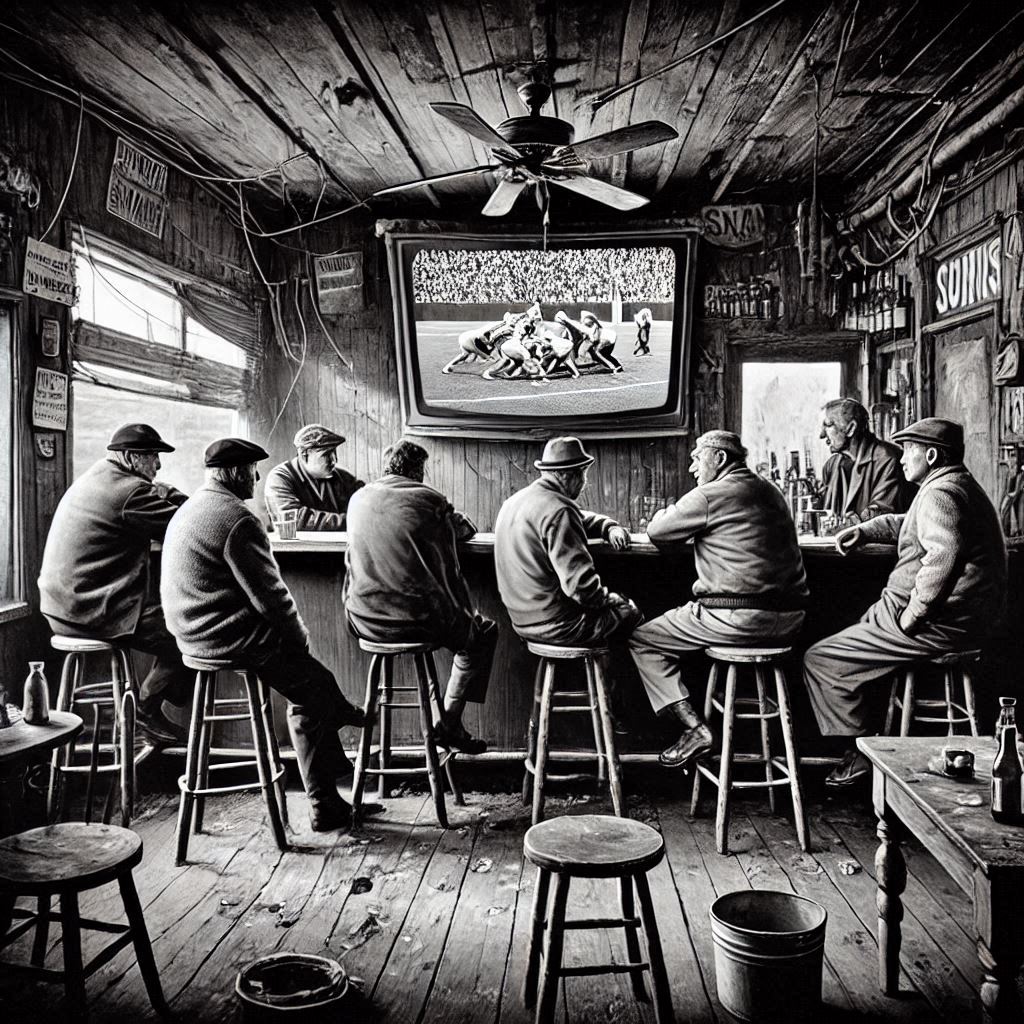
“You just jinxed us!” my friend said to explain why everyone was groaning at me and making the meanest faces they could find. 

“You think this is funny?” my friend’s dad said. I did, until the whole room turned against me, and I realized this man was asking me this in a very confrontational manner. “People here depend on the income from these games,” he added. In that brief window of silent tension I continued to believe I was the butt of a joke that would end in a big old “Gotcha!” followed by uproariously laughter. As our silent stare continued, and the dad’s confrontational stance appeared to only strengthen, I realized this was not fun and games to them.  

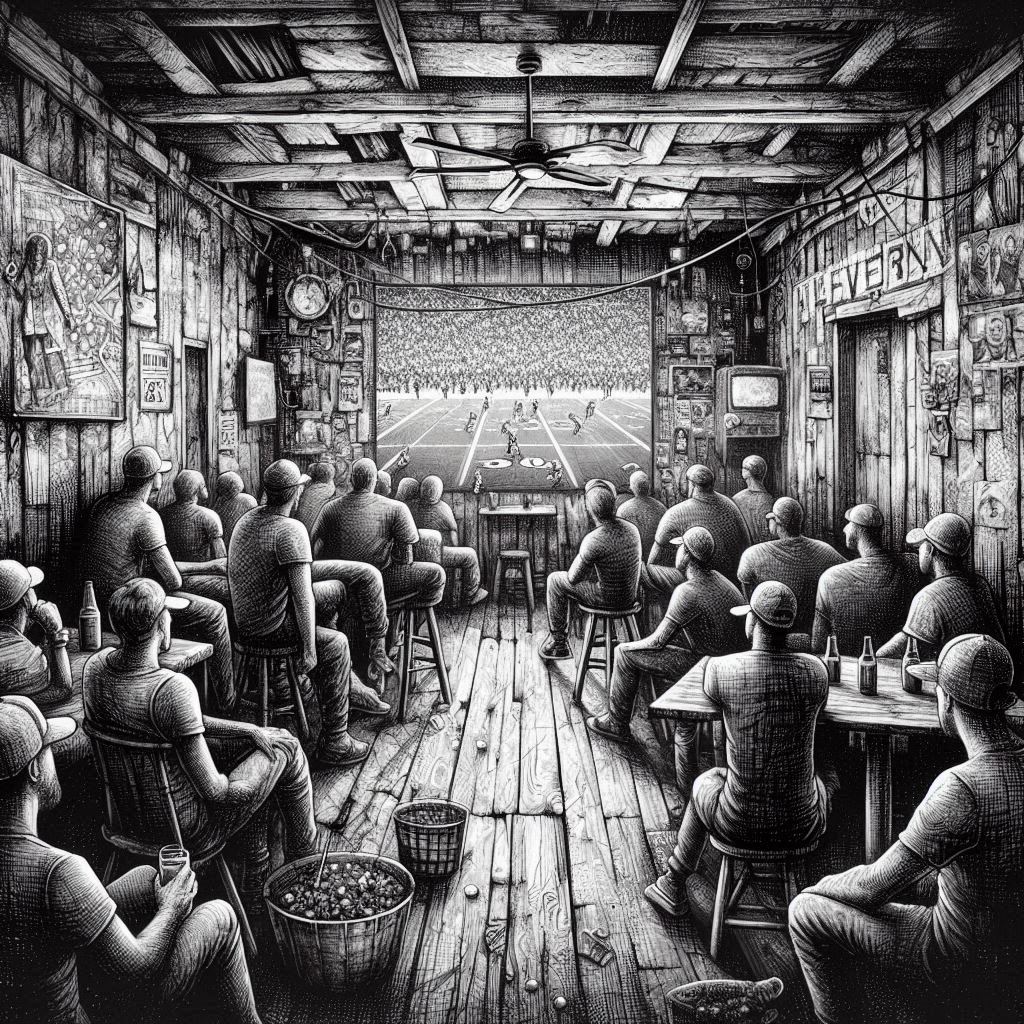
What I said to ignite this uproar, while watching an otherwise meaningless football game in my friend’s family home, was, “Well, it looks like we’re going to win here!” I violated the tenets of the jinx after our team scored a touchdown to put our team up by twenty-one points with less than two minutes left in the game. Lifelong football fans have seen some wild swings in football, but a comeback of historic proportions, but that meant nothing to them. When my friend not only joined the crowd, but led the charge, I thought he was joking, but he obviously read the room better than I did. 

The furor that line generated couldn’t have been too much worse if I went to the bathroom, stripped down naked and sat among these people as straight-faced as I could.  

In the aftermath of the silent tension between the dad and I, about five mouths around us continued to hang open. They were silently aghast at my utter stupidity. One of the attendees sat back with his hands splayed, as if to ask, “What are you doing to me here?”

Another said my comment was, “One of the dumbest things I’ve ever heard, and I’ve heard some really dumb things.”

My friend just sat there in the midst of all this shaking his head. After it was over, my friend reiterated that this football game wasn’t just a game to these people, they depended on the income from the outcome.  

I understand that anything can tip the precarious balance in sports, but I had no idea how instrumental I was in it, until they educated me. I would’ve maintained my I’m-not-falling-for-this stance if it were just my friend saying these things, as we joked about it many times before, but the adults in the room not only shared my friend’s condemnation, they taught it to him. Adults who had twenty-five-years experience on me and knew far more about the world than I did, were saying what I considered incomprehensible, and they were shaking their heads with their eyes closed, whispering my name through clenched teeth as if it were an unquestioned truth. 

You might think that I was the butt of some Jedi mind tricks, and that they would all have a good laugh later, but they wouldn’t. They genuinely believed it, all of it. They believed that sitting half-bun on a chair while watching a football game on TV, clothed in team-related regalia, while singing the team’s fight song to send a telepathic message of love and truth to our boys fighting on the gridiron would make a difference. 

After that incident, years of repetition informed me that these forty somethings were serious, “serious as a heart attack”. They also informed me, without saying these exact words, that I was to respect the ways and traditions of their home. 

My family wasn’t of sound mind. My dad was as quirky if not more than my friend’s dad, but he didn’t abide by these superstitions. I never experienced anything like this before, but I never spent time around big-time gamblers either. The adults basically informed me that I sat on the threshold of being banned from their home if that other team came back. They didn’t. Our team won, but they said, “You got lucky … this time, but don’t ever say anything like that again.”

The next time they invited me to their home to watch a game, the dad remained in the doorway for an uncomfortable amount of time, blocking it, saying, “You’re not going to say anything stupid this time, are you?” I assured him that I wouldn’t, and that I learned my lesson last time. He backed away and allowed my entrance.

The Drugstore Cowboy 

This friend and I later watched the movie Drugstore Cowboy together. In this movie, a character introduces the concept of a 30-day hex that results from leaving a hat on a bed. “Why a hat?” a side character asked. 

“Because that’s just the way it is sweetie,” the main character responded. “Never talk about dogs, and never look at the backside of a mirror, because it will affect your future, because you’re looking at yourself backwards … No, you’re looking at your inner self, and you don’t recognize it, because you’ve never seen it before. But the most important thing is the hat on a bed. The hat on a bed is the king of them all. Hell, that’s worth at least 15 years bad luck, even death, and I’d rather have death, because I couldn’t face no 15-year hex.”   

The hat-on-the-bed hex seemed so arbitrary and quirky that it was hilarious, kind of cool, and interesting. The characters in the movie were drug dealers, and we assumed that this explanation offered us some insight into their damaged brains. To prove the theory that a hat-on-a-bed could provide anywhere from 30-days to 15-years of bad luck, the movie characters’ lives fell apart, and they all realized their run of bad luck started after one of the other characters left a hat on the bed.    

That movie is decades old now, but I can still see that hat sitting on the bed. It provided a crucial turning point in that movie. The characters’ lives were progressing as well as any drug dealers could before a stupid and naïve character haphazardly left a hat sitting on a bed, as if it were nothing more than a hat resting on a bed. I remember that narrative so well because my best friend talked about it all the time, and anytime we entered his home, we were to abide by his incorporation of this rule into his life. 

“Are you serious about this?” I asked this otherwise rational human being when he introduced it to us all.

“Why would you want to risk it?” he asked. 

“Because it was a movie,” I said, “and not only that, it was a joke in the movie that the writers inserted to show how hilariously insane their characters were.” 

If he laughed and said, “I just thought it was kind of cool and funny.” I would’ve said, “Thank God, because I thought you were serious.” Unfortunate to his legacy, he told me he was serious. It should’ve been obvious to my otherwise intelligent and rational friend that the movie makers didn’t believe this superstitious nonsense any more than I did, as they arbitrarily edited the definition of looking at the backside of a mirror, and the length of the hat-on-bed hex, but my friend was born and raised in a home of very superstitious people, and he believed that a hat-on-bed could alter his life in the same manner the scene altered the trajectory of the characters in the movie. No one ever put a hat on his bed, as far as I know, but he made us all aware of the consequences of doing so on numerous occasions over the years. 

The Swanny

Propagandists say that if we repeat the same lie often enough, enough people will believe it to make it true, and my friend, his family, and their friends genuinely believed in hexes, jinxes, and superstitions. In their home, I learned that no matter how great the momentum, a few choice words from a teenage male, who doesn’t know anything about the world yet, can alter the course of a history.

One of those who insulted me, in my friend’s home, said I committed a Swanny. A Swanny, they explained, was a term they coined after a man named Ron “Swanny” Swanson said something as dumb as I did once, and they informed me that the other team miraculously came back shortly after he said it. “It happened,” they said, and after it happened, they labeled anyone prematurely calling out a victory and thus jinxing the team “a Swanny”.

“I’m not denying that “the Swanny” happened,” I said to my friend, after the whole incident was over, “but how many times has it happened since humans started watching sports on TV? How many television spectators, hundreds of miles away from the action on the field, have prematurely called out a victory only to have the outcome flip? Don’t you see how we could view Swanny’s “Swanny” as a coincidence?”

They could not. That inexplicable loss was marked in the annals of sports’ history as far as they were concerned, because it proved their contention that when anyone says a most unfortunate thing at a most inopportune time, they can alter the course of history as we watch it play out on TV, hundreds of miles away from the action on the field.

“What would happen if Swanny committed “a Swanny” while watching a documentary on World War II?” I asked, “and three-fourths of the way through that production he mentioned that he thought it was pretty obvious that the allied powers were going to win? Would we all be speaking German now?” 

“That is so ridiculous,” my friend said with laughter. “World War II is already over. The analogy doesn’t apply.”  

“Sometimes, the best way to prove how ridiculous something is,” I said. “Is to provide an analogy that is more ridiculous.”

If I thought my friend was an unmovable moron, I wouldn’t have pleaded my case against “The Swanny”, but my friend was a logical, reasonable man who just happened to be well-educated. On the subject of hexes, superstitions, and jinxes, however, he proved an immovable object. He had a blind spot, we all have them, but this one was so confusing to me.   

I might be one of the least superstitious beings on our planet now, and I’d love to write that even as a teenager, I was immune to such ridiculousness. I watched so many football games at my friend’s house for about a decade though, with his superstitious parents and their superstitious friends. They were rabid fans, and they loved gambling. They were some of the few I met who were into these games as much as I was. Watching sports in my teen years was tantamount to life and death. They were big fans, but they had a financial stake in victory too. Though we approached watching sports from different angles, the outcome was the same, and their fervor made watching games at their home so much fun. 

After committing “the Swanny”, I learned to watch my tongue when we were watching sports on TV. As ridiculous as I considered their rules, if I had respect for my friend and his family, I had to respect the rules of their home. This respectful silence had an accumulative effect over the years, as anytime I entered their home to watch a game, I learned to never say anything premature, or joke about it, and that led me to avoid even thinking that even the most obviously decided game was decided. Little by little, game after game, their repetitive messaging progressively seeped into my brain and morphed what I once considered a joke into a new reality for me. I don’t remember ever making a conscious flip in this regard, but I eventually took their ridiculous hat-on-the-bed type superstitions home with me, and I chastised my brother for making an inopportune comment at an inopportune time when the two of us were watching a football game on television together. “You just jinxed us!” I said. 

“Seriously?” he asked. “You’re serious? Take a step away from what you’re saying, and I think you’ll realize how ridiculous that sounds.” I didn’t, I wouldn’t, until I did, and I entered into a lifelong cringe for ever somewhat, sort of, and temporarily slipping under the power of group-think and repetition.