The Voluntary Visit to the Dentist


“As nice as you are, I’ve come to realize that you are not my friend,” I informed Ms. Mary, my dental hygienist, after she provided a deep cleaning procedure that involved the sights and sounds of my worst nightmares.

Ms. Mary is an extremely pleasant woman. Some might even go so far to say that with her disposition, she’s the perfect hire for such a position, and she has a voice that would sound perfect for audiobook versions of children’s books. She may have missed her calling, we think as we listen to her. She also has an unusually melodic laugh that makes us smile regardless how much trepidation and fear we feel sitting in her chair.

In a place many of us consider one of the scariest places on Earth, Ms. Mary’s bedside manner (or in this case chair side) puts us completely at ease. She is, indeed, the perfect hire. At some point, however, and we both know that this moment is inevitable, Ms. Mary will twist to the left to get down to business, and her business is not kind, sweet, or endearing. Her business involves something called a Sickle probe, a Scaler, and the most feared dental tools of all, the drill, a dental air drill to be precise. She doesn’t cackle when she picks it up, and no one cues up harrowing music to inform us that the setting is changing. She just quietly turns to gather her tools, while we’re answering one of her polite, sweet questions about our lives, and she returns to start the process

Some of Ms. Mary’s tools make the most awful sounds, and some of the others chip away at the plaque and other buildup her patients have so recklessly acquired over the years. They’re all painful. At some point in the process, we inform Ms. Mary that we obviously don’t have enough painkiller, and at another point in the process we know there never will be enough. Ms. Mary appears to do her best to accommodate us, but we know, somewhere deep in our heart, Ms. Mary is an awful person who enjoys this. 

When I tried to assure Ms. Mary that I was just joking when I said ‘you are not my friend,’ she said, “Oh, don’t worry about that. I love my job.” That convinced me that she knew I was joking, but it also led me to wonder if she might be something of a psychopath. She loves doing this to me? She loves doing this to kind, well-meaning people like me so much that she’s been doing it for over ten years? Ms. Mary has such a beautiful portrait of her family up in the corner of her cubicle, and as I said earlier she is so pleasant and seemingly well-centered, and happy that I’m sure I’ll feel different about her tomorrow, so I have to write this today.

I know this is Ms. Mary’s job, and I know someone has to do it, and I know that neglectful clients are almost required to find someone to do this, but I can’t help but suspect that if Ms. Mary enjoys doing such awful things to otherwise pleasant individuals like me, who never do anything to harm anyone, she might have some psychopathic tendencies. If as Diffen.com says, “[Psychopaths] can pretend to be charming and loving, so those around them can’t always detect their lack of empathy,” I suspect Ms. Mary might have some tendencies that remind us of psychopaths. Before we dismiss this idea entirely, I think we should look up the job history of some of our country’s worst psychopathic serial killers to see if we can find some corollaries. My bet is we find one who says:

“I was a dental hygienist for a couple years, and I found it absolutely thrilling, but I realized I needed to inflict more pain after a while. There was a reason that I was attracted to the profession in the first place though.”
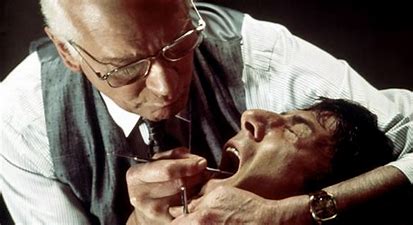
No one portrayed the sadistic tendencies of a dentist better than Laurence Olivier in the movie Marathon Man. There was one relatively horrific scene, in this otherwise boring movie, in which Olivier threatens to pull a healthy tooth from his patient without painkillers, unless the patient gives him the information he needs. The reason I consider the horror in this scene relative is that when I’m nowhere near a dentist’s chair, I don’t understand why anyone would consider having a healthy tooth pulled without painkillers so frightening that they would give up state secrets. When Ms. Mary and the dentist liberated me from their office, after about an hour of a level of torture all clients know, however, I recall that movie scene with a shudder.

The scene we’re starring in involves us lying supine, mouth open, and vulnerable to whatever they have planned. In the moment, I know I would’ve talked if Laurence Olivier prodded some sensitive nerves, telling me, “You need to take better care of your teeth.” If he hit those sensitive nerves with the high-pitched sounds of his drill, and I had no painkillers, I suspect I might give up every state secret I know.

Some talk about the high-pitched sounds of a drill with abject horror. This conversation is so common and the need to address the fear is so prevalent that most dentist office’s now provide their clients headphones to drown that sound out. Clients and prospective clients also talk about how much they hate the pain involved, so they take all of the painkillers the dentist has to offer, plus the nitrous oxide. Some potential clients seek dentists who have all of painkillers the state will allow, including putting them to sleep.

Prior to this particular dentist office visit, I informed everyone I knew that I turned down all but the basic painkiller, because I wanted the dentists and their assistants to hurry up and finish whatever procedures they proscribe for the horrors going on in my mouth. A younger, braver me opted to endure the pain to expedite the process. I did not want to wait for the nitrous to take hold. I just wanted them to start, so they could end sooner. Something changed over the years. I don’t know if I psyched myself into a frenzy or what, but when they started drilling, I raised a hand and asked for more painkiller and more time for the nitrous to take hold. I took all the painkillers they had at their disposal this time and the headphones.

***

I’ve heard about the Stockholm syndrome in which the captive begins to develop unusual feelings of trust and affection for their captors. Some of the captives, used in various case examples, develop an emotional attachment to the captors who torture them, and they do so because they become reliant on their captors for survival. At some point in the torture, they slip from being a hostile captive to a cooperative one, and finally to one who unwittingly begins to side with their captors’ cause. Everyone develops coping mechanisms for stressful moments, and while we understand that sitting in a dentists’ chair is not in the same league with all of the various forms of torture known to man, it does give those of us who know nothing of real torture some insight into what we might do when our captors know the right nerves to hit to get us to talk. 

My coping mechanism for dealing with this relatively, low-level stress was writing the article you’re reading right now. I wrote most of this article, in my mind, while Ms. Mary chipped away at my plaque, and I completed it when the dentist finished me off. When Ms. Mary tapped a sensitive nerve, I laughed. I did not laugh because I’m impervious to pain. I laughed because I thought of a great line I wanted to add right here … but I forgot it. Did I forget it, because our mind sweeps out negative memories to keep us happy? Some students of the mind suggest that the mind distills bad memories from our thoughts to keep us happy, in a manner similar to the liver distilling unhealthy products from our body to keep us healthy. I thought not, because the session wasn’t that horrific. I blame it on the drugs Ms. Mary induced. Whatever the case was, I remembered thinking that it was such a great line that I should hurry up and write it down before I forgot it, as I knew that it would get lost in the ether, or to the ether, and I probably should hurry up and write it down. I didn’t write it down, or even say it to Ms. Mary to make it more memorable, because as much as I live for great sentences, I didn’t want to prolong the process for even a minute more.    

I experienced a small window into how I might fare under torture when Ms. Mary drilled into a nerve that was not sufficiently dulled with painkillers. She responded in the manner I hoped she would, but I couldn’t help but think of what I might do if my captors not only didn’t stop when they hit that nerve, but they continued to explore the extent of my pain to get me to do whatever they wanted. We all love to think that we’re the heroic captive type who would never talk, but receiving a drill to a tender, exposed nerve reminds us why we revere those who endured what we cannot even imagine. I thought about how much I might hate the people doing this to me while they were at it, and I thought about how glorious it would be for me when they decided to stop. 

When the dentist finally decided I had enough, I appreciated his mercy so much that I felt grateful. It’s over, I survived, and I appreciated his contributions to my survival. The Stockholm syndrome suggests that the captive might appreciate their captors’ mercy for stopping. Those who study this effect say it doesn’t always happen to captives, but it has obviously happened so often that we’ve developed a term for it. For those who want to understand how this anomaly might happen, try going ten years between dentist visits. When the scraping, grinding, and drilling finding ends, it feels like they’re acting in a merciful, kind, and sympathetic manner, and the euphoria you feel might lead you to inexplicable feelings of affection that you don’t have for people who have never drilled anything into your face for a couple hours.

***

The thing about going to the dentist is it’s voluntary. We don’t have to go. If we want to keep our teeth, and keep them in such good shape that they might last for most of our lives, we must visit the dentist biannually. Some even suggest that a deterioration of our oral hygiene can lead to a decline in our overall health, but  it’s still voluntary. When we don’t visit the dentist’s office regularly, no one will think less of us, because no one will ever know. They might see the degradation of our teeth over time, but few will suspect that it has anything to do with the fact that we haven’t visited a dentist’s office in a while. They just cringe when we smile, and they think less of us, but they likely won’t make the connection. 

My dad had a miracle cure for bad teeth, milk. He thought the calcium in milk helped preserved his teeth so well that he didn’t have to brush, and he would never have to go to a dentist’s office, and he didn’t for most of his life. He thought milk, and the calcium therein, were the miracle cures to maintaining oral health to the point of having his natural teeth into old age. A high school friend of mine never brushed his teeth either, and he never visited the dentist’s office. His miracle cure was Listerine. Both men found the error of their ways during “the most painful experience I’ve ever had” when they eventually found their teeth so painful that a visit to the dentist proved to be the lesser of two evils. 

If they hadn’t volunteered this information, we would’ve never known, because no one lauds a person for responsibly visiting a dentist biannually, and no one talks about a person who doesn’t. “There goes Stewart, he hasn’t visited a dentist’s office in ten years.” I’ve never heard anyone say this, or anything else, about a person regarding the regularity of their dentist visits. There’s no peer pressure, parental pressure, or any other form of pressure, other than internal, to routinely address what could be a problem if we don’t.

“It’s voluntary? You mean I don’t have to subject myself to pain if I don’t want to do so? I have to be self-motivated to subject myself to the pain involved? Even those who regularly visit the dentist responsibly experience some pain in every visit? Who, in their right mind, would do this on a biannual basis?”

“The longer you wait the more painful it will be,” they caution.

“So, the only motivation to endure regular, painful visits, is to stave off the prospect of more pain?”

Most of the rewards for enduring everything Ms. Mary has at her disposal on a biannual basis, to maintain a healthy mouth, are long-term. If we maintain that biannual schedule, it’s possible that we might never experience a toothache, if we proactively follow their prescriptions for greater oral health on a daily basis. Yet, if we never have a toothache, how much do we appreciate it? If there are so few tangible, short-term rewards, what are the long term ones? Well, if we’re lucky enough to live into the 70s, 80s, and beyond, we might be able to luxuriate in the idea that we’re one of the few in the retirement community who still has most, if not all, of our natural teeth, but we’ll have to wait decades to lord that over our peers. When we finally arrive at that glorious day, how will they react? What will be our lifelong reward for having the various dentists and their Ms Marys drilling into our face for an hour, two times a year, for decades? If we’re lucky enough to live that long, we might one day receive nothing more than an unceremonious shrug from that guy who is now forced to wear dentures.

The Fear of Getting Punched in the Face


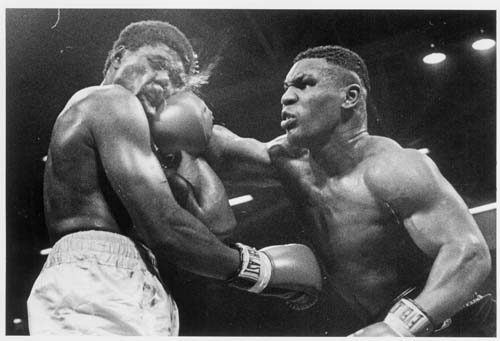
“I just hit that guy as hard as he’ll ever be hit,” a professional boxer said of his opponent. “I don’t see that as mean or cruel. I see it as liberating him from the fear of being punched in the face, because no one else will ever punch him that hard as long as he lives. He’s free now, as I see it, and I hope he uses it.”

That is so over-the-top, it’s almost funny. Even those of us who aren’t funny understand that the quality of a joke increases with the level of truth. The harder we shake our head, the harder we laugh. Those of us who don’t know how to punch or take a punch can also see the logic in what the man said, until we see it as a universally agreed upon truth. It also helped the comedic value of this line that when the boxer delivered this line, he appeared to be serious.

I don’t care what you say, the guy had to be delivering that line tongue-in-cheek, or ridiculing the opponent he just hit in some pseudo-serious way. It sounds like something Muhammed Ali might’ve said to try to further humiliate Joe Frazier. It sounds like a verbal version of Ali looming over Sonny Liston.”

I understand you think that, but even if it was delivered tongue-in-cheek, the audience at home could tell that this believed it so much it was a part of his constitution. He spoke as if he were spreading the gospel. (It wasn’t Mike Tyson, though he did say something similar.) When we’re done laughing at this, we acknowledge that the difference between funny and hilarious is that this fella delivered this unusual, unorthodox philosophy as if he believed it. The more we laugh, throwing our own bits in rounds, we realize that what makes such a line even more funny is that there might be some sort of twisted logic to it.

Speaking in public might be listed number one on everyone’s list of their greatest fears, followed by death, heights, spiders, and a general sense of the unknown. The fear of getting punched in the face might factor low on that list, especially among adult respondents who know that law enforcement will deliver harsh penalties to those who cannot control their impulses. Among the younger contingent, the teens and early twenty-somethings in particular, this fear likely rates much higher. Think about how often a hit to the face, and the threat thereof, governed our day-to-day interactions with our peers.

A hit to the face, no matter what the situation, or how hard it hits, is personal. A little kid hit me in the face recently to punctuate a joke. I immediately went into cool-down mode, “Don’t do that,” I instructed him, in my calmest voice. “Not to the face.” He assured me that he was just joking. I acknowledged that and reiterated, “Not to the face.”

What did we do to avoid any situations that could lead to a fight and a punch to the face? Most situations, even among testosterone-fueled, confusion-laden, and king-of-the-hill youth do not escalate to an actual punch. There’s usually a lot of screaming, and threats, but an actual fight rarely occurred in the schools most of us attended. The fear of it, however, influenced so many of our interactions. How liberating would it have been, back then, to have no such fears? If we were well-trained and well-schooled in the art of combat, how different would our interactions with bullies have been back then? If, as I say, most confrontations often don’t escalate to the physical?

How many of us have dreamed of standing tall and hitting our bully back? How many of those daydreams involved our bully flying back into the wall with an explosive, haymaker that had anime graphics behind it?

In our dreams, enhanced by cinematic indoctrination, the bully takes our bone-crushing blow, and he reaches out to shake our hand. “That, my friend, was a quality blow. Didn’t know you had it in you. Will you be my friend now?” The reality, for nerds like us, is our best punch probably would’ve felt like a duck down pillow landing at moderate speed. The truth is it probably would’ve encouraged our bully to show his friends how hard he could actually punch, and if you think they might feel bad about putting someone in the hospital, you had nicer bullies than I did. My bullies would’ve put that on their personal resume for the next time someone challenged them to a fight.

The contrarian response might be, “How about we gather together to stop encouraging kids from punching each other kids in the face?” Hey, I’m all hands up over here. All for it. I just live with the notion that there’s something in that young, testosterone male that no matter how much we encourage alternatives or discourage, we’ll never be able to quell. There are some people, kids, adults, and everyone in between who enjoy punching people in the face to resolve disagreements, and they use it to help them define their character both internally and externally. “There’s little you can do to quell the nature of the beast, especially among teenage boys,” a priest once said in one of my classes. “The best method we’ve found is to try to redirect all that hostility, rage, and aggression they have into sports. Football, wrestling, boxing and any other sport that provides young males an outlet.”

We’ve all met the exceptions to the rule, but most people will do anything and everything to prevent children from being harmed, intimidated, or bullied in any way. The reality is that the playground is the jungle. There are docile creatures who only eat vegetation and there are meat-eating predators. The vegetarians hide, they develop techniques to camouflage their weakness, and they develop their own maneuvers to thwart predators.

The vegetarians’ parents develop rules and codes of conduct, they put on seminars to reinforce rules, and they have one-on-one sessions with children who continue to violate those rules, but they don’t understand the rules of the jungle. The number one rule of the jungle is he who isn’t afraid to throw the first punch, or has the reputation thereof, often wins the argument. The second, and perhaps more important, rule of the jungle is he who is not afraid to take a punch has power equal to, and greater than, he who isn’t afraid to punch. To my old-fashioned, dated mind that deals in generalities as they apply to human nature, this prize fighter’s twisted logic actually makes a lot of sense.

We can all try to change the rules of the jungle, and we should, but when adults attempt to micromanage a kid’s world, the first and last question they should ask is, “And then what?” In my day (insert old fogey voice), the first and last thing we did, in our teens, was try to violate every rule we could find. We treated finding a way around the rules our high school administrators passed as an inmate might the rules of a penitentiary. So, if we try to engineer and re-engineer human behavior, do we change the nature of the rebel, or do we make those who still rebel more powerful? Do we accidentally make those who still aren’t afraid to punch and be punched more powerful?

Aside from the pain involved, there is something shocking about getting punched in the face. If the same person delivered the same blow to the stomach, it might hurt just as bad, but it’s not quite as shocking or personal.

If we didn’t receive such a blow by the time we graduated high school, it’s likely we never will. When we were younger, however, the perceived threat of being punched in the face was the fear of the unknown. Most of us didn’t have an older brother, a neighborhood kid, friends, or enemies to diminish this fear, so no one ever liberated us from this fear in the manner the prize fighter proposed.

We never heard the theory that a punch to the face could be liberating, when we were young vegetarians in the jungle, but the absence of it, and its subsequent qualities of the unknown, influenced our every day … until they approached the guardians at the gate. No matter how small, passive, and invisible some vegetarians might be, everyone has a threshold.

***

By the time Sean (the bully in this production) whipped a wadded up piece of paper at my face I’d already had enough. I just didn’t know it yet. The hit was so perfect that it achieved Sean’s goal of impressing Dave, the all-star defensive tackle at our school.

Dave never had anything to prove to anyone in high school. “The bigger they are, the harder they fall!” those who love to fight love to say, but when a man Dave’s size walks toward them, fighters part for him. He was one of those very few gargantuan human beings who have trouble holding pencils, because their fingers were the size of most teenage calves. When I asked these thrill-seeking fighters if they would fight someone as big as Dave, they said, “Well, there’s no sense in getting yourself killed.” Dave never had anything to prove to anyone in high school.

Sean did. He was a medium-sized guy who was always looking for ways to prove himself. Those of us near him, on the hierarchical totem pole, often received his proverbial boot to our face, so Sean could define himself worthy of the respect and friendship of his superiors, someone like Dave. The proverbial boot to the face, in my case, was a wadded up ball of paper that landed so flush that Dave considered it hilarious.

If I gave my reaction some thought, I might try to characterize it as brave, but it wasn’t. It was an impulsive, blind rage that drove me to pick up that ball of paper and throw it back in Sean’s face. I then, again without thinking about it, loomed over his desk.

“Knock it off!” the scariest teacher in our school yelled. “Return to your seat!” he said, yelling my name. It took me about five seconds to cool down, and I did after this scary teacher screamed at the top of his lungs again. He had one of those deep, baritone voices that called to mind the power of the bass in a live, Motley Crue song. I sat back down, and I tried to cool off. “You two, see me after class,” the teacher said, calling out our names, in his deepest baritone.

“You think you’re a tough guy don’t you?” the football superstar, Dave, whispered to me when class was over.

“I don’t,” I said. “I really don’t, but I’m not going to put up with that.”

What Sean and Dave didn’t understand was that I put up with such incidents for years from Sean and others, and I never did anything about it, because I feared I might not fare well in the final confrontation.

Mike Tyson once said, “Everyone has a strategy, until they get punched in the mouth.” It’s true, but how many failed strategies do we employ to avoid getting punched in the mouth? How many bullies proceed unimpeded with the implicit threat of that punch to the mouth? “We both know you’re not going to do anything about it, because you don’t want to get punched in the mouth.”  

Getting punched in the mouth hurts, and losing fights is so embarrassing that we do whatever we can to avoid it. In the cushy world our parents provide us, by sending us to quality schools, we never had to fight before, and we feared that the guy, challenging our manhood, might expose that.

In the high school arena that I call the jungle, we witnessed the non-confrontational tactics our fellow vegetarians tried to employ to end their torment. We saw them laugh with their bullies, to try to convince them that they were in on the joke. That tactic involved the nerd basically saying, “Your shot at my character not only failed to hurt my feelings, I thought it was actually pretty funny.” That never worked. We’ve also witnessed some nerds laugh when their bully picks on another nerd in a desperate quest to form some level of solidarity with their tormentors. This calls to mind another Tyson quote, “A man that’s a friend of everyone is an enemy to himself.” We empathize with the nerds’ efforts of course, as they desperately tried everything they could think up to end their torment, but those of us who survived high school know that nothing works better than finding a way to prove that we don’t fear that final confrontation. We nerds learned, from other nerds, to avoid overdoing our defense too, for that exposes the effort for what it is. We nerds need to muster up the courage to look the bully in the eye (and that’s essential) and confidently say something that suggests we don’t fear being punched in the mouth as much as they think. I wish I could give my fellow nerds a great line to end it once and for all, but those lines are almost always situational.

By the time Sean tested my boundaries, I’d had enough. That wadded up ball of paper blasted through my threshold in such a way that I wouldn’t have cared if it was the 6’5”, 250 lb., star defensive tackle who threw that ball of paper at me. I didn’t think of it in the moment, but I think I would’ve risked the hospital stay, and a month spent in traction just to send a message that I was done with it all. I was done with fearing a punch to the face. I was done taking it on the chin, figuratively speaking, because I feared that the other guy might have had older brothers who taught him how to punch, how to take a punch, and how to fight. This whole idea that I feared the unknown world of fighting just didn’t have the mystique it once did for me, when the alternative involved me continuing to allow them to do whatever they wanted to do to me.

I’m a smaller than average male now, but I was even smaller back then, and I wasn’t one of those scrappy little guys who knew how to fight either. In the few scrapes that came my way, I proved that I didn’t know what I was doing. There is, however, that flirtation we all have that if driven to the extreme, we might surprise them all with a sweeping haymaker that shocks the world. The truth, if we ever found out, is that our most devastating punch will probably come off as uninformed and untrained as we fear, BUT, more often than not, so will the other guy’s.

How many of us wish we could go back in this world and redress the wrongs done to us? I changed the course of one incident, and as you can probably tell I’m quite proud of it, but it was the result of silently putting up with so many other defamatory and embarrassing incidents that I will not provide for your entertainment. I also thought that if I did this to one person, word might spread, and I might not have to put up with others bullying me. Life doesn’t work that way, especially in the jungle. I also thought that if I displayed the temerity necessary to prove myself one day, I might be better prepared to do it again the next day. Again, life doesn’t work that way. Each confrontation is its own separate entity, and each high school student has to deal with each incident accordingly.

How many of us so feared the thought of being punched in the face that we allowed far too many confrontational tests go unchallenged? How many of us would love to go back to that world and say, “I honestly don’t give a crap if you punch me anymore. Punch me! Do it! Let’s just get this whole thing over with. I should warn you, however, that I’m going to help you christen this moment by bleeding and crying all over you.”

That probably wouldn’t diffuse the situation, but I thought of that unusual rebuttal one night, thinking of another incident that occurred so long ago that it is laughable that it still bothers me. When I found out that my sister-in-law thinks about confrontations that occurred decades ago, I didn’t feel so alone. Her confession led me to wonder how many of us think about these character-defining, yet decades-old incidents at three in the morning? How many of us get so tense over these moments that we might as well climb out of bed, pour ourselves a bowl of cereal and watch a sitcom to try to erase that 5th grade memory from our mind. Did we dream about it? We don’t know, but we know we won’t be able to get back to sleep until we rewrite the whole memory in such a way that we end up whipping them with Indiana Jones’ bullwhip. 

The best advice I can give someone facing a similar incident is that your liberation from fear will probably occur a short time after you’ve exhausted every tactic you can think up and every resource available. It probably won’t arrive in the midst of your desperation either. The moment of liberation, in my experience, occurs shortly after you stop giving a fig what might happen. If we do it to get our bullies named Sean in the jungle to respect and like us, we probably won’t be able to muster up the conviction necessary to stop it. Similarly, if we employ desperate, nerd tactics, we perform them with hope, as opposed to belief, that they will stop the carnage. What it took for me to get one of the most hated bullies in our school to leave me alone was being done with all that to the point that I no longer feared the punch to the face, the fight that followed, or whatever the final confrontation entailed. What it took for me was to approach this matter in a relatively fearless perspective, and I only reached that point after years of abuse.

The point of this article is that it’s too late for vegetarian dads to do anything to change their past, but there is something we can do to alter the future of our vegetarian sons. We’re not talking about offensive measures. We’re talking defense. We’re talking about building confidence.  

It’s possible that modern anti-bullying programs have made great strides in ending what we had to endure throughout our youth, but how do they quantify success? I don’t know, but I’m not so confident in them that I’m going to trust that my son won’t have to find some place beyond desperation to end his torment. I also know that with the modern dictum against masculinity, I’m not supposed to encourage my son to do anything more masculine that might help him in the jungle-like climate on the playground. My guess is that even the most modern boys on the most modern playgrounds still exhibit some of the most primal elements I saw on the playground, when the teacher isn’t looking, and that he’s going to zero in on the boys who are afraid to fight. I know most early aged kids don’t fight each other, and most of them don’t punch each other either, and most of them probably don’t even think in such terms. My personal experience in the jungle-like atmosphere on the playground taught me that this changes much quicker than most people know.

My son got punched in the mouth in a controlled setting. The two combatants were padded up, and there was little risk of physical injury. Yet, it was still shocking for him to get hit in the face. It still felt very personal to him, and it hurt his pride. He cried as a result. 

I almost cried with him. I knew that pain, I felt that pain, and I was that little kid getting hit with no one to protect him. My initial instinct was to step in, in some way, as it appeared obvious that this kid, this bully, delighted in my child’s pain. As difficult as it was to restrain myself, I thought about that prize fighter’s quote, and I thought that this controlled environment was the best place for my child to learn how to take a punch, how to fight back, and how to make all of the tiny, mental adjustments he needs to make against a kid who just keeps coming. 

When nerds and vegetarians think about getting hit in the mouth, they fall prey to the notion that all they need to do is counterpunch once, and the whole matter will resolve itself. We fall prey to the conceit that the other guy is simply testing our mettle. Some aren’t. Some love to fight, and they don’t stop. Some stop when they see another kid in actual pain, but that encourages others.  

When we witness it. We know it can be overwhelming, no matter how old they are. Our fatherly instincts kick in, and we don’t think it has to be this violent. We want it to end. We want to end it, but by doing so, we effectively negate the lessons learned in the jungle. We need to stay in our chair and empathize with the lesson we learned so long ago that he’s learning now. There will come a day when youth will pass away, and we won’t be there to protect them. No one will. It’s as scary for us as it is for them to learn that we’re not always going to be around to protect them, but we know this because we learned it. 

We all try to be there for our kids, but we know there is a frustrating extent to it. We also know that we can alert the authority figures in our kid’s school, and we can write emails to school’s district leaders if the more immediate authority figures don’t respond to our satisfaction. We can become that satellite parent who ensures their safety and well-being, but there is a frustrating limit to that too. There’s a frustrating extent to any tactics that we, as parents, can employ. The best tactic available to us is to teach them how to defend themselves in the “best defense is a good offense” mindset. The tactic might teach them what it means to take a punch to the face in some relatively safe, controlled environment.

If the unorthodox, twisted logic of the boxer in the intro of this article holds any weight, one of the elements that impede development is the fear of getting punched, it’s possible that our kids might handle matters differently when the threat of being punched in the face arrives. If we enroll them in boxing schools or one of the various martial arts schools that house heavily cushioned gloves to soften the impact of the blow so that our young kids can experience getting hit in the face without experiencing too much pain or damage, is it possible that we might be able to eliminate some of the stages we went through to defeat our bullies? It won’t spare them the pain of a mean-spirited, shocking bare-knuckled punch, but if we want our children to lead better lives, it could liberate them from that fear of getting punched in the mouth we experienced that influenced our lives so much in our youth, and it might prove to be the best money we’ve ever spent.  

I Hated Myself, and I Wanted to Dye


If you thought you “unliked” me before, wait till you get a load of this? I thought after dying my hair as a freshman in college. It worked for me before, I thought, in grade school. I sent a shot heard ’round my world, in grade school, with one of the weirdest, wildest hairdos anyone had ever seen. They probably thought I forgot to comb my hair the first day, until I walked into school with that hairdo so often that they could no longer characterize it as an accident. By some measures, it was a total failure in that those who didn’t ostracize me prior to the hairdo did after I walked into school with it for six straight days. If they hated that hairdo that much what will these people think of this, I thought of my dye job? If this experiment was a total failure, in grade school, and I hoped to do it again in college. 

My first experiment with shock and failure began when I spotted an older kid on the playground with what I considered a weird and wild hairdo, and I consider it an experiment now, for lack of a better way to describe it. I did not consider it an experiment back then. I thought this was the new me, and I silently forced everyone around me to accept and acknowledge this new me. I loved all of the shock and awe I saw, and I secretly and subconsciously loved the failure. I know that sounds odd, but even in my immature, unformed brain, I found failure more interesting. So, when I look back on it now, I label it my first experiment with self-imposed failure.

When I first spotted that other kid with a shocking hairdo, I thought he was sending a message to us. I didn’t know what that message was, but as I tried to understand it and help him define it, I realized it wasn’t all that important to me what his message was. I thought I might be able to send my own message to those who recently declared me “unliked”, and I considered his hairdo the perfect vehicle. Thus, when I later realized that this kid wasn’t sending a message to anyone, and that he just had a bad case of hathair the day I spotted him, it didn’t take me off course. 

How does he get away with that? was the first thought I had staring at the kid. Doesn’t he realize how difficult it is to escape the impressions others have of us once we do something like that? In my underdeveloped brain, I thought this kid was at the forefront of a movement, an “I don’t care what you think” movement, that I wanted to take part in. I thought the message he was sending us was meticulous and carefully orchestrated. I thought it was so outlandish to have such a hairdo that I considered it a little dangerous, and I knew I had to get me some of that. 

My other reaction to his hairdo was one of anger. You can’t just wear your hair anyway you want. We have conventions and rules, and you’re shattering them. Look at this guy. He’s taunting and flaunting our accepted way of life. I don’t know if I modified my thinking on the playground, on the ride home from school that day, or at home, but somewhere between that day and the next, I decided I wanted people to react to me the way I reacted to him. I wanted my peers to dislike me for my hair the way I disliked him for his. In some deep, dark recesses of my immature subconscious I thought if I gave them a reason to dislike me, it might clear up some of the confusion I had for why they did. I wanted to say they don’t like me, because they don’t understand me. The truth for me, at the time, was that they knew everything about me, and they understood me. They spent five years with me, so their decision to “unlike” me was an informed one, and it stung so bad that I wanted to do something to suggest that I had some control of it.

I romanticized that kid’s shocking hairdo so much that I showed up for school the next day with my own, individual version of it. The difference between my version and his was that he had what I now know to be a typical hathair crimp that pushed the bottom reaches of the hair out a tad. I enhanced that crimp by pushing my hair all the way up and out, until it was pointing out at 90-degree angles. My classmates didn’t understand it, and they weren’t shy about telling me that I needed to fix it. My teacher went so far as to pull me out of class for a private session loaded with pertinent and professional questions about my well-being. 

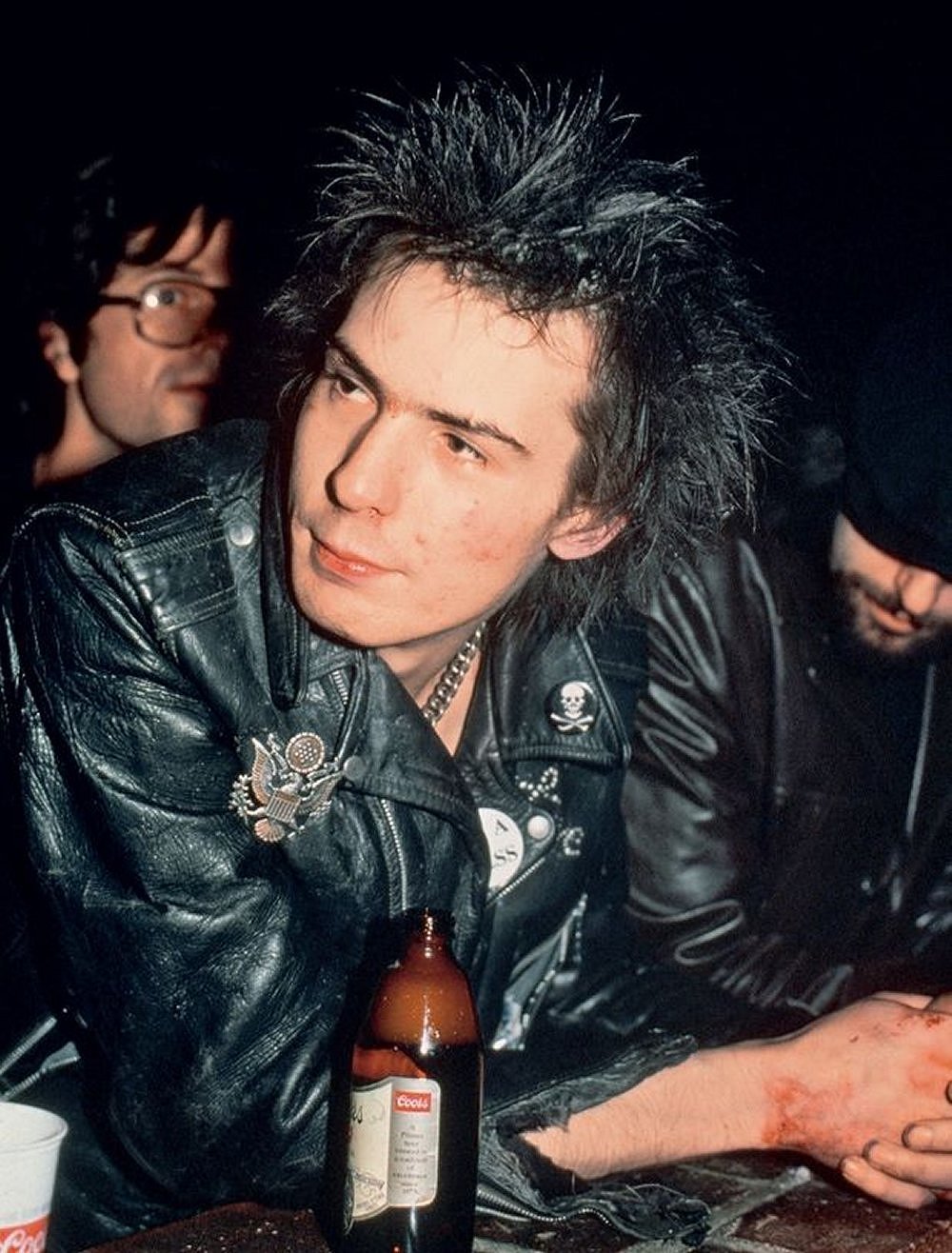
If some characterize this hairdo as going punk rock, I didn’t even know what punk rock was at the time, and I showed it. Going full-fledged, Sid Vicious punk rock requires one to have all their hair standing up and at attention. Sid Vicious punk rockers wouldn’t have understood my decision to maintain sensible hair down the middle. It was my individual, uninformed version of a mullet, except my business was in the middle, and my party was on the sides. 

So, my statement wouldn’t have fared well in punk rock circles either, and if I knew that I probably would’ve found that delicious in some odd way that I still find a little unsettling and thrilling. I don’t know what it said about my psychological well-being at the time, but I enjoyed the fact that those who didn’t dislike me before were now uncomfortable being around me or associating their reputations with mine. I also knew they now had a justifiable reason for unliking me.

I’ve never been a punk rock fan, but I understand its ethos, and its greater appeal. To be punk rock is to never try to understand your appeal or lack thereof, and any attempt its purveyors make to understand it is something punk rockers regard as selling out. My personal definition of the punk rock ethos involved shouting out confusion in some primal form of therapy that asks everyone else to question their values and social mores in reaction to you, and it also staves off personal introspection and interpersonal answers that can prove painful.  

I also know the origins of the ‘what do you want me to do?’, punk rock confusion. The ‘What do I have to do to get you to like me again?’ war is unwinnable, because if we were to ask them, both parties know their answers would be self-incriminating. So, they wouldn’t want to give us an answer if they had one. How many otherwise insecure pre-teens would answer, “I don’t like you anymore, because I think you’re an …” They don’t answer because most of them are relatively nice people who don’t want to do or say anything awful to people that might come back to characterize them as awful. It’s a no-win situation for them. The idea that they just don’t like us anymore is an unspoken pact that they hope we learn to abide by without further questions. They just don’t like us anymore, one day, because no one else does.

The “unlike” Facebook corollary to my grade school years is apt, if one considers having a Facebook page that everyone follows for years, and then, all of a sudden, for no stated reason, everyone starts to unlike. What do we do in the face of such rejection? An insecure, preteen, assumes their peers have justifiable reasons, or a group rationale, for why, but they don’t want to open that can of worms by asking them. An insecure preteen just assumes this is their new world.

Anyone who has ever been ostracized understands the confusion that starts with people who know us, sitting “together” at different lunch tables. We can’t sit next to them one day, because there are “saved” seats open to everyone but us. When it happens a third and a fourth time, we begin to realize it’s not a coincidence. Our classmates are, for no stated reason, making open declarations that we are “the unliked”. As painful as these declarations are, we can’t say they’re uninformed, because they know everything about us. As much as we say we don’t care what others think of us, the effect of others ostracizing us has lasting effects. We can’t go back in a time machine to ask them what happened. If we ask them why now, they’d say, “That happened so long ago …” We were so confused back then, and we couldn’t understand any of it. We understand some of it now, but it doesn’t diminish the effect.

How many awful things do the they have to say to our best friends, before the foundation of our friendship starts to crack? We thought they were so cool, and that they were the leaders of the thought movement in our world. We thought our friendship was so strong that it should’ve fortified their resolve, but even the greatest arches, built by the most talented civil engineers and architects, have a threshold. We thought everyone wanted to like him, and that he didn’t have to do anything to have others like him, but even the coolest of cool thought leaders eventually have to cut weight if they want others to continue to like them.

In the space of all that confusion, we go punk rock. I don’t know what going punk rock means to anyone else, but I sought out the weirdest and wildest hairdo, and I later dyed my hair, because I couldn’t understand why everyone “unliked” me when I needed them most. As I’m sure the perceptive reader understands, there were many other things going on with this pre-teen to teenage version of me that dwarfed my need for friendship, but I chose to focus on what I thought I might be able to somewhat, sort of control. There were bona fide reasons why they chose to “unlike” me, and it had little to do my personality. If they even flirted with the notion of helping me in anyway, they didn’t know how to go about doing it, so they did what any overwhelmed kid does in such a situation. They tried to avoid the situation by staying away, and as an equally confused teen I didn’t do anything to ease their confusion. I tried to push them further away by physically saying, I don’t need you, and I don’t want to be around you either, and I don’t like you, and I’m going to manifest this shout out with the weirdest, wildest hairdo you’ve ever seen, so we can all fill in these blanks together.