Why Adults Still Hate Their Parents


I am so glad I don’t have to go through all that anymore, is the first thought I have when I hear adults my age talk about how they still hate their parents. When they say it with such animosity and rage, I remember the emotions that drove me to say such things, and I’m happy to be past all that. When I hear someone say that their parents are bumbling fools, idiots, or backwater hicks from the 1950’s, I remember saying such things, and I regret some of it, but as has been said of regrets, there is little that we can do about them now.

When I’d complain about my dad, one of my greatest frustrations was that no one listened to me. So, when people talk about how awful their parents were/are, I listen. I listen to those in their twenties, and I remember those complaints. I listen to thirty-somethings, and I try to remember if I was still that angry in my thirties. When the complaints come from those who have crossed the big four-oh, I want to ask them, “Why is it still so important to you that your parents be wrong?”

“I’m smarter than my dad,” a twenty-something blogger wrote. “I really wish I wasn’t. It’s like finding out Santa isn’t real.” 

That isn’t an exact quote, but it is a decent summary of her entry. The blogger went onto discuss how intelligence and cultural sensitivity are a cross that she must now bear in her discussions with her parents. She never states that she hates her parents. She states that she, in fact, loves them a great deal, but she characterizes that definition of love with an element of pity, bordering on condescension, that appears to be endemic in twenty-somethings.

Define smart. Are you smart, or just smarter than your dad? What’s your definition of smart, intelligence, and knowledgeable? What are your bullet points, your parameters, and your conclusion? Before we move onto the next point, let’s consider the idea that these barometers are all based on your settings. These aren’t fighting words, I know exactly what she’s talking about, because when I set the ground rules, I found out that I was smarter than my dad too.

That’s the first question we should ask anytime we determine that we’re smarter than another, which one of us set the terms? We know our areas better than them, and if we could remember to walk away after laying out our presentation, we might leave that discussion with a lot of confidence in our intellect. Some of have the annoying habit of sticking around to let others present their side and delve into their areas. We learn more about them, and their areas, and at some point we just wish they would shut up because their presentation can be humbling.

Did you get better grades in school than your dad? If so, you’re probably smarter than he is, unless you consider the idea that you might just be an excellent test-taker. Tests are important, grades are important, and degrees are important in life, but are they the decisive determination between smart and smarter? We might score high marks on a test, but how often do we retain that information a year, a month, or even a week later? Being a good test-taker is an admirable skill that we might be able to use when we face tests in the workforce, but does it mean that we’re smarter than our adversaries? Were Jeopardy! champions that much smarter than their opponents on the quiz show, or did they prepare for the tests of their knowledge better than their opponents? 

My dad wasn’t smart by our standards, but he had boatloads of wisdom from his experiences in life, and he wasn’t afraid to bore his listener with his extraneous information, or information I considered extraneous. It went in one ear and out the other, of course, until a situation called for it, and I sucked it back into prefrontal cortex and used it. The disappointing conclusion I reached was that my dad wasn’t as dumb as I needed him to be for my characterization of my intelligence.  

My teenage hatred of him, blocked the idea that he had his areas, and some carry this well into their twenties. The teen years are a period of rebellion, learning, and individualization that wrestle with one another to mature our minds to formulation. As we age, our mind matures, and so does our rebellion, until it manifests into either full-fledged hatred, or a condescending pity that recognizes their backwater modes of thought for what they are. This matured rebellion is also based on the fact that our parents still have some authority over us, and that reminds us of those days when our parents had total authority over us, and how they “abused it to proselytize their closed-minded beliefs on us.”

When we finally reach a point when they’re no longer helping us pay for tuition, a car, or rent, and we’re able to flex some independent muscles, we spend the next couple of years fortifying this notion that they were wrong, all wrong, all along.

By the time we grow past our narcissistic teens, twenties, and for some of us, our thirties, circumstances begin to reveal some of the logic and wisdom our parents attempted to pass down to us, and the idea that some of it applies in some circumstances. (Some will never admit this. They remain stuck in peak rebellion.) Our parents advice did not apply in all circumstances, of course, but it does in enough of them that it starts to dim the bumbling fool tint on our rose colored glasses. Then, when we reach our forties, we begin to think that they’re idiots all over again.

I wrote the last line to complete a joke I read. I cannot remember where I read it, but it was one of those bullet point lists, oven mitt/bumper sticker type of rants that get passed around the office space. It’s a funny line, because there is an element of truth to it. We compare ourselves to the people who surround us, and our parents are the most prominent indicators we use to determine how we are doing in life. Our evaluations are steeped in emotion and feeling, and they very rarely involve objectivity. Even in our subjective analysis that ends with considering them fools all over again, we find ourselves admitting that a truth lies somewhere in the middle. This truth is a hybrid of the lifelong recognition we have had of our parents’ failings combined with the points we begrudgingly give them on some matters. We also gain some respect for them in a manner we never did as kids, because we now have our own kids who consider us bumbling fools.

As flawed as our parents were, and some of their advice and philosophies were fundamentally flawed, we eventually gain enough distance from our youth that we begin to view them as fellow parents who tried to lead us down a path conducive for happiness and success in life. At some point, we learn that the problems we have in life are no longer about them. It’s about us. If our inability to cope with problems results from our parents raising us, it might be a result from being so traumatized by our parents that it has lingering effects that cannot be resolved without outside assistance. If that outsider is able to approach our problem with a level of professional objectivity, they will inform us that if we are going to have a decent future, it’s on us to work on putting the past behind us.

This specific timeline may not apply to everyone, as we all go through these stages on our own time, and the word hate may be too strong to describe the animosity some adults still have for their parents, but anyone who has been through the peaks and valleys of a combustible relationship with their parents knows it can be one hell of an emotional roller coaster ride.

Theory formed the foundation of much of my uninformed rebellion, and real-world circumstances revealed to me that some of the archaic and antiquated advice my dad offered me had some merit. These circumstances, as I said, included having my own child and my own attempts to protect the sanctity of his childhood, in the same manner my dad attempted to protect mine. As evidence of this, I often informed those around me that my dad committed some egregious errors in raising me by sheltering me too much. I enjoyed this presentation, until some know-it-all suggested that that means my dad did his job. “How so?” I asked. I was all ready to launch into a self-righteous screed about how this know-it-all knew nothing about my childhood, until he said, “By allowing your childhood to last as long as possible.” That response shut me up in the moment, but the more I chewed on it, the more I liked it. 

Another circumstance that proved my dad might have had some worthwhile advice arrived when I tried to get along with my co-workers, and I tried to appease my boss. My father warned me that this would prove to be more difficult than I imagined, and he was right, but I regarded that as nothing more than an inconvenient coincidence in my path to individuality.   

It’s not debatable to me that I was right about some of the things on which I planted a flag, but these circumstances led me to recognize that although my dad would never be as intelligent as I am, he lived a rich, full life by the time he became my mentor, and some of my impulsive, theoretical thoughts about the world were, in fact, wrong. (Even after gaining some objectivity on this matter, it still pains me to write that line.)

Having my own job, my own money, and my own car did a great deal to provide me the independence I needed, but I wanted more. Having my own home, and friends, and a life completely devoid of my dad’s influence gained me even more, but it wasn’t enough. I wanted to be free of the figurative shackles being my dad’s son implied. Every piece of information I received about history, the culture, and the world was exciting, and new, and mine, because it stood in stark contrast to everything my dad believed. The information that confirmed my dad’s wisdom, bored me so much I dismissed it. The new age information coincided with everything I wanted to believe about the brave new world that my dad knew nothing about, and it confirmed my personal biases.

In my teens and twenties, I never asked myself the question that I now pose to those who still need to prove their parents wrong. I probably would not have had much of an answer, even if I searched for it. I probably would have said something along the lines of “Why is it so important to him that he cling to that age-old, traditional mode of thought?”

This redirect would not have been an attempt at deception or evasiveness. I just did not have the awareness necessary to answer such a question. Moreover, as a twenty-something, new age thinker, I was rarely called upon to establish my bona fides. All parties concerned considered me a righteous rebel, and the old guard was, by tradition, the party on trial. They often felt compelled to answer my questions, as opposed to forcing me to define my rebellion, and I enjoyed that because I couldn’t answer those questions.

My twenty-something definition of intelligence relied on emotion, theory, and very little in the way of facts. I thought they were facts, however, and I had the evidence to back them up. I thought I was intelligent, and more intelligent than my dad was, but the question I did not ask is what is intelligence? We asked the blogger that question, but we could also ask that same question of a person from a socioeconomic background far different from our bloggers, and we would receive an entirely different answer. How much does the answer to that question different from country to country and era to era?  

In Abraham Lincoln’s day, the ability to drop a pertinent reference from Shakespeare and The Bible in any given situation formed the perception of their intelligence. My generation believed that dropping a well-timed, pertinent quote from Friends and Seinfeld defined intelligence, coupled with a thorough knowledge of the IMBD list of Bruce Willis movies. To the next generation, it has something to do with knowing more than your neighbor does about Kim Kardashian and Lady Gaga. (I concede that the latter may be an epic fail on my part.) What if someone you know, someone similar in age and background, didn’t know that Jennifer Aniston was on a TV show prior to her movie career? Would you consider them hopelessly out of touch, possibly an alien from another planet, or just plain dumb?

Even if we thought our dad was from another planet, we didn’t know where to look. Even if we did, we were never so curious that we were going to look in various areas. He somehow managed to live through the 80s and 90s without ever hearing about Seinfeld or Bruce Willis, and that led us to believe he was so hopelessly out of touch that he knew nothing. He knew nothing about computers, devices, and a third party once introduced him to what he called “these fancy, new gold records” before his death. (It took us a while to realize these gold records were CDs, compact discs, LOL! Gold records?). This lack of knowledge about pop culture and technological innovation transcended all matters, as far as we were concerned. We believed our dad was a bumbling fool, traditionalist trapped in 1950’s traditionalist modes of thought, and that he could’ve never survived in our current, more sensitive culture. He was a backwater, hick, and whatever other adjectives we apply to one trapped in a time warp of the sixties, maybe seventies, but he was definitely not ready for the nineties, the noughties, or the one-ders.

The question that the I-am-smarter-than-my-parents contingent must ask themselves is how much of the divide between our parents’ level of intelligence and ours is in service of anything? I, like the snarky and provocative blog writer, can say that I knew more about more than my dad did, but I defined that divide and most of what I used to inform that divide involved inconsequential information that didn’t serve a substantial purpose. We all refer to ourselves as the king of useless knowledge in self-deprecating terms, but as with all good jokes, we know there is an element of truth in them.  

The conditions of my dad’s life were such that he didn’t receive what most would call a quality education, but he used what he learned to prosper on a relative basis. One could say that the difference between my dad’s education and mine, and the education of the snarky contingent versus her dad’s, could be whittled down to quantity versus quality.    

In the Workplace  

Much to my shock, I began quoting my dad to fellow tenured employees, when I was well into my thirties:

“Everyone has a boss,” and “You can learn everything there is to know about the world from books, but the two words most conducive to success in life are going to revert to either: ‘Yes sir!’ and ‘No sir’.” 

I loathed those words for much of my young life, as they implied that even after escaping my dad’s management of my life –a level of authority that turned out to be far more macro than I ever considered possible– I would always have a boss. The bosses who followed my dad incidentally taught me the true difference between his level of macro management, and their definition of micro when I was out on my own, and out from under his totalitarian thumb. I would also learn that my boss’s moods would forever dictate whether my day would be a good one or a bad one, in the same manner days under my dad’s moods affected me, only tenfold.

Dad’s advice derived from his experience in the workplace, but that experience occurred in an era that required absolute, unquestioning reverence of a boss. Thanks to the new age ideas of boards and panels conducting arbitration cases for those who have been fired, the various wrongful termination lawsuits, and the threat thereof that gave life to the Human Resources department, the reverence requirement was no longer as mandatory in my era.

I would also learn that my newfound level of freedom would contain a whole slew of asterisks that included the idea that no matter how much free time I had, I would spend a great portion of my life in a workplace, under the watchful eye of an authority figure, compromising my personal definition of freedom every step of the way. “You cannot talk to your neighbor on the job, and you are required to stand here, sit there, and always look professional. Why, because that’s what we’re paying you to do.” So, if I want money to be free, I must surrender my freedom in the workplace? “Of course not. You are free to follow whatever rules you want, but we are free to fire you too. At that point, you can seek employment elsewhere and follow their rules.”

Throughout the course of my life, I’ve met those who never went through through these stages of rebellion. If you find this as incomprehensible as I did, all I can tell you is I’ve met them. They said rational things like this, in their twenties, “I never thought my parents were perfect, but I know that they always tried to steer me into doing what they believed to be the right course.”

As soon as I picked myself off the floor from laughter –believing that I was on the receiving end of a comedic bit– I realized they were serious. The fact that their upbringing was so much healthier than mine, caused me to envy them in some ways, but after chewing on that for years I realized that all of the tumult I experienced, self-inflicted and otherwise, defined my character and my current individual definition of independence.

We are our parent’s children, and at times, we feel trapped by it. Therefore, we focus on the differences. We may mention some of the similarities, but we take those characteristics for granted, and we think all parties concerned should too. Even when we reach a stage in life when we begin to embrace some elements of that trap, somewhere in our thirties and forties, we cling to the idea that we’re so different. The answers as to why these dichotomies exist within us are as confusing to us as the fact that they are a fait accompli.

When immersed in the tumult of the younger brain, trying to make some sense of our world, we may fantasize about what it would be like to have other parents. Our friend’s parents seem so normal by comparison. We think most of our problems would’ve been resolved by having their parents, or any other normal people as parents. We might even fantasize about what it might be like to have been free of all patriarchal and matriarchal influence. We consider how liberating it might be to be an orphan, until we recognize how confusing that must also be. Those without parents must lack a frame of reference, a substantial framework, or a familiar foundation from which to rebel. When we consider this, we realize that much of our current identity is comprised of various pushes and pulls of acquiescence and rebellion to our parents.

While there is some acknowledgement of the ‘the more things change, the more they stay the same’ dictum when we receive advice from our parents, our rebellion operates under the “It was the best of times, it was the worst of times” principle when we process that advice and apply it to our era. When we acknowledge that knowledge of innovations and pop culture are superfluous that removes a substantial plank of our rebellion, until politics takes its place. We then sit down at our proverbial dinner table to resolve the political and geopolitical problems of the day, for our nation, our state, and our locale in a manner we deem substantial. It fires us up. We deliver nuke after nuke, until we realize that the effort to persuade our parents is futile. We also recognize that nestled within this effort is our juvenile, sometimes snarky need to prove them wrong. While a more substantial plane than pop culture, political discussions can be just as silly for us, as it was for our parents when they discussed such issues at their parents’ dinner table, and they considered their parents to be bumbling fools who offered nothing new to the discussion and stubbornly resisted the winds of culture change. The one import that they may have taken from their discussions with their parents, as we will with ours, over time, is that the more things change, the more they stay the same, and human nature doesn’t change as much as we may believe it does with innovations, cultural advancements, and social awareness. A kiss is still a kiss, a boss is still a boss, and the fundamental things still apply, as time goes by.

Epilogue

One final piece of advice this former-rebel-turned-individual offers to the provocative, parent-hating rebels is that we should all thank our parents for raising us. Thanking them could be one of the hardest things we ever do, as we may lose most of the provocative, parent-hating points we’ve spent our whole life accumulating, but it might turn out to be one of the best things we ever did too.

I thanked my dad for everything he did for me, and I did not add all of the qualifiers and the but-I’s I would have added years earlier. I managed to put all of my grievances behind me for the ten seconds it took me to thank him.

Was it hard? I will not bore you with the details of my rearing, but suffice it to say my dad could be a difficult man, and he played a significant role in the anger, frustration, and the feelings of resentment and estrangement I felt for much of my life.

I could go into further detail to ingratiate myself with those currently struggling with the idea that I don’t understand their dilemma. To display my empathy, I have a quote that served me well through the traumatic years: “Not every person who becomes a parent is a good person.” Modern media has made this quote much less provocative than it was when I was a kid. It’s no longer the tiny light-turned-epiphany in the darkness it was for me when I first heard it. I realized I wasn’t the only problem, and that my dad might be 50% of the problem. He was wrong as often as he was right, just like every other human on the planet. He was flawed, at times, misguided, confused, immoral, and as uncaring and narcissistic as the rest of us. Yet, we are people too, and we’re just as susceptible to being all of those things, especially in our view of them. If we were able to shake that view, most of us will see that our parents were essentially good people who tried to move past their limitations to make us better than they were.

As I sat in a pew staring at the pine box, it dawned on me that no matter how obnoxious, uncaring, self-serving, and angry my father could be at times, he was a member of an ever-dwindling, endangered species of those who truly care what happens to me. Others say they care, and some of them do, on a conditional and limited basis, but those who care comprehensively and unconditionally, I realized that day, are so few that when they’re gone, they’re gone. 

As sad as that day was, it could’ve been so much worse. If he died of the heart attack he had, in the midst of our tumult and turmoil, I would’ve been an absolute wreck. We managed to heal all wounds in the aftermath of that, and as I said I thanked him for taking the role he didn’t have to take in life, my father (he was my step-father).

Some might not be able to forget or forgive right now, because the wounds are too fresh and raw, and they might never reach a place where they can thank them. I empathize on a relative basis, but all I can tell my fellow angry offspring is when I sat before that pine box, I was glad I didn’t wait one more day. I thought about the number of people who truly care about me. I knew my friends care about me, but they have their own lives to live, and those lives will go on regardless what happens to us. We know our parents care, but some of them have a misguided, confusing, and completely wrong way of showing it. As impossible as this is to believe today, expressing some level of gratitude in whatever manner your relationship with your parents requires might be the best thing you have ever done. We might not see it that way today, but my guess is that even the most obnoxious rebel will see it one day, and my hope is that this epilogue will convince someone, somewhere that waiting one more day might be one day too late.

I dedicate this epilogue, and this near-complete compendium of my experience on this subject, as oppose to one of scholarly research, to those who need a tiny light in the overwhelming and all-consuming darkness. If this article provides some small spots of clarity for those who are confused, frustrated, and raging, then it will be worth all of the effort I put into writing it.  
The Other Side of Talent


“He has a talent,” one person said of another. “I don’t know what it is,” she furthered, “but he has a real knack for taking photos.” The subject of that compliment beamed in the aftermath. The compliment was vague, but she used the ‘T’ word, and very few can avoid the gush that follows having a ‘T’ word thrown at them.

It was a nice photo (not the one pictured here), but the ‘T’ word? The compliment suggested that this photo was but one of a long line of photos that you had to see to believe, but it was still just a photo.

Most of us reserve our use of the ‘T’ word for athletic and artistic accomplishments, but we know that many use it in broad terms. We know, for example, that an engineer can display a wide array of talents for his craft that others may not have, but we often say that that person is good at what he does, a master craftsman, or expertly skilled, but the use of the word talent is not often used in conjunction with most skills.

Some could say that a grown man’s ability to outdo his young peers in a game of hopscotch is a display of talent, but most fellow adults watching this man hop from square to square would suggest that he should consider finding a more constructive use of his abilities, if he wants others to consider him a talent.

Merriam-Webster defines talent as “a special ability that allows someone to do something well.”

Philosopher Ayn Rand steadfastly refused to recognize photography as art, but she did concede that it requires a skill, a technical skill, as opposed to a creative one.

We all know that definitions, such as these, can be broad, but most of us have personal definitions that fall on stricter lines. If the definition of talent is as broad as Merriam-Webster described, and photography requires some technical skill, then we should concede that taking a quality photograph does require some talent. One could also say that a talented photographer uses discretion and selectivity when he selects his shot, but could this ability to capture a moment be nothing more than a right place, right time decision? Some of them don’t even display that. They take ten to twenty photos and display the perfect one.

If one takes a hundred different photographs, and only one of them is of an exceptional quality, is that a display of the photographer’s skill? Yes it is, in a broad sense of the term. If that’s the case, we could say that if a man takes a hundred free throws and only makes one, he has a talent for shooting free throws, if that one free throw is so perfect that it barely touches the net.

If a photographer purchases a top of the line camera, and he uses the best photo-enhancing software available to produce evidence of his prowess, and he lays that photo down on a table next to the photo of another taken with a disposable Walmart camera, and no enhancements are permitted, does his superior photo reveal God-given talent on his part, or does it contribute to the lie that a skilled, talented photographer is artistically talented?

The Truly Talented

We’ve all witnessed the effect truly talented people can have on a room, and this effect often makes us a little sick. “He’s just a human being for God’s sakes!” is one of the snarky, coping mechanisms we’ve developed for dealing with “the gush” to adore the talented.

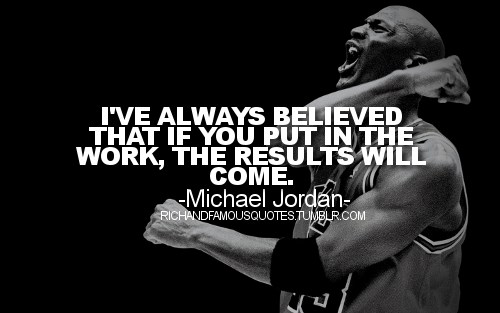
The adoration of talent varies with the skill required to accomplish the feat, of course, but if you’ve ever met a truly gifted people, you know that most of them are not interested in being better today than they were yesterday. Most of them enjoy the potential they have to be better more than they do the work involved in becoming better. “We’re talking about practice!”

Those that become obsessed with being better, and enjoy the benefits the rigors of practice can produce, often end up having their names etched into something by the time they’re finished. These few don’t necessarily bathe in adulation, they focus on one on one battles. When they get beat, and everyone gets beat, they do things that the overwhelming majority of us avoid to get better. For the overwhelming majority, sports, artistic endeavors, and all the venues that require talent involve moments. The talented enjoy those moments for what they are, when they happen, but the people who will have their names etched into something take it home with them. For these people, their talent is but a starting point and a gift that they end up honing to perfection, but even for these people talent can be a curse and a burden, and it can lead to acceptance, love, worship, and being scrutinized, ostracized, hated, and ridiculed. The idea of their talent, i.e. their potential, can also haunt them when they encounter its limitations.

An edition of 30 for 30 called Of Miracles and Men portrayed the other side of talent. It depicted the other side of the Miracle on Ice story that we all know of a ragtag group of American amateurs defeating the most talented Russian hockey team ever assembled. Some would argue that this Russian team might have been the greatest assemblage of hockey players ever to tie skates on their feet. This team had already won four Olympic gold medals in hockey, by the time they took to the ice against this American team, and some of them would go onto win a fifth after the 1980 defeat. To hear this group of talented men speak of their careers, the 1980 loss to a group of American amateurs, in a medal round, sits in their system like a kidney stone that will never pass. This Russian team beat an assemblage of Canada’s best that included probably the greatest hockey player that ever lived Wayne Gretzky. They also beat the 1980 American team in a match that preceded the 1980 medal round upset, and those two matches were not even close. This team was so dominant that they could not be beat, until they were.

Some would think that such an historic upset might serve to highlight the Russian team’s greatness, if one could say that one defeat in the midst of a record of total annihilation is a blip in the overall dominance this team displayed over the hockey world for two decades. Listening to these men speak, however, the listener gets a taste for the other side of talent when the only story anyone wants to hear from them involves the one time they didn’t succeed, and how that has haunted them since.

The point one could take from this 30 for 30 episode is that these men spent an excruciating amount of hours of their young lives in cold, dank gyms honing their God-given gifts, trying to improve on the smallest details of the game, only to fall to a bunch of ragtag Americans that may not have spent one-fifths the amount of time honing their gifts. Even with five gold medals (including the 1984 Olympics), the only thing we want to talk to them about is that one match they failed to win thirty-five years ago.

If you’re acknowledged as the most talented person anyone you know has ever met, and the only thing anyone wants to discuss is the one time you failed, why would you want to raise their expectations? Why would you want to endure the marathon practice sessions that focused on the minutiae your coach informed was going to be vital when you encountered the wall of your God-given abilities? Why would you want to invest more of your life becoming better at something other people hate you for being so good at? We’re talking about desire here.

We’re talking about the desire to be better today, than you were yesterday. “We’re talking about practice!” We’re talking about preparing for that day, that every talented person experiences, when they meet their personal wall.

The wall, for those that have never read about it, involves going up against other people that were the most talented people anyone they know had ever met. It involves seeing what the gifted person is made of when they encounter the another person loaded with so much talent that talent is afterthought.

To read the former NFL quarterback Kurt Warner’s examination of the natural talents that fail to succeed on the NFL level, it’s about having a coach, or mentor, early on that recognizes the person’s talent level, and challenges them in a brutal, heartless manner, to reach within themselves to find various other methods of succeeding beyond the talent level they’ve always known. This heartless mentor also helps the talented person in question determine if they have the desire to succeed on a level they may not have even considered to that point.

The Less Than Talented

“My talent has always been, and will always be, and it should be written with a capital ‘P’!” –Your Potential once said.

What if your talent has never taken you the places you thought it would, but you’ve always known you had the potential you had to succeed. What if your talent lays somewhere between being as talented as anyone that you’ve ever met, and perhaps more, but that untapped potential to be more has always remained at a frustrating distance?

We spoke of ‘the wall’ that every recognized talent experiences, but there is another wall that can be more formidable: the wall of self-imposed expectations. The talented might encounter this wall in moments considered inconsequential to other participants, and observers, but to the person that has lived with the idea that they’ve always had the potential to succeed it is but another example of their ineptitude. Most of them do not know that this is the source of their frustration, or if they do, they won’t acknowledge it.

As the Kurt Warner story informs us, the primary difference between those who will succeed and those that won’t occurs soon after they experience adversity. Moments of adversity can be large and small, but they all reveal who we are, and who we are going to be.

A young Kurt Warner may have dealt with moments of adversity throughout his largely undocumented young life, but we can guess that none of them would compare to the adversity that the adult Kurt Warner would experience in his adult life. The most talented person in his area received so few scholarship offers that he ended up playing quarterback for the University of Northern Iowa. The NFL draft did not draft him, following that college career, and the only team that gave him a try-out, cut him before the season even started. He ended up stocking shelves for a supermarket chain. He then played quarterback in the Arena Football League, and he had a stint in NFL Europe before an injury to a starter allowed him to start for a NFL team and lead them to a Super Bowl victory. He was MVP of that Super Bowl and MVP for the season. That Super Bowl team cut him a couple seasons later, and he went onto play for another NFL team for a couple of unproductive seasons, and he ended up with a team that he, again, guided to the Super Bowl. After Kurt Warner’s career concluded, he was considered to be the best undrafted free agent to ever play the game.

Kurt Warner’s story is one of not living up to his self-imposed expectations. It’s a story of what he did after failing to succeed on many levels. (After leading the St. Louis Rams to a Super Bowl victory, then a Super Bowl loss, he ended up on a New York Giants team that gave up on him in favor of future Hall of Fame starter Eli Manning. Warner then led the Arizona Cardinals to the Super Bowl.) It’s a story that should be held out as an example to talented people, but for most of those that are more talented than anyone they’ve ever met, talent and work have always been a zero-sum game: The more talent one has, the less work they think they have to do.

Warner states that most coaches and mentors coach to the talent, and they let the talent do what they do well in a manner that the coach hopes will reflect the coach’s ability to harness talent. They coach for the next game. They coach to keep the talent happy.

If we’re talking about practice, however, one of a coach’s duties should be to put talented people in uncomfortable positions to reveal to them what they must do when talent alone may not be enough get them out of moments of adversity.

It also allows those talented people –that have always used their talent as a picket sign to avoid the rigors of practice– to learn how to finesse the minutiae of their abilities and hone their desire.

As anyone who has displayed an ability to do anything knows, there is always a ceiling, and when one hits their head on that ceiling it can be humbling and humiliating. Some of the times, it’s more rewarding to hide in a cloud of potential. Those of us considered lesser-thans don’t understand what it must feel like to have so many consider us a true talent, and we never will, and that can provide the talented a comfortable space between the reality of their talent and the potential we believe they might have.

If you’ve ever witnessed a display of YouTube-worthy temper tantrum in a bowling alley, on a miniature golf course, or at a softball field, and you’ve wondered why a person would attempt to gouge their own eye out after missing a two-foot putt, I can tell you –as a former wild temper tantrum thrower– that there’s something more to it than the idea that the ball doesn’t always go where we want it to go. We thought we spotted something at a very young age, we thought we were going to be a somebody, a contender, and the obnoxious five-pin that will not fall no matter what we do is not just a configuration of rock maple wood to us, it is the eye of fate staring at us, mocking us for not being able to fulfill the potential we thought we saw.

These eye-catching temper tantrums are borne of an inability to deal with even the most inconsequential moments of adversity, because we never had a heartless mentor who cared enough not to care that we were tired, that our feelings were hurt by something they said, or that we wanted to quit the game because “it’s just not fun anymore”. One could read this post, and think it’s all about sports, until they witness a guy who has no capacity for dealing with the obnoxious five-pins of life, and in the moment that captures his frustration in life for all to see, he does something to the ball return that causes parents to shield their kids’ eyes. For an overwhelming majority of those who would have their names etched into something by the time their career is over, their mentors would spend countless hours teaching them how to deal with such adversity, how to overcome walls –self-imposed and otherwise– and how to become successful people, and yes, talented photographers, I guess.

Hey You, Get Off My Microbial Cloud!


Have you ever wanted to commit murder? Most of us don’t, but that doesn’t mean we don’t fantasize about it. Most of us don’t have anyone in mind, and we don’t think about it to the point of gauging the ramifications. We just think about how exciting it might be to test our skills against the most brilliant minds of the criminal justice system to see if our attention to detail could match theirs. We would love to see if we could get away with it, just to do it. If we believe what scientists at the University of Oregon, and microbiologists at Argonne National Laboratory suggest might be on the horizon in the science of criminal investigations, you might want to stop procrastinating, and just do it, because getting away with murder could become a lot more complex in the next ten-to-twenty-years.

Getting away with murder is such a common phrase that it doesn’t really mean anything to Americans any more. We toss the phrase around in such a cavalier manner that it confuses foreigners, learning the language and the American culture. They don’t understand how anyone could equate getting away with using a TPC form to complete a CPT request, could be equated to getting away with killing another person. They know that no one in the company is supposed to use this form for a CPT request, they know the dire consequences that await those who do, and they understand that the perpetrator in question didn’t experience any of the proscribed consequences after doing it, but they don’t understand how that is, in anyway, similar to getting away with murder. 

The cavalier use of such phrases may speak to the inability of most to express themselves, or the need we have to exaggerate everything for the purpose of illustrating how strong we feel about a matter. Whatever the case is, we use the phrase getting away with murder, because we deem it one of the most difficult things to do. Even in the days of Sherlock Holmes, when law enforcement officials had little more than their wit, elevated observation skills, the ability to read people, and all of the experience and training that honed those natural attributes, we deemed getting away with murder so difficult that few, if any, could escape a thorough investigation unscathed.

With the first conviction in 1987, by way of DNA evidence, the degree to which science was used in crime scene investigation grew by leaps and bounds. Some have said that jump was a generation-defining leap. Since that point, the FBI has compiled DNA records on more than five million convicted offenders, and around 240 convictions have been overturned because of DNA evidence. In most cases, law enforcement officials are now able to use science to narrow the field of suspects of an investigation with the assistance of DNA evidence. They are able to use it to apprehend suspects, and to build a strong enough case for conviction, as DNA evidence is now recognized by courts and juries alike as a tangible form of evidence. If we are to believe Christopher Cobble’s article for Findlaw Blotter, we’re about to take another huge leap forward with something called a microbial cloud.

Research scientists, and microbiologists, state that they have found that a cloud of bacteria surrounds every living being. This cloud is something they call “microbial miasma”. It is similar, in nature, to the cloud of filth that surrounds the character Pig Pen of the Peanuts comic strip. The cloud that surrounds us every minute of every day is a sort of haze of our microbiome that we emit, comprised of viruses, fungi, yeast, cells, cell parts filth, every piece of bacteria that lives on or around the skin, every piece of skin you shed, and every little, otherwise discreet fart that happened to come from you.

Have you ever encountered a person who had a body odor so strong that you swore you could taste it? Have you ever said something along the lines of, “I know this sounds foolish, but I swear his funk is still crawling on me!” The findings of these microbiologists, and research scientists, suggest that this thought may not have been as far-fetched as once thought.

The BBC summarizes these findings by writing, “When you approach another person’s microbial cloud, their bacteria “rains” down on your skin and is breathed into your lungs.”

Those of us who have a lifelong aversion to close talkers have found it difficult to express our discomfort, for we consider a violation of a norm to break that two-step invisible bubble we all have. It’s a custom of Americans, and some may even call it social protocol, to ask another for some space, but we understand that other cultures have other rules of space. This confusion makes it difficult for us to ask for more space in this regard, but this idea of a microbial cloud might be our saving grace.

“Could you back up a step?” we can now say. “You’re getting your microbial cloud all up in me.”

Reading the various studies of this new information on the net, leads this reader to believe that such hip jargon may not be too far off the mark, for even the customary distance of two-steps may involve the speaker’s microbial miasma going up your nose, in your ears and mouth, and through your immune system. Those of us who have an aversion to close talkers can now state with confidence that a close talker might exacerbate normal bacterial intrusion levels.

This research also gives credence, unfortunately, to the idea germophobes have feared for a generation that they will contract airborne diseases through the simple act of talking to people.

These researchers suggest that the bacteria located in microbial clouds are not just indigenous to every living thing, but they’re also individualistic in their own right. They have their own DNA.

“Researchers ran two trials with participants sitting in sterilized rooms and working on computers while air filters and trays on the ground detected and collected bacterial particles. According to Wired, “[T]he two trials showed that, at least in these 11 people, microbial clouds varied significantly from person to person. They also found that different people shed microbes at different rates.” This means we all have our own, personalized bio-dome following us around, but the DNA is so individualistic that science can now ID it.”

“We expected that we would be able to detect the human microbiome in the air around a person,” a James Meadow of the University of Oregon, said in a news release from the journal PeerJ, “but we were surprised to find that we could identify most of the occupants just by sampling their microbial cloud.”

Those of us who adored the brilliant 70’s television show Columbo, now watch it with a slight cringe and a quaint smile, as we watch the trench coat investigator solve “perfect crimes” by paying an inordinate amount of attention to the details that the average person would’ve missed. “Getting away with murder” back then involved a perpetrator wearing a pair of gloves, paying careful attention to their footprints, and wiping down door handles, lamp switches and telephones to cover any trace of evidence they may have left behind. We also watch the show’s perpetrators attend to the various circumstantial details that might account for the murderer’s whereabouts at the time of the murder, and the warmth of the body that might confuse the coroner’s time of death, and all of the other details that were difficult, but not impossible, to cover up. Those of us in the age of DNA, now watch Columbo with that quaint smile, knowing that if the trench coat investigator had access to the modern technology we have today, most of the “perfect crimes” it appeared that Columbo was the one man to solve, could now be solved by a forensics intern.

The generational differences may not be that stark, and some law enforcement officials will argue that science will probably never replace the basic investigatory tactics, such as knocking on doors, interviewing witnesses, and all of the tactics that Columbo used to solve crimes. The science, as I am sure every law enforcement official would admit, is a nice supplement to help close a case and gain a conviction, but it will never replace the hard work done to solve a murder. I am sure they would also admit that the advent of DNA into criminal investigations, and the depiction of it on shows like C.S.I., might discourage some from indulging in their sick and twisted fantasies with the belief that it’s harder to get away with than ever.

Getting away with murder has never been easy, but with the advent of DNA, and the understanding of it on a level that it could assist law enforcement, as depicted in numerous shows, such as C.S.I., leads those with a lust for blood to dress themselves, and the location of their crime in plastic, in the manner the Dexter would in that Showtime series. How will future assailants account for their microbial cloud? Will we view Dexter and C.S.I., one day, with the same cringes and quaint smiles we now view Columbo?

Jack Gilbert, a microbiologist at Argonne National Laboratory, has been working with crime scene investigators on how to use microbial residue to track down criminals. Mr. Gilbert believes that in the future, we might us microbial clouds, like DNA, to assist law enforcement officials in the future.

“Mr. Gilbert notes that our microbial clouds are not only particular to us, they are particular to where we’ve been, as we add microbes from the surrounding air, soil, and water to our personal Petri dishes. Therefore, an individual’s unique microbial signature could either confirm their alibi or place them at the scene of a crime.

“Solving crime with bacterial vapors remains in its infancy,” writes Christopher Coble. “As with DNA evidence, collection is one thing, but having a large enough database to compare results to it is quite another. But as the technology evolves, it’s yet another reminder to be careful about what you store in the cloud.”

If this research evolves to the point that Mr. Gilbert believes it might, criminal investigations may go beyond the as of yet simple study of skin and the complex collection of DNA, to the study of the DNA of the bacteria that lives on and around the skin. Bacteria, after all, are living organisms with their own DNA signatures.

What will happen in investigations of the future, according to Cosmos Magazine, is that the forensic scientists will get a hold of the bacteria in question and study it using high resolution DNA. In the course of their study of this organism, they will seek out the bacteria’s 16S gene that they say provides their reading a DNA signature equivalent to a grocery store barcode. All bacteria have this gene, but it varies by slight differences between species.

Dexter’s plastic wrap outfit, in essence, would not prevent future forensic specialists from narrowing the field down to him. If they were able to get a hold of the germane bacteria involved, scan it, perform a census on it against the different bacteria communities available, compare it to the 16S genes in their database, and compare it to victim’s bacteria on the alleged assailant or vice versa. If that failed, the forensic team could take soil samples from the area and compare the bacteria in that soil with the bacteria at the bottom of Dexter’s shoes, for example, to build a case against him. 

As Mr. Gilbert says of light switches and door handles, Dexter could be meticulous in his effort to wipe down every inch of the sole of his shoes, so that no milligram of dirt existed on that shoe, but the microbial signature, contained in the 16S genes of bacteria of that sole would be “virtually impossible” to wipe away. Mr. Gilbert even contends that anti-bacterial sanitizers would not be wipe this away entirely.

Dexter had a habit of putting plastic around his shoes, you argue. It’s a decent argument, until we ask the question when he put that plastic on. Did he put that plastic on before he left the car? When he opened the car door, did any of the microbial dust, indigenous to the area, make its way into his car? If he didn’t put them on in the car, did he wait until moments before entering the abandoned rail car? Did he step on any incriminating microbial dust en route to the abandoned railcar? If you watch an episode of Dexter, you’ll notice that his eyes are not covered, and that leaves him susceptible to getting some of the victim’s microbial miasma is his eyes. If investigators are able to get to him quick enough and put him into a sealed chamber, to test his air samples, they might be able to find some 16S genes from the area in question, or the victim. If law enforcement was able to locate and legally confiscate the plastic wrap Dexter used they could scour the outside of the outfit for location, and then they could test the inside of the plasti-wrap to see if his microbial cloud was in it. 

The point is that if you remained calm in the face of the intense interrogations of the Porfiry Petrovichs, the Father Browns, the Sherlock Holmes, and the Columbos of their day, and you were able to weather their psychological games of misdirection and distraction, your ability to get away with murder increased. Getting away with murder  was still so difficult that it became a euphemism for getting away with the impossible, but it was still possible.

The day may never come when the idea of getting away with murder is so impossible that it’s not even worth trying, but there may come a day when a forensic specialist locates some Propionibacterium and Corynebacterium on a clover leaf, in the soil, and around a duck pond where it was alleged that you got your thrill on by killing your neighbor that had belly fat hanging so low below his shirt that you couldn’t stand looking at it anymore. There may come a day when a forensic team is able to determine that those bacteria had a 16S gene, bar code that is specific to you, and there may come a day when they are able to convince a jury of your peers that this alone is enough to have you executed for your crime.

That day is not here yet, however, so it’s not too late for those who want to use all the knowledge they’ve gained from binge watching C.S.I., in the plasti-wrapped basement we’ve told everyone is for our daughter’s third birthday. If these reports are to be believed, however, and the science achieves all that these microbiologists, and research scientists, are projecting, we may want to stop procrastinating, because the forensic science involved in criminal investigations may get so intense that it may become almost impossible for even the most brilliant and meticulous to get away with murder, and that phrase could take on a whole new meaning in the next ten-to-twenty-years.