The Eye of the Fly


In a study published in Journal Science, researchers found that flies have the fastest visual responses in the animal kingdom. The study suggests that this rapid vision may be a result of a mechanical force that generates electrical responses that are sent to the brain much faster, for example, than our eyes, where responses are generated using traditional chemical messengers. The fly’s vision is so fast that it is capable of tracking movements up to five times faster than our eyes.

I realize that the fly would trade this one strength for even twenty-five percent of our brain power, but one has to wonder why the fly was given such an incredible eye compared to our relatively weak one. Why would we be granted the most complex brain in the animal kingdom, and not have the physical advantages inherent in the eye of the fly, the ears of the owl, the various sensory receptors of the snake, or the nose of the bloodhound? Wouldn’t we use those gifts better than those mindless animals, and insects, that don’t know enough to appreciate it?

The obvious answer, from the Darwin perspective, is that humans don’t need these extra senses for survival to avoid predators. The more interesting perspective, I believe, is that having an extra sense would prove such a distraction that it might inhibit the tedious, arduous process of developing the complex human brain.

In every young human child’s development, there is a constant push and pull. Parents and teachers push children to develop habits that they hope will eventually develop that brain as it matures. They know that if that child is going to find any measure of success within the species, they will need to push the child to help them develop that brain to capacity in a manner that can be painstakingly, gradual. Some would argue that no human ever reaches the maximum capacity of the brain, but it’s not much of a reach to suggest that if we were distracted by a super sense we wouldn’t come as close as we currently do.

On that note, this theoretical argument rises whenever I watch a Superhero movie. It’s great that this person (or these people depending on the movie) have these superhuman powers, but shouldn’t there be a countering deficit? If the natural world granted this individual powers we can’t fathom, shouldn’t there be some sort of deficit? Shouldn’t they be dumb as a rock, noticeably awkward socially, or some deficit to counter the natural, biological and/or personal focus?  It could be argued that there have never been more distractions, pulling children away from the painstakingly, gradual process of brain development that provide more instant gratification. Yet, there have always been distractions. It could also be argued that while there are more distractions now, there have always been distractions, and coaching or teaching children how to avoid distractions has remained constant.

I am not a Superman aficionado, but Ma and Pa Kent probably spent their lives developing Clark’s brain before he began relying on his superpowers, Spider-Man was a teen-ager when the radioactive spider bit him, so while his development to adulthood may have been hindered, he likely had a decent foundation. Some of the superheroes, in the various universes, were superheroes since birth. They have various natural powers but no deficit in human development. It just doesn’t seem well-rounded to me. 

Although there are numerous benefits to a young child engaging in athletics, it could be argued that it is an impediment to the optimal development of the brain. There are exceptionally gifted athletes, of course, but most athletes had to kinesthetically learn the craft. They had to do it so often that they developed muscle memory and whatever we call the level of muscle memory that allows them to hit a fastball that is relatively difficult for others on their level to hit. The point is that when a child is focusing so much of their time and energy to achieving on an athletic level, it often leads to less focus placed on academics. There are exceptions to the rule, of course, as some achieve All-American status in athletics and All-Academic in the classroom, but most children learn to focus on one area to the detriment of the other. 

“Keep your grades up if you want to maintain eligibility,” the adults surrounding the gifted athlete will say, but they rarely coach them to achieve academic excellence, and this is eventually displayed in the post-game interviews of those few elite athletes who have achieved the professional level.
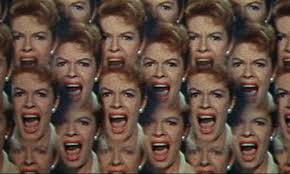
The same distractions can be found among the beautiful. Both genders learn that beauty is power, but most would acknowledge that the beautiful female has far more power in the room than anyone else, including the beautiful male. Most beautiful females learn, at some point in their lives, that no matter what they do in the classroom, their mental prowess will always be considered secondary to their physical attributes, and that they would be probably be better off if they just sat there and looked beautiful. They subsequently learn to speak less often, so as to silently soak up the power their beauty wields in the room?

Both of these superficial exaggerations could be called distractions in human development, and those who have these physical characteristics learn to employ their own distractions to keep people from focusing on their lack of intellectual development by criticizing those who wasted their time devoting precious resources to developing the brain.

“Did you read Lord of the Rings when you were a kid?” 

“No,” the beautiful reply, “I was out getting laid.” 

“At fifteen?” the nerdy brainiac asks, “because I read those books at fifteen.” 

“Yes,” the beautiful person responds. 

“You were getting laid so often that you didn’t have time to read?” 

YES!”

That exchange is not a direct quote from the TV show Friends, but it’s close. It encourages the idea that meaningless sex trumps any other activities of youth. “I was out climbing trees, playing football, listening to KISS, and collecting Star Wars cards.” 

“Really, because I was out getting laid.”

Sex between immature individuals should be the goal in life. It is the end game, and the end of the conversation. No one ever thinks to ask, “What did all that sex end up doing for you?” 

“Doing for me? What are you talking about? I was having sex when you were reading Tolkein, the comic strips Dondi and Peanuts, and all of those stupid Chose Your Own Adventures you nerds read.” 

“Did you forge the relationships you had with these people in such a way that helped you have more meaningful experiences that helped shape your life in profound ways in life?” 

“No, I was having sex with them.”

We’re not to question the idea that if we could’ve had more sexual experiences when we were young, we’d be better individuals now, or at least cooler people. Others drop the philosophy that if we had sex more often as young people, we wouldn’t be such a stick in the mud now. Some of us did have such opportunities when we were nine or ten-year-old, but we turned them down because we were scared, and we weren’t ready. So, if we said yes to that incredibly beautiful sixteen-year-old babysitter, we’d be better people now? 

Due to the fact that so many people laugh at such admissions now, we’ve been conditioned to feel shame, regret, and embarrassment about that fact. We feel shame admitting that, and we regret it almost every day. Why, because we have been conditioned to believe that that exchange of fluids would’ve somehow made us better people. This line of thinking gives credence to the idea that we never truly escape high school. We all wanted to be the cool kids in high school, and no amount of rationale will ever defeat this. Even when we reach our forties, and beyond, and we begin to appreciate our nerdy, reading youth for what it was, we still find it difficult to defeat the superficial, hyper-sexual Friends mentality.

On the flip side, no one would say that reading the Lord of the Rings series is an essential component of a child’s development, it does put that child on the road to every parent’s holy grail: The love of reading. A goal made all the more difficult by the instant gratification philosophy put forth by the Friends show. It did not, nor will it ever make a person better or cooler person 

For most of us, the opportunities to be sexually active at a young age were there, but some of us were too busy being kids, doing kid’s stuff, and as I wrote, we were simply too scared. When this Friends joke came along and told us that if we were truly cool, we should’ve been doing that all along, we regretted being that nerd who was too scared, enjoyed reading fantasy books, and mindlessly enjoyed our youth. We thought we missed out on something fundamental that made them better than us. In truth, such a philosophy will eventually catch up to them when the one thing that separated them from the pack, sexual activity, becomes more and more meaningless to them as they age. Like a drug user, they might vie for more and more of it for more meaningful sexual interactions, to try to recapture the euphoria they felt when they were virgins touched for the very first time. At some point, after a number of ruined marriages and meaningless encounters, they might realize that their life has amounted to nothing more than a series of superficial indulgences that have amounted to nothing more than a superficial life.

That’s another question I might have for these Friends’ types, if I agreed to have sex with my babysitter when I was nine or ten, would sexual interactions prove less meaningful throughout my life, or would it prove so meaningful that I developed a sexual addiction? Another question, on the same plane, would sex become such a primary driver for me that the rest of the otherwise normal, youthful activities I experienced between 10 and 18 be rendered comparatively meaningless?   

It is for all these reasons that some of us find it difficult to sit quietly through those superhero movies that depict an exceptionally gifted men and women, gifted with the eye of the fly, the ears of the owl, the various sensory receptors of the snake, or the nose of the bloodhound who are also exceptionally gifted intellects. There is just no way, some of us want to shout. Some of them might be smart, for there are always exceptions to the rule, but not that smart, not that exceptionally gifted in intellectual arenas. There’s always a trade-off, especially if they’ve been an exceptionally gifted, physical specimen since birth. Some may have been trained by their parents, or pseudo parents, to avoid relying on their gifts, but we have to think they would’ve accidentally, or incidentally, relied on their special gifts to the detriment of optimal brain development. There would’ve been some point when they realized that they didn’t need to go through the painstakingly arduous, and at times embarrassing, process of gradual development. In human nature, as in nature, there is always a trade-off in this sense.

An interesting question some sci-fi movies explore is if we only explore 10-13% of our brain, an appraisal some neurologists suggest is a well-travelled myth, what if we trained our focus on attaining the eye of the fly, or the hearing of the owl, or the nose of the bloodhound. Would it be possible if we sent our son to eye of the fly school and our daughter to ears of the owl school, and those schools focused as much effort on those characteristics as they do brain development in school? Even if it were, why would we do it? We don’t need such characteristics for survival, and while they might prove useful in some arenas, it would pale in comparison to the importance of overall development of the brain. The eye of the fly might prove beneficial to some Fortune 500 companies in some way, the military, and the revival of the modern carnival, but it would probably also diminish the place atop the animal kingdom that our brains have attained. 

The Obsession with Death and the Dead


In the first chapter, of Karl Ove Knausgaard’s first book of a six-book My Struggle series, Knausgaard asks why we’re so obsessed with concealing our dead?  If a body dies in a public arena, he writes, the civil servants in charge of such things, do their best to have that body removed from sight; if it dies in a hospital, the employees of that hospital see it as their duty to cover that body with a blanket, and eventually move that body to a basement, far from view; and if a body dies on a playground, the civil servants do their best to remove that body from the view of the children on that playground.  Why do we do this, Knausgaard asks, why are we so obsessed with removing these very natural images from prying eyes that we put blankets on them, cordon them off with police tape, and eventually put them in a coffin that no one can see through?  What harm is caused?  Why don’t we just leave the body where it is, uncovered, and in plain view?  Why do we worry that a bird may peck at its eyeball?  It’s just a carcass.

Seeroon Yeretzian
Seeroon Yeretzian

Though there was some humor involved in Knausgaard’s presentation, I do believe there was a central, provocative question he was asking in regards to the denial of death we all seek.  We ask our civil servants to hide death from us, so that we don’t have to face it, and this only perpetuates a denial of the reality that we’re all going to die.  My reply to Knausgaard, if he posed this provocative question to my face, would be: what difference does it make?

What difference is it going to make if we choose to be in denial regarding death?  What difference is it going to make that we continue to require that our civil servants remove human carcasses from view?  We’re still going to die, and the mistress is not going to be any less harsh to those that embrace her.

The reason we hide our dead may have something to do with our desire to live our lives free of the constraints thinking about our end might have on our lives.  Knowing the end of a book, movie, or TV show, for example, might ruin our enjoyment of it.  It’s the reason that we require *spoiler alert* notations for those that review such productions.  Some people prefer spoiler alerts, because they feel it allows them to make an informed choice before purchasing the book in question.  I knew one of them, I was raised by him.  He knew the reality of his own spoiler alert, and he embraced it.  He called it reality, and he mocked me for my unrealistic expectations, but an objective view of his life would show any concerned enough to take a look, that his quality of life was diminished by it in some measure.

The reason that some of us require reviewers to alert us of forthcoming spoiler alerts is that we don’t want them to ruin our journey through the book.  Some of us hate even watching trailers of movies, because those trailers usually provide us the key scenes of a movie that we cannot enjoy until they are over.  Everything in between seems like fluff leading up to that key scene that attracted us.  If those of us that hate trailers, and spoiler alerts, manage to avoid them, we usually end up enjoying the journey to those scenes all the more.

Whenever my four-year-old nephew and I were hanging out, having a blast, he would inevitably hit me with a question regarding the future.  “Are you coming over to my house?” he would ask.  He wanted this fun moment to last longer, and when I told him that I wasn’t coming over, it made all the fun we were currently having less fun to him.  He turned it into a combative “Why?” complaint that informed me that I did not spend enough time with him.

“Why don’t you simply enjoy this moment for what it is?” I would ask him.

“How does this movie end?” a friend will ask me in the midst of watching a movie that I’ve already seen.  She grows so anxious during the fast-paced, action packed scenes that she can’t just sit there and enjoy them for what they are, she needs to know how it will all end.

“Won’t it ruin all of these moments for you, if I tell you?” I ask.  She says nothing.  She knows I’m right, but the anticipation eats her insides up, until she cannot stand it anymore.  She will then pepper me with more questions, when more events play out, until I ask, “Why are you worried about that now?  Why aren’t you just enjoying these moments for what they are?  The end will come soon enough.”

Another friend of mine told me that she was going to see a fortune teller this weekend.  As a non-believer, believing that she had a decent head on her shoulder, I asked her why she would seek the services of a fortune teller.  “Because I can’t stand not knowing the future,” she said.

Let’s say that there is a truly gifted member of the fortune teller community.  Let’s say that this person has a well-documented history of being able to predict the future with 100% accuracy regarding specific, future events.  Let’s say that this fortune teller is so accurate, and so gifted that she doesn’t need to engage in the vague generalities indigenous to her craft.  Let’s say she tells this friend of mine: “You will have a key moment in your life occur at a Smashing Pumpkins concert on May 5th, and that moment will change your life.”  Let’s say that she is very specific regarding what that key moment is.

If she is 100% accurate, and that event occurred in the exact manner that she predicted, how enjoyable would my friend’s life be between the date the fortune teller made that prediction and May 5th?  Would my friend regard any interim moments as exciting and fun, or would they be regarded as inconsequential fluff compared to the expectations she had for May 5th?  How many times would my friend interrupt what could be seminal moments in her life to go back to that fortune teller to ask her for more specifics regarding May 5th? And, most importantly, how enjoyable will that May 5th moment be for her when it finally occurs?  Could it possibly live up to the expectations she built up for it, or will she have set the bar too high by the time the date finally rolls around?

The reason that we hide our dead, I write to Knausgaard, is that seeing them lie on a playground, as nothing more than a carcass, will remind us that we’re nothing more than a carcass.  Witnessing a carcass will remind us of the fact that we’re nothing more than a big bag of bones, tendons, and muscles, that will eventually give out.  It’s a spoiler alert regarding the cycle of life.  It ruins all of the mystery, and excitement, and the process of living while we’re living.  It reminds us that there’s nothing special about us, and that we’re all going to eventually become an image in a photograph that one of our descendants point to and says, ‘Who is that’?  We’re all going to eventually become a carcass laying somewhere for someone to cover up, so that that someone else doesn’t have to see us and think about their own mortality, but how are those, more accepting of this reality, at a greater advantage than those of us in complete denial?

My dad was so obsessed with death that he viewed all of the events of his life from the perspective of his eventual death.  He had wishes and dreams like the rest of us, but he would list them all under a “I just want a happy death” umbrella.  He collected funeral cards in the manner some collect baseball cards, and he memorized the stats on those cards in much the same manner; most of his conversations revolved around how old a close friend was when they died, what kind of health they were in at that moment, and how healthy he was by comparison.

When a doctor informed him that he was close to death, at one point in his life, he could barely contain his excitement.  It wasn’t so much that he wanted to die, but that he thought it was exciting to be the center of attention among those that watching him on this tightrope.  He also recounted, for any concerned, the number of times he probably should’ve died, and he did so in a voice normally reserved for those exciting, and enjoyable, moments of a life.

“Once you’re dead your dead,” I reminded him one day, when he informed me that he wanted the events of his life to line up in such a fashion that would allow him to be happy in death.  “You won’t be happy, or unhappy, you’ll be dead.  There’s no such thing as an emotional aftermath when you’re dead.  The end will come soon enough, and all of these moments that you follow in the hopes of having a happy death, will eventually become meaningless to the living that are concerned about you now.  Your name will eventually whither on the vine, until it falls from everyone’s memory, and you are no longer being considered any more.  So, you should want a happy life.  Your death should be utterly meaningless to you.

“I know we’re all going to die,” I said when he called me out for being unrealistic, “but I would think that it’s simply better to allow that to happen, than to focus of your life on it.

“Even if there is a heaven, and that afterlife is as unimaginably blissful as advertised,” I said when he called me out on that.  “I can’t help but think that we’re all going to be looking down at one point, and say, ‘This is great and all, but I still wish I would’ve enjoyed my time on earth a little more.  I spent so much of it thinking about how it was all going to end that I accidentally forgot to enjoy all of the fluff in between.’”

Brutal Honesty in the Age of Being Real


It was the best of times, it was the worst of times, it was the age of being real, it was the age of delusional thinking, it was the epoch of honesty, it was the epoch of lies, it was the season of transparency, it was the season of delusions, it was the spring of hope, it was the winter of despair, we had everything before us, we had nothing before us, we were going to achieve, what we had already achieved, what we would never achieve – in short, it was a period of time that needed to exist to rectify a period that may never have existed to the superlative degree of comparison that some of its noisiest authorities defined for the era.

As that paraphrase of Charles Dickens’ epic intro to A Tale of Two Cities suggests, reality TV did not the divide American culture in the manner some purported it would in the age of being real. The doyens and doyennes of our culture asked if reality TV was art imitating life, or if it was reflecting it? Others suggested reality TV represented such a small sample of the culture that the shows’ producers projected it out into the society as a measure of realness that wasn’t real to the superlative degree they portrayed? Others wondered if the culture used reality TV for what it was and dispensed of it in manner similar to the way a body puts out byproducts it can’t use?  Some people I knew, very real and intelligent people, acknowledged that while reality TV focused on a sample of a society none of us knew that didn’t mean it wasn’t real.

"Lars and The Real Girl"
“Lars and The Real Girl”

How many times in one episode did an actor say, “Hey, I’m just being real with ya” to assuage the guilt they might otherwise have while insulting another person? How many times did these show participants gain a certain degree of realness on the back of another? How many times was being real used as a confrontational device to belittle those who were less real, until the real proponent managed to gain some real definition on them?

Being real, in such instances, was nothing more than a cudgel used to diminish a person who wasn’t like the speaker. They used this device to make the unreal more like the real, and the viewer at home was supposed to accept all that as real thinking, if they ever hoped to gain real stature in the real world. Most of us now reflect back on the being real era, and see it as an intellectually dishonest era, designed to promote the position of the proselytizing speakers. 

Those of us who thought the age of being real was anything but, couldn’t deny the influence it had on the culture in general, and our friends and family. Otherwise kind and polite individuals who wouldn’t say an unkind word about anyone yesterday, started lobbing verbal grenades at us. “Hey,” we would say. 

“I’m just being real with ya,” they would respond. For word watchers in search of colloquialisms, it was mandatory for real people to use the less formal incarnation of the word you as a literary device to gain familiarity with the subject of their insults.   

“Why did you say that? That was not very nice.”

“We can do that now, in this era of being real.”

No one said that latter line, of course, but that was the import of the discussion. It didn’t happen in a day, and it didn’t happen this way, but friends and family felt they could say anything they wanted in this era, and they didn’t need to bother being conscientious, if they were just being real with ya. 

Those of us who experienced this era and studied it for what it was, learned it was based on the false premise that one could be real with ya without undergoing any substantive reflection of their own. Even those who may have watched a total of one hour of the more sophomoric shows of reality TV, could not escape its influence.

We thought the era of white lies were over. Even if being real had nothing more than a conjugal relationship with brutal honesty, and some of us used the nuggets of that message to put more brutal honesty in our presentation, regardless if anyone thought we were being real or not. In any repeated message of this type, there is a personal takeaway for some. Most of us didn’t believe the real characters in reality shows were being real, in other words, but the presentation affected us nonetheless. We changed our presentation to one that could be called brutal honesty, in regards to how we thought we should be perceived, and we encountered a number of surprising reactions.

The most surprising reaction we received was no reaction. We would detail our weaknesses for our audience and our trials and tribulations, and they would not say anything. We would finish our testimonial, and if someone didn’t say something to change the subject, the lunchroom table would go through a seven-second lull. Our audience presumably took it in stride, because they thought they were as honest with themselves as we purported to be. They lived with the idea that they were so honest that most people couldn’t handle their special brand of honesty. It didn’t dawn on them, however, that that interpretation of brutal honesty was limited to assessing others. Very few have the wherewithal to evaluate themselves honestly, and their particular brand of being real incorporated many of the elements the dictionary uses to define the word delusional. Those who attempt to help them be more real learn that it’s pointless, because the subject will attempt to be more real than you, with you, until the discussion devolves to something equivalent to the type of gunfight banter Hollywood writes into scripts to provide a tense setting for paragraphs of exposition.   

Those who have never made a concerted effort to be honest about themselves, might expect that being harshly critical of one’s self to be somewhat influential. The expectation I had was that others might “raise their game” in this regard, to be more honest. They didn’t, because, again, real people already think they are brutally honest.

Another surprising, and somewhat depressing, reaction to displaying brutal honesty, in the age of being real, was that our friends began to think less of us. In any other era, it might make sense to consider a person who provides us a laundry list of weaknesses a weak person. In the era of being real, we might fall prey to the belief that our friends and family might consider such brutal honesty refreshing, and that they might consider that moment the perfect time to be just as honest in return. No such luck. What often happens is that they join in on the discussion and add other weaknesses that the brutally honest person neglected to include.  

“How do you think you’d do in jail?” A Delusional Person asks Frank.

“Not well,” Frank replies with refreshing, brutal honesty.

When Frank provides a laundry list for why he probably wouldn’t do well in jail, the Delusional Person might laugh, because being this honest can be humorous when the recipient is allowed to bathe in the weaknesses of its purveyor. The Delusional Person will often agree with Frank’s frank assessment of himself, but they won’t assess themselves by the same measure.

“How do you think you would do?” Frank returns.

“I think I’d do all right,” the Delusional Person replies.

Even in the age of being real, most people fell prey to the idealized images they have of themselves. One of the more effective measures weight loss programs will employ are progress charting photos. They ask their clients to do this, because we can look in the mirror every day and fail to see our progress or regressions. We need a somewhat distant perspective to truly evaluate ourselves, and the same holds true with conversational scenarios such these.     

Most of us live with idealized images of ourselves, as if they happened yesterday for the rest of our lives. This particular Delusional Person was a championship-level wrestler in his teenage years. While on the wrestling team, he endured exhaustive workouts, and exercised levels of self-discipline, that most non-athletes will never know. This resulted in The Delusional Person being a finely crafted specimen who at that time may, indeed, have been capable of handling the hand-to-hand combat situations reported to occur within the confines of a cell block. When he answered Frank’s question, the Delusional Person remembered himself as finely tuned wrestler who won championships. The idea that lifted a weight or sprinted in fifteen years didn’t enter into his equation. A more brutally honest assessment of his stay in prison should have been, “I don’t know how I would so in jail, but I suspect that all of the years I’ve spent sitting behind a computer, and avoiding physical activity, would be exposed early on.”

We all picture ourselves in peak physical condition when we listen to others speak about how they have let themselves go. We laugh when others joke about those who have gained weight, conveniently forgetting that we just graduated to a thirty-six inch waist pair of pants last week. We’ll do this when we speak about the people we grew up with who “now look so old”, even though we’re now using hair-dye, wrinkle cream, and supplements to fight the aging process. We aren’t lying when we do this either, we’re projecting an idyllic image of ourselves into these scenarios that used to be able to lay out an entire prison yard when we were called upon to do so … in the movies.

Another surprising, and somewhat depressing, reaction I encountered was a kind, polite person who had no interest in being real, adding brutal honesty to my brutally honest presentation. 

“Are you sure that you’re capable of that?” she asked after I informed her that I threw my hat in the ring for a promotion that had everyone abuzz. The surprising element of this question was not that she asked it, for it could be said that she was looking out for me in her own way, but that she never asked that question of any of our other co-workers. With them, she expressed in what we could call a Hallmark card-style response to their desire to advance within the company. “Good luck!” she would say to them, or “I know you can do it.” She may have said those words to be polite, but she wasn’t polite with me. 

She asked me to reconsider whether I might be qualified. I told her that I had as many, if not more, qualifications than some of the others who applied for it. I assumed her question was borne of jealousy, but I didn’t say that. After processing her warning, I acknowledged that she was kind person, and I realized that her concerns were simple reactions to my presentations of brutal honesty. She didn’t want me to get hurt by the realities of my limits, limits that I had expressed in the course of being honest about my vulnerabilities, and she was just reacting to what I told her over the years.

Yet, people like my sweet, polite friend can inadvertently assist those striving for brutal honesty into a depressing state of their reality. The honest assessor realizes, about halfway down the spiral, that they’re doing this to themselves, and that they’re becoming too honest. Their friends aren’t helping, but their friends are just reacting to what they’ve heard us say, and they’re regurgitating our harsh and brutal opinions of us to us. Our friends are, in fact, greasing the skids to a form of depression. An honest assessor realizes, about halfway down this spiral, that they’ve become so realistic in their assessments that they’ve become brutally realistic.

We might start avoiding attempts to advance ourselves, because we’ve become so realistic in our abilities that we’re now asking ourselves so many brutally honest questions that we’re afraid to try and advance. As a result of such thorough examination, we’ve also become so realistic that we don’t think it’s realistic for any honest assessor to succeed. These could be called minor setbacks in the grand scheme of becoming more honest with one’s self, until we begin to see the Delusional People around us –some with half of our talent– begin to succeed beyond us. These Delusional People may even know that they’re lying to themselves, on some level, but they’re harmless little, white lies that everyone tells themselves in the quest for advancement, and if you can get all of them to add up just right, they may become a reality that no one can deny.

When the company selected Molly for this promotion, the confusion it created was almost painful. It wasn’t Armageddon, and no one was harmed by the company’s decision, but the aftermath of this tragedy left a proverbial wasteland of confusion. Those who devoted a large portion of their lives to this company felt that it could only be outweighed by familial or personal tragedies. The world moves on after political disasters, and religious hypocrisies can be overcome through personal devotion, but a seismic disaster on par with a person of Molly’s character, and work ethic, landing a top gig in their company can lead to reverberations that are felt throughout a person’s life. The company is where most people live most often. It’s a better indicator of how they’re living, as it’s the place where most people devote most of their resources. When matters in the workplace take a divergent path, different from all of the scenarios workers list in their head, it can lead to a company wide crisis.

“Part of an interview involves salesmanship,” those in the know tell the employees gathered in a team meeting, and that assessment was to remain within those closed doors, as off the record comments. This assessment was a “wink and a nod” attempt to assuage the confusion building around what many considered an absolute travesty. 

Those who have been in similar situations know the term “new reality”, as it becomes the theme of the many presentations that follow. If those in the know do comment on such a situation, they will say something along the lines of “You should be happy for Molly”. This leaves the suggestion that most of the confused, are confused about her promotion as a result of personal animus.

“We wouldn’t have a problem if Marsha, Kelly, or Dan received this promotion,” one person argued to reflect the general sentiment of the aggrieved, “but if Molly has any moral fiber, or conscience, she won’t be able to sleep at night.” No one cares. Molly has scoreboard. It’s the new reality. Deal with it. 

Amid the personal and professional confusion, one honest assessor, from the out of the loop sector, stepped forth and professed the harsh reality of the situation: “Molly simply fed into the leadership mystique of her superiors better than us.

“When we were concerned themselves with learning the inner machinations of the company’s system in a proficient manner they hoped might impress their superiors,“ the honest assessor added, “Molly was purchasing gift baskets for her bosses on boss day. When others were out volunteering for special projects to pad their resumé, and working untold amounts of overtime to put a smile on their bosses’ faces, Molly was at the bosses’ lunch tables laughing at their jokes, and when all of the applicants were drilling the interviewer with the bullet points of their resumé, Molly was feeding into whatever mystique they wanted to gain in that particular setting. This was Molly’s primary skill set.“

It was a bow atop the corporate basket of lies given to bosses, on boss day, in the age of being real. In the age of being real, employees began to demand more recognition for their accomplishments, and management responded, but in the end the employees realized that it was all part of a scripted, choreographed, and edited production designed to pacify their audience by mentioning their name in the credits that rolled out at the end of the day. When crunch time came, however, it was the Delusional People who had learned how to feed the mystique of those in the know that left everyone else feeling malnourished.

“Those who live in a dishonest manner will eventually get theirs,” our nuns told us in grade school. They also told us that, “Truth has a way of prevailing”. The company eventually discovered what everyone knew at the time, Molly was eventually discovered to be “not a good fit” for the position, but she was promoted up and out of the position, and out of the department, and the person who replaced her was yet another mystique feeder.

Those of us who lived and breathed corporate America heard all the stories about evil corporations, but we knew our corporate leadership board. They weren’t faceless corporate entities. They were people named Jeff and Sandy, and all the others who had kids and cats. We had one boss who was learning how to ride a motorcycle, and she drove one of her friend’s beloved Harleys into the ground, and it wasn’t funny, but it was. She was a real life, flawed individual who wasn’t afraid to show us her scars, literal and otherwise. When they speak in our corporate meetings, and our one on ones, we learn a little bit about their essence. We learned how they took their coffee, and what shows they went home to watch, and it all seemed so real, until they selected Molly for a big promotion.

We were all temporarily and permanently disillusioned. We thought our corporation was different, and that they hired and fired, and promoted and handed out raises based on merit. We believed that our corporation did not rise and fall based on the whims of faceless corporate entities. Ours was a real corporation comprised of people who knew us as well as we did them. We weren’t so delusion that we thought Jeff and Sandy knew us, but we thought some knowledge of our essence ascended from our bosses through the spider web, hierarchy, until we felt our efforts were recognized. 

The problem –those naïve enough to believe in the age of being real– discovered was not with Molly, but that Molly was emblematic of the problems inherent in a system that honest people once believed would find a way to provide rewards to those honest, hard working people who put their nose to the grindstone. The problem that seemed so complex to those of us who tried to wrestle with it, turned out to be so simple. The problem was that the various Jeffs and Sandys who controlled the spigots of reward for the hard working women and men in our company were humans themselves, and humans are inherently susceptible to flattery.

The nuns also provided their grade school students the proviso that if you’re living the honest life with the expectation of eventually receiving concretized recognition for it, you’re doing it for all the wrong reasons. We knew they were preaching gospel when they said this. Even if we didn’t know the depth of their statement, or how it might apply over time, some part of us knew that the rewards of living the honest life involve intangible, internal, and spiritual rewards. When the Delusional People begin to beat us to the more tangible goals in life, however, even the most honest assessors in a group will admit that it is difficult to avoid being affected by it, if they are being real with you.