Have you ever met that person that gets every joke they’ve ever been told and knows the answer to every trivia question put before them? We’ve all met people that specialize in an area, and we’ve all met those that take that to the extreme and accidentally develop tunnel vision for that specialty. There are others that appear to know a little something about everything but specialize in nothing. Then you have those rare individuals that appear to specialize in knowing everything about everything, and no one can trip them up on anything.
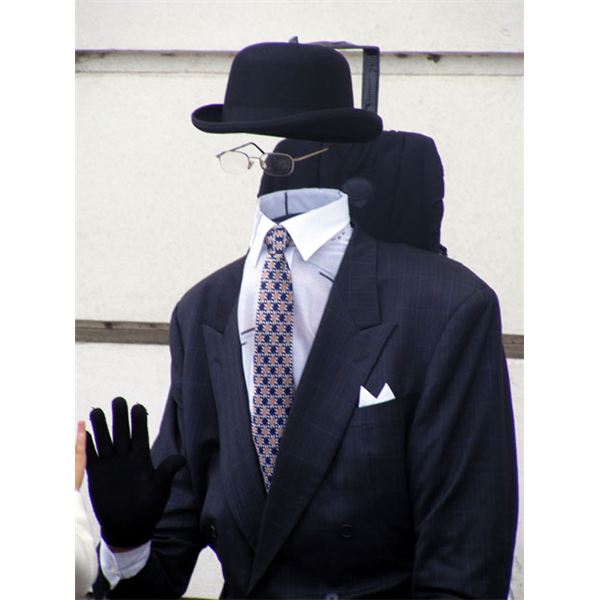
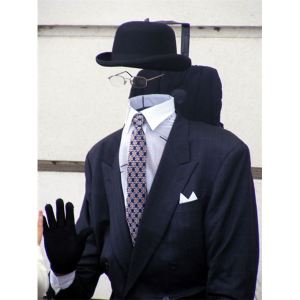 This façade didn’t bother me when it was first erected before me. I’ve met this type numerous times before, and their ego has never had any effect on me. Most of these types are usually so focused on creating the impression that they know everything that they avoid those people in the room that they fear might know something. Another aspect of their psychosis that has usually led to them leaving me alone is that creating an impression in another person’s mind is hard work, and it usually involves a great deal of concentration on convincing yourself. As a result of this, most of them have already convinced themselves that they’re so much smarter than me that they usually leave those that don’t challenge that impression alone. When a friend of mine informed me, with a simple, relatively innocuous smile, that his façade was not only created before me, but for me, it got to me, in a competitive sense.
It happened one day when a third-party friend gave the two of us the impression that she thought my friend knew so much more than I did. It happened, as a result of the small smile that he flashed at me after this impression was made clear.
It all began with a joke that this third-party friend told us. I made the mistake of telling her that I didn’t get the joke, and when she proceeded to explain it to us, my friend began echoing her explanation to leave the impression that he got the punch line. He didn’t, but he pretended so well that she was left with the impression that he did. She even went so far as to compliment him on this. She said something along the lines of: “Why can’t ever get you?” There were no specific allusions to the fact that I was any less intelligent, but that was implied, and in that vein, my friend issued me a competitive smile. The smile began as a general one that one normally issues in the face of such a compliment, and then right before he turned to walk away, he flashed it at me.
I’m not here to tell you that I was completely innocent in the progression that would occur, and that I don’t have my own psychoses that can develop in the face of what could be called a perfectly innocuous smile. My confidence in my intelligence is such that I can better deal with outright challenges, and I can wave those off with the idea that the need to challenge me in such an overt manner probably says more about the challenger than me, but those relatively innocuous, and I say competitive, smiles get under my skin.
“Don’t you see it?” I asked this third-party person, as my friend walked away with that competitive smile all over his face. “Don’t you see the game he is playing?” The third-party friend confessed that she hadn’t, so I laid it all out for her. The answers I gave her concerned what my friend did, but I would not get to the more fundamental question of why he did it for years.
Jokes. The what he did involved my friend uncovering various loopholes that all humans have in their interactions. Most of these loopholes are not obvious, and they allow those that locate them to conceal the limits of their abilities. When I write the word ‘limits’ I hope that no one thinks this piece is written specifically for the purpose of exposing the limits of my friend. We all have limits, after all, and we’re all scurrying about trying to prevent others from seeing them, but some of us are more successful in covering them up than others. Some of us avoid issues that may reveal our limitations, and others simply learn how to roll with the crowd in such a fashion that their limitations simply aren’t considered. My friend had managed to turn the latter into an art form by the time I met him, and it would’ve remained our little secret if he hadn’t gotten my juices flowing with that competitive smile.
The loophole that my friend found in leading a joke teller to the belief that he got the joke laid somewhere in the laughter that he provided them when their joke was complete. It was in the thin “knowing” laugh that he had issued to this third-party joke teller to provide her a glowing compliment that she simply bathed in. In the midst of this glow, most joke tellers don’t put the brakes on the laughter to find out why the laugher thought the joke was funny. The joke teller will just join the laugher within the shared glow of appreciation, and they will remain in that glow while giving the explanation of the joke to that unfortunate soul that admitted that they didn’t get it. During this explanation, the impression seeker will nod knowingly, and everyone will move on with their lives with the impression that he got it, until the joke teller says something along the lines of: “Why can’t I ever get you?”
Trivia. My friend is smart, and he knows his stuff, but I don’t care how smart anyone is, there is always going to be someone, somewhere that will come up a joke, or a piece of trivia, that they won’t know. My friend found a loophole there too. After hearing a trivia question, my friend will sit back and offer no reaction. “Do you give up?” the trivia asker will ask after a time. “Tell me!” he will say. After they tell him the answer, he says, “That is where I thought you were headed,” and he will say that in a manner that gives the asker the impression that if they had only given him more time he would’ve come up with the answer. At that point, he will increase their impression of him by showing a general knowledge of the chosen subject that basically provides them breadcrumbs back to the answer of the trivia question. The breadcrumbs do not have to be specific breadcrumbs, but they’re breadcrumbs, and the asker is left with the idea that he knew the answer. The whole point is that my friend waits until after the answer is given before putting on his show, and this leads him to his impression of himself in the trivia world of being excellent at answering trivia questions. Others believe this impression too, either because they aren’t so impolite as to suggest that he doesn’t get any of the answers before they give them, or they don’t spend enough time with him to spot the pattern.
I’ve laid out these breadcrumbs myself, I think we all have, but I’ve always prided myself on laying out my breadcrumbs in a specific manner that specifically points to the answer of the question. But, and this is the key distinction, I will always admit if I flat out didn’t know the answer the question, or if it was on the tip of my tongue, or something I feel I should’ve known. I offer no illusions about my intelligence, in other words, but I’m more confident of my intelligence than my friend. I only get competitive when people point out that he’s more intelligent than I am, because he achieves that plateau in what I believe to be a false manner, and it’s that false manner that I want recognized more than my comparative level of intelligence.
Another loophole my friend has exploited in the human condition is the need most people have to be impressive. My friend initiates this loophole by turning your need to be impressive back on you. You tell him something to impress him. He’s not impressed. Most of us are insecure in this manner, and most of us will then begin to focus our need to be impressive on that one person that isn’t impressed with us. I fell for this at first. I felt an overwhelming need to leave him impressed. I would show him why I thought I was interesting and impressive, and I would try to show him that I was funny. He wasn’t impressed.
It wasn’t too long before I realized that I had accidentally become more impressed with him, because he wasn’t all that impressed with me. I had accidentally foisted upon him the status of being a barometer of what the two of us should deem as impressive, because (and here’s the key) he poked holes in all of my attempts to be perceived as impressive. The one thing that neither of us had bothered to do was examine if he was, in fact, impressive. Our focus was on me, and by focusing on me, we provided him the status of being one that analyzes another’s attributes from on high. I allowed him this stature, until I figured it all out, and it annoyed me when others proceeded to do the same without putting any effort into studying how he had manipulated their interaction. I wanted this phony to be exposed to the world, and I told everyone we knew what he was doing, until I believed we had all achieved a degree of awareness.
Missing components. What I accidentally tripped on, years later, in the course of studying what he did was why he did it. I wasn’t looking for an answer, when I interrogated him on an almost daily basis. Anyone that has made the decision to be my friend can attest to the fact that being subjected to interrogations is the gift/curse of being my friend. The answer didn’t occur in one “aha!” type of epiphany either. It just kind of occurred to me over the course of years that my friend had a vital component missing that he concealed within all of the impressions he created for others. There was a loophole here too, of course, a loophole that when you create your own impression others will either believe it because they don’t necessarily care if they’re wrong, or they are so involved in creating their own impressions that they don’t notice any of those occurring around them. Sifting through all these impressions, I accidentally uncovered that fact my friend did not care for rebellion in any way, shape or form. He would laugh when I described the various forms of rebellion I had engaged in, but when those moments came for him to display a little rebellion, he made it quite clear that he simply felt more comfortable within the confines that his authority figures had created for him.
This is not to say that rebellion completely forms a personality, or that a person that won’t rebel is always somehow incomplete. I’ve seen those that refuse to rebel achieve happiness, and a sense of completion, within authoritarian constraints. I’ve also seen those that solely define themselves through rebellion end up accomplishing so little in life that rebellion was all they had, and they used it in a competitive sense to define a sense of superiority against those that weren’t as rebellious. This friend of mine was trapped somewhere in the middle, and it exposed an essential missing ingredient that suggested that the difference between him and those that he sought to deceive by manipulating their impressions of him was not so much whether or not he eventually decided to rebel against something, but why he wouldn’t.
What was the reason my friend hadn’t rebelled against everything he could find, like the rest of us had when we were teenagers? Why hadn’t he as much to drink as a teenage body could handle? Why hadn’t he tried to have sex with as many women as humanly possible? Why hadn’t he tried drugs? Did it have something to do with the fact that he was simply more responsible than the rest of us? Was he simply smarter, and he understood the ramifications of such actions at an age when the rest of us were just stupidly going about doing whatever felt good? Or did he just have a better parent? And if his parent was better, was my friend’s aversion to rebellion based on the fact that he assumed that his dad provided such a sound case for not indulging that he wanted to follow his dad’s golden rules, to emulate this man that he so revered? Or did he simply not have the fortitude to rebel? Therein lies the essential ingredient that I believe is missing in my friend that most people, that don’t know him, don’t see. He was so scared of disappointing his dad that he failed to indulge in that time-honored, teen rebellion against authority that provides characterization to those of us that believed our parents were wrong about everything.
Those of us that rebelled against anything we could find, thought we were righteous warriors on the road to an ultimate truth that only we could define. We eventually found that we were wrong about most things, of course, and that we didn’t know everything, but something about traveling through that natural course of life defined us in ways that my friend lacked. We discovered these truths the hard way, and these discoveries incrementally defined us. Those, like my friend —that never rebelled in any substantial manner when they were young— walk around in their adult worlds with some necessary ingredient missing that they are never able to locate, so they just decide —over the course of failed interactions— to fill the gaps in themselves. They decide that no one is really looking at them with much scrutiny anyway, so no one will ever find out that they had simply created impressions of themselves for others to feed on —with fibs, and façades, and affectations— that gives those around them the idea that they are complete. They never expect another individual to get so close that they notice.
This missing component was difficult to find too, even with someone scrutinizing him as intensely as I was, because my friend was guarded. He talked about being guarded too. He spoke about the fortress that he had created around himself, and how few were admitted entrance.
“You’re lucky I let you in,” he said. “I don’t let most people in.” I felt complimented by this. Who wouldn’t? It wasn’t until I sat back and thought about how few were clamoring for entrance that I realized that he said this for impression’s sake. The impression that most “guarded” people want to leave is that thousands are banging at the door, and that if those people don’t act right, they are denied entrance. Most of us, like my friend here, actually have very few banging on our door, but what if they were? How would we keep them out? It is here that I believe my friend came up with the ideal barricade to his inner sanctum: he wasn’t very interesting. If you don’t want people in your inner sanctum, states the logic of the ideal barrier, be boring, be quiet, and exhibit very few traits that people are interested in. If you can accomplish that, most people won’t notice you, they will not want in, and your inner sanctum will be protected. If the Chinese had only considered my friend’s idea of displaying wares no one wanted, they would not have had to build that Great Wall thinger diller.
It should be noted here that my friend is a good guy, and I do not believe that he sat down one day and devised a strategy to create false impressions, and fool people into believing he was more than he was by exploiting all of the various loopholes that occur within human interactions. He is not a dishonest man, and he never set about to mislead people into believing that he had a game show host’s type of charm. He is simply an insecure man that has learned —through failed interactions that have exposed his weaknesses— how to protect himself from ridicule, scorn, or the idea that he might be inferior or limited in any way. Other than learning through painful exposures, he probably took note of how others created impressions, until he became a hybrid of all of them. On that note, some may think me cruel for scrutinizing him to the point of revealing him, and there were occasions when I did feel bad about all this, but any time I let my foot off the gas, my friend saw this as a moment of weakness that he seized upon to attack my character. My friend was no wilting flower, in other words, and most of the intense scrutiny I directed at him was borne of the competitive exchanges he and I have always engaged in.
These missing elements in my friend became so obvious to me, after a time, that when he tried to turn our friendship back to the stage where I was hell-bent on impressing him, it no longer mattered to me what he thought, because I knew that that sword he used to prod my weaknesses was actually a shield he held out to prevent further investigation.


 Rilaly