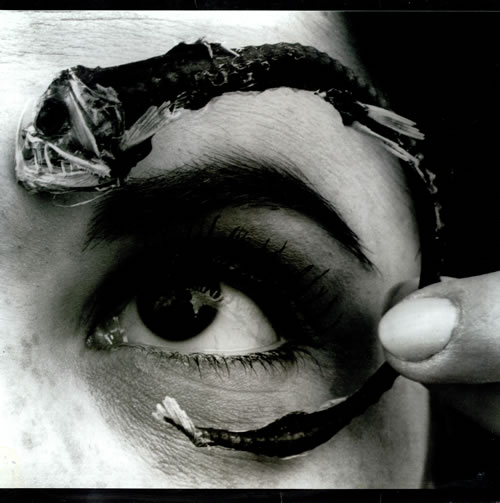
The Wicked Flames of the Weird


I get a perverse joy dancing in the wicked flames of the weird, but it has never been a calculated maneuver to draw people out from behind the barriers they erect for others. I just like the weird affectation.  I like the effect being weird has on people.  I like to see them think less of me.  I like to see that crinkled face that tells me that they don’t get it.  I like the confusion that asks the question, “Are you serious?”  I also like to get booed.

WeirdThese boos result from the fact that they don’t get the mental dance.  They’re never audible boos, but everything in their body language suggests that I just got booed.  People get uncomfortable when a joke you tell isn’t funny…Especially when it bombs.  They’ve been raised to be polite and laugh politely.  Little kids tell you when you’re not funny, point blank, but adults will usually try to soften the blow of your bomb.  Some of the times they can’t though.  Some of the times, they just don’t get it, and this frustrates them to a point where they may call you out on it.  It’s a perverse joy I derive from this dance, but it’s still a joy.

A funny thing happens to people when you start really grooving in this fire of the weird though. If you do it right, and you do it often enough, you’ll eventually run into the genuinely weird, the wacked, and the insane. You’ll find out a lot about your fellow humans by the way they react to your dance, for most of the truly weird ones can’t hide their reactions.  Like a dog that has its instinct to chase triggered when you start to run, the weird comes out of the weird when you start in on weird.  They accidentally start telling you where they stand on the various demarcation lines the separate the normal from the weird, and the insane.  They can’t help it.  It’s a biological function as indigenous to their makeup as sleeping and eating.

Most people have a view of where they stand that lacks true objectivity.  Their parents taught them where to stand in the world to avoid being perceived as weird, their friends and family ridiculed and bullied them into the knowledge of how to stand, and everyone else tells them where they stand when it’s all said and done.  The question that must be asked is what happens when everyone in their immediate world is weird.  Parents are the single, most prominent influence on our lives and our mental state, but what if they’re weird?  What happens to that kid who has those parents that have weird built into their DNA?  Their weird heritage is normal to their insular world but weird to everyone else.  What if all their friends and family members have lied to them, to be nice, for most of their lives?  The occasional potshot will come out, in reaction to a weird statement that a person makes, but for the most part most people are too polite to tell another when they are fundamentally weird.  Some may recognize these niceties for what they are and seek true definition that they can get nowhere else.  Some of these people may turn to TV, the movies, and other mediums, but most of these mediums exaggerate the true definitions of weird for entertainment purposes. Regardless where they think they stand, or where they’ve found solace for their definitions of what is weird and normal, one dance in the wicked fires of the weird will reveal them.

The key to my particular dance in the wicked flames of the weird is that I’m not afraid to follow the trails that lead to weird.  I know my way back to normal.  I’m so normal it bores me, and that’s why I do this dance in the first place.  I also do the dance because most of the people I know are normal, and I like to separate myself from them in varying ways.

Most people are normal.  If they weren’t, it would be weird to be normal and normal to be weird.  Most people see my dance for what it is, and they laugh, and clap, and encourage me on.  They’re the normal ones.  They have their own bread crumbs laid out on the trail back to normalcy, and they don’t mind watching a normal person occasionally act weird.  They think it’s fun, and they have occasionally added a few dance moves of their own to my performance, because they get the sense that that’s what it’s all about.

Some people think I’m a fool, and they have no time for me.  They’re the serious, normal people with serious and normal ambitions in life.  They have no time for my playtime and my weirdness.  I’m not going to tell you that I’m not a fool, for that would be an opinion you would have to shape based upon my performance.  Plus, if I were to show you the pictures of people who think I’m a fool, you would see that most of them are much better looking than I am, and you would be prone to side with them.

As I said, I’ve never started this dance of the weird to gauge people.  There has never been a calculated decision on my part to find out more about a person I’m talking to, but it has been very instructive nonetheless. “Why would a person would act like?” is a question an abnormal person asks when they see me dance.  They don’t go beyond that question, for doing so might reveal them.  If they did, it would probably go something like this: “Why would a person who is normal, act so abnormal?  Why would he enjoy dancing in the wicked flames of the weird if he is, as you say, normal?  Why would he dance in a fire we all try to avoid?  Is he making fun of us?  He must be weird, because no normal man would act like that on purpose would they Irene?

The completely rational types that grasp for mental health are usually my favorites.  These people are perpetually grasping at different rungs of the monkey bars, trying to determine if they’re abnormal, weird, or just as normal as you and I are.  Most of them choose math and science as their definition of normalcy, because it creates order in their otherwise chaotic minds.  Those who are truly adept at math and science can usually quash my attempts at bringing chaos to their minds, for I have never been a great student of these subjects.  I know just enough to know their basic order however, and I know just enough to funkify that basic order for the individual that clings to them like a life preserver.  I know just enough to remove one block of the order and twist it around and try to insert it in another part of the chain.  In other words, I take what I know of their rational world and present it to their rational mind with an irrational tweak, and I let them figure out the rest.  Also, and this is the important part, I phrase my question in the form of an answer.

As any propagandist will tell you, the best method of convincing another person of your point of view is to let them think they’ve arrived at your answer independently.  The best way to funkify a mind is to have them arrive at your irrational answer through the rational order of the subject. This dance involves me earnestly turning to them for an answer, “You’re good at math…” I say to introduce them to this irrational world, and they enjoy the compliment.  Then, when the heart of the question arrives, they are then eager to live up to that compliment I offered them.

As I said, those who know the schematics of math and science, would simply throttle me with their knowledge.  For those insecure individuals clinging to sanity through their limited knowledge of the mathematical order, my dance of the weird is not a pleasant experience, and there have been occasions when my little dance has nearly led us to the brink of physical confrontation.  They’ve worked hard to maintain their order, and there is a severe punishment waiting for those that dare to shake it up.  It’s been the only barrier they’ve been able to construct to keep the confusion of the random at bay, and they’ve worked hard at fortifying it.

Some of the weird ones have started out with laughter when I start this dance, but they usually stop when it dawns on them what’s really going on here.  Why did they start laughing?  Did they think they were being granted an opportunity to laugh at another weird person, to take a step up on them, and gain a greater foothold in normalcy among their more normal friends?  Why did they stop?  Did they stop, because they were in awe of my ability to step in and out of the weird with ease, and this frustrated them because they’ve never been able to do it with such ease? Or did they see how far out of the normal I chose to go for fun, and it frightened them in the manner it would frighten someone to see another laughing while dangling off a building?  Whatever the case is, they don’t like me after all this.  They can’t quite put their finger on it, except to say “He’s just weird,” and they leave it at that.

The insane ones are the scary ones. When I write the word insane, I’m not talking about the clinically insane.  I’ve never met a clinically insane person, so I know nothing of them.  If I met a clinically insane person, and they introduced me to their definition of the fire, I’m quite sure I would be so frightened that I would never dance in the wicked flames of the weird again, but I haven’t so it’s still a fun place for me to visit on occasion.  When I use the word insane I’m using a literary license to describe those fully functional, insane types that walk among us and take a point I’ve given them and use it as a launching point to dive deeper into the depths of the weird that my fun, weird brain could never understand.  When I use the word insane I’m using it as an extension on the word weird to describe those brains with cylinders so lubricated with pharmaceuticals that they aren’t the same person at noon that they were when they awoke to take their medicine.  There have been a few occasions where I thought they were purposely being weird to add a few steps to the dance, and I wanted to applaud their gamesmanship, until I realized this was no game for them.  This was the world that they woke to that morning and the one they would sleep in that night, and if I took their hand and followed them into the dark caverns of their mind I might never find my way back. My “what do you think of that?” smile quickly fades when they introduce me to their first shadow, and I realize it’s no dance to them.  I realize that this is their land, their home field advantage, and that they are welcoming me into it.  They’re just glad to have some company.

The Healthy Nature of Illusions and Delusions


“They’d listen if I complained,” a delusional friend of mine said moments after I told him I went to the boss man and complained, and that I didn’t think that my complaint would register. He said this in the midst of one of my fell-fledged rants, and he said it in such an egocentric manner that I felt he was in dire need of a reality check.

If you knew my friend, you’d know that he wasn’t the type to say such things to tweak people in a good-natured, competitive sense. He believed he was a more valued employee than I was. He believed that he was one of the most valued employees in the company.

t1larg.boss.gettyAnd if the world operated in a fair manner, my friend would’ve been an employer’s dream.  He was a hard worker, and an eager student for those that could inform him how he could do his job better today than he did yesterday. He was a quiet man who didn’t care for socializing on the clock, and he even tried to avoid drinking soda, not for health reasons, but to avoid taking too many trips to the bathroom on the company dime. He tried to avoid speaking in meetings, because he didn’t want to be perceived as a complainer, or trouble maker. He wanted to do the work he loved and be compensated accordingly.

He believed in the old adage that if you keep your head low, and your nose to the grindstone, they notice. They may not have said anything to him, but “trust me they notice. And if I ever did complain, all that hard work, and obeying the rules, would pay off. Trust me.”

I worked for too many corporations to trust him however, for I knew it was human nature for an employer to take model employees for granted. I did not have the temerity to tell him that his beliefs were delusional, however, and that he would one day have his unhealthy delusions shattered.

When I would later read, in a Psychology Today article, written by Merel van Beeren*, is that psychologists believe that the delusional are exhibiting greater mental health than I am.  This would prove to be a direct contradiction of the beliefs I’ve had about the unhealthy nature of the illusions and delusions we have about the power and control of our day-to-day lives.

“People overestimate their agency, but it’s for the best –those with an accurate sense of their own influence are often depressed. Participation in lotteries goes up, for example, when players can choose their own numbers, even though they are no more likely to win.”   

“I choose to stay employed at the company,” is something we might say to bolster this argument. “If the boss man changes the rules on me in a fashion I don’t care for, I can always quit. It’s not like I’m being held against my will, or locked into employment at this company. This is America, the land of opportunity, and there are numerous opportunities out there for someone like me.”

Fair enough, but how many of us do leave the company? How many of us get locked into the fear that we cannot do anything else? How many of us get locked into the “At least I have a job!” mentality that helps us deal with the changes the boss man makes that affect us in a negative manner?

“Well,” we say, “I guess I do have the option to leave the company I work for, and I guess I could drop out of the workforce altogether if I want to go live with my mom, but I choose to live free of those constraints.  I choose to live by certain constraints, beset upon me by my boss, so that I might be a self-sufficient individual who lives free based on the payment he gives me to live within his rules.”

The point, as I see it, is most of us do not view these matters in such constructs. We think everyone has to have a job. There is a “40-hour a week, paycheck on Friday, and put up with constraints” mentality that we have.  If you think this is an exaggeration, try quitting your job and going out on your own. Try existing in a realm that is free of constraints in a relative fashion. The first, and most prominent aspect of life that you’ll miss is the routine of a work day, and then you’ll miss the structure that that mentality provides. You’ll feel an odd sense of worthlessness that you cannot explain, because you’re used to being a drone, and you’ve trained yourself to be an employee and to accept what the boss man says.  You’re locked into this mentality.

In the freest country the world has ever known, we get locked into a mindset that this is all we can do, so we will put up with the boss man’s constraints.  In order to support ourselves, and continue to be free, and self-sufficient, we make compromises.  But Where is the Line? the singer/songwriter Bjork once asked.  Where is that line between the freedoms we give up and the freedoms we enjoy, and how much freedom are we willing to give up to be free?  As the writer of this Psychology Today article suggests, analyzing all of this can lead to depression, and it’s much healthier to delude one’s self into believing that we’re free and in total control of our own universe.

It’s much healthier, for example, to believe that we have some say in the rule changes that the boss man employs than it is to examine how valuable we are in lieu of the changes the boss man has made to affect our work dynamic in a negative manner.  It’s much healthier, to think that we are such valuable employees that there is some fear in the boss man that prevents him from making such drastic changes that would affect our decision to stay with the company than it is to acknowledge that the boss man often decides what is best for his company’s bottom line first, what is best for all of his employees second, and then what is best for the individual employee last, unless we fit into the second group of course.  If we don’t, the boss man will find a way to sell his change to us in a manner that satisfies our ego.

There is a great website out there that has a single joke on it.  It’s called Office Versus Prison, and it details how the office space mirrors the day-to-day activities of the prison.  The following are a few of my favorites:

IN PRISON…you spend the majority of your time in an 8×10 cell.
AT WORK…you spend most of your time in a 6×8 cubicle.

IN PRISON…you can watch TV and play games.
AT WORK…you get fired for watching TV and playing games.

IN PRISON…they allow your family and friends to visit.
AT WORK…you cannot even speak to your family and friends.

IN PRISON…all expenses are paid by taxpayers with no work required
AT WORK…you get to pay all the expenses to go to work and then they deduct taxes from your salary to pay for prisoners.

IN PRISON…you spend most of your life looking through bars from the inside wanting to get out.
AT WORK…you spend most of your time wanting to get out and go inside bars.

IN PRISON…there are wardens who are often sadistic.
AT WORK…they are called managers.

My friend lived with the delusion that if he ever decided to take the floor and complain, the higher ups would sit up and take notice.  Things would change.  ‘They may not listen to the average employee, but they’ll listen to me,’ was his mindset.

I would barrage him with a list of complaints I had about the way things were done on a week-to-week basis.  He would remain quiet, with a quiet smile on his face.  “Doesn’t that frustrate you?” I would ask.  Most of them time it didn’t.  Most of the time he had already developed a rationale for the way things were done, but some of the times he would get just as enraged as me.  “Too bad there’s not a darned thing we can do about it!” I would say to sum up our unified frustration on those occasions.  I would tell him that I complained to the boss man, and I was given some lame excuse for why things would continue to be the way they were.

“They’d listen if I complained,” my friend said.  Of course that statement bothered me, as it fed into my insecure belief that, in Merel van Beeren’s words, my friend’s agency was more valuable than mine in the company.  I told him that he, again in the words of van Beeren’s, overestimated his agency in the company.  I warned him that there would come a day when he risked letting people know his opinion of the way things were done, and he would find out that the boss man just wanted him to shut up and go back to being that face in the crowd that accepted his changes for what they were.

My knowledge was not theoretical.  It was firsthand knowledge that I gained by being a man that kept most of his complaints in check, until that moment arrived when something meaningful came my way.

I used to think that if you picked your battles for subjects that you had deep concerns about, the boss man would be more apt to listen.  I was wrong.  I learned that the boss doesn’t care for complaints, and he doesn’t give more weight to complaints that come from a person that doesn’t complain often.  They just want you, and the person that complains all the time, to shut up and learn your station in life.  Coming to that realization was, as Merel van Beeren pointed out, caused me a sense of depression that I wished I could walk back.

My friend did complain about the way things were done, after a time, and he found that he had overestimated his agency, and he quit the company.  My friend didn’t quit right away.  He loved the company, but his moment of epiphany was just as painful as mine.  He learned that by avoiding the complaint, you don’t gain the respect of the boss man, you slip into the favored status of rarely seen, never heard, and the minute you pop that delusion, you shatter everything you once held dear.

If Merel van Beeren is to be believed, and I must say he puts forth a pretty decent argument, my friend was the healthy one in our friendship, until I poked so many holes in his delusions that I brought my unhealthy skepticism to his life and depressed him.

* van Beeren, Merel.  The Skeptic’s Cheat Sheet.  June 2012. Psychology Today. Pg. 22.

Are You Superior?


I met a guy who didn’t mind dressing me down psychologically. Yet, he probably wouldn’t admit it, even if I called him out on it. Dressing people down in such an obvious manner is uncouth, and it suggests that the purveyor is superior while doing it. I could feel him doing it as walking down the aisle toward him. I was smiling, and I felt him analyze that smile. I could tell that he perceived smiling as a weakness. When he looked at the shirt I wore, the manner in which I walked toward him, and the way I greeted him in a nice manner, I could tell he was scoring me on an analytical chart, and I could tell I wasn’t do well. As much as I hate to admit it, his superficial analysis of me affected our initial interaction. My natural insecurities took over, and I felt inferior to him in a way that I spent weeks trying to redefine. 

This loathsome character is anecdotal evidence of a strange psychological phenomenon in our every day conversations. He’s anecdotal, because most of us don’t examine others in such an obvious manner, but do they psychologically dress us down in a more subtle, less obtuse manner? Do they score us on their personal analytical charts without intending to do so during our casual conversations? They probably don’t know why they do it. If they did, they likely wouldn’t attribute it to a search for superiority, but they do know that they’re searching for something that will give them some intangible, hard to describe feelings of superiority.

If an individual is muscular in a noteworthy manner, or gifted in the athletic arena, they already know the feeling of superiority, as most of us grant physical traits superiority. For the rest of us, this search is not as simple. How do we compare to others? How do we stack up? It’s often difficult, and fruitless, to stare into a mirror and gain true, objective definition, so we do it on the backs of others through our day-to-day interactions to try to gain some information about our identity.

The searches may occur in the first few moments we begin speaking to them, and it often involves scrutiny of our physical appearance. Are we well groomed? Do we brush our teeth? Are all of our nose and ear hairs trimmed? Do we have a socially acceptable hairdo? How much did we pay for that hairdo? How much did we pay for the clothes we wear? Do we wear fashionable clothes? If clothes make the man, what kind of men are we? Some say it’s all about the shoes. Others say that by creating a pleasing dimple in our tie, by denting that tie with the thumb in the tying process, we can create quite a first impression. Most people don’t speak in terms of superiority or inferiority in polite company. Yet, those same people worry about the first impressions they make. What are impressions, but an attempt to define ourselves among our peers?

Is it all about the clothes, or do we make a better first impression through a confident posture, the way we sit, the manner in which we hold our head when we talk, or whether or not we look our counterpart in the eye? Do we have a tongue stud? Are we tattooed or non-tattooed, and who is superior in that dynamic? It’s all relative.

First impressions can be difficult to overcome, but some suggest that what we say after the first impression has greater import. If we have a noticeable flaw we can garner sympathy or empathy, through an underdog status, with what we say in the follow up impression we provide.

To further this theory, some believe that if we notify our counterpart of our weakness –say in the form of a self-deprecating joke– it will redound to the benefit of a strong follow up impression. The subtext involves the idea that doing so will end their search for our weakness, and the feeling of superiority they gain will allow them to feel more comfortable with us. This, we hope, might result in them enjoying our company more. 

Comedian Louie Anderson turned this into an art form. Moments after taking the stage, Louie Anderson informs his audience that he’s overweight in the form of a well-rehearsed joke. The first impression we have of Louie is that he is overweight. When he addresses that first impression up with a quality, self-deprecating joke it disarms us. We thought we were superior to him, based on his physical flaw. By acknowledging that flaw, Louie takes that feeling of superiority away from us, and he gives it back to us with his definition of it. That re-definition of our superiority allows him to go ahead and manipulate us in all the ways a comedian needs to manipulate a crowd. The distraction of our physical superiority is gone, and we’re now free to enjoy the comedic stylings of Louie Anderson.

The problem with a successful follow up rears its ugly head when we begin to overdo it. When our self-deprecating humor works in the second stage of impression, we attempt to move into the more personal third and fourth stages of getting to know our counterpart better. In these stages, we begin to feel more comfortable with the person on the receiving end, and we let our guard down. The problem we encounter, partially due to our insecurity, is that these people might not be as entertained by us as they were in the second, more self-deprecating stage of impression. As a result, we might begin to fall back on the more successful, second impression to lessen the impact of our attempts to be more personal with them. “Of course I’m nothing but a fat body, so what do I know,” is a qualifier that we insecure types add to an insightful comment we make that they don’t find as entertaining. When that proves successful, and our counterpart begins laughing again, we begin committing to this qualifier so often that we become it in their eyes. They can’t help thinking this is who we are, because it’s the impression we’ve given them so often that it becomes part of what they think of us. One way to test if we’ve fallen prey to this progression is to remove that successful, qualifier that we have been adding to the tail end of our jokes and stories to gain favor with them. If we have been adding it too often, the recipient of the qualifier might add, “That’s true, but aren’t you fat?” to the tail end of our story for us.

Some of the times, we commit to these additions to complete the rhythm of a joke or story, but most of the times we do it to insert some element of superiority or inferiority. Thanks to certain situation comedies, and the effect they’ve had on the zeitgeist, some jokes, stories, and thoughts feel incomplete without some element of superiority or inferiority attached to it. I used to be a qualifier, until I realized that too many people were exploiting my qualifiers for their own sense of superiority. It was so bad, at one point, that I couldn’t say anything halfway intelligent without someone adding, “That’s true, but aren’t you fat?” at the tail end of it.

***

It’s my contention that most of us are in a constant search of indicators of superiority or inferiority. If our counterpart is religious, we may feel superior to them because we’re not. If we are religious, we may want to know what religion they are, and we may base our feelings of superiority on that.

“They’re all going to hell,” a friend of mine whispered when we passed a group of Muslims. When I asked why she thought this, she said, “They don’t accept the Lord, Jesus Christ as their personal savior.” 

I’ve heard Christians use that condemnation many times, but I rarely heard someone use it as a weapon of superiority. I realized some time later that this was all this woman had. She hated her job, her kids hated her, and she was far from attractive, or in good shape. She needed that nugget of superiority to help her get through the day, and to assist her in believing that she was, at least, superior to someone in some manner.

On the flip side of the coin, a Muslim friend of mine seemed forever curious about the American way of life. She would constantly ask me questions about the motivations I had for doing what I did. I didn’t mind it at the time, for I didn’t mind jokes about how Americans seem to be driven by sex, violence, and other “unclean” motivations. I also didn’t mind that some of her questions involved me, as I didn’t mind being self-deprecating. It didn’t dawn on me until later that she was searching for points of superiority. She saw the Muslim religion as a clean religion from which she gained a feeling of purity. There is nothing wrong with that, of course, until she used that as a weapon of superiority against me.

The search for where we stand in this chasm of superiority and inferiority can be a difficult one to traverse, so we often attempt to answer our questions on the backs of others. It’s a shortcut around introspective examination and self-reflection. Some feel superior to another, based on another’s religion, their politics, their race, or their education level. Some even gain feelings of superiority based on the manner they use to brush their teeth. Those who brush their teeth top to bottom are not doing it in the manner advised by the American Dental Association, but do those of us who brush our teeth in circles find vindication and validation from our dentist? Others base their comparative analyses on the manner in which they shave their pubic hair. If one person leaves a strip and another shaves Brazilian who is superior, and who is inferior, and where does the person that lets it all grow wild stand in that dynamic? We all have some positions of superiority and inferiority, and most of them are relative.

This modern battle for psychological definition often calls for the subtleties and nuance of guerrilla style warfare. The age of standing toe to toe occurred in the days of duels, and The Civil War, are over because most modern field generals would never risk their troops in toe-to-toe battles that former battalion leaders considered the gentleman’s way to fight. On that note, no one of the modern age would ever ask their counterpart if they think they’re superior for that might involve some sort of equivocation that details the strengths and weaknesses of both parties in which no one is a winner and no one a loser. No, the battle between two modern day, psychological combatants, more often than not, involves a never-ending battle of guerrilla warfare-style pot shots.

***

Long before my mind’s eye was opened to the comprehensive nature of this conversation, I met a kid named Walter in high school. A decent description of Walter is that he was at the bottom of the teenage boys’s totem pole. He was the rabbit and the ground squirrel at the bottom of the food chain. An indecent way of describing Walter is that he was a target for every other boy who feared being in the crosshairs of every other boy. In this indecent description, I was superior to Walter. If I was above him, I was clinging to the divider by my fingernails.

Walter did all the things boys like. He never let a slight go by without reply, and his replies were feckless screams of indignation. Teenage boys love nothing more than knowing they can get under another boy’s skin, and there’s nothing the subject can do about it. It makes them feel superior to drive another boy crazy, and it gives them a greater sense of superiority when that kid acts as if he’s being attacked by a hive of hornets. 

It would’ve been so easy to join the pack of jackals, as I saw an overwhelming number of my peers (those of us clinging to the border that divided us from Walter) join in on the barrage against Walter. The fact that I did not was based on sympathy and empathy. I knew what it felt like to be on the other end of a barrage. If Walter dominated the bully charts, I was in the top five. I thought we rabbits and ground squirrels should stick together and advise one another on how to deal with these awful moments in our lives. Not only did Walter fail to heed my advice, because why would he, I suffered from almost as much abuse as he did, but he joined the barrages against me to take a step up on me in this superior vs. inferior world.

‘Et tu, Walter?’ I wanted to yell, ‘but I refrained.’ You gave me ample opportunity to ride you, like a horse, to the promised land, but I refrained. Did I expect gratitude, respect, or appreciation from Walter ? Did I expect him to recognize me as one of the goodfellas who chose to refrain? If you knew Walter as well as we did, you knew he had a no-one-gets-out-of-here-alive mentality. I knew that, but I thought he might consider the numerous times I refrained. Not only did he fail to value, or even recognize my efforts for what they were, he apparently thought less of me for doing it. 

I don’t remember if I wanted Walter to recognize my previous efforts of refraining, or if Walter joining a barrage against me fueled some competitive animosity I gained for him, but I joined in on the next barrage against Walter. The funny thing was Walter didn’t react any different. 

For those, like me, who might feel guilty about cashing in on those opportunities to nuke another person for the purpose of gaining superiority, there is no reward for refraining. Even the most inferior will take any opportunity they can find to make another look bad. They enjoy it without reflection or feelings of empathy or solidarity, especially when they consider the new target to be superior in some way. Others don’t enjoy this, as we have intimate knowledge of the embarrassment that can accompany looking bad in front of others. We also feel some empathy for those who expose flaws that can be easily corrected. We hold our fire. In a perfect world, others would value such judiciousness, and they would return it. For various reasons, including the idea that most people do not know when we’re refraining, it is not valued. Some may even consider any refraining a display of inferiority on our part.

In a perfect world, our interactions would involve others recognizing inferiority and superiority in a gentlemanly manner. We would wait for enemy fire before firing, to win the battle off the field as well as the one on it. The problem with refraining too often, or only firing in self-defense, with those we battle in psychological warfare, is that most enemy combatants do not view refraining as an order to hold your fire. One would think that in the absence of pot shots, the other party would recognize any cease and desist order. In my experience, they don’t. They sense weakness, and they open fire. Something about the human condition suggests that even the most empathetic and sympathetic souls stay vigilant. Every once in a while, we need to fire off a few rounds just to keep our enemy combatants hunkered down behind shields. Are we superior, are they inferior? We don’t care. We just want to keep them level with us, as we learn that the individual with their mind’s eye open to the psychological games we all play must keep firing, if for no other reason than to remind all of our opponents of the arsenal we have at our disposal. 

If you enjoyed this article, you might enjoy the personal experience that drove it: Are You Superior? II