Today’s Music Ain’t Got the Same Soul


As a former AOP (album oriented person), I have finally come to realize that most songs, on most albums, by most artists, are crap.  It’s a tough admission for me to make, especially after decades of fighting against my “single-loving” friends on this very issue.

downloadThe Beatles may be one of the few exceptions to this rule. The Beatles made about five albums that were almost top to bottom perfect, but then again they had three bona fide songwriters in their group. Those three songwriters could usually write one to two great songs a piece for the albums The Beatles would release on an annual and biannual basis. When The Beatles broke up, these three artists continued that trend.  They would write one to two great songs on solo albums that they would usually release on a semi-annual basis. One of those songs would get extensive airplay on the radio, and we would all run out and buy the album. To our disappointment, there would probably be only one other song on their solo albums that could be enjoyed long-term. A couple of the other songs on those albums were self-indulgent, political rants, and the rest were just filler. Led Zeppelin may be one of the other another exceptions, but they sold their souls to the devil(!), and there’s Queen, but Queen had four solid songwriters in their band.

There are other exceptions to the rule of course, and I’m sure you have them in mind, but were those exceptions the first album your “my guys” made for a major label? If that’s the case, you have to ask yourself how many years of writing went into the making of that first album? If that’s the case, I submit that that first album was a compendium of all the years this artist(s) spent as a struggling, starving artist. Kurt Cobain once said that if he knew what he was doing, he would’ve spaced out all the songs on the album Nevermind, to presumably allow some of those single songs to appear as lead singles for forthcoming albums.

From what I understand of the business, and I understand very little, the first album usually generates little to no money for the artist. The reason for this is that the record company assumes all the financial risk for this unknown artist on first albums, and this unknown artist is usually so eager to sign with a major label that they forego most of their rights. Most new artists have little-to-no pull in the signing process, and most labels take advantage of them on that basis. Most labels are also hesitant to give a lot of money to a new artist, because they know that they will go out and ruin their minds and bodies on drugs and alcohol with all of their new found money. Other than the objective to make the most money they can off the artist, they might also want to keep the artists hungry enough to produce at least one more great album.

After the artist is raped by the label on the first contract for the first album, they’re usually bled dry by the lawyers who seek to rectify that first deal. This gives them the hunger necessary to complete a second album. This second album is usually rushed by the artist, the label, the lawyers, and all of those with their hands in the pot trying to cash in on the success of the first album. It usually sells well, based on the success of the first one, and the critics often label this effort “the sophomore jinx”. The second album usually contains the “could’ve beens” and “should’ve beens” that didn’t make the cut on the first album, and that album usually sounds rushed, sporadic, and often times sub par, but we can’t blame the artist too much for wanting some of the money they missed out on with the first album. If the artist was allowed some time to write a new single, and some time is usually reserved solely for studio time in the world of music –because most artists are not artistic on their time– we may get one marginal-to-good song on this record that would’ve been a better-than-average filler song on the first album.

“Wait one cotton-picking moment here,” you say. “The artist I listen to says that they don’t do it for the money.” That’s just good business. Very few artists, outside the for reals world of rap artists, would tell us that they’re in it for the money. If they believe it is about the money, and for some it is, then they’re probably not very good artists. For those who are quality artists, that love the art form, money is a happy byproduct that pays the rent and the grocery bills. Money allows the artist the free time necessary to concentrate on their craft, and that is important even if they won’t admit it. If an artist is in it solely for the money (or the fame), if they’re being for reals, they’re probably producing the schlock that comprises most of the Top 40. It is about the money though, for those artists who truly know something about business side. They know that that when a customer hands over dollars for product, they’re complimenting such products in a manner that allows the artist to keep producing said products.

Sting once said: “Anyone can write a hit, but it takes a true artist to write an album of excellent material.” 

If that’s the case, there just aren’t as many artists out there nowadays. Either that or my patience for half-hearted material has diminished, because there appears to have been a dearth of great albums in the last ten years. My guess is either there are fewer spectacular artists out there nowadays, or we have over-estimated these artists in the music field for decades. Perhaps these artists were never were as intelligent, or as brilliant, as rock journalists led us to believe. I’m not just taking about the members of ‘80’s hairbands in this critique, or the starlet that tries to show off her body parts to remain relevant.  I’m talking about our favorite artists. I’m talking about the seminal artists who have graced the covers of corporate magazines for decades. I’m talking about the artists that the marketing arms of these corporate magazines, and the corporate labels, have led us to believe were complicated geniuses. Maybe they were just better than most at crafting an image, maybe they are not as deep as we perceived them to be, and maybe we need re-evaluate our definition of the term “musical genius” based on the fact that they can’t come out with three decent songs every two years.

If we are to judge an artist based upon their albums, and not their singles, then we have to assume that they’re not very deep. The Beatles came out with nearly three albums a year in the 60’s, and they came out with some complete albums, top to bottom. With today’s artist, we’re lucky if they come out with an album every two years, and as I said those albums usually only produce two decent songs on average. Whatever the case is, I usually make my own albums out of all of the singles and some of the secondary songs released today. The rest of the songs released by these complicated artists are just drivel. Thanks iTunes and Spotify!
Ace Frehley’s book: No Regrets. A Review


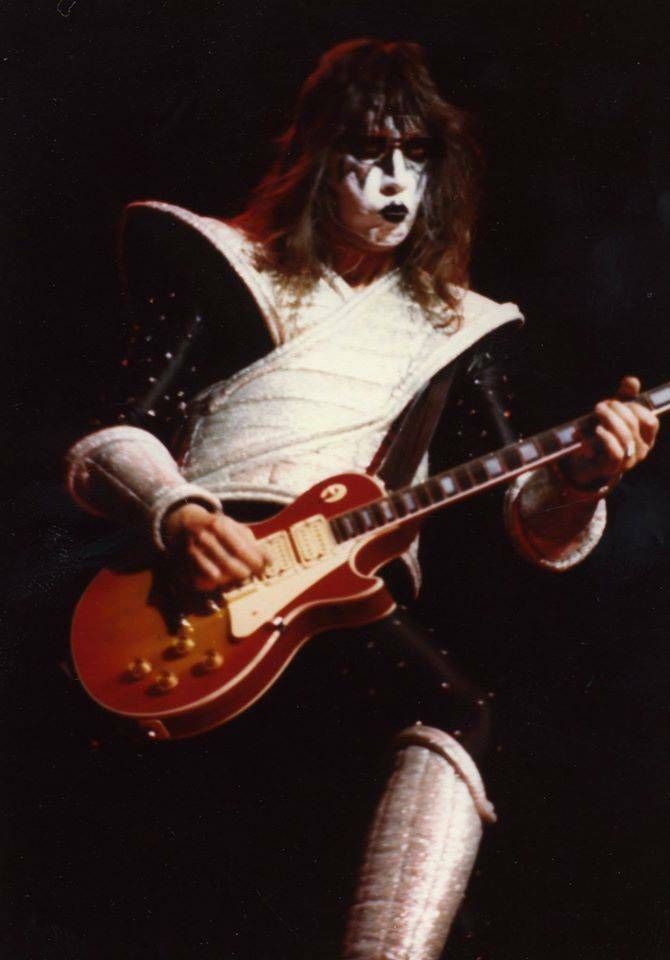
Ace Frehley has No Regrets. It’s the title of his book. He has no regrets, apparently, about wasting whatever God-given talent he was given, and he has no regrets about doing little-to-nothing to make his “right place right time” moment in history a little better. That’s great Ace, you stuck your middle finger right up into what Gene and Paul have been saying about you, but what about those young fans who defended your legacy for much of their young lives? Do you have No Regrets about all that?

The author of this piece was a fan, a HUGE KISS fan, and more specifically an Ace Frehley fan. Like the Beatles’ fans of the 60s, we all had our favorite member of KISS, mine was Ace Frehley. Chicago Bears running back Walter Payton was my favorite person and Ace was number two. I still have a soft spot in my heart for the man, but Ace Frehley’s new book No Regrets has even tainted that.

Ace Frehley states that he is clean now, and like so many other rock bios that adorn the shelves of bookstores across America, Frehley takes the vantage point of an outsider commenting on his past debauchery. Alcohol and drugs were the way Frehley dealt with the ups and downs of stardom, but he has No Regrets about this. As comedians in the past (Pryor and Carlin) have done, Ace chooses to laugh at his lifestyle choices. He chooses the “now that I’m clean” theme to detail for us the hilarity of being so out of control that you don’t know what you’re doing. As a lifelong Ace Frehley fan, I found many of the Ace Frehley stories funny, troubling, and disenchanting, but Ace has No Regrets.

The “breath of fresh air” arrives when Ace details for us the tale of KISS. Ace is more honest and forthcoming about the formulation of KISS than any of the other members have been to this point. The reader begins to realize that Ace is going to be the first to tell the story of KISS without a marketing plan. There is no KISS mysticism attached to this version of the story, the KISStory, such as the stories faithful KISS readers have been inundated with by Paul and Gene. This is the KISS story as told by “the fun and spontaneous member”. This is the more “real” version of the story. Unfortunately, the more “real”, Ace Frehley version of the story substantiates many of the charges Stanley and Simmons made against Ace’s apathy and his poor work ethic. The No Regrets book also substantiates the charge that Ace wasn’t particularly elemental in the formulation of the eventual KISS product, that he was basically just along for the ride, and that he has No Regrets about any of this.

In one particular story, Ace says that the producer of the KISS album Destroyer, Bob Ezrin, began pushing Ace to come up with guitar solos for the songs on the album. Ace complains that Ezrin’s pushing proved counterproductive, because Ezrin didn’t understand the spontaneous nature of artistic creation. This, for me, is the most illustrative moment in the Ace Frehley story, because I understand the spontaneous nature of artistic creation, and I know how much downtime musicians have between albums. They might be touring, doing promo spots, and other forms of promotion, but there’s still a lot of time to sit around and fiddle with the guitar to create solos. If Ace entered the studio with around ten to twelve solos, it’s possible none of them would’ve fit the songs perfectly, and that’s where the whittling and tweaking come into play. To listen to Ezrin and Ace’s characterization of this confrontation, Ace walked into the studio with no solos, or any ideas for solos, and Ezrin expected him to come up with one to fulfill his contribution to the song. 

At that point in his career, Ace Frehley was one of most revered guitar players, known for his creative solos. Ace’s lone contribution on a majority of the KISS songs was a brief solo between verses, and he couldn’t even come up with that by the time KISS’ Destroyer album came out? At this point in the story, I would’ve been mentally lambasting Gene and Paul for presumably leaving out some necessary details of the story. That’s not the case here of course. This is Ace telling the story. As I said, it’s all troubling and disenchanting, but he had No Regrets.

The question that this reader has for Ace, on this particular issue, is, “How much time, between albums, did you have to work on these spontaneous solos?” Spontaneity can be tough to generate on the spot, of course, but how much better would those solos be if by the time he entered the studio, he had a pallet from which to choose? Talented artists, of which I think Ace is one, know better than to do nothing for months and then expect some sort of divine inspiration to strike when they need it. Most who depend on spontaneity for a living know that they have to constantly hone the muscle. Artistic creations take time, devotion, and discipline.

I’m not a blind fan don’t get me wrong. I recognize KISS music for what it is. I don’t put it on par with Monet or Picasso in the world of art, but even KISS music takes a degree of involvement, work ethic, and commitment. Ace Frehley was a significant part of a group that put out products that many of us spent our allowance on, but Frehley thought Bob Ezrin pushed his artistic sensibilities a little too hard, because Ezrin didn’t understand the gentle process of artistic creation. In this gentleman’s disagreement, we have the artiste named Ace Frehley who many have charged, and Ace basically substantiated in his book, had a very poor work ethic and chose to party when he wasn’t in the studio versus Bob Ezrin. Ezrin, to that point, worked with Aerosmith, Alice Cooper, and Lou Reed. Ezrin also produced albums for a wide array of artists including: Pink Floyd, Hanoi Rocks, Deep Purple, and many others before and after Destroyer. Even fan boy here, who wants to take Ace’s side in this episode, cannot side with him. My educated guess, based on the characterization of Ace Frehley by others, and by Ace Frehley in this book, is that he arrived in the studio totally unprepared, and Bob Ezrin got mad at him for it. Ace then got mad at Ezrin for getting mad at him about it. Yet, Ace Frehley has No Regrets.

Few have questioned Frehley’s God-given gifts, but he apprently did little to formulate and finesse the gifts that were given to him. What were you doing between albums Ace, other than touring? The answer: Sex, drugs, and alcohol. No Regrets. You read Ace detail this portion of his story, and you realize that Ace may have been paying a little bit too much attention to his press clippings. He may have been listening to those adoring fans that put him on a pedestal. He may have thought there was a degree of mysticism to his art that couldn’t arise as a result of a request from a meager human, but it had to be waited for in the manner of some divine artiste. Say what you want about Gene and Paul, and many have (Ace does in this book in good ways and bad), but Gene and Paul knew there was nothing divine about what they were doing. They simply worked their tails off for the legacy they eventually achieved (and I cringe a little taking Simmons and Stanley’s side here).

Ace chastises the KISS bassist Gene Simmons throughout the book as a man who took the KISS product a little too seriously throughout the process of building it. Ace talks about how he couldn’t do it. The movie KISS Meets the Phantom is an example of the “KISStory” that Ace admits he basically sat out. He looks good in hindsight for having sat that one out, because the movie is generally considered a bomb. Ace talks about how he didn’t enjoy making the album “The Elder”, and how he generally sat that one out too. Ace then talks about how he wasn’t much of a part of the making of the album Destroyer either. The latter is a little more painful to him, as evidenced in his words, but this may be due to the fact that Destroyer is generally considered to be KISS’ best album. Hindsight shows Ace regretting that he wasn’t a greater part of the successes, but he doesn’t mind telling us he had little to nothing to do with that which is generally considered less successful artistically and financially. How convenient.

Ace condemns Gene as a business man who has no friends. He says Gene needs to cut loose and have a beer every once in a while. To be fair to Ace, he does thank Gene and Paul for everything they built, and he’s not as negative as I thought he would be. I read where Gene leveled Ace in many areas, and I expected the return fire to be explosive. He pounded home the point that Gene has no friends by saying that the Gene Simmons Roast only had comedians in it (and family members), but he doesn’t have as many negative things to say about Gene as this review and others may lead one to believe. The point he’s trying to make is Gene isn’t very fun, warm, or an extreme joy to be around. Ace knows Gene better than most, and he makes an informed analysis, but I don’t really care that much. I met Gene once, and he was very nice, but who cares? Gene could argue that he devoted his life to an enterprise that a lot of people really enjoyed. Whatever talents in life Gene was granted, he made the most he could out of them. When the final epitaphs are written, the idea that Ace had a ton of friends, and he was a fun-loving, good time rock-n-roll dude, sometimes at the expense of his dedication to his craft, will prove a testament to his character, but Gene’s dedication to his craft, at the apparent expense of human relationships, will prove just as vital to his legacy. As Ace once sang, it was, “Two sides of the coin, which one should I choose.” Thanks in part to No Regrets, many hardcore Ace Frehley fans now know which side he chose, and it did some damage to his legacy.

Those of us who were Ace Frehley loyalists for much of our life, have one quick question for Ace. The question is based on the fact that we defended Ace among our friends and those who informed us what Gene and Paul said about him. Why would you write this? Why would you tell the world that you didn’t have as much play in the formulation of this KISS product as we thought you had. Why would you tell your biggest fans that you were basically along for the ride, for much of the time? Why would you say that other than some minor artistic differences, there’s no real huge story to your departure? Or, that you simply got sick of it?’ We know nothing lasts forever, and some of the times good things need to die. Most of us would agree with you that KISS overstayed their time on stage, but your notes on how little it meant to you when it meant so much to us, when we were kids, was a little deflating.

Ace does mention the fact that he may not be alive if he were still in KISS, but it’s clear that that was totally on him by that point. The only one who encouraged Frehley into greater debauchery, Peter Criss, was long gone by the time he quit, and Paul and Gene were basically dry as stated time and again throughout the book. Did Ace envy the success Guns N’ Roses guitarist Slash had with his autobiography? Did he know that his story was similar, and he wanted a piece of that pie?

In a promotional interview for this book, Ace did on The Today Show, Ace talked about how proud he was to add published author to his list of accomplishments. That’s great, some of us thought, and it’s a laudable goal for any high school dropout. The question is what did you accomplish? What did you publish? Was it a novel, a short story collection, or a bio that detailed for the American public a dossier of artistic accomplishments? What this published author managed to have published was a tome of a wasted opportunity, a waste of talent, and a largely wasted life. My guess is that Frehley saw all of acclaim and sales that went to Guns N’ Roses guitarist Slash and realized that his story was similar. It’s as entertaining as Slash’s was, and it’s received as much praise, but at what price?

The reader is left with the idea that Ace led a blessed and lucky life, but when it came to actually working, and finessing that gift to even greater heights, Ace got artificially turned on and tuned out. Ace will undoubtedly receive a lot more praise for being “more real” with his story, but those of us that considered ourselves true fans wish he had been a little less real to keep the myth of Ace Frehley alive. Don’t get me wrong, it’s a fun (and in spots a funny) read, stories of debauchery always are, but it’s also a little sad and disenchanting.

I Hate Guitar Solos!


A Cool Kat walks into the auditorium’s bathroom. He has a wife beater on that’s frayed at the collar, his jeans have a whole in the knee, and he has tattoos that suggest (in Asian characters) that he has some kind of duality or inner strength about him. The Kat also has a perpetual snarl on the face, and he doesn’t so much as give me a passing glance as he steps to the urinal near mine. His reproductive organ is medium sized, and non-threatening, so I say, “What do you think of all these solos?”

“Solos?” the Kat asks. It’s loud in this bathroom.  The metal band of no name, plays over his right shoulder, so I assume he couldn’t hear me.

“Guitar solos, drum solos, they even had a bass solo out there for the love of all that’s holy,” I said.  “I paid hard-earned money for this show.  I don’t want to watch some self-indulgent, over paid rock star get his nards off playing a solo for ten minutes. I want to hear songs, music, and structure.”

“You ain’t where it’s at Daddy-O,” the hipster, Kat says.  I always wanted to be called Daddy-O, so it took me a second to get over that fact that this guy was attempting to belittle me in a manner that insinuated I was old.

“You know these guys don’t care what you think don’t you?” I said.  He shrugged and looked forward.  I didn’t know if I was trying to convert the incontrovertible, but I leaped headlong, “They don’t care whether or not you understand the intrinsic value of what they’re doing up there!” As the kids say, I was hating on the hip Kat, but I had had this bug crawling up my 50% polyester/50% cotton slacks for as long as I could remember. This kid just happened to be in the wrong place at the wrong time. “They don’t whisper to their band mates, ‘Look at that kid over there on air guitar. He really gets it. If he had a guitar right now, I’ll bet he’d be hitting the right chords and everything. Jimmy, the road feller, go get that kid, give him a guitar and get him up here. That kid’s got the goods.’  That’s not going to happen my friend.”

“Let’s say that one of your dreams did come true,” I continued. “Let’s say you ran into one of your gods on the street, or how about a backstage pass. Let’s say your dream came true, and you got a backstage pass where you could finally tell this guitarist how much he’s meant to your life. You could say, ‘dude, that eighteen minute solo you played out there dude, that was the bit dude!’ You want to know what they’d say to you? They’d say SECURITY! They would rather run into a five foot seven cockroach than a fan that they have to talk to.”

“I just like the group Daddy-O,” the Kat said, “and I enjoy hearing them play music.”

“Then quit applauding solos,” I said.  “It’s not music.  It’s self-indulgence.  Spread the word.”  

We’re only encouraging them to do more solos when we applaud, is something else I would’ve loved to say to the hip Kat. In their heads, I’m sure most of these guitar players are saying, they think I’m a guitar god. When, in essence, we’re just trying to show that we understand the complications involved in strumming or picking a guitar string…We don’t. Some of us don’t think it’s as complicated as rock journalists purport it to be, but most of us don’t care one way or another. We just want to hear the songs, but we’ve been conditioned to clap. If we don’t clap, people will stare, and they’ll know that we don’t know that that guy can pick his guitar strings in a manner no one has since Moses stepped down from Mount Sinai. It’s like when a reference comedian drops a  joke about how Archduke Ferdinand’s assassination started World War One. Everybody just laughs themselves silly. One percent of the audience probably gets the joke, but no one wants it known that they don’t get it, and that they’re not intelligent enough to understand culture, history, or a super cool and ridiculously complicated Brian May guitar solo.

We don’t want the guy next to us to think that we don’t appreciate an eighteen minute guitar solo that involves seventeen different chord changes, the bowel movement facial expressions that appear to biologically accompany higher note sections of solos, and the inevitable pause that occurs halfway through where people feel compelled to cheer him onto another seven minutes.

“Dude, when I went to Clapton the other night he played an eighteen minute solo!”

Don’t you frigging hate that? I would’ve asked for my money back.

“What the fog? No way man, Clapton is god dude!”

Give me song structure. Give me 1st verse, refrain, 2nd verse, refrain, and a succinct solo that is conducted as a bridge to freshen our palette before we get onto the 3rd and 4th and 5th repetition of the refrain that leads us to the fade out. (If you’re Paul McCartney, go ahead and add 12 to 14 more repetitions of Hey Jude before the fade out. At that point in their career, it appears even George Martin couldn’t edit them.) My point is if the solo, or interlude, is an integral part of the song’s structure I have no problem with it. I’m not against instrumentation in a song. I’ve tried listening to the Counting Crows. They have too many lyrics. They don’t let the music do the talking. They don’t let the music breathe in the songs I’ve heard. I prefer a nice mixture of lyrics with music. I ascribe to Mike Patton’s belief that vocals should, at best, be used as nothing more and nothing less than another instrument in a song.

As I told the hep Kat though, it’s our fault that we are inundated with solos when we attend a rock concert. We understand that these fellas need a break in their 90 minute extravaganzas, but how much time do they need to get a glass of water, get a hit on the bong, a swig on the Jack, or a snort on a line of ants? Does it take eighteen ear splitting, headache inducing, and Noriega surrendering minutes?? I paid money to watch this show. Go vain glorify yourself in the backroom where I don’t have to listen to it.