The Perfect Imperfections of Kafka’s Metamorphosis


It’s not funny that a man awakes one day to discover that a he has transformed into “a monstrous vermin, (Some readers have declared that Sama changed into a giant insect or a cockroach.) but it could be … in the hands of more humorous writer. The plot could be less cerebral, more slapstick, and loaded with innuendo in other hands. The premise is just ripe for one-liners, hilarious getups, and situational comedy gold. In Franz Kafka’s hands, however, Metamorphosis is not only unfunny. It’s not even humorous. If the story didn’t have such a preposterous premise, we might even call it tragic. As David Foster Wallace, suggests, all of these ingredients are what make Metamorphosis hilarious in a weird way that never leaves us.

If the stubborn reader refuses to accept the idea that Kafka’s masterpiece Metamorphosis is hilarious, they would have to acknowledge that using a man changing into a bug as a vehicle to explain human psychology is one of the finest literary definitions of the word clever.

For young, aspiring writers, Metamorphosis may also be one of the finest examples of Chekov’s razor we have in the literary canon. For what modern writer would write a story of a man turning into a bug without some sort of explanation of that transformation? First-time readers might read Metamorphosis from the perspective that it’s a widely-regarded masterpiece, but we can guess that most young people won’t get it.

“I didn’t think it was so great. They skipped the best part!” The best part, of course, would be the transformation, and young people, spoiled on modern technology, want a detailed, computer-generated-imagery (CGI) style, scientific description of how a man could turn into vermin. They want a description so through, they feel the ooze dripping out of whatever orifice is necessary to complete the transformation, and they want the screams of pain, as this man’s bones and organs undergo extreme changes. The modern reader might not be able to pay attention to such a story without sufficient explanation. They might even call the omission distracting. A writer shouldn’t start a story after the transformation, modern audiences might complain. The transformation is the story, or at least the cool part of the story.

We can only guess that Kafka had some ideas for gestating transformations in early, rough drafts, and that he couldn’t come up with one he considered satisfactory. Those of us who know literary techniques could also guess that at some point in the creative process, Kafka learned of Chekov’s razor, and Kafka began to believe that the explanations were of no value to anyone but himself, thus leading him to place the metamorphosis on the editing room floor. The only explanation we get is, “Gregor Samsa awoke one morning from uneasy dreams. He found himself in his bed into a monstrous vermin transformed.” Kafka might have deemed all preceding details irrelevant and best left to the imagination of the reader.

Gregor’s dreams weren’t even Horrific! Evil! or MADDENING! Kafka does not even lead the reader to believe the transformation was the result of the dreams. The dreams were just “uneasy”. Subtle, in other words, and inconsequential to the story.

Kafka’s apparent adherence to Chekov’s razor informs the reader that the transformation, or metamorphosis, is not the story. Kafka apparently deemed the transformation so low on the scale of importance, in the story, that when his publisher informed him that a bug would be on the cover of the story, Kafka replied, “Not that, please not that!” Kafka may have hoped to attract readers with the premise of the transformation, he did title the story Metamorphosis after all, but he hoped that readers would approach the story with more nuance. If Kafka were alive today, and awash in modern lexicon, he might say that readers should read Metamorphosis from an “It is what it is” perspective and nothing more.

Although, Kafka spends some time revealing how the other characters react to Gregor’s transformation by screaming, fainting, and falling, he does not portray these reactions in an over-the-top, slapstick manner that helps us define funny. The mother falls over a table, and Gregor’s employer runs from the apartment. A reader, reading from the “more is always more” perspective would not be pleased with Franz Kafka, and Kafka might even find himself the subject of notes from an editor for if he attempted to publish it today.

“You could do so much more with these scenes,” one imagines a group of beta readers informing Franz Kafka, in a modern day writing circle. “Why don’t you have the sister, this Grete, vomit? You could then describe the vomit in intricate detail.” “What about having the father soil himself in some way? Bodily functions are always funny,” and Kafka might eventually hear a culmination of the complaints, along the lines of, “You just left us hanging here, begging for more.”

In Kafka’s “it is what it is” hands, however, the family’s reactions are portrayed in a serious, if not sad vein, as the victim of the metamorphosis becomes more ostracized from his own family due to his affliction. The humor, if there is any in this scene, is for the reader to define.

Another lesson Metamorphosis provides the aspiring writer seeking to learn a lesson in style, is in the power of subtlety. The outlandish storyteller, seeking to provide modern lessons in disturbing and evocative imagery, learns in one reading of this story that the “it is what it is” principle of storytelling should be employed to lay a foundation of pedantic reality from which the reader can leap.

“It’s not that students don’t “get” Kafka’s humor,” David Foster Wallace wrote, postulating on the frustration of teaching Franz Kafka, “but that we’ve taught them to see humor as something you get –the same way we’ve taught them that a self is something you just have. No wonder they cannot appreciate the really central Kafka joke– that the horrific struggle to establish a human self results in a self whose humanity is inseparable from that horrific struggle. That our endless and impossible journey toward home is in fact our home. It’s hard to put into words up at the blackboard, believe me. You can tell them that maybe it’s good they don’t “get” Kafka. You can ask them to imagine his art as a kind of door. To envision us readers coming up and pounding on this door, pounding and pounding, not just wanting admission but needing it, we don’t know what it is but we can feel it, this total desperation to enter, pounding and pushing and kicking, etc. That, finally, the door opens … and it opens outward: we’ve been inside what we wanted all along. Das ist komisch (Translation: That’s really funny).”

Even those of us who appreciate subtlety, find it difficult to read this quintessential Kafka story, Metamorphosis, without feeling a little letdown by the anti-climactic ending. The monstrous vermin, that is Gregor Samsa, dies without ceremony. The advent of his death is subtle and inconsequential. By the time Gregor succumbs to death, his family is glad to be rid of him. To them, he has become a burden and an embarrassment. The reader infers that the Samsa family members are already at peace with the loss of Gregor, but there is little evidence of this fact in the passages that follow the transformation. The mother does state that she wants to visit her son, at one point, but the family easily dissuades her from doing so. Her plea, we can only guess, is nothing more than a mother attempting to display motherly concern, and the idea that the other two family members are able to easily dissuade her suggests that her concern is largely self-serving symbolism. After the transformed Gregor finally dies, the Samsa family calls upon the maid to dispose of the carcass, in the manner they might any other burdensome vermin.

Kafka scholars state that he agreed that Metamorphosis had an unsatisfactory ending stating: “Unreadable ending. Imperfect almost to its very marrow.” After the initial reading of the story, this reader found himself letdown too. I fell prey to imagining the possibilities. I thought of other avenues for the story, great one-liners, hilarious getups, and the manner in which the situation could be weaved to comedic gold for others “to get”. The more I thought about Metamorphosis’ ending, the more I thought the imperfect ending might have been the perfect one. For, if as David Foster Wallace suggested, “The horrific struggle to establish a human self results in a self whose humanity is inseparable from that horrific struggle. That our endless and impossible journey toward home is in fact our home.”

Kafka’s Metamorphosis is one of the few stories I’ve read more than once. I didn’t consider it a masterpiece when I was forced to read it in high school, and I subscribed to my teacher’s interpretation. When I read it later, I tried to approach it from a different angle, but as a member of the everything-is-funny generation, I thought it should’ve been funnier. Reading it recently, I now think, Metamorphosis requires a long form, subjective interpretation (if we can view the subject matter from the perspective of a senior citizen). If the reader is able to view this story from the perspective of one of the lucky few to live a long life, and that term is relative to all the players involved, as we continue to exist beyond our expiration date. If we are one of the lucky few to live a long life, we will eventually and progressively gain distance from what made us consequential throughout our life. Our need to establish, and re-establish ourselves will begin to wane, as will that constant struggle. At some point, we will note that we’re the same age as our grandparents were when we remember them best, and we will recall how soon thereafter, they began to metamorphose into senile, old people who were incapable of taking care of themselves. We remember how they became a burden to our parents, and our extended family, and we realize that if we are lucky enough to live as long as our grandfather did, we will become reduced to that perspective for our loved ones. If we are lucky enough to continue to exist beyond that point, we might eventually reach a point where they no longer cherish what we once were –when we took care of them and guided them through life– and as with our grandfather, it will eventually become a relief to them that we’re finally gone when we arrive at our own anti-climactic ending that requires them to find someone who will help them properly dispose of us. 
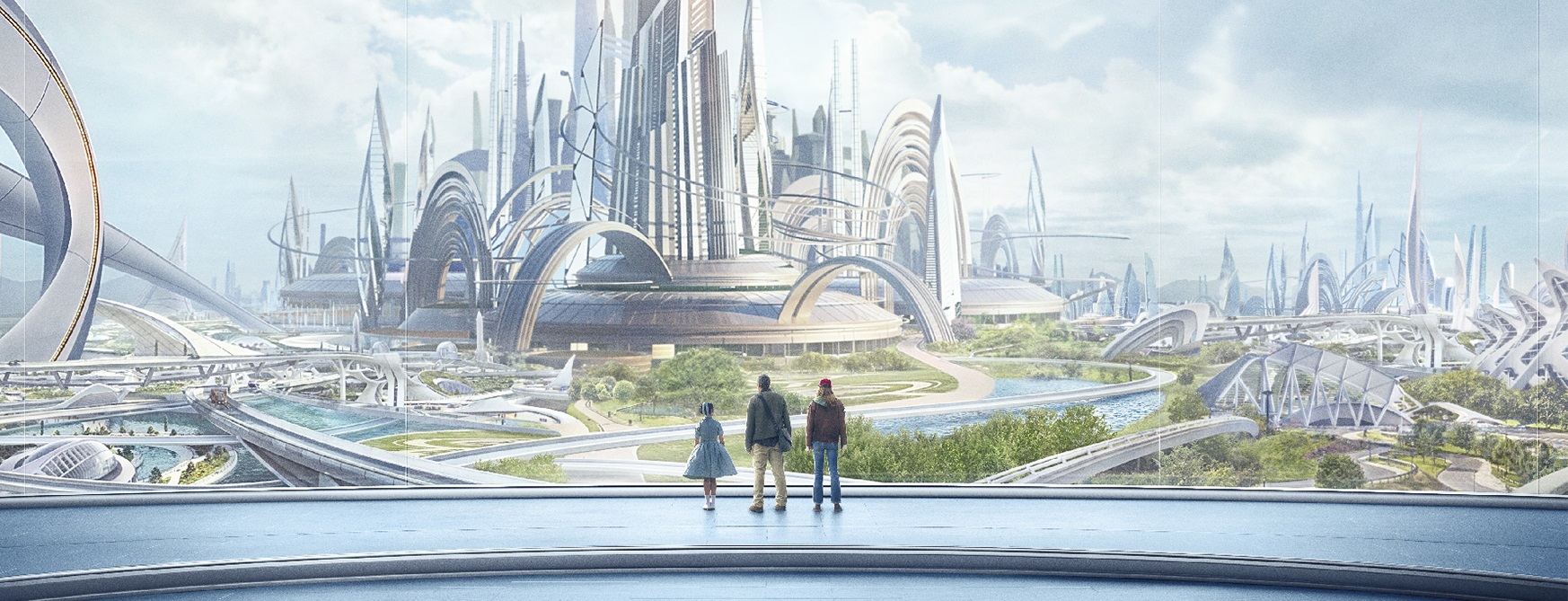
The Future of Sci-Fi Tropes and Dystopic Hopes


Roads will still exist in the future, but if the “figurative schemes of thought” of the architectural images of futuristic sci-fi movies are to be believed, they will be miles above the ground. These future sci-fi roads will sprout from an enormous, corporate monolith in the manner of an octopus. The import of this sci-fi trope is that we will no longer have cars in the incarnation we now know. These cars do not even require a runway, they lift off the ground, which begs the question why will we need roads? The unspoken answer is that while roads may no longer be constructed for human travel, they are necessary to provide a foundation of stability for the evil, corporate structure.

The corporation, in question, is often an intangible, ominous main character in the story, with an ominous name. This begs the question why would the founder choose such a name for his creation that potential clients might associate with evil? Answer: Corporations have no human origin. The corporation, is, was, and always will be, springing to life from some sort of primordial, evil ooze. The corporation did no originate from a they –those humans who sit on its corporate boards, and worked in its departments, and divisions– it evolved into a self-serving “It” that no longer has a need for employees, much less customers, or any goods and services. It no longer serves man, man serves it. 

TMLandThose few humans still serve the corporation are made all the less human by the corporation requiring them to be in full battle gear even while tasked with the most mundane chores, such as inputting data into a computer, and their prime directive (much like the drone bee) is to chase and/or kill anyone who dares to question It. And the It (as forecast by those that know) will find a way to progress into our neighborhoods, put us in pods –as opposed to suburban housing– take away our need for Puggles, and parakeets, and drain us of every vestige of humanity, until It can achieve an end game.

This end game often gets muddled in a loose group of references, but most sci-fi fans don’t require a great deal of detail regarding It’s evil plan. (This viewer also thinks the specifics of the corporation’s evil plan end up on the cutting room floor with a “too preachy” note from the monolithic, evil production chieftains from Hollywood.) The average sci-fi fan cares more about chase scenes anyway, the battle scenes, the CGI, and how the movies’ gorgeous heroes will overcome the final obstacle, the manifestation of It (often some monster who drools lot). The details of this plan would be redundant anyway, for as all sci-fi fans know the sole purpose of all corporations is to end humanity as we know it, so the corporation can franchise out to a chain that will exist for the sole purpose of being evil and ending humanity as we know it, unless our unassuming, swashbuckling, and gorgeous heroes can put a stop It.

The website The Millions states that the word trope has taken on a different incarnation through the years:

“‘Various scholars throughout history … have argued that a great deal of our conceptual experience, even the foundation of human consciousness, is based on figurative schemes of thought.’ The writer also notes that Tropes (in the sense of figures of speech) do not just provide a way for us to talk about how we think, reason, and imagine, they are also constitutive of our experience.’” Modern language has it that the word trope has come to mean: “a common or overused theme or device: cliché.”

The origin of the trope for the octopus road coming out of the monolith, corporate structure may have occurred long before The Jetsons, but most of us (of a certain age) saw it displayed there first. To our minds, therefore, when sci-fi movie makers feel compelled to add the octopus road, they are either paying some sort of tangential homage to The Jetsons, or they are attempting to appeal to our “figurative schemes of thought that are constitutive of our experience” of what the future will look like by way of The Jetsons, or the sci-fi novels and comic books that preceded it.

The unspoken reason behind these miles high roads, is based on the idea that we’ll run out of the space necessary for more traditional, ground bound roads. For some reason, however, pedestrians keep falling off these roads that are created miles above the terrestrial plain. We have roads and walkways that were constructed high off the ground in the present, but they’re often enclosed, or they have substantial guardrails to prevent people from falling. There is no apparent need for guardrails in our shared “figurative schemes of thought” of the future.

If guardrails become passé in the future, one has to wonder how the original architect of the evil monolith (often composed of shiny crystal) will manage to avoid federal and state zoning codes that governments throw at every producer prior to construction. If this architect is crafty enough to evade government intervention, or he has enough money to bribe government officials, one has to imagine that he will see financial ruin by way of personal injury lawyers looking to cash in on the mental duress their clients experience when thinking of falling from these roads, and from those families of the victims who do fall.

If this architect manages to develop some patented safety measures that thwart most of the personal injury lawsuits that hit him, and he manages to avoid getting bogged down in all of the bureaucratic red tape from government officials –expressing alarm for public safety with one hand pointing at the inherent danger and taking payoffs for their silence with the other– this architect will probably go broke as a result of litigation brought by patent lawyers scouring the finer details of the architect’s patent to help the lawyer’s clients siphon as much cash off the original architect as possible, until no future architects, seeking to create evil, corporate monoliths will follow the original architect into this minefield.

The future, as cynical, non-sci-fi fans see it, is not one of crystal cities, miles high roads, and constant innovation, but of government-mandated open spaces and wide open plains as far as the eye can see. One has to guess with the current path we’re on –of government officials and lawyers destroying creators’ plans and finances– that our current course dictates that the future will not be one of architectural brilliance and innovation, unless an ingenious mind comes along and discovers a way to bubble wrap the world and have gelatinous bubble guns at every portal to protect anyone from ever being harmed again.

Until that day arrives, a more realistic dystopian, sci-fi movie would depict our future being one of wide open plains and prairies that mirror Kansas and Nebraska where a screaming fall of a couple miles before one makes contact with terra firma –from an octopus road that sprouts from a monolithic corporation– becomes nothing more than a trip over a piece of loose soil. This movie would not provide us the stunning visuals our “figurative schemes of thought” have come to expect from big budget sci-fi movies that project our future, of course, but with the course we’re now on it would be a lot more realistic.

Faith No More: Sol Invictus


Three things that are consistent with just about every review of Faith No More’s (FNM) latest output Sol Invictus: It’s been 18 years since 1997’s album Album of the Year; the single Epic was their greatest hit; and the boys in the band were considered zany back in the day.  The rock critics also make the leap from that latter point to suggest that that zaniness eventually created a rap/funk/rock movement that we’re all familiar with today.  (Side note: Anthony Keidis, and the Red Hot Chili Peppers have hotly contested the idea that FNM created this movement.)  Most of the critics also speak of the multitude of projects that the band members have been involved in since the 1997 album, and the fact that the album is named after a Roman Sun god.  What is not stated in any of these reviews is that the very idea of an FNM reunion is emblematic of the dire straits of the music industry as a whole.

Faith-no-More-Sol-Invictus-Cover1This isn’t to say Sol Invictus is a money grab, or at least it doesn’t sound like it was.  Yet, the reunion is evidence of something that members of this band, Pavement, and to varying degrees Soundgarden, Blur, and The Verve, said would never happen.  Or, if they never said “never”, they suggested it would be a cold day in hell before they even considered it.  FNM fans would probably argue that the reunion was spawned by how well the members of the band got along together in their most recent European, reunion tour.  If we conceded that point, and we have to to some degree, we could hit those same fans with the question: why did they get together for that tour in the first place?

In the eighteen years that have followed the dissolution of the FNM, lead singer Mike Patton was often asked about the possibility of them ever getting back together again, and on one occasion he said, and I paraphrase:

Every so often, a guy will approach me with a suitcase full of money and a plan for how the reunion of Faith No More will work.  Maybe if they would offer us two suitcases we could talk.” 

To be fair, Patton never hinted that there was animosity within the band, and he never said never, but he did leave the impression that it would be a cold day in hell.  Those of us that pined for a reunion, and parsed Patton’s words for hope, read him speaking about fond memories, and a recognition that none of what he did after FNM would’ve been possible were it not for FNM.  We read interviews in which he said he learned so much about the craft from those days, and that he was eternally grateful for the opportunity they gave him (my words).  We also read him say that he had learned to put the past behind him, and that he felt that they had all reached a creative peak with one another on their last album, and we read lines that amounted to him hoping that no one would hold it against him, but that he was just not interested.

Unless, perhaps, the industry fell to such a level that no one could make money anymore?  Unless the dire straits of the industry reached a point where wives were approaching the former band members with employment brochures from the local life insurance company?  Hell may not have frozen over, as it did with the Eagles, but there is an apparent point where even the most stubborn artist can no longer laughingly reject that guy with one suitcase full of money.

It may seem like unnecessary cynicism to include such a point, and it may be sad to think that it reached that point for these gifted musicians, but there does come a point where pole dancing around the elephant in the room becomes so tedious that someone’s got to jam a thumb in it.

One, almost universal complaint of the album Sol Invictus, from these rock critics, is that it is not breathtakingly original.  The track Sunny Side Up was singled out for the theme of criticism leveled at the album as an example of how FNM followed their soft-loud-soft formula a little too closely.  Any fans of the lead singer Mike Patton know that the man has not followed a formula in many of his works, and that he has numerous artistic, and largely inaccessible albums in his catalog.  My contention is that once you’ve established your bona fides as a risk-taking, boundary-breaking artist, you can go ahead and make more accessible albums.  There is a trade-off, in other words, in which a true artist shows that he can nimbly cross borders without doing damage to his artistic core.  And while Faith No More may be more accessible, and more formulaic, than many of Patton’s other projects, FNM’s definition of accessible and formulaic is far more creative and artistic than the many other, computer generated artists in the modern day lists of music.

The one track that some of these reviews list as a standout in originality, on the Sol Invictus album is: Matador.  Consider me too well-versed on 80’s hair metal bands if you want, but I consider this song to be heavily influenced by the Warning and Rage for Order-era Queensryche albums.  While this track may be original in the FNM catalog, it is not breathtakingly original as far as I’m concerned.  I do understand that most people don’t have a thirty-year reference base, but one would expect someone from the world of rock critics to pick up on this one.

One decent excuse for wanting the material on Sol Invictus to be more original comes from Ms. Zoe Camp from Pitchfork.com:

There’s nothing necessarily wrong with a band repeating itself. But because Faith No More have such a long history, and their members are responsible for music in a staggering array of styles, it’s hard not to expect more, to wish that they might in some way top themselves, or at least change direction.”

Among the influences that Zoe Camp, and Adam Workman of The National, list for Faith No More (FNM) is Nirvana?  Nirvana?  How could anyone listen to any FNM song and think Nirvana?  FNM actually came out before Nirvana is a point that I would make in this argument.  There’s absolutely nothing wrong with Nirvana, of course, but comparing the two sounds is like comparing Neptune and Venus.  They’re both planets, and their existence is influenced to varying degrees by the Sun, but the comparisons really end there.  I realize that one of the members of FNM was friends with Kurt Cobain, but unless these critics are privy to information I don’t have, I don’t know how anyone could list Nirvana as an influence.  One song Star A.D., was supposedly an homage to Cobain, but lead singer Mike Patton has denied even that.  Perhaps these two reviewers were attempting to frame the era in which these two bands were popular, but other than that I don’t see a Nirvana influence in any FNM songs or albums.

Most FNM fans, aching for new material, were a little disappointed by the November 2014 single MF.  For those unacquainted with the single, the full name of the single is the swear word.  We feared that this was a hint of the material to come.  The song itself is decent, but we feared that FNM was trying too hard to be racy, naughty, and that it was a cover for a lack of creative ingenuity in the manner that a stand up comedian with subpar material tries to tap into the audience’s preference for a tableau that is titillating and exciting through swears.  Not only that, but there was the “act your age” element to it that led some of to believe that these fifty-something rockers were trying too hard to sound young.

When the Superhero track was released, some of us were relieved.  Did it sort of plagiarize other material in FNM’s back catalog?  Or, could it be stated that it was a Patton-influenced Tomahawk-like track?  Whatever the case, it was an excellent re-introduction to the FNM sound.

Some of the reviews focus some of their space on Mike Patton’s lyrics.  In my opinion, as I’ve stated in a number of music reviews, when you isolate most lyrics from the music, they are actually pretty mindless.

Lyrics,” as Patton has said many times, “simply fit the music.  Lyrics, or vocals, at their best, should be used as nothing more than another instrument in a song.  No more, no less.”  (Paraphrase.)

If you are still a Mike Patton fan, at this point, you’re not one that demands that he fulfill some sort of unquenchable thirst for knowledge and philosophy you have in his lyrics.  A fairly decent chunk of his output involves non-verbal, guttural sounds, and some of it is even in a foreign language.  Some of the great lyricists in rock history have stated that they were surprised by the effect their lyrics had on people. The reason for this, we can only guess, is that it was not their intention to be thought-provoking, as much as it was to provide “cool” imagery in word collages made famous by William S. Burroughs, and later used by David Bowie.

Most lyricists are not trying to be philosophers, social commentators, or poets, and they’re not trying to write that college thesis that they never had the chance to write after dropping out of school to pursue the dream of being a musician.  The import given to most rock lyrics occurs in the creative minds of rock critics mining the material for something they can expound upon.  If I had the ear of a rock journalist for one minute this would be my plea, get over your obsession with lyrics, they mean far more to you than anyone else.

Chris Conaton of Pop Matters writes that:

Sol Invictus probably isn’t going to top Angel Dust or The Real Thing on most fans’ lists of favorite Faith No More albums, but it’s a step up from Album of the Year and holds its own with the strong but slightly bloated King for a Day, Fool for a Lifetime record. This is a solid comeback album that succeeds on its own terms. Namely, the whole band sounds engaged and enthusiastic to be working together, and that’s good for everyone that’s ever had a vested interest in Faith No More.”

The very idea that anyone that follows what “most FNM fans” think would consider The Real Thing for their top FNM albums’ list reveals that that person has no idea how most hard-core, longtime FNM fans think.  Most of them don’t even mention The Real Thing on FNM discussion boards.  Perhaps those that are just now learning of FNM, or those only familiar with FM radio’s version of FNM would consider that album for their top two.  For most of us, however, The Real Thing put FNM on the map, and we’ve moved past it to such a degree that unless we’re bit by the retro bug, it is growing dust in our basement.  Most true fans would surely agree that Sol Invictus is not going to cause anyone to forget Angel Dust, however, and the point about King for a Day, Fool for a Lifetime would probably lead to some debate, but Mr. Conaton’s greater point about Sol Invictus appearing to be more of a creative interest for the band, than a purely financial one appears to be a strong one.

Reading through the critical reviews of this album, and all album reviews, this reader gets the sense that most rock critics are less concerned with you actually buying the album, in question, than they are getting you to scroll up to see the writer that wrote the review.  They use huge, lofty words to describe the band’s history, and they use flowery language to describe the intricacies of the music involved on the album.  It is, of course, incumbent on them to prove some mastery of both in any album review, but some critics get so out of hand that it can appear a little self-indulgent at times.  Sol Invictus is a hard rock album that will remind you why you fell in love with the artistic brilliance of Faith No More in the first place, and just about everything that Mike Patton has involved himself in over the past twenty-five years.  The fact that the music therein will never cause the hardcore, longtime fan of FNM to forget Angel Dust; coupled with the fact that the lyrics will never cause you to forget Robert Frost should not deter you from purchasing an album that someone finally approached them with two suitcases (or the one that is now more valuable in the current climate of the music industry) shouldn’t deter you from purchasing what happens to be a damn good, hard rock album.