Effective Perhaps, Brilliant No


Effective Perhaps, Brilliant No— “She’s brilliant,” a social commentator, from the Vanity Fair magazine, said when asked to provide some commentary on the social impact Courtney Love had on the 90’s. “I’ve never seen anyone manipulate the media in the manner she does.” If this social commentator knew what he was talking about –and he must working for Vanity Fair— he would know that Love’s method of manipulating the media involves persistent, high volume, and presumably vulgar calls to the offending member of the media that eventuate into threats of physical violence to those who refuse to portray her in a positive light. Effective perhaps, brilliant no.

vicksburgIf this strategy of manipulating the media is brilliant, it’s brilliant in the way Ulysses S. Grant’s strategy in The Civil War was brilliant. His strategy has been called brilliant by some historians, and he has been called a “military genius” by others, but he has also been called a “butcher” for his utter disregard for the lives of his own, Union soldiers in battle. His strategy was based on the fact that the Confederate Army had a tougher time replenishing its forces, so he threw his soldiers at them in what some critics have called a “meat grinder” strategy to eliminate as many Confederates as possible without regard for casualty numbers. The eventual result was so horrendous that President Abraham Lincoln’s wife Mary called Grant “a butcher”, but Grant achieved results. He won strategic battles against the South, where other Union generals presumably worried about the casualty numbers suffered defeat, and history has looked kindly on Grant as a general. After reading through the stats, coupled with the results, it’s difficult to call these tactics, and this strategy, brilliant. Effective perhaps, brilliant no.

This term brilliant is thrown around so loosely, in the modern era, that it’s now as common in the American lexicon as it is in the British one. The Americans used to reserve the term for incredible minds of science, math, and art, where the Brits might define one bite of a crisp brilliant. Those lines became blurred soon after stars began exposing themselves on social media. These posts result in hits, followers, and cachet in our society. Analysts suggest that the star engages in brilliant use of the media. The star might have better looking parts than the rest of us, but other than that, is the star engaging us in an ingenious manner that exponentially exceeds anything we can do on social media? How is it brilliant?

Can I call someone up and verbally abuse them into thinking I’m a pretty good guy? Probably. Can I threaten them in such a fashion that they’ll eventually see things my way? Probably. Could I have sat down at a Civil War planning board to devise Grant’s “meat grinder” strategy? Who couldn’t have? I do not mean to diminish the career of Ulysses S. Grant, because he did what was necessary to win an otherwise disastrous war, and it could be argued that if he hadn’t executed the “meat grinder” strategy, it is plausible to suggest that the Civil War would have lasted longer and eventuated in an equal number of casualties. It’s also plausible, and some historians would suggest likely, that if the “butcher” had not executed such a brutal that the proud South may never have been intimidated into surrendering.

That having been said, I think it would have been difficult for me to live with the unintended consequences of the “meat grinder” strategy, but that may have been what set Grant apart. My question is, was this an ingenious strategy that required a special kind of mind? Is it possible for me to expose physically myself on social media? I’m guessing that fewer people would want to watch me do it, but I do not think it requires a brilliant mind? Effective perhaps, brilliant no.

Points for the Pointless— “Happiness finds you when you least expect it.” I used to pass by these oven mitt and bumper sticker-type sayings on calendars, and in desk cubicles, without lifting an eyebrow, until someone informed me that they’re points for the pointless. They’re for people that are doing nothing in life, have little-to-nothing to look forward to, and need some hope. Do they hope that owning these oven mitts and bumper stickers will make all of their dreams come true? Most of them don’t, but I do think that they’re comforted by the idea that being able to look up at pointless sayings makes their journeys around the Sun feel a little less pointless.

Provocative Statements— “You never know what’s going to come out of his mouth next,” someone once said of me. I lived with that assessment for years, and I spent other years trying to live up to it. Short-term, comfy statements that lead other people to being more comfortable, and happy, have always bothered me. I’m still not entirely over this. I still feel the need to challenge, mock, and expose comfortable thinking for the short-term, uselessness that it is. I’m still tempted, oh so tempted, to add to my already lengthy list of provocative statements, but I’ve realized –with the wisdom that comes from trial and error, and age– that some of the times, it’s better to keep some provocative statements to myself.

Political Hypocrisy— “If the government doesn’t help you, who will?” Some of the most fervent “government solution” types I’ve encountered are often some of the most fervently anti-law enforcement types. They don’t say that they’re anti-law enforcement, few of them do anyway, but they suggest that law enforcement officials “can” get out of hand, and that they “can” take the law into their own hands. Of course some law enforcement officials “can”, and “do” get out of hand, just as I’m sure that there are some shoe cobblers whose actions give their profession a bad name, but to castigate the whole of law enforcement based on the anecdotal evidence of a few is ludicrous. It’s like saying that singers can’t sing based on a performance by Britney Spears. The “government solution” types then extend their complaint to the manner in which law enforcement officials encroach upon our freedom. The funny thing is that these same anti-law enforcement types don’t draw parallels between the enforcement of some dangerous laws that law enforcement officials are forced to enforce and the government officials that pass those laws. Some of them actually turn around and vote for those politicians that complain about the manner in which law enforcement officials conduct themselves on the scene, when the only reason these law enforcers took it to the next level was that the victim failed to comply with the government official’s law. Their solution, I assume based on their premise, is for government officials to pass a law against the law enforcement officials enforcing the laws that the government officials pass.

I used to work in a PC, HR, and “California way of doing business” company. I had an encounter with a supervisor that acted –in a closed door, one on one session– in a very un-PC, anti-HR manner that would’ve left those that think that the “California way of doing business” should be exported, breathless. These people would’ve had their hands over their mouths if I told them even half of what this man said to me –in a closed door, one on one session. If I were as PC as this company informed me I should be, I could’ve made this supervisor’s life very difficult. It’s possible that I could’ve had him fired for the things he said, and the way he acted. It was obvious, from the things said –in this closed door, one on one session— that this was not business, it was personal.

I should’ve spotted this for what it was in the moment. I should’ve called this supervisor out at the time, regardless if I deserved it or not. I should’ve informed him that we live in a new world now, and that this company has adopted the “California way of doing business”, and that those old world, right-to-work Nebraska tactics don’t work in this company anymore. That’s not the way I was raised however, and I don’t write that to establish my bona fides as a tough, no nonsense guy, but to say that I do not think in terms of PC or HR. Regardless what I did to deserve this, just about every employee in the PC, HR department would’ve found in my favor.

The point is that while some of these PC, HR “California way of doing business” measures may help an employee, most of them are very damaging to the way business is done in America today. Most of these measures prevent the company in question from being sued, but there are always unintended consequences to the routine ways of doing business. Good employees are fired, poor employees remain based on the situations in question, but it’s all worth it, apparently, to prevent a probable lawsuit.
Rilalities VI


Lucky is the man who does not secretly believe that every possibility is open to him.” — Walker Percy

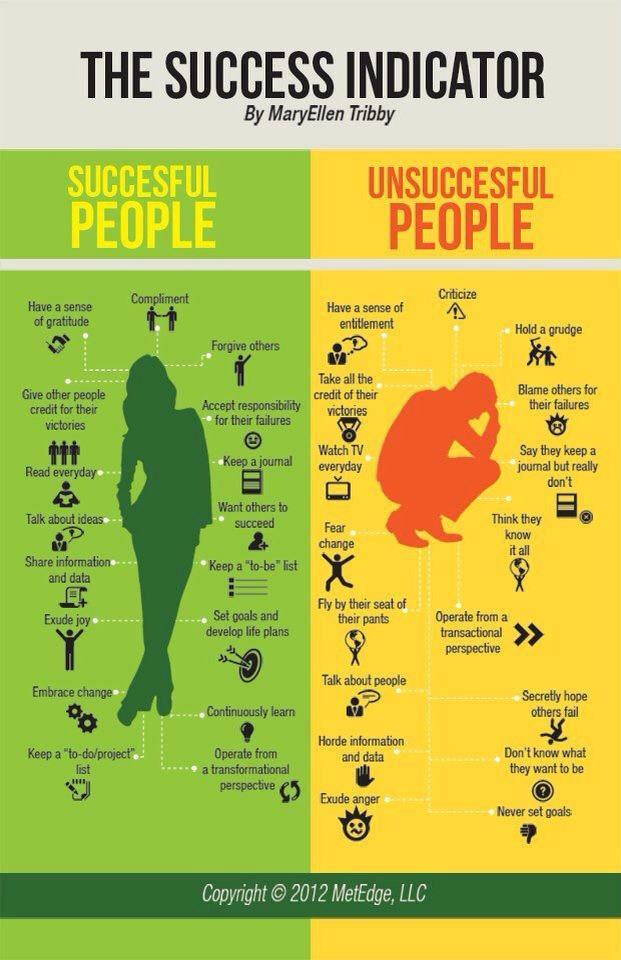
1) A Man on the Rise534382_543655018980917_1211806109_nWe all have a formula for success, but how flawed are they? How many inconsequential matters make it into our formula? I met a man who achieved a relative level of success in life. The only problem was he didn’t know how to set an alarm clock, so I showed him … numerous times. Frustrated and embarrassed by this revelation, he stopped me and said, “Just give me a damned wake up call!” He looked at me with a bemused smile that contained shades of embarrassment. The shades of embarrassment suggested that he knew he should know how to do this by this point in his life, if he wasn’t a senior citizen he was close. Beneath that subtle shade of embarrassment was a bold confidence that suggested this moment  didn’t bother him as much as I thought it should. I was so shocked that I could barely return a polite smile. I figured that someone, a mom, a wife, or a secretary obviously made sure his clocks ran on time. The man’s confidence, combined with this lack of knowledge, led me to share this moment with a number of people, until I finally ran into someone who knew who that feller was. “That man is the vice-president (VP) of one of the most prestigious companies in the world,” he said mentioning the name of the company in question.

It seemed unfair to me that a man who knows so much should achieve so little, while this near infant-of-a-man should rise to the upper reaches of our society. The difference between the two, life has taught me, is tunnel vision.

Long after meeting that VP, I met a man named Kelsey Anderson. As opposed to the specific knowledge that the VP gained, attained, and sustained, Kelsey was more of a generalist. “Okay, that man is just smart,” someone once said after spending some time in his company. “He is,” I said. “No doubt about that, but he has no direction. He’s never learned how to apply that knowledge in any productive way.” Kelsey and I spent about six months working next to each other in a big company, and my impression of him only strengthened over time.  

The question is who is smarter, who’s more successful, and who has the better game plan? The VP obviously focused his more limited resources in one particular area, until he eventually succeeded beyond 99 percent of most men. Kelsey was an impressive intellect who could’ve taken that alarm clock apart and rebuilt it. He was one of those guys who appears to know a surprising amount of something about everything, but he had no particular area of focus, no direction, and thus no arena in which to display his prowess. His potential to succeed was unbound, and we all knew it. He knew it. The vice-president had comparatively limited resources, but he obviously learned his limitations early on, and he learned how to hone those few strengths he had to become what we all deem successful.

We’ve all witnessed impressive people before, but how many people do we know that are so impressive that their listeners cannot contain themselves? Most people try to find the one thing that is not impressive about the impressive, so that they can feel more comfortable in their less than impressive lives. Most people do not say things like: “What’s he doing here?” … among us?

“If someone were to just give me half-a-(durned) chance … ” Kelsey would complain when I complimented him on his intelligence. The compliment I gave didn’t please him. It made him more angry about his station in life. “I just-I have so many ideas … ” he complained. He knew so much, about so much, that he was an intimidating force of a man, but he had learned so little in life that he never found out how to capitalize on it. Watching him, one was left to wonder how many learned men in history had so much trouble harnessing their ability that they were deemed a failure by those that knew them? And how many lesser men learned how to harness their limited ability, until they achieved a place in history we all know well?

Catchers and framing

2) Framing an Argument: Have you ever found out that an overwhelming number of people disagree with something you’ve believed in for so long that it’s now an ingrained truth to you? Is this issue something that you hold so close to your heart, that it pains you to learn that so many disagree with you? The disagreements you’ve heard aren’t simple disagreements either, they’re profound, substantive disagreements that cause you to question everything you once held dear.

The first question that your like-minded cohorts will ask you is what is wrong? Even moral issues are relative when looked at in a certain light. There are no absolutes, they will say. You may love that answer for it falls in line with your philosophy, but it doesn’t satisfy the internal dilemma you’re experiencing, because the contradictory information pouring in is penetrating.

You simply need a course in framing, your like-minded cohorts will say. The art of framing employs the soul of wit: brevity. If you can frame your issue in the form of a sound bite, a lyric, one frame of one cartoon, or a couple of pictures, the world will be your oyster. The particulars of the argument may damn you to the point of being wrong on this particular issue, but you need not worry about the particulars when you’re framing. Your goal, in this the age of 140 words, is to succinctly portray your position in a manner that can be repeated, and shared, until you’re as close to right as you can possibly be without saying the wrong thing, and your brokenhearted brethren will like you for it.

3) LANGUAGE: I’ve always had a passing interest in the French language. When it’s fluently spoken, it can sound so rhythmic and beautiful. I was so taken by the language that I decided to take a college course in French. It became clear to me (about a month in) how passing that fascination was. I still enjoyed hearing the language though, and I’ve even tried my hand at using some of the language’s more exotic words with all of the umlauts, graves, and aigues in place. It was my goal to speak the language in a manner absent the mundane, specific-to-America renderings. The French word for accessories, accouterments, got a hold of me once, and I began using it as often as I could. It made me feel exotic and a little worldly when my English speaking friends would say, “What?”

“It means accessories,” I would say with a subtle amount of smugness that bathed in the exotic juices of knowing a little French. I finally ran into a native French speaker some time later, and I couldn’t wait to give the word a test drive. I used it in proper context, and I thought I had my elocution down. I had also used the word for years at that point, so I felt confident in the idea that I could now say it without the effort those that had never heard the word used.

When my native French speaking friend said: “What?” I was a little taken aback.

“Isn’t that French for accessories?” I asked.

He asked me to repeat it, and when he was able to pick himself up off the floor, he informed me that most non-native French speakers should just stick with the American renderings.

elliwtch4) SELF-PROMOTION: Rarely will you read an author write, “I’d like to talk about myself now … ” They’re usually more creative than that, but some of them aren’t. Some of them should spend a little more time trying to creatively frame their indulgence a little better.

I recently put a book down that contained the words: “They don’t want Harlan Ellison messing around with that.” Speaking in the third person can be funny, and some of the times it can be an affectation of funny that leaves the reader thinking that they’re about to go down an unusually funny, self-defecating (sic) path, but this particular fork in the road was not a veiled attempt at humor, nor was it eventually self-deprecating. This was pure self-promotion. This was Harlan Ellison telling the reader that the establishment regards him as a dangerous rascal that keeps on mucking up the status quo to a point that they believe he must be constrained to maintain their precious military, industrial complex. They’re afraid of what Harlan Ellison might tell you, Harlan basically writes. They do not want Harlan speaking out, because they know that his powerful words can cause unrest. Harlan also wants you to know that the establishment, the man, doesn’t appreciate him speaking out, because they’re afraid of his thoughts, and he’s much more powerful than you know (or perhaps than he even knows), but the man knows, and they have tried to find some way of shutting him up. Either that, or the cynic in me believes, that Harlan wants you to feel like an outsider that doesn’t know how truly rascally Harlan can be, so you may want to buy more of his books to find out. When we buy a book, we do want to find out what an author thinks, and we’ve been tantalized by his thoughts through some other medium that led us to being so interested in his thoughts that we wanted to purchase a compendium of them, but when that author qualifies his thoughts in a manner that suggests that he believes that his thoughts are extravagantly provocative, some of us simply tune him out.

5) Quote: Recalling the fifty year anniversary of the legislation, George Will writes of President Lyndon B. Johnson’s Great Society: “In 1964, 76 percent of Americans trusted government to do the right thing just about always or most of the time. Today, 19 percent do. The former number is one reason Johnson did so much; the latter is one consequence of his doing so.”

Rilalities V: Challenges and Insecurities


The 6’5” Guy

“I’m six foot five,” a man named Joe said when I met him. He did not work this into his greeting, and he did not say it in the early minutes of our introduction but it hung over his sizable head until he acknowledged it.

Those fortunate enough to meet Joe will discover the reason we learn about his height soon after learning his first name. The natural inclination of most is to drop their last name soon after saying their first name. Some drop their last name soon after mentioning their first name as a matter of habit, and some do it because they’re so proud of their family and heritage. Others might mention their occupation soon after mentioning their first name. I didn’t learn any of that from Joe in the brief moments Joe and I spoke. I learned that Joe was 6’5”. Joe was more 6’5” than he was Joe, and those fortunate enough to have a conversation with him that extends beyond superficial pleasantries will learn how 6’5” he is. If the conversation we share with Joe evolves into a minutes-long discussion, and the listener doesn’t acknowledge his height in anyway, he’ll break the news to them:

“I’m six foot five!”

Although Joe and I spoke for a total of about three minutes, I had the impression that the man could’ve written a bestseller, won the Heisman Trophy, saved children from a fire, or discovered the cure for cancer, and his height would still be his greatest and worst attribute. No matter what happens to him in life, I think Joe will prefer to have “Here lies Joe. He was 6’5” chiseled into his gravestone.

Joe was an interesting guy. He appeared to be conversant on a wide range of topics, and he managed to tell some stories from his life in an impressively timely manner, but everything he spoke of kept coming back to that refrain of his life.

His height was the reason he had trouble finding chairs to sit in with comfort, the reason his 5’3” mother was always on him about stuff, and the reason he couldn’t be as particular as he wanted to be about the clothing he wore:

“You can’t be finicky about clothes when you’re 6’5” and built like me.”

Joe, we should also note, was broad-shouldered. This attribute, coupled with the idea that he was 6’5” was the reason he had trouble going door-to-door to talk to people.

“Would you be comfortable discussing politics, if a man my size came-a-knocking on your door?”

His height was also the reason, he informed me, that he had such trouble finding a decent woman. That subject matter may have shocked most people, or at least made them somewhat uncomfortable, as most people would deem such a discussion inordinately intimate for a conversation between two people meeting for the first time. I had a best friend in high school who was 6’7” however, so I was well versed in the travails of being an abnormally tall male in America today, and I was used to my friend going into such intimate details with people he just met. Joe and I did try, at various intervals, to move on to other topics, but he was unable to let the fact that he was 6’5” go as easily as I was.

What struck me as odd was that I never mentioned his height, and I don’t think I provided any verbal or physical cues that called attention to it. Was that the point though? I later wondered. Was my refusal to acknowledge his height such an aberration to his experience that until I acknowledged it in some way, he would not be able to move on until one of us did?

Being a tall man has numerous advantages, but it has almost as many disadvantages. As I wrote, I was well versed in the travails of being an abnormally tall man in America. I knew, for example, that a person’s height is the first thing people notice when another is taller than 6’3”, and the thing they talk about after the person leaves. “How would you like it if no matter what you said, ’Man he is a big fella ain’t he?’ is the only thing they have to say about you after you leave?” When you’re 6’5” people pester another about in malls. It’s the reason some guys won’t mess with you and the reason others do. It’s also the reason some women want to date you and others don’t. A 6’5” man could be the most charming person in the world, in other words, and most people will have preconceived notions about them based on their height.

With that in mind, one would think that an abnormally tall male, or a woman with abnormally large breasts, would find it refreshing when they’ve finally encountered someone who seems to be genuinely unconcerned with their attribute(s). One would think that they might find it refreshing when they’ve finally found a person who is willing to talk geopolitics with them without looking down their shirt, or saying, “How’s the weather up there?” One would think that someone who broke those patterns of human interaction would receive a bright smile as a reward, and maybe even something along the lines of, “Thank you. You may not even know why I’m thanking you, but thank you!” Yet, tall men and large-breasted women, just like all humans with exaggerated attributes, become so accustomed to these patterns of interaction that they feel compelled to draw your attention to them just to complete a line of dialogue comfortably.

Most people try to avoid talking about a trait they generally considered a negative, and they will do everything they can to avoid noticing it. When they consider that person’s attribute a positive, most people think you should feel privileged to have it, so they don’t mind drawing attention to it. “You’re tall Joe!” they will say, or “I wish I had those,” and they will add something along the lines of, “You should feel privileged.”

As my conversation with Joe continued, and he began to belabor the point of his height, I thought he was trying to assert some sort of dominance. I may have been wrong on that note, and it might have had more to do with everything I thought later, but I began to rebel against his theme by making a concerted effort to avoid the topic of his height. Our conversation ended soon thereafter, and we moved onto other people at the gathering.

“What did you say to Joe?” our mutual friend later asked. She thought Joe and I would have so much in common that we would hit it off.

“Why?” I asked.

“He says he doesn’t think you two hit it off.” When I asked her for more details, our mutual friend said, “He said he can’t put a finger on it, but he doesn’t like you as much as I thought he would.”

Without going into what I deem to be the unnecessary details of our otherwise innocuous conversation, I can tell you that the conversation I had with Joe involved no disagreements. To my mind, there were not even moments of subtle tension, and there certainly were no overt ones, but he didn’t like me. Now, I’m not one of those people who thinks every person has to like me, and if they don’t I think there has to be something wrong with them, but to my mind this conversation I had with Joe proved to be amicable if not pleasant. Joe and I also proved to be as like-minded on certain topics as our mutual friend thought we would be. The only thing I did, and that which I presume led Joe to state that I didn’t live up to the characteristics our mutual friend detailed for him, was refuse to acknowledge he was 6’5” in anyway, and I think he thought that if I was’t going to do that, I was probably a phony.

Going Clear—

Anytime I finish a book as fantastic as Lawrence Wright’s Going Clear, I wonder what I am going to do with my free time?  The book gives credence to Phillip Roth’s line about non-fiction being stranger than fiction.  A complaint that an Amazon.com reviewer posed was: “If everything Wright writes is factual, why would anyone want to join the Scientology religion?”  This reviewer stated that this was the only point, and a central point, that they found lacking in the book.  If I were this Amazon.com reviewer’s teacher, and I lived by the credo, there’s no such thing as a stupid question, I would simply require that student reread the book.

Kiss in Rolling Stone—

Anyone that thinks that being “king of the hill, top of the heap, and ‘A’ number one” means that you will be able control your press, should read the March 28, 2014, issue of Rolling Stone magazine.  Kiss may no longer be the band that sells platinum records every year, and they may be more about marketing than music at this point in their career, but this Rolling Stone article was supposed to be about their soon-to-occur induction into the Rock and Roll Hall of Fame.  To read this piece in the Rolling Stone, however, that fact means little-to-nothing.

This piece of rock journalism was so shockingly brutal that one has to imagine that Gene Simmons is still throwing some of his much detailed Kiss memorabilia at the wall when he thinks about it.  All four members of the band Kiss came under attack from the author of the piece, but the author reserved most of his unprofessional brutality for Gene.  This writer’s attacks were so petty and snarky that a regular reader of Rolling Stone would suspect that Gene was a Republican candidate running for office.  Yet, Gene’s not even a Republican voter, as he has made it public that he voted for both Barack Obama and Bill Clinton twice.

This article would also be an excellent read for journalism students seeking answers on what not to do with subjects they’re covering in an article.  Having never taken a journalism course, I would have to imagine that one of the primary rules discussed in a Journalism 101 class is: “The articles that you write are not about you.  No one will be reading your article to learn what you think, unless you’re writing an opinion piece.  If you’re covering a subject in a journalistic manner, however, remember that your readers are only reading your article to learn more about the subject.  It’s not about you.  Your readers won’t care about your opinion, your preferences, or what you think about the subject you’re covering, so be careful how you frame their answers.  If your subject says something stupid, infantile, or in any way revealing of their character, put that statement on the record, but do not comment, or frame, that quote in anyway.  That’s not your job.”  Judging by the course journalism has followed in the last generation, I’m quite sure that most journalism schools now include an asterisk with each of these rules that states: “Unless your subject is a Republican politician.”  As I wrote, however, Gene Simmons is not a Republican voter.

Inspiration—

“This guy sounds like a complete fraud,” a writer said of a fellow writer I was describing.  I wasn’t even done with my description of this fellow writer, when this writer interrupted me with her blunt characterization.  I wasn’t shocked by her assessment of this fellow writer.  She had said as much of other, more established writers, but it was apparent to me that this woman believed that by diminishing all other writers around her, her stature as a writer would somehow be fortified.  Had this been the first time I heard any writer say such a thing, I would’ve passed her comments off as flaws in her character, but I’ve heard a number of novices, and well-established writers, engage in the this practice.  If you’ve ever heard a U.F.O. chaser, a ghost hunter, or some fortune teller attempt to establish their bona fides by telling you that every other person engaged in their craft are fraudulent, then you have some idea what I’m detailing here.

Knowing how hard it is to come up with ideas, and execute those ideas to the point of proper completion, one would think that a writer would bend over backwards to extend professional courtesies to anyone trying to do the same.  If you think that, you’ve never sat down with a group of writers.

“You can say he’s a poor writer,” I said, “But are you saying he’s not a writer?”

“I’m saying he’s probably a hack,” she responded.  She didn’t arc her nose upward after saying that, but that’s how I now remember it.  It seemed like such a violation of the code, on so many levels, that it was hard to comprehend how she could be so brutal.

She cut me off before I could ask her what she meant by “hack”.  I know the general term applies to writers that write just to write, and churn out poor quality submissions for financial gain, but she had never read this person’s material.  She had never even met the man.  Yet, he was a hack in a manner that made her appear adept at using the word.

One essential component to avoid being called a hack, apparently, is to write so little that everything you write can be perceived as enlightened, or divine in nature.  If you want to avoid being a hack, you should never write what others might consider mundane.  Yet, those of us that truly love the minutiae involved in writing, believe that it’s only through exploring the mundane that moments of inspiration can be discovered.    

One key component to being in a position to level such a charge, and have that charge stick –I now know after reading her material— is to never allow those that hear you level it, read your material.  Your charge should remain an indefinable accusation that leaves you with the dignified, nose-in-the-air air about you.

Her material brought to mind the one key component of storytelling that every writer should focus on —be they a writer of vital, substantial material, or a hack— make sure it’s interesting.  Translation: You can be the most gifted writer the world has ever read, but if your material is not interesting, no one will care. 

In the face of the constructive comments (see negative) this woman received from our group, she said, “Perhaps, I’m a better editor, than I am a writer.”  Translation: I have little in the way of creative talent, but I am, indeed, gifted in the art of telling others how little they have.