The Good, the Bad, and the Beagle


“Your dog is a hunting dog,” some men say when they see a Beagle. “Seriously, they’re bred to hunt.”

“Really,” I say. “That’s interesting.” I found the characterization, or categorization, interesting. I heard it before, as I watch cartoons, but I dismissed it based on the fact that I’m not a hunter, and I didn’t think I’d witness those characteristics.

I owned a Puggle (part Beagle, part Pug) for over eleven years, and I named it Mr. Fehrley after the landlord on Three’s Company. Mr. Fehrley was the best dog I’ve ever owned. Loyal, obedient, easily trained, affectionate as all get out, and as fun as a dog could possibly be. If anyone is looking for a great dog, I don’t think you can do much better than the Puggle. I could be wrong, but I think Mr. Fehrley took the best of the Beagle traits and combined them with the cute, cuddly traits of the Pug.

I loved that Puggle so much that I wanted another one right after Mr. Fehrley’s tragic demise. My wife said that I would forever unfairly compare the new puppy to Mr. Fehrley. She was right, of course, as no dog could live up to the lofty plane I put Mr. Fehrley on.

The Cute Beagle

If I wanted another Mr. Fehrley, the question was should I go Pug or Beagle? I’ve met some pugs, and I read about a whole lot more. While they are one of the more attractive dogs the consensus on them is that they are cute and cuddly lap dogs. They are characteristically loyal and affectionate, but their preference (according to the various websites on dogs) is to sleep. They enjoy sleeping by your side, on your lap, but they are just as content to sleep by themselves, as long as they’re sleeping. They will occasionally chase a ball around when they’re puppies. Older Pugs fall routinely fall into the 20-hour plus sleep routines of the normal dog.

The best dog I’ve ever owned napped a lot, but most of his characteristics lined up with the playful Beagle traits. If you loved those traits so much, I thought, why not go one step further and find out what a purebred Beagle might have to offer?

Over a year in, I’ve seen the documented loyalty of the Beagle in Max. He’s no Mr. Fehrley, but he’s probably as close as I could get with all of the other characteristics thrown in.

Max, while still a puppy, had boundless energy. Just when we thought we drained every ounce of energy out of this tiny dog, he regroups. He takes a break. He drops to his belly and pants it out, and then he’s ready to go all over again, usually within minutes.

As I suspected I didn’t see the hunting side of Max, and I never thought I would, until we took a trip to grandpa’s house. Grandpa’s house is in a small town, surrounded by acres of forested region. On the outskirts of that forested region, we spotted a deer.

Anytime Mr. Fehrley spotted something wild, his motto was “I’m game!” He spent his eleven-and-a-half-year existence chasing anything and everything just to do it and just to see what it was. He loved “the chase”. (He chased an opossum once, and he caught up to it, but he didn’t know what to do with it when he did.)

We could see Mr. Fehrley’s Beagle characteristics in the course of a chase, but the Pug characteristics appeared when he was easily dissuaded from pursuing it by our arbitrary definition of “too much”. If I decided this would be a fun hunt, and I did more often than not, Mr. Fehrley was game. He was all-in, as it were, but after a while, humans get tired, bored, or in other ways disinterested in the chase. A Puggle follows suit. “I get it,” they basically say. “It’s time to move on.”

The Hunter

A Beagle, as evidenced by this trip to the grandparents, and a couple of instances since, cannot flip the switch of their internal mechanism off as easily.

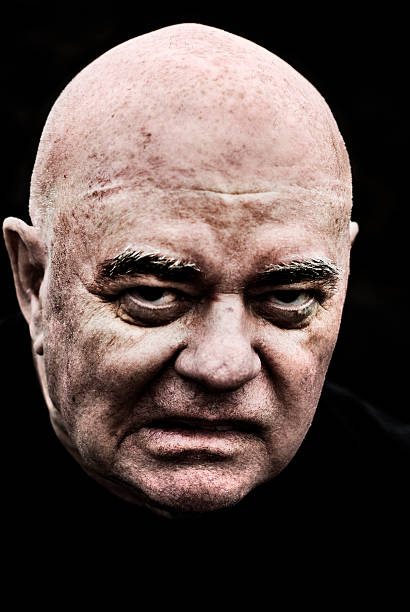
The quote “Your dog is a hunting dog” came back to me when I saw Max’s internal mechanism go primal. Mr. Fehrley whined and barked after squirrels, rabbits, deer, and any other being we saw through the course of his life, but his emotions dictated that he enjoyed chasing things more than anything else. He was a very curious dog and highly intelligent. Max’s reactions suggest he doesn’t want to just chase prey, he wants to rip the throat out of whatever is on the other end of this scent. His whining and barking are more of a primal, desperate cry to satiate the characteristics bred into his DNA.

It’s difficult to describe the distinction between a dog who enjoys the hunt, as if it were a game, and one who displays an internal, primal switch. To illustrate the difference, Mr. Fehrley chased hundreds of rabbits under chain link fences. He then dug fastidiously under the fence, and he whined while doing it, but after a time, Mr. Fehrley recognized the pointlessness of the exercise. It was cute and funny to see him display all of these characteristics. Max did all of the same things, but at the point when Mr. Fehrley would recognize the pointlessness of it, Max attempted to bash through the fence, headfirst, twice. If I didn’t pull him away, I suspect he would’ve harmed himself in the pursuit.

The men who told me Max was a hunting dog said it was why humans bred them. We all knew this. We know this about our German Shorthairs, our Pointers, and the various retrievers we call our best friends. We know some dogs are bred for hunting, but until we see it firsthand, we don’t truly know it.

The Beagle Smile

Mr. Fehrley ran to the extent of his talent to capture the goal, but he never came close to achieving it. Max is so fast and so quick with his change of direction speed that if I let him off the leash, I can only guess that he wouldn’t stop until he ended the life of whatever it was he was chasing, and he’ll come back with a bloody beard when he’s done. 

I let Mr. Fehrley off the leash to chase his intended victims, because I knew he’d stop when I ordered him to, and he’d always come back. I’m almost positive that the moment after I let Max off the leash, I’d never see him again.

I flirted with letting him off the leash once, but there was a fairly busy thoroughfare a quarter of a mile away. Just seeing what I saw that day at the grandparents’ home, I know Max would go to that thoroughfare and beyond it if that was required to catch his game.

The Passion of the Beagle

Dogs love their masters in a general sense, defined by the way they greet us at the door, the way they enjoy being pet, and in all the ways a dog expresses love. If we were to define love, in this sense, we would define a Beagle’s love as passion. The French have a term joie de vivre, which basically means to express a cheerful enjoyment of life, an exultation of spirit, and a general sense of happiness. To watch Max go through life, one gets the feeling that they’re not enjoying life to the fullest. Everything is the greatest thing that ever happened to him. When he greets you at the door, it’s as if you’ve been gone for a year, and he curdles under your touch when you pet him. When you pick him up, he wears a full doggie smile, coupled with a quick lick to your nose, and a wriggling that suggests he wants you to put him down. If you abide by what you consider his wishes, he tries everything he can to get back up. He wants to sleep with some part of his body touching you, and he even sleeps passionately, which you learn if you move your leg. “I’m sleeping here,” he growls. Most dogs love to play chase the ball, but of all the dogs I’ve owned, no dog plays chase with more zest, zeal, and passion than the Beagle. When he greets a stranger that you’ve acknowledged in some way, he passionately pursues their affection in ways that can, at times, prove embarrassing. If you watch him in your backyard with seemingly nothing to play with, he races around in the yard, in a manner some call the zoomies. I’ve watched him chase nothing for a good ten minutes as top speed with no break. I’ve watched him flip a stone up in the air and chase it around for a couple minutes, then he rolls his back on it, flip it up and repeat for an unusual amount of time.   

Max is the most passionate and affectionate dog I’ve ever owned. He’s as loyal as any in-the-home, domesticated dog I’ve ever encountered, much less owned. After a year of ownership, I thought I knew him as well as any dog I’ve ever spent every day with for a year. I’ve owned a Cain Terrier (a Toto) who surprised me by digging so deep into a ground squirrel’s hole that I was reminded my cute, little fuzzy buddy was a carnivore. I owned a Puggle who showed me what he was bred to do, but neither of those two dogs could prepare me for what the Beagle wants to do, how badly he wants it, and what he might do if he catches it.

If you’re in the market for a dog, the Beagle is one of the most beautiful dogs you’ll ever see, and they’re one of the best family dogs on the market, but they’re also listed as one of the best hunting dogs by many other outlets. If you want to buy a Beagle for evidence of the former, but you don’t want to see evidence of the latter, my advice is never take them out of your city neighborhood. Doing so, might lead you to see a side of them you don’t care to see. I enjoy it all to a limited extent. You can call me a soft, city-dweller if you want, but I must admit that I was not ready to see the extent of my Beagle’s ability as a hunter. Now that I see it to the extent that I know it, I’ve learned how to feed the breed to make him happy. 

How We Saved an Alien Species: The Untold Story


“It was a fact-finding mission,” Ty Tabor told a Congressional Committee devoted to finding out what happened during supposed alien invasion. “We were never on the brink of war or in the midst of an invasion,” Tabor added with a condescending tone. “It was a desperate mission, on their part, to see how we reacted to combat. I mean no disrespect for those who lost their lives in the combat that erupted, but these were brief skirmishes that resulted in some unfortunate death for both humans and aliens. They could’ve annihilated us with their advanced weaponry, and the genetics they designed specially for battle, but they didn’t. With all due respect to you and Congress, we should devote the rest of these hearings on why they didn’t wipe out the human race when they could’ve.“

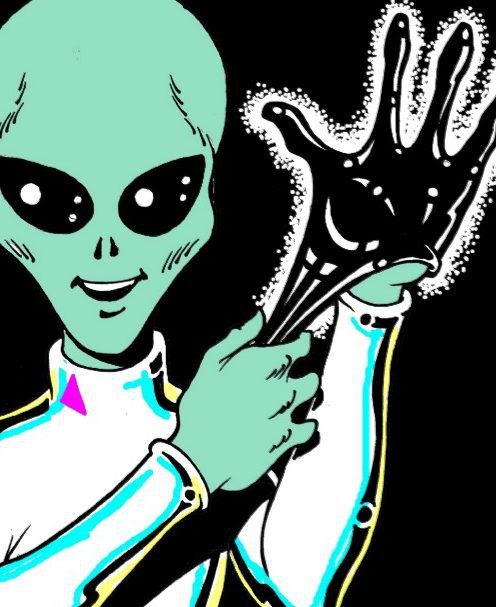
As Tabor suggested, Earth wasn’t the first planet the aliens visited, and it wasn’t the last, but as we will detail in due course it turned out to be the most informative for them. They used one little nugget they discovered in their battles with Earthlings to save their small, resource-rich planet from constant war and possible extinction.

They proved to us that they’re generations ahead of us in gene manipulation, because the constant invasions they experienced over the the course of generations forced them to use their advancements in science and math to build the ultimate warriors that we witnessed on the battlefield. They sorted out their gene code to make their warriors run faster, and their hands operate faster and quicker. They’re now genetically designed to think quicker on the battlefield, and their methods of destruction are far more creative and devastating. The scientists from their species messed around with their gene code until they created more intelligent mathematicians and engineers to help their species create better weapons, and they monkeyed around with genetics, until they created beings who could go longer stretches without food and water.

War became a way of life for them, as the other alien species set down upon their planet for its resources. The young warriors we witnessed, and most of their species knew nothing but war for the whole of their lives. War and population replacement were their two primary concerns for so long that the only evidence of peace on their planet existed in their history books.

The moment after they developed a genetic superiority of some form, the invaders would capture a carcass and copy their genetic manipulations. Before long, the battles between alien species involved one genetically altered warrior against another, and the results of these battles ended up a 50/50 proposition, or what we might call a coin flip.

When they sent envoys to Earth, they found that we were largely inferior on the battlefield. When they stole our carcasses for study, they also found our genetic codes inferior. As we all know, not all of their battles on Earth were successful. We won some, but they won a whole lot more. When their alien counsel questioned their scientists and engineers, the scientists and engineers theorized that total annihilation of the human population would prove difficult if not impossible? Again, this wasn’t their primary directive, but the alien council wanted to know how the scientists and engineers came to this conclusion.

“It has nothing to do with any form of inferiority on our part,” one scientist theorized. “We are superior to them in every way that we can determine, save for one. Perhaps. If you want to call it that.” The alien council pressed the scientist on this topic. “I want to stress that this is but a theory, and I do not know if it is a superiority or an inferiority, but we found that humans have a greater desire to live than our superior warriors do. They do not do what is necessary to win a battle, most of the time, but their crafty solutions on the battlefield were informed by their desperation to keep living. Our warriors, again superior in every other way, did their jobs, but we found that most of them didn’t do what was necessary to survive. That difference proved to be the humans only advantage on the battlefield.”

“Why?” an alien council member asked.

“We’ve asked ourselves this many times,” the scientist said. “In preparation for my testimony today, my teams and I developed a number of complex answers that we thought our warriors could use against our enemies, but for every answer, we developed about ten more questions. The one answer we developed, which arrived as a recurring theme that no one noticed until someone did, might be the simplest answer but the most complex one for us to implement is that humans just seem to enjoy elements of life, and life in general, more than we do.”

The alien council was not satisfied with that answer and most of them rejected it for the record, and one even wanted it stricken from the record. After the scientist left the boardroom, one member of the alien council said, “The idea that we don’t want to consider what our esteemed scientists found should make it the one idea we consider most.”

The council brought in a number of the surviving warriors who saw action on Earth. The council wanted to focus on those who weren’t as successful to find out why. Most of them were so embarrassed by their failures that they wouldn’t admit, or didn’t know, why they were not completely successful. Their answers were so situational that they did not prove useful to the council.

The council finally brought in their most successful commander who won over 90% of his battles, yet they wanted to know why the commander thought his troops weren’t 100% successful.

In their interrogation, the council was careful to avoid any questions that might embarrass the commander, and they did not want to influence his answers with any of the answers they received prior to him taking to the floor. They wanted honest appraisals of the human beings to use for future manipulations of their species’ gene codes.

The commander started out situational, explaining why he thought they were successful in some locations and unsuccessful in others, but he mentioned that he thought some people in a very specific location had a greater will to survive than others did in other locations. When he concluded, a council member focused in on that idea of their greater will to survive, an idea the commander only mentioned in passing.

“They do have a will to live that surpasses any species we’ve encountered,” the commander said in an unprompted repetition of what the scientist said. “As opposed to most of the captured combatants I have witnessed throughout my career, most humans gave up whatever we wanted to know when we tortured them. We regarded this as a weakness at first, but we came to appreciate how much they wanted to survive.

“When we asked them why they wanted to survive so badly, some spoke of wanting to see their offspring grow to be adult humans, others spoke about enjoying their freedom, and some spoke of enjoying their lives in some sort of philosophical fashion.”

The alien council found those answers so esoteric that they struggled to understand how could use them. They brought in another commander who echoed many of the answers of the first, but he added:

“We captured one male who called himself Ty Gabor. Ty Gabor refused to give up any secrets that he knew,” the second commander said. “We killed Ty Gabor over twenty times in the most painful ways we’ve developed. We removed his limbs and his sensitive reproductive parts, and we damaged and repaired his mind so many times that we thought he would give up, but this man wouldn’t give up any information. In our after-torture interrogations, we found that he was willing to withstand this torture if he thought it meant that his nation and his world would live for one more day. We suspected, based on our precedents, that the primary reason he was holding out was for his offspring. So, we located his daughter and his son, and we killed them in front of him in one of the procedures he knew firsthand, he told us everything we needed to know with the hope that we would bring them back to life, as we did him. When we asked him why he held out so long, he talked about those offspring, but he also mentioned silly things, such as wanting to see a painting one more time, he said something about wanting to taste an animal called a ribeye one more time, and he said he missed hearing music after such a long incarceration.”

“What is a ribeye?” one of the council members asked.

“It is a species that they feed and maintain specifically to eat,” the second commander said. The commander then went down other roads, discussing some of the tactical maneuvers the humans used to thwart total annihilation that the council might be able to use in future battles, but one of the council members cut him off.

“Describe for us why you think eating this ribeye is something he enjoyed so much that that he wanted to continue life.”

“To be quite honest we did not expect the council to focus on this so much,” the commander said, rifling through his notes, “but Ty Gabor said, oh, here it is, he said that he enjoyed eating this animal so much that he experienced what he called euphoria, which he basically described a heightened emotional reaction. Our interrogator noted that he got so emotional about the ribeye that he cried, but it should be noted how long he spent in isolation, how many times we tortured and killed him, and how many times his mind was altered and repaired.

“We did notice,” the second commander continued, reading from the notes of various other interrogators, “that when we killed our captives’ children, took their limbs and ruined their minds so much that we thought we took away their will to live, our analysis showed that their minds switched to the smaller things, like the paintings, the music and the ribeye. One of them hoped that we might set him free so he could run in an open field with flowers in it. Some of them talked about doing a sporting event again, creating something artistic, and experiencing a heightened level of fondness that they have with another they call love.

“The human beings are not strong in mental or physical ways,” the commander concluded, “but they do not give up hope, and that does prove to be a strength in its own regard.”

Going forward, the alien council focused the rest of their interviews on the idea of this ribeye in conjunction with the human’s unusual propensity to desperately want to live. The problem the council had with the humans’ desire for freedom, and their desire to continue living for their offspring was that the aliens genetically altered those codes out of their warriors. It would take them a generation to correct that error, and they might lose many battles, or their planet, in the interim. They decided they might use all of the information long term, but they needed a quick fix too, and they decided that the ribeyes might provide them this.

“Humans need food to sustain life,” one of the council leaders suggested after the interviews were done, and they discussed the data their people found, “but we do too. The difference is that humans appear to enjoy eating food so much that it adds to their quality of life. Is it possible that we might give our warriors a small edge by giving them a quality of food that is better than our adversary’s and that their desire to eat more of it might lead them to want to live longer and thus increase their win percentage in battle?”

“We have survived this long by focusing on the larger ideas,” one of the other council members added at the tail end of the meeting. “We have better knowledge and technology, but we basically built robots to protect us. We erased the genetic codes that promote emotion. Now, I am not saying that was wrong, because we would not be here if our warriors knew fear and were overcome by feelings of pain, but by erasing their emotions we might have accidentally erased many of the details that drive the humans to some success in battle. The humans from Earth taught us a great deal about values and principles and desire and all of the messy details of existence that we worked so hard to erase. We can give our current warriors ribeyes, but we should probably reset some of the genetic codes that promote feelings about genetic offspring, spouses, and the general sense of family, their nations, and our world to give them something to fight for and survive for, as the humans have.”

The simple experiment of allowing their warriors to eat ribeye proved so successful for the aliens in the short term, because their warriors reacted in the manner they hoped, but even more than that, their adversaries couldn’t figure out how these aliens were winning such a high percentage of their battles. The adversaries studied the alien carcasses and scanned for the modifications of their genes. They couldn’t find anything of course, and they sought complex answers that drove them away from the simple answer the aliens derived from their skirmishes with the humans. The problem for the alien council was that there were a limited number of ribeyes on Earth that they found humans called cows, and that the ribeye was but a piece of that cow. They decided that they wouldn’t steal all of the humans’ cows, so they began capturing select bulls and cows to create their own. The next problem that arose was that the warriors suggested that the reward of eating ribeye diminished over time. The aliens sent more enjoys down to Earth to study the human digestive tract for other dietary choices they could offer their warriors. By probing the anuses of the humans, the aliens found that some humans enjoyed eating an animal called pork more than the cow, and others enjoyed eating a bird called chicken. They implemented these animals into their warriors’ diets, and they added all of the various plants they found in the humans’ digestive tracts. The surprising results suggested that not only did the warriors want to survive their battles more often, but their overall health improved, and their life expectancy increased.

The alien council’s suggestions proved so successful for so long that their adversaries simply gave up trying to conquer their planet, and this resulted in an unprecedented level and length of peace and prosperity on their planet. This peace and prosperity lasted so long that the generations of aliens who followed only knew war through history books. This presented the alien species with new problems, as they found that when their citizens weren’t living every day in fear of war, they focused their unhappiness on other things, and for this future alien councils found that they could not turn to Earthlings for answers.

We’re Doomed! Long Live the Gloom!


“The planet’s not in trouble,” a comedian said onstage. “It has survived countless threats, tragedies, and catastrophes. The planet will be just fine. Human beings, however, we’re screwed.”

The End of The Road

We’re doomed, and we love it! If ratings, proceeds, and ratings mean anything, doom and gloom is big business. 

We want it in the all-too-near future, “Ten years from now…” Ten years is one of our favorite time frames. Twenty years is too far away and five years is too close. We want urgency, we need it now, but not too close. We might deem it hysterical if it’s too close, and we might not worry about it if it’s too far away, so we’ve deemed ten years the Goldilocks, sweet spot for dystopian rants. I think I can top them. I think future street corner bell ringers might want to narrow their hysterical rants for greater appeal among consumers. If you know anything about grocery store pricing, you know that consumers find round numbers too stark, too pricey, and generally unappealing. Their psychologist advisors have informed them that consumers find $9.99 more appealing than $10.00. It’s a penny right, what’s the difference? These psychologists say it’s everything to consumers, so we now see their items listed accordingly on all shelves, car salesmen do it, and everyone who wants to appeal to this mindset we all have. The chicken littles of our future might want to recalibrate accordingly and say, “Nine years and nine-nine days from now…” 

Ten years also seems like enough time for human ingenuity to develop a solution. If we’re facing a true cataclysm that will end the human population, we have to think it would become the sole focus of more than a few of our brightest stars in science, engineering, and just about every other focus we have to attempt to counter the sure-to-come devastation of life on the planet? 

How many times has human life faced extinction only to have some genius come along and devise an ingenious way of saving life? This time it’s different, of course. This time, no one can save us. We’re helpless. How exciting!

We’ve all been here before, in theoretical forecasts, but this is the future. We’re here to report that the ten years in the future that we’ve forecast for the last seventy years is now here. It is ten years in the future, and a moment, not the moment, but a moment we’ve feared for at least seventy years is here, and we don’t know what to do about it.

The reporters investigated and attempted to locate and expose a human culprit. They hopscotch between various narratives to find a bad guy before it’s too late. They join forces with the scientific community to narrow the focus of their study on human involvement. Regardless whether they’re wrong or right, they have the best intentions.

So Scary, It’s Beautiful!

There are no high-profile news agents ten years in the future. They’ve been exposed in one way or another, and relatively few read, watch, or listen to them anymore. In their wake, citizen journalists rose up on the internet and developed reputations for telling the truth in the years preceding the looming tragedy. Some of the more prominent citizen journalists provided a contrarian belief that certain scientists developed by studying the looming tragedy through various angles that focus on the math and science of the universe. These contrarian scientists eventually proved incorrect, and those with no knowledge of science rained fire upon them. 

“It’s you job to figure this out!” a reporter screamed at a contrarian scientist, as he walked to his car. This confrontation went viral and social media launched “It’s your job!” meme at scientists, and the citizen journalists who supported them.

The contrarian, non-human theories were rejected so often, and so publicly, that most become afraid to voice their concerns with their neighbors, lest they be called a denier. “There’s nothing we can do!” becomes the credo of the day. “The scientific consensus suggests there’s nothing we can do.” 

Teams of scientists hear this, of course, and they’re scared, but some of them brave the cynical firestorm to push this theory that the new, unforeseen, looming, and disastrous event involves a detailed and complicated natural occurrence that has nothing to do human beings. 

“It is,” they write, “an event that occurs throughout the universe on a relatively infrequent basis, and it is going to occur near Earth, unless we are able to do something about it.” 

Numerous scientists attempt to disprove their theory, as is their role, and most of them suggest that their findings are inconclusive. Some of those scientists who unsuccessfully attempt to disprove the theory, decide to pursue the theory in purely hypothetical mathematical and scientific forms. “If true,” they write, “then we could use an end around to avert the looming disaster.” Other scientists join in and posit theories around this new end around theory. 

“It’s time to say it, Science has failed us!” a major online news publication, that no one reads anymore, states in the title of an article they publish in a desperate attempt to remain popular. The article proves popular, of course, as a crude attempt to develop “if it bleeds, it leads” style click-bait articles that feed into the gloom and or doom themes. “As time continues to tick down,” the article states, “our most brilliant minds continue to fail to find a solution.” 

Scientists develop other theories, and other scientists disprove them. The lack of understanding of science, leads to mayhem all over the world as citizens the world over begin to panic over the delays. In the midst of that panic, as time ticks precariously closer, a scientific hypothesis emerges.

High profile scientists immediately reject the hypothesis, with no evidence, and popular sentiment follows suit. Prominent leaders of the world join the popular sentiment. With the lack of any government endorsements, and more importantly government funding, these teams of scientists desperately seek private donors to help them pursue the hypothesis that no scientist has been able to concretely disprove. The theory does not please anyone and everyone is torn, until it works. The event from the far reaches of the universe is thwarted, and the little dots in the universe, we call human beings, avoid extinction. Most of us feel weirdly disappointed when we realize that we get to live at least a little bit longer.

Science does not experience a popular upgrade in the aftermath, since so much of it failed, so often, when people were really scared. The citizen journalists do not experience more popularity, as the historical record suggests they backed the wrong horse more often than not. One citizen journalist, in defense of his record, and the record, suggests that this is the nature of science. “Most of science is as wrong, flawed, and incompetent as the humans who develop it. Scientists develop theories and other scientists disprove them, until the various teams compile a deeper knowledge of the harmony of math and science in the universe.” He continues, “Scientists are flawed human beings who aren’t large enough to qualify as a speck in the universe. Our/their knowledge and understanding of how universe the works wouldn’t qualify as a speck either. The failure of these brilliant minds only reinforces how little we are, and we can know what we know and still be wrong an overwhelming number of times, until some congealed form of human ingenuity, based entirely on observations, wrong educated guesses, and the infighting we now all know about leads, inevitably and almost accidentally, trip on a truth.” 

The politicians who said the end around theory would never work, because they wanted us to follow the theory that they supported, now attempt to embrace the end around theory as one they supported all along. The reporters and social media outlets who rejected and condemned anyone who believed in the theory move onto other, click-bait stories of the next looming disaster. 

When Tuesday rolls around, everyone forgets how close we actually came to extinction on Monday, as few appreciate a tragedy that never happens. The various teams of scientists who developed, pursued, and helped execute the end around theory are vilified by the scientific community, the politicians eventually join in the condemnation for those who saved the world, and the media seeks numerous angles to further vilify them. A major, online publication produces a series of pictures depicting the team of scientists most responsible for saving the world in mug shots. “They saved the world,” the title of the feature article says. “Why it’s not okay to like them.” 

Some of the scientists who braved the negative forces primed against them to save the world, quit their jobs, others finish out their career anonymously, because their names were never attached to the chains that led to the theories that saved the world, and one unfortunate scientist commits suicide. “Leave my family alone!” was the first sentence of his suicide note.

“He joined a team that wound end up saving the human race from annihilation,” the suicide victim’s friend said in the eulogy, “and they destroyed him for it.”

It is the future, it is the past, and it is the present. 

Mutually Assured Destruction

“He was the worst human being on the planet,” we now hear. “What he did was indefensible!” The definition of defensible involves flowcharts. Who is the alleged perpetrator? “Who are his victims?” What was the nature of his crime? “Was he well-intentioned or just awful?” It’s impossible to know, and we might never know. We base our conjecture on what team we’re on.

If we’re on his team, we qualify with excuses. We have so many excuses. Why? We don’t really know what happened, so why do we care so much about the accused that we’re willing to put our reputation on the line to see our guy go free or be penalized as little as possible? “What if he’s guilty?” What if he’s innocent? “All right, but what if?” We have no serious, vested interest. We’re just watching it on TV.

They don’t believe him. We know they’re on a certain team. If they believe him. We know they’re on the other team. The bad team. We know they’re capable of anything. We don’t know the truth, but we know if they pound the table harder than the other guy, they can sway popular opinion.

“What is the truth?” No one would openly say that the truth doesn’t matter anymore, “but someone has to be right,” and someone has to be wrong. Do we crush the importance of truth under the weight of what’s right? “I don’t know and you don’t know,” but let’s not study that subtle distinction. “Right.” We know that they’re wrong, and no one will be able to convince us otherwise. Our guys aren’t capable of wrongdoing, because like us, they come from better stock. “They would never do that.” We like our side, because they make us feel like a major component.

When we debate the other team’s proponents, we fear they might know something we don’t. We know our stuff, but we don’t have that haymaker to silence all debate. Everyone is searching for the person, place or thing that provides the haymaker. Yet, we don’t even bring it up, thinking that they might know something we don’t, or they could be offended. Saying our guy could be innocent might offend their sensibilities, and our friends might not be our friends in the aftermath.

The End of The Road

We can find the truth, as always, nestled somewhere in between. The lawyers in every industry define a truth. Not the truth. They manage information and disinformation so well that they push us further away from the truth through whatever means necessary. It’s called a quality defense, and we’re willing to pay buku bucks for it. Everyone is afraid of lawsuits, so we don’t question their version of the truth.

There are those who report a truth based on how they see it. Are they right? Who cares? We dismantle truth seekers based on past behavior to destroy them, so no one believes their version of truth. The truth seeker goes on defense, and our assumption of guilt and innocence depends on how much they defend themselves. The more they defend themselves, the guiltier they are. We think we’re onto something. As far as we know, they reported their side’s version of truth. Is their side’s version of the truth true? Who cares, destroy them before they destroy us in a pact of mutually assured destruction.

This might sound cynical, but how could anyone paying attention avoid some semblance of cynicism? Cynicism is the safe place for those seeking foolproof status. You can’t fool me, and neither can they, but while no one can call me a fool, I can’t say I know anything about the spaces in between.