Was Y2K an Unfixable Problem, Hysteria, or an Easy Fix?


“You never get credit for the disasters you avert,” Technology forecaster Paul Saffo told the New York Times in 2013. 

The greatest fear of the Y2K (Year 2000) bug was the fear of the unknown. In 1999, we thought the unfixable” Y2K bug was a first step in our dystopian future. We can all have a laugh about it now, but very few of us were laughing in December 1999. We didn’t know, and that’s what scared us.

The crux of the fear, for those who didn’t live through it, was that computer programmers didn’t bother listing the full four numbers of a year. 1995, for example, was listed by most computers as 95. 1996 was listed by computers as 96, and so on and so forth. The fear was that when the calendar flipped from 1999 to 2000, computers might not be able to distinguish between 1900 and 2000, because computers, in computer-reliant industries, might not be able to distinguish between the years, since they had, to this point, only listed years as two digits.

If it was fixed, did it require a collective effort from private companies, government expenditures that some estimate in the range of $400 to $600 billion, and independent engineers, or was this largely exaggerated problem a relatively easy fix? Was the problem greatly exaggerated and overhyped?

Some of us had our own, internalized doomsday clock in December of 1999, because we feared the unknown. Did we fear it from the comfort of our own home, because we were told to fear it? We were told it would affect every human’s daily life in one way or another. Large or small, we thought every day life wouldn’t be as great as it once was in December 1999. Some of us thought the electricity grid might go down, we heard planes might fall from the sky, our cars and unprepared computers would become inoperable, and our bank’s automatic teller machines (ATMs) would not dispense money. We all laugh about it now, but some maintain that tragedy was averted, and when tragedy is averted without a noteworthy event, we quickly forget how tragic it could’ve and probably should’ve been.

If any problem solver fixes a problem before it ever becomes a problem, they receive no credit for it. If they’re concerned with receiving some form of credit, the most advantageous route is to forestall a solution to allow noteworthy events to occur, and then fix it and save the world. As we all know, this did not happen in the Y2K scare.
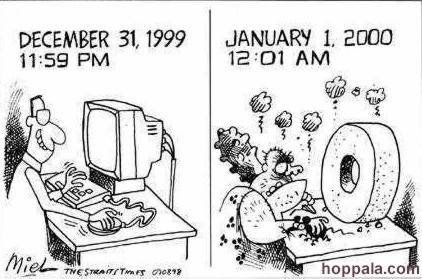
I knew people who stocked their pantries with bottled water and grain pellets, I knew others who withdrew extra cash from their bank’s ATM, and I knew a number of people who bought Y2K software updates for their computers. No one knew everything, but we all knew some things, and everyone knew that we had to be prepared for anything. Our reaction to the scare defined us in 1999, but it further defined us on January 1, 2000, as it was noteworthy what we did to avoid becoming a victim of something that never happened. Whatever you did became the subject of ridicule.

The theoretical question we asked one another in 1999 was not when it would affect us, because we all knew that. The question was how much would it affect our daily lives? Few reasonable and rational adults asked the question if it would affect us. Due to the fact that computers were still relatively new to us, we considered it a fait accompli that it would affect us. We grew up with science fiction movies that revolved around a plot that that which can help man today could one day, and in some way, ruin man in a dystopian manner that no one saw coming.

In those movies, the proverbial, street corner bell ringer was always the best-looking actor in the movie (which lends their character more gravitas) warning the less attractive (and thus less aware) side characters of impending doom. None of the average-to-ugly actors in the movies recognized the true, impending threat for what it was until it was too late. We didn’t want anyone to consider us average-to-ugly, so we mentally prepared for the day when an attractive person lofted a preposterous notion to us.

In 1985, someone posed a theoretical question about how Y2K might affect computers when the century switched, but the problem for us was we didn’t know how attractive that theoretician was, so we didn’t take it seriously. Their theoretical notion hinged on the idea that for decades computer programmers wrote the year in shorthand. They didn’t write out the year 1985, they wrote 85. Some claimed the shorthand was done to save memory space. Thus, when the year flipped from 99 to 00, we feared that all of our computers would believe the year was 1900, 1800, or even year 00? Most of us didn’t believe that computers would transport us bedside, next to the baby Jesus, but we feared that our computers would fail to recognize the logic of the switch, and that the bug it created might introduce such internal confusion in the computer’s mainframe that they would simply shutdown. We feared any human input introduced to combat this inconsistency would prove insufficient, and that human interference could lead to some unforeseen complications, and we feared our computers would be unable to sort it out? The theoretical question reached hysterical proportions in the fourteen years between 1985 and 1999, as America grew more and more reliant on computers for everything from its most important activities (travel) to its most basic (ATMs and the electrical grid).

My guess is that the recipient of that first theoretical question brought it to a closed-door boardroom, and some of those board members took that question out to other parties, until someone in the media heard the question and thought it might prove to be an excellent ongoing question to ask an audience in ongoing features every week. They could start a Tuesday Tech story of the week in which they asked the informed and uninformed what they thought of a problem that wasn’t a problem yet, but could be a problem when the calendar flipped.

Media figures play two roles in our lives, they tell us what we need to hear, read, and see, and they tell us what we want to hear. We don’t want to hear eggheads talk 1s and 0s, unless they can make it apply to our lives with a quality presentation. That, in my opinion, provides stark clarity on our mindset, because we prefer the presentations inherent in science fiction to the hard science of the actual factual.

“Nobody cares about computer programming,” we can guess a network executive informed that ambitious reporter’s Tuesday Tech proposal. “Why should I care about this?”

“The angle we’re proposing is more granular,” this reporter said. “The first network focused on the larger question of computer technology in their Tech Tuesday reports. In our Tech Thursday features, we’ll explore how much of our lives are now dependent on computers. Our energy grid, the tanks at the gas station, and the ATMs. We plan on bringing this theoretical problem home to where people live. We will say this Y2K bug is not just going to affect Silicon Valley and Wall Street, it could have far-reaching implications for citizens watching from Pocatello, Idaho to Destin, Florida, and here’s how …”

As usual with hysterical premises of this sort, the one component most news agencies, and the word-of-mouth hysteria that follows, fail to address is human ingenuity. Rarely, do we hear a reporter say, “We’ve all heard the problem called the Y2K bug, but we rarely hear about proposed solutions. Today, our guest Derrick Aspergren will talk about proposed solutions to comfort the audience at home.” The problem for news agencies is that the Derrick Apergrens of the world are often not very attractive or charismatic, and they speak in ones and zeroes. Even though most computer problems and solutions involve a lexicon of ones and zeroes, no one wants to hear it, and few will remember it. As a result, news agencies rarely give Derrick Aspergrens airtime, and they focus on the dramatic and provocative, proverbial bell ringers standing on a street corner.

In 1999, we rarely heard the question, can hardware engineers and electrical engineers fix a problem they created? The learned fear we’re conditioned to believe, based on the plot lines of so many science fiction movies, is that if we dig deep enough, we’ll discover that this isn’t a human problem at all, but a problem generated by a scary conglomeration of ones and zeroes we call AI (artificial intelligence). We knew little-to-nothing about the potential of AI in 1999, but we feared it, and its potential, because we feared the unknown. “AI is here, and there’s nothing we can do about it!” was (and is) the battle cry of conspiracy theorists on radio, in our neighborhoods, and in our work place. The truth is often much less dramatic.

The truth, we now know, was somewhere south of the hype. The truth lived somewhere in the question of whether the Y2K fear was real. If it required a big, worldwide fix, as some suggest happened, how come there were no Nobel Prizes handed out? “That’s because it required a collective effort from so many minds, around the world that there was no individual to accord credit.” Or, was the fix so easy that any hardware engineer, worth half of his college tuition payments, was able to do it?

Was the Y2K scare a tragedy averted by hardware engineers enduring mind-numbing hours of editing, or was the entire affair hyped up through media mis, dis, or mal-information? I don’t remember the reports from every media outlet, but how much focus did the round robin hysteria generated by the media place on possible and probable fixes? Some suggest if there was a need for a fix, it could be easily accomplished by hardware programmers, and others suggest it was never this world-shaking threat we thought it was.

The problem for us was that the problem was so much more interesting than the fix. Take a step back to December 1999, and imagine this news report, “Here we have a man named Geoffrey James, who says, “If Y2K experts (some of whom have a software background but none a hardware background) ask some electrical engineers about date checking in embedded systems, they will learn that only a complete idiot would do anything resembling the conversion and comparison of calendar dates inside a chip. We use elapsed time, which is a simple, single counter; it takes ten seconds to add to a circuit.

“I may oversimplifying but ultimately the reasoning doesn’t matter,” Geoffrey continues, “the unfixable system problem either isn’t real or isn’t significant enough to spawn a disaster. Because there aren’t any.” That rational and reasonable explanation from someone purportedly in the know would’ve gone in one ear and out the other, because for some of us there are no absolutes, and there are no quick fixes. When someone dangles the prospect of a simple solution to the simplest problems, we swat them away:

“You mean to tell me that all they have to do is add to a circuit. I ain’t buying it brother, and if I were you, I wouldn’t buy it either. I wouldn’t go out into the world naked with the beliefs of some egghead. We all have to prepare for this, in one way or another, we must prepare.”

Some of us thought the Y2K bug would force us to back to the primal life of the cavemen, or at least to the latest and greatest technology of the McKinley administration of 1900. Friends of mine thought those of us who know how to hunt and forage for food would once again take their rightful place atop the kingdom of those who grew so accustomed to the comfy life of a visit to the neighborhood grocery store. More than one person I knew thought our appliances might explode, and that Americans might finally know what it’s like to live in the poorest third-world nations in the world. They thought we would return to our primal life, and our TV shows and movies reflected that fear, anxiety, and (some say) desire to return to our primal roots.

News reports stated that hardware engineers and other electrical engineers were working on the problem, but they’re not sure they’ll have a workable in time. We knew the line: “For every problem there is a solution,” but when you’re in the midst of hysteria, lines like, “This was a man-made problem that requires a man-made solution” provide no comfort. We all know that tangled within mankind is a ratio of geniuses who not only know how to propose solutions, but they know how to apply and implement them. We know this, but humans suffer from an ever-present inferiority complex that suggests no mere mortal can resolve a crisis like this one. We know this because no self-respecting science fiction writer would ever be so lazy as to suggest that a mortal, whether they be a military leader with a blood lust who wants to detonate a warhead on the monster, a policeman who believes that a bullet can kill it, or an egotistical scientist can resolve this particular dystopian dilemma.

Even though this was a man-made problem, few outside the halls of hardware engineer offices believed man could solve the problem. We heard about geniuses who brought us incredible leaps of technology so often that it was old hat to us. We knew they could build it, but there was this fear, borne in the human inferiority complex, and propagated by the sci-fi movies we loved, that technology had spiraled so out of our control that it was now beyond human comprehension to fix it.

Was Y2K overhyped as an unfixable problem, was the solution so elementary that it simply took a mind-numbing number of man hours to implement it, or was it a simple hardware fix? I don’t know if the numerous media outlets who ran their Tech Tuesday features ever focused on the idea that the Y2K problem, of two digits vs. four, was generated by a theoretical question someone asked fifteen years before, but I told my terrified friends as much. “If this whole thing is based on a theoretical question, what is the theoretical answer?” With fellow uneducated types, I furthered, “And if we search through the theoretical answers, we might find an actual one.” The theme of my response involved the hope that we weren’t so terrified by the questions that we failed to seek answers, and I was shouted down. I was shouted down by uneducated types, like me, and I was, am, and forever will be woefully uninformed on this subject. They told me that I didn’t understand the complexities involved, that this situation was far more serious, and that I was underestimating it. I’d love to say that I adjusted the focus of my glasses, as I attempted to adjust theirs, but when the screaming majority in your inner circle is convinced to consensus those who are relatively uninformed either silence or buckle. I cowered, and I regrettably conformed to some of their fears, but I didn’t know any better. None of us did. The one takeaway I have from the hysteria we now call Y2K is that we should use Y2K hysterica’s fears as a precedent. If we have theoretical questions based on theoretical questions we should ask them of the more informed, more educated “experts”, because theoretical questions could eventually lead to some actual answers. The alternative might result in us shutting down the world over some hysterical fear of the unknown.
Beagle Buyers Beware Beelzebub Boy 


“Aww, look at the little fella, how can you call him the spawn of Satan? He’s so cute!”

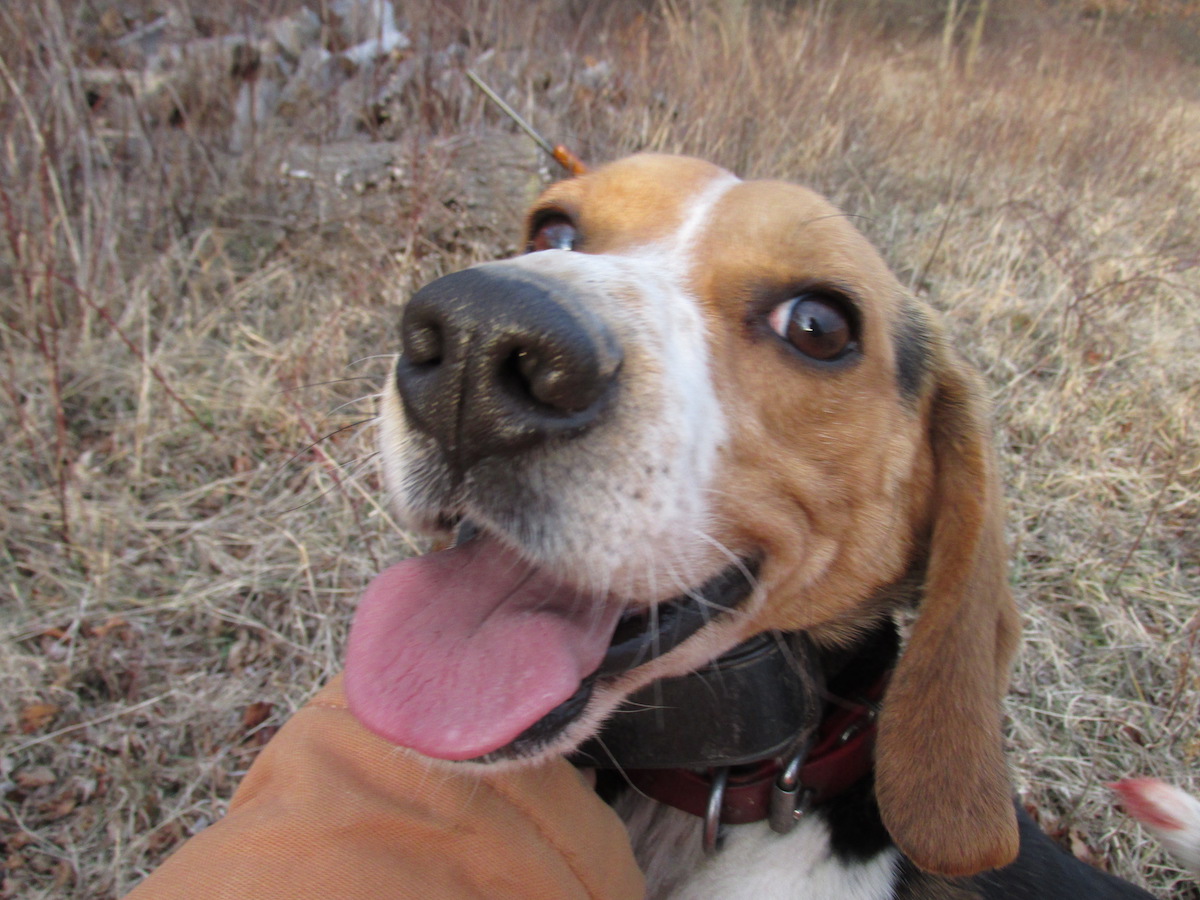
Max is a beautiful Beagle. He is well-marked with long, thin legs, and he has that award-winning Beagle arch. He has a dog-smile on his face almost twenty-four seven, and he has an excellent disposition.

The idea that a breeder would sell him for a third of what his brothers and sisters were going for confused us? The breeder said she could only guess that most Beagle fans want a female, or they want a Beagle that was more white than black coloring. She said she was as confused as we were. My best guess, four months in, is that the potential buyers knew more about Beagles than we did. My guess is they know, like we all do, that although all Beagles are high energy, very intelligent and stubborn, there’s always one in the litter who is a little more of all of the above. My guess is that they sensed that Max might be a little crazed, and they know to be wary the runt of the litter. My guess is they know that the runt of a Beagle litter, more than any other type of dog, might just be the spawn of Satan. 

The Beagle Smile

Those in our house who don’t close their bedroom door know that something they hold dear will be ripped to shreds within the hour. We know that it’s in our best interests to keep him on-task, interested and engaged, because if he grows bored in any way, he’ll fill the void.  

“Give a Beagle little to no exercise at your own peril,” Beagle experts warn. Okay, but how much exercise does the average Beagle need? Whatever that number is, go ahead and triple that for Max. We walk him twice a day, play with him constantly, and we have a huge backyard that he spends most of his day in, zooming back and forth in at top speed, and it’s never enough. If you don’t know what the zoomies are, get a Beagle

After he spends a good ten minutes zooming back and forth, you might think, as we did that he’d come back in exhausted, spent, or physically satisfied. He comes in jacked up, jamming a toy in our face, ready to play for the next half-hour. A half-hour doesn’t seem like that much, until we learn that it’s a minimal requirement for him on a daily basis. Four months in, we’ve yet to see him pant with exhaustion. My high energy, high functioning child can’t keep up with this dog. 

“They’re hunters,” experts say. “They’re have a strong sense of smell.” Most dogs walk with their heads up, but Beagles walk with their head down because they don’t want to miss a scent. I’ve yet to see Max take more than ten steps with his head up. When I leaned over to watch his schnoz in action, the rapid speed of his nose touching ground reminded me of a hummingbird’s wings, moving so fast it’s almost hard to see. If we dabbed some paint on the end of his nose, we could probably use it to find our way back home. 

We’ve had him roughly 120 days, and I’ve probably pulled 100 things out of his mouth. A sample includes hair scrunchies, innumerable COVID masks, already been chewed gum (more than six times), other dogs’ waste matter (more than ten times, and one of them was stomach churning long!) a wide variety of plastic items, coins, candy, various parts of whatever carcasses he finds along the way, and day’s old, rotting rice. That’s a very small sample of what I can recall pulling out. He’s like the bull shark of dogs, he’ll eat anything and everything, and he growls angrily when I pull it out. He also bites at the hand that feeds it, or unfeeds it by pulling trinkets out. 

I know a dog’s sleeping patterns are probably as relative as humans, but this dog rarely sleeps. I can count, on one hand, the number of times that he wasn’t up for at least nine hours straight. Nine hours doesn’t seem like much in human terms, but imagine trying to entertain a high energy, high functioning dog for nine straight hours. When hes up, hes not watching TV, looking out the window, or playing with his toys. Max knows how to play by himself, and he does, but he gets bored easily and very quickly. The time between one stretch of playing time and another, takes about as long as your sigh of relief. When he gets bored, he gets into things, causing trouble, and doing anything and everything he can to gain our attention. One day, he was up for eleven straight hours without a nap. Needless to say, it can be exhausting and frustrating, and it can consume your life.

Most dogs are on our schedule. When we’re ready to play with them, or entertain them in any way we dream up, they respond eagerly. I understand and appreciate the fact that puppies are more energetic than adult dogs, but even most puppies sleep until you’re ready to play with them. Not this guy.  

When I searched for a new puppy, I put together a mental checklist. I wanted a playful dog (check), I wanted him to be high energy (check, check), I wanted him to always want to be around me (check), and I wanted a dog who wanted to sleep on my lap while I watched TV (check). I got everything I wanted in this dog and then some, but it’s the “and then some” that I’m writing about today. The “and then some” portion occurs after we’ve played ball for 15-20 minutes, and he’s racing the ball back to me with as much speed and energy as he had when we started. I know, I know, the puppy thing, but it’s impossible to exhaust this dog. I’ve yet to see him run out of energy. 

I read all of the “read this before you buy a Beagle,” warning lists. I read literature stating that due to their high level of energy, their nose, and their heightened sense of adventure that the owner will need to keep them leashed them at all times, and that they will want to kennel train them immediately after bringing them home, because a Beagle needs to be kenneled when they sleep and when their owners leave. Doing anything less is just asking for trouble. I read all that from what I considered a knowledgeable perspective. I owned a Puggle (part Beagle, part Pug), so I thought I knew what I was getting into. I don’t know if the Pug characteristics softened the Beagle traits in my previous dog, but I wasn’t ready for this fella. 

He is a good puppy, and he will eventually be a great dog. He runs and plays keep away with the neighborhood kids. He greets every new person as if they’re the greatest person on Earth. He loves meeting kids and other dogs, and he has a very sweet disposition, but he is CONSTANTLY on.  

Walking him is an excellent workout for anyone who wants to focus their workouts on their forearms, as he wouldn’t know a straight line if he tripped over it. Every dog I’ve owned went from two pulls on the leash, as a puppy, to one pull as a full grow adult dog. The average walk with Max reminds us of a dance step, “It’s one step, two step, pull, pull, pull, three step, four step, pull, pull, pull.” If he’s mildly interested in something, it might require three tugs on the leash, but if he’s intensely interested in something, and this usually happens two to three times a walk, I have to pull him from it with great force. At this point in his puppyhood, I am the only one in the neighborhood who can walk him. No one else is focused enough to distract him, when necessary, as often as it’s necessary to prevent him from ingesting something he shouldn’t, and no one is strong enough to keep him in line when required. And it’s not as if he’s heavy, because he’s not, but even twenty pounds becomes taxing after the rigors of repetitive motion begins to kick in. He exhausts kids as easily as adults. A discarded, half-full milkshake cup required so much pulling that I almost considered calling for assistance.    

I’ve read some Beagle owners write, “Toughen up buttercup!” when a Beagle owner complains. And they add, “You should’ve known what you were getting into. You should’ve done your research!” I thought I had. I read all the literature I could find on the breed, and I prepared my friends and family for him, but I now think I was the least prepared of all because I thought I was.  

Maybe Max is an anomaly, and that might be my fault. I love playing with dogs, and I can get rowdy, so it’s possible that I jacked him up to another level. From what I read now, from my current perspective, I don’t think so. Maybe Im not disciplined enough to keep Max disciplined. Maybe Im just not a very good trainer. This is not only possible but plausible, but I ask the novice, dog enthusiast how many of us have the time, patience, and discipline necessary to train such a dog?

“My college roommate had a beagle,” a friend, who purchased a Freagle (French bulldog, Beagle mix) told me. “I said I would never buy a Beagle after what I saw that dog do. That dog got into everything. Every day there was something new with that dog.” I wish I would’ve talked to her first before purchasing this one. I might not have listened, but I probably would’ve been better prepared. 

This warning is being sent out to those who are interested in purchasing what I consider the most beautiful, friendly, and loyal breed of dogs, be careful what you wish for. You might have more energy than I do, and you might love dogs so much that you’re willing to spend hours with that dog entertaining him, and if you do, you’ll absolutely love the experiences you have with your new, little pooch 80% of the time, but you will run out of gas eventually. They won’t.

Chapter Two: Emotional Intelligence

“Dogs just want to make their owners happy,” a friend of mine said one time when I was complaining about my dog (a cairn terrier named Tyler).

“My dog doesn’t give a turd if I’m happy, he does what he wants” I said. “I appreciate what you’re saying, as I think you’re right with most dogs, but some dogs do whatever they want.” Through the three dogs I’ve owned I maintained that argument without a good argument. I just knew that the three of them responded to me differently, and I maintain that saying ‘all dogs just want to make their owners happy’ is a simple argument that suggests that all dogs are simple. I developed an argument based on an article I read that suggested, “Dogs, like humans, have varying degrees of emotional intelligence.” It sounds like something your stoned uncle would say at the campfire, or that thing your lunch bucket co-worker said after he read a book. 

If you believe her argument I would ask, have you ever tried scolding a dog for misbehaving? I’m not talking about physically disciplining a dog. I’m talking about verbally scolding them. Their theory holds that if you’re happy, they’re happy. I challenged that theory when I first heard it, but I kind of believed it for most of the decade I owned Tyler. Then I met a Puggle named Fehrley. When I scolded Fehrley, it appeared to hurt his feelings. For the most part, Fehrley’s self-esteem appeared based on what I thought of him. If he did something wrong, and I was disappointed in him, he not only displayed feelings of shame, he never did that thing again. My current dog Max, like Tyler, doesn’t appear to care too much what I think.  

Both Tyler and Max put their heads down and stopped doing what they were doing in the moment, but they forgot about it soon after the drama/trauma concluded. Fehrley remembered. Does this mean that Fehrley was more intelligent than the other two? I don’t think so. I think Max might be the most intelligent of the three, but he’s clearly not nearly as sensitive as Fehrley was.

If you told me that dogs are sensitive, I might’ve agreed with you to an extent. I probably would’ve said that I think you’re overplaying your hand, but I’ve seen evidence of what you’re saying. After owning three different dogs, however, I now have a fully-formed and well-informed opinion on the matter. Mr. Fehrley was clearly the most sensitive of the three. He was more proud when he did something that earned a reward. He got far more excited over the prospect of going bye-bye, a treat, and the prospect of experiencing something new. He was more ashamed of doing something wrong, and as a result he learned how to comport himself accordingly for more freedom and more happiness. He was also less impulsive and more calculating based on rewards and punishment. Was he more emotionally intelligent than the other two dogs I’ve owned?  

As a writer who tries to avoid foo foo as often as I can, I hear people say that we underestimate the intelligence of animals. “Foo foo,” I say. I think we overestimate their intelligence so often that we begin to believe it. In movies, we see dogs respond to complex human conversation, and we laugh, and we believe that dogs can understand human conversation. So, in real life, do they pretend they can’t. We see dogs in cartoons act in a very human manner when we’re not around, and we wonder if they do that in real life. We say it as a joke, over and over, until someone says, “That’s funny, but you don’t believe it do you?” 

“Well, why not?” they ask. “Who’s to say dogs aren’t far more intelligent than we can conceive?” 

I don’t believe dogs are more intelligent than we think, but I reserve some space on every issue for fallibility.  

We hate to compare animals to children. It’s unfair, inexact and tedious. Yet, we all do it. As I wrote, Max appears to be the most intelligent with his ability to create his own situations, the ability to adapt, and the way he pays attention to things. I’ve never owned a dog who heard a plane fly overhead and watched it, and he’s done that more than twice. He appears to be trying to figure it out. I’ve never owned a dog who looked up. They might stop whatever they’re doing and look out momentarily, but then they go back to what they’re doing. Max looks up and continues to look up for about three seconds. Is he trying to figure out what it is? Who knows, but he’s definitely more curious about it than any other dog I’ve owned, and I equate curiosity with intelligence. He watches TV longer than any dog I’ve owned. He saw images of dogs on the set run right to left, and he looked at the spot beyond the TV to see what, if anything, would come out. He also studies me and my reactions longer than any dog I’ve owned, but he doesn’t appear to care near as much as Mr. Fehrley did what the end result of my reactions are. 

As evidenced by Max, I think our relative definition of their intelligence is based on how acutely they study us. If you are the head master, lead dog, or alpha in their lives, their emotions are dependent on yours. I know now what subtle cues I give when I’m angry over relatively innocuous things, like a driver waiting too long to turn right on red, by how Max reacts to my subtle displays of frustration, impatience, and anger. When it’s obvious it’s obvious, but most of us offer subtle cues of emotion, and Max is acutely attuned to all of mine. He looks back at me, ears slightly perched, waiting for me to inform him that my display of emotions have nothing to do with him. Is that a display of general intelligence, emotional intelligence, or a greater sense of awareness. I don’t know, but some dogs have it more than others. 

My evidence for the intelligence of dogs is based on the last three I’ve owned. Mr. Fehrley was the most sensitive of the three, but where does sensitivity rate on the intelligence scale? Max is by far the most curious and aware, but where do these traits rank on the same scale? Are dogs more intelligent than other animals. Some suggest that the inability to train/domesticate an animal is a sign of intelligence. If that’s the case, the cat is smarter than the dog, but part of training involves praising and/or scolding. A cat, generally speaking, does not respond to training, so are they more intelligent or less sensitive? I don’t know the answer to any of these questions, but prior to owning three dogs of varying intelligence, I must say that I’m more interested in this discussion and more open to hearing the various where, when, and why’s of how I’m wrong.     

The Unfunny Comedian: I Love to Eat


“I love to eat. Who here loves to eat?” Barry Becker said to open his first show in Waukee, Iowa. “How many of you live to eat? I’m talking to the people who love to eat tonight. C’mon, how many of you love to eat? Let me hear you!”

“That line never gets much applause. Most applaud politely and softly, thinking, ‘I don’t know where you’re going with this, but yeah, I enjoy eating a thing or two.’ Very few people leave their seat with, “EATING! YEAH! Sing it sista!” Yet, we have to eat food to sustain life. It’s true. Look it up. In your research, you’ll find that not only does eating food sustain life, it provides the protein and vitamins we need to maintain energy levels and strength, but that doesn’t mean that we’re going to rise up and scream at the top of our lungs to express our passion for it in an open forum like this one, because people will think we’re pigs

“Even those of you who were on a half-bun, ready to rise up and scream your heads off about the glory of eating, won’t do so on the first date. It’s just … It’s not a good look. Most prospective lovers won’t mind hearing that we enjoy eating, as long as we do so in moderation. They don’t want to hear about our plans for massive weight gain. “You like what you see here, babe, because there’s going to be a whole lot more of it soon. Once you start to love me, and make me more comfortable with myself and my physical appearance, it’s only a matter of time before this,” Barry said loosely circling his belly, “becomes a big mess of Frito’s and Skittles. That’s right, this is only the beginning. I love to eat hon’.”

“Women don’t demand skinny, most don’t anyway, but they don’t want us to be all hooting and woo hooing about it either. They do it, though. That’s right, they don’t mind talking about how much they love to eat, because they’re all thin and stuff. They’re not afraid to share it with the world. “I love to eat!” They say it all the time. Really? You love to eat? I don’t think you do. Here, here’s a rack of spare ribs. Prove it!

“Starting today! Right now! If you’re a little chubby, or planning to be, shout it with me. “I love to eat!” Shout it loud, shout it proud. I like sleeping, and sitting around and do nothing for unusually long, unhealthy stretches, but nothing compares to eating. 

“Have you ever had a friend say, “Let’s go grab something to eat, and then we can-” Wait, wait, hold on, hold on, there little doggie. For me, there is no and then. I don’t know what you plan to do after this meal, but the meal is the event for me, the night out, the fun. I’m sure your other plans will be a blast, but I’m old, and keeping these beautiful curves ain’t as easy as it used to be, so I’m not into your and then. If I’m only going to be able to eat two meals a day now, and one of them has to be a light one, and you’re going to tell me to reduce my sugar intake and cut back on all those delicious, salty snacks that are probably going to lead to a painfully slow, premature death, you better bring your A-game if you’re going to ask me to have a meal with you. Use your words. Seduce me.

“Hey, I want to live a long life as much as the next guy. I want to live so long that someone at my funeral whispers, “Good God he was old!” and I know I’m going to have to sacrifice some to get there. At some point, though, I’m going to have to sit down with a spreadsheet with one column titled, ‘How long do I really want to live?’ and the other titled ‘How much fun am I having here?’ where I add, multiply, subtract and divide the quality of my life from a desired quantity.

“Meals are the event of the day. They’re what we look forward to throughout the mind-numbing hours of inputting data into a computer. The meal is our reward for putting up with the family, home repairs, and the dog that we wanted so bad at one time. We do what we’re supposed to do. We drop the kids off at school on time, pick them up on time, and we work our tail off to crunch the numbers for Mr. Jamison to try to get one small smile out of him, and then we’re supposed to go home and eat a sensible salad with a side of broccoli? Screw that! I want meat. I want a steak. I want a big old artery clogging ribeye, with a side of mashed potatoes and a beer as my reward for putting up with all that.

“I’d love to eat all I want and be as slim and trim as you, so I don’t have to see all of my chins in photographs, but to do that they suggest that we might want to consider skipping a few meals, or at least think about mixing in a salad here and there. Have you heard this joke? This ‘Feel free to mix in a salad’ they say, or, ‘Have you ever heard of a salad?’ Yes, yes, I’ve heard of salad. Somebody, somewhere told me about how they ordered a salad instead of a steak at one of the finest steakhouses in our city, because he thought he could use a little more ruffage in his diet. He didn’t order it as an appetizer. It was his main course. He wanted to be healthy, and he thought it might help him live longer. You can eat salad with a side of broccoli all you want, to live longer, but I got news for you, brothers and sisters, you’re probably not going to outlive me as much as you think. I’m not going to live forever, I know that, we all know that, but while we’re here we should live like we’re going to die tomorrow, and a portion of that means I’m going to eat whatever the hell I want.

“If you don’t view meals as the event of the day, it’s because you’re not married. The first question the wife hits you with when the two of you arrive home from work is, “What do you want to eat tonight?” It happens so often, you should be prepared, but you’re not. “Ah, crap, I didn’t even think about it today, sorry.” It’s almost stressful. You answer, and she immediately vetoes.

“I don’t want to eat there, Henry. We ate there so recently.” Why is it so important to space out restaurants, because if we eat at the same place, in a too narrow a space in time, it will ruin the event of eating that particular meal. “Let’s try something else,” she says, “and I don’t want red meat tonight, and no more pizza, for God’s sakes Henry.” Ok, well, I don’t know where to eat then. You pick. “I picked last time.” This unlocks the dreaded ‘who picked last time?’ phase of the back-and-forth. Why is this important, because you both know your tailbone is on the line to pick the greatest place to eat every time out. She picked last time, and the two of you both know what an epic failure that was, and she can’t take the pressure of picking two times in a row, especially after that last one.

“Do you have these little, internecine battles with currents and undercurrents of tension flowing back and forth between your words? We all do, right? Eating is what we must do, and what we talk about nonstop. The what, when, where, and with whom are we going to eat tonight dominate all discussion topics. “I don’t want to eat at that place, because I hate their side items. The entrees are all right, I guess, but their sides are so ordinary and bland.”

“If you’re anything like me, you take such criticism personal. You have no stake in the success or failure of that restaurant. You don’t own any of the corporation’s stocks, but you love their food, and she knows it, and that agitates us, because she seems to reject everything, we hold dear. She doesn’t do it with that purpose in mind, and we know it, but we like that place so much that it’s kind of our place, and some weird part of us takes proprietary ownership of that place in our marriage to the point that any insults directed at it are personal. Yet, we abide her veto power, and we come up with another place. “I don’t want to eat there, either, the service sucks, and their bathrooms are dirty.” Their bathrooms are dirty? I’ve heard this more than twice. How did the cleanliness of a bathroom become a bullet point in this debate? What are you going to do in there? Exactly! You’re going to do your part to do your part to dirty it up. “Cleanliness of bathrooms, she says,” we mutter as the squabble comes to a close.

“Except, we don’t mutter that, because we know what starts out as a minor rebuttal can turn a back-and-forth discussion into a squabble, which can lead to a back and forth that can somehow escalate into an argument, and on rare occasions even a fight. A fight over where to eat? If that’s not a first world problem I don’t know what is. The larger point is that the two of you will never look back on the incremental progressions of this fight with a laugh, because it’s such a silly thing to fight over. You won’t, because you know that this is the meal, the hallowed parent’s night out meal. The parent’s night out meal is not just important, it’s an existential pivot point. It might not be that substantial, but we know that every time we have to choose that perfect place. If we want to continue to enjoy the freedom and fun that come with our Tuesday nights, and we hope to keep our marriage exciting and new, we know we have to do this night up right. We have to plan, discuss the details of that plan, and iron out any differences to one day, hopefully, look back on this night as that night. “You remember that night, right?” The ‘that night’ designation is the gold standard for all nights in romantic relationships, and those of us in such relationships fear we might never get back to them, and there’s no sense in trying to duplicate them either.

“Why don’t we just eat at home?” she says as we enter the ‘give up’ phase of our process. I do not want to eat at home Mildred, we always eat at home. “It’s healthier and cheaper.” It’s not healthier. Do people ever ask you that question? They ask me that all the time. ‘How often do you eat out?’ It doesn’t matter what we say. We could say we haven’t eaten out since the Coolidge administration, and they’d say, ‘Oh, that’s so unhealthy. You have to eat at home more.’ Screw you, I like to eat out. It’s special, and I’m paying them to treat me special. When they don’t, God help them, I’ll rage. When people say it’s healthier to eat at home, I say, “Doesn’t it depend on what you eat, no matter where you eat it? What if I chose a healthy entrée and healthy sides at a restaurant? Now, I don’t, I won’t, and we all know I won’t, but what if I did?  

“When we’re not talking about what we’re going to eat, we talk about what we ate, and where we ate it. Have you eaten there yet? No, OhmiGod, you must eat there, before they have to start feeding you through a tube, you’ve got to eat there. We argue about the best places to eat and what to eat, because we love to eat.

“You are what you eat. We’ve all heard that. I have a friend who won’t eat chicken. Chicken. I understand not eating red meat and pork, but chicken? She said she doesn’t like the texture. Every time I run into her, ‘How could you not like chicken?’ is the first and last thought in my head. I have more of a problem with her than I do vegetarians. I actually respect vegetarians and vegans. I could never be one, but you have to respect the amount of discipline it takes to go into a backyard brimming with all those gorgeous smells of red meat and pork and say, “I think I’ll take the beans, lentils and organic chia seeds on that side platter over there.” I take my hat off to the, because I could never do it.

“I respect you if you’ve managed to limit your diet to legumes, flax, and chia seeds, and you only drink water that comes from the finest springs in Demark. I respect anyone who can limit their diet in that manner, but my question is always why? Well, to be healthier, they say, and being healthier actually leads to more happiness. I would never say that consumption alone leads to happiness, but it’s definitely part of the equation. If you doubt that, try having someone try to take it away from you. I saw that firsthand. Someone very dear to me told his caretakers he would rather die than give up oral consumption. He went to the extreme of threatening a lawsuit over it, because when someone threatened to take eating away from him, he wrote: “I’d rather die! Eating is the only joy I have left in life, and I’d rather die than have that taken away from me.”

“Some of us who have no limits on our joy of oral consumption choose lentils and legumes over barbecued ribs and steak, because they think those decisions will help them outlive the rest of us. They might be right, if we take accidents and other freak occurrences out of the equation, but will they be happier? It’s a leading question, because I know they won’t. They can’t be happier. We’re talking about the quality of life here.

“Eat eggs,” they say. “Eat tons of them. They’re nature’s perfect food.” “Don’t eat eggs; they’re evil.” What? “It depends on how you prepare them.” Drink coffee, don’t drink coffee. Eat steak, don’t eat steak. Eat butter over substitutes, and everything your body recognizes in the digestion process. Everything in moderation: Eat less, play more.

“Various studies suggest that if you eat less, you will have more energy to play. It makes sense and it doesn’t. We need food to sustain energy levels, but if we eat too much, the digestion of it saps our energy. Even without the science we know what happens when we eat huge. To prove their point, the study brought on some fella who tight ropes the very lowest levels of caloric intake possible. He says he’s happier and healthier than he’s ever been. I don’t question the science, but I know what I know, and I know that if I go out to eat at a big steak house, and I choose salad with a side of broccoli, I’m not going to be happier. I might have more energy, and I might be healthier, but when I’m 105, playing pickleball and parcheesi, I’m still going to be thinking about all the steaks I passed on in life. Healthier? Yes. More energetic and playful, sure, with some asterisks. Happier? No.

***

“You see me here tonight. I could stand to lose what 10, 20 … 30 pounds?” Barry asked. He turned to an audience member with a smile. “You think I could stand to lose 40?” All right, I could stand to lose a lot of weight, but I’m not a glutton. Yet, I receive sensorial joy from eating delicious food, and I find going to a restaurant and eating their food eventful. I, like the distant kings and queens of yore, get to point at a menu selection, “I shall have your finest meal on this eve.” When the server walks out with my food, or what I think is my food, most of them understand how majestic we consider their arrival. The ones who do it up right, share a knowing smile with us, and they add a very subtle element of pageantry to their arrival. If you watch them, the best of them, they have it in their stride, both of us knowing our moment has arrived. They also have a big, glorious ‘your moment has arrived’ smile on their face.

“We all know this ‘your moment has arrived’ smile. When it’s directed at us, it’s glorious. I think, I think she just directed that smile at me. Praise the heavens, she did. When I was younger and more attractive, and young women gave me that ‘your moment has arrived’ smile, it meant something entirely different. It took me a while to deal with the fact that that’s over for me, but I’m okay with it now if it means food. I’m okay with it, because when I see that smile now, it comes after I saw all the other tables around me have had their moment arrive first, while I silently implored my server to bring my food.

That smile suggests she knows what we’ve been through. Even though were good little soldiers, silently waiting, she knows. We know she knows, because she a couple minutes ago she stopped by to say, “Don’t worry, your moment is near. I just checked with the cook. It will only be moments. I promise.” Then it happens. “Look, there she is! She has that big smile and that majestic stride. She knows. She knows, and she’s still young enough, and she hasn’t done this so often that she’s lost her enthusiasm. She loves this moment as much as we do. “Wait a second, did I see pork on her tray. I think I saw pork. No! God, no!” That smile was for someone else. If feels like, in a weird way, that’s hard to explain, that she’s cheating on us, when she gives that big, glorious ‘your moment has arrived’ smile to someone else.

“What the hell is going on here?” we say, rolling our head up to the heavens. “I’m going to say something.”

“Don’t,” the wife says.

“I’m sorry, I have to say something. This is getting ridiculous.”

Then the true moment arrives, and the server knows firsthand what this means after everything we’ve been through together. She has a majestic, almost parade-like stride to deliver our food. How many of us go to the bathroom, hoping, just hoping that our moment will arrive while we’re in there? We all do this right? We all think things up to pass the time until our moment arrives. We talk. We look around at our neighboring tables, and we whisper awful things about them just to waste time, until our moment arrives. We go to the bathroom, and some of the times it works, but most of the time it doesn’t.

“And you, you in your distant, ivory tower of health and nutrition, you want me to give all this up? To what? To live longer? You’re telling me that I shouldn’t go through the cinematic highs and lows of food arrival for nutritional and health reasons? Yeah, I’m not going to do that, and I’m not even going to cut back, even if it means I’ll only live to 65 as opposed to 105.

“The event today was this big, old beautiful ribeye. Ribeye was the word that popped into my head when I woke up today. Do you hate mornings? Everyone does. We hate waking up? Today, I sprang out of bed singing, “Good Day Sunshine, Good Day Sunshine!” and I was doing it with this smile on,” Barry said pointing to an exaggerated, toothy smile. “This is my ribeye-eating smile. Ribeye was the first thing I thought about when I woke up, and it was the only thing on my mind when people spoke to me. They all became a Simpsons’ jokes, talking ribeyes.

“It sang out to me, this ribeye, calling me like some evil siren beckoning me to my doom. I couldn’t understand the lyrics, but I can tell you that she had a beautiful, alluring falsetto voice.  

“When our moment finally happened, the server slid that big old block of meat in front of me. I love everything about that moment, the majestic arrival, the “Who had the ribeye?” question, and the, “Right here!” answer I give with pride and joy of ownership in my voice, followed by the almost cinematic sound of a plate sliding across the table. These are a few of my favorite things.

“When I finally have that big, old before me, I cut the entire thing up into small, serving portions. I no longer have a big, huge ribeye before me. I have all these little ribeyes. It makes me think I have more ribeye. I don’t and I know it, but a secret part of me thinks I can fool myself into thinking I have more. I also want to enjoy chewing each bite as much as I possibly can, and cutting them into smaller portions allows each piece an ability to do that for me. If I don’t cut up my steak before taking a bite, I’ll either cut while I’m chewing, which diminishes my enjoyment somewhat, or I’ll be thinking about my next cut while I’m chewing. Either way, I’ve calculated that I’m diminishing my enjoyment of a chew by fractional percentages by cutting while I chew or thinking about my next cut. By cutting my steak into small pieces before I take my first bite, I also get all the work out of the way, so I can sit back and enjoy those cuts of beef without having to worry about any future cuts while I’m chewing, savoring, and soaking it all in.  

“We all know it’s not healthy to eat large portions, but when that server puts that plate of ribeye before me, I don’t see plate, fixings, or side items. It’s all ribeye. I’m not going to complain. I’m not going to tell that server, “I’m sorry, that’s too much ribeye.” Have you heard people do this? “Oh, that’s too much ribeye.” Excuse me, excuse me, what the hell is too much ribeye? I ask this not to boost a joke. I’m genuinely curious. How can there be too much ribeye? The premise of this guilt makes no sense to me.

“I really shouldn’t have eaten all that,” is another way they express guilt. Yeah, you didn’t say jack when they slid all that in front of you. Some people suffer gastrointestinal issues in the aftermath, and they say that that seductive, siren song I hear is the voice of a gargling monster in their head who says, ‘Go ahead, but you’re going regret it,’ followed by maniacal laughter. Food fights back some of the times. I know that, but I think most people say it just to say it, because they feel guilty eating too much.   

“So, the question I hear in your heads is, do I feel some guilt when I have a twelve-ounce ribeye sitting before me? Some? They stress that word some as if it will unlock some false wall we have before guilt. No! No, I don’t feel guilty. Not only do I not feel guilty, I think I’ve found my purpose in life when a ribeye sits before me. I feel guilty about a lot of things, I’m Catholic, but eating a big, juicy, medium rare ribeye is not one of them. We all think we were put here with a greater purpose in mind. “What’s my purpose?” they say. “I need to find my purpose.” “It’s your job in life to find your purpose.” We all say various forms of that. Well, I found mine. You can laugh and call it stupid and simple, all you want, but when it slides across the table at me, I know I’m going to love that piece of meat so much that I will make noises eating it. “And some of them won’t be what you classify as human noises,” I warn my date.

“They listen, they nod, and do you want to know what they say, it’s so cute, they say, “Hey, I like to eat too Barry, and we all make noises.” They think they know what they’re talking about when they say noises, but they ain’t ready, as evidenced by the fact that they’re all shushing me a couple bites in.

“Hey, I told you I love to eat,” I say, “and I told you that I make noises.”

“I know, but people are staring, Barry. They’re uncomfortable. We’re all … uncomfortable.”

“Then, some busybody saunters over to the table. You know what he looks like. I don’t even need to describe him. The minute he steps up to the table, with his phone out, you just know he’s going to drop some kind of busybody crap on you, talking about how he and his family are trying to enjoy a meal, and how his kid is crying, because she’s scared. He says all that, and then he adds something about public noise ordinances. Noise ordinances? Did you just say noise ordinances? Noise ordinances are about firecrackers, sirens, and barking dogs. It’s got nothing to do with the sounds a fella makes eating a delicious ribeye. Mr. Busybody shows me his phone, saying, “Here you go,” and he conveniently has a copy of section 27 of article 4 of the city’s noise ordinances all pulled up, “And you’ll see here,” he says with professorial authority, “that subsection C of article 4 specifically addresses public eating noises in restaurants.”   

“People like this busybody, some of my friends, and the women who state they’ll never eat with me in public with me again, think these noises are a problem, a real problem. We all know I could control myself, and these noises better, but I have to tell you that I don’t consider it a pressing issue. I wish I could find some way to enjoy eating more, and I fear that if I tried to temper my noises that might diminish my enjoyment of the meal by fractional percentages, and that’s just not a risk I’m willing to take at this point in my life. Because, as great as the meal of the day is, it doesn’t last long. I eat and what seems like a minute and a half later, I’m done. It’s all over. The whole event I looked forward to all day is … over. It was so hot and juicy that I ate it too fast. I didn’t chitchat. Chitchat ends with the sound of a plate sliding across a table. I don’t even look around the room when a big, old juicy ribeye sits before me. Taking in my surroundings is over too. I even forget, sometimes, that I have someone sitting across the table from me. I hate reaching the end of a meal and having to force down the last few lukewarm bites. I want it hot! So, I eat all of those beautiful cuts of ribeye so fast that some of the times I can’t even remember how good they were. I know I just met these delicious, little morsels, but in a strange way that’s tough to describe to those of you cringing throughout my testimonial tonight, I kind of miss them. I miss them so much that, look at me, I’m salivating. I know it’s disgusting, but I can’t help myself. I loved eating them so much that I almost wish I didn’t eat them, so I could eat them again. I apologize for getting so emotional, and I know I shouldn’t get so emotional over such a stupid thing. It’s unseemly and not very professional, I know. I just love them so much that it’s hard for me to accept that they’re gone now. All of them. They’re all gone. I just loved eating them so much.

[Standup comedian Barry Becker is The Unfunny comedian, and this is one of his sets. If you enjoy this style of comedy, there’s more available at The Unfunny.]