“I could’ve done that!” we say when we see professional athletes perform spectacular athletic feats on TV. We say this after developing vicarious attachments to athletes after watching sports for decades. We do no not make the same I could’ve done that attachments when they mess up just as spectacularly? Being a fan allows us free movement along the spectrum of our associations with athletes. We identify with them when they succeed, and we distance ourselves from the stink of their failure.
I got a small taste of I could’ve done that when I dropped a routine fly ball in front of about thirty people in total. I doubt any of them remember that. Check that. One does. One person will never forget it. It wasn’t just a drop. It was the way I dropped it that might haunt me for the rest of my life. You don’t care about that, and no one else does either, because no one cares about me, my softball team, or that game. We do care about professional sports, its athletes, and the outcomes. We care so much that our association them becomes an integral part of our identity. So, when one of our favorite players, from our favorite team, drops the ball we regard it as a personal embarrassment, and if they do it in a deciding game of the World Series, they’ll never forget it, because we won’t let them.
“Hardly a day in my life, hardly an hour, that in some manner or other the dropping of that fly doesn’t come up, even after 30 years,” Fred Snodgrass said in a 1940 interview. “On the street, in my store, at my home . . . it’s all the same. They might choke up before they ask me and they hesitate — but they always ask.”
Imagine the life of Fred Snodgrass. He made one relatively small mistake as a young twenty something, and for the rest of his life, he’s so embarrassed by it that he probably does everything he can to avoid telling strangers his name. He probably considered legally changing his name at some points, and if he wasn’t so proud of his heritage, and that which he passed along to his children and grandchildren, he probably would’ve, just so he doesn’t have to answer any more questions about the one mistake he made in life. No matter what Fred did for the rest of that game [Snodgrass later made what many call an incredible catch later in that game], that season, for the rest of his baseball career, and beyond, when people heard his name, they’d probably snicker, ask him about that drop, and never let him move on in life because he dropped a ball.
“I yelled that I’ll take it, and waved [the other outfielder] Murray off,” Snodgrass later told author Lawrence Ritter, author of the 1966 book The Glory of Their Times, “and, well, I dropped the darn thing.”
Can you hear the pain in his words? Even reading him recount a couple seconds of his life, 30 years prior, we hear how painful it was to him. We’ve heard that time heals all wounds, but some of the times it doesn’t. No one would let him forget “Dropping that darn thing” for thirty years, and he lived for another 34 years beyond that. We can assume that some people forgot as the 1912 “Snodgrass Muff” dropped further back into the rearview mirror and future generations forgot or never knew about it, but a 1974 obituary in the New York Times stated, “Fred Snodgrass, 86, Dead; Ball Player Muffed 1912 Fly.” They (we) wouldn’t even allow the man to have a peaceful death. We can only imagine how his friends and family probably talked about it at the funeral. “Most people don’t know this, but Fred actually lived a happy life, and we’re sad that he died, sure, but at least he doesn’t have to answer another question about that fly ball. At least he can have some peace now.”
Fred Snodgrass wasn’t the best player on the New York Giants team that won three straight pennants between 1911 and 1914, but he was a solid contributor. He was a young talent that the man some consider the greatest manager of all time, John McGraw, spotted, signed, and kept in his starting lineup for seven years. After his relatively successful career in baseball, Fred Snodgrass became a successful banker, an appliance merchant, and a rancherwho grew lemons and walnuts. He was also elected mayor of Oxnard California, and he served on the City Council for three terms. For all of his successes, on and off the field, Fred Snodgrass would never forget dropping an “easy” flyball in the deciding 8th game of 1912 the World Series (the 7th was game called due to darkness), because they (we) would never let him forget it.
Bill Buckner played Major League Baseball for twenty-two years, spanning four different decades. He had over 10,00 plate appearances, 2,715 hits, won a batting title, and received MVP votes in five different seasons, but all anyone remembers him for is the Mookie-ball that rolled between his legs in game 6 of the 1986 World Series.
2003 shortstop, Alex Gonzalez, might’ve suffered a fate similar to Snodgrass and Buckner, were it not for a man named Steve Bartman. Gonzalez muffed a routine groundball that could’ve and should’ve gotten the Cubs out of the “Bartman inning” with a double play, so routine that Gonzalez probably executed to perfection a hundred thousand times throughout his life. He muffed the most important one of his life, but few casual fans put him on any lists, like this one, thanks to Bartman. For the record, Bartman’s relatively innocent attempt to catch a foul ball for a souvenir led to a walk, and Gonzalez error led to five unearned runs. Steve Bartman’s life was ruined in a way few fans have ever experienced, and Alex Gonzalez’s name remains unknown to everyone except writers who write columns based on a theme that the Chicago Cubs lost that National League Championship Series, not a fan named Steve Bartman.
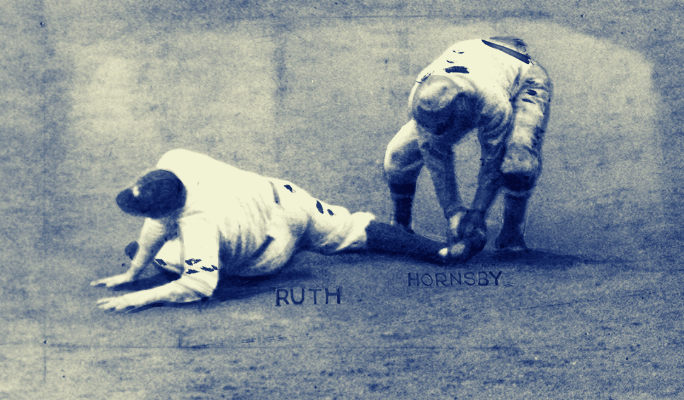
Most people, young and old, know the name Babe Ruth. “The Babe”, the Bambino, the Sultan of Swat. He was, arguably, the first national sports celebrity, and some say he saved the game of baseball from the 1919 Black Sox scandal. Long, soaring home runs, are still called Ruthian, 100 years later. He appeared in ten different World Series, and he helped his teams win seven of them, but some contend that Ruth’s ill-advised attempt to steal with two outs in the bottom of the 9thinning of Game 7, cost the Yankee’s a World Series ring. The truth is that the hitter behind Ruth called for a hit and run, but the hitter, a Bob Meusel, signaled to Ruth that a hit-and-run was on. Ruth ran, but Meusel didn’t get the hit. Ruth was then left out to dry as Rogers Hornsby tagged him out and the St. Louis Cardinals won the 1926 World Series. History goes to the winners of course, and some writers have attempted to besmirch Ruth’s name by saying, “He might have been the home run king for decades, and he might have been a World Series hero many times over, but did you know…?
We all dream of becoming a professional sports athlete. They live the lives that only royalty knew in the past. They have more money than any of us could dream of making, and they have all spoils their culture has to offer, and we live vicariously through their successes. If you’ve ever dropped the ball in a spectacularly humiliating fashion, you received some taste of how awful it feels. They call these plays routine for a reason, because we’ve practiced for such moments hundreds to thousands of times, and professional athletes have performed the routine perhaps hundreds of thousands of times. Some of the times, routine becomes so routine that we accidentally take our eye off the ball for less than a second, and we’re already throwing the ball before we catch it, or whatever the reason might be. When we play sports, we make mistakes that take a fraction of a second. Every athlete has makes so many humiliating and embarrassing mistakes that contests often come down to who makes the least amount of them. Athletes are so used to making mistakes that the best ones just move on, but we never do, and we take it as a personal insult when someone from our team tries to move on from one. In Fred Snodgrass’s case, a fraction of a second ruined his life for about sixty years.
We don’t think about how awful it would feel for an athlete to make a crucial mistake that decides a championship, because we’re fans, and being a fan allows us to move wherever we want in our relationship with them. We want to move closer when they succeed, but we distance ourselves from the stink of their failure. It also gives us a certain joy to mock and scorn them for the rest of their lives, so that they never live the worst moment in their life down. Anyone who has ever dropped the ball, even in a meaningless softball game, has empathy for those who commit errors. We think everyone who was there that worst day of our lives remembers. They don’t, because they don’t care about us, and nobody cares about an insignificant softball game. Those of us on the outside looking in have no idea what it feels like to have someone associate their lives with us. Some of us would give up everything that makes us happy now to know just one day of their life, but as many have said in so many ways, fame has so many downsides that we should be careful what they wish for. Imagine being a grandparent, and a relatively successful business man, living a quiet, happy life, and every third person you encounter says something like this in front of your beloved grandchildren, “Aren’t you Fred Snodgrass? Didn’t you drop the ball in the World Series? Yeah, kids, that play is so famous they gave your grandpa’s play a name, the Snodgrass muff.” Most people would never say such a thing, especially in front of adoring children, but some do, and they think it’s okay, because they were fans, and he let them down.
“Your guy’s records shouldn’t count, because of this! My guy’s should, because of that.” The this and thats are asterisks, we’re talking about asterisks. Historians love them, and sports historians love them more when arguing the this and thats, but nobody loves the asterisk more than the baseball historian. It’s their favorite punctuation mark. Rather than write about an athlete’s athletic prowess as he chases down a record, some baseball historians pull the asterisk on them or the record holder they’re pursuing. The thing about asterisks is that they’re rarely objective, and they don’t bother sifting through the details to find the truth.
Example: I believe Babe Ruth was the greatest hitter of all time. If we say that most baseball historians cringe. Why? My guess is that it’s so obvious that it’s kind of boring. Everyone with a blog can write that, but a quality baseball historian justifies his existence by saying everything but. Other baseball historians would argue that my contention is inaccurate. Why? Asterisks.
“But Babe Ruth had a .342 career batting average.” Pfft. (Pfft is the sound of an asterisk punctuating a point.) *He got most of his hits against starting pitchers who were tired by his third or fourth at-bat. “As a pitcher, Ruth went 65-33.” *Yeah, but (the yeahbut is an unofficial, verbal asterisk) between 1915-1917, he played for the Boston Red Sox. The Red Sox won the World Series three out of four of those years, so of course he won a lot of games on those incredible teams. “He pitched 29.2 scoreless innings in those World Series games.” *It was the dead ball era. It was easier to pitch scoreless innings back then. “He pitched a 2.06 ERA during those years.” *Again, it was the dead ball era, and he wasn’t even in the top ten ERA leaders most of those years. “He hit a number of his 714 during those dead ball years.” *He didn’t have to face African American pitchers back then, he didn’t have to play night games, and he didn’t have to face the rigors of extensive travel back then. “He ended up with 714 after only hitting 20 the first five years of his career. Are you saying that’s not an accomplishment?” *He didn’t have to face as many teams, as many different starting pitchers, and there was only one prominent reliever back then. How many of those home runs did he hit in his third and fourth at-bats when the starters were fatigued? “Baseball was the premier sport during Ruth’s playing days, and it attracted the best athletes in the country.” *In the country are the key words here. Modern baseball now invites the best athletes from around the world to compete.
The Babe Ruth defender cannot win, as baseball historians have an asterisk ready for every single one of Babe Ruth’s accomplishments, but for every argument for an asterisk there is a counterargument, and every counterargument has its own counterargument, until we arrive at the idea if we’re going to asterisk every baseball player from every era then we should probably not asterisk anyone (*except for PED players), because it’s almost impossible to compare eras.
The asterisk we hear most often against calling Babe Ruth the unquestioned “Sultan of Swat” is that he didn’t have to face African-American pitchers. Between the years 1846 and 1947, professional baseball was not integrated. Was that immoral? Of course it was. The idea that an individual wasn’t allowed to compete for a job in a sport was a stain on baseball, its history and tradition, and its records. Baseball could’ve led by example, in this regard, and there are no asterisks, excuses, no ifs, ands, or yeahbuts to support why this wasn’t done from the very beginning. Full stop.
Due to the fact that Major League Baseball (MLB) participated in the stain of segregation, Babe Ruth did not have the chance to face a wide swath of the national, and international, populations. Since integration, some of the greatest pitchers of all time have been either African American, Hispanic, and Asian. Yet, if integration were introduced when it should’ve been, in the very beginning, how many of the members of other races would’ve replaced the starting pitchers Babe Ruth faced? The fact is that it was unfair that pitchers were not given the chance to compete for those jobs, but the inference that Babe Ruth’s career total of 714 home runs would be significantly lower if he faced black pitchers, specifically, is just as unfair. As you’ll read below, Buck O’Neill’s observation reinforces the unfairness of baseball historians attaching this unofficial, verbal asterisk to Ruth’s career numbers.
Buck on Babe
Buck O’Neill, who played in the [African-American] Leagues, then scouted and managed in Major League baseball for 50+ years, said, “[African-American] League pitching lacked the depth [of the pitching] that Major League Baseball [had at the time].” Buck O’Neill was not only an [African-American] League athlete, he was one of the primary voices fightingto keep the tradition and history of [African-American] League Baseball alive. As such, O’Neill could’ve viewed the comparisons from a subjective perspective, or even a competitive point of view, that stated how all of his [African-American] League peers were just as good as anyone in Major League Baseball. He didn’t. O’Neill could’ve also said nothing on this matter. He could’ve left the matter to historians to sort out. To his credit, O’Neill examined the two leagues objectively and said the depth of [African-American] League pitching was comparatively lacking by comparison. Mr. O’Neill did not say that the best pitchers in the [African-American] Leagues could not have made the Majors. He just said that the [African-American] League rotations weren’t as deep as those in the Major League, top to bottom.
Based on what Mr. O’Neill saw in his playing days, scouting, managing, and just appreciating the game as an insider/outsider for 50+ years, we can infer him saying that if integration was never an issue, and black pitchers were allowed to play in the Major League from the beginning, the quality of pitching, across the league, wouldn’t have been significantly different top to bottom. Further research from The Society of American Baseball Research also notes that becoming a Major League pitcher has never been particularly attractive to the African-American athlete. After 1947, the percentage of African-American pitchers peaked at around 6% of all pitchers in the 1970’s. A USA Today article interviewed various commentators on this subject, and they offered several speculative reasons for this, but regardless what those reasons are, the fact remains that the demographic has never been particularly attracted to the position. The inference baseball historians make is that Ruth’s home run totals pale in comparison to modern, hitters, because modern hitters face more African-American pitchers, but most of them have faced pitching staffs that are, historically, between 1% and 2% African-American on average.
To asterisk this asterisk, we do have one small sample of how Babe Ruth might have fared against the African-American pitchers of his era, and it involves the times when Babe Ruth batted against African American pitchers in exhibition games. The baseball historian might further asterisk this asterisk by suggesting that sixteen contests is anecdotal evidence, and the fact that they were exhibition games suggests they shouldn’t even be entered into the argument. It’s true, all true, but we can guess that the [African-American] League pitchers did not pitch in those games as if they were exhibition games when they faced Major League ballplayers. We can guess that even though they were only exhibition games, these pitchers put forth their best effort to show that they were just as good if not better than the pitchers in the Major League. When they faced The Babe, specifically, we can be sure that they did everything they could to get the most famous man of his era out. If they did, we can guess they would’ve talked about it to their friends, relatives, reporters, and baseball historians for the rest of their lives. Babe Ruth ended up hitting 12 home runs against them in 55 at-bats, for a 22% rate. Babe Ruth hit 714 home runs in 8,399 at bats against Major League pitching, at a 9% clip. This isn’t to suggest if Ruth hit against African-American pitchers, in the Majors, throughout his career, he would have hit home runs in 22% of his at-bats against them, because that would be unreasonable speculation based on anecdotal evidence. Yet, when we hear casual fans, sportswriters and baseball historians cite the [African-American] League pitcher asterisk they imply that Babe Ruth’s numerous athletic accomplishments would be diminished or should be dismissed. Both sides can speculate on anecdotal information, but when we compile all of the data, I think both sides would eventually agree that his numbers wouldn’t have been as significantly different as they imply.
Babe Ruth in the Modern Game
Baseball historian, Bob Klapisch writes that, “Ruth was found to have had substantially above-average hand-eye coordination, intelligence and steadier nerves.”
I find this addition worthy, because Klapisch’s repeat of Ruth’s scouting report, combined with O’Neill’s description of the rare sound the ball made coming off his bat, describe intangibles that cannot be taught or coached. The jokes coaches of various sports repeat is, “You can’t coach someone to be taller, and you can’t coach someone to be faster.” You also can’t coach someone to have above-average hand-eye coordination. It’s an intangible that an athlete either has or doesn’t, and that’s one of the many reasons why I think Babe Ruth would be a top-tier baseball player, at the very least, in any era.
Kevin Long, the Yankees’ hitting instructor, counters, “I see too much movement in [Babe Ruth’s] stride, he’s hitting off his front foot. That’s OK only if you’re sitting on an 80-mph fastball or waiting on a curveball that only breaks on two [up and down] planes.”
Hitting instructor, Kevin Long, makes the ‘we live in the best of times’ argument many indulge in that suggests the modern athlete is so superior to the athletes of yesteryear that the latter couldn’t compete in today’s game. He states that if Ruth were playing in the modern game, he’d have tendencies that would inhibit his success, yet a hitting instructor knows that tendencies can be corrected. He then suggests Babe Ruth would have a tough time adjusting to the faster fastball of modernity, or a better curveball, as if it were a feat to which a modern Babe Ruth couldn’t adjust. I realize this is speculative, and it’s an asterisk in its own right that cannot be proved, but it seems ridiculous to me that an elite athlete as superior as many claim Ruth was, of “above average intelligence with steadier nerves” couldn’t adjust. Athletic ability aside for just a moment, if we could transport Babe Ruth, from birth on, to the modern era, and we could transport the conditions in which he was raised with him, Ruth would have the same driving force to learn, adjust, and succeed, because he would be as desperate to succeed now as he was then.
Those who train fighters in boxing often tell us that what separates equally talented boxers is the desperation one of the boxers has to succeed. They say that a fighter desperate to escape his current conditions, is more coachable and trainable, because they just want it more. The inference being that they have nothing to their name, so they have nothing to lose, and anyone who is that desperate to succeed in something is often willing to risk more and endure more than the individual who has had an easier life. As anyone who has played any sport knows, defeat, personal failure, and the resulting embarrassment from that are all part of becoming a better athlete. Baseball, perhaps more than any other sport, is a game in which its top stars endure more failure than success. The top hitters, for example, do not reach base 70% of the time. If Babe Ruth was the superior athlete that Klapisch and numerous others describe, he would fail to hit the modern 100mph fastball, and the modern curveball, as Long describes, but how many modern athletes fail to hit those same pitches? I believe that Babe Ruth would learn from his failures, adjust, and eventually succeed on the level he did in the 1920’s and 1930’s, because of the sense of desperation that would surely supersede his more priviledged peers.
Major League players, coaches, and managers on the Red Sox, Yankees and the other teams he played throughout the American League, in his era, considered Babe Ruth the asterisk of his era. They considered him a freak of nature athletically. *If African-Americans were allowed to play baseball in the Major League, they argue, Babe Ruth wouldn’t have appeared so freakishly talented. It’s a theoretical argument that has merit, especially if the unsubstantiated rumors about Josh Gibson are anywhere close to true, except when it comes to pitching. The principles of pitching aren’t solely based on athletic talent. If this argument focused on the NBA or the NFL, the athletic argument might take center stage. Integration of African-Americans transformed those leagues, but the eventual integration of baseball in 1947 showed very few pitchers make the jump to the Major Leagues. Did the Major League teams make these decisions as a result of racism? There were a number of hitters who made the jump, but very few pitchers did.
Buck O’Neill never explored why he thought the [African-American] League pitching staffs weren’t as deep as the Major League Baseball ones, but the inference baseball historians make that Babe Ruth didn’t face the superior athletes of his era deserves its own asterisk because superior athleticism doesn’t significantly enhance one’s ability to pitch. The difference between a dominant pitcher and an average one is not necessarily athletic, but it’s not necessarily based on intelligence either. Star-quality pitching at the Major League level is one of those things that I’m sure if we asked Major League scouts, how do we make a dominant Major League pitcher, they would probably say, “If we knew, we’d probably make a lot more of them.” A dominant Major League pitcher is as much about tangibles as it is intangibles, like perseverance through perpetual failure, that are not based on race, economic conditions, or any other indicators that we can point to in a substantial manner.
The problem with the integration argument is that we can’t argue what if’s, what abouts, and all that, so Ruth’s legacy suffers from the institutional wrongdoings of his era that now lead us to either accept his 714 home runs with asterisks, or dismiss them entirely.
Asterisk Them All
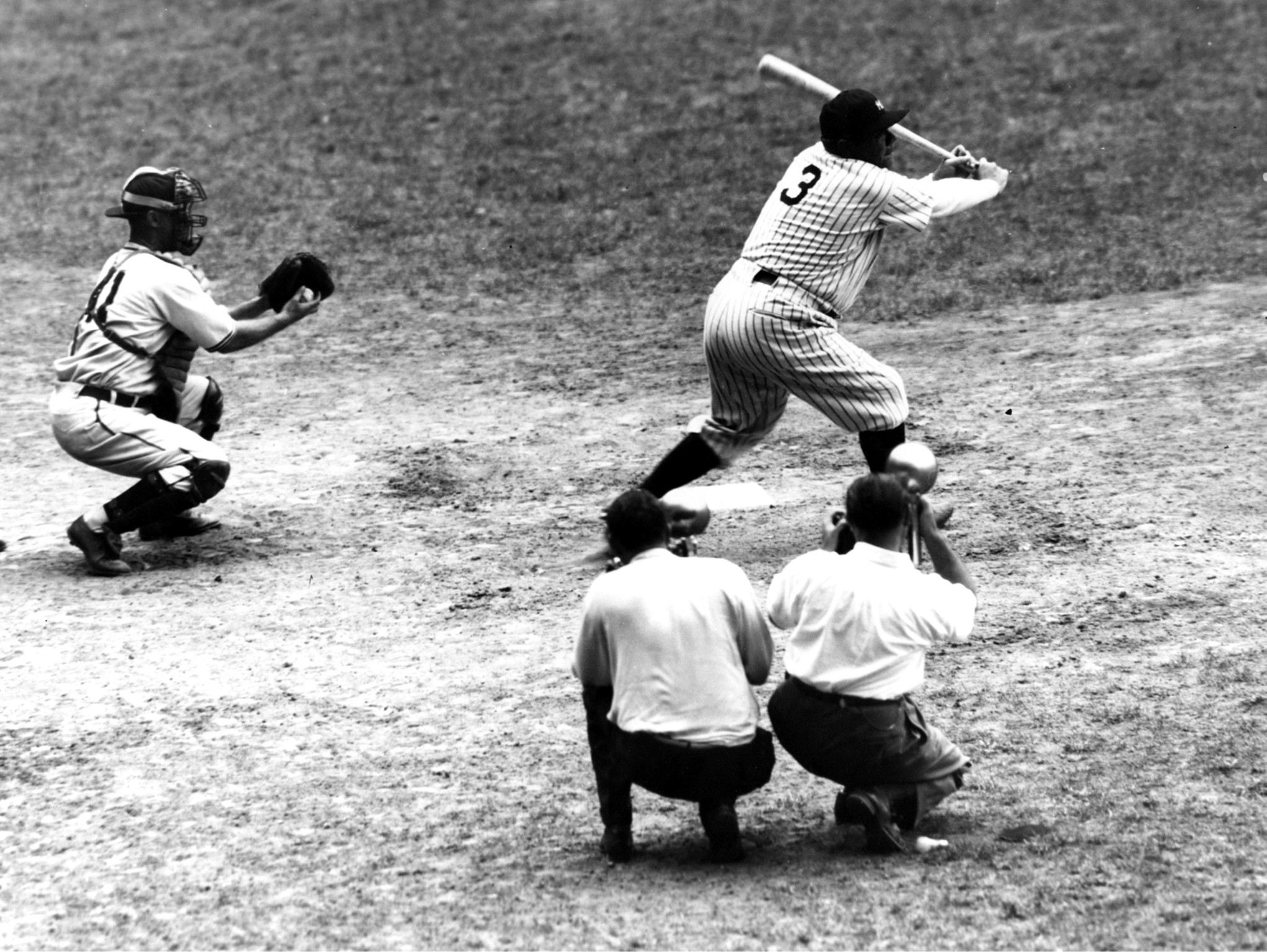
UNITED STATES – CIRCA 1926: Babe Ruth batting during an exhibition game.
Baseball historians also list ‘Babe Ruth didn’t have to play night games’ as one of the unofficial, verbal asterisks we should all place an asterisk on his .342, 714 numbers, and they usually throw the ‘night games’ asterisk in with the list of generally accepted asterisks against Ruth. I’ve never heard one of them suggest it as a standalone, because I think they know that this argument is so flimsy it would fall apart as a standalone. They much prefer that it gets lost in the list of asterisks. I understand the ‘Babe Ruth didn’t have to travel extensively’ asterisk to some degree, because we all know how long flights can lead to some fatigue. If we combine the two and say Ruth never had to travel to the west coast to play a 10:00 PM game, that might have some merit, but from what we know of Babe Ruth, it appears he had no trouble playing at night.
Unless you consider a diet of hot dogs and beer performance enhancing, we might add an asterisk in Babe Ruth’s favor by saying he played in an era without any performance enhancement supplements of any kind. When the discussion of performance enhancement products come up, we all impulsively go to the illegal ones, but there are numerous legal enhancements the more modern athlete consumes that weren’t apart of Ruth’s world. If we’re talking about the illegal ones that infiltrated the game in the 90s, and the amphetamines that worked their way into baseball in the World War II era of the 1940s or 1950s, the athletes of the Ruth era didn’t have any of those advantages.
Though there is some evidence that The Babe lifted a barbell, but his era knew little-to-nothing about how to maximize the benefits of weightlifting, or the advanced training methods of the modern era. Even some relatively modern athletes, as far back as the 1970s, report that they (team doctors and trainers included) actually considered weight training counterproductive to baseball. So, we could argue that if Ruth matured athletically in the climate of modern, advanced training methods, weightlifting, and the science behind strength and conditioning, his numbers could be significantly higher. Also, if Ruth had the video resources, modern hitting instruction, or any of the advanced scouting hitters have today, his numbers could even be higher. As Buck O’Neill, and others allude, Babe Ruth might have been one of the most naturally gifted athletes of his century, especially when considering the stories of how much damage he did to his body with his nightlife, alcohol consumption, and his general diet.
Ruth Basically Invented the Home Run
This part might be hard for modern baseball fans to understand, but before Babe Ruth, the home run wasn’t the prized athletic event it is today. Up until Babe Ruth, baseball teams didn’t sign pure home run hitters, and they didn’t strategize for the home run. Even when Ruth hit 148 home runs for the Yankees, between 1920 and 1922, the Yankees still didn’t win their first World Series title. So, while the rest of baseball saw the popularity of home runs for what it was among the fans, their version of statistical analysis led them to believe that home runs didn’t equate to wins. The myth that most of us believed that no one hit home runs before Babe Ruth is not true. Various players hit them, but the rationale back then was when you swung for the fences, it messed up the mechanics of your swing. As Ty Cobb once observed, it was Ruth’s first career as a pitcher that allowed him to perfect his reckless, from-the-heels, all-or-nothing cut, since nothing much was expected of pitchers at the plate. One of the greatest home run hitters of all time, Babe Ruth wasn’t even signed as a home run hitter, and he wasn’t utilized by the team (Boston Red Sox) that initially signed him to a Major League contract, until his final, fifth year with them. His first year, he only hit four home runs, but he was a primarily a pitcher when he did that. The Red Sox viewed Babe Ruth as a pitcher who could hit, and they eventually used him in that manner.
How many years did the Red Sox cost Babe Ruth in terms of home run production? First, we’ll dismiss Ruth’s 1914 season from the record, because Ruth was a rookie, and no one knew much about him. He went 22-9 as a pitcher in the minors, but as a hitter he had 28 hits in 131 plate appearances for a .231 batting average and one home run. So, at this point even the eventual Hall of Fame home run hitter himself had no reason to believe he would be anything more or less than a dominant pitcher, on a Major League Level. In his next three years (1915-1917), in the majors, Ruth went 65-33 with the Red Sox and an 2.06 ERA. While that number looks great by today’s standards, some argue that these numbers occurred during the dead ball era, and that Ruth was not as dominant a pitcher as some baseball historians suggest. These naysayers also say that his win rate was influenced by the fact that he was on a Red Sox team that competed for the World Series annually. As a counterpoint, Red Sox outfielder Harry Hooper approached the team’s manager Ed Barrow and told him the team needed to get Ruth’s bat into the lineup. Barrow said no. “I’d be the laughingstock of baseball if I took the best left hander in the league and put him in the outfield.” So, why would any manager who fears getting fired every year, allow such a successful pitcher in the batting order for more opportunity to injury, possible fatigue, and embarrassment for trying to make such a good pitcher a hitter? World War I.
There are disputes about how Ed Barrow eventually decided to put Ruth in the batting order*, but some suggest that Barrow put Ruth in the batting order out of desperation because World War I depleted the Red Sox roster to the point that Ruth was one of the few options available to him at the time. Babe Ruth didn’t go to World War I, because his number was never called, so those of us who don’t follow the rich tradition of baseball intensely, probably wouldn’t know the name Babe Ruth, if it weren’t for World War I.
Not only did Ruth hit .300 and tie for the home run title, in 1919, but the Red Sox won the World Series. When the World Series arrived, Barrow limited Ruth’s at bats, but that was probably because Ruth shut out the Cubs in the first game, to stretch Ruth’s record of shutout innings to 22.1 innings. Ruth would stretch that record to a then record 29.2 innings of consecutive shutout innings, and Ruth won his next start to help the Red Sox win the series four games to two.
The first five seasons of his career, spent with the Boston Red Sox, Ruth only hit 49 home runs. Hank Aaron already hit 140 at the same age and in the fifth years in their respective careers. We could argue that the Red Sox accidentally cost Ruth about four and a half years of potentially productive years as a home run hitter, by mostly keeping him out of the batting lineup until his fifth year.
When the Yankees traded for Ruth, they viewed Ruth as a hitter, and they switched him to the outfield. (Stats show he only pitched 20 innings in 15 years with the Yankees.) He hit 54 home runs in his first year, 1920, with the Yankees, and a star was born, and the glory of the home run was born with it. The second most home runs hit that year were by George Sisler 19, and in ’21 Ruth hit 59, and 2nd place was Bob Meusel at 24. Ruth’s success helped bring about the end of dead ball era.
Another unofficial, verbal asterisk that we could use in Ruth’s favor is the ball. How many fresh, clean balls does the modern hitter have? How many times, in one at-bat, does an umpire, pitcher, catcher, or batter ask for a new ball? If a foul ball is hit, the umpire reaches into his bag and hands the catcher a new ball. In Ruth’s day, reports suggest “the ball was sacred”. Fielders and fans were instructed to return the game ball to the pitcher after a foul ball, and Major League Teams hired security personnel and ushers to retrieve foul balls from the stands. In this era, teams played with one ball until “it was literally falling to pieces, and you couldn’t use it anymore”. John Rossi’s piece states that the ball “would be covered with grass and mud stains, along with goodly amount of tobacco juice from being spit on by the fielders. They would also lose their resiliency. Thus, the name the dead-ball era.” Some suggest that Ruth may have been partially responsible for Major League Baseball creating rules for a cleaner ball. As a result of the popularity of his home runs, the owners of Major League Baseball teams decided to feed into the massive attendance jump for just about every team in 1920. The owners made various “trick” pitches illegal, including the spitball, and they instituted a better ball, though this term would be refuted by laboratory tests. The owners wanted to keep the ball white, so hitters could see it. The spitball was banned in 1920, but numerous pitchers, who used it as their primary pitch throughout their career, were grandfathered in.
If Babe Ruth didn’t invent the home run, he single-handedly revolutionized the game from the John McGraw “inside” baseball tactics of bunt, steal, sacrifice to move over, and score on sacrifice fly to win 1-0, to a hitter’s game. Ruth’s home runs were not the sole reason for the explosion of baseball’s popularity. The end of the war, the money involved, and the more lively ball, as opposed to the 1-0 contests that tends to only please baseball purists. He wasn’t the sole reason, but he was the primary reason there was more money in the game, as attendance exploded after his home run explosions, and for the more lively ball. As Robert W. Creamer concludes in Babe: The Legend Comes to Life, “Ruth’s 1919 breakthrough did not provide a gradual evolution. It was sudden and cataclysmic.”
The First Sports Celebrity
The one other element that most baseball historians don’t mention when they discuss how Babe Ruth changed the game was that Babe Ruth became this nation’s first sports celebrity. He was America’s first athletic superstar at a time when baseball sorely needed it after the Black Sox scandal. Baseball had famous hitters before Ruth, from Ty Cobb to Tris Speaker to Honus Wagner who were just as good, and some might argue better than Ruth, but Babe Ruth’s hitting style, his personality, and his off-the-field antics made him larger than life. Those other hitters were huge in their hometown, state, and region, and every baseball fan of the era knew their name, but by the time Ruth joined the Yankees, everyone had a love/hate relationship with him. I haven’t done extensive research on this, but my guess is Ruth was baseball’s first constant headline maker. This media attention brought fans to the stands, and since the first transmission of television broadcasts didn’t occur until 1925, the primary source of revenue for owners was fan attendance. There are many bullet points to add to Babe Ruth’s claim to fame, but the idea that he almost single-handedly changed one of the three major sports and defined the idea of sports celebrity might shine the brightest, and no baseball historian can asterisk their way out of that argument.
In all of the research I did for this piece, I found authoritative asterisks that suggest while Babe Ruth might have been one of the best athletes of his generation, he couldn’t compete against the modern athlete. I found a counterargument to that asterisk that suggest most modern star athletes entering high school dream of playing in either the NFL, the NBA, and the MLB, in that order. In Babe Ruth’s era, the MLB was the premier sports organization that attracted the best, caucasian athletes in the country. Professional football and professional basketball existed, but they were nowhere near as popular as Major League Baseball. The premier athletes in the United States wanted to play baseball, and Babe Ruth faced off against the very best athletes of his era. I’m sure you just thought of a counterargument to that argument, and that’s the point I made earlier. For every argument, there is a counterargument, and a counter to that counterargument, as evidenced by all the articles, opinion articles, and replies to those articles. The one definitive, authoritative, and irrefutable conclusion on whether or not Babe Ruth was a superior athlete who could compete in any era is that there is no definitive, authoritative, and irrefutable conclusion.
“Why do you care?” might be the question Babe Ruth defenders hear most often. “What difference does it make now?” might be the second most, “Babe Ruth’s (1914-1935) career now is almost 100 years old now.” My drive might have something to do with the fact that I cannot stand it when people say, “It is the best of times, right now, as far as athletics are concerned.” This argument of the tangibles suggests that athletes who dominated during “the worst of times” could not compete in today’s game. I’m not going to say there is no merit to this argument as I believe the middle of the pack and lower level athletes of today are far better than the athlete of yesteryear, but I maintain that the elite athletes of yesteryear could’ve competed in any era. Having said that, we do concede that if the average to poor athletes of yesteryear pale in comparison to today’s, Babe Ruth competed against those average to poor athletes, and his career totals would probably not be as high in the modern game. It pains us to make that concession, but we still think The Babe would still be one of the elite athletes in any era.
The “best of times/worst of times” argument also stubbornly insists that any argument that includes a Babe Ruth must be an as-is model. We cannot transport him to today’s era of training and diet science, so why debate it? We debate it, because athletic prowess is the most important characteristic, but it’s not the only trait that defines that superior, elite athlete. When we start throwing out asterisks on Ruth, Walter Payton, Wilt Chamberlain, and other elite athletes who dominated the game during their respective era, we often leave off the intangibles that defined them beyond their athletic prowess. Ruth, like Payton and Bill Russell, were born and raised in situations they desperately sought to escape, and they believed sports were their ticket out. The desperation to succeed can also be combined and furthered by their will to win. The will to win can be broadly defined by an athlete doing the best they can to help their team defeat the opponent, but in just about every sport there is a one-on-one, mano y mano confrontation between two equally skilled athletes. The will to win in those showdowns defines an athlete as much as stats, wins and losses, and legacy, and I believe that these athletes would’ve used their elite talent, their desperation to succeed, and the will to win to use all of the advantages the modern athlete has, adapt to the current game, and succeed. As stated earlier, he who wins athletic contests are often the most athletic, but some of the times, the desperation to win and eventually succeed defines the difference in a manner that transcends the best of times and the worst of times.
I provide the numbers below, because someone once said that numbers speak for themselves, but I think we all know that they don’t, because they invite asterisks, counterpoints to those asterisks, and counterarguments to the counterargument.
Total Home Runs: Ruth 714 vs. Aaron 755 vs. Pujols 703
Total Games — Ruth 2,503 vs. Aaron 3,298 vs. Pujols 3,080
At Bats — Ruth 8,399 vs. Aaron 12,365 vs. Pujols 11,421
Plate Appearances — Ruth 10,623 vs. Aaron 13,941 vs. Pujols 13,041
Batting Average — Ruth .342 vs. Aaron .305 vs. Pujols .296
Runs — Ruth and Aaron tied at 2,174 vs. Pujols 1,914
Runs Batted In — Ruth 2,214 vs. Aaron 2,297 vs. Pujols 2,218
Walks — Ruth 2,062 vs. Aaron 1,402 vs. Pujols 1,373
Strike Outs — Ruth 1,330 vs. Aaron 1,383 vs. Pujols 1,404
Slugging Percentage — Ruth .690 vs. Aaron .555 vs. Pujols .544
Number of Unique Pitchers Hitter Hit Home Runs On — Ruth 342*(as a Yankee) vs. Aaron 310 vs. Pujols 458
Seasons — Ruth 22 vs. Aaron 23 vs. Pujols 22
World Series Rings — Ruth 7 vs. Aaron 1 vs. Pujols 2
*In Babe: The Legend Comes to Life, the author Robert W. Creamer states that Ruth’s transition was not a managerial decision, or one based on WWI depletion, but Babe Ruth’s decision. After experiencing some success as a hitter, Ruth decided he no longer wanted to pitch. Ruth’s and manager Ed Barrow argued about this, but Ruth eventually won the argument. The book also states that Ruth’s ability to avoid the draft involved him being married at the time and some squabbles between Major League Baseball and government agencies.
**Other sites say that on May 6, Barrow changed his mind and started Ruth at first base. After that, Ruth played in the field when he wasn’t pitching and the Red Sox were facing a right-hander. Ruth responded by hitting 11 home runs to lead the American League and pitching to a 13-7 record.
@) If we could talk to the animals, my guess is that we’d find that, among others things, we’re the only being that finds flatulence and bowel movements funny.
“Why do you find them funny?” Dabbi the deer might ask.
“Because we find them disgusting,” we’d answer.
“What?”
“It’s complicated, but it’s further complicated by the fact that you don’t have a sense of humor.”
“I don’t have a sense of humor?” she asked. “I don’t? I’ll have you know that I share the same sense of humor with the rest of the human population. Our sense of humor generates ratings, box office sales, and album sales. You’re the freak of nature.”
&) We never call out dystopian productions from their all-too-near future predictions for being wrong. Young up-and-coming lyricists are forever in search of meaningful and important lyrics. They can’t write about Lord of the Rings anymore. Led Zeppelin been there done that. Silly Love Songs were Paul McCartney’s domain, and we can no longer write ‘baby’ lyrics, because the 70’s and 80’s bands drained that vestibule. The only avenue left is war, anti-war, and anti-military, but there hasn’t been a real war by first world countries in about 50 years. So, while all of the lyrics written in the interim are meaningful and important lyric, they’ve also been false, so far. “True, but they weren’t talking about today, they were talking the all-too-near future.” So, when do we say they’re wrong. “You don’t!”
$) So, how do young, inexperienced artists craft “meaningful and important” lyrics and dialogue when they know nothing about the real world? Is it more important to be meaningful and idealistic or knowledgeable and realistic?
#) If you’ve ever met a truly tough guy, you know they’ve already done it. They wear a “nothing left to prove” garb for the rest of their lives. We know how tough they are, when we meet the other guys, those who talk tough to show it.
*) If we ever catch up to Alien technology, will medical professionals finally learn that the key to physical and mental health lies in the anus?
^) Too much sports knowledge is trivial and useless. Watching sports on TV is supposed to be fun, but some of us get so tied up in good guys vs. bad guys that we forget this is basically a reality show. It’s the best one we’ve ever invented, but it’s still just a show. The next time we meet that guy who knows so much about sports that we’re slightly intimidated by his fact-based opinions, we should liberate him by saying, “Who cares?”
!) You’ll know you’re one of these guys if a lighthearted disagreement over useless and trivial information boils over into you deciding that you’re never speak to the other ever again. At that point, someone needs to step in and say, “Clark, no one cares. You think you’re right, and she thinks you’re wrong, but no one here really cares. We just want to go back to eating our turkey, watching football, and talking about Mary’s Jell-O. That’s all we want to do today.
?) What if she says that your favorite sports star is actually a pretty awful human being? We defend him, because we’re nerds who sit in an audience of millions, and he’s the good-looking, athlete who wouldn’t talk to us in high school. If we pick the right one (he who wins) we want everyone to know our vicarious association. “I’ve followed that guy since he was a five-star recruit. I know his high school stats and college stats by heart.”
“No one cares, Clark!”
%) To counter those who say, “Today’s music ain’t got the same soul,” I would like to introduce you to the noise coming out of Britain. black midi (lower case for whatever reason), Black Country, New Road (one band), Squid, and a band named Famous. These bands are genuinely creative and innovative souls coming out with music that might be as brilliant as the music of past decades, and my guess is they’re only going to get better. Other bands that are also making great noise are Thee Oh Osees (or Osees), and just about everything Ty Segall puts his name on. As with all innovative music, we shouldn’t expect the noise to grab in one blow, and we shouldn’t expect one song to deliver the knockout blow either. Although I think the music from black midi’s Welcome to Hell (not the 23-year-old’s definition of meaningful and important lyrics) might change your interiority by about the tenth listen.
Pitchfork has a few nuggets from black midi’s lead singer Gordie Greep to dispel the notion we have that he wants us to view him as deep, meaningful, and important.
“It’s just fun man,” Greep said. “We’re doing this this stupid thing and somehow making the semblance of a living.” This might be false modesty, as we can be sure he hopes we take his stupid stuff seriously.
Greep also drops a fascinating description of his writing style. “When you want to do something original…use something as a model or inspiration that you know you definitely can’t do,” Greep has said. “Your failure will be interesting.” He talks about Clint Eastwood’s failure to act like Marilyn Monroe, and Tom Waits attempt at the blues. He says they both failed by relative measures, but he says we found their attempts interesting. I found a similar attempt to write like James Joyce interesting.
So, he writes what he doesn’t know, just to see what falls out? What an interesting and perplexing method of writing. My guess, and I have a pretty decent track record in this regard, is that Gordie Greep (whether with black midi or not) is a craftsman who has a relatively bright future.
() I got off on Queen when I was younger. Queen almost single-handedly introduced me to the concept that different can be so beautiful in the right hands, and then I discovered David Bowie. Once I got passed Bowie’s pop songs, I thought he was the most experimental artist in the mainstream, until I discovered Mike Patton. Mike Patton did things I never heard before, and I thought he was the most adventurous artist I ever heard, and I still think that in many ways, but Omar Rodríguez-López (ORL) is just as adventurous in different ways.
Omar Rodríguez-López (ORL) is one of the most gifted artists and musicians on the scene today, and he has played some role, most often leading it in some creative manner, in over fifty albums. I purchased an At the Drive-In album, and I purchased a couple of Mars Volta albums, but for some reason they never appealed to me. If it hadn’t been for Ipecac Records releasing his solo recordings, I never would’ve discovered the genius (and I do not use that term lightly) behind the music of those previously mentioned bands.
AllMusic.com tries to succinctly capture this genius writing, “His multivalent body of work derives inspiration from punk rock, prog, metal, funk, traditional Latin music, blues, jazz, film music, and avant-garde composition.”
As with any mercurial genius, much of ORL’s solo albums will not appeal to most palettes, but the true music fan will probably go nuts over about twenty-four of the fifty albums. When I approached Omar Rodríguez-López music, I had no idea what to expect, but he violated those expectations in the most obscene manner possible. Such violations are not immediate, as they rarely are. My first love was Roman Lips. Anytime a friend invites me to listen to complicated, difficult music, I suggest he do so by starting their most accessible album. Roman Lips is probably the most accessible ORL album, followed by Blind Worms, Pious Swine. Beyond that, the ORL solo albums are impossible to categorize, list, or breakdown by category. Suffice it to say that I was wary that the genius behind At the Drive-In and Mars Volta would appeal to me. I was also wary of the Ipecac Recordings, as they release a lot of material that major recording studios won’t, and a number of their albums don’t appeal to me, but ORL.
As with all of the artists listed above, it’s difficult to believe that these individual artists, and Queen, are capable of such wide-ranging music. I love some of the more major, mainstream pop acts, but there is a comfortable thread that runs through most of them. Their fifth album might sound more advanced than their first in production value and matured writing, but we all know what kind of music they prefer. Listening to the albums put out by Bowie, Patton, and Omar Rodríguez-López, it’s hard to believe the same artist created all these incredible albums. ORL is definitely the most prolific of the three, and he’s not even fifty-years-old at the time of this article.


 2003 shortstop, Alex Gonzalez, might’ve suffered a fate similar to Snodgrass and Buckner, were it not for a man named Steve Bartman. Gonzalez muffed a routine groundball that could’ve and should’ve gotten the Cubs out of the “Bartman inning” with a double play, so routine that Gonzalez probably executed to perfection a hundred thousand times throughout his life. He muffed the most important one of his life, but few casual fans put him on any lists, like this one, thanks to Bartman. For the record, Bartman’s relatively innocent attempt to catch a foul ball for a souvenir led to a walk, and Gonzalez error led to five unearned runs. Steve Bartman’s life was ruined in a way few fans have ever experienced, and Alex Gonzalez’s name remains unknown to everyone except writers who write columns based on a theme that the Chicago Cubs lost that National League Championship Series, not a fan named Steve Bartman.
  We all dream of becoming a professional sports athlete. They live the lives that only royalty knew in the past. They have more money than any of us could dream of making, and they have all spoils their culture has to offer, and we live vicariously through their successes. If you’ve ever dropped the ball in a spectacularly humiliating fashion, you received some taste of how awful it feels. They call these plays routine for a reason, because we’ve practiced for such moments hundreds to thousands of times, and professional athletes have performed the routine perhaps hundreds of thousands of times. Some of the times, routine becomes so routine that we accidentally take our eye off the ball for less than a second, and we’re already throwing the ball before we catch it, or whatever the reason might be. When we play sports, we make mistakes that take a fraction of a second. Every athlete has makes so many humiliating and embarrassing mistakes that contests often come down to who makes the least amount of them. Athletes are so used to making mistakes that the best ones just move on, but we never do, and we take it as a personal insult when someone from our team tries to move on from one. In Fred Snodgrass’s case, a fraction of a second ruined his life for about sixty years.



 Rilaly