Artistic Images vs. Artistic Creations


Imagine that someone tells you that an artist’s self-portrait is now on sale.  “Who is it?” would probably be the first question you ask, and if it turns out to be the work of a relative unknown, “What’s his story?” would probably be your next.  If the answers to these questions aren’t very satisfying, all of your follow up questions would probably involve the story behind the particular self-portrait painting in question.  If these questions yield no satisfactory answers, your final question might be, “Why should I be interested in this piece?”  The quality of any artistic piece is subjective, but most art enthusiasts generate enthusiasm based on a number of factors, most of which have little to do with the actual quality of the piece.

It may be a little unfair to criticize the desire some art enthusiasts have for “a story”, or more information, of a self-portrait of a relatively unknown author before vesting any interest in a piece, but in the case of artist Bryan Lewis Saunders such interest has been generated.  This event leads to the question, how does a relatively unknown artist generate interest in his work?

That’s easy: paint a masterpiece.  Most works of art are not masterpieces, however, and they fall into the subjective, relative arena of appealing to the patron on some level.  Very few pieces of literature, musical productions, or sculptures are so great that they can attract an audience without a great accompanying story.  Most art falls into the middle ground of subjectivity, and it’s that subjectivity that requires a great story we can identify with, or that which tantalizes us in some fashion.

Computer Duster (2 squirts)

The self-portraits of Bryan Lewis Saunders appear to be –to the non-enthusiast crowd– marginal works of art at the very least.  For those that are interested in making their own determinations on his art, these works can be viewed here and here.  In the second link, and in Jon Ronson’s piece on Mr. Saunders for the Guardian, you can learn of the story behind these self-portraits, and how they involve Mr. Saunders doing roughly fifty different self-portraits on fifty different drugs, be they of the prescription or controlled substance variety.  This story has generated a tremendous amount of interest in Mr. Saunders, and his work, and it appears to have added tremendous value to his pieces among the chichi crowd that wants to have his story hanging on their wall.

Let’s say, for a moment, that I’m right about the artistic merit of Mr. Saunders’ work, and the greater value exists in the narrative.  Are you one that would love to give that narrative to visitors of your home?  Are you one that would love to have a Saunders hanging above your shabby chic armoire, so that you could say, “Mr. Saunders did that while wrecked on the prescription drug Klonopin, otherwise known as Clonazepam.  And let me take you down the hall here,” you say with excitement.  “This is Mr. Saunders interpretation of himself after experimenting with butane honey oil, and in our master bedroom is my personal favorite that Mr. Saunders created after taking 250mg of Cephalexin.  He actually mixed some of the cephalexin into the painting with water and a watercolor pencil.  It’s the prized piece of my Saunders collection,” you say with pride.

If your audience isn’t necessarily impressed with the paintings, they would probably find the narratives so exotic, that they probably wouldn’t want to discuss the actual artistic merits of the piece.  They also probably wouldn’t want to enter into a moral discussion of recreational drug use, and how your piece seems to glorify it in some way.  Most people do everything they can to avoid appearing puritanical, and they want others to perceive them as hip and cutting edge.  That having been said, if the pieces are as marginal as I believe them to be, most of your friends will silently wonder if your interest in the narrative may have clouded your judgment.  They would probably not call you out on it, however, with something along the lines of: “So, if it came out that Mr. Saunders was actually completely sober when he did these pieces, would you feel like you were robbed?”

What if you spoke to the author of the painting, at a gallery that presented his work, and you found out that he was actually a loving father of four that had a full time job as a UPS truck driver, and he did the particular piece you love on a caffeine buzz, as a result of putting down an extra cup of Folger’s, and the only reason he came up with the whole “drug thing” was to build some sort of mythology that his artistic career lacked.  Would you give that narrative to prospective admirers?  What if it turned out that this author had a sensible haircut, wore Levi’s jeans, and spoke in a manner that never wavered from the Queen’s English?  How would you enhance your admirer’s enjoyment?  What if your friend didn’t enjoy the piece you purchased, what kind of defense would you have?  What would it say about you that you even purchased such a piece?

Too often, the definition of art is conflated the image of art, and we like those images to be festooned with notions of troubled, reclusive individuals that suck in a potent drug at high volume; and we prefer them unhappy, inconsistent, singularly focused, and driven by the vagaries of the heart as opposed to a concrete, rational mind.  We want to hear that our artists are so singularly focused that don’t understand how toasters work; that they didn’t know how to tie a tie, until they were forty; and they don’t understand the intangible merits of kissing.  The only images we want in artistic profiles are those of quirky individuals that never learned how to fit in with society properly.  The normal person that happens to have a creative flair about them are just not very interesting, so we choose to believe that all artists, true artists, fit an image we’ve constructed in our head.

If you’ve ever watched a docu-drama about an artist, you know these images well.  By the time these movies are over, you’re left with the impression that it’s far more virtuous to be labeled a creative genius than it is to create art.  The constraints of these entertainment vehicles being what they are, the director cannot have a 90-minute movie about a guy painting.  That wouldn’t be very entertaining.  It might also be just as boring to have the characters sitting around discussing interpretations of the pieces, but when the directors of these movies portray the polar opposite, and focus on nothing but the narrative behind the artist, and the subsequent image of the artist, the notion of the narrative of art being more important than art is fostered, until it’s possible that some truly brilliant, yet unnaturally normal artists could remain obscure.

Those of us that have heard about the near divine inspiration that informed the masterpieces we all know, occurred within an elegant hotel room that overlooks the streets of Pamplona, Spain –where the running of the bulls occurs– begin to question these narratives after hearing them for the thousandth time.  Is it a marketing campaign that they use to influence the perception of the final product, or do some people really go to “different places” and receive a degree of insight into the human condition that overwhelms them to such a degree that a seemingly inhuman masterpiece is born?  It’s possible, and it’s likely that it has occurred on occasion, but for the most part, most art is created in boring places, on the backside of all of the mundane routines, and the dogged determination that has persevered through all of the trials and errors that eventually led to a product that an enthusiasts might find so pleasing that they litter their walls and book shelves with them.

Artistic brilliance can be defined as an individual perspective of the world, and the presentation of said material.  It can come from the most unusual places, but it can also come from such usual places that it doesn’t fit the mold of artistic brilliance.  Does this presentation of material require a narrative, does a well-crafted, somewhat spruced up narrative make a final product more beautiful or more interesting?   Maybe, maybe not, but I’m sure that every mid-level artist that has made their way into the chichi art world would tell you, it doesn’t hurt.

Mr. Saunders work can be used as the idyllic form of the mold, but it shouldn’t suggest that there is any less merit to the artistic creations Mr. Saunders decided to produce.  That’s his art, his niche, and it’s what he does, and how he perceives the world through a purposely unfocused lens.  What should bother anyone attempting to create art is the manner in which the world views the artistic world.  If you create an excellent piece of do you have to indulge in mind-altering substances to tantalize the imagination of the chichi contingent, or should you just lie and tell them that’s what you’re doing?  My advice would be to do the latter, and simply give them a narrative to sell to their friends.  Your art may be better received for it, and you may be invited to live the artistic life, for the chichi crowd is vehemently against drug-testing, even if it means that they’re being duped into believing in it.

The Fanatical Fallacies of Football Fans


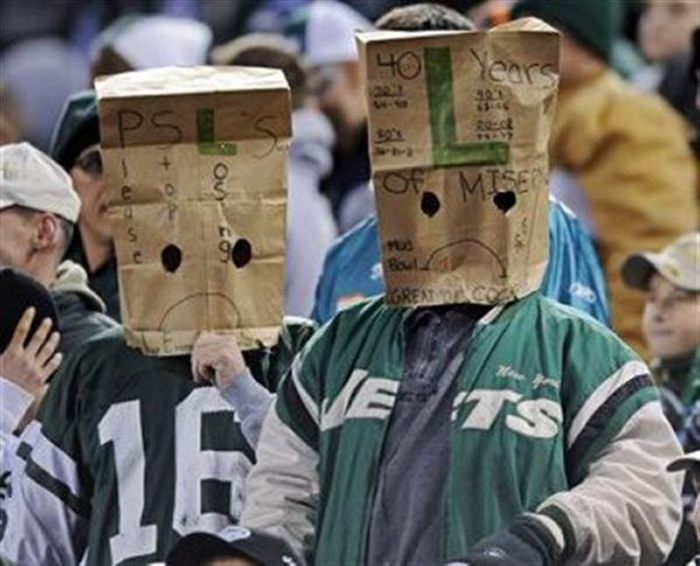
After a lifetime spent watching college football, the only thing I find more disturbing than the disillusioned fan is the idea that I may have been disillusioned for most of my life. Watching college football now, I realize how little I actually know about the game. I may know the history of the game as well as most fans that I encounter; I may know the terminology of the game as well as most of these fans; and I may even surprise some fans by the obscure knowledge I have of some obscure players on some relatively obscure teams. For all of us fans that “know” the game, however, it can feel like a revelation to learn –because most of us have never been involved in the game in any organized capacity— how little we actually know about what goes into the determinations and decisions, made in football meetings, involving those “in the know” coaches of even our favorite teams.

A revelation, by my definition, is a different way of looking at something you’ve been looking at for a long time. Some revelations, such as “Coaches game plan according to the talent they have on the field” can be perceived as so obvious that it may elicit laughter from many quarters, because that’s as obvious as the nose on your face. And I’ve always known that coaches coach according to talent, but when I realized that it answered just about every complaint I’ve ever had about “my team”, I began to complain less and less. When you say that to someone that has been complaining about their coach’s game plan for longer than you’ve been alive, however, they may look at you like that’s as obvious as the nose on your face.

635510731292908219-USATSI-8192511“We have the talent,” is something a fanatical might say, because they know you don’t know “their team” as well as they do. “Trust me, we have the talent.” At this point, you may detect that they think you’re insulting their team, so you clarify:

“I’m not saying you shouldn’t complain, and I’m not saying you have nothing to complain about. I’m saying that most of what you’re complaining about is based on all of the decisions and determinations your coaches, offensive coordinators, and position coaches have made based on what they learn in the spring, and throughout the season, regarding how to game plan according to their team’s strengths, and weaknesses.”

“We have the talent,” he repeated.

When you have a revelation of this sort, you may want to share it, because you may believe that your friend is in an earnest search for truth in the same manner you were, you may think that they’ll chew on your revelation, and reconsider it the next time they think of complaining.  When I presented my revelation to my friend, I didn’t bother to consider that I was treading upon the precarious line that exists between emotion and rational thinking. I didn’t consider that I was doing an injustice to the time-honored past-time of all fans: The art of the complaining.  I basically told him that once you come to grips with the fact that the talent you believe you see on the field is probably not a very good indication of the actual talent those “in the know” know, you’ll begin to understand why the game plan of “your team” is what it is.

The gist of this complaint, as I see it, is that all fans live with the notion that their team’s quarterback (QB) is an as-of-yet, undiscovered John Elway –a player I use as a high water mark of the greatest individual talent the game has ever seen at the position of quarterback, as opposed to the other talented QB’s that happened to fit into their team’s brilliant system perfectly— and the complaint stems from the idea that the only thing holding “our team’s” QB back from recognizing that kind of potential, is the conservative game plan that the coaches decide to implement. The question I had for my friend, and all football fans, is how well do you know the strengths and weaknesses of your team’s QB?  How well do you know, really know, your team’s strengths and weaknesses?  He, like most fans, suggested he knew. He watched them on TV, and he went to their games, and he probably read editorials, and listened to sports radio.

When an offensive coordinator (OC) is first introduced to the potential of a newly recruited QB, he may be led to believe that the sky’s the limit with this kid, and he may develop an explosive game plan that seeks to explore the extent of that QB’s talent on the field. The OC may be as excited as the young QB to employ this explosive game plan, as it will make the OC look as brilliant as the young kid if that kid is capable of executing it. At some point in the spring workouts, and/or throughout the season, the OC begins learn to game plan around the extent of this young man’s ability. It is the OC’s job to not only explore this young man’s talent, and put him in a situation in which he can succeed, but also —and perhaps most importantly— avoid placing him in situations in which he fails too often. At this point, the OC, together with the head coach, and the team’s position coach, may deem it necessary to thin the playbook, or develop a more run-heavy, more conservative game plan.  The latter fact drives most fans crazy, because no head coach, no OC, and no QB coach is going to say, “We had to make that change, because the golden boy that we worked so hard to recruit is not as good as we thought he’d be, or as good as you fans think.”

When my friend’s team’s QB first took the field last year, in 2013, the young man came out of the gate as a highly touted gunslinger. The initial game plan ended up resulting in a shockingly poor interception to touchdown ratio for the young kid. The resultant talk that sprang from that ratio –among fans, and sports radio personalities— involved replacing that QB with the as-of-yet undiscovered abilities of the backup QB.

There’s an old joke that every fan’s favorite player on the field is the backup QB, and the reason for this is that, to some extent, analysts and fans learn the actuality of the starting QB’s abilities, while the extent of the backup’s are still a source of exciting speculation. The fans and analysts know that the backup, much like the starter, was a highly recruited young man that their school happened to land, but they haven’t seen him in practice, they have never attended QB meetings, and they don’t know that young backup QB’s demeanor in the manner the coaches do. When those meetings between the coach, the OC, and the position coaches conclude, and they decide that their best chances at success involve that starting QB, coupled with a new, more conservative game plan, the fans revolt in their little echo chamber, and they come to the conclusion that the coach doesn’t know what he’s talking about. Why did they recruit the backup if they aren’t going to use him? Didn’t they watch the games where the starter threw interceptions all over the place? The head coach, they decide, is just stubborn. He decided to start the starter, and he can’t get out of his way long enough to understand that he needs to do go in a different direction.

Regardless the emotions involved in this situation, I would think that most fans would recognize that every coach, on every level, will do whatever they have to to succeed.  “No, he’s a stubborn, old rooster that always believes he’s right,” they say to this.  Fair enough, I say, but if he were wrong, don’t you think that the OC, and the position coach, would tell him he’s wrong. “They probably do,” the complainer would suggest. “And I’m sure the stubborn, old rooster tells them to go to hell.” You think that this head coach is willing to lose games to prove he’s right? “I sure do. I think he’s willing to go down with the ship. We need a new coach even more than we need a new QB, and that AD (GM if it’s pro) needs to go, and if the owner (pro) doesn’t know that, then we might need a new owner too!”

After listening to my friend gripe about his team’s underutilized golden boy, with a golden arm, he switched the discussion to the manner in which the team audibles at the line. “Everyone in the stadium knows that they’re going to see an off tackle right when the QB audibles out of the called play.” To further my “Coaches game plan according to the talent on the field” belief, I offered my friend a response that I believed to be a helpful, if not humble, insight:

“At one point, in one season, (my team) decided to switch up the snap count, to slow, and presumably throw off the timing, of defensive ends, and blitzing defenders. The only thing they ended up doing, unfortunately, was throwing off their own offensive lineman. The result was an embarrassing amount of false start penalties. The coaches decided that their 18-22 year-old offensive lineman could not keep the switched up snap counts in their 18-22 year-old minds properly, and the coaches were forced to adjust to that by having the QB use more consistent snap counts, silent snaps, and the “slow clap snap” that has been en vogue in college football of late.” My point in introducing that humble analogy to my friend was to prove the point that a game plan has to adjust to the player personnel you have on the field. Rather than acknowledge that larger point, my friend chose to focus on those deficits that I had mentioned with regard to my team.

It’s important to note here that prior to this discussion with my friend, I held his overall intellect in high regard. I wasn’t trying to belittle a person I considered beneath me, in other words, as much as I was trying to move an otherwise silly discussion to a higher level, a level I believed was more true than I knew for most of my life, and a level that I fantasized might place me in a higher level of esteem by my friend. What I found, instead, was that my friend had an unshakable belief, a wall that that he had presumably erected for the purpose of shutting out contrary opinion, and that this wall of was based almost solely on emotion. I’m quite sure that when I repeat this story to another disillusioned fan that they will laugh, and nod, and say they’ve had such a discussion, until that discussion moves to “their team” at which point the cycle will start all over again. When it does, however, I will be armed and ready with Kenny Rogers’ prescient rules of life: “You gotta know when to fold ’em, know when to walk away, and know when to run.”

We don’t know what we’re talking about when it comes to the finer points of football, be it college or pro. You don’t know why the coaches made the decisions they made, and I don’t know why. We all think “our guys” are supremely talented individuals who can throw every throw, block every defensive player, and run like the wind. We think this guy should be the starter based on what we’ve seen. We don’t know. We don’t know their weaknesses as well as the coaches, and we don’t know why they’ve coached the players how to compensate for their weaknesses in the manner they do. No coach is going to tell you that, however, as doing so would insult his player. No sports announcer is going to tell you this, because they do not want to insult their audience. Only someone with nothing to gain and nothing to lose would tell you that you don’t know what you’re talking about, because if they’re truly paying attention to the finer points of the game, they’re finding out how little they know on a weekly basis. You’ll probably agree with us, because you think you know far more than we do, but by doing so you might be exposing your own ignorance.  

A Review of Lost at Sea


Journalists are not your friend

Let me start off by saying, I am not a fan of the music of rap duo Violent J and Shaggy 2 Dope, otherwise known as Insane Clown Posse (ICP), and other than the occasional, “This is the type of music they play … ” cuts I’ve heard in news clips, I’ve never listened to them. I have no alliance to them, in other words, but I harbor no ill will for them either. I know that they exist in the universe, they make music, they wear makeup, and their rap songs are violent. Other than that, I don’t care about the theme of their material, I don’t care that they “outed” themselves as evangelical spiritualists, and I don’t care that their fans (Juggalos and Juggalettes) stated that “They felt deeply betrayed and outraged” by the revelation of the rap duo’s spiritual nature. I am not overtly religious, but I do not condemn organized religion in the manner I once did … in my youth. I also don’t have any particular allegiance to fellow writer, Jon Ronson, either. I say this to let you know that I do not have a dog in this fight. I don’t have an ideological stake in one side appearing better at the end of this article, and I don’t see my side being represented by either party involved in this interview.

ICP-604x471What bothers me most about Mr. Jon Ronson’s interview of the ICP, presented in the form of an Have You Ever Stood Next to an Elephant essay, in Mr. Ronson’s Lost at Sea collection of essays, is the sense of trust the rap duo ICP display with Mr. Ronson. I don’t care that that level of trust Jon Ronson attained from these two produced an entertaining article. All the power to him for doing so, but I am not a member of the Jerry Springer contingent that enjoys watching people make fools of themselves. Had I been present at this interview, I may have laughed a little, but at some point I would’ve said, “All right, all right!  Enough!” I would’ve then turned to one of these two rappers and said, “This man is not your friend. He is a journalist devoted to exposing the truth, your version of the truth, or the truth, as he sees it.”

I see this level of trust, displayed by religious people, in a number of journalistic enterprises, and I always want to ask the subjects of these interviews if they’ve read a newspaper in the last twenty years; if they’ve listened to the radio; and if they have cable. If you have, I would say, why would you think this man is going to give you a fair shake? Why wouldn’t you walk into the interview with less than a healthy dose of skepticism? Why would you, after witnessing the last twenty years of journalists ripping and tearing at the heart of religion like starved hyena, not approach every question the ask you as if it were a trap? I understand that you appreciate the opportunity this journalist is offering you to “get your message out”, but if you were paying attention you’d know that 9.8357 times out of 10 the only reason a journalist is going to agree to sit down with you, or seek you out for an interview, is that you said something stupid, dumb, or just plain wacky that feeds into their narrative that all religious people are stupid, dumb, or just plain wacky. The latter may be hard for you to swallow, and it may be untrue as far as you’re concerned, but you should approach this interview with that mindset.

I don’t know what Mr. Ronson did to gain the level of trust he attained with the rap duo ICP. I don’t know if he is blessed with such a pleasant demeanor that he disarms the subjects of his interviews, if he was in any way duplicitous with the ICP, or if the rap duo was so excited about getting their message out, in The Guardian, that they didn’t pay enough attention to how they were being presented.  I do suspect, however, that the rap duo may have fallen prey to the very human conceit of believing that they have such a command of the issue that they could control the debate that they would be having with a journalist, even if that journalist may be approaching the subject matter from an adversarial position.

As pieces of this type go, Jon Ronson was not as adversarial as some have been, but there are moments when Mr. Ronson characterizes this rap duo as … less than fluent.  In one particular section, Ronson writes that Violent J says: “Huh?” to a relatively innocuous, leading question that Mr. Ronson asks of him.  The author clarifies his question.  Violent J comes back with yet another “Huh?” that the author suggests is due to the fact that Violent J is mystified. This is then followed by Ronson writing that: “There’s a silence.” After this presumed “mystified” silence, Violent J proceeds to answer the question. Whether or not, Violent J actually said “Huh?” on those two occasions, or spent a moment in silence gathering his thoughts, is not the point as far as I’m concerned. The point –that should be remembered by those religious people, excited by the prospect of being interviewed in such a prestigious publication– is that Mr. Ronson considered it germane to include those three reactions. The point, as it see is that the writer chose to include those three reactions to help him frame the interview for his readers, and presumably his colleagues and friends, so that they could laugh about it later.  The point is, also, that the editors at The Guardian considered them so germane to their writer’s point, and their writer’s framing, that they allowed it to be printed in that manner. The point is that we’ve all read interviews with rock stars, and movie stars, and can all guess –based on the totality of what we’ve read concerning the knowledge base of rock stars and movie stars– that these stats have a loose, half-baked grasp on the geopolitical issues they claim expertise in. We can also guess that some, if not a majority, of those interviews are littered with “Huhs?” and spells of silence that are deleted from the final piece prior to publication. For some reason, and I think those reasons are obvious, ICP were not extended this professional courtesy.

The point is not that Jon Ronson misrepresented the rap duo from ICP. We don’t know what happened in that interview, an interview that occurred backstage at an ICP show. We don’t know how long that interview lasted, or why Ronson decided to include what he did. There are only three people that know exactly how that interview went down (unless there were others in the room of course), and only they know whether or not the rappers Violent J and Shaggy 2 Dope, of ICP, were properly represented. And if it is the case that this is how these two wanted to be represented, then it appears that Mr. Ronson was more than happy to oblige.

Why would Mr. Ronson allow these two to represent themselves so poorly? If you asked him, I’m sure he would say something along the lines of: “I’m a reporter, and this is what I do …Report the facts and all … I report you decide,” and he might say the latter with tongue firmly planted in cheek. A truer motive might also be that Violent J and Shaggy 2 Dope further a narrative that Mr. Ronson has of religious people in general, a point that as I wrote answers the question of why he would decide to participate in this interview in the first place. Would Mr. Ronson enjoy a “Why do you not want to meet (with) scientists? Because (science is a way of) explaining things to people” debate with a C.S. Lewis type of rational advocate for religion? Mr. Ronson very well may enjoy such debates in his private life, but he probably knows that such a heady debate might only find a home in a scholarly journal.

A rational, religious figure, like C.S. Lewis, might argue that while Mr. Ronson may not agree with the explanations religious leaders offer, they are, just like science, “explaining things to people”. Mr. Ronson might then reply with a Richard Dawkins-type reply: “Just because science hasn’t advanced to the degree that it can explain everything, doesn’t mean that we should fill all those gaps with some form of divine intervention.” The C.S. Lewis type thinker could then talk about how the highly regarded physicist Albert Einstein believed in “a supernatural creative intelligence”. To this, Ronson could say that Einstein was dealing with a level of science even less advanced than ours, and he may have had such an ego about his abilities that if he couldn’t explain it, then no one could, and therefore we must fill the gaps of what I, Albert Einstein, cannot explain with the mysteries of a supernatural power. To this, the C.S. Lewis type of rational, religious thinker would remind Ronson that physicist Max Born commented that: “(I do) not think religious belief a sign of stupidity, not unbelief a sign of intelligence.” While I am sure that this debate would be far more intelligent than the one I craft for example, enthusiasts eager for substantial debates of this nature, would view it in the manner sports enthusiasts viewed the epic battles between Michael Jordan’s Bulls versus Patrick Ewing’s Knicks, battles that resulted in blood, sweat and tears being shed before a game seven victor could be declared. For reasons that are endemic to the argument that journalists (and their readers presumably) prefer, we get a preordained pickup game with the Washington Generals in which the journalist is allowed to dazzle the audience with their wordplay, and their Keats quotes, in a debate where the victor is so obvious that it’s an afterthought.

Instead of Michael Jordan skimming the inbound line to throw up a shot that Patrick Ewing barely misses, or John Starks throwing down “The Dunk” on Jordan, we get a Generals’ guard chasing Curly Neal around in a circle:

“Have you ever stood next to an elephant, my friend?” asks Violent J. “A f—— elephant is a miracle. If people can’t see a f—— miracle in a f—— elephant, then life must suck for them, because an elephant is a f—— miracle. So is a giraffe.”

We also read:

“Nobody can explain magnets,”  “Gravity’s cool, but not as cool as magnets,” and “Fog, to me, is awesome.”  

Finally, we receive the culmination of why Violent J and Shaggy 2 Dope prefer the idea of describing natural events as miracles, as opposed to the science explanations:

“Well,” Violent J says, “science is… we don’t really… that’s like…” He pauses. Then he waves his hands as if to say, “OK, an analogy”: “If you’re trying to f— a girl, but her mom’s home, f— her mom! You understand? You want to f— the girl, but her mom’s home? F— the mom. See? Now, you don’t really feel that way,” Violent J says. “You don’t really hate her mom. But for this moment when you’re trying to f— this girl, f— her! And that’s what we mean when we say f— scientists. Sometimes they kill all the cool mysteries away. When I was a kid, they couldn’t tell you how pyramids were made…”

“Like Stonehenge and Easter Island,” says Shaggy. “Nobody knows how that s— got there. But since then, scientists go, ‘I’ve got an explanation for that.’ It’s like, f— you! I like to believe it was something out of this world.”

It makes for great theater, as I said, for those the love bearded ladies, wolf boys, and illustrated men, but if any of you laughers are religious, you should know that Jon Ronson, and his colleagues in journalism, are not laughing with you in such pieces. They’re laughing at you. You, the religious person, may deem these explanations, and this summation on science, as ridiculous as anyone else, but journalists don’t know that. They may consider the ICP a bit of an outlier, but they know that for something to be truly funny it has to have a germ of truth in it, and I’m guessing that most of them find Jon Ronson’s piece hilarious. They are not your friends.

If you are, by and large a religious person, and you are open about it, so open that you hope to encourage others to be religious, you will be considered “the other side” by most journalists, and they will do whatever they have to to characterize you as “that side” for their readers. And you will learn, no matter how nice that interviewer appears to be on the surface, that most modern journalists are on that side, and they will do whatever they have to do to score points on you.

“There are myths and miracles at the core of every belief system that, if held up to the harsh light of a scholar or an investigative reporter, could easily be passed off as lies,” Lawrence Wright writes in the epilogue of his book Going Clear.

They could also be passed off as ridiculous, as this essay proves, and while most religious people may agree that Violent J and Shaggy 2 Dope’s version of the Christian belief system is ridiculous, the greater import of Jon Ronson’s narrative appears to be that all religion is this ridiculous, but that the ICP version of it is just a slight exaggeration.

As I wrote, I don’t care that ICP were skewered by Mr. Ronson, and I don’t care that he took a few hours out of his day to attempt to skewer religion, insofar as I’m getting used to it. What bothers me is the confusion that the members of ICP felt when the members of the music media pounced on them after their announcement. This confusion is, as I see it, an exaggeration of the fact that most religious people are shocked to find out how anti-religious the media, as a whole, have become. Soon after the announcement, Blender magazine listed them as the worst band in music history; and that “the worst musical moment from the worst band ever, is The Wraith: Shangri-La, the album that climaxes with Thy Unveiling” (the song where they reveal that they have been Christians all along). They received negative responses to Thy Unveiling that spanned from science bloggers, college professors, and even Saturday Night Live.

When Mr. Ronson asked ICP if they anticipated such a reaction, Violent J said:

 “No, I figured most people would say, ‘Wow, I didn’t know Insane Clown Posse could be deep like that.”

Deep is, of course, a relative measure, and I’m going to guess that most that read the lyrics to this song are going to agree that depth is a relative measure, but I still can’t get over Violent J’s surprise. When my religious friends express similar surprise, I ask them if they’re paying attention. I ask them if they have cable, if they’ve ever read the newspaper, and when they say they do, I ask them how they can still shocked by it all. If you had been paying any attention at all, I reply, you would know know that even mainstream religious views have been the subject to public scorn, and while I’m sure you regard your views as mainstream, you should know what all religious people paying attention to the current climate of the society should know: journalists are not your friend.

If a journalist asks you if you’d like to be interviewed for a major publication, go ahead and assume that they’re not going on a fact-finding mission that will help their readers learn the essence of your religion. They want kooky ideas, medieval practices, a Svengali-like leader to herd the sheep, racist tendencies, homophobia, xenophobia, sexism, and any vestige of hatred that you may harbor to entertain their readers in a manner that characterizes your ideas and practices as those of the “other side”. Even if you don’t harbor such hatred for your fellow man, and you haven’t said anything stupid that you know of, you should wonder why this journalist is so eager to interview you, and why they’re being so nice to you. You should be skeptical of every question they ask you; treat every “friendly” story they share with you as a way of making you talk; and you should regard every smile as a duplicitous method of disarming you, even if it’s simply a pleasant smile from a relatively pleasant man. You should wonder why a journalist, from a major publication, appears to be on the border of being your friend. You should wonder why he just wants you to tell your side, why he just wants you to talk, and why he thinks the things you say are so funny. I know you think you’re funny, but everyone does, and everyone enjoys making other people laugh, but in this particular case you’re probably not half as funny as he’s leading you to believe. And he’s probably not laughing with you, he’s laughing at you, because he’s not your friend.