It’s not anything I’ve ever given a second thought to,” Linda Ronstadt says of being elected to Rock and Roll’s Hall of Fame, “I never thought of myself as a rock ‘n’ roll singer. I’ve thought of myself as a singer who sang rock ‘n’ roll, who sang this, who sang that.
“I remember one of the guys at my record company asked me once if I would induct somebody into the Rock and Roll Hall of Fame, and I said ‘I really don’t like going to things like that.’ And he said, ‘Linda, you have to do it if you ever want to get inducted yourself!’
“I said, ‘I don’t care if I ever get inducted,’” she said. “That was a long time ago—in the ‘80s, and that was the last I ever thought of it.”
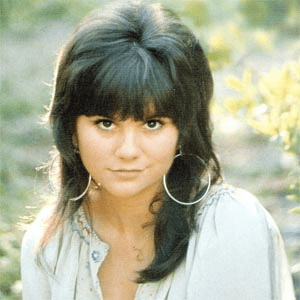 ‘Heretic!’ the rock and roll intelligentsia is probably screaming. ‘She’s lying! She’s a witch!! Get her!!!’ Some, more reasonable Americans, are probably thinking that her ambivalence toward induction has something to do with the fact that she can’t sing anymore due to her Parkinson’s disease diagnosis. Others might think that Ronstadt fears that she won’t match up to other inductees, under this most, scrutinizing spotlight, but most are thinking that it’s just not rational that a living, breathing human being would leave any amount of fame on the doorstop before entirely fading away into obscurity.
How could you not be intoxicated by the fame a Hall of Fame induction might bring you? Isn’t it every person’s dream to be enshrined in such a manner. Isn’t that why you did what you did. Doesn’t it put a punctuation mark on your career? Are you lying when you say that you don’t spend every moment of your existence remembering your glory years? Don’t you want to have your legacy properly placed alongside your peers?
It’s not enough, for some, to simply have their songs still played on radio, it’s not enough for them to know that they have had some form of artistic impact on millions of lives. They want more. What is more? What you got?
Even though the brunt of their careers are now thirty years past, most artists still want more. They still have agents, and public relations guys, and they are immersed in this competitive desire to have more fame, more money, more recognition, or more of ‘what you got’ than their generation’s peers. We’re so accustomed to every artist clinging to their moment in the spotlight that when one artist steps forward and basically says, “Enough. I’m ready to move on in life,” we consider them to be either dishonest, or driven by an unseen agenda that we have to unearth to reveal them as the freaks they have to be.
I think it hurt Linda that she didn’t write (her own songs),” said one longtime Hall of Fame voter who asked not to be identified. “Unlike (others), (Ronstadt) was viewed as a popularizer of songs, which isn’t as valued in the rock tradition as the pop tradition. She also was more pop in some ways than country or rock or soul, even though she incorporated touches of all that in her music.”
It could have a lot to do with that, say those of us that aren’t attempting to evaluate Ronstadt’s position with an agenda. It could have something to do with the fact that Ronstadt can’t sing anymore, and all these retrospectives and celebrations bring her feelings of pain and sorrow. Or, it could have something to do with the fact that (hold onto your bootstraps) she no longer has a desire for unnaturally prolonged fame.
She boils her career down to ‘I sang this, I sang that.’ She said that she didn’t want to be considered the Queen of Rock, when she was declared so in the 70’s, and that she has either lost, or given away, all of the awards she has received in her life. She then furthered her heresy, by condemning the Rolling Stone (the magazine’s) effect on music when she said: “There was a puritanical attitude about music that reeked out of Rolling Stone: The attitude that only a certain kind of music is hip, that you have to be funky. Where does that leave Jimmy Webb or Paul Simon or Kate & Anna McGarrigle or so many other great writers whose songs have nothing to do with whether they are hip or trendy or what they’re supposed to be doing this week? People write music from the most personal point of view, and that process endlessly renews itself.”
Music, she says, “Should be about processing your feelings and helping you get through life.”{1}
Taken at face value, most music is simplistically pure, she seems to be saying, but those outside the art form (Rolling Stone critics and writers) bring so many personal agendas, and personal interpretations, and attempts at self-aggrandizement, that what is actually simple becomes complicated with all of these establishment attachments added to it.
Would the Sex Pistols have achieved any fame at all, if Rolling Stone magazine had never existed? Anyone that was so subjected to the Rolling Stone definition of cool that they actually bought a Sex Pistols album, knows that they were actually pretty terrible, but they achieved worldwide fame on the basis of attitude, and that attitude fit perfectly with the Rolling Stone ethos. Anyone that bought a Ramones album, based on the never-ending plaudits that every Rolling Stone writer attached to them, to gain their bona fides as a rock critic, knows how limited the range of the Ramones catalogue was. Ask any Rolling Stone writer about Tom Petty, and they’ll say he was great. Ask these same people about a similar artist, from a similar era (say Billy Joel) and they’ll point their thumbs down with a raspberry to follow. Petty was traditional, and Joel was more oriented towards pop music, which Rolling Stone generally rejects as bad. Michael Jackson, bad, Prince good; traditional rock good, arena rock bad; and punk rock good, heavy metal bad. It’s the Rolling Stone ethos.
Taste in music is relative, of course, and I’m sure that there are some that actually preferred Jim Morrison’s voice to Freddie Mercury’s, but how much of that preference was personally decided, and how much of it was spawned by the Rolling Stone’s declarations of good and bad? How many of us dismissed Bohemian Rhapsody as unserious bubble gum pop, that therefore shouldn’t be held in the same category as the more important song The End by The Doors. You can like Bohemian Rhapsody, in other words, but if you put it on the same level with The End, you’re unserious, and you should be dismissed as such.
The effect this magazine, and American Idol, have had on music is unquestioned, and this is what Ronstadt rejects: “This sort of competition has nothing to do with art. It’s so counterproductive to put everybody in some kind of category. That’s got nothing to do with anything. I just don’t like it. I think competition is really good for horse races.” She was speaking of the American Idol effect with this specific quote, but the feet of Rolling Stone’s writers can be held to some of the same fires.
In our teens, many of us were confused, on a daily basis, on what we could like and what we couldn’t. Was it okay to like Michael Jackson back then? That depends on the mood of the cool kid of the day. Was it okay to like Kiss? It usually wasn’t, but there were days when you could catch the right cool kid, on the right day, and find out it was. Was it okay to like Cindy Lauper and Phil Collins? That all depended on the motif you were trying to create. Did you want to be a kitschy, retro, nerd, or were you seeking good music? If you truly wanted to be in the know, it was probably safer to put the Lauper CD back and pick up a Patty Smith, or Aretha Franklin CD.
The cool kids that I hung around—those that refused to join the Echo and the Bunnyman, Elvis Costello, and R.E.M, inner circle of Rolling Stone magazine cool kids—faced a quandary with Ozzy Osbourne. Was he cool, or was he a kitschy cool, cartoon character on par with Kiss? Most of the high school students I hung out with knew nothing of Black Sabbath, or anything that preceded the bat-biting heavy metal dude. Once we found out the man had history, transcendental history, it was cool to love Ozzy again. I was so confused.
I don’t know if the cool kid status, is as confusing today as it was back then, but I do know that for most adulthood allows those insecurities to slip away, like a snake shedding its skin. I do know that most people start to like the music they like, because they like the music, and they eschew all of the personal, and establishment attachments that are placed on it. I do know that most adults are confident enough that they don’t need the constant reinforcement that it appears most aging rock stars do when they have their Rolling Stone, classic rock bona fides redefined by the Hall, and they get to feel like cool kids again, until they are so overwhelmed that they are move to tears by it. Very few of them appear to be so confident, or comfortable, that they are able to opt out of all this foolishness and say, “Okay, that’s enough, let’s all move on. I’m in my sixties now, and I’m simply tired of reliving all those events that occurred thirty years ago.” Linda Ronstadt appears to be the exception to the rule, and her public proclamation appears to have reflected so poorly on the others that they need some sort of explanation for this most personal affront.
[Editorial update] Linda Ronstadt was inducted into the Hall of Fame in April 2014. In the dignified manner Ms. Ronstadt has conducted herself throughout her career, she said: “I don’t want to seem ungracious, but I’ve refused all comment about this.”
{1} http://www.latimes.com/entertainment/music/posts/la-et-ms-linda-ronstadt-book-parkinsons-rock-hall-fame-simple-dreams-20130927,0,5027737.story
 Larry David has an observation he calls being car conscious. Are you car conscious when you cross the street? How quickly do you walk when you cross? Are you ambivalent to the amount of time you have to cross the street, when you have the right of way, and do you walk at your own pace regardless of the amount of time you have to cross, or do you always walk expediently?
 If the rhythm of this line sounds familiar, it may have something to do with the author of the quote co-opting from those old Superman lines used to promote the corporate sponsorship of that show:
 Rilaly