How to Succeed in Writing VII: Being Authentic versus Being Entertaining


The truth is more important than the truth in creative non-fiction. Readers can spot a truth even when they don’t know it. So, the truth is not only imporant, it’s so vital that the writer must know it better than any of the players involved if they hope to write about it. 

Being entertaining is far more important than being honest when writing fiction. That thesis has recently been challenged in a blog written by Diane McKinnon called Writing Authentically. In her blog, Ms. McKinnon suggests that: “It’s better to write it as authentically as possible, and decide not to share it, than to write a sanitized version of it and have it move no one, not even me.”[1] Ms. McKinnon writes that those who have read her “sanitized” versions have found something lacking. “The story’s good, but there’s no emotion in it,” one commenter said. “How did you feel? We want to know,” said another. [2] The insinuation that Ms. McKinnon leaves with these comments is that she wasn’t able to achieve an emotional truth in her piece without, first, writing the total truth of the matter in an original version. She writes that she would never publish the unvarnished truth, for she wouldn’t want to hurt those involved in the truth, but she felt the need to write the truth, so that she could get to the inner core of the matter, before eventually revising the truth out in the final, published, and sanitized version.

How does a fiction, non-fiction, or creative non-fiction writer avoid the truth, is a question I would ask her, even in a sanitized version? For those writers who’ve written for a substantial amount of time and mined their souls to a depth of truth, I don’t know how they avoid the truth. I know my truth, I would argue, and I probably know it better than those who experienced it with me. I feel it incumbent upon me to know the truth, and to study it from every possible angle I can think of, if I ever hope to embellish upon it properly, and I don’t think I need to first create an “authentic” version first to know it better.
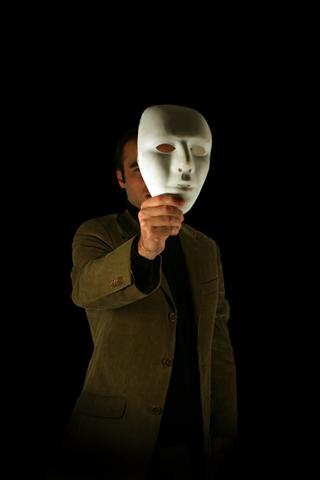
My job as a writer, as I see it, is to take the experiences of my life that I’ve found entertaining, and combine them with a degree of creativity to create a fascinating story. As I’ve written in previous blogs, some of the best sentences I’ve ever read were written by the best liars, and for a liar to become a really good liar they have to know the truth. For a really good liar to become a writer they have to know the truth better than anyone else involved. The sentences will reveal if a liar is nothing more than an outrageous liar. We know this, we can read it, and some of us learn to adapt and evolve, until we become so intimate with the truth that we can embellish it and move onto an eventual fabricated story about it. For a liar to become a really good liar, we have to take the truth, combine it with a fabrication, and twist it around so that even those who shared the experience with us begin to question their memory of it. If the liar is going to achieve this optimum level of confusion and believability, they have to eventually reach a point where they twist the truth around so often, and so artfully, and with such conviction, that they accidentally convince themselves of the story about it. After doing this for a significant amount of time, the really good liar learns to channel that gift for lying into something that doesn’t cause embarrassing ramifications or harm to those affected by the lies. They learn that writers tell lies to lead others to true emotions, and a writer can not do that if it’s not true, or truer than true. 

The Lies Inherent in our Character 

When writers write characters we want to write the most entertaining characters that have ever graced an 8 X 11, but for these characters to achieve life-like qualities, we’ve learned that they can never stray so far away from their core that we feel lost within the characterization. Even when we write bad guys, we might achieve some literary distance, but if that character strays too far from our truth, we lose touch with him. That character may be based on that surprisingly uncaring friend we have who is capable of causing some people harm without conscience, and we might even take our characterization of him out to a limb that even he couldn’t contemplate, but for those characters to move us, and others, we need to explore their truth.

Larry David (Seinfeld and Curb Your Enthusiasm) states that the show Curb Your Enthusiasm is based upon experiences that have occurred in his life. The difference, says Mr. David, is that the character says and does things that the real Larry David wishes he could’ve said or done. Larry David is writing a character that is the complete opposite of him in these given situations, but that character still has a truth about him with which Larry can identify. He has his character do things that tick people off, he has him do things that are occasionally immoral and spiteful, but he also has this character do things that entertain him, and in doing so he may be saying more about his true character than the real life Larry David that couches his personality to be polite.

A writer who has written at any length, or with any measure of depth, knows the truth. They know the truth better than the truth, and they hope to capture it in the great sentences that are truer than true. I don’t know how a writer can avoid the truth even as they’re disassembling it and recreating it. If it loses its truth, it loses its soul. I don’t know how a writer can write a sanitized version of the truth without complete exploration of it. I don’t know how a writer can write a complete character, a decent setting, or a captivating conflict without exhaustive reflection of the way they see the world, or their truth, and I don’t think they have to write the truth to achieve it.

{1}https://rilaly.com/2012/05/10/how-to-succeed-in-writing-part-ii-the-search-for-the-great-story/

{2} http://nhwn.wordpress.com/2013/01/31/writing-authentically/

Finding the Better, Happier Person Through Change


Are you happy? I mean happy. You can tell me. I’m just an anonymous writer. Are you happy? Whisper it to me. You’re not? Well, what are you going to do about it? Are you just going to sit there like a chump while the rest of us are living in the land of sunshine with fortune smiling down upon us? Go out there and get you some happy sistas and brothas!

I used to believe I was on the cusp of being happy. I thought I was so close that if my Dad would just loosen the purse strings a little and purchase this one, solitary item of the moment for me, it would launch me through the entrance of the land of hope and sunshine. I wasn’t running a con game. I truly believed that if my Dad would just purchase this one pack of KISS cards for me, it would go a long way to helping me achieve my ideal state.

“No!” was what he said (cue the dark and foreboding music). He told me “No” on more than one occasion, and there were even times when he would follow that ‘No!’ up with a heaping pile of “Shut up!” (Cue the B roll, creepy B actor with bushy eyebrows that point inward, playing my dad in this reenactment.)

A part of me believed that the constant “No’s!” I received from him manifested into a personality disorder in which I wanted to buy things, but I was scared that I wasn’t worthy of them. Another part of me wondered what kind of man I would be today if he purchased everything I wanted. Would I be a spoiled brat? Would I have some sort of obnoxiousness about me that expected to be able to have everything I wanted (see deserved) regardless if I had to go into debt to get it? Would I be one of those “I deserve it” adult babies who permeate the culture? Another part of me knows that I would’ve had to work my through whatever psychosis my dad chose to inflict on me, and that I would probably end up in the exact same place I’m in right now.

The point is that most of us believe we are in some location on the emotional equator just south of happy, and some of us will live our whole lives down there blaming our parents for it. Most of us are not miserable or depressed in the sense that we need medical assistance. Most of us are just a little south of unhappy, and a little unsatisfied with the way our lives turned out. We had incompetent parents, we grew up in broken homes, we never had any money, we were bullied in school, and our grades weren’t what they could’ve and should’ve been, and if we were able to do it all over again … We wouldn’t want to go through it all over again.

We are who we are, based upon what we’ve been through? Are we happy? Could we be happier? What do you got?

Was I unhappy in that temporary sense that every teen is unhappy when their parent tells them no? I’m quite sure that if a talent agent spotted me in the dramatic aftermath of one of my dad’s denials, they would’ve had their guy call my guy, and said, “That kid’s got the goods.”

As evidence of the fact that my dad did buy me things, I was one of the first kids on my block who had all of the cards necessary to complete the puzzle on the card backs. Did any of the items my dad purchased for me make me happy? I’m sure they did, temporarily, but throughout my reflective examinations, I have found those moments conspicuously absent. I’m sure I received some sort of validation from those sparse moments in life, until the next time my dad and I went to the department store. The next time we went to a store, I had the same notion of being on the cusp of happiness again, and I believed his decision could affect whether or not I would end up in a land of sunshine once again. When he decided not to make those purchases, the cyclical drama would begin again. The question is, was I so unhappy that my definition of happiness was dependent on my dad’s decisions in department stores, or did I enjoy casting him as the bad guy role in the end credits of my psychodrama?

What I thought I was talking about, when I talked to my Dad about making these purchases, was definition. I wanted to be a somebody who had a certain something that someone else had. I wanted to be a have in a world where I felt like a have not, and I knew that those who have are happier. I was also talking about fulfillment, whether I knew it or not. I was talking about a patch, or a hotfix, to correct a bug in my operating system that I thought would help me live through the teenage, “all hope is lost” software program that I just downloaded to my hard drive. I thought was talking about helping him help me become a real player in a world of people that had such products.

How many otherwise unhappy people had parents purchase those KISS cards for them at that seminal checkout counter of their lives? How many of them walked away realizing that that was it. One simple pack of KISS cards was all it took. That moment may have occurred thirty-five years ago, but I’m happy now. I reached the point, after all those years, of fundamental happiness. I have no wants or desire any more. I am what you could call a fulfilled man.

“And Dad, it was those KISS cards that you purchased, when I was all but thirteen years of age, that accomplished that for me. I find it hard to believe too, but all I can say is I told you so.”

Are we happy people in a fundamental sense, or do we define fundamental happiness based on attaining things? If we experience fundamental unhappiness, we may not know what caused it, but we know we need things, and change, and things that change us. We need constant change. Change results in definition and redefinition, until we achieve the ideal state of being that we believe is forever beyond our reach, but one solitary purchase away.

We are oysters in search of a process through which we can change our interiority to protect us from our internal intruders. It’s silly to believe that one pack of KISS cards, of course, as we need layers upon layers of calcium carbonate to shield us from the forces of interiority, until we create that pearl. This process is similar, yet different, from the outer shell we create to protect us from possible external intruders.

The intruder inside us is unhappiness, and to defeat it we need to undergo changes equivalent to those the oyster uses. We’re all animals after all, and we’re required to change, adapt, and evolve throughout life for our survival and for survival of the species? It’s natural, it’s science, and we’re not that much different from the oyster?

Are the changes we require biological, sometimes, but sometimes we just need some sort of change to give us a lift out of the tedium of today, regardless what we did yesterday, to give us a brighter tomorrow. If we’re unhappy, in a manner we define, how do we achieve fundamental and constant happiness? To what do we resort? How do we define ourselves, and if we make sweeping changes, are we ever happy in the aftermath, or are we in need of more change?

✽✽✽

A friend of mine resorted to drastic change. She pursued it. She achieved it. She needed it. The drastic change was so elemental to her makeup that she believed it bisected her personal timeline into a B.C/A.D. demarcation. When she and I talked –after years of separation from the drastic change– she no longer wanted to discuss the B.C. (before change) life that I knew. That discussion seemed irrelevant to her compared to the A.D. (after decision) lifestyle that she was now enjoying. She was no longer the person I knew. She changed, and any observer could see that my attempts to relive our past bored her. Since it had been so long since we last spoke, however, the past was the only thing we had in common. It frustrated her. She found a way to make this conversation relevant, or enjoyable to her, by asking me how the characters of our shared past would’ve reacted to her drastic change … if they had lived long enough to see it.

The question that I would’ve loved to ask her –as if I didn’t already know the answer– is did any of these fundamental changes do anything to help her achieve greater fundamental happiness. An inevitable ‘yes’ would follow, for change is good, change is always good, but more change is better. Once she accomplished these drastic changes, was she able to wipe those memories of a rough upbringing off the slate? Yes she was. Did these changes accomplish everything she hoped they would? Yes they did. These questions would go to the very heart of why she decided she needed change, and very few would admit they were an utter waste of time, but the greater question would be was this change so complete that she would no longer need further, drastic changes in future? I’m quite sure that the next time I run into her, she will have undergone a number of other, drastic changes, now that she’s married a man that can afford them for her.

“Could you achieve the same amount of happiness without those drastic changes?” I would’ve loved to ask her.

“Yes,” I’m sure she would say, “And I did try them. Nothing happened. I needed change.” Fair enough, but how much effort did you put into taking inventory of everything you have that should make you happy, versus everything you could have that could make you happy, and how much have you lost in the pursuit of these total transformations?

If we run across the rare individual who admits that their transformational changes didn’t accomplish what they thought they should, they will have their remedy all ready for us. They will tell us that they need more changes, other changes, and a metamorphosis into something no one considered before. The point of all these changes is to save them from what they were, or to prevent them from becoming what they might become if they don’t change. At some point in this process, they invest so much in change that they cannot turn back.

Are we ever happy? I mean happy! Or, is happiness a state of mind that can achieve internal activation after a series of events occur in a very specific way that we define? We’ve suffered damages that leave us damaged, and we can’t fix them on our own. We have flaws, but there is hope. There is always hope. We can change, and changes can change us. We have the money. We have the technology. We can rebuild it. Better than we were before. Better…stronger…faster…happier. We can make more money, with a different job, a better job. We can have more love … more sex … better sex if we can find a way to change. We might consider having an affair on our spouse, as that could shake things up, cause some turmoil, and lead to couple’s therapy and renewal of sorts that could lead to makeup sex. An affair could also lead to a divorce, but what is divorce? Divorce can be messy and awful, but it can also lead to change, drastic change. We might need pharmaceuticals, and alcohol to help us through it, but it could lead us to refocus on our beauty and losing divorce weight, as we become more concerned with our appearance. We might buy better products and supplements that could lead to more gym time that will lead us to be thinner and happier, until it dawns on us that tummy tucks, collagen injections, and more colonics could change us quicker and better. We’ll need more boob, or better boobs, at some point that will lead us to feel younger, better, and thinner. We’ll have more definition, we’ll be more feminine, or less feminine, and more masculine, and who cares about gender specifics anyway? We could live the rock and roll lifestyle. We’ll have more “me” time, but that could lead to more alone time that could lead to more introspection and some depression. It always does. It will also lead us to focus on the fact that we need better appliances, more extravagant vacations, and more “me” time and greater self-indulgence, until we get what we deserve. Something different. Hey, I’ll try anything once. Changehappinesschange…repeat if necessary.

When we talk about monsters, who are we talking about?


 Who are you, and how close are you to becoming a monster?  Are you a rational, quiet individual that wouldn’t harm a fly?  If you are, and most think they are, why are you so fascinated with the talk of monsters?

If you’re one of those that shout “Just kill the guy!” at a movie screen when some fella comes along and “fronts” your main character, how close are you to handling such matters in that manner?  “Don’t take that stuff!” we shout. “Kill him!” While we must take into account that this is just a movie in our scenario, and you’re just an audience member when you do this, we must also consider how many of us go to those movies that “do” what we would love to do in the confrontations of our life?  How close are we to those with a penchant for violence, and why do we enjoy these movies so much?

joker-the-joker-28092805-1920-1080How many of us would get a perverse thrill from having murder in our personal arsenal?  Or, if that’s too irrational for you, how many of us would love to have the fear of our potential for violence on the minds of those that confront us?  It’s seen as “respect” in many of the top, action movies of the day to have another back down before saying a word, because that side character knows your favorite character’s penchant for violence.  How many of us have laughed at the idea that this side character backs down, because he knows not to mess with the crazy, main character?  How many of us would love to have that definition of respect incorporated into our daily interactions?  We may never act in a violent manner, but we would love to have that persona.  How many of us get a perverse, vicarious thrill from watching our favorite characters resolve their problems in violent ways that we can’t in our civil society, and how close are we really to enacting that persona?

The-WolfmanWhat is a monster, and what’s the difference between them and those that would never purposely harm another individual?  The reason we developed fictional monsters in the first place, writes author John Douglas in his book Mindhunter, was to give us some distance from this question.  We’re human, they’re human, and what’s the difference between us and, say, a good looking, well-educated, and seemingly benign person like a Ted Bundy?  They’re monsters, said those 19th century people that understood the complexities and vagaries of the human mind far less than we do.  They may seem unassuming now, but if a full moon rises, they change into a monster of inexplicable horror.  They’re not like us after all.  PHEW!

These people had some idea that some, seemingly benign people can have mental health problems on a scale that they may end up hurting someone, but the idea that it could be as a result of a natural chemical depletion was foreign to them, so they needed to think that there was some form of distance.  They didn’t understand the resultant effects injuries can have on the brain; effects of enzymes levels, like dopamine and serotonin; effects of heredity and rearing; and they probably didn’t want to know such things.  They didn’t want to think that they were that close to those they labeled heinous monsters, so they turned to the world of fiction to give them comfort from these thoughts.

When we talk about monsters, in this modern era, we all know who we’re talking about.  We’ve all heard, read, and watched the stories of mass shootings, and we’ve all watched with open mouthed awe, from a comfortable distance, but at a certain point in the media saturation of these stories, some of us begin to wonder where we truly lie in the aftermath of these horrible tragedies?  Who are we, and how close are we to becoming that which we fear most?

We’ve all read the books in the True Crime section of our local book stores and libraries that will start with the “It could be you” narrative, that details how a normal, Midwestern, and religious small town white boy became an assailant.  His story is not that much different than ours, the theme of this narrative suggests, and this just opens our mouths wider and causes us to flip the pages faster.  How close are we to this truly horrific creature we’re reading about?  What was that different about their upbringing, their daily lives, and the thoughts that led to these horrible acts?

At some point in their maturation, these assailants chose a path that separated them from us, but this point of separation didn’t usually occur in one, solitary event.  There isn’t, usually, a substantial fork in the road that we can point to that says, “That’s where he and I differ.”  Most true crime authors don’t let us off the hook that easy, for that would be a simplistic reading of their complex, yet simple character, and they’ve written a whole book on the subject, so you’re simply going have to get to a half a bun on your chair while reading this book what could be more about you than you know.

If the author does provide some sort of separation it’s usually, and purposefully, murky.  The gist of the story that “this could be more about you than you know” is the reason most of us bought the book in the first place.  Some may have made the purchase based solely on the sadistic, or voyeuristic, interests in reading about torture, mayhem, destructive viciousness, and psychopaths, but most of us want to know about the separation.  Most of us want to know why we haven’t gone on killing sprees, or at least what makes those who do so different.  It could be that there actually is no separation, or it could be that providing unquestionable and substantial proof of the separation will lose the reader.  Whatever the case is, we continue to buy these books in pursuit of a truth or an explanation regarding why some fantasize about violence in the dark recesses of their mind, and why some act on them.

virginia-tech-shooter-cho-300x182Disgusted by the insanity defense, a friend of mine said: “I think we can go ahead and say one thing that is not debatable, and that is that anyone that would take the life of another is, at least, a little insane. To resort to taking another man’s life as a form of problem solving that requires, at least, a temporary degree of insanity that I’ll never know.”  Does one have to be insane to take another person’s life, especially if the matter at hand is somewhat innocuous, or is the determination of that person’s insanity a way of distancing one’s self from having to deal with the fact that they may be a lot more like us than we want to explore?

This mystery of what separates the rational from the irrational and the irrationally violent is not modern, and in some cases it dates back to early man.  Mary Shelley wrote Frankenstein in 1821; Bram Stoker wrote Dracula in 1897; and references to Werewolves were written in ancient Greece.  Trying to understand why man acts in the manner he does has fascinated other men for as long as we’ve been on the Earth.  It has fascinated some, titillated others, and repulsed many so much that they don’t even want to talk about it.  Those that are repulsed by such discussions believe that we are humanizing these monsters by giving them such play in the media and medical journals, and that we are giving them exactly what they want by broadcasting everything about their otherwise, anonymous lives.

We’re all fascinated with violence to some extent, some just may choose to distance themselves from that fascination that they don’t want to explore it in anyway, but is the person that is interested in exploring the differences closer or further away from the separation than those that aren’t?

Why are some prone to purchase a Rottweiler, or a Pitbull, and others a Poodle?  I know, I know your Pitbull is not violent, and you’ve raised him well in a happy home, and he wouldn’t harm a fly.  He’s just Ralphie.  He may be Ralphie now, but he wasn’t always Ralphie.  He was once a … Pitbull!!!, and if you’ve read or heard any stories about them, then you know that Pitbulls have a propensity for violence.  I know, I know, you’ve heard stories about the propensity that the Chihuahua has for violence, we all have, but how many “Chihuahua bites man” cases have come before Supreme Courts?  How many Supreme Court justices have found the Chihuahua to be “inherently dangerous” as they did the Pitbull in a case before the Maryland Supreme Court?{1}  The Chihuahua may have a propensity for violence that matches, and in some cases exceeds, that of the Pitbull, but does anyone care based on the capabilities of the Chihuahua?  The point is that potential owners are attracted to the potential and the capabilities of the Pitbull, and in this writer’s humble opinion, they love explaining that away too.  If it truly is not the case that you are in some way attracted to their potential, why didn’t you just pick a Poodle, or a Puggle?  They’re boring.  But why are they boring?  Why are there so few documentaries done on the anteater compared to number done on the shark or the alligator?  Why is Shark Week an annual event on The Discovery Channel?  Why do some people love the books of Stephen King, the movies of Quentin Tarantino, and violent rap music, while others read Dickenson, watch Wes Anderson movies, and listen to Brahms?  Some are simply more fascinated with the propensity to violence?  How close are they, and does owning a Pitbull give their owners greater distance from this potential, or does it tweak their fascination with it?

This article is not intended to be a tedious, Phil Donahue-style exercise in moral relativism, but an examination for why we are fascinated with violence and the tenuous line that exists between those that act on their fantasies and those that are fascinated by that tenuous line.  If you have a quick and easy answer for where you stand on that line, how did you arrive at that answer?  And why are you able to pull it out in such a quick-draw fashion?  Does it provide you comfort to have this answer at the ready, especially when it didn’t require much examination in the first place, or is it just easier for you to live the unexamined life?  Do you know yourself better or less than those of us constantly in search of answers?  Are you confident of your answers, or are you so insecure that you can’t stand the questions, and you seek a fictional depiction of a heinous creature to give you a comfortable distance?  Who are you, and how close are you to becoming that which you fear most?

{1}http://www.policymic.com/articles/8104/dog-owners-beware-maryland-warns-that-pit-bulls-are-a-danger-as-government-targets-your-pets