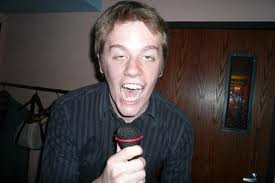
The Notification that Should be Placed Outside Every Karaoke Bar


10) There are no A&R (Artists and Repertoire) men in the audience tonight.  It’s just a bunch of nobodies listening to you, so sing your song and get off the stage.

9) Don’t feel your way through a song.  There’s nothing we hate more than watching some fool “feel” their way through a song.  Feeling your way through a song involves closing your eyes to spiritually feel your way through a song, it involves swaying, dropping your head emphatically when a crescendo hits, rhythmically dropping the mic between verses, and smiling or waving at people in the audience in the manner Crystal Gayle would.  You’re not Crystal Gale, and there are no A&R men from any major record labels in the audience.  Just sing your song and get off the stage.

8) Don’t suck if you sing.  We’re not talking about you marginally talented people that are only on stage for fun.  We’re talking about the inebriated, tone deaf people that attempt to overcompensate for their inability to sing by yelling and screeching their way through lyrics.  You’re not Axl Rose or Kurt Cobain.  There’s nothing to be gained by finding an octave that would cause a dog to bash its head into a wall.

7) Stop grading people when you’re in the audience.  It’s all right to laugh at them.  That’s what they’re there for.  If you’re doing this from a point of superiority, however, you may need to reexamine your life for just a moment.  You may have a mutual respect society built up at this bar, based on the fact that you can do a mean Bohemian Rhapsody, but remember that the people who have that appreciation for your talent will no longer feel that way when the bartender says last call.

6) Karaoke is not an art form.  Most of you who will sing tonight have no artistic abilities.  I don’t care what American Idol and The Voice have done for this novelty, it is not artistic.  Most of you who will sing tonight cannot read music, much less write it.  We’ve all had people compliment us on our karaoke abilities, and we’ve all had that urge to consider it an artistic achievement.  Fight that urge.  Sing your song.  Have fun.  Get off the stage.  We’re all pretending here tonight.

5) No matter how much you drink, nobody cares what you think.  You know nothing about the music business, so quit pretending like you know talent when you see it.  You will see some good singers up on stage tonight, and you will see some bad ones.  There is very little discrepancy between the two.  No one cares that you can spot it.

The American Idol and The Voice shows have turned us all into Simon Cowell-style harsh critics.  Fight the urge to think you’re Simon Cowell.  Even Simon Cowell isn’t the Simon Cowell you think he is.  He brings on dupes that are terrible, and he tells you he thinks they’re terrible.  He does this so that you’ll give him credibility.  The golden rule in the bar tonight is: ‘No one cares what you think, no matter how much you’ve had to drink.’  No one cares that you used to hold some obscure job in the music industry, so you know what you’re talking about when it comes to talent.

You know as much about the music business, as I do about football…Even though I’ve watched it and read about it going on forty years.  I’ve listened to critics, experts, former players, former coaches, and former General Managers talk about the game of football in intricate ways, but the more I learn the more I realize I know little to nothing about the game.  Just because you were a sound guy for some local, cover band doesn’t mean you’re any more qualified to spot talent than I am, so quit pretending that your opinions on a karaoke singer are any more relevant than ours.

4) You’re not that much better than “that guy” on stage.  Hundreds of people enter onto our karaoke stage with the notion that they’re not as bad as “that guy” that took the stage before them.  The business of karaoke singing is built on the “at least I’m better than that guy” meme.  We have news for you here, that we’ll tell you for one night only!   It’s something that even your closest friends won’t tell you, you’re not that much better than “that guy”.  We’re not talking about some anonymous guy that reads this bill either.  We’re talking about you, even if we haven’t heard you sing yet.

*(A Side note for all dreamers.) Most artists featured in the Top 100 in Billboard are, in fact, as talentless as you are.  Labels hire people to hire other people to buy songs for “the artists”.  The labels then have the album’s producers arrange “the artist’s” music, digitize “the artist’s” voice, then sample other people’s music into the artists’ music, and the producers are then required to use all of the technology available to them to prevent you from hearing how talented “the artist” is.  They do all this, because some big honcho, at some big label, has deemed this “artist” a prized commodity.  Yet, these “artists” still don’t know how to read or write music.  There’s one minor distinction between you and them: no one is willing to invest millions into you becoming a star.  I know, you can sing better than Britney Spears, but so can 90% of the U.S. population.  No one cares.  Investors don’t care.  Investors want someone that one portion of the population wants to have sex with, and the other portion of the population wants to be.  Most of the business that you purport to know so much about isn’t even about singing ability anymore.  So you may be somewhat better than “that guy” but no one really cares.

3) Don’t massacre the song.  We’ve had plenty of “fun” singers get up on stage and just have a blast in the opening minutes of a song.  They got us all excited that they were going to be a “fun one” who did some justice to the song while making everyone laugh and sing along.  You don’t have to know all the lyrics, but you should know the song.  There’s nothing that makes us cringe more than a person who gets lost halfway through a song.  If you’re going to do a song, you should listen to that song like you’re going to do it.  Again, perfection is not what we call for here, but you should at least be able to murmur your way through a song to rhythmically pass it off, until you get to the part you know.

2) Don’t sing sad or meaningful songs.  Sad and meaningful songs are self-indulgent.  This is true of most songs, but it is especially true of karaoke singers’ songs.  Remember, we are not at this joint tonight to discover the next Crystal Gayle.  We’re here to have a good time and to hear some guy rock out in a fun way that causes us to laugh and drink more.  If you have had a sad week, either stay home, or go to a bar that allows you to sit in a corner and sulk.  No one cares that you feel like Karen Carpenter’s “I won’t last a day without you” perfectly captures the way you feel about your most recent breakup with your boyfriend.  Most of the sad and meaningful songs you sing will be forgotten the minute you step off a stage, or we’ll talk through your sad and self-indulgent moment until you leave the stage, and if we even notice you when you leave we’ll probably be laughing at you.  If you still want to sing these songs, you’ll have to do so before 9 P.M. when no one is here.  After 9 P.M. you’ll receive a second playlist that has all of the sad and meaningful songs removed from our playlist, because no one wants to drink anymore after they’re sung.

1) Sing fun songs.  We brought karaoke to this establishment to have dopes get up here and sing “Meet the Flintstones” out of key.  The patrons of our bar are not here to hear someone sound exactly like Kenny Rogers.  They want sing-a-longs and chanteys.  They want “The Theme from Gilligan’s Island” and “Grease”.    It’s why they go out to karaoke bars like ours in the first place.  If our patrons wanted to hear something closer to perfection, they’d go see the latest incarnation of the group Journey.  That guy has, at least, practiced more than you have.

Today’s Music Ain’t Got the Same Soul


As a former AOP (album oriented person), I have finally come to realize that most songs, on most albums, by most artists, are crap.  It’s a tough admission for me to make, especially after decades of fighting against my “single-loving” friends on this very issue.

downloadThe Beatles may be one of the few exceptions to this rule. The Beatles made about five albums that were almost top to bottom perfect, but then again they had three bona fide songwriters in their group. Those three songwriters could usually write one to two great songs a piece for the albums The Beatles would release on an annual and biannual basis. When The Beatles broke up, these three artists continued that trend.  They would write one to two great songs on solo albums that they would usually release on a semi-annual basis. One of those songs would get extensive airplay on the radio, and we would all run out and buy the album. To our disappointment, there would probably be only one other song on their solo albums that could be enjoyed long-term. A couple of the other songs on those albums were self-indulgent, political rants, and the rest were just filler. Led Zeppelin may be one of the other another exceptions, but they sold their souls to the devil(!), and there’s Queen, but Queen had four solid songwriters in their band.

There are other exceptions to the rule of course, and I’m sure you have them in mind, but were those exceptions the first album your “my guys” made for a major label? If that’s the case, you have to ask yourself how many years of writing went into the making of that first album? If that’s the case, I submit that that first album was a compendium of all the years this artist(s) spent as a struggling, starving artist. Kurt Cobain once said that if he knew what he was doing, he would’ve spaced out all the songs on the album Nevermind, to presumably allow some of those single songs to appear as lead singles for forthcoming albums.

From what I understand of the business, and I understand very little, the first album usually generates little to no money for the artist. The reason for this is that the record company assumes all the financial risk for this unknown artist on first albums, and this unknown artist is usually so eager to sign with a major label that they forego most of their rights. Most new artists have little-to-no pull in the signing process, and most labels take advantage of them on that basis. Most labels are also hesitant to give a lot of money to a new artist, because they know that they will go out and ruin their minds and bodies on drugs and alcohol with all of their new found money. Other than the objective to make the most money they can off the artist, they might also want to keep the artists hungry enough to produce at least one more great album.

After the artist is raped by the label on the first contract for the first album, they’re usually bled dry by the lawyers who seek to rectify that first deal. This gives them the hunger necessary to complete a second album. This second album is usually rushed by the artist, the label, the lawyers, and all of those with their hands in the pot trying to cash in on the success of the first album. It usually sells well, based on the success of the first one, and the critics often label this effort “the sophomore jinx”. The second album usually contains the “could’ve beens” and “should’ve beens” that didn’t make the cut on the first album, and that album usually sounds rushed, sporadic, and often times sub par, but we can’t blame the artist too much for wanting some of the money they missed out on with the first album. If the artist was allowed some time to write a new single, and some time is usually reserved solely for studio time in the world of music –because most artists are not artistic on their time– we may get one marginal-to-good song on this record that would’ve been a better-than-average filler song on the first album.

“Wait one cotton-picking moment here,” you say. “The artist I listen to says that they don’t do it for the money.” That’s just good business. Very few artists, outside the for reals world of rap artists, would tell us that they’re in it for the money. If they believe it is about the money, and for some it is, then they’re probably not very good artists. For those who are quality artists, that love the art form, money is a happy byproduct that pays the rent and the grocery bills. Money allows the artist the free time necessary to concentrate on their craft, and that is important even if they won’t admit it. If an artist is in it solely for the money (or the fame), if they’re being for reals, they’re probably producing the schlock that comprises most of the Top 40. It is about the money though, for those artists who truly know something about business side. They know that that when a customer hands over dollars for product, they’re complimenting such products in a manner that allows the artist to keep producing said products.

Sting once said: “Anyone can write a hit, but it takes a true artist to write an album of excellent material.” 

If that’s the case, there just aren’t as many artists out there nowadays. Either that or my patience for half-hearted material has diminished, because there appears to have been a dearth of great albums in the last ten years. My guess is either there are fewer spectacular artists out there nowadays, or we have over-estimated these artists in the music field for decades. Perhaps these artists were never were as intelligent, or as brilliant, as rock journalists led us to believe. I’m not just taking about the members of ‘80’s hairbands in this critique, or the starlet that tries to show off her body parts to remain relevant.  I’m talking about our favorite artists. I’m talking about the seminal artists who have graced the covers of corporate magazines for decades. I’m talking about the artists that the marketing arms of these corporate magazines, and the corporate labels, have led us to believe were complicated geniuses. Maybe they were just better than most at crafting an image, maybe they are not as deep as we perceived them to be, and maybe we need re-evaluate our definition of the term “musical genius” based on the fact that they can’t come out with three decent songs every two years.

If we are to judge an artist based upon their albums, and not their singles, then we have to assume that they’re not very deep. The Beatles came out with nearly three albums a year in the 60’s, and they came out with some complete albums, top to bottom. With today’s artist, we’re lucky if they come out with an album every two years, and as I said those albums usually only produce two decent songs on average. Whatever the case is, I usually make my own albums out of all of the singles and some of the secondary songs released today. The rest of the songs released by these complicated artists are just drivel. Thanks iTunes and Spotify!

The Exit Strategy of Sitcoms


I want it, you want it, we all want the funny. We want to laugh, we want to learn how to make others laugh, and we’ve all seen the people who don’t seem to mind putting themselves in embarrassing and vulnerable positions that lead to others laughing at them as opposed to with them. They don’t mind it, because they just want to be funny.

Most of us don’t want it so bad that we would take a class on it, read a book, or watch an instructional video on it, but we study, mimic, and outright steal the jokes we hear at school, in the workplace, or in the media. We share funny posts under the guise of “If I considered it funny, I thought others might too,” but we all know what you’re doing. You want others to consider you funny.

One of the most rewarding elements of being funny is that it doesn’t happen too often, it’s often so subjective that 50% of the people around you won’t find you funny, and it’s just really hard to be truly funny. Repeating a knock-knock joke or a Bazooka Joe joke might elicit a chuckle, if delivered correctly, but if we want hysterical laughter, we have to be situationally spontaneous, and that ain’t easy.  

Most of us screw jokes up in some way, so often, that it can be embarrassing. Some of us mess the stresses up when it comes to punctuating a punch line in a proper manner. Some of us have horrible joke-telling rhythm. Some of us provide our audience the exact same material as the best comic in the world, but for some reason we don’t hit the mark the way they do. What happened? Why didn’t they fall over laughing the way they did when that comedian told the joke?

The first thing we all need to do is relax for just a second and realize that we’re not as funny as Jerry Seinfeld and Jay Leno are, and we never will be, and they’re not as funny as they are either. “What? I’ve seen their acts. They’re funny,” you say. You’ve seen their standup routines, and their standup routines are hysterical, but they’re works in progress. They spend hours, months, and sometimes years perfecting their jokes. They test them out on audiences, and they adapt their material to the audience’s laughter. They change words, phrases, tones, and even pauses to perfect their comedic rhythm. In the process to perfection, they fail as often as they succeed. When we watch one of their specials, we see their (‘A’) game material that has been tried and tested to perfection. We see the results of their sometimes painful process. This is their craft, and they do it so well that they make it look easy, but it wasn’t always this way. They have natural gifts, of course, but they honed those gifts over the course of decades, until they found their groove. They also wanted it more than us, as they proved on the day after they bombed on stage. They are funnier than the rest of us, however, and we hear that in interviews, but they’re not as funny as they are on stage. That’s their (‘A’) game material. 

As hard as we try, we can never be as funny as Leno and Seinfeld, but we can steal their material and sell it as our own at the various water coolers. We can mimic their rhythm and patterns when we retell their jokes, and we can (and do) mimic the reactions of our favorite situational comedy stars. One of the primary reasons such theft is so successful is that the standup comedians and sitcom stars do all the hard work of laying the foundation for what’s funny. They’ve tried and tested the rhythmic structures of their tones and exit strategies, and they end up influencing what he all consider funny. When we repeat those patterns, rhythms, and reactions, there’s a level of familiarity to it, and familiar is funny. People are just more comfortable with these patterns and rhythms, so it’s just easier, and less taxing, to copy them. We all do it in one form or another. Some of us wish we didn’t have to resort to that, but we can’t help it. We want the laugh.

***

Erik Schmidt never studied the finer points of funny, but he obviously believed that nothing left a better punctuation mark on a punchline better than a well-executed, perfectly timed exit. Our guess was that he didn’t marvel at the sitcom, stage left exit, and believe he should try it one day. He just sort of absorbed it over the years of watching sitcoms, and he ended up believing that the perfect exit could cover for any deficiencies his jokes may have had.

Erik was a nervous guy. He wasn’t a public speaker, and we never broke the barrier between acquaintance and friendship. He wasn’t at ease telling me a joke, and for some reason it made him nervous, but he loved doing it.

Through the years we worked together, I attained some sort of upper-echelon status in his joke-telling world. If he ever came across what he considered a fantastic joke, he felt compelled to bring it to me for some reason. It might have had something to do with the fact that I enjoy laughing. I’m not afraid to make an absolute fool out of myself laughing at a joke. I’m also not one of those types who tries to top a joke with one of my own. If you’re funny, you’re funny in my world, and I let you have the stage for however long you want it and need it. Most of us just can’t live with that. We hear a joke, and our instinct is “You’re funny, but I’m funnier. Catch this …” and we tell our funnier joke. I try very hard not to do this, which is why I found his comedic exits so confusing. “I’m giving you the stage,” I wanted to say. “Where are you going?”

Before attempting his comedic exits, Erik would lean down, and put his hands on the desk before him. This was, I’m guessing, his joke-telling stance. I can’t remember any of the actual jokes he told me. Most of them weren’t as great as he thought they were, but they weren’t that bad either. The actual jokes don’t matter though. What mattered to me were his exits. He had this whole routine down. He would lean down, tell the joke, and deliver the punch line. In the immediate aftermath of the punch line, he would pull his hands away from the desk in a swift manner and exit in an erratic fashion. This erratic exit was supposed to punctuate the joke. It was supposed to add to the comedic rhythm. “Get in, get out” was his strategy. Don’t stick around for the laughter. If you execute an ideal exit, the laughter will follow as a matter of course. It will arise in appreciation of the exit, as punctuation for the rhythm the audience feels compelled to conclude with you. “Get in, GET OUT!”

It’s a compulsion sitcom fans feel compelled to add to the tail end of their jokes after watching sitcoms for decades. This compulsion is so strong that it feels instinctual. The “don’t try this at home” lesson Erik should have learned the first couple times he tried it was, make sure you have somewhere to go when you exit. There is no “exit stage left” in real life. There is no curtain concealing the actor’s exit in real life. Even trained TV watchers, who know they’re not supposed to watch you exit can’t help it, and some of the times, they see the real life actor trapped in the reality of having nowhere to go.

There have been times when my friend attempted an exit stage left, after executing the perfect punchline tone and pitch, and ended up in another row of desks looking back at me uncomfortably. It’s embarrassing. The sitcoms don’t cover this territory well, for their characters always have a predetermined destination. No one offered my friend this luxury, and anyone watching him could see that he didn’t plan his exits well.

The pained question I see on his face, when I ask him to return is, “Why do you need jokes explained to you. Most jokes don’t survive explanations.” True, but some do. The presentation of some jokes requires explanation, whether that be due to a flawed presentation, or the inability of the listener to follow it well. Call those of us who require explanation stupid if you want, but if you’re going to come to us with a joke, be prepared to stick around for some of the questions.

On those occasions when the nature of his joke forced me to call Erik back, we would both look at each other with pained expressions. “I’m sorry,” my expression would say, “I just don’t get it.” Some of the times, he would come back and explain his joke to me, and we would be so uncomfortable that I felt compelled to laugh harder than I otherwise would have as an act of contrition for forcing him to provide follow-up. I ruined his exit, and we both knew it, so I felt the need to cover for this sense of violation.

After a number of violations on my part, Erik decided to exit to a location so far away that it would be inconceivable for me to call him back. I would still call him back, but he would pretend that he could no longer hear me. We would then share an uncomfortable look when he established the fact that he was not returning. You’re not ruining what I consider the perfect exit, his stance stated, to explain things to you in the manner I have far too many times before. You’re just going to have to figure this one out yourself. After committing a number of violations of this sort, I lost my stature in his joke telling world, as he no longer considered me his go-to when it came to telling great jokes. I can only assume he found someone who wouldn’t call him back.