James Joyce: Incomparable or Incomprehensible?


Those of us who are always on the lookout for edgy, racy content have heard the term “Joycean” thrown about with little discretion over the years. If you’ve heard this term as often as I have, you’ve no doubt asked, what does it mean to be “Joycean”? To listen to critics, it can mean whatever you want it to mean? They appear to be more interested in using the term than using it properly, but how do we use it properly? What does “Joycean” mean? If James Joyce were still alive, we would love to ask him if his last two books were two of the most erudite, most complicated pieces of fiction ever written, or were they a great practical joke you played on the literature community to expose reference makers and elitist, scholars for who they are?

James Joyce
James Joyce

Readers who seek to up their erudite status by reading “difficult” books, have all heard of Joyce’s final two works of fiction: Ulysses and Finnegans Wake, as literary scholars list these books as some of the most difficult, most complicated works of fiction ever created. Those of us who were intrigued, decided to pick them up that as a challenge of the mind, others attempt to read them to gain entrance into their subjective definition of elite status. Most are confused and disoriented by the books, but some have the patience, the wherewithal, and the understanding of all of the references made, and languages used, in these books necessary for comprehension. Those readers either deserve a hearty salute, or the scorn and laughter that Joyce provided, as a gift to the havenots, who are honest enough to admit that they don’t know what was going on in them. Was Ulysses such an ingenious book that it’s worth all of the effort it requires for greater understanding, or was it a book about nothing?  

I don’t understand either of these books, and I have gone back numerous times to try to further my understanding. Some have said that Ulysses is the more palatable of the two, but I have found it too elliptical, too erratic, and too detail-oriented to maintain focus, and I have purchased three different aides to guide me through it. Some of the readers who claim to enjoy Ulysses, admit that Finnegans Wake is ridiculously incomprehensible.

Most people enjoyed Dennis Miller’s tenure as an announcer on Monday Night Football, but most of those same people complained that they didn’t understand two-thirds of the man’s references. I didn’t keep a journal on his references, but I’m willing to bet that at least a third of them were Joycean in nature (Ulysses specifically). Miller stated that his goal, in using such obscure references, was to make fellow announcer Al Michaels laugh, but any fan who has followed Miller’s career knows that he enjoys the motif of using complicated and obscure references to make himself sound erudite. There are, today, very few references more obscure than those that recall the work of James Joyce, a man who described his last book, Finnegans Wake, as “A book obscure enough to keep professors busy for 300 years.”

Andy Kaufman referenced James Joyce when trying to describe his method of operation. The import of the reference was that Kaufman wanted to be a comedian’s comedian, in the manner that Joyce was a writer’s writer. Kaufman wanted to perform difficult and complicated acts that the average consumer would not understand, and the very fact that they didn’t “get it” was what invigorated him. He wanted that insider status that an artist uses to gain entrée to the “in the know” groups. After achieving some fame, audiences began laughing with Kaufman in a manner that appears to have bored him, and he spent the rest of his career trying to up that ante. By doing the latter, we can guess that there was something genuine about Kaufman’s path in that he was only trying to entertain himself, and his friends, and if anyone else wanted on board that was up to them. Joyce and Kaufman, it appears, shared this impulse.

Anytime an artist creates a difficult piece of work, there is going to be a divide between the haves (those who get it) and the havenots. When Mike Patton formed the relatively obscure band Fantomas, he never did so with the illusion that he was going to unseat the Eagles Greatest Hits, or Michael Jackson’s Thriller, atop the list of greatest selling albums of all time. He knew that his group would playing to a very select audience.

What is the audience for such difficult subject matter? Most people seek music, as either background noise, something to dance to, or something to which they can tap their finger. Most people read a book to gain a little more characterization and complication than a movie can provide, but they don’t want too much characterization, or too much complication. Most people only buy art to feng shui their homes. Most people don’t seek excessively difficult art, and those who do are usually seeking something more, something more engaging, and something more provocative that can only be defined by the individual. The audience who seek something so different that it can be difficult generally have such a strong foundation in the arts that they reach a point where their artistic desires can only satiated by something different.

Yet, different can mean different things at different times to different people. Different can be complicated, and discordant, but it can also be limited to style. At this point in history, it’s difficult to be different, in a manner that cannot be called derivative of someone or something, so some people seek any separations they can find. When the latest starlet of the moment twerks in a provocative manner, has a construction worker find her pornographic video, or accidentally has her reproductive organ photographed, we know that these are incidents were created by the starlet, and her people, to get noticed after they have exhausted all other attempts to be perceived as artistically brilliant and different.

There are other artists who are different for the sole sake of being different. This is often less than organic, and it often disinterests those who seek a true separation from the norm, because we feel that this has been thoroughly explored to the point of exhaustion. Andy Kaufman created something organically different that can never be completely replicated, in much the same manner Chuck Palahniuk, Mike Patton, David Bowie, Quentin Tarantino, and Jerry Seinfeld and Larry David did. Can it be said that James Joyce’s final two books were different in an artistically brilliant, and cutting edge manner that all of these artists’ creations were, or were James Joyce’s writings more symbolism over substance? Put another way, was Joyce a substantive artist who’s true messages need to be unearthed through careful examination, or was he simply twerking in a provocative manner with the hope of getting noticed by the elite scholars of his generation after exhausting the limits of his talent in other works?

Judging by his short stories, James Joyce could’ve written some of the best novels in history. Those who say that he already did, would have to admit that his final two works were not overly concerned with story, or plot. Those who defend his final two works would probably say that I am judging Joyce’s final two works by traditional standards, and that they were anything but traditional. They would probably also argue that the final two works sought to shake up the traditional world of literature, and anyone who dared to take up the challenge of reading these works would probably say Joyce sought to confound us, more than interest us, and if they concede to the idea that the final two works were different for the sole sake of being different, they would add that he was one of the first to do so. Those who defend his final two works say that they are not as difficult to read, or as complex, as some would lead you to believe. These people suggest that reading these two works only requires more patience, and examination, than the average works. Anyone who states such a thing is attempting to sound either hyper intelligent, or hyper erudite, for it was Joyce’s expressed purpose to be difficult, complicated, and hyper-erudite.

To understand Ulysses, one needs an annotated guide of 1920-era Dublin, a guide that describes the Irish songs of the day, some limericks, mythology, and a fluent understanding of Homer’s The Odyssey. If the reader doesn’t have a well-versed knowledge of that which occurred nearly one-hundred years prior to today, they may not understand the parodies, or jokes Joyce employs in Ulysses. Yet, it was considered, by the Modern Library, in 1998, to be the greatest work of fiction ever produced.

“Everyone I know owns Ulysses, but no one I know has finished it.”  —Larry King.

To fully understand, and presumably enjoy, Finnegans Wake, the reader needs to have at least a decent understanding of Latin, German, French, and Hebrew, and a basic understanding of the Norwegian linguistic and cultural elements. The reader will also need to be well-versed in Egypt’s Book of the Dead, Shakespeare, The Bible, and The Qur’an. They also need to understand the English language on an etymological level, for one of Joyce’s goals with Finnegans Wake, was to mess with the conventions of the English language.

Some have opined that one of Joyce’s goals, in Ulysses, was to use every word in the English language, and others have stated that this is a possibility since he used approximately 40,000 unique words throughout the work. If this is true, say others, his goal for Finnegans Wake, was to extend the confusion by incorporating German, French, Latin, Hebrew, and other languages into his text. When he did use English, in Finnegans Wake, Joyce sought to use it in unconventional and etymological ways to describe what he believed to be the language of the night. He stated that Finnegans Wake was “A book of the night” and Ulysses was “A book of the day”.

“In writing of the night, I really could not, I felt, use words in their ordinary connections . . . that way they do not express how things are in the night, in the different stages – conscious, then semi-conscious, then unconscious. I found that it could not be done with words in their ordinary relations and connections. When morning comes of course everything will be clear again . . .  I’ll give them back their English language. I’m not destroying it for good.” —James Joyce on his novel Finnegans Wake.

This use of the “language of the night” could lead one to say that Joyce was one of the first deconstructionists, and thus ahead of his time by destroying the meaning of meaning in the immediate sense. Those obsessed with James Joyce could interpret the quote, and the subsequent methodology used in Finnegans Wake, to mean that Joyce had such a profound understanding of linguistics that normal modes of communicating an idea, bored him. He wanted something different. He wanted to explore language, and meaning, in a manner that made his readers question their fundamentals. Readability was not his goal, nor was storytelling, or achieving a best-seller list. He sought to destroy conventions, and common sense, and achieve a higher realm of perfect, in which timeless abstractions cannot be communicated to those who adhere to common sense. This makes for an interesting conversation on high art, and philosophy, but does it lend itself to quality reading?

“What is clear and concise can’t deal with reality,” Joyce is reported to have told friend Arthur Power, “For to be real is to be surrounded by mystery.”

In the modern age, there is much discussion of the widening gap between the haves and the have nots. That particular discussion revolves around economic distinctions, as it has for time immemorial, but in the Joycean world, the gap involves those who “get” his works, and those who do not. Those who get it usually prefer to have deeper meanings shrouded in clever wordplay. They usually prefer symbolism over substance; writing over storytelling; and interpretation over consistent and concretized thoughts.

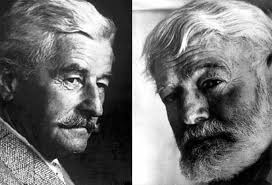
The two schools of thought between the haves and the havenots can probably best be explained by breaking them down to the different approaches James Joyce and one of Joyce’s contemporaries Ernest Hemingway. Hemingway wrote clear and concise sentences. Hemingway stated that his methodology was to write something that was true:

“The hardest thing is to make something really true and sometimes truer than true.”—Ernest Hemingway.

Putting Joyce’s final two works through the Hemingway school of thought, one could say that Joyce’s methodology was: Some of the times, it’s more interesting to make it false and allow others to define it as true. 

“Though people may read more into Ulysses than I ever intended, who is to say that they are wrong: do any of us know what we are creating? … Which of us can control our scribblings? They are the script of one’s personality like your voice or your walk.” —James Joyce

Those of us who have had a deep discussion, on a deep, multifaceted topic, with a deep thinker know that sooner or later a declarative distinction will be made if we stubbornly insist that we are not wrong. “You don’t get it, and you probably never will,” is something they say in a variety of ways. We all know what it feels like to be summarily dismissed as an anti-intellectual by a deep thinker? Those who aren’t snobbish in an anti-social manner, often avoid openly dismissing us when we’re around, but even the polite snobs give us a vibe, a look, or a chuff that is intended to let us know our place.

“Well, what do you think of it then?” is the response some of us have given, after being backed into an anti-intellectual corner by deep thinkers.

If they are an anti-social, elite intellectual snob, they will say something along the lines of: “I simply choose to think deeper!” It’s a great line, and it purportedly puts us stubborn types in our place, but it’s a self-serving non-answer. Those of us who are more accustomed to interaction with deep thinkers, will then ask them to expound upon their complicated, deep thinking? Pushing deep thinkers deeper will often reveal a lack of substance beneath their piles of style, and the careful observer will find that the results of their deep thinking is no deeper than the deep thinker cap they wear to the pub.

A number of attempts at reading Joyce has led me to believe that he probably didn’t have much substance beneath his piles of style, so he muddied the waters of his message with puns, songs, gibberish, abstractions, foreign languages, and overly complicated complications. He did this, in my opinion, to conceal the fact that when compared to his colleagues, he didn’t have all that much to say. If that’s true, he was definitely artistically accomplished in saying it.

Who can forget the many sayings that Finnegans Wake dropped on our culture, such as the transcendental sound of the thunderclap that announced the fall of Adam and Eve from the garden of Eden:

“bababadalgharaghtakamminarronnkonnbronntonnerronntuonnthunntrovarrhounawnskawntoohoohoordenenthur-nuk!”

What about the mirthsome giggles we have had in social gatherings with the catchphrase:

“A way a lone a last a loved a long the riverrun, past Eve and Adam’s, from swerve of shore to bend of bay, brings us by a commodius vicus of recirculation back to Howth Castle and Environs.”

Or the ever present: 

“(Stoop) if you are abcedminded, to this claybook, what curios of sings (please stoop), in this allaphbed! Can you rede (since We and Thou had it out already) its world?”

If you just read those sentences three or four times, and you still have no idea what it says, and you just went back to read them again, because you want to be a have that “gets it”, you’re not alone. If these passages were merely anecdotal evidence of the difficulty involved in reading Finnegans Wake, that would be one thing, but these difficulties litter just about every sentence of every paragraph of the book, as evidenced by the exhaustive assistance provided at the site Finwake.com for readers who have no idea what this writer is going on about. 

Finnegans Wake is reported to be in English, but it’s not the standard version of English where words have specific meaning. The “language of the night” was intended for linguists who are tired of reading words that have exact meanings, and it was intended to be playful and mind-altering, and rule breaking. James Joyce made references intended to be obscure even to the reader of his day who may not have Joyce’s wealth of knowledge of history, or the manner in which the meaning of the words in the English language have changed throughout history.

“What is really imaginative is the contrary to what is concise and clear.” —James Joyce

James Joyce was a stream of consciousness writer who believed that all “mistakes” were intended on some level that superseded awareness. In the 500+ page book, Finnegans Wake, Joyce found 600 errors after publication. He was informed of some, if not all of these errors, and he was reported to have fought his publishers to keep them in. Later editions were written to correct many of these errors, and provide readers “the book in the manner Joyce had intended.” If Joyce didn’t believe in errors, however, how can those who corrected them state that the corrected edition is the definitive edition that “Joyce intended”?

“The man of genius makes no mistakes, his errors are volitional and portals of discovery.” –James Joyce

Throughout the seventeen years Joyce spent writing Finnegans Wake, he began to go blind, so he had a friend named, Samuel Beckett, take dictation over the phone to complete the novel. At one point in this dictation setting, someone knocked on Joyce’s door. Joyce said, “Come in!” to the knocker, and Beckett wrote the words “Come in!” into the narrative of Finnegans Wake. When this error was spotted by Joyce, and the confusion was sorted out, Joyce insisted that Beckett, “Leave it in!” On another occasion, when a printer’s error was pointed out he said, “Leave it. It sounds better that way than the way I wrote it.”

There are three different versions of the text: The first and second are the editions that Joyce submitted for publications with all of the errors intact. The third edition has the errors that the editors located, and the 600 corrections that Joyce spent two years locating, corrected. Some would have you believe that first two editions are the definitive editions, but you have to be a Joyce purist to appreciate them.

Can it be called anything short of egotistical for an author to believe that his subconscious choices and decisions, are somehow divine? If, as Joyce said, and Picasso later repeated in regard to his paintings, mistakes are portals of discovery, then we can say that’s great, and incredibly artistic in the process of creation. To leave it in the finished product, however, and subject your readers to the confusion, just seems narcissistic. “Here’s what I was thinking at the time,” Joyce is basically telling his readers. “I don’t know what it means, but this is a higher plane of thinking than simple conscious thought. Isn’t it magical? Maybe you can make some sense of it. Maybe you can attribute it to your life in some manner.” This method of operation may say something profound about the random nature of the universe, but when we’re reading a novel we don’t necessarily want to know about the randomness of the universe, unless it’s structured in a manner that leads us to your statement. 

Not everyone can write a classic, and some realize this after a number of failed attempts. Once they arrive at this fork in the road, they can either write simple books that provide them and theirs an honest living, or they can grow so frustrated by their inability to write classics that they separate themselves from the pack through obscurity. The advantage of creating such an alleged contrivance is that beauty is in the eye of the beholder, and the beholder can assign their own relative beauty to it. Some would say this is the very definition of art, but others would say even that definition has limits. Some would say that the most obscure painting is art, because they “see it”, where others see only schlock for elitists to crib note to death, until meaning is derived.

James Joyce is considered the exception to this rule, fellow writers have told me, and if you are going to attempt to write an important novel in the 21st Century, you had better be familiar with him. I’ve tried, and I now believe that I’m destined to be a havenot in the Joycean world … even with Ulysses. The question that arises out of those ashes is, am I going a long way to becoming more intelligent by recognizing my limits, or should it be every aspiring intellect’s responsibility to continue to push themselves beyond any self-imposed limits to a point where they can finally achieve a scholarly understanding of difficult material? If this is a conundrum that every person encounters when facing challenges to their intelligence, is Ulysses, or more pointedly Finnegans Wake, the ultimate barometer of intelligence, or is it such an exaggerated extension that it had to have been a practical joke James Joyce played on the elitist literary community to expose them as the in-crowd, elitist snobs that they are when they “get it” just to get it. Do they really “get it”, or are they falling prey to Joyce’s clever ruse to expose them as people that “get” something that was never intended to be “got”?

How to Succeed in Writing VI: Follow guidelines, and let your freak flag fly!


Mike Patton

“There’s a right way to do things, and a wrong way!”  My Dad used to say. “And you always choose the wrong way!”  All artists have a natural proclivity to doing things the other way, a different way, and “the wrong way”.  Those who want to write a best-seller, sing a top 40 song, or sell a mainstream painting, study up on the trends of the market, and they have all their formulas for success spelled out for them in the various “self-help” guides that are available in the marketplace.  Artists, true artists, are the freaks, the odd balls, and the weirdoes of our society.

If these artists didn’t have certain predilections in life, they probably would’ve been better athletes in high school, and more popular, and less inclined to eventually have the angst that drove them to do what they would ended up doing.  They probably would’ve made better employees, better spouses, better parents, and better people.  Their people probably would’ve enjoyed their company more if they fell in line with the practiced repetitions that led to better muscle memory in all these avenues of life.  They probably would’ve been happier people and fit into society better, but they chose a different path in life.

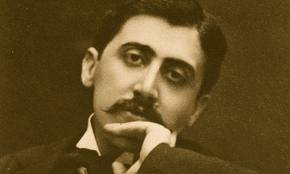
Marcel Proust

“Everything great in the world comes from Neurotics.  They alone have founded our religion and composed our masterpieces,” –Marcel Proust.

To say that an artist chooses his path in life is a bit of a misnomer, for most artists fell into expression as a form of therapy.  They’ve usually had an incident, or a series of incidents, that they couldn’t quite get past in the accepted ways, but they made decisions on how to deal with them in their own way.  Most artists didn’t “reach out” for others to help them deal with that which plagued them, or if they did they recognized the fact that most people don’t care about other people’s problems.  Either that, or they didn’t receive any satisfaction from sympathetic responses.  Most artists internalized their pain, until it exploded into some form of expression.

Expression meant free-form expression to them early on.  It meant being outrageous, and offensive, and playing the game by their own rules.  If they had good mentors though, they learned that much of this resulted in sloppy and undisciplined work.  The whole reason they entered this field of expression was to expunge the toxins they had coursing through their veins, but their mentors told them there were rules and guidelines to doing this properly.  Most artists angrily accepted that fact.  They believed that artists should think outside the box, but they learned that true artists would eventually have to know what was in the box is if they ever hoped to violate it properly.

A friend of mine is not artistic, but he reads a lot of novels, and he knows their rules.  He also gets bogged down in details.  He circles offensive material, and he suggests that I delete, or edit, those portions.  He doesn’t know art in this sense, and he doesn’t care.  He knows the rules of society, and how those rules were applied by Hemingway and Faulkner, and he knows I’m offensive.  This friend wouldn’t be able to write one word of fiction.  He could get so boxed in by the rules that every word would be written, edited, and then deleted.  He would write a novel that would be as entertaining as an instructional manual for a park bench, or the proper use of fly paper.  He would’ve made a better editor, if he came to that crossroad.

The differences between an individual who knows the rules, but doesn’t know how to apply them in an artistic manner, are the differences between an artistic writer and an editor.  Take a look at some of the names of the people who have written the articles on developing the perfect character, or the most dynamic conflict.  You’ve probably never heard of them, for they know as little about writing an artistic novel as you do.  Some people are excellent editors and teachers, but they know little to nothing about being an artist.  The opposite is usually true of artists, and this is why freelance editors are making such a great living in the age of the rule breaking, freelance eBook writer.  It is also why the advice of most artists, such as myself, is to just do it.  Don’t talk about writing, don’t hold yourself up as a writer when you don’t write, and don’t complain about the arduous process involved.  Just do it!  Doing it, will help you figure out why you can do it or not.  The other important note on this topic is that those who teach can’t teach you how to write your novel.  They can give you general guidelines that you’ll need to know, but they can’t teach you the art of writing, and the art of letting your freak flag fly, in the vein that you’ll  learn by just doing it.  I’m not saying that their advice is without merit, but don’t let yourself get bogged down in the detail.

Psychological Swearing and other maladies of the human condition


1) Swearing.  I used to wonder what it would be like to swear like an adult when I was younger.  Their ferocity fascinated me.  Their anger! had such punctuation.  Their sense of regret and sadness were palpable.  Everyone took them so seriously, and I was seen as a little kid.  I couldn’t get my emotions across.  It was a source of great frustration for me.  I saw adults in movies sweep everything off their desk to convey ultimate frustration, and I saw them stare into a mirror for thirty seconds before punching it, but in my inner circle of adults it was swearing that caused one adult to take another adult seriously when they were trying to convey emotion.  Swearing had great punctuation.  I knew I could punch people to get them to understand I was mad at them, but that usually prompted them to punch me back, and I didn’t care for getting punched when I could avoid it.  I knew I could cry to convey my sadness, but I’m a boy, and boys don’t cry.  Boys used different swear words, boy swear words, to convey sadness.  I knew I could raise my voice to convey excitement, and I did when I said something was great! but most people didn’t latch onto that excitement and try what I was telling them to try.  I realized that if anyone was going to take me seriously, I was going to have to start cussing.  It wasn’t that I didn’t want to start cussing, it was that I was bad at it.  I didn’t have the timing aspect of it down, and my inflection was horrible.

I learned timing first.  I learned that there were occasions when group think purveyors considered it mandatory and acceptable to swear, but there were also times when restraint was necessary.   Cussing too much drained the power of the words, and it made one look like they were trying too hard.  Restraint was the key, but even using the words sparingly didn’t help me comprehensively.  I still lacked inflection.  I sounded awkward.  I learned timing, and I learned how to place provocative words before and after sentiments to get people shocked, but due to my inflections few people took me seriously long term.  The inflections came last, but they finally came, and I entered into that adult world of conveyance.  I was shocking and provocative, and people began to take me seriously emotionally, and I found that pleasing.  If I had a rough day, or someone was giving me the business, I could throw out a swear word, and everyone would back up and raise their eyebrows.  They finally knew that I was someone to take seriously.  What a glorious day that was!  Everyone knew I was a person who used swear words adeptly!  I was accepted into the club!  To maintain membership, I swore all the time.  I swore when I was sad, I swore when I was happy, and of course when I was mad and fed up.  I was conveying emotion with a degree of ferocity that could be felt.  A funny thing happened to me at one point in my swearing career, I began overusing the words.  I drained them of their emotional impact through overuse, and I ended up right back at square one.  I was unable to convey emotion in a proper manner, because I was swearing too much, using too many of the designed shortcuts, and no one was taking me seriously anymore.  When I wanted to convey emotion at times when group think purveyors considered it inappropriate and unacceptable to swear I couldn’t think of any appropriate and acceptable words to use.  It was then that I came to the conclusion that most adults have as much trouble conveying emotion as kids do.  They just use swear words to camouflage that struggle.

2) Girl Crazy. “The charms of the passing woman are generally in direct proportion to the swiftness of her passing. –Marcel Proust.

When I was young, and I was very very young, I had this notion that every girl was attracted to me. All I had to do was catch their eye and hold it, and they would be mine on a temporary basis.  It didn’t matter how gorgeous they were, I could captivate them with one powerful stare.  When I got older, I had this notion that no girl was attracted to me.  Now that I’ve met that person that I wanted to meet my whole life, I no longer care who is attracted to me, and I can look back on this cognitive dissonance with some perspective.  Women like men that are attracted to them. They like to be wanted, even if they never cash in on the desire to be wanted, they like to be liked.  So, when I had the notion that a woman was attracted to me, I was actually attracting them with the notion that I was attracted to them.

3) Assigning Characteristics to Animals. Movies, both cartoon and otherwise, depict a dog listening to a conversation and reacting in a manner that suggest they understand more than key words and tones.  Some of us think this is cute and funny.  Some of us think they truly understand.  The cartoonish dogs hide their head when their owner says something stupid, and we laugh.  They scurry from the room when the bad guy suggests that they would make for an excellent dinner.  We laugh.  It sinks in with repetitive messaging.  Why wouldn’t Rover understand what we’re saying? We underestimate animals all the time. Look at what science is uncovering every day about the intelligence of these animals, why would it be so impossible to believe that they can understand us?  It’s not impossible to think that they understand us to a degree, but degrees are the key.  Dogs understand key words, and they understand tone.  Those who believe they understand more than that are trying too hard to understand their pets.  They’re trying to bond with their pets, and they believe their pets understand more than they actually do to bond with them, so they assign a degree of intelligence to these canines to have a better relationship with them.  It is the same mind set we bring to trying to understand infants and small children.  This is more credible, of course, as small children do have a greater capacity to understand language, but they do not understand high-minded, philosophical concepts such as morality.  Some psychologists have stated that young minds don’t have a complete grasp of the ramifications of their actions until they’re about eighteen years old, but we’ve told them and told them, and they still don’t grasp it.  This is due to the fact that their brains are not complex enough to understand these concepts.  As hard as it is for some of us to grasp the complex concept that animals and children don’t understand complex concepts, it actually says more about us that we think that they do than it does whether they do or not.  The question I have is am I onto something here, or do entertainment honchos know that we simply regard this all as entertainment and nothing more?

4) Misunderstood. “Everything great in the world comes from Neurotics. They alone have founded our religion and composed our masterpieces.” –Marcel Proust

I feel that I’m not understood, and I don’t understand that. I speak so clearly that a monkey should be able to understand me, but the humans around me listen to me with their own agenda so often that they do not take the time to understand mine.  Or am I a blowhard that is so ignorant of the various agendas around me that if I took a little time to understand them, they would take the time to understand me?

5) The Dark Days. “Happiness is beneficial for the body but it is grief that develops the powers of the mind.” –Marcel Proust

There are dark days that overwhelm me. Nothing I think, or write, can overshadow these days. These are the ‘all hope is lost’ days when I am so depressed about what is going on in the world philosophically, that I can think of nothing that will supersede it. These are the days when I realize that the world holds views so different than mine that it feels pointless to continue pounding my keyboard.  No one is listening.  No one is watching. No one is reading.  No one knows what’s going on. They all think in terms of their insular world, and they can’t see the greater whole. I look back on all the days I spent screaming from rooftops, and I realize I may have just as well have been shouting into a well. It all seems so pointless on these days that I can think of nothing funny, interesting, or enlightening to say or write. I just want to sit and sulk over the proceedings and realize that I have as little power as anyone else does to affect change. All hope is lost. It’s pointless. I don’t think I’m as important as everyone else thinks they are, so I end up cloistered by my own opinion and therefore invalid in the grand scheme of things.

6) Bring the Magic.  “Every reader finds himself. The writer’s work is merely a kind of optical instrument that makes it possible for the reader to discern what, without this book, he would perhaps never have seen in himself.” –Marcel Proust.

Is it possible for a painting to affect our feelings of relevance?  What about music, have you ever listened to a song and felt alone?  Have you ever been scared by a series of words in a book?  It’s the only form of magic I believe in.  Some of the times, we bring the magic to a piece, some of the times the piece brings magic to us, and some of the times we invent magic that isn’t otherwise there.

I sat in a theater once, one among many, and I horrified myself.  The setting of the movie was one I knew, the characters were familiar to me, and I knew the plot from my own imagination. Goosebumps riddled my skin, my eyes were popped wide, and I wanted this movie to end well.  This is unusual for me, because I normally loathe happy endings.  I see them as unrealistic, cliché, and anti-climactic. When I’m truly horrified, however, I want peace in the valley.

I have a friend who never brings the magic.  The onus is on the artist to bring him enjoyment.  He doesn’t understand magic.

There have also been magicians that stole my magic.  These artists insist on telling me that my artistic interpretation was nowhere near what they had in mind.  How dare they steal my magic?  These magicians have reached a place in their career where they are so accustomed to people enjoying their work that they take it for granted, and they want to define it for us, so that their work properly represents their worldview.  They don’t belong in a world of magic.

It is possible, however, to bring too much magic. Yoko Ono created a work (that’s all I will call it) that was done on a large, white canvas.  It was what she called a ceiling painting.  The canvas was glaringly white and glaringly blank, except for one little word “Yes” painted up in the corner.  The canvas was so large, and the word “Yes” so small that the observer needed a ladder to get to it, and a magnifying glass to see it.  John Lennon later claimed this was one of the reasons he fell in love with Yoko Ono. He claimed that after seeing the piece, he had to know the author of the piece, and he had to meet her to see if she followed his ethic in life.  He wanted to find that one “Yes” person in a glaringly blank world of no.

If you don’t “get” a work of art like this, there’s something wrong with you.  You’re in the world of no, and you’re close-minded to the world of yes.  You’re not smart enough, artistic enough, or hip enough to interpret the insular world of yes.  If you look at this piece as a huge waste of canvas, that’s on you brotha.  You don’t understand the psychological power or the sociological ramification of the grand minimalist approach in such a statement.  Most of us know that art is a term that can be loosely applied to a number of works, but we all have limits.  We all want artists to perform individual interpretations of the world, but we also think that there should be some sweat involved.  Writing a word on a canvas in this manner could be called juvenile, posh and elitist, and something an insecure, high-minded, high-browed college art student would do to complete an assignment by the deadline.  A really devious college student could then add in all the interpretations later, and slip his buddy a high five when the teacher fell for it.  For this to be considered a seminal work by a seminal artist, on the other hand defies credulity, but as they say beauty, like art, is in the eyes of the beholder.

“It was beautiful,” Lennon said of the work.  He got it.   You didn’t, and we all know a number of people who get a lot of mileage out of that mindset.  His interpretation was egotistical and insular.  It could be said that that is what artistic interpretation is, but some of the times we bring too much magic to our interpretation.  Some of the times we bring more than the pieces actually contain.

7) God and Philosophy. I believe in God, and I am sympathetic to those who want to worship Him in a relative manner, but God should have little place in philosophy. Philosophy is the study of the human mind. Philosophers take their observations, and knowledge, of man and spread it out to the masses. They help us understand who we are and why we do the things we do, and in their interpretations of man are many answers to the problems we face if we understand how the human mind works a little better. To say that we should turn to God for all that ails us is, to my mind, a violation of the “God helps those who help themselves” principle. A philosopher should be forced, in his study of general and fundamental problems, to locate an answer that is entirely secular. Everyone has a relative understanding of God, and I understand their need to seek his guidance in matters great and small, but to my mind God placed us on this Earth to fend for ourselves, and our greatest philosophical minds shouldn’t rely on God to provide the answers to human frailty any more than we should.

8) Bullying and inner-strength. “We don’t receive wisdom; we must discover it for ourselves after a journey that no one can take for us or spare us.” –Marcel Proust.

Have you ever met a guy who was never bullied? They’re out there, and they’re usually soft. They have no precedent in their lives. When someone lays into them, they can’t look back at the high school bully and say this particular person laying into them now is not as bad as that bully. They can’t recall a day when they had to fight their way out of a particular corner. They have no mechanism with which to continue the fight of their lives for the rest of their lives. They never had to face the reality that they’re alone in a fight, and they never had to deal with the fact that if they didn’t do something the endless abuse would continue. Your parents can advise you, and in some ill-advised circumstances they can step in and assist you in this fight.  Most friends will abandon you on these occasions.  They may put forth a “Leave the guy alone,” but that usually leads to you having a weaker perception of yourself and increased bullying.  Most friends won’t want to implicated with the names you’re being called, or the degradation that you’re suffering.  They’ll usually take their seat with the rest of the spectators and enjoy the show.  It’s not that they’re evil or negligent in their duties as a friend.  It’s just that they’re insecure individuals who don’t want any part of your pain.  They probably have enough of their own to deal with, and this is especially the case in high school where insecurities are rampant.  When you’re bullied, and I’m not talking about the occasional pot shots that are delivered on a daily basis, but really bullied to the point where you don’t want to go to school the next day, you’re on your own.  You’re on an island with nothing but your own devices.  As Proust says, no one can truly spare you the humiliation of these fights, but you will be wiser, stronger, and mightier for having successfully fought them alone.

9) Argument for pot legalization.  If you bring up the fiscal problems experienced in California and elsewhere, you’re sure to hear a myriad of creative solutions.  One of the most popular out there right now is the legalization of marijuana.  “If we legalized it, and taxed it, the revenue we receive could balance a budget.”  It is possible.  I’m not saying it’s not, but my question is how long would it take to accomplish this goal?  How many balanced budgets would be achieved before the representatives began reallocating that money?  All of these creative measures are band aids to the true problem: spending.  It’s our fault.  We voted these guys in.  They appealed to us by promising record levels of spending, and we continue to require that they spend more.  Bottom line: All of these creative measures may bring more revenue to the government, but if these government representatives received increased revenue, they would simply spend more.  There seems to be no end in sight to this cycle for the moment.  We need a catastrophe.  Legislators don’t usually change their ways without a catastropohe that touches the lives of enough voters to make a difference in how its broadcast to the world.  Even then, they usually find their favorite band aid that allows them to keep doing what they want to do.  We’re in whatever situation we’re in, because it favors those who put us there.

10) Purchasing an identity.  We have too much time on our hands. We have too much disposable income. We have no disasters to worry about. We are so bored. We need a trinket that is backed by a successful marketing campaign to complete us. It’s a nothing nothing, but it’s something we need.  We need something to have, but what do we have to have?  We don’t know.  We’re told in some creative manner that affects what we think of our completion what we have to have, and we fall for it, because  we’re impulsive. We’re bored. We’re insecure.  We’re searching for something to complete us. This one product could make life so much easier. We could be one of the crowd and better than the Johnstons, but at least we’d have something to talking about. We like to talk about the products we purchase and how our products are better than yours.  It shows we know a little something something about the nothing nothing products we purchase. We’re finally complete, until the product runs its course and loses all tangible value to us, and it is a staple in the corner of our storage closet with all the other products that used to do something for us, until they grow so abundant that we need to buy a storage unit to house all of the products that used to complete us.  We can’t throw those products away, because we may fall back a stage if we do.

11) Our interest in the joneses.  We’re disinterested in most people.  We claim to be interested in them.  We detail for others who know them what we know.  Then when we have that narrative validated, we move on.  A friend of mine, we’ll call her Renee, wants to keep up on a girl we’ll call Shelly.  Renee details all that she knows of Shelley’s life.  Then she says: “Is that where she’s at right now at this point in her life?”  Another responds that that is correct.  The thing is if Shelley was at the reunion that just ended, Renee would have virtually no interest in speaking with Shelley.  We all have these little gatherings to help us keep up on each other’s lives, but we’re all usually interested only in those things that have occurred with us and those in our inner circle.  We constantly evaluate those of us around us to determine if there is something interesting in their lives, and we usually determine that there isn’t.  We usually live most of our lives in varying degrees of disinterest to the lives around us.