‘Good Boy!’


“Try saying something other than ‘Good boy’ to your dog the next time you reward them for good behavior,” said a human who claimed to know more about dogs than other humans. “Your dog gets tired of hearing the same phrases over and over again. Mix it up and keep it fresh to allow for greater stimulation of your dog’s mind.”

I am not an expert on dogs, but if this is expert advice, then I wonder how we qualify the term expert. “They spend a lot of time around dogs,” you say. Okay, but I spend a lot of time around my dogs, and I notice that they prefer that we keep it simple and consistent. This expert is basically suggesting that the best way to enhance our relationship with our dog is to complicate our relationship with them.

This expert is not talking to dogs here. He’s talking to us, trying to justify his title as an expert. If this expert said, “The next time you want to reward your dog for good behavior, say ‘Good boy!’” We would all question his title for saying what we already know. They know this, so they tweak our common knowledge in a harmless way that most of us won’t follow. If we do, we might try it once or twice and realize it doesn’tmake a difference, and we’ll all go back to saying “Good boy!” again to enjoy the simple, fun, and loving relationship we have with our dog.

My guess, if we could talk to our dogs, they’d say something along the lines of, “I’m going to be honest with you, I don’t know what you’re talking about 95% of the time, I don’t speak English, but I know tones. I’mperfectly happy with the arrangement we have right now, but if you feel the need to start messing with the five percent I understand, do what you need to do, but keep the tone the same.”  

If I could gather a group of experts to comment on this situation, I’m sure they would all condemn this expert advice, and I’m sure that their condemnation would leave me feeling temporarily validated. Yet, the other thing we know about experts is that they get their validation condemning another expert’s advice.

The Suspect 
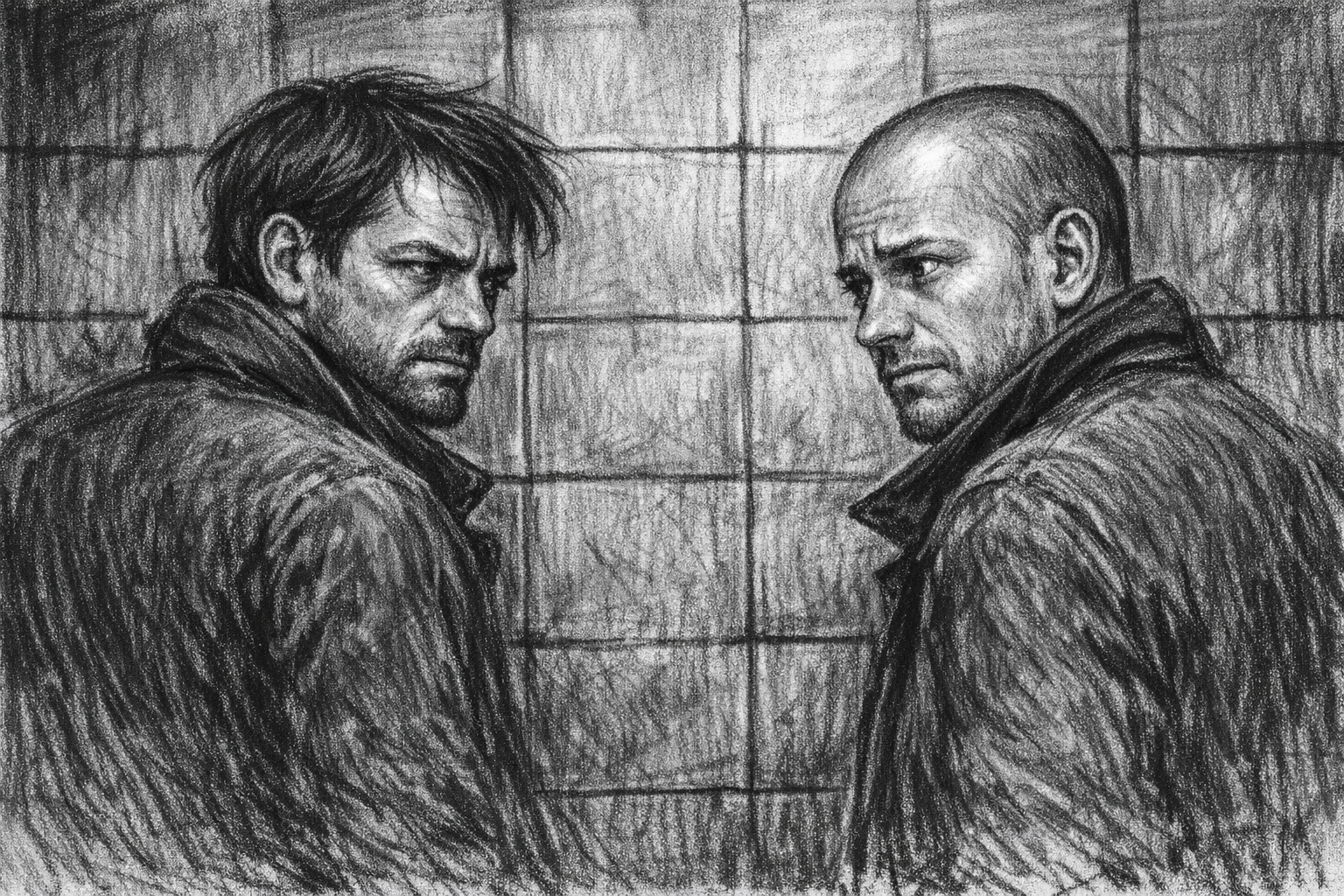
If I walk into a public restroom, and it’s obvious that something awful happened there, you’re the primary suspect if you’re the one walking out. You’re guilty until proven innocent, and there’s really no effective defense. I thought this was pretty damned hilarious, until I realized, while conducting my affairs, that I would have to time my exit perfectly to avoid becoming someone else’s primary suspect.

The Relative Definition of Beauty 

“If you’ve ever been to a male stripper’s joint,” Jane said. “You’ll see that nearly 100% of the female patrons of the joint are ugly, old, and out of shape women. There’s no way the males enjoy that?”
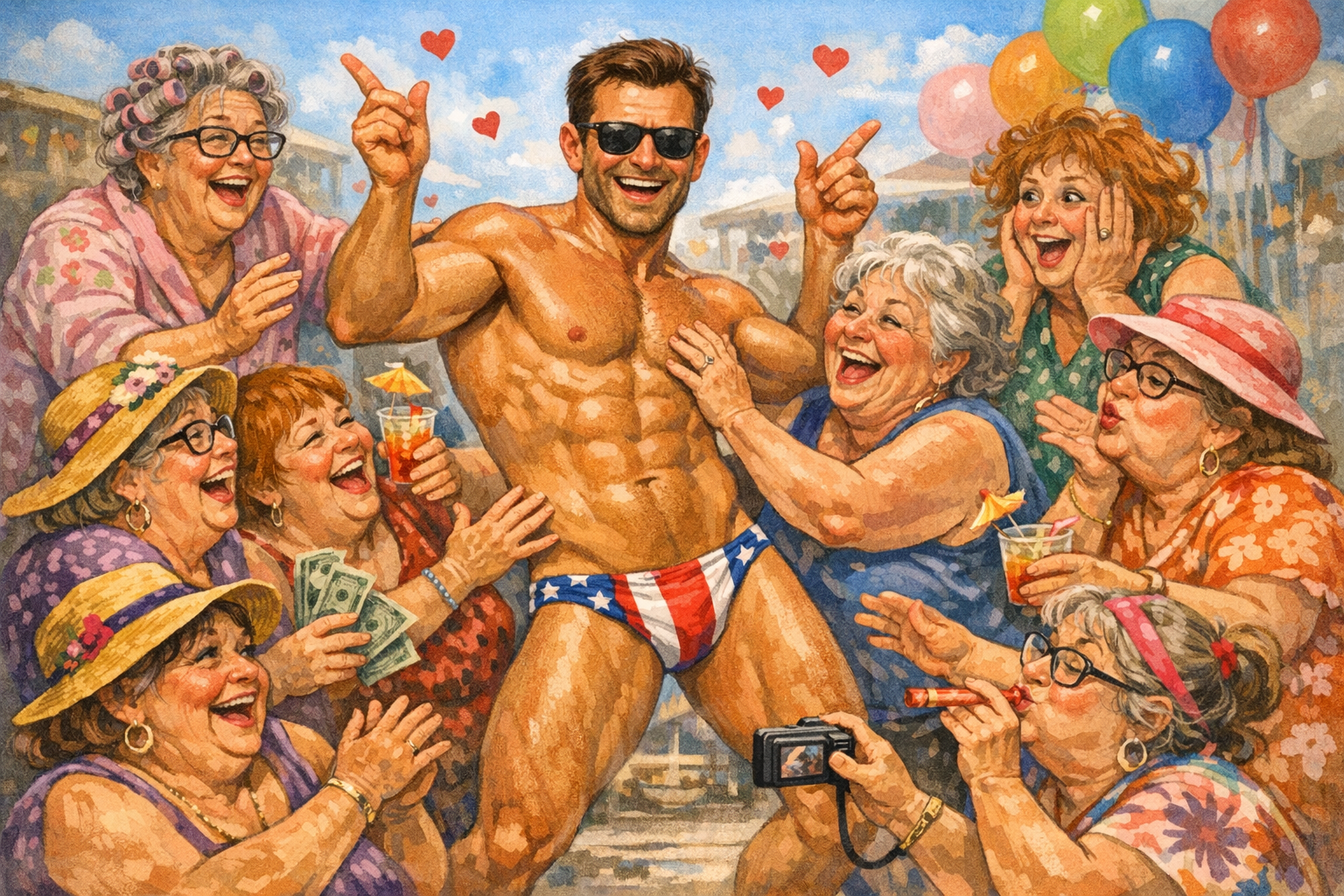
“Have you ever been fawned over?” I asked her. “Most women have. Most men haven’t. I’m sure gorgeous men get fawned over all the time, but most men don’t know they’re attractive, until it’s too late in life. They look back at pictures of themselves and realize that they were a lot better looking than they thought.” Women aren’t as generous with their praise. They seek to humble men. So, when a man gets fawned over by women, it doesn’t really matter to the man what the women look like.  

Everything in its Right Place 

I could never be a slob again. I’m not talking about the difference between clean and unclean as much as the difference between being organized and unorganized. Losing things bothers me more than being unclean. If I place a toothbrush on a bathroom sink, for instance, I’ll think about that toothbrush until I have a chance to put it in its proper place. If I don’t, I fear that it will somehow become lost before I need to use it.   

The History of Propaganda 

Most people have heard the phrase, “If we repeat the same thing often enough, people will believe it.” Evil historical figures have proven this is an effective tool to fool some of the people some of the times, but as Malcolm Gladwell wrote there is a tipping point to everything.

We’re all subjected to various forms of propaganda, everything from the more obvious political slogans to advertisements, but there is a moment somewhere between “I got it already” and “They’ve been pounding this drum SO often that I’m starting to think they’re up to something.” Some call this Message Fatigue and others call it the Backfire Point.

I don’t think this deduction requires a level of ingenuity or cleverness. It’s such a basic understanding of human nature that it’s kind of boring to read and write about. There’s one nugget that contributes to the survival of this myth, the stupidity of the man of yesteryear. Since most men of yesteryear lived without modern technology and conveniences, we all think they were a little dumber than we are. C’mon, admit it. We see old black and white daguerreotype photos of people, and we think hayseed, yokel types who barely knew how to read. “They fell for it,” we think, looking at them, and those of us who have iPhones, Google, and AI feel so much more advanced, even though we had nothing to do with those technological advancements, and we think we would never fall for propaganda. Or, if we did, we would have a tipping point, and they probably didn’t, because “Look at them. Look at what they wore.”

The ‘S’ 

I found a trivia question to stump the band: “What was the 18th president Ulysses S. Grant’s middle name at birth?” Answer, Ulysses. Wait a second, how did they get from Ulysses from ‘S’. Ulysses is his first name. His actual birth name was Hiram Ulysses Grant, but everybody called him Ulysses. If you had the opportunity to choose between the name Hiram and the central figure of The Odyssey, wouldn’t you choose the latter? Some sources state that the young Hiram Ulysses Grant hated his name, because his initials were HUG, but that doesn’t answer the question of how his official name went from Hiram Ulysses Grant to Ulysses S. Grant.

The confusion began after “Grant was nominated to West Point in 1839 by Ohio Congressman Thomas Hamer, who wrote Grant’s name in the application as “Ulysses S. Grant.”” Everyone called him Ulysses, so Congressman Hamer just assumed that was Hiram’s first name. Middle names weren’t as common in this era as they are today, as evidenced by the fact that Abraham Lincoln did not have one, so we can only assume that Hamer assumed Ulysses Grant didn’t have a middle name. The problem for Congressman Hamer was that the West Point application required a middle initial, and due to the fact that Hamer couldn’t just text Hiram to sort matters out, or call him, he decided to just fill the blank in that application to get it done. Congressman Hamer found out that Hiram Grant’s mother’s maiden name was Simpson, so he just added that famous ‘S’ on the application.

Aside #1 Harry S Truman middle name is ‘S’. It’s not ‘S’ period, because it’s not an abbreviation. His parents couldn’t decide whether to name him after Solomon Young, Harry’s maternal grandfather, or Anderson Shipp Truman, his paternal grandfather, so they compromised and just gave him the middle name ‘S’.

Aside #2  Grant’s fellow cadets at Westpoint noted the patriotic arrangement of Ulysses S.’ initials, and they began calling him U.S. Grant, Uncle Sam, or just Sam.

Aside #3 “In an 1844 letter to his future wife Julia Dent, Grant wrote, “You know I have an ‘S’ in my name and don’t know what it stand (sic) for.”

“Grant made several efforts to correct the mistake [Ohio Congressman Thomas Hamer made], but the name Ulysses S. Grant stuck.” So, the correct answer to the trivia question what was Grant’s middle name was Ulysses at birth, but an error by a congressman permanently changed his middle name to ‘S.,’ which was an abbreviation for his mother’s maiden name: Simpson. So, the error by a bureaucrat was compounded by a bunch of lazy, incompetent bureaucrats who didn’t want to do more paperwork? I can only imagine that when Grant attempted to correct the record, the bureaucrats   at West Point said, “Do you know how much paperwork changing a name involves? It’s incredibly tedious, and are you really going to fight for a name like Hiram?” My guess is Hiram Ulysses Grant didn’t give up easily, because he was a fighter, and the bureaucrats were talking about permanently changing his name on the record. My guess is the lazy bureaucrat pounded it home with a compelling argument along the lines of: “I think the congressman actually did you a favor by fixing the error your parents made by giving you the incredibly nerdy name of an accountant. Ulysses was the name of Homer’s warrior, and it could help you rise through the ranks of the military if you have the name of a warrior.”

Hiram Ulysses Grant did, in fact, rise through the ranks of the military, becoming General of the Army of the United States, a fourstar rank created for him in 1866. This rank made him the senior officer of the U.S. Army and the first person since George Washington to hold a comparable level of authority. Then, of course, he became the 18th president of the United States. If we could ask Abraham Lincoln how the Civil War would’ve progressed without General Grant, he probably would’ve said, “I don’t even want to think about that.” If Grant managed to correct the record and made Westpoint change his name back to Hiram Ulysses Grant, would Lincoln have trusted the fate of the nation to an accountant? I’m sure soldiers and generals offered testimonials to bolster Grant’s credentials, but Lincoln would’ve ended each reading with, “But his name is Hiram.” Some historians would suggest that the Civil War wouldn’t have ended as quickly as it did without the leadership, and some might add the utter brutality, of Ulysses Grant’s leadership, tactics, and strategies. Some suggest if it weren’t for him, the nation might not be united in the manner we know it today, and his stature might not have happened without the mistake of one bureaucrat and the probable laziness of a bunch of other ones. Now, you might say that I’m connecting and disconnecting a lot of dots to complete a story with ifs, buts, and what-ifs, but isn’t that how a number of stories of history were made and unmade?

The Eye of the Fly


In a study published in Journal Science, researchers found that flies have the fastest visual responses in the animal kingdom. The study suggests that this rapid vision may be a result of a mechanical force that generates electrical responses that are sent to the brain much faster, for example, than our eyes, where responses are generated using traditional chemical messengers. The fly’s vision is so fast that it is capable of tracking movements up to five times faster than our eyes.

I realize that the fly would trade this one strength for even twenty-five percent of our brain power, but one has to wonder why the fly was given such an incredible eye compared to our relatively weak one. Why would we be granted the most complex brain in the animal kingdom, and not have the physical advantages inherent in the eye of the fly, the ears of the owl, the various sensory receptors of the snake, or the nose of the bloodhound? Wouldn’t we use those gifts better than those mindless animals, and insects, that don’t know enough to appreciate it?

The obvious answer, from the Darwin perspective, is that humans don’t need these extra senses for survival to avoid predators. The more interesting perspective, I believe, is that having an extra sense would prove such a distraction that it might inhibit the tedious, arduous process of developing the complex human brain.

In every young human child’s development, there is a constant push and pull. Parents and teachers push children to develop habits that they hope will eventually develop that brain as it matures. They know that if that child is going to find any measure of success within the species, they will need to push the child to help them develop that brain to capacity in a manner that can be painstakingly, gradual. Some would argue that no human ever reaches the maximum capacity of the brain, but it’s not much of a reach to suggest that if we were distracted by a super sense we wouldn’t come as close as we currently do.

On that note, this theoretical argument rises whenever I watch a Superhero movie. It’s great that this person (or these people depending on the movie) have these superhuman powers, but shouldn’t there be a countering deficit? If the natural world granted this individual powers we can’t fathom, shouldn’t there be some sort of deficit? Shouldn’t they be dumb as a rock, noticeably awkward socially, or some deficit to counter the natural, biological and/or personal focus?  It could be argued that there have never been more distractions, pulling children away from the painstakingly, gradual process of brain development that provide more instant gratification. Yet, there have always been distractions. It could also be argued that while there are more distractions now, there have always been distractions, and coaching or teaching children how to avoid distractions has remained constant.

I am not a Superman aficionado, but Ma and Pa Kent probably spent their lives developing Clark’s brain before he began relying on his superpowers, Spider-Man was a teen-ager when the radioactive spider bit him, so while his development to adulthood may have been hindered, he likely had a decent foundation. Some of the superheroes, in the various universes, were superheroes since birth. They have various natural powers but no deficit in human development. It just doesn’t seem well-rounded to me. 

Although there are numerous benefits to a young child engaging in athletics, it could be argued that it is an impediment to the optimal development of the brain. There are exceptionally gifted athletes, of course, but most athletes had to kinesthetically learn the craft. They had to do it so often that they developed muscle memory and whatever we call the level of muscle memory that allows them to hit a fastball that is relatively difficult for others on their level to hit. The point is that when a child is focusing so much of their time and energy to achieving on an athletic level, it often leads to less focus placed on academics. There are exceptions to the rule, of course, as some achieve All-American status in athletics and All-Academic in the classroom, but most children learn to focus on one area to the detriment of the other. 

“Keep your grades up if you want to maintain eligibility,” the adults surrounding the gifted athlete will say, but they rarely coach them to achieve academic excellence, and this is eventually displayed in the post-game interviews of those few elite athletes who have achieved the professional level.

The same distractions can be found among the beautiful. Both genders learn that beauty is power, but most would acknowledge that the beautiful female has far more power in the room than anyone else, including the beautiful male. Most beautiful females learn, at some point in their lives, that no matter what they do in the classroom, their mental prowess will always be considered secondary to their physical attributes, and that they would be probably be better off if they just sat there and looked beautiful. They subsequently learn to speak less often, so as to silently soak up the power their beauty wields in the room?

Both of these superficial exaggerations could be called distractions in human development, and those who have these physical characteristics learn to employ their own distractions to keep people from focusing on their lack of intellectual development by criticizing those who wasted their time devoting precious resources to developing the brain.

“Did you read Lord of the Rings when you were a kid?” 

“No,” the beautiful reply, “I was out getting laid.” 

“At fifteen?” the nerdy brainiac asks, “because I read those books at fifteen.” 

“Yes,” the beautiful person responds. 

“You were getting laid so often that you didn’t have time to read?” 

YES!”

That exchange is not a direct quote from the TV show Friends, but it’s close. It encourages the idea that meaningless sex trumps any other activities of youth. “I was out climbing trees, playing football, listening to KISS, and collecting Star Wars cards.” 

“Really, because I was out getting laid.”

Sex between immature individuals should be the goal in life. It is the end game, and the end of the conversation. No one ever thinks to ask, “What did all that sex end up doing for you?” 

“Doing for me? What are you talking about? I was having sex when you were reading Tolkein, the comic strips Dondi and Peanuts, and all of those stupid Chose Your Own Adventures you nerds read.” 

“Did you forge the relationships you had with these people in such a way that helped you have more meaningful experiences that helped shape your life in profound ways in life?” 

“No, I was having sex with them.”

We’re not to question the idea that if we could’ve had more sexual experiences when we were young, we’d be better individuals now, or at least cooler people. Others drop the philosophy that if we had sex more often as young people, we wouldn’t be such a stick in the mud now. Some of us did have such opportunities when we were nine or ten-year-old, but we turned them down because we were scared, and we weren’t ready. So, if we said yes to that incredibly beautiful sixteen-year-old babysitter, we’d be better people now? 

Due to the fact that so many people laugh at such admissions now, we’ve been conditioned to feel shame, regret, and embarrassment about that fact. We feel shame admitting that, and we regret it almost every day. Why, because we have been conditioned to believe that that exchange of fluids would’ve somehow made us better people. This line of thinking gives credence to the idea that we never truly escape high school. We all wanted to be the cool kids in high school, and no amount of rationale will ever defeat this. Even when we reach our forties, and beyond, and we begin to appreciate our nerdy, reading youth for what it was, we still find it difficult to defeat the superficial, hyper-sexual Friends mentality.

On the flip side, no one would say that reading the Lord of the Rings series is an essential component of a child’s development, it does put that child on the road to every parent’s holy grail: The love of reading. A goal made all the more difficult by the instant gratification philosophy put forth by the Friends show. It did not, nor will it ever make a person better or cooler person 

For most of us, the opportunities to be sexually active at a young age were there, but some of us were too busy being kids, doing kid’s stuff, and as I wrote, we were simply too scared. When this Friends joke came along and told us that if we were truly cool, we should’ve been doing that all along, we regretted being that nerd who was too scared, enjoyed reading fantasy books, and mindlessly enjoyed our youth. We thought we missed out on something fundamental that made them better than us. In truth, such a philosophy will eventually catch up to them when the one thing that separated them from the pack, sexual activity, becomes more and more meaningless to them as they age. Like a drug user, they might vie for more and more of it for more meaningful sexual interactions, to try to recapture the euphoria they felt when they were virgins touched for the very first time. At some point, after a number of ruined marriages and meaningless encounters, they might realize that their life has amounted to nothing more than a series of superficial indulgences that have amounted to nothing more than a superficial life.

That’s another question I might have for these Friends’ types, if I agreed to have sex with my babysitter when I was nine or ten, would sexual interactions prove less meaningful throughout my life, or would it prove so meaningful that I developed a sexual addiction? Another question, on the same plane, would sex become such a primary driver for me that the rest of the otherwise normal, youthful activities I experienced between 10 and 18 be rendered comparatively meaningless?   

It is for all these reasons that some of us find it difficult to sit quietly through those superhero movies that depict an exceptionally gifted men and women, gifted with the eye of the fly, the ears of the owl, the various sensory receptors of the snake, or the nose of the bloodhound who are also exceptionally gifted intellects. There is just no way, some of us want to shout. Some of them might be smart, for there are always exceptions to the rule, but not that smart, not that exceptionally gifted in intellectual arenas. There’s always a trade-off, especially if they’ve been an exceptionally gifted, physical specimen since birth. Some may have been trained by their parents, or pseudo parents, to avoid relying on their gifts, but we have to think they would’ve accidentally, or incidentally, relied on their special gifts to the detriment of optimal brain development. There would’ve been some point when they realized that they didn’t need to go through the painstakingly arduous, and at times embarrassing, process of gradual development. In human nature, as in nature, there is always a trade-off in this sense.

An interesting question some sci-fi movies explore is if we only explore 10-13% of our brain, an appraisal some neurologists suggest is a well-travelled myth, what if we trained our focus on attaining the eye of the fly, or the hearing of the owl, or the nose of the bloodhound. Would it be possible if we sent our son to eye of the fly school and our daughter to ears of the owl school, and those schools focused as much effort on those characteristics as they do brain development in school? Even if it were, why would we do it? We don’t need such characteristics for survival, and while they might prove useful in some arenas, it would pale in comparison to the importance of overall development of the brain. The eye of the fly might prove beneficial to some Fortune 500 companies in some way, the military, and the revival of the modern carnival, but it would probably also diminish the place atop the animal kingdom that our brains have attained. 

Finding the Better, Happier Person Through Change


Are you happy? I mean happy. You can tell me. I’m just an anonymous writer. Are you happy? Whisper it to me. You’re not? Well, what are you going to do about it? Are you just going to sit there like a chump while the rest of us are living in the land of sunshine with fortune smiling down upon us? Go out there and get you some happy sistas and brothas!

I used to believe I was on the cusp of being happy. I thought I was so close that if my Dad would just loosen the purse strings a little and purchase this one, solitary item of the moment for me, it would launch me through the entrance of the land of hope and sunshine. I wasn’t running a con game. I truly believed that if my Dad would just purchase this one pack of KISS cards for me, it would go a long way to helping me achieve my ideal state.

“No!” was what he said (cue the dark and foreboding music). He told me “No” on more than one occasion, and there were even times when he would follow that ‘No!’ up with a heaping pile of “Shut up!” (Cue the B roll, creepy B actor with bushy eyebrows that point inward, playing my dad in this reenactment.)

A part of me believed that the constant “No’s!” I received from him manifested into a personality disorder in which I wanted to buy things, but I was scared that I wasn’t worthy of them. Another part of me wondered what kind of man I would be today if he purchased everything I wanted. Would I be a spoiled brat? Would I have some sort of obnoxiousness about me that expected to be able to have everything I wanted (see deserved) regardless if I had to go into debt to get it? Would I be one of those “I deserve it” adult babies who permeate the culture? Another part of me knows that I would’ve had to work my through whatever psychosis my dad chose to inflict on me, and that I would probably end up in the exact same place I’m in right now.

The point is that most of us believe we are in some location on the emotional equator just south of happy, and some of us will live our whole lives down there blaming our parents for it. Most of us are not miserable or depressed in the sense that we need medical assistance. Most of us are just a little south of unhappy, and a little unsatisfied with the way our lives turned out. We had incompetent parents, we grew up in broken homes, we never had any money, we were bullied in school, and our grades weren’t what they could’ve and should’ve been, and if we were able to do it all over again … We wouldn’t want to go through it all over again.

We are who we are, based upon what we’ve been through? Are we happy? Could we be happier? What do you got?

Was I unhappy in that temporary sense that every teen is unhappy when their parent tells them no? I’m quite sure that if a talent agent spotted me in the dramatic aftermath of one of my dad’s denials, they would’ve had their guy call my guy, and said, “That kid’s got the goods.”

As evidence of the fact that my dad did buy me things, I was one of the first kids on my block who had all of the cards necessary to complete the puzzle on the card backs. Did any of the items my dad purchased for me make me happy? I’m sure they did, temporarily, but throughout my reflective examinations, I have found those moments conspicuously absent. I’m sure I received some sort of validation from those sparse moments in life, until the next time my dad and I went to the department store. The next time we went to a store, I had the same notion of being on the cusp of happiness again, and I believed his decision could affect whether or not I would end up in a land of sunshine once again. When he decided not to make those purchases, the cyclical drama would begin again. The question is, was I so unhappy that my definition of happiness was dependent on my dad’s decisions in department stores, or did I enjoy casting him as the bad guy role in the end credits of my psychodrama?

What I thought I was talking about, when I talked to my Dad about making these purchases, was definition. I wanted to be a somebody who had a certain something that someone else had. I wanted to be a have in a world where I felt like a have not, and I knew that those who have are happier. I was also talking about fulfillment, whether I knew it or not. I was talking about a patch, or a hotfix, to correct a bug in my operating system that I thought would help me live through the teenage, “all hope is lost” software program that I just downloaded to my hard drive. I thought was talking about helping him help me become a real player in a world of people that had such products.

How many otherwise unhappy people had parents purchase those KISS cards for them at that seminal checkout counter of their lives? How many of them walked away realizing that that was it. One simple pack of KISS cards was all it took. That moment may have occurred thirty-five years ago, but I’m happy now. I reached the point, after all those years, of fundamental happiness. I have no wants or desire any more. I am what you could call a fulfilled man.

“And Dad, it was those KISS cards that you purchased, when I was all but thirteen years of age, that accomplished that for me. I find it hard to believe too, but all I can say is I told you so.”

Are we happy people in a fundamental sense, or do we define fundamental happiness based on attaining things? If we experience fundamental unhappiness, we may not know what caused it, but we know we need things, and change, and things that change us. We need constant change. Change results in definition and redefinition, until we achieve the ideal state of being that we believe is forever beyond our reach, but one solitary purchase away.

We are oysters in search of a process through which we can change our interiority to protect us from our internal intruders. It’s silly to believe that one pack of KISS cards, of course, as we need layers upon layers of calcium carbonate to shield us from the forces of interiority, until we create that pearl. This process is similar, yet different, from the outer shell we create to protect us from possible external intruders.

The intruder inside us is unhappiness, and to defeat it we need to undergo changes equivalent to those the oyster uses. We’re all animals after all, and we’re required to change, adapt, and evolve throughout life for our survival and for survival of the species? It’s natural, it’s science, and we’re not that much different from the oyster?

Are the changes we require biological, sometimes, but sometimes we just need some sort of change to give us a lift out of the tedium of today, regardless what we did yesterday, to give us a brighter tomorrow. If we’re unhappy, in a manner we define, how do we achieve fundamental and constant happiness? To what do we resort? How do we define ourselves, and if we make sweeping changes, are we ever happy in the aftermath, or are we in need of more change?

✽✽✽

A friend of mine resorted to drastic change. She pursued it. She achieved it. She needed it. The drastic change was so elemental to her makeup that she believed it bisected her personal timeline into a B.C/A.D. demarcation. When she and I talked –after years of separation from the drastic change– she no longer wanted to discuss the B.C. (before change) life that I knew. That discussion seemed irrelevant to her compared to the A.D. (after decision) lifestyle that she was now enjoying. She was no longer the person I knew. She changed, and any observer could see that my attempts to relive our past bored her. Since it had been so long since we last spoke, however, the past was the only thing we had in common. It frustrated her. She found a way to make this conversation relevant, or enjoyable to her, by asking me how the characters of our shared past would’ve reacted to her drastic change … if they had lived long enough to see it.

The question that I would’ve loved to ask her –as if I didn’t already know the answer– is did any of these fundamental changes do anything to help her achieve greater fundamental happiness. An inevitable ‘yes’ would follow, for change is good, change is always good, but more change is better. Once she accomplished these drastic changes, was she able to wipe those memories of a rough upbringing off the slate? Yes she was. Did these changes accomplish everything she hoped they would? Yes they did. These questions would go to the very heart of why she decided she needed change, and very few would admit they were an utter waste of time, but the greater question would be was this change so complete that she would no longer need further, drastic changes in future? I’m quite sure that the next time I run into her, she will have undergone a number of other, drastic changes, now that she’s married a man that can afford them for her.

“Could you achieve the same amount of happiness without those drastic changes?” I would’ve loved to ask her.

“Yes,” I’m sure she would say, “And I did try them. Nothing happened. I needed change.” Fair enough, but how much effort did you put into taking inventory of everything you have that should make you happy, versus everything you could have that could make you happy, and how much have you lost in the pursuit of these total transformations?

If we run across the rare individual who admits that their transformational changes didn’t accomplish what they thought they should, they will have their remedy all ready for us. They will tell us that they need more changes, other changes, and a metamorphosis into something no one considered before. The point of all these changes is to save them from what they were, or to prevent them from becoming what they might become if they don’t change. At some point in this process, they invest so much in change that they cannot turn back.

Are we ever happy? I mean happy! Or, is happiness a state of mind that can achieve internal activation after a series of events occur in a very specific way that we define? We’ve suffered damages that leave us damaged, and we can’t fix them on our own. We have flaws, but there is hope. There is always hope. We can change, and changes can change us. We have the money. We have the technology. We can rebuild it. Better than we were before. Better…stronger…faster…happier. We can make more money, with a different job, a better job. We can have more love … more sex … better sex if we can find a way to change. We might consider having an affair on our spouse, as that could shake things up, cause some turmoil, and lead to couple’s therapy and renewal of sorts that could lead to makeup sex. An affair could also lead to a divorce, but what is divorce? Divorce can be messy and awful, but it can also lead to change, drastic change. We might need pharmaceuticals, and alcohol to help us through it, but it could lead us to refocus on our beauty and losing divorce weight, as we become more concerned with our appearance. We might buy better products and supplements that could lead to more gym time that will lead us to be thinner and happier, until it dawns on us that tummy tucks, collagen injections, and more colonics could change us quicker and better. We’ll need more boob, or better boobs, at some point that will lead us to feel younger, better, and thinner. We’ll have more definition, we’ll be more feminine, or less feminine, and more masculine, and who cares about gender specifics anyway? We could live the rock and roll lifestyle. We’ll have more “me” time, but that could lead to more alone time that could lead to more introspection and some depression. It always does. It will also lead us to focus on the fact that we need better appliances, more extravagant vacations, and more “me” time and greater self-indulgence, until we get what we deserve. Something different. Hey, I’ll try anything once. Changehappinesschange…repeat if necessary.