The Rise and Fall of Billy Squier


“One day, everyone I knew had Billy Squier’s record Emotions in Motion, and the next day nobody mentioned his name.” It wasn’t that immediate, but it felt that way. Billy Squier had a long, relatively prosperous career, but there was a time, circa 1980-82, when the man had trajectory. Rock critics, corporate insiders, and his peers thought William Haislip Squier was the next big thing. At one point in his career, Billy Squier said, he was outselling Sinatra. 

Emotions in Motion was one of the staple records of the era. Everyone I knew had Men at Work’s Business as Usual, Foreigner’s 4, Journey’s Escape, and Emotions in Motion. If someone didn’t have all of these albums, their collection just didn’t appear complete. All of these artists came out with other albums and had decent careers, but they would never achieve the peak of popularity they experienced during this 1981-1983 run. Our initial inclination is to feel sorry for these artists who experienced so much unimaginable success so early on in the careers when they were too young to appreciate it, but most artists never have such a run. The skilled, lucky, and timely ones do, and some have longer runs than others. Very, very few artists prove so popular that they can sustain a relatively high level of popularity throughout their career. Billy Squier’s run occurred early on in his career, but that run was so fruitful, with so many hit songs, that many predicted he would be one of the few to, at least, have a long, prosperous run. He was so huge that Andy Warhol agreed to design an album cover for him, and Jim Steinem agreed to produce one of his albums. Every run comes to an end, but the change in Billy Squier’s trajectory happened so quickly that many fans from the era still wonder what happened? “Of course I remember him,” many fans of 80’s music said, “Whatever happened to him?” 

One look at his bio suggests a very simple answer, Billy Squier stopped writing chart-topping songs. He wrote chart-topping songs for the first few years of his career, and then he didn’t. No matter what happened in 1984, if Squier continued to write chart-topping singles, he would’ve overcome “the video”. Numerous others, including Billy Squier, say, “No, it was the video.” They say that his trajectory altered dramatically after “the video”. That just seems utterly impossible to those of us on the outside looking in. How could one video bring such a high-profile artist’s career down?

Well, “the video” was a bad. Even viewed in hindsight, alongside all of the horribly embarrassing videos made in artists’ names in the era, Billy Squier’s video for Rock me Tonite stands out as the worst videos made in the era, and according to the authors of the 2011 book I Want My MTV, it was the worst video ever made. “The authors of this book interviewed over 400 people, primarily artists, managers, filmmakers, record company executives and MTV employees. They said that none [of them] could agree on the best video, but all agreed that “Rock Me Tonite” was the worst.” The authors devoted an entire chapter to describe how and why this video was so bad, and how and why it diminished one of the biggest rock stars of the era.

The counterpoint to the claim that a poorly conceived video can irreparably damage a recording artists career is Dancing in the Streets. Dancing in the Streets is arguably one of the top-five worst videos ever made with equally awkward dance moves and embarrassment for the artists involved. Yet, that equally bad, career-killing video that did little to tarnish the career and legacy of David Bowie and Mick Jagger. Those two artists, however, had stronger careers before their embarrassing video, and they created music after “their video” that they helped us forget their egregious misstep. 

Rudolph Schenker of the Scorpions said, “I liked [Billy Squier] very much … then I saw him do the video in a very terrible way, and I couldn’t take his music seriously anymore.”

***

Right around the time of Billy Squier’s Emotions in Motion, I had my own money. I had a job, and I never had a job before. I also had disposable income that was not subject to my dad’s approval, and I wanted music. I didn’t know anything about who music magazines declared “who’s hot and who’s not”. I just knew that when I heard either Everybody Wants You and Emotions in Motion, I dropped on the floor and skated at my local Skateland, and every else I knew did too. I also saw Quiet Riot’s Metal Health cassette on the store shelves, and those two albums were the only ones I knew that catered to my need for hard charging guitars. My musical tastes were based on the influence of friends, what local, Top-40 radio Disc Jockeys decided to play, and what my neighborhood Skateland decided to play to try to get me on the floor. In these arenas, Billy Squier sat atop my Mount Rushmore, but so did Quiet Riot. I had the income, and I had the need. I purchased both.

I thought the Quiet Riot singles Come on Feel the Noise and Metal Health (Bang your Head) hit all the bullet points a young man and woman had, I was wrong. In one of the first lessons I learned about the difference between genders, the reaction to those songs was divided among the boys and girls circling the no-go zone in the middle of the skating room floor. The singles Everybody Wants You and Emotions in Motion, however, put everyone on the floor. The opening guitar riff from Everybody Wants You caused girls to shriek and guys to pump their fists as they rounded the floor. The speed skating and broad smiles that resulted were infectious. Bill Squier’s musical creations were so ubiquitous that everyone who was anyone wanted his songs in their home. So, what happened?

***
Some critics suggest that Billy Squier’s move away from guitar-based rock to keyboards and synthesized rhythms, on 1984’s Signs of Life, alienated many in his fan base. Others say that while that album had some guitars, they were mostly used as an afterthought to appease his fans. The Signs of Life album appeared to be Squier’s attempt to transition from heavy, hard-charging guitar-based music to keyboards and synthesized rhythms to stay up with the times, while trying to appease his guitar-driven fan base at the same time. He tried to appease all the people all of the time, in other words. The primary critiques I found of Billy Squier is that he tried so hard to keep it going after Emotions in Motion that he probably tried too hard, and he ended up becoming a parody of himself. (We should note that Signs of Life went platinum, which kind of surprised me when I read that, because Billy Squier was persona non grata in my social circles after Emotions in Motion.) 

Anyone who studies any form of art knows that most artists are prone to become parodies of themselves at one point or another. Few artists in music, in particular, are able to reinvent themselves just about every time out, I cite David Bowie and Bob Dylan as two such exceptions to the rule. For the rest of the world, there is the Thelonius Monk quote, “A genius is the one most like himself.” 

How does an artist stay true to themselves and their fans, while trying to reach out and broaden their fan base? Billy Squier had an idea. Rock historians and critics now call it “the video”. Prior to the short shelf life the video for Rock me Tonite experienced on MTV, the 1984 album Signs of Life was flying up the charts. It charted high on Billboard’s top selling charts, but it stalled and eventually fell after the video for the song Rock me Tonite premiered on MTV. Some, including Billy Squier, say the video ruined his career.

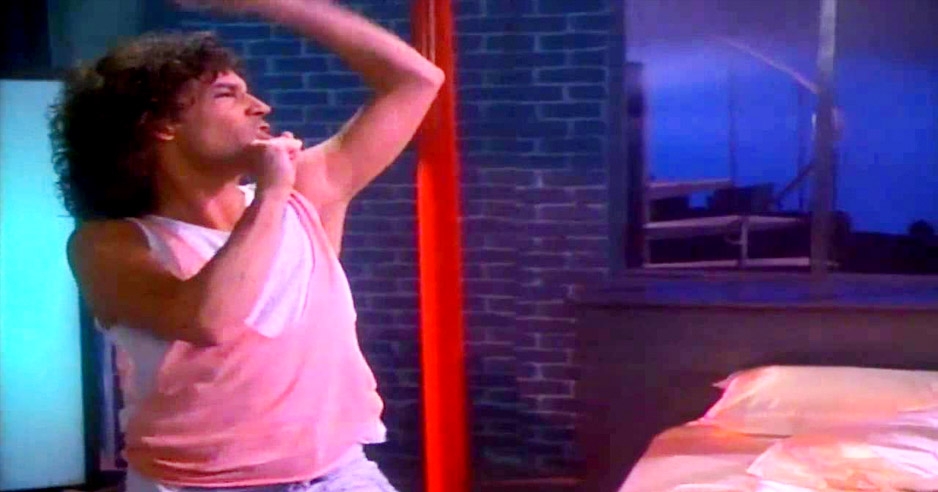
Why was it so bad? Watch it. There’s nothing anyone can say to describe how bad something is than to say, ‘just watch it for yourself.’ Wikipedia provides the most succinct description of the video, “It shows Squier waking up in a bed with satiny, pastel-colored sheets, then prancing around the bed as he gets dressed, ultimately putting on a pink tank top over a white shirt. At the conclusion he leaves the room with a pink guitar to join his band in performing the song.” The song also shows Squier putting on a shirt, then ripping it off in an apparent display of lust that just happens to reveal his “good-looking sexy chest.” There’s also the requisite sprawl on the ground in which the sexy beast pulls themselves forward on the ground to evocatively display the character’s primal lust. I don’t know which video director displayed this first, but it became a staple in 80’s videos.  

There is some debate regarding why the video was so bad. Some, including Squier, suggest he appeared too feminine in the video, but we could say that that characteristic didn’t alter David Bowie’s trajectory, Marc Bolan’s, Twisted Sister’s, or even to a lesser degree Alice Cooper’s (Cooper was more about shock value and makeup than he was femininity). Others say it was more about Billy Squier’s ill-conceived dance moves. Were the dance moves feminine? Yes, but anyone who watches “the video” knows that its problems do not begin and end with “being too feminine”. The video is just awkward, and so weird, and so out of the artist’s personae. Even those of us who didn’t know the persona he had before the video can watch it and know he probably shouldn’t be doing that in public. “But,” the defenders of Squier said, “These were the same dance moves he did in concert every night on tour.” We’ve all been to those concerts, and we’ve all cheered any dance moves the lead singer engages in. It’s almost as if we’re starved for entertainment, and a dance move here and there, regardless the quality of the moves, is met with ecstatic approval as it adds to the collective energy we can feel from the speakers. Even ill-considered, poorly choreographed dance moves seem more in context, in an auditorium, than they do from the perspective of watching them on TV. If Saturday Night Live tried to do a spoof on all of the awkward staples of 80’s videos, they couldn’t have done much better than Billy Squier did in this video. The video reminds us of the conversations the fellas had at the high school dance, seeing all the beautiful girls on the other side of the floor, wishing we could dance. “I can dance,” one of our friends said, and he showed us something he probably practiced a million times in the mirror with no objective criticism to inform him how hilariously bad his moves are. We can only imagine that Squier watched all of the hot, risqué videos of the era, from Madonna and Prince, and thought, “Hell, I can do that.”
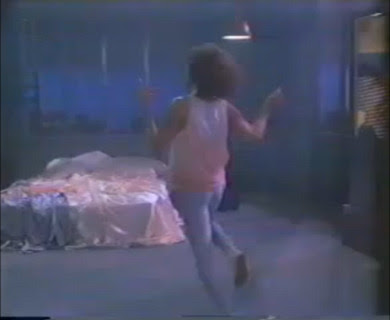
As Squier said, “I was a good-looking sexy guy.” The video appears to be Squier’s attempt to show the world how good-looking and sexy he could be, to use his natural assets to make it to the next-level. Perhaps, he thought this video would help him make the leap from rock icon to sex symbol. We can only guess that Squier designed Rock me Tonite to elicit comments like “steamy” and “too-hot-for-TV” comments to attract the prized female demographic. The use of pink, as the predominant color in the video, reinforces that guess. 

After the fantastic success of Emotions in Motion, we can only imagine that record company executives sat Billy Squier down in a boardroom to discuss his future. In this boardroom, Public Relations advisors entered with charts and graphs detailing Billy Squier’s popularity from 1980 to 1982, with comparative lines listing his male-centric base against a projective arrow of what his numbers could be with some kind of paean to the female demo. Whether Squier saw the trends and tried to up his game, or he received some bad advice, his gambit failed miserably.

The fallout from the video was so immediate that Squier claims he went from packed stadiums before the video to half-filled auditoriums almost overnight. He fired both of his managers within a month of the video’s airing, and he tried to put all the blame the video on director Kenny Ortega.

“If anything, I tried to toughen the image he was projecting,” [Kenny Ortega] told the author of a 1986 book about the record industry. He claims he and the video’s editor had their names taken out of the credits when they got frustrated over their lack of creative input. “Let there be no doubt, ‘Rock Me Tonite’ was a Billy Squier video in every sense. If it has damaged his career, he has no one to blame but himself.”

Research shows that the video for Rock Me Tonite didn’t kill Billy Squier’s career, as the album Signs of Life went platinum, and the next two albums both sold 300,000 a piece. How many artists would kill to sell 300,000 albums? The video did appear to alter the trajectory of his career that peaked with the multi-platnium album Emotions in Motion, but it’s entirely possible that his run just ended, as most runs do. The most imperfect way to solve the dilemma that appeared to haunt Billy Squire to his dying day is what would’ve happened to Billy Squire’s career if he never made “the video”. While I understand that rappers use his samples in their songs, his legacy and overall influence just isn’t as strong as a Marc Bolan’s is. Both artists experienced massive success early in their careers, roughly ten years apart, and their sales numbers leveled off after a couple albums. Comparatively speaking, they both experienced decent runs and comparatively long careers in an otherwise unforgiving industry. Neither of them were one-hit wonders, in other words, as they both ended up having about ten chart-topping singles. At some point in their careers, they both got lost in the shuffle, and their runs somehow ended. When we write somehow, Billy Squier might correct us, if he were alive today, saying it was “the video”. Yet, if he came out with another chart-topping song or album, he could’ve put the ill-advised, poorly timed, and utterly embarrassing video behind him, but he never did.   

Circa ’72: The Magical Musical Era


It’s been 50 years since the most seminal era of music. That’s a long time to remember, forget, and strategically distort some facts. I found that out as I started writing this article in my head, staring at the ceiling, unable to sleep. I am unable to sleep if I have a thought, any stray thought I can think up to keep sleep at bay for one more minute or hour as the case may be. This particular article haunted me, as I thought it was so good that I couldn’t, wouldn’t, or shouldn’t sleep, until it was done. It’s sort of a small, obsessive, and to my mind incurable, mental illness.  

(Now that I’m done with this article, and editing it, it’s not as great as I thought it would be, but read on.)

My original inspiration involved what I considered could be an award-winning title: 1972: The Magical Music Year. My inspiration involved telling you, my faithful reader, how many of our most beloved musical artists started in 1972, how many of the most influential bands of all time came out with their seminal works in 1972, and what an incredible year it was for the music industry. I was all ready to write about all of artists and bands from 1972 that would shape the music industry for decades, and in some small ways the world, for decades (50 year!) to come. I was ready to follow each entry with the words, “such and such did this in 1972 to further cement the notion that 1972 was, indeed, a magical year”, and I planned to write that line so often that the reader would grow sick of it. I found out I was wrong, somewhat, sort of. I found out that in some ways, and by some days, I was a little off. Instead of titling this piece 1972: The Magical Music Year, I edited the title to Circa 1972. The theme remains, but the word circa (approximately) gives me a three-year window, either way, to talk about one of the most incredible eras (as opposed to years) in music, and I also decided to continue writing this piece because I didn’t want to waste a night’s sleep for nothing.

22) Most of the folksy, Jim Croce music has not aged well, and he probably doesn’t make many “best of” lists, but my mom forced me to grow up listening to his tunes, and his 1972 You don’t Mess Around with Jim was one of the first albums, not created by Johnny Cash, that I heard top to bottom so often that it’s earned a place on this list. I heard it at my aunt’s house, when she wasn’t playing Johnny Cash, and I was heard it in my neighbors’ homes when they couldn’t find their Johnny Cash albums. As a result, I hated Croce (and Cash) for so many years, but when I hear this album now, I experience some nostalgia, remembering those years when I was so young that I had no control of the music they played in my vicinity.

21) As often as I was wrong about 1972, I was also right on the mark for some artists. Stevie Wonder, for example, wrote and released one of his many incredible albums in 1972, Talking Book.

20) Michael Jackson’s solo debut Got to Be There was released in 1972. This might not be his best album, but I dont think anyone would argue that it kicked off an incredibly influential solo career. 

19) Deep Purple did not form in 1972, but the album most argue their best Machine Headcame out in 1972.

18) Steely Dan’s debut Can’t Buy a Thrill was released in 1972, and two of their other more influential albums, Countdown to Ecstasy (1973) and Pretzel Logic (1974), were released during our arbitrary window.

17) Roxy Music’s debut was released in 1972. They also released four more of their best albums in this arbitrary window. All five of these albums contain singles that have made their way to various playlists I’ve created for decades.

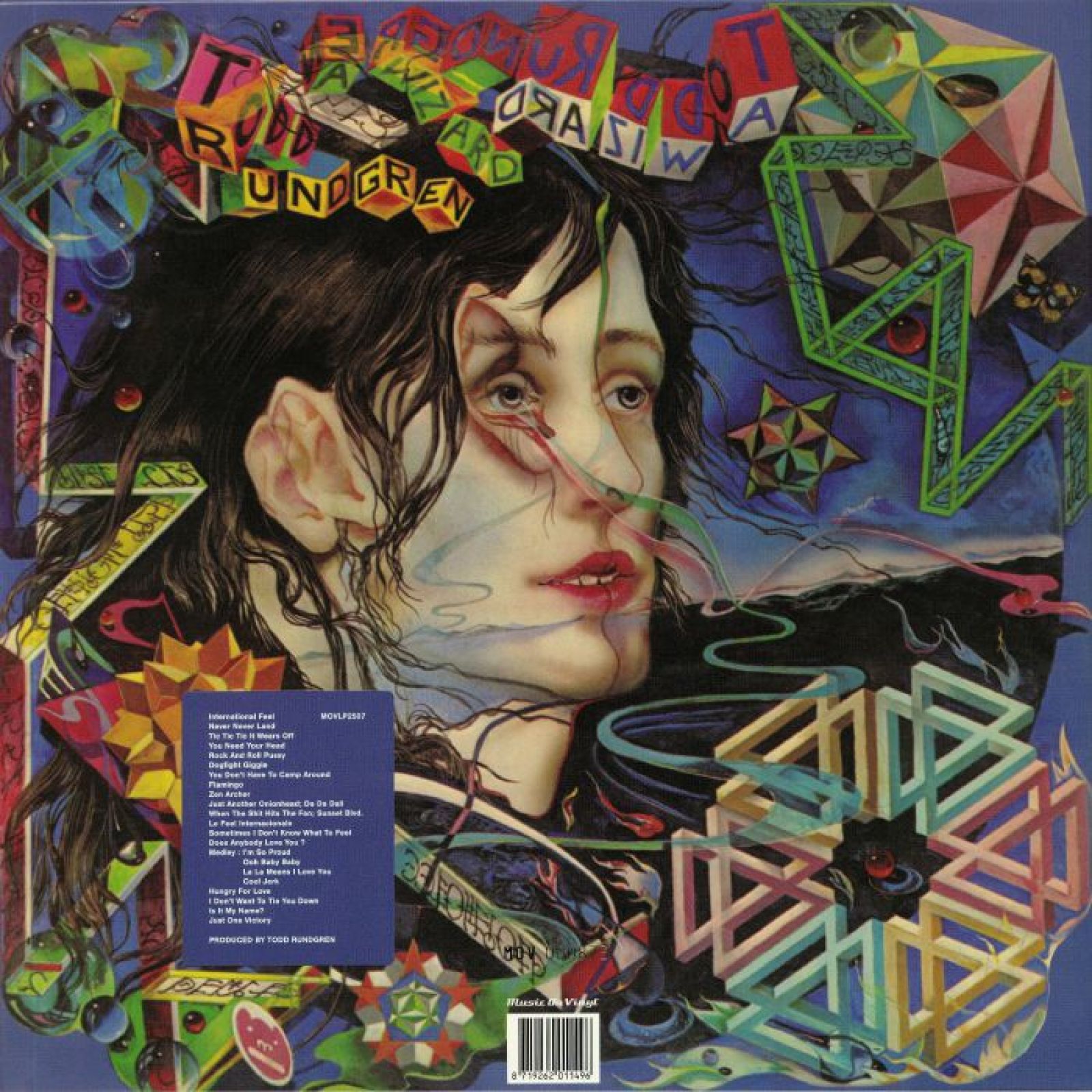
16) Todd Rungren’s weirdest and most creative album, A Wizard/ATrue Star, was created in 1972, as was his most popular album Something/Anything. As with most artists on this list, Rungren’s pre and post 1972 career is hit and miss, but I consider Wizard/A True Star his masterpiece.

15) Lou Reed put out his debut album, and the career defining album that David Bowie deserved a major assist on, Transformer in 1972.

14) Elton John and Bernie Taupin put together what Allmusic.com calls one of the most focused and accomplished set of songs they ever wrote in 1972, Honky Chateau.

13) I thought I heard somewhere that Billy Joel’s Piano Man came out in 1972, but it was 1973. His debut album came out in 1971, so to cement my conspiracy theory, Mr. Joel just happened to take 1972 off to make it seem like I wasted a night of insomnia for nothing. Are we supposed to believe that it just happened to happen that way? Are we supposed to believe that they didn’t get together to make me look foolish? I’ll leave that up to you.

12) The Rolling Stones did not start in 1972, of course, and some would argue that it wasn’t the beginning of their artistic peak, but the end. The Stones did put out an album in 1972 that many consider their best, and some consider one of the best albums ever made Exile on Main Street. The Stones would release better singles than anything on Exile on Main Street, in my opinion, but they never delivered a better album, top to bottom, than Exile. Sticky Fingersalso came out in 1971.

11) Queen loosely formed in 1970, John Deacon joined in 1971, and they recorded their debut album in 1973, but they wouldn’t reach their artistic peak until 1975 with their A Night at the Opera album.

10) KISS started in 1973, and they recorded their debut album in 1974, but they wouldn’t achieve worldwide stardom until the release of their Alive album in 1975.

9) Rush would form in 1968, but they were far from ready. They would experience lineup changes and several configurations before they became the band we know today. (Sidenote: I had no idea, until I began researching this piece that Alex Lifeson was the only remaining member from the original lineup. If I ever put any thought into it, I would’ve thought Lee or Peart was.) They didn’t release their debut album for six long years later in 1974, and they released Fly by Night in 1975.

8) Some of us argue that 1972 was the apex of Frank Zappa’s mainstream creativity, but Apostrophe (1974) and Over-Nite Sensation (1973) weren’t released for a couple years after that seminal year.

7) One of the greatest albums of all time, Pink Floyd’s Dark Side of the Moon, wasn’t released until March of 1973, but we can guess that the heart of this album was created in 1972, and most of the touch up, superficial tinkering work done on the album occurred in 1973. (I’m trying to keep a theme going here.)

6) I had it in my head that an album many arguably call Bob Dylan’s best Blood on the Tracks came out in in 1972, but it was 1975.

5) Likewise, Paul McCartney didn’t form Wings in 1971, and Band on the Run didn’t come out until December 1973. Due to the fact that McCartney normally writes so quickly, and so often, I suspect that he wrote Wing’s debut Wild Life in 1971, and he skipped 1972 before delivering Band on the Run just to mess with my theme here, and don’t tell me he couldn’t know I’d be writing this article 50 years later. He knew!

4) Aerosmith formed in 1970, but they didn’t release their debut album until 1973.

3) Led Zeppelin released their best album, IMHO, Physical Graffiti in 1974. The three-year window also includes Led Zeppelin IV (1971) and Houses of the Holy (1973). Notice the pattern of skipping 1972? You think that’s a coincidence?

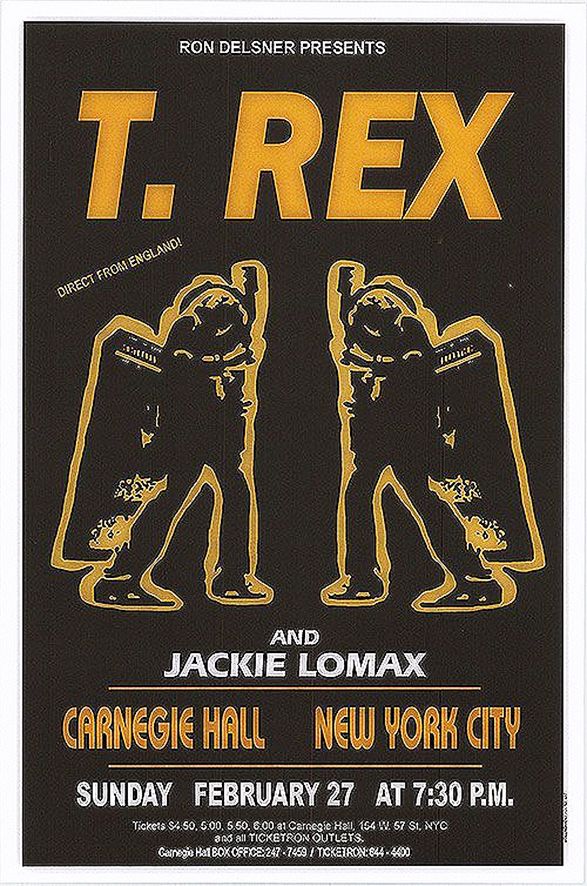
2) T. Rex’s most incredible album Electric Warrior was released in September of 1971, but the single from the album didn’t begin to chart until January of 1972. Marc Bolan’s second-best, stellar album Slider was released in ’72.  

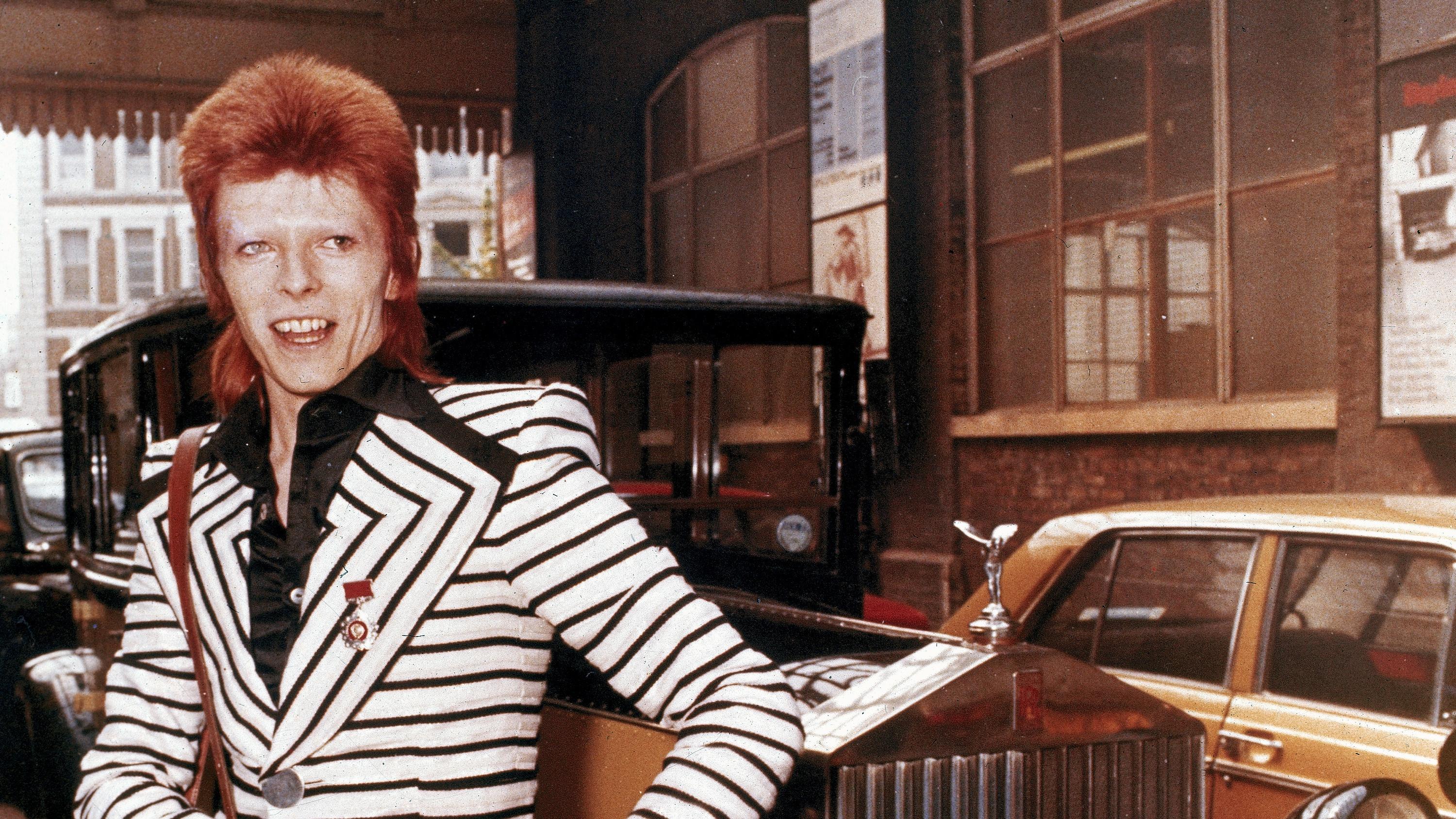
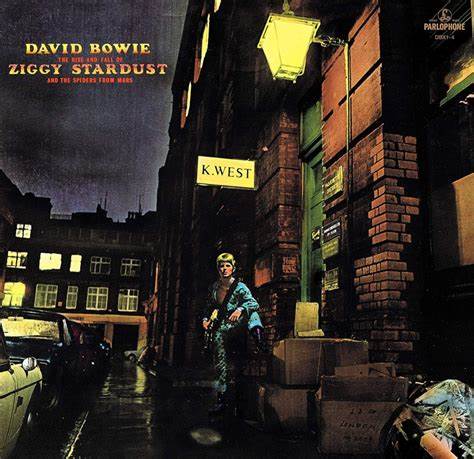
1) And last but not least, we direct you to the reason I wrote this article in the first place, as I introduce you to a man that I consider one of greatest, most influential, prolific, and creative artists of all time. In 1972, David Bowie experienced what could be his most popular year, a year in which he produced what may not be his best record, but the one that had the most cultural impact. Before and after 1972, Mr. David Bowie created incredible music, but IMHO, he blew the damned doors open with his 1972 release Ziggy Stardust and the Spiders from Mars.

If you’re looking for a starting point on the otherwise daunting musical catalogue of one of music’s greatest artists, I can think of no album that initiates the uninitiated better than Ziggy.

We all go through phases with artists, songs, and albums, but I don’t think I listened to any album on this 1972 list more than Ziggy. In 1972, as the character Ziggy, David Bowie sat atop the world.

The album wasn’t adored by critics or fans at the time of its release (though it did peak at #5 in the U.K.), but after Bowie killed the rock star, he posthumously received accolades as Bowie’s breakthrough character, and one of the most important rock albums of all time.  

In this arbitrary window we’ve created here, Bowie also made Hunky Dory, Aladdin Sane,and Diamond Dogs. Bowie is one of the few on this list who didn’t peak in this arbitrary window of ‘72-‘75, as he created the ’77-’80 Berlin Trilogy, but ‘72-‘75 years were definitely one of his peaks.

Honorable mentions) Mott the Hoople, All the Young Dudes; Can Ege Bamyasi, Big Star #1 Record; Captain Beefheart, Clear Spot; Neil Young, Harvest.

I’m quite sure you just thought of about five-to-ten artists and albums I left out, but this is a list of artists who influenced my life the most, and though I was too young to listen to the music of 1972, when it came out, and I had no say in what music was played on record players and eight-track decks, I would eventually come to adore the music I thought they created in 1972.

Before reading on, go back and look at the list of emboldened names. Look at the names of the artists who either debuted between 1972 and 1975, or look at the albums these incredible artists created circa ‘72-’75 window. What kind of soup were they eating? What did they have in their water? If there was some sort of toxic substance with a byproduct of greater creativity, they probably would‘ve suffered long-term effects, but as far as we know they didn‘t, so how did this happen? 

Most of the artists of this era talk about one seminal moment, The Beatles appearance on The Ed Sullivan Show. Others talk about the other The Beatles albums that followed to inspire them to want to create a little magic of their own. Some also suggest that The Rolling Stones, Elvis, The Who, and Black Sabbath played seminal roles to influence their music careers. Whomever it was that inspired these guys, a window opened, circa 1972, for so many artists to take that influence to a different level that displayed a level of unique brilliance of their own. We can guess that some of them went to their mom’s garage, or whatever space they could find, and they started something that took years to develop after seeing The Beatles for the first time.

The artists on this list then created something that inspired those who followed to create their own influence. How many different algorithms can we create from the list of artists above who took their influence to another, completely different level? It‘s incredible to think how influential this small window in time was, and how it changed the musical landscape forever. It’s a window in time that I don’t think will ever recreate, duplicate, or defeat for sheer output, creativity, and intellectual brilliance. No matter how you square it, this year, and these three years, were some of the greatest, most creative three years in rock history.

David Bowie was Just Too Weird


“He’s just so weird,” my mom said when David Bowie took the stage on a 1970s, variety show called The Midnight Special. Before the marketing teams learned how fascinating weird could be to us, being weird was not a good thing. We strove to avoid the weird, so no one would call us weird. I didn’t want my mom to think I was weird, I didn’t want my friends to think that, and I didn’t want to be seduced into thinking I could be weird if I watched him, so I shut it off. We writers love to rewrite our past to suggest that we were so hip that we were bucking the system at eleven-years-old, so we can fortify our artistic bona fides. I wasn’t. I was a normal eleven-year-old who wanted to learn how to be more normal, so other kids would like me, and my primary conduit to absolute normalcy was my mom.  So, when Bowie walk out onto the stage, I was floored by his appearance. My mom must’ve sensed how confused I was, so she quickly told me to turn the channel. I asked why, she said, “He’s just so weird,” and I turned the channel.

David Bowie was weird, there’s no point trying to argue, minimize, or qualify it. He even admitted as much, telling TV on the Radio’s Dave Sitek to, “Stay Strange.” Thanks to artists like David Bowie, we’re all a little weirder, stranger, and everything outside the mainframe. The typical narrative might depict me in front of that TV, experiencing an epiphany, with a “That’s me, mama,” explosion of excitement that she never could quell. It might just be me, but I needed to establish a solid foundation of normal before I could start exploring the weird, strange and just plain different avenues of my otherwise immature and fragile psyche. So, before we continue, let me send out a shout out to my mom for all the effort she put into giving me the most normal upbringing she could before I could explore the other side with more maturity. 

David Bowie feared he was a weird person at a very young age. He believed that he was susceptible to the schizophrenia that haunted his half-brother, Terry Burns. We can only guess that before he embraced the fears of falling prey to that mental disorder that haunted his mother’s side of the family Bowie sought the comfort of normalcy. This duality, as anyone who has worked their way through Bowie’s catalog can attest, would affect his artistic output.   

“I’m not so sure how much of it is madness,” Bowie would ruminate to Yentob. “There’s an awful lot of emotional and spiritual mutilation that goes on in my family.”

He was “too weird” for my people. He was even too weird for me when I was too young to fight that two-word condemnation. My mom told me he was “too weird”, and even if I had the moxie to fight everyone else, I couldnt fight her. I was too young to know how different I was, and even I if did, I wouldn’t acknowledge it, because I didn’t want to be weird. I wanted to have friends, and when my friends told me something was not only weird, but “too weird,” I backed away, into them, and their more comfortable groups.  

High brow, low brow, or no brow?

David Bowie shocked in an era that didn’t want to be shocked. Shock value was not commodity in Bowie’s peak years. The New York Dolls were shocking people in New York, Marc Bolan was doing it to England, and Alice Cooper and KISS were putting it to the United States, but shocking people was not yet part of an artist’s marketing package. Those guys tapped into a tongue-in-cheek definition of the weird, but it was all a part of their schtick. There was something unnerving about Bowie’s strain of strange that made it feel a bit more organic. When we saw it, we could tell he wasn’t having a laugh. It was a part of him, the alien part, and perhaps the schizophrenia part.   

Watch the shows of David Bowie on YouTube, circa 1972, and try to put yourself in that audience. It’s hard to do now, now that we’re so accustomed to performers playing around in the more customary borders of shock value now, but in 1972 Bowie had people actively avoiding him and his alien nature. 

Even after I made it past my mom’s “too weird” block, I still wasn’t attracted to him artistically. I thought he sang songs to make tons of money, become a rock and roll star, and then become a celebrity. All the power to those who do that, but it wasn’t for me. I thought he was the artistic equivalent of a beautiful person who is fun to look at, but doesn’t have much more to them. My attraction to his music is a love story, and to sum up that story, it wasnt love at first sight. It took him a long time to win me over, but I have been in a relationship with David Bowie’s music for about 30 years now.  

I already knew most of his hits by the time I discovered Bowie, so I wasn’t blown away by those songs. The genius of his deep cuts did not blow me away either, in the manner the Beatles’ deep cuts did. I don’t know how anyone else characterizes Bowie’s genius, but it wasn’t immediate for me. His subtle artistic creativity required repeated listens, until I found myself working through his constructs when I wasn’t listening to the music. 

I now liken listening to Bowie to sliding a foot into a great pair of socks. I’ve never met anyone who was absolutely blown away by a pair of socks. Slipping into a great shirt, and finding a pair of pants that fit just right can be mind blowing, but I never went nuts over a pair of socks, not when I slipped them on for the first time anyway. There are some socks that fit so well that when we put them on, they just feel like us, and we begin wearing them every day. When I began seriously listening to Bowie on a daily basis, I found philosophical artistry that fit me like a great pair of socks. Art is relative of course, and I’m sure some identify with Elvis Costello in the same ways, but I’ve heard numerous people recognize Costello for who he was in the music world for decades. Up until about the last ten years, very very few listed Bowie in their elite artists’ discussions. It didn’t affect what I thought of him, but I couldn’t understand it. The only answer I could come up with was that he was just “too weird”.

*** 

I appreciated Bowie’s reincarnation on MTV from afar, as a kid, but the Let’s Dance, China Girl songs seemed more like period pieces in the Madonna/Whitney Houston mold. Pop stars buy great songs from great songwriters, I thought, but a weird, music freak seeking deep, multi-faceted artists doesn’t dive deep into the catalog of pop stars like David Bowie. We wait until the radio stations play their singles. I thought David Bowie was just another good-looking pop star who bought great songs that were probably written by someone else. It was important to me, even back then, that an artist write their own music, because, to my mind, that was the difference between a star and an artist. I thought Bowie was just another 80s pop star who had a 70s catalog that I had no real interest in exploring, until an unusually perceptive friend of mine, named Dan, dropped this line on me.   

“This crazy, weird musical path you’re on all points to one man, David Bowie,” Dan said. 

David Bowie?” I asked with disdain. “The Let’s Dance, China Girl guy?” I couldn’t believe Dan, the guy who had a long history of introducing me to deep, powerful music, was now saying I should be listening to an 80s pop artist. I’d been on the other end of his “if you like those guys, you’ll love these guys” suggestion so many times that I always gave his recommendations a shot. Over the years, Dan proved to be one of the few people I’d ever met who knew more about music than I did, but he didn’t know “my music”. He introduced me to Miles Davis, King Crimson, and Frank Zappa in the past, and while I liked and respected those incredible artists, they didn’t reach me on that other, “my music” level.  

“I’m telling you,” he added, “Bowie is T. Rex, Hanoi Rocks, and Roxy Music, and that music is Bowie in a way that you won’t understand until you hear this.” He handed me a copy of a Ziggy Stardust and the Spiders from Mars (AKA Ziggy) compact disc. I’m not going to rewrite this section either and suggest that that compact disc glowed or that there was a sound equivalent to Heaven’s Gate opening when he handed it to me, but that is how I now remember it. “This is David Bowie 101, and when you start loving the alien, I’ll introduce you to other elements of the alternate universe he created.”  

I thought Ziggy was a quality album when I first heard it, but I couldn’t get passed the pop artist and “too weird” hang ups I had with Bowie. Those hang ups led me to think the single Ziggy Stardust was so immediate that it might be too immediate. After repeated spins, I started zeroing in on the other songs on the album, and I started dissecting them in the “parts are greater than the whole” mindset. Soul Love was the first song that nabbed me, and I put that song on repeat numerous times. At the end of that week, I forgot to return the disc to my friend. The music on Ziggy Stardust became “mine” in so many ways that I forgot the actual, physical disc was not. When he reminded me that I forgot to return his disc, I did and went out and bought one of my own. 

I was already a Ziggy freak by the time Dan suggested I listen to Hunky Dory and Diamond Dogs. I was hesitant, thinking Bowie might be a one-album wonder. After a couple weeks, I was hooked on everything Bowie. The “too weird” notions I had of Bowie began to fall away, and I stopped borrowing the discs from my incredibly perceptive friend. I bought them. I did something different with my Bowie-obsession than I did with every other artist to whom I became obsessed. I bought a Bowie album, and I inhaled it. I lived each album, until I knew just about every lyric and every beat of those albums. I thought there was something different to know, feel and experience on each album that I never had before with any other artist. Each album was so different that I could see what everyone was saying when they said he was too weird, but by this time, I recognized that I was a little too weird too, and I began to think David Bowie was singing about me. I listened to each album as an art enthusiast might when examining a painting, slowly ingesting every little nuance until they discovered what it meant to the artist.  

When my excitement to buy another album overrode my good sense, I moved onto the next album, only to discover I wasn’t as done with the previous one as I thought I was. Bowie, I realized, was one of the very few musicians who could have one foot planted in the pop world and another in the world of art. My peers told me the man was weird, “too weird”, and I listened. Soon after taking a deep dive, I regretted how much I missed by refusing to listen to him for so long. There are very few artists that affect me so much that I regret not listening to them sooner. I thought of all the years I wasted listening other artists when I could’ve been listening to Hunky Dory, Alladin Sane, and Diamond Dogs. I thought he could’ve changed my world just a little bit sooner back then, and I know that sounds silly, but the effect of his music on me was that profound. 

When I finally made it past the obsession, I had with what some now call the Five Years chunk of his catalog (Man Who Sold the World through Diamond Dogs), I graduated to his Berlin Trilogy; Low, Lodger, and Scary Monsters. We listen to music, albums, and artists for a variety of reasons, and I’ve had so many obsessions that I don’t have enough fingers or toes to count them, but there was something different about my obsession with David Bowie. We could label his music in all the pedantic ways, deep, meaningful, and spiritual, but that “not just weird, but too weird” characterization that influenced my refusal to listen to Bowie became the primary reason I listened to him in my adult years. 

Whereas most singers sang about love, sex, drugs, and rocking out, Bowie sang about estrangement, an alien nature, and various other themes we deem “too weird”. In places where an artist might go over the top, and be weird for the sake of being weird, Bowie displayed restraint. In places where an artist should shows restraint, Bowie went over the top. He could write a song that that would live on in the history of FM radio (Space Oddity, Changes, and Heroes), and on the same album he would leave a deep cut to cure our longing for great, weird, and offbeat music that only aficionados love (Alternative Candidate, It’s no Game (part 1), and Lady Grinning Soul). Bowie was the consummate artist who found a way to reach me as few artists could. Most music aficionados don’t intend to downplay the effects of hits, but most quality artists have some hits in their catalog. The difference between Bowie and most quality artists is that he spent as much time perfecting his deep cuts as he did his hits. He had a conventional side and an artistic side, as most of us do, but unlike the rest of us, David Bowie managed to cultivate his normal side, coupled with the “emotional and spiritual feelings of estrangement” from his mom’s side, and this duality led him to craft some excellent pop songs and some brilliant, “too weird” deep cuts. 

I started listening to David Bowie obsessively about 30 years ago, and I bought his new releases on the date of their release. I enjoy a majority of them, but Bowie captured magic in a bottle during the Five Years albums and the Berlin Trilogy. Hours…, Reality, and Blackstar were my favorite late Bowie albums, but they couldn’t compare to the great eight.  

Years before his death, David Bowie experienced something of a rebirth. All of a sudden, and seemingly out of nowhere, I began hearing his peers begin listing him as one of their primary influences. I heard one or two artists do this before, but not to this degree, and I was paying attention. Fans began listing Bowie just a bit outside the greatest artists of his era. They called him revolutionary, a pioneer, and all that stuff we’re accustomed to hearing now, but save for a few artists here and there, I didn’t hear the adoration society crown him in a way he richly deserved for most of my life. I’ve often wondered why, and how, this happened.

If an artist moves into the pulse of the zeitgeist after decades of being on the outer rim, we can usually pinpoint when and where this happened. The artist probably had that one song, movie, or another momentous event that put them over the top. Unless you consider Nirvana’s acoustic cover of The Man who Sold the World that momentous event, it did not happen with Bowie for most of his career. Some of the albums in the “back nine” (or in Bowie’s case the back eight– Outside to Blackstar) of his career were good, but they weren’t so great that they should’ve moved the needle on a retrospective analysis of his career. Before I get to the primary reason I think Bowie moved from just another artist putting out music to a cultural touchstone in the zeitgeist, there were years after 1980’s Scary Monsters and before 1995’s Outside when Bowie got lost in the artistic wilderness. Having said that, I don’t think Bowie moved to us as much as we moved to him in a cultural appreciation of everything he accomplished throughout his glorious career. I think we, as a culture, became more weird, or at least we embraced the weird far more in 2002 (roughly) than we did in 1972. As I wrote, I was already a Bowie fanatic by the time Heathen came out, but others were suddenly calling Heathen his best Bowie disc since Scary Monsters. I liked, and still like Heathen, but I didn’t think it was as good as Hours…. and I didn’t understand how everyone missed what I consider the Great Eight albums from Man who Sold the World and Scary Monsters.  

If you’re one who remains on the sideline for whatever reason, I suggest that you cast that cloak aside for as long as it takes to make an individual assessment of his material. My bet is that he reaches you on a level you’ve never considered before. Music, like every other art form, is so relative that his artistry might not appeal to you on the level he did me, but if you’re anything like me, you now know, as my friend Dan predicted it would for me, my definition of “my music” all goes back to Bowie.  

Other than providing me an excellent entry point to David Bowie, with Ziggy, Dan was notoriously poor at providing me an entry point to the artists he loved. To introduced me to Frank Zappa, for example, but he loaned me an advanced Zappa album that he loved as someone who had been listening to Zappa for decades. I eventually grew to love that album, but it took me a while. I needed to start at a better entry point to appreciate what Zappa did throughout his career. With that in mind, I thought about an entry point to David Bowie. I would compile the albums Hunky Dory and Ziggy into a playlist, and I would cut the songs Eight Line Poem and It Ain’t Easy (personal preference). Best of Bowie is another great place to start to learn the more normal side, as most people prefer normal pop songs, or hits, as a point of entry, and if you’re not familiar with those songs, it’s an excellent starting point. For those who know those the hits so well that they seek deep cuts, or songs beyond the hits, I’ve compiled a list of those songs that have made it onto so many of my Bowie playlists. Some of them were marginal hits in their era, but I still consider them so deep and meaningful that I had to include them.   

1) Alternative Candidate (It’s no longer on Spotify for some reason. It’s on YouTube though.) 

2) It’s no Game (Part 1) 

3) Lady Grinning Soul 

4) Sound and Vision 

5) Kooks 

6) African Night Flight 

7) Soul Love 

8) Dodo (This song is also not on Spotify. Here’s the YouTube capture.) 

9) Thursday’s Child 

10) Queen Bitch