The Seemingly Insignificant Lego: A Philosophy of the Obvious


“We don’t need no stinking instructions!” I said to the enjoyment of my son. “A trained chimpanzee could figure this thing out. Right? Give me some!” I said slapping skin with my son after we ripped the cellophane away and cracked open the little package inside to begin our Lego adventure. We felt like pioneer adventurers going it alone, because that’s just what we do. We’re the types who venture into dark forests without a map just for the adventure and just to say we did it.  
For those of us who aren’t great at building things, putting big blocks together correctly provides a sense of satisfaction so complete that it just feels so me and so right. “It looks just like it does on the cover,” we say, sharing a smile.

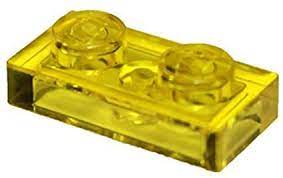
This idea, and I’ll say it, the fun of this adventure all comes crashing down about a fourth of the way through when one of the other large constructs doesn’t snap into another quite right. It makes no sense. It makes so little sense that we drop the ego and consult the instructions. The instructions inform us that we will now have to tear all of our hard work apart to insert a crucial tiny, seemingly insignificant, yellow, transparent Lego. In our frustration, we wondered why the Lego designer didn’t just include a little extension on the larger piece to render the little, yellow Lego unnecessary. 

After we complete the reassembly, and our frustration subsides, those of us who seek philosophical nuggets wherever we can find them, think there might be some sort of philosophical nugget in the requirement of the seemingly insignificant Lego. Some call these moments Eureka moments, or epiphanies, but we prefer to call them “Holy Crud!” moments. “Holy Crud, there might be a philosophical component behind the Lego designers making the tiny, yellow piece so mandatory for completion.” Movies might depict this as the lightning strikes moment, or they might put a cartoonish lightbulb above the head of the main character that leads them to look at the camera and say something to viewers at home that break down the fourth wall. 

The little philosophical nugget we thought we discovered, or imagined, that day was that in most real-world constructs, little parts are as important as the big ones, and sometimes they’re more important. The spark plug might be one of the smallest parts on a car, for instance, but if it’s not firing properly in a spark ignition system, proper combustion is not possible, and our car won’t run properly. Do Lego designers have an unspoken philosophy that they want to share with their customer base that some of the times, the seemingly insignificant is just as relevant and more vital at times?

“The unapparent connection,” Heraclitus said, “is more powerful than the apparent one.”  

“Life is filled with trivial examples,” Dennis Prager once wrote. “Most of life is not major moments.”

When developing a personal philosophy, some of us prefer to go it alone. We don’t want to follow instructions from our parents, or any of the other authority figures in our lives. We prefer the adventure of going it alone for the philosophical purity of it that often leads to greater definition on the other side. “We don’t need no stinking instruction manuals.” We enjoy putting large concepts and constructs together to figure various situations and matters out, and we want to design our own philosophies that discount the need for tiny, seemingly insignificant ideas. Do we make mistakes, of course, but they only provide lessons we can learn and greater philosophical purity and the resultant definition. This can also lead to individualistic ideas that might not be earth-shattering to you, but they lead us down paths we never considered before, and we take great pride in informing anyone who will listen that we arrived there all on our own. 

About a fourth of the way down that path, we make other mistakes, and those mistakes begin to compile, until we realize with frustration that we might need to consult our instruction manuals. At some point, we realize we might have to tear our big ideas apart to allow for the crucial, unapparent connections we failed to make the first time through. The frustrating part is that when we learn the solution to what ails us, it was so obvious that it was staring us in the face all along. We then wonder how much easier our lives might have been if we discovered it sooner.

The Philosophy of the Obvious

The philosophy of the tiny, seemingly insignificant, yellow, transparent Lego suggests that while big philosophical ideas and profound psychological thoughts often lead to big accolades, the philosophy of the obvious states that those advancements may not have been possible without the “Well, Duh!” or “I can’t believe you didn’t know that!” ideas that litter philosophy.

We can’t believe we didn’t know these ideas either, so we compensate by convincing ourselves that we knew them all along, and we make such a clever presentation that not only do we convince ourselves we always knew this, we can’t remember ever thinking otherwise. Yet, we lived a chunk of our lives without knowing anything about the tiny bricks in our foundation, and our mind somehow adjusted to those deficiencies.

How often do we subconsciously adjust to limitations or deficiencies? To answer that question, we ask ourselves another question, how many of us didn’t know we were colorblind, until our eighth grade science teacher instructed us to complete her colorblind test? Our eighth grade teacher gave us images and asked us to whisper to her what colors existed in the photo, and some of us failed it. Some of us learned we were incapable of properly distinguishing the color red for example, and we adjusted to that new reality going forward. We all talked about this test later and Pat Murray informed us that he failed the red portion of the test. Prior to that test, he admitted, he didn’t know he was colorblind. I heard him say this, but the full import of it didn’t register initially. As I gnawed on what this test revealed, I could not maintain a polite, sensitive stance.

“You had no idea that you were colorblind until today?” I asked. He answered that question and the string of questions that followed. He grew defensive the more I questioned him, but he did not grow angry. I don’t know if he thought I was making fun of him in some way, but I wasn’t. I was stunned that he had no idea he was color-blind for fourteen years prior to that day. My questions alluded to the idea that if I just learned, as Pat had, that I had been unable to distinguish red for fourteen years, it would rock my world. “Now that you know you’re colorblind, do you think back on all the adjustments you’ve made through the years?” How often did he adjust to his inability to distinguish red for fourteen years without knowing he was adjusting? What kind of adaptations did he make, in his daily life, to compensate for something about himself that he didn’t know. How many times did he leave his bedroom with mismatching colors on, only to have his mom say, “Um, no, you are not wearing that today, Pat, it doesn’t match.” How many times was he surprised? How many times did he say, “I thought it did.” Were there so many arguments on this topic that he just learned to concede, or did he always concede? We might say Pat figured he was just a dumb kid who didn’t know any better, and his mom always forced him to check with her before going out, but how did the mom not know? Did she just think he was a dumb kid who didn’t know any better? I know Pat had, at least, two brothers. Did she have to do the same with them, was there a pattern with her sons on this topic, or was Pat an aberration in the family? Either way, she probably shouldve noticed something. On that note, how long do some suffer through school before discovering that they suffer from some level of dyslexia? As one who was fortunate to have never suffered such deficiencies, I think it might find it earth shattering to learn such things after suffering in the dark for so long.  

The mind-blowing reactions I’ve witnessed from people like Pat is that they don’t have much of a reaction. Our instant assessment must be that the reason they act blasé about it, or attempt to downplay the news is to avoid any teasing or condemnation. I can tell you that with Pat, and the others I later met, who experienced what I would consider mind-altering information is a quiet and unassuming acceptance. They treat it like a person might when finding out they’re one of those who can’t roll their tongues.

“It makes sense now that the reason I was having trouble reading,” they say, “or the reason I couldn’t match my clothes well … was based of a deficiency.” I would’ve been so flabbergasted by the findings that I would’ve asked for a retake. I would’ve considered the tests flawed, but my personal and anecdotal experiences with sufferers is that they  don’t think about all the struggles they’ve endured, and they don’t think about how learning the diagnosis would’ve made their lives easier if they learned it earlier. They don’t consider the information impossible, flawed, or earth shattering, they just move onto the next phase of life that involves them approaching such matters with the diagnosis in mind.

How many tiny adjustments did we make prior to discovering the philosophical equivalent of the tiny, seemingly insignificant, yellow, transparent block? How many things do we now view in hindsight thinking if I just knew that sooner, I could’ve saved myself a lot of heartache and headaches? How are we going to use this information going forward? Most of us just adjust, adapt, and move on. “Nothing to see here folks, just a fella doing what he does.”

Regardless how we arrive at this place, or exit it, we gradually move to the philosophy of the obvious. It can take a while to uncover what we’re trying to write about in an article, on a website, but some of us uncovered our whole modus operandi (M.O.), or our raison de’etre (our purpose) while trying to do something else, something as relatively trivial as cobbling a bunch of Legos together. This otherwise trivial experience in my life proved a humbling and illuminating experience, and it changed the manner in which we think about such matters.  

We all have these moments that some call epiphanies, and others call “Holy Crud!” moments, that change the way we approach situations, philosophical conundrums, and life in general. These moments don’t move most people, as they illustrate what an adaptive species we are, regardless the circumstances. Some of us, perhaps those of us who can be too introspective at times, can easily be shocked by a unique approach to a common dilemma, a fascinating outlook on life we never considered before, and people who just think different.

We’ve catalogued the weird individuals we’ve met in life, but where we started cataloguing these weird people, and their strange ideas, for immediate entertainment. The more we wrote on the topic, the less rewarding that theme became on every other level. There were too many tiny adjustments to log here, but suffice it to say that we went from weird for the sake of being weird to understanding that some people genuinely think so different from some of us that the greater question is why. To make such a progressions, we initially considered it natural to move to large philosophical concepts and profound philosophical constructs, but as the philosophy of the tiny, seemingly insignificant, yellow, transparent Lego taught us, some of the times these progressions require us to move downscale to the tiny, little nuggets found in the philosophy of the obvious.  

The Philosophy of the Obvious


Anyone who has messed around with Legos knows the philosophy behind the seemingly insignificant, yellow, see-through Lego. Our lego adventure begins when we rip off the cellophane and crack open the packages. Exuberance leads novices to ignore the systematic instructions and find the largest pieces to put together. It probably has something to do with our need for immediate gratification and an underlying lack of intelligence, but we like to snap big pieces together. It gives us a false sense of accomplishment that we find pleasing. At some point in the process, and it’s usually 3/4ths the way through, we recognize an error. One of the other large pieces doesn’t snap into the large structure we’ve created. We drop whatever ego drove us to approach the project without instructions, and we open them up. In the instructions, there is a step that requires us to attach a seemingly insignificant, yellow, see-through Lego properly. With some frustration, we realize we have to disassemble the project, almost in total, to put that seemingly insignificant, yellow, see-through Lego on. In our frustration, we mentally suggest that the Lego designer could’ve added a quarter inch protrusion to the larger piece to make the tiny, yellow Lego unnecessary. We might even say that aloud, but in the midst of frustration, we recognize the philosophical driver behind the Lego designer making the tiny, yellow piece. In most real-world constructs, the little parts are as important as the big ones, and sometimes they’re more important. The spark plug might not be the smallest part on a car, for example, but if it’s not firing properly in a spark ignition system, proper combustion is not possible, and the process by which we achieve transportation doesn’t work. Perhaps, the Lego designers wanted their loyal customer base to recognize the kinesthetic knowledge inherent in the Heraclitus quote, “The unapparent connection is more powerful than the apparent one.”  

“Life is filled with trivial examples,” Dennis Prager once wrote. “Most of life is not major moments.”

As with Lego projects, we attempt to define our philosophy through large constructs. We ignore the road maps others design, or the instructions, and we attempt to design our own philosophy without the need for seemingly insignificant, yellow, see-through Legos. At some point, we’ll realize the mistakes we’ve made, but we won’t know how to fix them until we consult instruction manuals that detail how we need to incorporate the proverbial yellow Lego to unlock larger, more confusing and debilitating complexities that inhibited us throughout our construction. After we reconstruct our project, we realize that that the crucial, unapparent connection we fail to make was so obvious that it was staring us in the face all along.

Most of us view philosophy as the study of larger concepts and abstracts that govern human behavior. Philosophers call this the accurate and abstract philosophy. The other branch of philosophical thought is considered the easy and obvious philosophy. The latter, writes David Hume, “Uses examples from everyday life so we can see the difference between right and wrong. He says that this type of philosophy is popular and follows from common sense, therefore there are rarely errors in it.” Some consider the easy and obvious philosophy, and the discovery of the obvious, a “Well yeah” and “Of course!” study. The second philosophy, the accurate and abstract philosophy, does not direct our behavior. Instead, it focuses on what causes that behavior and why we do the things we do and uses abstract reasoning to attempt to make sense of it.” The Group 3 Blog goes onto write, “That Hume says that since this area of philosophy does not use common sense, errors are made often and because of this, this area is sometimes rejected.”

***

“I deal with the obvious. I present, reiterate and glorify the obvious – because the obvious is what people need to be told,” Dale Carnegie. We have to imagine that as a young upstart, Carnegie didn’t put much focus on the obvious, and that he initially considered those smaller elements somewhat irrelevant and trivial. We can guess that he set out to find a larger, mind-blowing concept regarding the general principles that govern human behavior to impress his peers, and the world in general. At some point in his studies, he realized the larger concepts don’t seem to fit quite right without the more obvious tenets, and he realized that he needed to disassemble the larger concepts and reassembled them with the philosophical equivalent of the seemingly insignificant, yellow, see through Lego of the mind.

After he reached that point, we can guess Carnegie saw little-to-no reward for his modified thinking on a subject like, How to Make Friends and Influence People because he was just pointing out what was so obvious to everyone. He probably also learned that if he transmitted his version of the obvious philosophy properly, the recipients would assume they arrived at the conclusion on their own.    

“It takes a very unusual mind to undertake analysis of the obvious,” Alfred North Whitehead said. Most authors worry about insulting their readers by introducing concepts that are so obvious that the reader might view their writing as condescending. They also don’t want their readers to consider them authors who deal with matters so obvious that they’re not worth reading, so they qualify it in an almost apologetic manner, “This might seem so obvious as to be unworthy of discussion, but …” If the author is cursed, or blessed, with an unusual mind, however, they consider the point in question so noteworthy that they need to explore it.  

“The more original a discovery, the more obvious it seems afterwards.” Arthur Koestler. Those who consider such discussions unworthy should ask themselves how many times they’ve discussed something so obvious that it was a complete waste of time, only to realize that that discussion modified their thinking on the issue. We could call this almost imperceptible progression an epiphany, unless we remain fixated on the image of an epiphany involving an inventor toiling away in a basement until they make that mind-altering, “Eureeka!” discovery. This definition of epiphany usually involves a light bulb above the recipient’s head. Epiphanies, like most matters, come in big and small packages. In this case, it involves seeing something a certain way for our whole lives, until we run into the unusual mind who sees it a little different.

Smaller epiphanies arrive when we view an obvious matter one way our whole life, only to see a small, obvious addition or contradiction to that way of thinking. It might be so obvious that we think we thought of it ourselves, and we make that imperceptible change that incorporates this line of thinking into ours, until we can no longer “unsee” it back to the way we saw it before. As Koestler says, we might view the obvious concept as so obvious after we hear it that we may never remember how we saw it before, if we never face a contradiction that exposes how we used to view it. In this sense, we could call this modification of our thinking on an issue an epiphany. Some epiphanies are small, as we said, but some are so tiny that we might never know we made a change. If we do, and we want to tell our world about it, they might consider it so obvious that they wonder how we didn’t see it before.

For some, obvious philosophy might be, as Alfred North Whitehead writes, “Familiar things happen and mankind does not bother about them.” It might be something that generates an, “Of course!” after reading. Obvious philosophy might also analyze the obvious in a way that we’ve never considered before. The careful study and processing of an obvious quote might eventually result in clarity on some complex concept that required obvious don’t-I-feel-stupid for never seeing it that way before. “Simplicity is the Ultimate Sophistication,” Leonardo da Vinci. “That’s the way things come clear. All of a sudden! And then you realize how obvious they’ve been all along,” Madeleine L’Engle. 

“There is nothing as deceptive as an obvious fact.” –Sir Arthur Conan Doyle

“No question is so difficult to answer as that to which the answer is obvious.” –George Bernard Shaw.

“The obvious is that which is never seen until someone expresses it.” –Kahlil Gibran

“Nothing evades our attention as persistently as that which is taken for granted.” –Gustav Ichheiser

“Because it’s familiar, a thing remains unknown.” –Hegel

“Most human beings have an almost infinite capacity for taking things for granted.” –Aldous Huxley

“The aspects of things that are most important for us are hidden because of their simplicity and familiarity. (One is unable to notice something – because it is always before one’s eyes). The real foundations of his enquiry do not strike a man at all. Unless THAT fact has at some time struck him. And this means: we fail to be struck by what, once seen, is most striking and most powerful.” –Ludwig Wittgenstein

“The best place to hide a needle is in a stack of needles.” –Robert Heinlein [Finding a needle in a haystack is difficult, but what about finding one in a stack of needles? That would be so obvious.]

“We are like people looking for something they have in their hands all the time; we’re looking in all directions except at the thing we want, which is probably why we haven’t found it.” –Plato

***

Yesterday, I thought I could help a friend with my version of the obvious philosophy. I did it before. I offered another friend some platitude on a crisis that they were experiencing. To my amazement, they used it, and it helped them. Drunk on this success, I later tried to help another friend in a similar vein. Today, I realized that I’m not the genius I thought I was, and that the best thing we can do is help those who are open to constructive criticism, our loved ones and ourselves.

The late sixties Star Trek crew sets foot on a foreign planet. They know a beast awaits them on this planet. The beast, in this case, is a large, red carnivorous flower. The guy in a red shirt (aka Redman) is the first to encounter the beast. As he attempts to perform some scientific readings on the flower, it shoots a tentacle out, captures Redman, and begins to devour him feet first. By the time the Star Trek crew happens upon Redman, he is in the flower up to his waist, and his reaction suggests that the pain involved in the flower’s digestion process is excruciating. When we witness the veins in the man’s forehead pulse, we immediately mistake this for his agony, but it might be part of the flower’s digestion process. Captain Kirk is in the corner shielding Lieutenant Uhura from the scene and the man’s screaming, and the other players attempt to avoid watching the event. Spock steps forward and examines the episode from a relatively safe distance as the man screams in agony. “Fascinating,” Spock says. He then explains to the rest of the crew what he thinks the beast’s digestive process is doing this to Redman. He does so using unemotional, scientific jargon.

This specific scene never happened on the show, but if it did, and I wrote it, I would focus on the Vulcan characteristics of Spock’s lineage, by depicting him as oblivious to Redman’s screaming. I might even have him swipe Bones’ scanner to conduct further scientific readings of the digestion process, and what the flower is doing to Redman’s body. I would have him look at the scanner, lift an eyebrow and repeat, “Fascinating,” as he walks away from the scene.

I might have Kirk and the rest of the crew aghast at Spock’s reaction. I might have Kirk confront Spock about his unwillingness to save Redman. “Captain, it was obvious, by the time we arrived that it was too late,” Spock would say, “and if we hope to defeat this beast, we need the data necessary to understand its nature first.”

It’s obvious that if the Star Trek crew was going to survive the threat of the beast, they were going to need the data necessary to understand it first. The logical, Vulcan side knew this, even while Redman suffered, but why did Spock’s human side permit him to allow for human suffering to continue regardless of the overall benefits? Anyone who knows anything about Star Trek, knows Spock regularly faced the conflict of his nature. He was part human and part Vulcan. The Vulcan side of him viewed matters without sympathy, empathy, or any other human emotion, and the human side contained all of them above. The interesting contrast often played out when Spock was confronted in situations like these regarding how he should react. The human side probably wanted to save Redman, but the Vulcan, rational and unemotional side, won out, because he knew that the emotions of humans often play a role in their demise.

Spock’s Vulcan reaction, in this scene, displays the scientific approach layman should pursue when studying our fellow man. We cannot save everyone. By the time we learn the details of our friend’s self-destructive downward spiral, it’s often too late to save them. Those of us who try, often hear “Who the hell are you?” from those we’re trying to help. More often than not, we don’t know what we’re talking about when we try to help others. We don’t know any more how to correct the course they’re on than they do, but when we watch them continue to flail about, we develop ideas how we might avoid a similar plight. Today I realized, we want to end human suffering, but most sufferers have to reach the depths of despair before they realize they need our help, and it might be too late at that point. At some point in our frustration, and despair, we realize that the only thing we can do, while others scream in agony, is study them from an analytical, emotionless Vulcan perspective to try to use our obvious logic and obvious philosophies to avoid falling prey to what ails them.

***

Had I heeded the tenets of obvious logic, I wouldn’t have done the stupid thing I did yesterday. Yet, if I ever wanted to sleep again, I thought I had to do it. I knew it was wrong, and the corporation had a list of the consequences for such an action expressly stated in the employee handbook. After I fell prey to my impulses, my boss, and the HR department did not waste any time delivering the consequence. I paid a heavy price for doing something that was obviously stupid.

I remembered the obvious advice one of my friends offered his son, “Don’t do stupid things.” I found that philosophy so obvious as to be hilarious. Would I have been able to avoid the pain and humiliation I experienced if someone told me to avoid doing stupid things when I was younger? Of course, but stupid things are what we do when we’re young. We jump from an unreasonable high for the adventure it promises, then we get hurt, and then we learn. We throw something at something, we get in trouble, and we learn from it. Some of the stupid things we do are impulsive, and some involve knowledge and forethought, but they all provide one vital component to maturity: lessons. Our elders and superiors tell us to avoid stupid things, but for some reason those lessons don’t stick as well as the lessons we learn on our own. Those who know how to advise children suggest that if we raise our children properly, we will help them avoid experiencing one-tenth the pain and humiliation we did. If we achieve this, we should consider our parenting a success. We know we all have to ride this merry-go-round on our own, in other words, and no advice is going to prevent us from doing stupid things. We might know these things are wrong, but we will do them anyway for reasons we might not be able to justify. The best we can do is teach them what to do in the aftermath.

Some of the best advice my dad passed along to me, when I experienced a crisis was, “Some of the times, you just have to take it on the chin.” If we don’t have a valid excuse for the stupid thing we did, in other words, don’t bother trying to dream up other excuses. Just take your medicine. 

The worst advice he passed along was, “Some of the times, you just have to take it on the chin, even when you know you’re right, because you didn’t got caught for all of the other stupid stuff you did.”

Even the most obvious philosophies and advice don’t work all of the time, but I think that’s obvious. 

For those who can’t leave well enough alone, the two lists of these great quotes can be found here and here to support your theories that a discussion of the obvious is not always a complete waste of time.


Find Your Own Truth


“You need to find your own truth,” Ray Bradbury said to a caller of a radio show on which he was a guest. Mr. Bradbury expounded on the idea, somewhat, but he remained vague. He said some things about following the lead of influential masters of the craft, and all that, “But you’ll eventually need to find your own truth,”

We loathe vague advice. We want answers, thorough and perfect answers, that help us cross bridges. We also want those answers to be pointed and easy to incorporate, but another part of us knows that the seeker of easy paths often gets what they pay for in that regard.

When we listen to a radio show guesting a master craftsman, however, we expect nuggets of information to unlock the mystery of how a master craftsman managed to carve out a niche in his overpopulated craft. We want tidbits, words of wisdom about design, and/or habits we can imitate and emulate, until we reach a point where we don’t feel so alone in our structure. Vague advice and vague platitudes feel like a waste of our time. Especially when that advice comes so close to our personal core and stops abrupt.

Ray Bradbury went onto define his vision of an artistic truth as he saw it, as a guest on this radio show, but that definition didn’t step much beyond the precipice. I tuned him out by the time he began speaking of other matters, and I eventually turned the channel. I might have missed some great advice, but I was frustrated.

After I heard the advice, but I went back to doing what I was doing soon after hearing it, because he didn’t give me what I wanted and needed at the time. It did start popping up when I was doing something, and then it started popping up when I started doing something else. The advice initially felt like useless new-age advice we give to confused souls looking for guidance. It felt like sage advice from some kind of guru who never figured out how to succeed within normal structures in life, so he began dispensing gobbledy gook that others should interpret but never can, so they just label the guru a spiritual guide, because they don’t know what else to call him.  

It might take hours, it might take weeks, but this idea of an individual truth, as it pertains specifically to artistic vision, becomes applicable so often and, in so many situations, that we begin to chew on it and digest it. Others may continue to find this vague advice about an artistic truth nothing more than waste matter –to bring this analogy to its biological conclusion– but it begins to infiltrate everything the eager student does. If the advice is pertinent, the recipient begins spotting truths what should’ve been so obvious before. They begin to see that what they thought was their artistic truth, and what their primary influences considered true, is not as true for them as they once thought.

Vague advice might seem inconsequential to those who do not bump up against the precipice. For these people, a platitude such as, “Find your own truth” may have an “of course” suffix attached to it. “Of course an artist needs to find their artistic truth when approaching an artistic project,” they say. “Isn’t that the very definition of art?” It is, but if we were to ask an artist about the current project they’re working on, and its relation to their definition of an artistic truth, they will surely reply that they think they’re really onto something. If we ask them about the project after they finish the piece, we will likely receive a revelation of the artist’s frustration in one form or another, as most art involves the pursuit of an artistic truth coupled with an inability to ever capture it to the artist’s satisfaction. Yet, we could say that the pursuit of artistic truth, coupled with the frustration of never achieving it, provides more fuel to the artist than an actual, final, arrived-upon truth ever could.

Finding an artistic truth, involves intensive knowledge of the rules of a craft, locating the parameters of the artist’s ability, finding their formula within, and whittling. Any individual who has ever attempted to create art has started with a master’s template in mind. The aspiring, young artist tries to imitate and emulate that master’s design, and they wonder what that master might do in moments of artistic uncertainty: Can I do this? What would they do? Should I do that? Is my truth nestled somewhere inside all of that awaiting further exploration? At a furthered point in the process, the artist discovers other truths, including artistic truths that contradict prior truths, until all truths become falsehoods when compared to the current artistic truth. This is where the whittling begins.

In a manner similar to the whittler whittling away at a stick to create form, the storyteller is always whittling. He’s whittling when he writes. He’s whittling when he reads. He’s whittling in a movie theater, spotting subplots and subtext that his fellow moviegoers might not see. He’s whittling when we tell him about our experience at the used car dealership. He’s trying to get to the core of the tale, a core the storyteller might not see.

“I could tell you about the greatest adventure tale ever told, or a story that everyone agrees is the funniest they’ve ever heard,” she says, “and you’d focus on the part where I said the instead of the.” The whittler searches for the truth, or a subjective truth that he can use. Is it the truth, or the truth? It doesn’t matter, because he doesn’t believe that the storyteller’s representation of the truth is the truth.

Once the artist has learned all the rules, defined the parameters, and found his own formula within a study of a master’s template, and all the templates that contradict that master template, it is time for him to branch out and find his own artistic truth.

The Narrative Essay

Even while scouring the read-if-you-like (RIYL) links the various outlets provide for the books I’ve enjoyed previously, I knew that the narrative essay existed. Just as I’ve always known that the strawberry existed, I knew about the form some call memoir, also known as literary non-fiction or creative non-fiction, but have you ever tasted a strawberry that caused you to flirt with the idea of eating nothing but strawberries for the rest of your life? If you have, your enjoyment probably had more to do with your diet prior to eating that strawberry than the actual flavor of the inexplicably delicious fruit. In the course of one’s life, a person might accidentally indulge in a diet that leaves them vitamin deficient, and they might not know the carelessness of their ways until they take that first bite of the little heart-shaped berry.

“You simply must try these strawberries,” a co-worker said in a buffet line at the office. I have always loved strawberries, but I didn’t even notice these particular strawberries in the shadow of the glorious array of meats and carbs at the other end of the buffet. While I stood there, impatiently waiting for the slow forking procedures some have for finding the perfect piece of meat, she gave me a look. “Just try them,” she said. I did.

Prior to eating that strawberry, I knew nothing about chemical rewards the brain offers for fulfilling a need, and I didn’t know anything about it after I took that first bite either. The only thing I knew, or thought, was that that strawberry was so delicious that I experienced a temporary feeling of euphoria. I piled some strawberries on my plate, and ate a couple of them, but the line was so slow that I was allowed to eat a number of the strawberries on my plate before progressing. I normally do not do this, and I normally loathe those people who do. I prefer to assemble a meal for myself and wait until I’m at a table before I even take my first bite. My co-worker was so insistent that I try one, that I bit into to one to indulge her.

“These things are glorious,” I said.

“What are?”

“The strawberries.”

“Oh, right,” she said. “I told you.”

The sixth and seventh strawberries were as glorious as the first few, and before I knew it, I was gorging on the fruit when another friend behind me, in the buffet line, informed me that I was holding up the line.

At this point, the reader might like to know the title of the one gorgeous little narrative essay that spawned my feelings of creative euphoria. The only answer I can give is that one essay will not quench those suffering from a nutrient depletion any more than a single strawberry can. You might need to gorge on them in the rude, obsessive manner I did that day in the buffet line. One narrative essay did not provide a eureka-style epiphany that led me to understanding of all the creative avenues worthy of exploration in the form. One essay did not quench the idea depletion I experienced in the time-tested formulas and notions I had of the world of storytelling. I just knew I needed something more and something different, and I read all the narrative essays I could find in a manner equivalent to the effort I put into exploring the maximum benefits the strawberry could provide, until a grocery store checker proclaimed that she never witnessed anyone purchase as many strawberries as I was in one transaction. She even called a fellow employee over to witness the spectacle I laid out on her conveyor belt. The unspoken critique between the two was that no wife would permit a man to make such an exaggerated, imbalanced purchase, so I must be a self-indulgent bachelor.

An unprecedented amount of strawberries did not provide me with an unprecedented amount of euphoria, of course, as the brain appears to only provide euphoric chemical rewards for satisfying a severe depletion, but the chemical rewards of finding my own truth, in the narrative essay format, have proven almost endless. The same holds true for the rewards I’ve experienced reading the output of others who have reached their creative peaks. I knew narrative essays existed, as I said, but I considered most to be dry, personal essays that attempted to describe the cute, funny things that happened to them on their way to 40. I never thought of them as a vehicle for the exploration of the answers to our abundant questions on how to be, become, and live in  the stories written by those authors who accomplished it.

It is difficult to describe an epiphany to a person who has never experienced one or even to those who have. The variables are so unique that they can be difficult to describe to a listener donning an of-course face. More often than not, an epiphany does not involve the provocative shock of unique, ingenious thoughts. My personal definition involves all of the of-course thoughts nestled among commonplace events and conversations that one has to arrive at by their own accord. When such an explanation doesn’t make a dent in the of-course faces, we can only conclude that epiphanies are almost entirely personal.

For me, the narrative essay was an avenue to the truth my mind craved, and I might have never have ventured down that path had Ray Bradbury’s vague four words “Find your own truth,” failed to register. For those who stubbornly maintain their of-course faces in the shadow of the maxim the late, great Ray Bradbury, I offer another vague piece of advice that the late, great Rodney Dangerfield offered to an aspiring, young comedian: “You’ll figure it out.”

If advice such as these two nuggets appear so obvious that it is considered unworthy of discussion, or the reader cannot see how to apply it, no matter how much time they spend thinking about it, adding to it, or whittling away at it to find a worthy core, I add this: You’ll either figure it out, or you won’t.