Fear of Heights: It’s Partly Biology 


You could say I’m terrified of heights, but they’re just the delivery system. What I really fear is the rapid, involuntary reunion with the ground. 

I’ve tried multiple variations of that unfunny joke through the years, because I want something to say when the questions, the teasing, and the antagonism starts. The best thing to say in these moments is something, because I’ve tried saying nothing, and it doesn’t work. I also need answers to the internal dilemma I experience when I encounter those who fear just about everything but heights. What’s different about me? If I had an actual phobia, an acrophobia, I wouldn’t be able to climb ladders, go on roller coasters, or zipline through a forest. I found an answer that states that I’m not in the five to ten percent of those who suffer from some form of acrophobia, but I fit within a broader, non-phobic category of twenty-eight percent who suffer from something called a visual height intolerance (VHI). This isn’t the answer I was searching for, but it is an answer.  
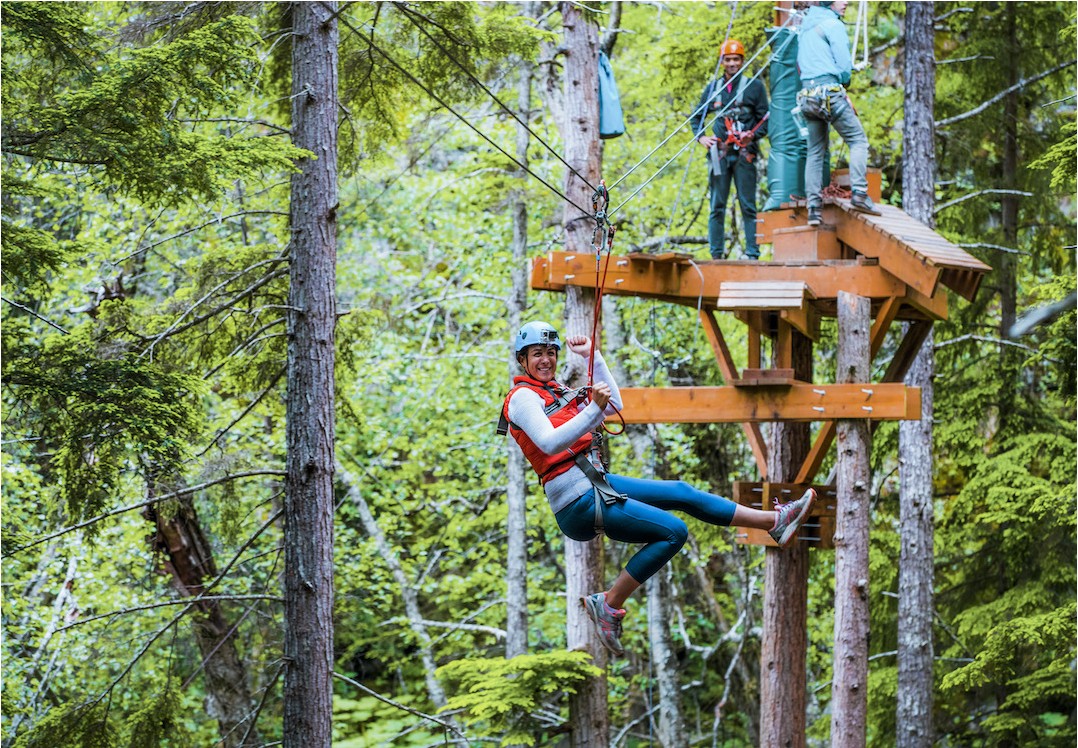
Even with that answer, those of us who suffer from VHI don’t understand why we have an irrational, emotional reaction to heights that frail, little old ladies and young teenagers don’t. It makes no sense to us that we struggle to stand atop a twenty-foot ladder and jump into a thirty-foot void tied to a zipline, and other people don’t. 

As our group of eleven made our way through the various ziplines, we got to know one another in superficial ways, and we learned that some of us are doofuses, but even our doofus demographic weren’t as scared as I was. They were having fun. I wanted to believe they were too dumb to know how much danger they were in, but when the people who were more intelligent than me screamed with glee on their turn, the only answer left for me was that I was a fraidycat.  

If you’re an awful, offensive person, you probably attract offensively awful people as friends, and if you don’t have answers for them, they’ll hit you with every mean-spirited, funny joke they know. I also have nice friends, but their sad, sympathetic looks hit deeper than my friends’ jokes, and I tell unfunny jokes to keep those looks off me. No matter which side of the fence they’re on, I suspect that most people enjoy tasting another’s vulnerability so much that they can’t hide their sympathetic, concerned smiles. I know this because that’s how I react to their vulnerabilities.  

“You didn’t like the zipline? Because I thought it was fun!” they say. It’s humbling, embarrassing, and frustrating to be this scared of something that people who make no sense enjoy. We can drop our “C’mons!” on them, but after we algorithm their answers, we find that they genuinely enjoy ziplining. I realize I have no answers for that, other than I’m just scared. I’m scared of something that frail, little old women and teenagers aren’t. The idea that the zipline experience didn’t rattle the teenagers, in particular, really got to me, because I was the one who helped them get over their irrational fears. “Monsters don’t exist,” “Most bugs aren’t as big as your fingernail,” and “You can take control of your nightmares in a way that will prevent them from being as scary.” I taught them that if they are able to rationalize the irrational, they might not fear it as much. I helped them conquer their worst fears in life, and theyre the ones now giving me sympathetic, concerned smiles

One of the answers I have for why I fear ziplining so much is that the plot of most of the nightmares I’ve had since I was a little kid involved being high up on something, looking down, then falling off (or stepping off) a platform into nothingness. We now call this ziplining.   
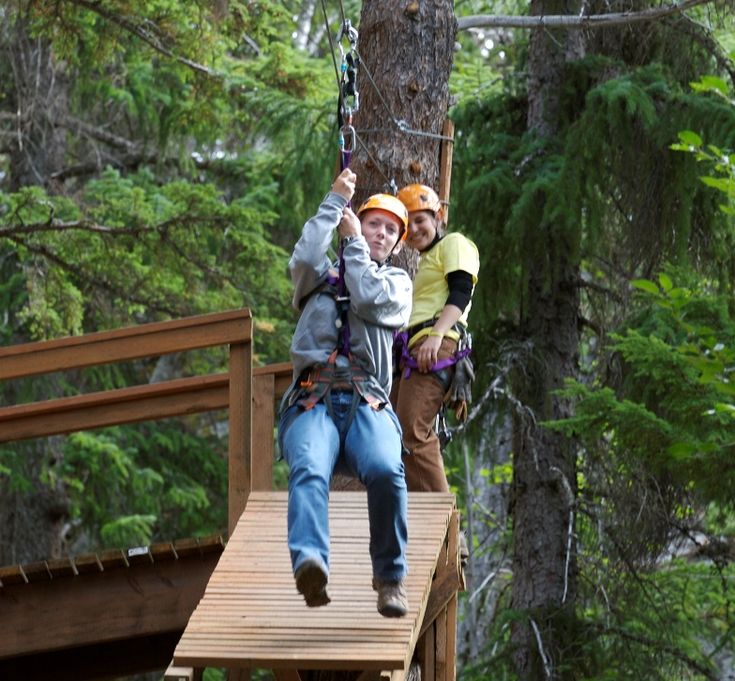
I did it though! Before we continue, I want it noted that I managed to separate myself from what researchers call a clinical case of acrophobia to one who suffers from what they call a visual height intolerance (VHI). Those with a clinical case, the roughly five to ten percent, would’ve never been able to step off that platform into nothingness secured to nothing more than a line with three reinforced nylon ropes. I did it. I braved my worst fears, and I tweaked those (to me, crippling) fears by ziplining through a forest. I jumped off five different ledges and zoomed 30 feet above the ground from tree to tree. It was one of the greatest accomplishments of my life, and that’s not hyperbole for me. I know that’s sad, but it’s sad but true.

Now, how many of my most beloved and loyal members of my friends and family do you think joined me in the celebration of my accomplishment of conquering what I considered the most terrifying experiences of my life? If you guessed zero, you are correct. I didn’t really need anyone to congratulate me, because when I finally touched ground, I experienced what Irvine Welsh wrote about in his 1993 novel Trainspotting “doing heroine [is] like having 10,000 orgasms at once”, except I would replace “doing heroine” with ziplining. I didn’t need anyone to intensify my reaction to completing the course, in other words, but when they asked me: “Are you going to do it again?” my disgust broke out: 

“Who gives a crap! Right now?” I said. “We’re not even a minute away from me conquering my greatest fear in life, and you’re asking me if I’m going to do it again? Why don’t we take a minute to celebrate what I just did.”  

I enjoy being human don’t get me wrong, and I’m not going to switch species based on one petty grievance, but why do we insist on asking someone if they have the skill, temerity, and resolve to accomplish something great, momentous, and unprecedented again? Why do we insist on doing it right after they did it? They don’t let us savor our accomplishment for one minute. When we graduate high school, which was an incredibly arduous accomplishment for me, the first question was, “So, where are you going to college?” When we receive a promotion, they ask, “Is this a stepping stone, or are you going to fly higher?” Who gives a crap about that now, right now? Right now, I think you should say, “‘Holy Larry!’ You did it!” The key to my frustration, if you haven’t guessed is the “right now” portion of this ubiquitous exercise, the present tense, as in just minutes away from our grand accomplishment. We can get around to all the other stuff when we get around to it, but for now, help me celebrate this accomplishment.   

In the history of Super Bowls, there have been a little over 3,000 NFL players who have reached the pinnacle of winning a ring. As evidenced by the idiotic and obnoxious sideline reporters, we don’t want to let those elite athletes celebrate their enormous accomplishment for five minutes, as these reporters ask the star of the game, immediately after the game, ‘Do you think you can do it again next year?’ The player responds, “I’m just going to celebrate this one for a while.” Rather than focus on the incredible athletic achievement these fifty-three players, coaches, and the team’s hierarchy just accomplished, we want to know if they think they’re going to be able to win it all again next year. I want one of these players to look at these reporters with disgust and say, “Do you want to know what it took from us to get to this point? Do you have any idea what it takes to win what might be the most difficult and prestigious trophies in our country? Do you want to know anything about the sacrifices the fifty-three players on our roster made to make this happen?” I want this NFL player to add, “All those hours you spent watching Netflix, going to parties, and sitting around watching sunsets, I was in the weight room, in dark film rooms, and in grueling two-a-days, and doing it over and over again all year, and that’s not even accounting for everything we did in past years to get to this point. We haven’t had a drop of alcohol or smoked anything all year. I haven’t had a slice of cheese in three years. And we did it all for this moment, so could you, maybe, just give me a moment to celebrate what it took me and only about 3,000 other men to accomplish in life?” 
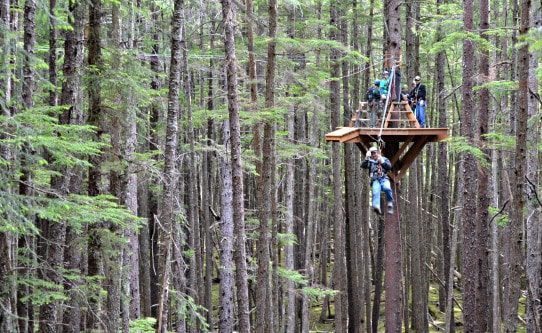
I understand that some anonymous boob ziplining 30 feet off the ground doesn’t even come close to winning a Super Bowl, but conquering my crippling fear felt just as momentous in the moment. When I reached the final platform, and it was over, truly over, I felt an adrenaline rush that informed me that I could do anything I wanted to in life. When that adrenaline washed out of my system, I softened my stance a little, because I realized that my friends and family couldn’t understand how huge that moment was for me, but I added that it would’ve been nice if they asked me to try to explain it to them before asking me if I was brave enough to do it again.    

I’ll admit that I likely won’t do what was one of the most terrifying experiences of my life ever again (insert your small smile of schadenfreude and sympathy here), but why does that matter? Correction, maybe it should matter at some point in the future, let’s say the one or two years from now when we talk about ziplining again. For now though, right now, let’s just let me celebrate my crowning achievement for a moment. Let’s just take a second and realize how hard this was for me, and let’s celebrate the fact that I did it all with a dry throat and quivering legs.  

When they ask, “Are you going to do it again?” they usually follow our ‘no!’ with, “Really? Because I didn’t think it was that big of a big deal. It was 30 feet off the ground. That’s considered a minor to low-medium elevation zipline experience.”  
Our ziplining experience was probably equivalent to a kiddie slope in skiing, and all people and companies that offer ziplining experiences know to go over the top with safety measures to make sure their customer base feels secure. This involves being secured in at three different points and various other procedures the employees require their customers to go through. Our lives were never on the line, in other words, but that’s all rational and reasonable. Those who suffer visual height intolerance (VHI) and a clinical case of acrophobia know that a fear of heights is irrational, unreasonable, emotional, and now we know that it’s partly psychological too.  

If you missed the key word of that last sentence, go back and reread it and focus on the third to last word of that last sentence partly, for therein lies an answer.  

The research states that the majority of my fear of heights is mental/ psychological, but there are physical elements involved too. That’s right, I found an answer to why some frail, little old ladies who fear things that go bump in the night, and teenagers who still have some remnants of fear of the boogieman haunting their dreams don’t experience crippling fear on a zipline’s platform, and I do. If you’re an acrophobic or one who suffers from VHI, and you don’t have an answer, you might not consider this a quality answer, but I’m okay with that, because like fear in general, the quality of answers are relative to the person.  

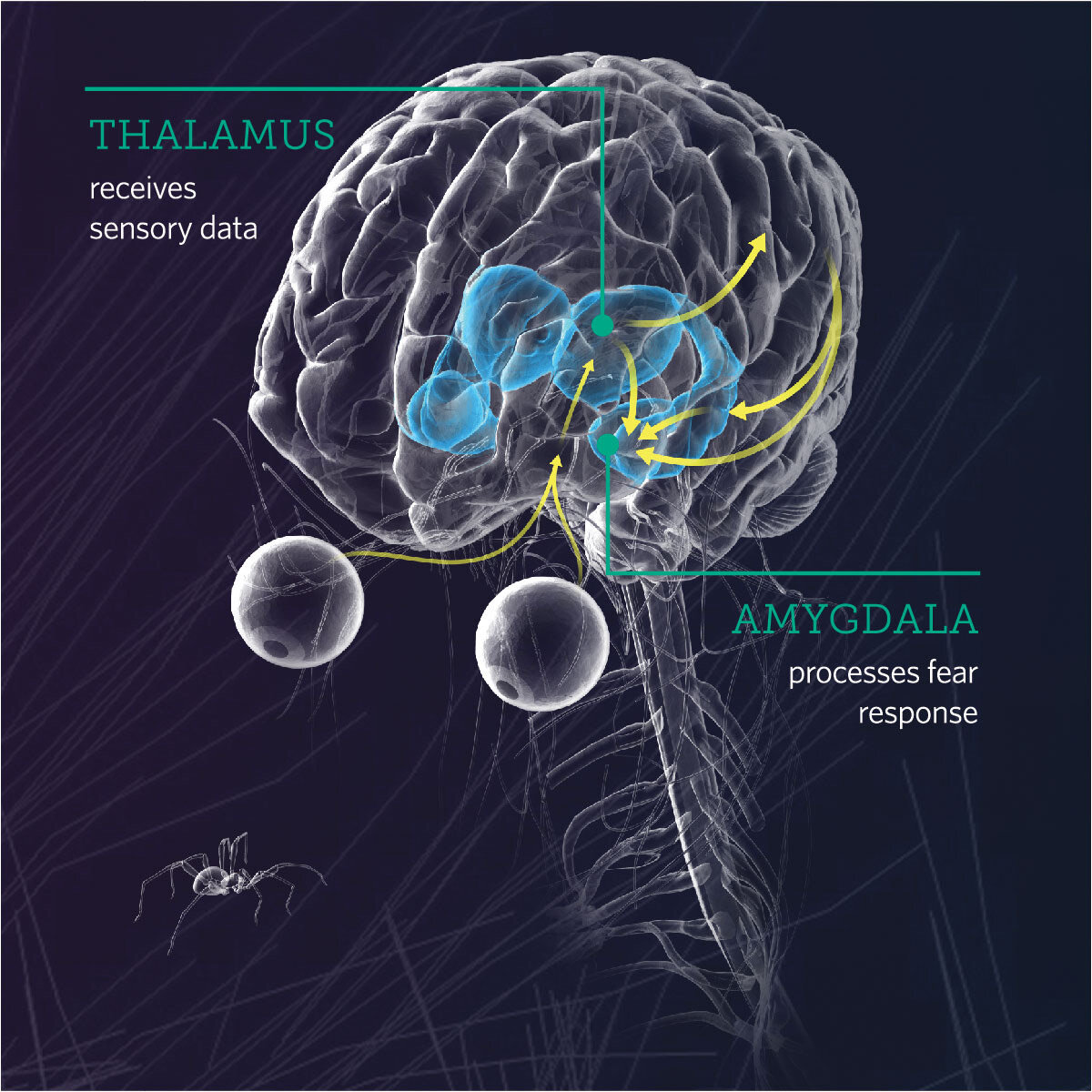
Research has concluded that some brains are just different. That’s not a mind-blowing revelation, I know, but it opens up the idea that some brains, be they in the little old lady or teen demographic, adjust well to heights. Others don’t, and the fear that others experience might feel psychological, but its roots are partly physical too — and those roots vary from person to person. At certain heights, an individual’s balance system, their proprioception, or equilibrium, becomes less stable.  

The sensorymotor system (vision, vestibular organs, proprioception) of the acrophobic and VHI sufferer generates stronger instability signals at heights. The brain’s balance system—its ability to sense its position, movement, and force without relying on visual input, enabling balance coordination, and precise motor control—becomes less stable at varying heights. Some brains interpret that instability as danger; others don’t. It all depends on which side of that divide you fall. When visual cues are far away, those with a condition can’t use them to stabilize posture, so sway increases. Some people’s brains treat that sway as a threat, triggering fear. Others feel the same physical shift but don’t interpret it as danger. Put simply, some brains handle visual–vestibular mismatches smoothly; others become unstable and anxious. If the acrophobic and VHI person experienced frightening experiences, or they dreamt them up, they may have incidentally linked instability with danger. Others don’t make the same associations. The individual who doesn’t fear heights isn’t braver or made of a stronger constitution, their body just doesn’t send “danger” signals at heights, and their brain won’t amplify those signals.

We do it to ourselves, in other words. Some of us may have experienced real life incidents that forever shaped our reaction to heights, but most of us train our overly creative brain to react to heights in such a manner. If we have always imagined the worst, and/or experienced decades of nightmares where heights played a main character, our trained brain will not handle vestibular mismatches smoothly, and our body won’t stabilize posture very well when visual cues are so far away. As I wrote, sufferers might not consider that answer an epiphany, and it might not prevent the pack of wolves, we call friends, from whipping out their measuring sticks to prove superiority, but it is an answer.  

It’s also an adequate answer to the question, “If you received such an adrenaline rush from tweaking your fear, why wouldn’t you want to do it again?” Adrenaline rushes are short term fixes. They’re not the answer, as we will be just as afraid next time as we were this time, because the portion of our brain that regulates proprioception, or equilibrium, when we’re high up is still going to be a little off.  

My final word to those who suffer from these varying levels of fear when they’re high up is, there is something wrong with you, but it’s not what you think. You’re not a coward, a fraidycat, or a wimp. Your brain is just a little tiny bit off, and in the grand list of physical, psychological, and mental disorders this might be the one everyone would pick if they were forced to pick one at birth.

So, the next time someone calls you chicken, a wuss, or a fraidycat, you can now say, “Well, it’s partly that, but it also has something to do with my overly active sensory-motor system cranking out premium-grade instability signals the moment I achieve altitude. My brain simply refuses to handle visual-vestibular mismatches with any dignity whatsoever.

“And yes, it’s mildly embarrassing, as I’ve never actually plummeted from anything noteworthy. After mining the scientific research put into the study of me and my 22-28% brethren, the best answer I found is that I did this to myself. My overly creative brain has changed me into a certified neural drama queen who instantly routes even ‘minor sway’ into the ‘instability equals instant doom’ shortcut anytime I achieve at least twenty feet of altitude.

“You, on the other hand, haven’t trained your brain to broadcast or amplify overly theatrical danger signals. Congratulations, you calm biological member of the majority, but you’re not necessarily braver or composed of a stronger constitution, your hardware just isn’t quite as hysterically talented as mine.”

I’m not afraid of spiders, snakes, enclosed spaces, injections, germs, thunder and lightning, dogs, flying, or flying dogs, but I do have one highly irrational and emotional fear related to my visual‑vestibular conflict. When I started my research, I wanted to find that we have some gene variant or some sort of genetic clue involving the inner ear that helps us regulate balance. I wanted to be able to say that my condition was directly related to genetics, so I could blame someone or something else. The best answer I found is that modern scientific research finds that my system is likely over‑responsive to height‑related visual‑vestibular mismatch — something that can be influenced by genetics, but also by experience, conditioning, and neural wiring. I wanted something I could drop on my family members and obnoxious friends, but there’s no conclusive, proven casual links. I wanted to find satisfying clarity, but every study kept coming back to the idea that an overwhelming majority of my problem is all my fault, and the same level of creativity I use to write on this site is the culprit fueling my greatest fear. It’s an answer, but it’s not a very satisfying one.

“I’m Just Too Dumb!” 


“Hey Patrick come over here and check out our sinkhole,” Hector said when he spotted his neighbor walking outside. Patrick walked over and looked, because who wouldn’t want to look in a sinkhole? He looked from a careful distance, made a comment that I can’t remember, and he began walking away. “Wait, Patrick, you really gotta see this thing,” Hector urged. “C’mere.” 

“I saw it,” Patrick said. “It’s a sinkhole Hector. I’ve seen sinkholes before. It’s not a circus exhibit.”

“C’mon,” Hector said, “I’ll hold your hand, if you’re afraid of falling in.”

“You don’t understand, I will fall in. I’m just that dumb,” Patrick said, dropping his new favorite line on those of us standing around the sinkhole.

“No, you won’t. They’ve cordoned off the dangerous spots, so we know how close we can get,” Hector said, noting that he already called the police, and they put yellow tape around the weak spots. “Just don’t cross the tape.”

“Trust me,” Patrick said. “I’ll fall in. I’m just too dumb.” 

Patrick loved that line. He dropped it so often, in so many situations, that it kind of  became his catch phrase. Why did he love it? I wasn’t there when he first heard it, but I wonder if he thought it was so hilarious that he would start using it. Did he think it was so hilarious because he could relate to it? Did he think it applied to him so well that he thought he should start using it? He might have started using it because he found it funny, but he began using it so often that I think he now believes it. 

“Be careful what the brain hears you say,” a friend of mine said when I told her this story. “It might start to believe it.” 

Others can convince us of just about anything, if they repeat it often enough, but can we convince ourselves of something if we repeat it often enough? If we hear someone else’s schtick, and we love it for being such a great, self-deprecating line, can we accidentally convince ourselves that of something like being so dumb that we might do something that could cause ourselves irreparable harm? It’s possible of course, but is it probable? I would say this is not a joke, but it probably started out that way to Patrick, until he accidentally convinced himself that not only is he dumb, he’s so dumb that if he doesn’t check himself, and his brain, he’s probably going to end up in an emergency room saying, “I told you. I told you how dumb I was. Why didn’t you listen? Why didn’t I?” 

I’m not exactly sure why I considered Patrick’s “I’m too dumb” joke so funny. He dropped this line on me several times, in casual conversations, and I always enjoyed it. We’ve all heard people drop variations of self-deprecating humor, but Patrick’s delivery was so pitch-perfect that I can’t but think he believes it on some level. He was so flat and straight, and nothing about his presentation suggests that he’s seeking laughter. Does that make his joke better, yes it does, but does he deserve credit for his ability to deliver a joke, and is it possible for someone to deliver a joke that well without some belief in it?  

To arrive at answers that plagues us, we need a control group. When research scientists attempt to arrive at answers regarding psychological complexities, they divide their group into subjects and a control group. Patrick is a jokester, always telling jokes, and he’s a pretty funny guy, but he has one flaw. He laughs harder at his jokes than anyone else does. To understand if he is kidding, and by how much, we need to study the methods, patterns, and reactions he has when telling his other jokes. Following his other jokes, he drops a “I mean, C’mon, right?” followed by laughter. He pumps his head back, and his eyebrows go high on his head as he laughs. When he drops his “I’m too dumb” jokes, however, he doesn’t laugh, and his head goes down in the manner a dog’s might to signify submission. Is this part of his schtick? Does he do that to sell the joke better? Patrick is funny, but he’s not that funny. He does not apply such subtle intricacies to any of his other jokes, even the other self-deprecating jokes he tells. I don’t think it would take a team of research doctors to find that the reason Patrick tells this joke so well because he believes it. 

For all the reasons listed below, reasons I imagined later, this instance at the sinkhole struck me as particularly hilarious. Patrick added to the comedic nature of his joke by putting greater distance between he and the sinkhole. He walked away from Hector’s home, and off Hector’s lawn, and he then went into his home. I don’t know if he locked the door, but my guess is he did to presumably place one more obstacle for him to cross to get back to the hole. I presume Patrick did this, because he no longer trusts his brain to help him avoid an impulse that might cause him harm. Those of us standing around this sinkhole in Hector’s lawn could only presume that Patrick lost all faith in his brain’s ability to protect him from harm.  

I flashed to Patrick falling in the hole, a near bottomless pit in Patrick’s imagination (it was about three feet deep), looking up at us saying, “See, gawdangit, I told you how dumb I was.”

“Listen, I have two kids to raise, and they count on me to be there for them in so many ways,” I imagine Patrick pleading if Hector pressed him further. “If I start following whatever impulses my insufficient brain provides, I’m going to leave my wife a single-parent, and I’m not going to do that to her or my beloved children. I have to learn to reject whatever temptations I encounter to protect my body, so I’m there for them throughout their maturation.” 

We’ve all heard psychologists talk about a person being at war with their brain. It’s a deep, complex topic they use to describe those with seriously troubling psychological issues. Patrick doesn’t have those, but he does appear to be in conflict with his brain on a level that he describes with repetitive jokes. At one point in his life, I think Patrick decided to wage a cold war against his brain. A cold war, by our definition, involves “threats, propaganda, and other measures employed just short of open warfare.” Or, as others put it more succinctly, “Waging war without firing a shot.” At some point, Patrick’s internal forces decided to mount an internal coup against the brain, because those mechanisms decided that the brain no longer had their best interests in mind. 

One of the primary directives of the brain is to protect us. It protects us from heights, guns, and the prospect of encountering large, man-eating animals through chemical compounds that induce fear. When we fear, we learn to employ various defensive measures, including creating distance from the temptation, to prevent what the brain suspects could cause bodily harm. Over the years, we learn what to eat and drink, and what we do and think to prevent bodily harm. The brain instinctively knows, and learns, what can cause death. What isn’t so obvious are the irrational fears we develop for the dark, ladybugs, and inanimate objects.

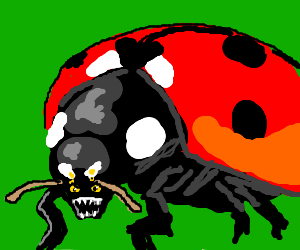
Why are we so afraid of insects, even relatively harmless insects such as the ladybug, at a young age? We don’t know what a ladybug is when we’re young, or if we do on some rudimentary level, we don’t know the extent of their abilities. This is the fear of the unknown. As we age, we learn that most animals and insects have an instinctual fear of humans, and it  provides us a level of comfort when we’re walking down the sidewalk, and they clear the way for us. Some of the times, insects occasionally land on us in their confusion, and our young, fantastical mind can interpret that as purposeful, especially when the ladybug begins to crawl up our leg in a manner we could further interpret as a purposeful violation of the parameters we thought we had with insects. We convince ourselves that they’re not afraid of us anymore. They’re crawling up our legs with a specific purpose in mind that we don’t even want to imagine, and that leaves us paralyzed with fear.  

At some point in our maturation, our brain learns the parameters of threats against the body. There’s nothing to fear from ladybugs, even those that appear to violate the parameters of the relationship we have with insects. We’re quite sure that there are some anecdotal tales of a ladybug causing human deaths, but they’re so few that we know there’s little to fear from them. There are, however, a number of tales told of spiders causing death, but not as many as those from the mosquito archive. Yet, the number of people who fear spiders far outweighs those who fear mosquito. The whole world of fearing spiders involves their creepy nature, their physical appearance, and the techniques they use to poison their fellow insects and eat them.     

At some point in our search of what to fear and what we learn is relatively harmless, the brain plays tricks on us. We fear the relatively harmless, clowns and cotton, yet we don’t fear some of the things that can actually harm us, and kill us, like driving ninety miles an hour down the interstate. 

“I like to tease my fears,” a friend told me. “I prefer to live dangerously. It’s a rush to put your life on the line by skydiving from a plane, or bungee jumping, and bungee jumping is actually a lot more dangerous than people know.”

“So, you consider jumping from 50 to 500 feet with nothing but a cord tied to your ankle dangerous?” I asked sarcastically. The fact that she felt the need to tell me that bungee jumping was dangerous suggested to me that most people she knows have tried to argue against her position, and if that ain’t the brain messing with people, I don’t know what is. 

Patrick’s brain has obviously spent a lot of time messing with him in this manner, trying to convince him that nothing is as dangerous as they say, and his brain has obviously done this so often that Patrick just doesn’t trust it anymore. We’ve all heard that those working a police beat believe half of what they see and none of what they hear, but I’ve always assumed that was intended to illustrate their trust of what others do and say. Others can deceive us into accepting what we know is not true, but can we do this to ourselves? Are we at war with our own brain in relatively benign situations such as our approach to a sinkhole? There’s knowing and not knowing, of course, but as Patrick said he’s seen sinkholes before, so he presumably knows how to approach it. He just doesn’t trust his instincts, and he’s skeptical of what he might do. 

We all engage in self-deprecating humor, and we all enjoy the fruits of a person showing that he doesn’t take himself too seriously. As I’ve written many times and many ways, be careful with this comedic tool, because your audience might begin to believe it. Patrick’s use of self-deprecating humor seemingly adds another layer of caution, be careful how often you use it, because you might start to believe it.   

Patrick is not a dumb man, and if we are ever tempted to join him in the belief that he is, all we have to do is talk to the man for about forty-five minutes to learn how knowledgeable he is on so many different and diverse topics. Somewhere along the line, Patrick heard someone say that they were “so dumb” that they might not be smart enough to prolong their health and well-being. Patrick obviously considered that so funny that he began using it, and he saw how this exaggeration of the typical self-deprecating joke comforted his audience. It obviously comforted him too, to a degree, to think that he wasn’t all that. At some point, he began to fear that he might actually be “so dumb” that he could find a way to convince himself that he might cross that yellow, police tape to end up in a bottom of a sinkhole without knowing how it happened or why he did it, because his brain is now so deficient that it might lead him to him harming himself in some life-altering manner. Faced with such internal strife, Patrick decided that it was just safer for him to walk away, enter his home, and lock the door to try to prevent his kids from being fatherless children. “Trust me, I will fall in,” he warns us, and presumably himself, “because I’m just that dumb.”  

Fear’s Veil: Decoding the Leadership Mystique


“You’re getting a detention for that,” were the scariest words we could hear between fifth grade and eighth grade. To avoid hearing that from a teacher, the principle, or any of the other authority figures who stalked the halls of my school, I walked straight lines, stood as straight as I could, and I didn’t respond to neighbors who whispered something funny that required a rejoinder. We were not only scared, we were terrified to the point of anxiety attacks when the teacher would give us the pre-detention eyeball. 

A detention required us to spend one half-hour after school. Thirty minutes. You might think that serving a mere thirty minutes after school would lead an overwhelming majority of us to think, “Hey, that wasn’t so bad after all.” No, it was so terrifying that some of us had nightmares about being caught in the act, the teacher writing out the detention, and the din of silence that followed with everyone staring, looking away, and staring again. Thinking back, it’s almost funny to think how powerful the culture of fear was, but we all knew it, and we all participated in it in our own individual ways. 

The tradition of forcing a student to stay after school, as a punishment for bad behavior was not new, or unique, to us. This punishment has probably been handed out for hundreds of years, the world over. It was also not unusual for us to fear getting in trouble in grade school, nor was it unprecedented that the kids in my grade school were absolutely terrified. This article isn’t about the silly effort of trying to suggest that our experience in grade school was worse than yours, better, or any different. We’re far more interested in the culture of fear that some institutions, such as my grade school, instituted to modify behavior.    

As scary as our principal was, and Mary Jane Meyer (aka Mrs. Meyer) was as scary, and as angry, as any individual I’ve met in all the decades sense. You might suggest that she thought she had to be to keep the hundreds of grade-school-aged kids in line.

“And if you just happened to catch her tending to her garden on some sunny day, she was probably a sweet, elderly woman.”

I just can’t picture it. I can’t picture her being gracious, warm, or even smiling. I’m sure she was quite pleasant to certain people, but I can’t picture it, and I don’t think any of my fellow students who attended this grade school during her reign of terror could either.  

Mrs. Meyer provided us a more tangible fear of God, and she was the wizard behind the curtain who orchestrated the culture of fear we knew. If we messed around in class, our teacher might scold us. If that wasn’t enough, she could threaten and/or give us a detention. That was enough for an overwhelming majority of us, but there were a few, and aren’t there always a few, for whom that wasn’t enough. For them, there was the ever-present threat of being sent to Mrs. Meyer’s office. That was enough for just about everyone else.

As scary as she was, however, Mrs. Meyer couldn’t have created the level of fear we knew on her own. She delegated much of the responsibility to her teachers, but they couldn’t have terrified us to the degree that some of us had anxiety issues, and others had such horrible nightmares they couldn’t sleep at night. For that level of fear, the institution needed compliance, our compliance. It needed our participation, and our promulgation of the culture that suggested that getting a detention was the most awful thing that could ever happened to a human being. No matter what they did to establish this climate, it wouldn’t have been half as effective as it was if we didn’t participate and fortify it. We did that to ourselves.   

“Did you hear that Gretchen and Marla got detentions?” someone would say in conspiratorial whisper.

“No way! For what?” No matter what the conspiratorial whisperer said there, the gossip mill spun the threads out to ultimately characterize the alleged perpetrator as the most horrible person of the day, and they often had a difficult time recovering their reputation in the aftermath.

When we approached one of the pariahs to get their perspective on what happened, they usually broke down like a politician in the midst of a career-ending scandal. Some tried to maintain a strong façade, but most couldn’t. Their defense usually devolved to those scared, uncontrollable tears. We empathized, because we knew firsthand the idea that nothing this bad had ever happened to them before.

It was our fault that she felt that way, because when she’d walk down the aisle to receive her detention, she felt our eyes on her, and she heard our whispers. The minute she turned around, we’d turn away and go silent. When it came to defending herself against the mob, she’s lie, obfuscate, try to shift the blame, and try anything and everything she could to salvage her reputation. We empathized here too, because what else are you going to do? 

We did more damage to her than the teacher, the principal, or any of our other authority figures could to demonize her, the detention of the day. We did it to ourselves. We policed our own and promulgated the culture of fear that surrounded the detention.

The idea that we cultivated their culture of fear wasn’t apparent to me in the moment, of course, because I was too young to grasp such complicated concepts, but it was crystallized in the form of a transfer student named Billy Kifferly. I knew Billy Kifferly before he transferred to our school, he was a friend of a friend, so when he got a detention I was the emissary sent to find out what happened, and how he entered into our dominion of the damned.

I asked him about it in the most empathetic manner a ten-year-old could. “… And it’s fine if you don’t want to tell me …” I added. I was fully prepared for his tears and/or the anguish that followed, and I had my shoulder all ready for him to cry on.

Not only did Billy not cry, or show any signs of fear of remorse, he told me all of the damning details of his detention, as if … as if they didn’t really matter. He didn’t try to wriggle out of it, or spread the blame. He said, “I did it. It was all my fault and all that, but it’s a half hour, so, big deal, right? I could do that standing on my head.”

That put me back a step. I couldn’t understand how he could be so blasé about it. As his only friend and confidant, I wanted to say, ‘Billy, you don’t understand,’ but Billy’s reaction to it informed me that there was something larger going on here that I didn’t understand. I didn’t get the fact that he was more accustomed to getting in trouble, or failing to meet the standards. He just got expelled from his prior school, so on that scale, a detention, or a half-hour after school, was nothing to him. I also didn’t understand that I was not only a part of the institutional culture of fear, but a promulgator of it

“It’s just a half-hour,” he said, and he was right, but ‘It’s so much more than that’ I wanted to say. I couldn’t back that up though, because I was too young to understand the nature of authority, rebellion, and Billy’s far too mature definition of the system-is-a-farce reaction. I knew Billy was the rebel, on some complicated level, I knew I’d become the standard bearer for the status quo if I said anything further.  

By not fearing the institutional hierarchy, and the elements that propped it up, Billy essentially informed me that the whole system was a farce. “Why should I fear spending a half-hour after school so much?” was essentially what he said. I thought of instructing him in our ways, but I was too young to understand the nature of our ways, and I was also far too immature to understand that we weren’t just ceding to authority, we were contributing to it.  

***

We can now all laugh at this kid, I call me, now. We’re sophisticated adults now with a more sophisticated understanding of authority, rebellion, and the balance of the two that forms a foundation that helps maintain a system, but when we look back at our naïve, immature understandings of an authoritarian world, we laugh. While we’re laughing, we should also take a look at how we sophisticated adults not only cede authority to authority figures in our lives now, we contribute to the underpinnings of their authority?

We call certain individuals in our culture authoritative experts, and we allow them to dictate their facts and opinions in a manner that changes the direction of our lives. “Why?” we ask rhetorically, “because they are more informed.” Are they? “Sure, they use the scientific method to arrive at dispassionate theories based on empirical data.” We learn from their research that there is “there is no conclusive evidence” for what we see and hear. How can that be? “After exhaustive research, the team at (fill in the blank) has determined that there is no conclusive evidence to suggest that’s true.” We learn to accept what they say, until we develop a level of faith in their point of view, their expertise, and their authority on the issue. We learn to accept their values through their lens. Are they right? “They’re experts, what are you asking here?”

Analysts call the dynamic of subjects contributing to expert analysis and authoritative dictates the leadership mystique. We now have unspoken requirements of our leaders to which they must adhere. We require them to exhibit, display, and provide some semblance of leadership qualities to fortify the facade. What are these requirements? They vary, but anyone who knows anything about icebergs knows that 90% of an iceberg is underwater. It could be argued that we create 90% of the foundation of leadership mystique for us, and we contribute to it in our interactions with other, fellow subjects.

We see this at play in the workplace when someone everyone considered an oaf yesterday, receives a prominent promotion today, and we agree to their leadership qualities tomorrow, characteristics that we never saw previously. Our authority figures obviously saw something special in them, and that’s enough for us, for some of us, and the onus is on us to help others see, accept, and promulgate their authority tomorrow.

Coupled with our concessions and contributions to authority figures and their rules and punishments, is the inherent recognition that even if we disagree with all of the above, we can’t choose our leaders. We are subjects who are subjected to those who make the rules, and we don’t even know who to blame when those rules prove silly. We blame our supervisor for imposing a rule passed down by a manager; we blame the policeman for carrying out a silly law passed down by a state legislator or federal official. We blame the person who is in our face, enforcing the rules, because most of us don’t dig through the layers to find the person who is to blame for drawing up the rules/laws, and those who pass them. 

The United States citizen lives in a Representative Republic that permits us to choose those we deem our authority figures. Yet, how many of us choose a representative of what we want to be as opposed to who we are. An overwhelming majority of us live within our means, and we’re quiet, unassuming types. We’re more like the character actor who quietly assumes the characteristics necessary for a role, but we prefer to vote charismatic game show hosts types into office. That guy looks like someone who would be fun to hang around. If that’s our choice for a leader in a Representative Republic, who are we? Who do we deify and assign leadership qualities to satisfy our role in the leadership mystique? How many of us assign such qualities to the manager of our local Wendy’s? We don’t, we hold them accountable for producing an inferior product.

Most of us don’t condemn representatives we charge with voting the way we would or the manner in which they spend our money. We direct our ire at those who don’t pay enough in taxes instead. We police our own. The governments can levy fines, put liens on our property, and take away our freedom if they determine that we didn’t pay enough taxes, but they cannot convince us to condemn our neighbor as a pariah for not paying what we deem enough. That’s our job, and we relish it.    

This article is not about the rebels or the figures of authority in our lives, though those would be interesting pieces. It’s about us, and our amenable and compliant ways of helping authority figures establish and maintain a level of authority in our lives. It’s about ceding elements of our lives to authoritative experts who sit behind a type writer telling us how to live our lives, raise our children, and go silent when they need us to just be quiet. 

In grade school, we were little kids who were easy to manipulate and cajole into carrying out institutional planks, but how many adults aid in the culture of fear of government edicts on paying “enough” taxes? We’re not half as concerned when our government officials spend our money in foolish ways, as we are the CEO of a company not paying what we deem enough in taxes. We not only cede authority to government officials. We contribute to it by condemning our neighbor for not paying enough.

As someone who has been on both sides of the paradigm, on a very, very minor scale, one thing I recognized when given an relatively insignificant level of authority was that my level of authority was not recognized or appreciated by my fellow authoritative figures. As a huge Letterman fan in the 80s, I’ve always found some inspiration in his idea that he was a bit of a joke. You can be king of the world, and he was in his own little way, but you’re still that goofy kid from the Midwest who had some really stupid notions about the world. His influence led me to consider myself a bit of a joke, and I saw the joke in everyone around me too, especially those in leadership positions. Everyone enjoys hearing that what they’re doing is important and substantial, and they don’t mind laughing at themselves, but they do no enjoy hearing that they’re kind of a joke too. When I learned to control my comedic impulses, and I ceded to their authority, they began to appreciate and contribute to my comparatively meager mystique. 

“It’s called reciprocity,” a friend of mine said, “I scratch your back, you feed my need!”