Enjoying Other People’s Pain


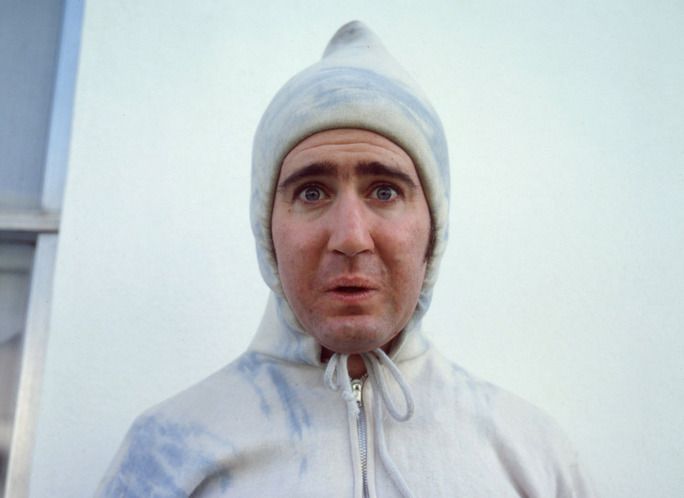
Tedious. The guy is tedious. He doesn’t even know it. He thinks he’s hilarious. He thinks this is his big moment. He probably thinks this moment on stage is the big break he’s been waiting for his whole life. Shouldn’t we always think that? Yes, but he thinks this is a stepping stone to a bigger, better life. Someone probably told him he was funny. Was it his Aunt Clara, or his dad? Who told this guy he was so funny that he should step on a stage and try to make a career out of it? I’m not funny, so I’m probably not the best critic, but I know what I think is funny and this ain’t it. I know the plight of the unfunny, but this guy? The idea that this guy has a bright, gleaming smile on his face makes it obvious that he thinks this is his moment in the Sun. He thinks he’s doing it. He thinks this might be the best day of his life. “Except for the birth of my children,” he might add, “and the day I bought Herschel the Turtle at a pet store, and the day I met my wife.” He’d probably qualify that best-day-of-my-life assessment, so no one calls him out on it, but he’d probably say it was top-5 … if someone stopped him right there in the first quarter of his standup routine.   
How many people can do this? I wonder, while trying to drum up some respect for this guy. What percentage of the population can stand up on a stage and try to make complete strangers laugh? I respect anyone who can do what I never could. He told us he traveled twelve hours to be here tonight. He traveled half-a-day to try to make a roomful of strangers laugh. That’s a level of commitment that most people don’t have. It’s one thing to try to make a table of four laugh, but a comedy club requires its patrons to pay a two-drink minimum to enter. How many people could stand up to try to make a roomful of demanding, paying customers laugh? I mentally applaud this guy for doing what he’s doing, but I can’t get past the fact that he’s just not funny.  

The audience is receptive at first. At first, they’re laughing at everything he says. Why are they laughing? My bet is they’re aching for comedy. It’s why they’re here. Most of them probably bought their tickets weeks in advance, and they looked forward to it all week. They convinced their girlfriend, wife, brother, or friend that this would be an excellent idea for a Friday night. They bought the tickets for the headliner, but they’re more than willing to give this guy the benefit of the doubt, if he’s halfway decent. What if he did something edgy? What if his act involved nothing more than eating a bowl of Count Chokula? What if he performed a dramatic reading of Dr. Seuss’ ABC book or The Great Gatsby? Would they still be laughing? To us, he has a certain position of authority on humor, because he’s up there, and we’re not. We assume he’s played a number of cities before ours. We assume that he’s up there, because other people more knowledgeable than us put him up there, and he’s been thoroughly vetted. He’s doing something none of us could do sober, so we defer to his experience. Is that why they’re laughing, because I find this guy typical and tedious. 

I was so immersed in these thoughts that I missed the audience turn. The laughter went from a throng to sparse. What are you laughing at? I thought to those few still laughing, this guy’s not funny. While I searched for the laughers, I failed to notice that they were some of the few who were still laughing, until they stopped too.  

The standup comedian was baking under an uncomfortably bright spotlight when that silence took hold. The silence was deafening and a little claustrophobic. Prior to the turn, he informed us that he traveled half a day for the chance to make us laugh, and he added some typical, tedious notes to that, and everyone laughed. That was his attempt to build familiarity with the audience, and to infect them with the laughing bug so they might follow him into the unfamiliar. They didn’t. 

In the now deafening silence, I thought about that twelve-hour drive, and how it must’ve been filled with such excitement. I figured he must have quickly clicked his cruise control in, because he knew his excitement would cause him to violate speed limits. He probably thought his appearance in our small city would kickstart his dream of being a standup comedian. I wonder if that trip involved any concerns about about how quickly the best day in your life can turn into your worst. Twelve hours is a long time to spend in a car, alone, with nothing but your thoughts, your excitement and your worst fears.

He resembles Weird Al without the looks. I see myself in this man. I see his observations. I know where they’re headed, but they don’t quite get there. There’s something wrong with his delivery, and his material. Members of the audience are now cringing at one another. They’re as uncomfortable as he is, I think. I chuckle. He drops another tedious joke, and I laugh harder. His material hasn’t changed, but his delivery has. He’s in pain now, and I’m close to guffawing. 

He had a few self-deprecating jokes that hit home in the beginning. He opened with a few jokes about being unattractive and overweight. He joked about how grateful he was that a woman decided to become the wife of an overweight, unattractive man. They laughed. Little by little, joke by joke, silence began to rear its ugly head, until it became obvious the poor man was baking under the spotlight. I was one of the few not laughing in the beginning. Now I’m the only one who is. Various members of the audience began twisting around in their seats to see who is laughing.  

I laughed because I saw him sweating. I laughed because I saw him trying so hard that he was trying too hard. I laughed because he was drowning, and he was not doing some kind of meta routine on failure. I laughed, because I realized I knew we were watching a man’s dreams come crashing down around him. I laughed because I knew I was witnessing one of the best days of his life turn into his worst nightmare. It was fascinating to watch. It was captivating.

“What’s the opposite of empathy and sympathy?” I asked a friend, in a discussion involving this peculiar morbid curiosity we have for enjoying other people’s pain. When he didn’t answer straight away, I added, “Sociopathic, psychopathic? Is it narcissism? Whatever it is, I have it.”    

“It’s evil!” he said. “We’re not evil, but we have a little spot of evil in our hearts. You know how some people say they have a soft spot in their hearts for something about a person, place, or thing? Yeah, we have a hard spot in our hearts.”

That was such an insightful comment that I couldn’t help but think he put a lot of thought into it, but was it true? Kind-hearted, sympathetic and empathetic men do not enjoy watching another man squirm in pain. I don’t rubberneck on the interstate, hoping to see some guy screaming on a stretcher, and I don’t enjoy seeing other people cry, but I love watching the worst part of an otherwise healthy, normal man’s worst day. What’s wrong with me? Have I been conditioned by the comedians who almost appear to enjoy bombing? Andy Kaufman, David Letterman, and Norm MacDonald turned bombing into an art form. They almost appeared to get off on it. MacDonald said he didn’t care if an audience laughed or not, as long as it was a good joke. That was his charm. Chris Elliott personalized the Kaufman/Letterman element and created a career out of it, based on the idea that no one would purposely subject themselves to the level of self-deprecation and debasement he did that would result in ridicule and embarrassment. Did they plant seeds in my brain that anything embarrassing, uncomfortable, or cringeworthy is some form of lowbrow entertainment that is so low that it’s considered high art? I didn’t get that, until I did. Once it clicked that it’s schtick, it stuck. Once I got it, I couldn’t wait to proclaim to the world that I got it. I understood it, until I understood it to the point that I now consider it hilarious to watch another man squirm under the bright spotlight of a small city’s comedy club. 

It’s not schtick for this man however. He worked hard on this material. We can feel it in his transitions that this isn’t some form of meta material with highbrow commentary on the plight of man. We can hear him nix some material, lose his place, and worry that he frontloaded all of his best material. We can hear him worry about his performance while he’s talking. He’s lost faith in his material, in himself, and his ability to turn this around. I laugh harder. I have the giggles. I can’t stop. People are staring. The other comedians in the comedy club are giving me looks. I compose myself, until I analyze the comedian’s face deeper. His pain is so obvious that I imagine this is what it might look like if I could see the expression of someone who just jumped off a building. I have the giggles again, but I’m controlling it better this time. 

Mercifully, the comedian’s act ends. The crowd applauds politely, and the comedian surprises me by mouthing, “Thank you!” to me. I didn’t know it at the time, but my friends later tell me that he began directing his jokes at me toward the tail end of his act. I saw him looking at me, but I didn’t think he was looking at me. They said he was. He, presumably, thought I was the only audience member who got it. I felt bad, because I wasn’t laughing with him. I was laughing at him.  

One excuse I could use to explain my behavior is that I find the unfunny hilarious. Perhaps I relate to this comedian, because I’ve been told that I have a decent pitch, and I know my beats, but my punchlines are so confusing that they’re not funny. Perhaps my laughter had something to do with the idea that I don’t enjoy traditional humor. I’ve watched too many comedies, sitcoms, and radio shows to appreciate what we call a traditional humor.   

It’s Letterman’s fault. He started it all for me. Letterman turned squirming into an art form. Letterman left us wondering how we could help him, and he answered by saying there’s no help for me. It made us so uncomfortable it was almost painful and hilarious to watch. It’s the joy of witnessing other people’s pain (OPP), and it’s David Letterman’s fault. I’d love to say that I believe that. I’d love to say that watching him on NBC for all those years had such a profound effect on me that I’m now conditioned to find OPP hilarious. How many years did he cringe with us in uncomfortable pain? I’d love to say it’s all his fault, but my enjoyment of OPP predates him.

***

In grade school, I just happened to have the perfect angle to catch Andy Parizek’s impact face, when he walked into a light pole. Some deep, dark part of me found his expression of pain so precious that I watched it over and over on an internal loop I developed in my brain. I wished I had some ability to draw, so I could create some product to memorialize this moment. Andy Parizek wore glasses, and the impact was so perfect that it broke his glasses in a clean break right down the middle. The pain was followed by a brief period of silence in which the good people around him tried not to laugh and further his pain. When those good people then moved in to comfort him, I tried to run away to a dark corner of the playground to laugh, but I didn’t quite make it. 

“How come when we get hurt, it’s so funny to you,” Mike Amick said, “but when you get hurt, we’re supposed to take it serious?” 

Is it evil to enjoy watching other people get hurt? Do we have a hard spot on our hearts for certain moments? We’re not evil, but is there something wrong with us if we enjoy it when another person cries during an argument? Is there a hard spot on the heart of someone who enjoys watching another’s dreams come crashing down around them? The fact that a grade school child’s assessment stays with me to this day should suggest that I’m still struggling with it.

When we discuss such things, some of us exaggerate the levels of pain involved. The incidents we’re talking about here are skinned knees, the guy who walked into a pole and broke his glasses in half, and a comedian who wasn’t able to make strangers laugh. Most of us have never seen anyone get truly hurt, and if we did, we probably wouldn’t laugh. Yet, it is a little deranged and morbid to enjoy watching another experience minor pain, regardless if that victim eventually finds a way to laugh about it. 

I’m a grown man now who manages to display kindness in the face of tragedy. When someone dies, I join the good people who express compassion, and sympathy. If I ever saw someone truly get hurt, I don’t think I would find their excruciating pain enjoyable. I know all kinds of physical and emotional pain intimately now, and I empathize when anyone endures minor physical pain, but after I tend to their wounds and make sure their okay, I still rush to that dark corner of the room to laugh my tail off.

Conducting corporate meetings is not in the same league with standing on stage before paying customers, but they gave me a taste of what this comedian was going through. When you’re conducting a board meeting, your material sucks, but it’s important that the employees know the material. It doesn’t matter that the employees know that they’ll be caught with their pants down when the situation in which this material arises, they’re so bored they can’t take it anymore. I’ve been on both sides of corporate board meetings, and I know one in one hundred are in some way interesting. In the hundreds of board meetings I conducted, I thought I had an interesting one once. It was a special subject I knew inside and out, I got a great night sleep the night before, and I think I ate something healthy. I was on, and I knew it. I dropped two or three jokes that I thought were pertinent, and I looked out in the audience to gauge their reaction. Two people were asleep, and the rest of the eyes in the room were glossed over. I had a small taste for what this comedian was going through, but that didn’t make it any less funny to watch him squirm and implode.

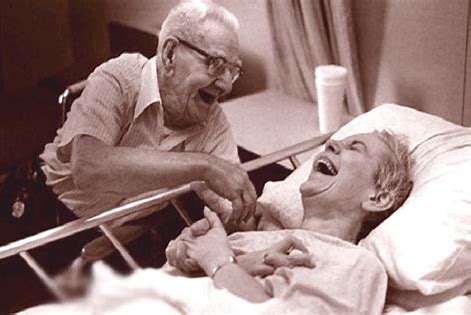
Anyone who laughs at other people’s pain knows they’re going to get theirs, eventually. We’ve all experienced some levels of karma, but we know that ain’t it. There’s more to come. We know it’s going to get us, and it’s going to hurt. We know there will come a day when we’re old and decrepit, struggling to breathe one last breath, and someone will find that struggle hilarious. We’ll probably yell something like, “What are you laughing at? I’m dying here!” in the heat of the moment. When our emotional hysteria subsides, and we don’t have the strength to fight death anymore, we’ll either acknowledge that we deserve it after laughing at so many others during the worst days of their life, or we’ll find humor in it too.  
Yesterday I Learned … IV


Yesterday, I learned that taste is so relative that it must be impossible to make any money trying to appeal to it. “If you want to write a best seller,” experts say, “read through some books already on the list. If you want to make a living at this game, you need to know the trends.” The word flavor should have a capitalized ‘f’ attached to it in this article, for it focuses on the wide spectrum of taste. Food and drink have a flavor of course, but so do music, literature, and all of the arts in the sense that some of it creates the same but different tingles in the brain.

Yesterday, I thought I had a universal sense of humor. Today, I realized that most appreciation for humor is conditional and polite. If our audience is predisposed to find us disagreeable, they will not laugh at anything we say. Humor and laughter also involves a certain quid pro quo agreement that calls for us to laugh at their attempts at humor. If we fail to live up to our end of the agreement, they will not even laugh politely at our attempts to be humorous. Toddlers and other kids are not a part of this agreement. Kids are the very definition of honesty, and they have no agendas, especially the ones we’ve never met. If we’re behind one in our local Wal-Mart, we might try out our best “baby laugh” material to see what kind of reaction we receive. They will turn away at some point, but if nothing else distracts them, we’ll get a second glance followed by a reaction. If we don’t get a second look, or a subsequent reaction, we can go ahead and assume that we’re probably are not as funny, or as charismatic as the polite and conditional reactions led us to believe.

Yesterday, I thought people people were so unusual. “I’m just a people person,” they might say when we ask them why they enter a business enterprise just to chat with some of the employees. “I don’t know why, I just like being around a lot of people.” Today, I found the term people person an unusual, accepted description healthy men, and women, use to describe themselves. We all enjoy speaking with other people, we do it all day, but some people go out of their way for some quality conversation. 

When I was much younger, I hung around my friend’s liquor store, and I worked in restaurants, and hotels. I saw a wide array of people people who walk into an establishment and just start talking to whomever would speak with them. These people “stick around” for a chat that can last hours. They even endure long lulls, hoping that some provocative conversation will weave its way through it all. They just stand there silently, trying to think up something interesting to say. My first thought was that these conversations sprang up in a more organic manner, until my friend said:

“Nope! He stops in here, every other day, and talks my ear off about the most inane stuff.”

Some men would walk into the restaurant where I worked, alone, and ask for a table in their favorite waitress’ station. Most of them didn’t have a newspaper or anything to busy themselves while they waited for her to chat with them. They usually entered after the breakfast rush and before the lunch crowd, so the waitress would have a couple of minutes to chat.

“Why do you stop and chat with these guys who seem to be a little creepy,” I asked one of the waitresses.

“You can tell he doesn’t have anyone,” she said, “and he’s harmless … trust me. Plus, he adds a couple bucks to the tip when I take the time to chat with him.”

I thought they were wrong. I thought they underestimated these guys. I didn’t want anything to happen to them. They were my friends. I was wrong. I over-estimated these guys. They were, in fact, harmless, insofar as nothing ever happened in my time there. These men weren’t just alone in life, they were lonely, and they had holes in their soul. Some of them were old, but most of them were men in their prime who would get dressed up, perhaps sprinkle on a little cologne, and get regular, fashionable haircuts for the purpose of fostering the belief that they might have a chance to spend some quality time, between the breakfast crowd and the lunch crowd, to speak to young, attractive girls.

If the traveling businessmen who frequented our hotel were lucky enough to time their entrance into our hotel, so that one of the cute, young women on staff checked them in, they would remain at the front desk long after their check in was complete. They just wanted to chat with some young women, and hopefully make them laugh a couple times. I intervened in these conversations multiple times, but they made it clear they had no interest in speaking to me. They weren’t rude, but I was obviously not the purpose of their chats.

“So how you doing?” they would ask these women with all of the urgency removed from their voice. They, too, were harmless individuals who just wanted someone to speak with young women. Most of them didn’t want to date these girls, or see them in varying stages of undress. They just wanted to chat. They wanted these girls to think they were people people. They were so alone that they just wanted a couple of minutes of that girl’s time to break up the quiet, tedious monotony of their lives, and have just one attractive, young female on God’s green earth say:

“Hank Schwertley, how are you doing? How’s that God forsaken Cutlass Supreme holding up for you?”

Business needs often ended these conversations abruptly, and when they interrupted the conversations, I could see the beaming smiles on the customers’ faces collapse. Their face went back into the more customary expression of fatigue, sadness, and loneliness that the muscles in their face were used to supporting.

The customers at the hotels and restaurants appeared to be normal men, with normal and pleasant dispositions, and it seemed impossible to me that they couldn’t get some woman to pay consistent enough attention to fill that gap they needed filling.

“You want to be a traveling salesman?” one of these men, a traveling salesman who stayed at our hotel so often I knew his whole life story said when I expressed some polite, conversational interest in his profession. “The first thing you’ll need to do is forget about ever having a family,” he said. When I asked why, he added that, “It would be unfair to any woman, much less the children you produce, to be on the road about 200 hundred days a year.” My shock was obvious in his expression, as he sought to lessen the blow, but he could not redefine the impact of his statement. Prior to his cautionary description, I considered this man a successful, self-defined man. After it, I saw how lonely he was. From that point forward, I realized he was a second fiddle. I finally saw him as the Stan Laurel, Bud Abbot character he was, who bounced off the more charismatic centerpiece of the conversation. Even in the polite, time-filling conversations we had with him at the front desk of the hotel, this man was always a second fiddle.

When we have such conversations with the people who orbit our lives, they remind us how fortunate we are to have people who enjoy being around us. I’ve felt lonely before, but I’ve never felt so alone that I went into an establishment just to speak to someone for five minutes.

Who are these people, and what do they do in life to gain some separation from the lives they selected. They want moments in life to help them make it to Thursday, and they want to find someone to notice them long enough to achieve some level of companionship, even if it’s only for five minutes. My experience in the service industry also taught me that they are a lot more common than most people think.

The Unfunny, Influential Comedy of Andy Kaufman


On the timeline of comedy, the subversive nature of it became so comprehensive that it became uniform, conventional, and in need of total destruction. Although the late, great Andy Kaufman may never have intended to undermine and, thus, destroy the top talent of his generation, his act revealed his contemporaries for what they were: conventional comedians operating under a like-minded banner. In doing so, Andy Kaufman created a new art form.

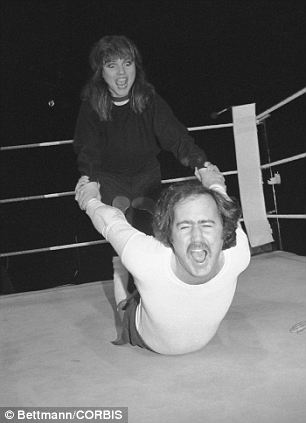
Some say they enjoyed Andy Kaufman’s character on Taxi, and they enjoyed some of his other performances in tightly scripted roles as a comedic actor, but his solo stage performances weren’t funny. They weren’t funny. They were unfunny, and they were so unfunny they were hilarious.  If you saw his act, and I did on tape, you knew he wasnt going for funny. He stood on stage in the manner a typical standup comedian would, and the audience sat in their seats as a typical audience will. The lines began to blur almost immediately after Kaufman took the stage. What is the joke here? Is he telling jokes? Am I in on it? They didn’t get it, but Andy Kaufman didn’t want us to get it. After he became famous, more people started to get it, so his act evolved, naturally, to wrestling women.

After reading every book written about him, watching every YouTube video on him, and watching every VHS tape ever made with him in it, I gained some objectivity. My guess is that he wasn’t talented enough to succeed as a conventional artist”. He didn’t have oodles of material to fall back on, and he wasn’t a prolific writer. He wasn’t a one-trick pony, but he wasn’t a thoroughbred who could have a long, multi-faceted career either. Whatever it was that he did, it was something we had to see, and he did it better than anyone else ever has. If you dont get it, and few do, then you never will. Thats not intended as a slam on the reader, because he didnt want us to get it. Andy Kaufmans M.O. was a little bit childish and narcissistic, but in many ways his overly simplistic acts somehow ended up redefining and revolutionizing comedy. If you saw it back then, you see it now all over comedy. 

Those of us who had an unnatural attraction to Kaufman’s game-changing brand of unfunny comedy now know the man was oblivious to greater concerns, but we used whatever it was he created to subvert conventional subversions, until they lost their subversive quality for us.

Those “in the know” drew up very distinct, sociopolitical definitions of subversion long before Andy Kaufman. They may consider Kaufman comedic genius now, but they had no idea what he was doing while he was doing it. I can only guess that most of those who saw Kaufman’s act in its gestational period cautioned him against going overdoing it. 

I see what you’re trying to do. I do,” I imagine them saying, “but I don’t think this will play well in Kansas. They’ll just think you’re weird, and weird doesn’t play well on the national stage, unless you’re funny-weird.”

Many of them regarded being weird, in the manner embodied by his definition of that beautiful adjective as just plain weird, even idiotic. They didn’t understand what he was doing.

Before Andy Kaufman became Andy Kaufman, and his definition of weird defined it as a transcendent art form, being weird meant going so far over-the-top that the audience felt comfortable with the notion of a comedian being weird. It required the comedic player to find a way to communicate a simple message to the audience: “I’m not really weird. I’m just acting weird.” Before Kaufman, and those influenced by his brilliance, broke the mold on weird, comedians relied on visual cues, in the form of weird facial expressions, vocal inflections, and tones so weird that the so-called less sophisticated audiences in Kansas could understand the notion of a comedic actor just being weird. Before Kaufman, comedic actors had no interest in taking audiences to uncomfortable places. They just wanted the laugh. 

One can be sure that before Andy Kaufman took to the national stage on Saturday Night Live, he heard the warnings from many corners, but for whatever reason he didn’t heed them. It’s possible that Kaufman was just that weird, and that he thought his only path to success was to let his freak flag fly. It’s also possible that this is just who Andy Kaufman was. Those who haven’t read the many books about him, watched the VHS tapes, the YouTube videos, and the podcasts had no idea what he was doing, but he had enough confidence in his act to ignore the advice from those in the know. We admirers must also concede that it’s possible Kaufman might not have been talented enough to be funny in a more conventional sense. Whatever the case, Kaufman maintained his unconventional, unfunny, idiotic characters and bits until those “in the know” declared him one of the funniest men who ever lived.

The cutting-edge, comedic intelligentsia now discuss the deceased Kaufman in a frame that suggests they were onto his act the whole time. They weren’t. They didn’t get it. I didn’t get it, but I was young, and I needed the assistance of repetition to lead me to the genius of being an authentic idiot, until I busied myself trying to carve out my own path to true idiocy, in my own little world.

Andy Kaufman may not have been the first true idiot in the pantheon of comedy, but for those of us who witnessed his hilariously unfunny, idiotic behavior, it opened us up to a completely new world. We knew how to be idiots, but we didn’t understand the finer points of the elusive art of persuading another of our inferiority until Kaufman came along, broke that door down, and showed us all his furniture.

For those who’ve never watched Andy Kaufman at work, his claim to fame did not involve jokes. His modus operandi involved situational humor. The situations he manufactured weren’t funny either, not in the traditionally conventional, subversive sense. Some of the situations he created were so unfunny and so unnerving that viewers deemed them idiotic. Kaufman was so idiotic that many believed his shows were nothing more than a series of improvised situations in which he reacted on the fly to a bunch of idiotic stuff, but what most of those in the know could not comprehend at the time was that everything he did was methodical, meticulous, and choreographed.

Being Unfunny and Idiotic in Real-life Situations

This might involve some speculative interpretation, but I think Andy Kaufman was one of the first purveyors of the knuckleball in comedy. Like the knuckleball, the manner in which situational humor evolves can grow better or worse as the game goes on, but eventual success requires unshakeable devotion to the pitch. The knuckleballer will give up a lot of walks, and home runs, and they will knock the occasional mascot down with a wild pitch, but for situational jokes to be effective, they can’t just be another pitch in our arsenal. This pitch requires a level of commitment that will become a level that eventuates into a lifestyle that even those closest to us will have a difficult time understanding.

“Why would you try to confuse people?” they will ask. “Why do you continue to say jokes that aren’t funny?” 

“I would like someone, somewhere to one day consider me an idiot,” the devoted will respond. “Any idiot can fall down a flight of stairs, trip over a heat register, and engage in the fine art of slapstick comedy, but I want to achieve a form of idiocy that leads others to believe I am a total idiot who doesn’t know any better.”

For those less confident in their modus operandi, high-minded responses might answer the question in a way that the recipient considers us more intelligent, but those responses obfuscate the truth regarding why we enjoy doing it. The truth may be that we know the path to achieving laughter from our audience through the various pitches and rhythms made available to us in movies and primetime sitcoms, but some of us reach a point when that master template begins to bore us. Others may recognize, at some point in their lives, that they don’t have the wherewithal to match the delivery that their funny friends employ, particularly those friends with gameshow host personalities. For these people, the raison d’être of Kaufman’s idiotology may offer an end run around to traditional modes of comedy. Some employ these tactics as a means of standing out and above the fray, while others enjoy the superiority-through-inferiority psychological base this mindset procures. The one certain truth is that most find themselves unable to identify the exact reason why they do what they do. They just know they enjoy it, and they will continue to pursue it no matter how many poison-tipped arrows come their way.

An acquaintance of mine learned of my devotion to this pitch when she overheard me contrast it in a conversation I had with a third party in her proximity. I did not want to have that conversation with the third party so close to her, but my devotion to the pitch was not so great that I was willing to be rude to that other person. What she overheard was a brief display of intellectual prowess that crushed her previous characterizations of me. When I turned back to her to continue the discussion she and I were having prior to the interruption, her mouth was hanging open, and her eyes were wide. The remark she made in that moment was one she repeated throughout our friendship.

“I am onto you now,” she said. “You are not as dumb as you pretend to be.”

The delicious moment of confusion occurred seconds later, when it dawned on her that what she thought she figured out made no sense in conventional constructs. 99% of conversationalists pretend to be smart, and the traditional gauge of the listener involves them defining the speaker’s perceived intelligence downward, as they continue to speak and leak their weaknesses in this regard. What I did was not reveal some jaw-dropping level intellect but a degree of knowledge that served to upend her traditional study of those around her to define their level of intelligence. 

She looked at me with pride after she figured me out, but that look faded when she digested what she thought she figured out. Who pretends to be dumb and inferior? was a thought I could see in the fade.

What are you up to? was the look she gave me every time I attempted to perpetuate ignorance thereafter. The looks she gave me led me to believe that everything she thought she figured out only brought more questions to the fore. I imagined that something of a flowchart developed in her mind to explain everything I did and said to that point, and that each flowchart ended in a rabbit hole that once entered into would place her in a variety of vulnerable positions, including the beginning. She pursued me after that, just to inform me that she was onto what I was doing, until it became obvious that she was the primary audience of her own pleas.

I’ve never thrown an actual knuckleball with any success, but watching her flail at the gradual progression of my situational joke, trying to convince me that she was now above the fray, cemented my lifelong theory: Jokes can be funny, but reactions are hilarious.

The point is that if you devote yourself to this mindset, and you try your hardest not to let your opponents see the stitches, you can convince some of the people, some of the times, that you are an idiot.

The Idiotology

Some idiots purchased every VHS tape and book we could find on Andy Kaufman, and we read every internet article that carried his name to try to unlock the mystery of what he was trying to do. We wanted those who knew him best to tell us why he chose to go against the advice of those in the know and if it was possible for us to follow his indefinable passion to some end. We followed his examples and teachings in the manner of disciples, until it became a lifestyle. Andy Kaufman led us to believe that if we could confuse the sensibilities of serious world just enough that it could lead to some seminal moments in our pursuit of the idiotic life.

If our goals were to be funny, we would’ve attempted to follow the trail laid by Jerry Seinfeld. If our aim was only to be weird-funny, we would’ve adopted the weird-funny voice Steve Martin used in The Jerk. If we wanted to be sardonic or satirical, we would have looked to George Carlin for guidance. We knew we weren’t as funny as any of those men were, but we reached a point when that didn’t matter to us. When we discovered the unfunny, subversive idiocy of Andy Kaufman, however, it filled us like water rushing down the gullet of a dehydrated man.

“How did the unfunny idiot reach the point where it no longer mattered that others considered them funny?” the reader might ask. “How did you reach the point where that bored you?” The natural inclination most might have is that we think were so funny for so long that we sought something more. This was not the case for us, as most people, especially women, never thought we were funny. The answer, if there is one, is that, like Andy Kaufman, we might not be as funny or as talented as our friends, but we choose not to see it that way of course. The unfunny idiot is just thrilled as anyone else when others find them funny, even by conventional means, but there’s something different and unusually thrilling to us when we deliver a crushing haymaker that no one finds funny, per se, and most people consider idiotic. “Okay, right there, you said it, you said it,” an especially perspicacious individual might say, “You find it unusually thrilling. Why?” When pressed to the mat, and if we do it long enough someone will call us out on it and interrogate, until they help us arrive at an answer, such as, we don’t know, but we were probably just wired a little different. 

Most of our friends considered us weird for the sake of being weird, but they don’t recognize the depth charges until they’re detonated. If we do it just right, and knuckleball slides under the bat perfectly, they’ll see it for what it is. They might not understand it, but they’ll get it. They won’t feel foolish for not getting it, because you were the idiot in that scenario, but they’ll eventually see that you weren’t being weird just for the sake of being weird.  

The Disclaimer

If the goal of the reader is to have their friends and co-workers consider them funny, adding Kaufman’s knuckleball to your repertoire will only lead to heartache and headaches. What we advise, instead, is for the reader to focus on adding more traditional beats and rhythm to their delivery, and they should learn how to incorporate them, on a situational basis, into conversations. This gets easier with practice and time. Quality humor, like quality music, must offer pleasing beats and rhythms that find a familiar home within the audience’s mind. (Some suggest that the best beats and rhythm of humor come in threes. Two is not as funny as three, and four is too much more.) To achieve familiarity, there are few resources more familiar than that which comes from sitcoms and standup comedians that everyone knows and loves. We should also copy the template our friends lay out for a definition of what’s funny. There’s nothing an audience loves more than repeating their jokes, rhythms and beats, right back at them. If the joke teller leads into the punchline with a familiar rhythm and lands on the line in a familiar beat, the audience’s reward for figuring out that beat will be a shot of dopamine, and the joke teller’s reward is the resulting laughter. To keep things fresh, the joke teller might want to consider providing their audience a slight, yet still pleasing, twist at the end. The latter can be funny as long as the punchline is a slight slide away from expectations.

If, however, the goal is to be an unfunny idiot who receives no immediate laughter, the joke teller still needs to adhere to the standardized rules of comedic beats and rhythms, and they need to know them even better than students of traditional humor do. As any gifted practitioner of the art of idiocy will tell those willing to listen, it is far more difficult to find a way to distort and destroy the perception of conventional humor than it is to abide by it. This takes practice and practice in the art of practice, as Andy Kaufman displayed.

The rewards for being a total idiot are few and far between. If we achieve total destruction or distortion of what others know to be the beats and rhythm of humor, a sympathetic soul might consider us such an idiot that they take us aside to advise us about our beats and the rhythm of our delivery. For the most part, however, the rewards idiots receive are damage to their reputations as potentially funny people. Most will dismiss us as weird, and others might even categorically dismiss us as strange. Still others will dismiss us as idiots who know nothing about making people laugh. Most will want to have little to nothing to do with us. Women, in particular, might claim they don’t want to date us, declaring, “I prefer nice, funny guys. You? I’m sorry to say this, but you’ve said so many weird things over the years that … I kind of consider you an idiot.”