The Eye of the Fly


In a study published in Journal Science, researchers found that flies have the fastest visual responses in the animal kingdom. The study suggests that this rapid vision may be a result of a mechanical force that generates electrical responses that are sent to the brain much faster, for example, than our eyes, where responses are generated using traditional chemical messengers. The fly’s vision is so fast that it is capable of tracking movements up to five times faster than our eyes.

I realize that the fly would trade this one strength for even twenty-five percent of our brain power, but one has to wonder why the fly was given such an incredible eye compared to our relatively weak one. Why would we be granted the most complex brain in the animal kingdom, and not have the physical advantages inherent in the eye of the fly, the ears of the owl, the various sensory receptors of the snake, or the nose of the bloodhound? Wouldn’t we use those gifts better than those mindless animals, and insects, that don’t know enough to appreciate it?

The obvious answer, from the Darwin perspective, is that humans don’t need these extra senses for survival to avoid predators. The more interesting perspective, I believe, is that having an extra sense would prove such a distraction that it might inhibit the tedious, arduous process of developing the complex human brain.

In every young human child’s development, there is a constant push and pull. Parents and teachers push children to develop habits that they hope will eventually develop that brain as it matures. They know that if that child is going to find any measure of success within the species, they will need to push the child to help them develop that brain to capacity in a manner that can be painstakingly, gradual. Some would argue that no human ever reaches the maximum capacity of the brain, but it’s not much of a reach to suggest that if we were distracted by a super sense we wouldn’t come as close as we currently do.

On that note, this theoretical argument rises whenever I watch a Superhero movie. It’s great that this person (or these people depending on the movie) have these superhuman powers, but shouldn’t there be a countering deficit? If the natural world granted this individual powers we can’t fathom, shouldn’t there be some sort of deficit? Shouldn’t they be dumb as a rock, noticeably awkward socially, or some deficit to counter the natural, biological and/or personal focus?  It could be argued that there have never been more distractions, pulling children away from the painstakingly, gradual process of brain development that provide more instant gratification. Yet, there have always been distractions. It could also be argued that while there are more distractions now, there have always been distractions, and coaching or teaching children how to avoid distractions has remained constant.

I am not a Superman aficionado, but Ma and Pa Kent probably spent their lives developing Clark’s brain before he began relying on his superpowers, Spider-Man was a teen-ager when the radioactive spider bit him, so while his development to adulthood may have been hindered, he likely had a decent foundation. Some of the superheroes, in the various universes, were superheroes since birth. They have various natural powers but no deficit in human development. It just doesn’t seem well-rounded to me. 

Although there are numerous benefits to a young child engaging in athletics, it could be argued that it is an impediment to the optimal development of the brain. There are exceptionally gifted athletes, of course, but most athletes had to kinesthetically learn the craft. They had to do it so often that they developed muscle memory and whatever we call the level of muscle memory that allows them to hit a fastball that is relatively difficult for others on their level to hit. The point is that when a child is focusing so much of their time and energy to achieving on an athletic level, it often leads to less focus placed on academics. There are exceptions to the rule, of course, as some achieve All-American status in athletics and All-Academic in the classroom, but most children learn to focus on one area to the detriment of the other. 

“Keep your grades up if you want to maintain eligibility,” the adults surrounding the gifted athlete will say, but they rarely coach them to achieve academic excellence, and this is eventually displayed in the post-game interviews of those few elite athletes who have achieved the professional level.
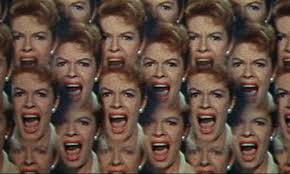
The same distractions can be found among the beautiful. Both genders learn that beauty is power, but most would acknowledge that the beautiful female has far more power in the room than anyone else, including the beautiful male. Most beautiful females learn, at some point in their lives, that no matter what they do in the classroom, their mental prowess will always be considered secondary to their physical attributes, and that they would be probably be better off if they just sat there and looked beautiful. They subsequently learn to speak less often, so as to silently soak up the power their beauty wields in the room?

Both of these superficial exaggerations could be called distractions in human development, and those who have these physical characteristics learn to employ their own distractions to keep people from focusing on their lack of intellectual development by criticizing those who wasted their time devoting precious resources to developing the brain.

“Did you read Lord of the Rings when you were a kid?” 

“No,” the beautiful reply, “I was out getting laid.” 

“At fifteen?” the nerdy brainiac asks, “because I read those books at fifteen.” 

“Yes,” the beautiful person responds. 

“You were getting laid so often that you didn’t have time to read?” 

YES!”

That exchange is not a direct quote from the TV show Friends, but it’s close. It encourages the idea that meaningless sex trumps any other activities of youth. “I was out climbing trees, playing football, listening to KISS, and collecting Star Wars cards.” 

“Really, because I was out getting laid.”

Sex between immature individuals should be the goal in life. It is the end game, and the end of the conversation. No one ever thinks to ask, “What did all that sex end up doing for you?” 

“Doing for me? What are you talking about? I was having sex when you were reading Tolkein, the comic strips Dondi and Peanuts, and all of those stupid Chose Your Own Adventures you nerds read.” 

“Did you forge the relationships you had with these people in such a way that helped you have more meaningful experiences that helped shape your life in profound ways in life?” 

“No, I was having sex with them.”

We’re not to question the idea that if we could’ve had more sexual experiences when we were young, we’d be better individuals now, or at least cooler people. Others drop the philosophy that if we had sex more often as young people, we wouldn’t be such a stick in the mud now. Some of us did have such opportunities when we were nine or ten-year-old, but we turned them down because we were scared, and we weren’t ready. So, if we said yes to that incredibly beautiful sixteen-year-old babysitter, we’d be better people now? 

Due to the fact that so many people laugh at such admissions now, we’ve been conditioned to feel shame, regret, and embarrassment about that fact. We feel shame admitting that, and we regret it almost every day. Why, because we have been conditioned to believe that that exchange of fluids would’ve somehow made us better people. This line of thinking gives credence to the idea that we never truly escape high school. We all wanted to be the cool kids in high school, and no amount of rationale will ever defeat this. Even when we reach our forties, and beyond, and we begin to appreciate our nerdy, reading youth for what it was, we still find it difficult to defeat the superficial, hyper-sexual Friends mentality.

On the flip side, no one would say that reading the Lord of the Rings series is an essential component of a child’s development, it does put that child on the road to every parent’s holy grail: The love of reading. A goal made all the more difficult by the instant gratification philosophy put forth by the Friends show. It did not, nor will it ever make a person better or cooler person 

For most of us, the opportunities to be sexually active at a young age were there, but some of us were too busy being kids, doing kid’s stuff, and as I wrote, we were simply too scared. When this Friends joke came along and told us that if we were truly cool, we should’ve been doing that all along, we regretted being that nerd who was too scared, enjoyed reading fantasy books, and mindlessly enjoyed our youth. We thought we missed out on something fundamental that made them better than us. In truth, such a philosophy will eventually catch up to them when the one thing that separated them from the pack, sexual activity, becomes more and more meaningless to them as they age. Like a drug user, they might vie for more and more of it for more meaningful sexual interactions, to try to recapture the euphoria they felt when they were virgins touched for the very first time. At some point, after a number of ruined marriages and meaningless encounters, they might realize that their life has amounted to nothing more than a series of superficial indulgences that have amounted to nothing more than a superficial life.

That’s another question I might have for these Friends’ types, if I agreed to have sex with my babysitter when I was nine or ten, would sexual interactions prove less meaningful throughout my life, or would it prove so meaningful that I developed a sexual addiction? Another question, on the same plane, would sex become such a primary driver for me that the rest of the otherwise normal, youthful activities I experienced between 10 and 18 be rendered comparatively meaningless?   

It is for all these reasons that some of us find it difficult to sit quietly through those superhero movies that depict an exceptionally gifted men and women, gifted with the eye of the fly, the ears of the owl, the various sensory receptors of the snake, or the nose of the bloodhound who are also exceptionally gifted intellects. There is just no way, some of us want to shout. Some of them might be smart, for there are always exceptions to the rule, but not that smart, not that exceptionally gifted in intellectual arenas. There’s always a trade-off, especially if they’ve been an exceptionally gifted, physical specimen since birth. Some may have been trained by their parents, or pseudo parents, to avoid relying on their gifts, but we have to think they would’ve accidentally, or incidentally, relied on their special gifts to the detriment of optimal brain development. There would’ve been some point when they realized that they didn’t need to go through the painstakingly arduous, and at times embarrassing, process of gradual development. In human nature, as in nature, there is always a trade-off in this sense.

An interesting question some sci-fi movies explore is if we only explore 10-13% of our brain, an appraisal some neurologists suggest is a well-travelled myth, what if we trained our focus on attaining the eye of the fly, or the hearing of the owl, or the nose of the bloodhound. Would it be possible if we sent our son to eye of the fly school and our daughter to ears of the owl school, and those schools focused as much effort on those characteristics as they do brain development in school? Even if it were, why would we do it? We don’t need such characteristics for survival, and while they might prove useful in some arenas, it would pale in comparison to the importance of overall development of the brain. The eye of the fly might prove beneficial to some Fortune 500 companies in some way, the military, and the revival of the modern carnival, but it would probably also diminish the place atop the animal kingdom that our brains have attained. 

Indigo Children: The Next Step in Human Evolution


Is your child special? Have you ever looked deep into their eyes and walked away thinking that there was something special about them? Really special? Do they exhibit traits that you consider so beautiful they might be otherworldly special? Do they express a degree of intelligence that you consider unfathomable? Are your children different and special? Do they do things that are different and abnormal? Do they have problems getting along with children their age? Have you ever considered the idea that you may have an Indigo Child?

Indigo Children learn that they are different at a young age, and most of them believe it with enough persuasion. Some Indigo Children claim to have invisible friends, they say that they see dead people, and they have inter-spatial relationships with inanimate objects like products from their Great Grandmothers, teddy bears, and rubber duckies.

Experts in this field suggest that Indigo Children have a different aura about them, a special, blue aura. Experts claim that Indigo Children see the auras of other kids and adults who surround them. Indigos struggle with the belief that they are normal, because they have experiences that appear to be normal, but they aren’t, and they know it, because their parents, teachers, and psychotherapists tell them so.

Indigo Children, we are informed, are the next step in human evolution, and they came into being, according to CNN reporter Gary Tuchman, following the great Harmonic Convergence of 1978{1}. This Great Harmonic Convergence was an important and celebrated New Age event that many link to the completion of our sun’s 26,000-year orbital cycle around the Pleiades star system and the alignment of our winter solstice with the Galactic Center/Hunab Ku. Many also suggest that this transitional period is reflected in the shift of astrological ages from Pisces to Aquarius.

As is the case with any story of this nature, a little fact checking is necessary. The second entry in a Google search performed on the term “Harmonic Convergence” shows that this “first, great synchronized, global meditation”, announced by Jose Arguelles, occurred between August 16th and 17th in 1987. There appears to be a discrepancy in the dates between this Harmonic Convergence and the next step in human evolution we call Indigo, but this discrepancy is explained by a “crop circle” bridge. Either Gary Tuchman didn’t know of the first reported appearance of a crop circle that occurred in 1978, and the manner in which it bridged the gap between the great Harmonic Convergence and the Indigo evolution, or he didn’t report it. Whatever the case, it appears that the first reported “Consciousness Crop Circles of the New Earth” bridged the progressive gap from The Great Convergence to the Indigo evolution, as referenced in archived data provided by the good people at Crop Circle Connector. {2}

Crop circles have become a joke in some quarters, as most of the crop circles that appeared in the past decades were later declared man-made, but others are of unknown origins. Many believe that the non-man-made crop circles are being impressed upon earth’s grain fields by extraterrestrial, or inter-dimensional intelligences, for the sole purpose of activating dormant sections of human DNA to catalyze the spiritual evolution of the species we call Indigo.{3}

Any who doubt there was a progression from the first reported “Consciousness Crop Circles of the New Earth” to the “Great Harmonic Convergence” and Indigo Children, need look to the numbers. Between the first, reported crop circles in 1978 to the Harmonic Convergence in 1987, there were only forty-nine crop circles reported, for a low average of near ten a year. Following the Great Harmonic Convergence to the last reported crop circle on CropCircleConnector.com, in 2010, there were 3,281 crop circles cited, for an average of 149 reports a year. So while Gary Tuchman’s report on the actual date of The Great Harmonic Convergence may be a little off, it all ties in together with the escalation of crop circle reports, and the emergence, and progression, of the next step in human evolution, otherwise known as Indigo Children.

Another parallel theory on Indigo Children, states that the Indigo Children theory was based on concepts developed in the 1970s by Nancy Ann Tappe, and further developed by Jan Tober and Lee Carroll. The concepts involved in this theory gained popular interest with the publication of a series of books in the late 1990s and the release of several films in the following decade. The interpretations of these beliefs range from Indigoes being the next stage in human evolution, in some cases possessing paranormal abilities such as telepathy, to the belief that they may be evolved creatures that are more empathetic and creative than their peer group.

Indigo Children are said to be children with blessed with higher I.Q.s, in some quarters, that have a heightened intuition, psychic powers, and an ability to see dead people. Some also say they are hard-wired into a sort of supernatural highway. Indigos tend to be rebellious children who may be hypersensitive, but they have been known to display a generosity that allows them to share their special gifts with others. There are even some psychotherapists, like Julie Rosenshine, who have chosen to specialize in specific dealings with the special needs of Indigo Children.

Indigo children display indigo colored energy fields, or auras, about them that some state they can capture in photographs with an aura sensitive camera. Aura camera specialist Nancy Stevens says she can capture such auras on her aura sensitive camera. She says that the auras captured by her camera locate “your physical energy, your emotional energy, and perhaps most important your spiritual energy in photographs.” Manufacturers did not create Aura sensitive cameras with the specific intention of detecting Indigo Children, however, as they also have the ability to give those struggling with their identity insight into whom they are. They can detail for you any strengths or weaknesses you may have, and they can capture some of the challenges you may go through in life.

Such cameras have been able to capture auras of Indigo Children in their natural state, and this has led numerous children to finding out that they are an Indigo Child. This, in turn, has led to less depression in some, to doing better in school, and to performing better in social arenas in areas where they may have felt disoriented about their placement. It has also led them to being more comfortable with their identity, in that they no longer feel like outsiders in life, cursed with the feelings of being different.

Skeptics have said that these children may, in fact, be suffering from an overactive imagination, and that they may also be victims of an ADD, ADHD, or any number of operational defiant disorders. Labeling them as Indigo Children, these skeptics further may assist these kids in having a stronger ego and better self-esteem with such positive, spiritual, and unique labels attached to them, but it may also mask a disorder that requires treatment, through counseling or pharmaceuticals.

Skeptics have also stated that promotion of the idea of Indigo Children might provide unqualified people a way to make money from credulous parents through the sales of related products and services. Mental health experts are concerned that labeling a disruptive child an “Indigo” may delay proper diagnosis and treatment that could help the child. Others have stated that many of the traits of Indigo Children are open to interpretation that provides a more prosaic climate as simple unruliness and alertness. {4} One gastroenterologist has even claimed that the sensitivity that these Indigo Children have may be because of heightened food sensitivities. Parents disavow all such attempts to mislabel their children on the basis that they’ve “seen too many things.”

Some have speculated that a mere 3% of the world’s population may be Indigo Children, but that that 3% are advanced beyond their years, and that they are hyper-sensitive to things in their environment. Indigo Children tend to have a higher I.Q. than most children do, but it isn’t clear whether the evidence for this is anecdotal. Indigo Children do not lay claim to the idea that they know more about concretized facts in History, Math, the Sciences, or any other quantifiable precepts of human knowledge, but that they are smarter about that aspect of the human experience that occurs between the lines, or on the supernatural highway. Those who make such claims declare that Indigos are able to tune into something different and in some cases higher realm of thought patterns that are out of the realm of normal thought patterns.

The unquantifiable intelligence they use to see another’s aura allows them to predict the future, or learn things about you that you might not otherwise want known. Parents of these unique children use the words paranormal intelligence to describe their children’s gifts. They are special children, but they don’t enjoy the term abnormal. They want to play, and run, and build sand castles just like any child, so please don’t ask them to predict the outcome of boxing matches or the rise and fall of the Dow Jones Industrial rate.

Are your children Indigo Children? If you’re curious, you can seek out a number of sources on the net that define Indigo Children. At last check, there were 4,920,000 results on the Google.com search engine. The one qualifier that the curious should take into account before pursuing this information, however, is an observation called the Forer Effect.

The Forer Effect (also called the Barnum Effect after P.T. Barnum’s observation that “we’ve got something for everyone”) is the observation that individuals will give high accuracy ratings to descriptions tailored to their personality, but are in fact vague and general enough to be assigned to a wide range of people. This effect can provide a partial explanation for the widespread acceptance of some beliefs and practices, such as astrology, fortune telling, graphology, and some types of personality tests. {5}

Descriptions of Indigo Children from the net include:

  • the belief that they (Indigo Children) are empathetic, curious, strong-willed, independent, and often perceived by friends and family as being strange;
  • they possess a clear sense of self-definition and purpose;
  • they exhibit a strong innate sub-conscious spirituality from early childhood (which, however, does not necessarily imply a direct interest in spiritual or religious areas);
  • they have a strong feeling of entitlement, or “deserving to be here.”

Other alleged traits include:

  • a high intelligence quotient (I.Q.), an inherent intuitive ability; and
  • a resistance to rigid, control-based paradigms of authority*.

According to Tober and Carroll, Indigo Children may not function well in conventional schools due to their rejection of rigid authority*, being smarter (or of a more spiritual mature) than their teachers, and a lack of response to guilt-, fear- or manipulation-based discipline.

*We list the idea that Indigo Children reject rigid authority with an asterisk to provide the explanation: “Presumed to be related to the fact that their parents’ reject the rigid authority figures that might categorize their children as normal, under-achieving young ones that may otherwise provide consternation to their parents.”

As a future parent, I can attest to the fact that I, too, want to have a perfect child. I want my child to soar high above the levels kids his age achieve in every category designed by men and women that rate my child’s various abilities, and when he doesn’t I don’t want to blame myself for insufficient parenting. I also don’t want to blame my child, in an unnecessary way, for being lazy, rebellious, head strong, or so smart that the schools I send him to dumb down their learning exercises for the dumbest kids in the class to a point that my kid gets bored and acts out.

I’ll also want to tell any that challenge my ability to raise my child, that they cannot hold my child to normal standards, because he’s different. He suffers from a clinical case of ADD, ADHD, that he is an Indigo Child, or that he has had some sort of paranormal experience that has hampered his ability to learn at the same rate theirs has. I will also tell these detractors that my child’s difficulties have nothing to do with me, because I am one heck of a good guy. I’ll know that I’ve tried my damndest, even if I haven’t. Even if some teacher, or parent, tells me that it might be possible that I may have made some mistake, somewhere along the line, I’ll reject that, because (again) I’ll know that I’m one heck of a good guy. I’ll also know that there is always going to be some sort of scientist out there, somewhere that can explain to me why my child is having some sort of difficulty. As I run out of money trying to find explanations for it, I know I’ll run into some guy, some doctor, or some pseudoscientist or psychotherapist that has some sort of Forer Effect to explain it, since it cannot be “explained” to me to my satisfaction by “normal” measures.

We love our kids so much, and they’re so cute and funny, that we cannot accept the fact that there’s something wrong with them, even if there isn’t, and if our kids just aren’t able to meet our expectations in the manner we require. We give tangible love to our kids by doing something to help them, even if they don’t need anything. We want to do that something that someone should’ve done for us to put us on an equal level with our peer group, and to assist them through life, but some of the times the best course of action to take is to do nothing. It may go against every parental instinct we have, but it might be the best thing we ever did for our children.

***

In his book: Late Talkers: What to do if your child isn’t Talking Yet, Thomas Sowell states that there are some children that need to be tested. “Silence may be a sign of a hearing loss or a neurological disorder, and that needs to be addressed sooner rather than later.” He also adds, “There can be negative consequences to endless evaluations and needless testing.” As a father of a late-talker Sowell notes that some parents may want to adopt a “wait and see”, approach for not all late-talkers occur because of a lack of intelligence. This, he states, is best displayed by the fact that one of the greatest minds of all time, Albert Einstein, did not speak until he was three years old.{6}

Most parents are frustrated that their children haven’t escalated to the top of the class soon enough; they are frustrated that their kids haven’t displayed the athletic prowess that they believed their children would; and they tend to grow frustrated that their offspring hasn’t yet developed the ability to stand out in the manner their friends’ have. We vie for some sort of validation, vindication, or explanation regarding why their children aren’t regarded as special in the quantifiable manner that they believe they should be. Is there some sort of frontal lobe damage that they’ve attained from the swing set accident they had when they were three? Was there damage done to them in the birthing process, or the inoculations they received from the hospital before dismissal? Are they Indigo Children, or do they have ADD, ADHD, or some other operational defiant disorder? We need something that relieves us of the guilt of having a child we define as insufficient, strange, or in all other ways difficult. We need a diagnosis, so we can begin treatment, and in some cases we don’t care how bizarre that diagnosis is, because nothing the doctor, the teacher, or the theories of our fellow parents have worked yet. There is help out there, and if the internet has proven nothing else it has shown that it can provide “something for everyone”.

{1} http://www.youtube.com/watch?v=F8B3EhxnoFE

{2} http://www.cropcircleconnector.com/interface2005.htm

{3} http://causeyourlife.com/2011/02/harmonic-convergence-and-crop-circles/

{4} http://en.wikipedia.org/wiki/Indigo_children

{5} http://en.wikipedia.org/wiki/Forer_effect

{6}http://books.google.com/books?id=9aIS36Ls1BUC&pg=PA22&lpg=PA22&dq=slow+homas+homas+sowell&source=bl&ots=nZ-seJyK1F&sig=GnalTbnTctoQj6yT9N3P1oMOoTs&hl=en&sa=X&ei=uHHLULXYFuqc2QwfkYCICQ&ved=0CG0Q6AewCA#v=onepage&q=slow%20talkers%20thomas%20sowell&f=false

How to Succeed in Writing III: Are you Intelligent Enough to Write a Novel?


I write one page of masterpiece to ninety-one pages of (poor fiction),” –Hemingway confided to F. Scott Fitzgerald in 1934. “I try to put the (poor fiction) in the wastebasket.”

The key to writing great fiction is streamlining your story. Cut the fat! Some of the greatest authors of all time have admitted that the best additions they made to their novel were the parts they deleted. Somewhere along the line, in their writing career, they achieved objectivity. Somewhere along the line, they arrived at the idea that not all of their words were golden. Somewhere along the line, they realized that some of their words, sentences, paragraphs, and even some of their chapters were quite simply self-indulgent, wastebasket material. These self-indulgent portions, or the “ninety-one pages of (poor fiction),” of any novel are usually found in the asides.

There are asides, and then there are asides. Some asides are what we enjoy in a novel. Some provide setting, pace, and drama. Some also build suspense by taking us away from the train barreling down on the main character to form a cliff hanger. Some fortify the characteristics of a character, and kill a novel. Most asides are unnecessary in the grand scheme of things. As anyone who has read a novel can attest, most novels could be written in forty pages, but that’s a short story, and short stories don’t sell as well as novels. They don’t sell as well, because readers want involvement. Readers don’t fall in love with snapshot stories. They want a world. They not only want to know the humans that they are reading about, they want to be involved with them. They want to see them breathe, they want to hear them talk to an employee at a Kwik Shop, and they want to feel the steps these characters take from place to place. They want to know these people, so when something happens to them, they can care about them. They want to know the minutiae of the human they’re reading about, but they don’t want to get so caught up in the minutiae that they’re taken off pace, and they don’t want to read a self-absorbed writer who thinks it’s all about them. Cut the fat! Get to the point already!

“I’ve met a number of intelligent people throughout my life, and I’ve met a number of people I consider brilliant. I’ve met very few that were able to combine the two.” –Unknown.

One such aside involved the author trying to prove how intelligent they are. The desire to be perceived as intelligent is a strong, driving force in all of us. How many stupid and overly analytical things do we say in one day to try to get one person to think that we’re not a total idiot? This desire to prove intelligence is right up there with the drive to be perceived as beautiful and likeable. It’s right up there with the desire to be seen as strong, athletic, independent, and mechanically inclined. We spend our whole lives trying to impress people. Even those who say that they don’t care what others think are trying to impress us with the fact that they don’t care.

In my first era of writing, I wrote a lot of these self-indulgent asides that contributed little to the story. I was a new student to the world of politics, and I was anxious to prove to the world that I was one smart cookie. I also wanted to show that half of the world that disagreed with my politics how wrong they were. So, I put my main character through an incident, and he came out of it enlightened by a political philosophy that agreed with mine. In various other pieces, I wanted to inform the world of all of this great underground music I was experiencing. My thought process at the time was: “Hey, if Stephen King can get away with telling us about tired rockers that we’ve all heard a thousand times. Why can’t I tell a few readers about a group they’ve never heard before?” Copy the masters right? I wanted the world to know both sides of my brain in the same artistic piece. After taking a step back, I reread the novel, and I achieved enough objectivity to realize that it was all a big ball of mess.

If I was going to clean this mess up and start writing decent stories, I was going to have to divide my desires up. I was going to have to cut the fat. I was going to have to discipline myself to the creed that should be recited nightly by all aspiring storytellers: Story is sacred. I was going to have to learn to channel my desire to be perceived as smart into political and philosophical blogs. I was going to have to channel my desires to have people listen to my “discovered” music into Amazon.com reviews, and my stories, my novels, and my short stories would be left pure, untarnished stories with no agendas. By dividing these desires up, I would be able to proselytize on the role of the Puggle in our society today, and the absolute beauty of Mr. Bungle’s music, without damaging my stories or boring the readers of my stories. I learned the principle the esteemed rock band Offspring tried to teach the world when they sang: “You gotta keep ‘em separated.”

There’s one writer, he-who-must-not-be-named, who never learned this principle. This author presumably got tired of being viewed as nothing more than a storyteller. This author knew he was intelligent, and all of his friends and family knew he was intelligent, but the world didn’t know. The world only knew that he was a gifted storyteller, and they proved this by purchasing his books by the millions, but they didn’t know that he was so much more. This author achieved as much in the industry, if not more, as any other writer alive or dead (It’s Not King!), but he remained unsatisfied with that status. He needed the world to know that he wasn’t just a master of fiction. He needed the world to know he was as intelligent as he was brilliant, and he wrote the book that he hoped would prove it. It resulted in him ticking off 50% of his audience. 50% of his audience disagreed with him, and his politics, and they (we!) vowed to never read another one of his novels again. This is the risk you run when you seek to be perceived as intelligent and brilliant in the same work.

thomas-mannBut politics makes for such great filler, and to quote the great Thomas Mann: “Everything is political.” Well, there’s politics, and then there’s politics. If you’re one of those who doesn’t know the difference, and you don’t think your politics is politics, you should probably be writing something political. If you’re one of those who wants to write politics into your novel simply because it makes for such great filler, however, then you should try to avoid the self-indulgent conceit that ticks off that half of the population that disagrees with your politics. You’ll anger some with this, you’ll bore others, and the rest of us won’t care that you think it’s vital that your main character expresses something in some way that validates your way of thinking. We will just think it’s boring proselytizing from an insecure writer who needs validation from their peers. Stick to the story, we will scream, as we skip those passages or put your book down to never read anything you’ve ever written again.

You will need to be somewhat intelligent though. You’ll need enough to know your punctuation and grammar rules, you will need to know when and where to make paragraph breaks, and you will need to know how to edit your story for pace, but these aspects of storytelling can be learned.

“I am not adept at using punctuation and/or grammar in general…” A caller to a radio show once informed author Clive Barker. She said that she enjoyed writing, but it was the mechanics of writing that prevented her from delving into it whole hog. “Are you a clever story teller?” Clive asked her. “Do you enjoy telling stories, and do you entertain your friends with your tales?” The woman said yes to all of the above. “Well, you can learn the mechanics, and I strongly encourage you to do so, but you cannot learn the art of storytelling. This ability to tell a story is, largely, a gift. Either you have it or you don’t.”

Be brilliant first, in other words, and if you can achieve brilliance, you can learn the rest. You can gain the intelligence necessary to get a thumbs up from a publisher, an agent, and eventually a reader, but you cannot learn brilliance. You cannot gain artistic creativity, and it’s hard enough to prove artistic brilliance. Why would you want to further burden yourself by going overboard in trying to also prove intelligence, and thus be everything to all people?

Let the people see how brilliant you are first! Gain a following. Once you have achieved that pied piper Wildeplateau, you can then attend to the self-indulgent effort of proving your intelligence. I don’t understand why that is so important to those who achieve artistic brilliance, but if I could understand their mindset better, I would probably be one of them. The preferred method of achieving all of your goals is to ‘keep ‘em separated’, but there are always going to be some who need to prove their intelligence and brilliance in the same Great American Novel. Those people are going to say Stephen King is a much better example to follow to the best-seller list than I am, and he achieved his plateau with a little bit of this and a little bit of that sprinkled in his prose. The question you have to ask yourself is, is he the rule or the exception to the rule? If Stephen King’s model is your preferred model, and these political and music parts are so germane, so golden, and so uniquely special to your story, keep them in. As Oscar Wilde once said, “You might as well be yourself, everyone else is taken.”