“Neptune was the first planet to be discovered through mathematical equations, as opposed to astronomical observations.”
Wait, before we continue, think about that for a second. A man, or two men, or three, used the data of the day, a pencil, paper and nothing more than their brains to declare that a planet should be … right there! Let that sink for a moment.

Five of the planets were discovered by humans looking up, and we’ve been doing that for so long, thousands of years that someone would’ve eventually gone on the historical record to say, “I have just discovered a planet.” Was that impressive, well there is documented evidence that early civilizations in Babylonia looked up and said, “That right there, ain’t no star. That’s a damn planet” as far back as 1,000 BC. Actually, Teddy, we always knew that was there, you just beat us all to the historically documented record.
When Sir William Herschel discovered a planet we now call Uranus on March 13, 1781 with his trusty telescope, and his further observations found that it wasn’t a comet, but a planet, they all thought he made one whale of a discovery, but if everyone had telescopes at that point, we could say Sir Herschel just beat everyone else to the historical record. Whatever the case, Sir Herschel was given credit for discovering the end of the universe. There was one problem, the astronomical community could not plot point Uranus’ positions based on mathematical projections. Every other planet had very specific orbital points that they would hit, based on the gravitational laws of the universe, otherwise known as Newton’s laws. Those planets pushed and pulled on each other to keep themselves in line. This new planet, that we now call Uranus, was all over the place, and its orbital pattern, or its projected plot points, made no sense.
Using all of the pre-discovery data, Astronomer Alexis Bouvard made seventy-seven projections on where Uranus should be, but his fellow astronomers called him out. Based on their observations, they found that all of his projections were wrong. Recognizing his errors, after the tables of his projections were published worldwide, the confused Bouvard initially blamed the pre-discovery data, but when that didn’t satisfy him or the astronomical community, Bouvard came up with a theory called “A Perturbing Force.”
My guess is that the astronomical community initially greeted the perturbing force theory as an excuse Alexis Bouvard made for his inaccuracies. “Alex, my guy, just admit it, you were wrong. We all know you’re a genius, but we’re dealing with the unknown here. Maybe you should just admit that you were wrong and move on.”
Here, we have to have some sympathy for Bouvard, as we can only guess that he pined for months and years to come up with these tables. We can guess that he said something along the lines of, “Hey, I didn’t just throw this stuff out there. These were precise projections based on all the data I had at my disposal, coupled with the laws Sir Isaac Newton. I wouldn’t just guess and then publish those guesses to subject myself to this level of humiliation. There’s something more here, something we need to study.” Bouvard further suggested something that probably furthered his abuse among his peers in the astronomical community. He suggested that this perturbing force could quite possibly be another planet. Then, he submitted that proposal that Uranus might not be the end of the universe to the Paris Observatory, but unfortunate for the legacy of Alexis Bouvard, the astronomer who received that request for a follow up left soon after Bouvard submitted that request for further findings.
Furthering the unfortunate nature of Bouvard’s legacy, Alexis died before anyone would substantiate his projections and the idea that it had to be a perturbing force gravitationally pulling and pushing Uranus off what should have been precise data points dictating its orbit. Thus, we can only guess that Alexis Bouvard probably died believing himself a failure, or at the very least that everything he accomplished in life ended with a huge stain, in the form of an exclamation point, on his legacy.
Even though Alexis Bouvard never found a workaround to nature taking his life, his idea of a perturbing force remained. Skeptics of the day argued that because Bouvard’s projections relied on Isaac Newton’s theories, Bouvard’s inaccurate projections exposed the flaws in Newton’s theories.
Mathematicians, like John Couch Adams, insisted that Newton’s theories were sound and after studying Bouvard’s projections, they believed they should’ve been true. Adams was young, twenty-four-years-old, old enough to know the laws of nature, and all the laws and bylaws his peers developed to explain the universe, but he was still young enough to think they were all wrong. He thought he could use Bouvard’s projections, and all of the data Bouvard compiled, coupled with Newton’s laws to deduce the mass, position, and orbit of this perturber Bouvard theorized. Couch Adams then devoted four years of his life to study, calculate, and project where a possible perturber could be, and he submitted those four years of work to the esteemed British Astronomer Royal George Biddell Airy.

Biddell Airy was understandably skeptical of Adams’ findings, as the mathematician submitting them was such a young pup. We can also guess that Airy was wary of placing his esteemed stamp of approval on Adams’ findings without further evidence. He decided to press Adams for more detailed computations. Unfortunate to the legacy of John Couch Adams he did not respond, some suggest that this failure to respond was due to Adams’s unprofessional demeanor, his nerves, procrastination, or the idea that Adams may not have had those detailed computations. Whatever the case was, Couch Adams’s failure to respond in a timely manner cost him sole credit for the discovery of the planet Neptune.
Some suggest that Frenchman, Urbain Jean Joseph Le Verrier, was unaware of John Couch Adams work, his subsequent submission, and his failure to complete the work, but Le Verrier was very aware of Alexis Bouvard’s life’s work. He paid particular attention to Bouvard’s “perturbing force”, and it fascinated him. He thought he could find the missing link, and he thought he did. He first sent his findings to the French Academy of Sciences in Paris, but due to bureaucratic inertia and a lack of proactive observation, the Academy did not follow up. They did not reject Le Verrier’s math, however, as they found it rigorous, but his findings did not translate into instant acceptance as a confirmed discovery because to them it remained theoretical until it could be observed. The Academy later stated that they had “other concerns” that precluded them from making such observations, and they claimed that they lacked the capacity to follow up with the level of immediacy Le Verrier demanded. Whatever the case, Le Verrier basically said if you’re not going to do it, I’ll find someone who will, and he submitted his edited findings to Johann Gottfried Galle at the Berlin Observatory on September 18, 1846. Berlin had a powerful new refractor telescope and a more agile response, partly because Galle and his assistant Heinrich d’Arrest were eager to test the hypothesis.
Galle confirmed Le Verrier’s detailed calculations, and they confirmed the existence of the planet we now know as Neptune on September 23, 1846, but they added that Le Verrier was one degree off. Here we reach another “think about it, before we move on” moment. Le Verrier took Alexis Bouvard’s precise projections, based on pre-discovery data, and he joined Bouvard’s mathematical calculations on his errors, coupled with some theoretical notion of a perturbing force, pushing and pulling Uranus off what should have been its normal orbit, and declared that Neptune should be right there! And those calculating his math, nothing more than math(!), found that he was one degree off! [Note: The international astronomy community eventually decided to settle the international dispute by giving credit to both the British Adams and the French Urbain for Neptune’s discovery, even though Adams unofficially discovered it first.] Astronomy.com also states that “Adams [eventually] completed his calculations first, but Le Verrier published first. Le Verrier’s calculations were also more accurate.” The lesson here for you kids looking to submit astronomical findings to a governing body, when they approach you for detailed calculations to support your astronomical findings make sure you either respond immediately, or maybe you should have your detailed calculations ready before declaring your findings.
Neptune is not visible by the naked eye, and this, coupled with the technological limitations of the time, forced the brightest minds in astronomy, physics, and mathematics to base their theoretical predictions and findings on the celestial mechanics of Isaac Newton theories, and this idea that the entire universe existed on universally accepted mathematical principles.
Anytime we discuss a first, we encounter the eventuality of someone discovering something eventually. In doing so, we undermine the definition of smart, creative, and ingenious. Some of us might be too easily impressed by knowledge in an arena for which we are basically neanderthals. Yet, how can anyone not be impressed that a man, or two men, or three men in total, used relatively basic theory, combined with data points, and a vague supposition to mathematically project that due to the irregular movements of one body in the universe is acting so unusual that it must be acting or reacting to another body in such a way that it has to be … right there, only to find out that they are one degree off. We can only guess that in the intervening twenty-four to twenty-five years, between Bouvard’s guess and Adams and Le Verrier’s confirmation, there were hundreds of guesses submitted to observatories, and they were all wrong.
Were all of those theoretical guesses wrong, or were they, as P Andrew Karam, at Encyclopedia.com states, simply the result of bad timing? “The discovery of Neptune proved more a remarkable coincidence than a testimony to mathematical prowess.
“Leverrier’s and Adams’s solutions for Neptune’s orbit were incorrect. They both assumed Neptune to lie further from the sun than it actually does, leading, in turn, to erroneous calculations of Neptune’s actual orbit. In fact, while the calculated position was correct, had the search taken place even a year earlier or later, Neptune would not have been discovered so readily and both Leverrier and Adams might well be unknown today except as historical footnotes. These inaccuracies are best summarized by a comment made by a Scientific American editor:”
“Leverrier’s planet in the end matched neither the orbit, size, location or any other significant characteristic of the planet Neptune, but he still garners most of the credit for discovering it.”
“It is also worth noting that, after Neptune’s mass and orbit were calculated, they turned out to be insufficient to account for all of the discrepancies in Uranus’s motion and, in turn, Neptune appeared to have discrepancies in its orbit. This spurred the searches culminating in Pluto’s discovery in 1930. However, since Pluto is not large enough to cause Neptune and Uranus to diverge from their orbits, some astronomers speculated the existence of still more planets beyond Pluto. Hence, Pluto’s discovery, too, seems to be more remarkable coincidence than testimony to mathematical prowess. More recent work suggests that these orbital discrepancies do not actually exist and are due instead to plotting the planets’ positions on the inexact star charts that existed until recently.”

The two of them got lucky in Karam’s words. They made 19th Century errors that we can now fact-check with our modern technology, and we can now say that they timed their findings at a most opportune time in Neptune’s orbit. Yet, whatever “remarkable coincidences” occurred, it turns out Adams’ and Leverrier’s “calculated position [proved] correct”.
“The remarkable coincidences” answers the question why so many previous theoretical submissions were incorrect, rejected, or couldn’t be observed by observatories and thus verified between Bouvard’s initial theory in 1821 and Leverrier’s detailed calculations of the positioning of the planet later named Neptune.
As with any story of this type, some of us wonder what happened between the lines? Have you ever been so obsessed with something that you couldn’t function on a normal human level? Have you ever been so obsessed with something that you didn’t enjoy food, drink, or any of the other fundamental joys of life the way you did before? Have you ever been so obsessed that you couldn’t sleep at night, and routine, mundane conversations with your friends seemed so routine and mundane that you can’t bear them, until you resolve the one problem that haunts you. How many accomplished individuals in their respective fields sacrificed dating, marrying, and having a family to their focus their existence on being the one to find the answer to the perturbing body theory? We can talk about fame, and fortune, and all that, but if you’re genuinely obsessed, you reach a tipping point where those things become nothing more than a byproduct to working through the question to find the answer on your own. In instances such as these, even a level of historical fame pales in comparison to the personal satisfaction we feel by finding the answer.
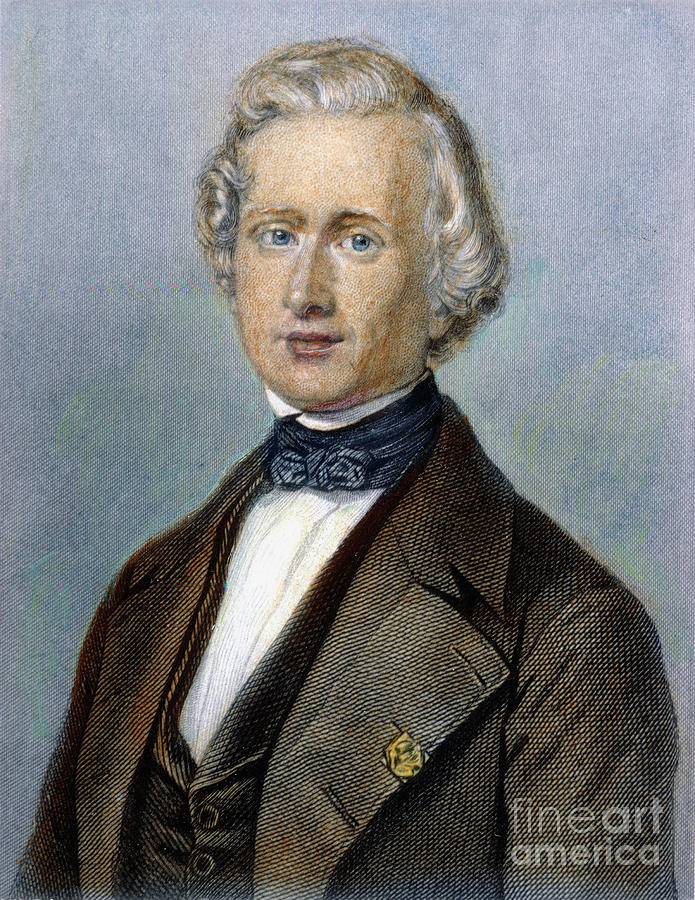
Whatever the case was, we can comfortably guess that Adams and Le Verrier didn’t submit the first predictions. We can find fault in Le Verrier’s projections, but we should remember that he was providing an educated guess that a planet one billion miles away from Uranus, and 2.7 billion miles away from him on Earth existed. The observatory asked him for detailed calculations, he provided them, and the observatory used those calculations to spot Neptune. I consider that a point blank exclamation mark at the end of this discussion.
Yet, whenever we discuss the idea that .25% of the population, or one in 400, are geniuses, and we publicly marvel at their accomplishments, some ninny comes along and drops the ever-annoying, “It would’ve eventually been discovered by someone, somewhere.” When we express exhaustion, they add, “What? It’s a planet, a planet that is roughly four times larger than Earth. Someone would’ve eventually spotted it.”
As much as we loathe such dismissals, it appears to be true in this case. If P Andrew Karam is correct, and we have no reason to doubt him, Adams and Leverrier were the first to submit right place, right time predictions that due to “a remarkable coincidence” could be verified due to the timing of their submissions.
It also bothers those of us who enjoy marveling at genius to hear things like, “Some guys are just smarter than others. I know some smart guys who say some smart things.” That’s true too, of course, but some are geniuses, and some of us love nothing more than dissecting, refuting, and demystifying the notions of their genius. Were John Couch Adams and Urbain Jean Joseph Le Verrier geniuses who figured something out that no one else could, or were they right-time, right place opportunists? No matter what Karam writes about their errors, he admits the “calculated position was correct”.

Le Verrier’s calculated position was also derived without the benefit of James Webb or Hubble telescopes, and he and Adams did not know the nuclear-powered space probes that could confirm theoretical guesses on the molecular composition of the lakes on Saturn’s moon Titan. They also did not have the advantage provided by Voyager Spacecraft visits, of course. They had Isaac Newton’s laws of motion and gravitation, the idea of celestial mechanics from Johannes Kepler, some comparatively archaic technology, and a pencil and paper.
With our modern technology, we can now correct the mistakes of the past. This is the way it should be, of course, but we should refrain from diminishing past accomplishments or inherently claiming superior intelligence now. We might know more now thanks to the brilliance of our greatest technological toys, but most of us had nothing to do with building that technology. We’re just the beneficiaries of it. We now have the advantage of all of these marvelous gadgets and tools at our disposal to fact-check prior “geniuses”, but does that mean that the brilliant minds of the past weren’t geniuses? We can talk about how some of the theories don’t stand up, but think about how many physicists, astronomers, mathematicians, and general theorists of yesteryear developed theories, without the advantage of the accumulated knowledge we’ve gathered since, that do?
Some of the geniuses of yesteryear turned out to be wrong, of course, and some of them were right-place, right-time opportunists who discovered things first, but before you say “Someone, somewhere would’ve discovered it” remember the guys who mathematically predicted the existence of Neptune, probably road a horse to work on a dirt road, if they were lucky enough and rich enough to own a horse, and their definition of the heart of the city was often just a bunch of wooden store fronts, like the recreations we see on the old HBO show Deadwood. Most of what these 19th century astronomers and mathematicians saw in the nighttime sky is what we can see by stepping outside and looking up into the sky. They had some technological assistance back then, in the form of relatively weak telescopes, and some theorize that astronomers, like Galileo Galilei in 1613, Jerome Lalande in 1795, and John Herschel in 1830 may have used it to spot Neptune first, but they didn’t know they were seeing a planet, because their telescopes were not powerful enough for them to know that. Those of us who write articles about such topics and the geniuses who made ingenious discoveries or theories that proved slightly incorrect or somewhat flawed should asterisk our critiques by saying, “I am smart. No, really I am, really, really smart, but as ingenious as I am, I don’t know if I could’ve done what they did with the primitive technology they had, primitive when compared to ours. So, before I go about correcting and critiquing their findings with the technology I have at my disposal, thanks to those who developed it for me, I’d like to say how impressive it is that they came so close that it’s impressive that they did what they did with what they had.”
 Rilaly