My Proustian Moments


“Scent, emotion, and memory are intertwined,” experts say. 

“Smell and emotion are stored as one memory.” —Dawn Goldworm, co-founder of “olfactive branding company” 12.29

There was nothing extra ordinary about the ham sandwich I ate, but I thought it was extraordinary! Every ingredient was store bought from leading brands, and it was one thin slice of ham, with a thin layer of mayo on it, between two slices of ordinary bread. When I say I enjoyed that sandwich, I’m not talking about a “This tastes good” reaction. I’m talking about “Holy crap, this is so good that I forgot how great the ham sandwich can be.” If I said all that aloud, I probably would’ve received some looks, some long hard looks that measured my seriousness against my sanity. Years later, I had a similar experience with a piece of KFC chicken. Prior to that experience, I denigrated the unhealthy food from that chain for years, perhaps decades. That piece of chicken led me to rethink everything I thought about their original recipe. I tried them both again, days after those moments, and I realized I probably just had a moment, but it was quite a moment, a moment some call a Proustian moment.
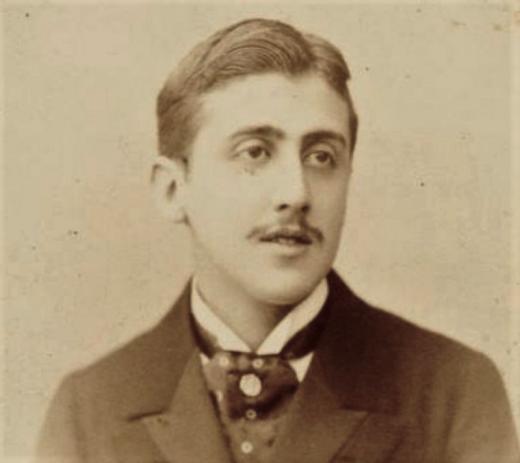
A Proustian moment, based on the writings of author Marcel Proust, occurs “when a sensory experience triggers a rush of memories often long past, or even seemingly forgotten”. The nature of Proustian moments suggest that we do not seek these moments so much as they find us. We cannot create Proustian moments, in other words, they just happen. They are similar to the tool a writer uses to set a joke up. The writer foreshadows the payoff with a subtle, unusual moment that has no conclusion. The writer then moves the narrative to a seemingly unrelated matter and combines it with that subtle unusual moment to form a rewarding payoff for the audience.  

If someone told me about the concept of the Proustian moment, I probably would’ve considered it so obvious that it was hardly worth discussing. If they defined it for me to further its alleged profundity, I would’ve said, “So, you see, hear or taste something that sparks a memory of something else? And someone developed a literary term for it to make it seem more profound? It’s called a flashback, and I probably have about one a month.” As a writer, I may have considered it a fascinating idea to use a ham sandwich to spark a distant, fond memory for one of my characters, but I would’ve dismissed it as a real-life profundity. The whole concept sounds like something overly complicated people do to add complicated intrigue to their otherwise simplistic lives. 

The Proustian moment in Marcel Proust’s novel Remembrance of Things Past involves the character experiencing a moment with a soupçon of cake in tea: 

“… I carried to my lips a spoonful of the tea in which I had let soften a bit of madeleine. But at the very instant when the mouthful of tea mixed with cake crumbs touched my palate, I quivered, attentive to the extraordinary thing that was happening inside me.”

Yeah, that ain’t me. I enjoy the sensory experiences involved in eating and drinking as much as the next fella, and I appreciate what they have done to help me sustain life for all these years, but if a ham sandwich caused me to “quiver, attentive to the extraordinary thing that was happening inside me,” I probably would’ve considered it a sign of gastro-intestinal turmoil. 

Those who seek literary terms to define their quivers are often complicated, dramatic types seeking spiritual connections, and they often define their creativity by doing so. To the rest of us:

“It’s a ham sandwich,” Gil Burkett said. “Let’s not over-complicate this.” Gil Burkett often said things like this to rein me in when I attempted to assign literary value to the mundane, and minds like mine need Gil Burketts to remind us that some ham sandwiches just taste better than others for real world reasons. A slice of ham of higher quality than we’re accustomed to make the sandwiches taste better, for example, an expert sandwich maker can perform their magic on the ingredients, and there are time and place situations that can influence the taste of anything. We might be hungrier than we were the last time we had a ham sandwich, and everything tastes better after a rigorous workout. I could’ve ended this debate by letting Gil try my sandwich, but that would’ve been such a violation of my constitution that I was willing to be wrong and allow his “It’s a ham sandwich” to be the final word. 

Ham is an overly salted meat, and salt makes everything taste better, but it is really unhealthy. I spent most of my life railing against the purveyors of what’s healthy, and I based my personal definition on how it affected me. For most of my life, I could eat and drink whatever I wanted, and the incredible machine that is my body helped me overcome most of what I put into it. As we age, that incredible machine begins to lose some of its superpowers, and the unhealthy nature of food or drink becomes more obvious. My body began reacting very poorly to these unhealthy foods, and I responded by not consuming them.

Thus, when I tried my first bite of a KFC chicken leg after years of abstaining, it was glorious. Why was it so glorious? Did I consider that KFC chicken leg, and that ham sandwich so delicious, because absence makes the palette grow fonder? Did I need more salt in my body to counter all the gallons of water I now pour into it now to try to stay in alliance with modern health edicts, or did their taste and smell remind me of something so long since passed that I didn’t even know that memory existed? After these experiences, I tried eating them both a couple more times before the unhealthy effects of eating them outweighed whatever caused me to enjoy them in those moments, and I realized, there was nothing special about them. I still don’t know why they tasted especially good on those occasions, but I didn’t try to make any connections, until my cousin threw out an offhand comment:

“Do you remember when your dad used to buy a bucket of KFC and take you and your mom to the city park, before they married,” she said. “He did that all the time. He did it in an attempt to win your heart.” (She was referring to my step-dad.) 

I was so young that I don’t remember the particulars of those days in the park, but I’ve always felt some kind of weird connection to the red and white stripes that KFC has on their buckets and signs. I initially thought it might have something to do with my fascination, bordering on obsession, with the colors, red, white, and black. This near-obsession goes so far back that I just assumed that it had something to do with the colors of my favorite college football team, the Nebraska Cornhuskers. (Side note: Psychologists suggest that our favorite colors can have a relationship with our favorite teams, as green cars sell better in Wisconsin than anywhere else in the nation, purple cars sell better in Manhattan, Kansas, and red, white, and black cars sell better in Nebraska.) My favorite album covers, my other favorite football team, and every car I’ve purchased are red, white, and black. I have always assumed that my affinity for these colors developed in the years I spent cheering on the Huskers, and I still think that, but I now consider it a possibility that some part of my associations with these colors developed much earlier, because they may have reminded me, on some subconscious level, of the time my step-dad stepped in to rescue me from a fatherless maturation. If you posed this notion to me as a possibility, before my cousin said that, I probably would’ve been laughing louder than anyone else in the room

I was so young when catastrophe struck that I can’t remember the catastrophic circumstances firsthand, but I wonder if those red and white stripes signaled some sort of salvation, or hope, in some way that a two-year-old couldn’t recognize at the time, articulate, or appreciate as a seminal moment. I think I just knew, on some level, that I was being saved by a generous man, and the strong, very distinctive smell of KFC chicken might have reminded me of a moment buried so deep in the recesses of my psyche that it took a period of abstinence to rekindle it.

When all that happened, and I dug through my psyche to try to connect the associations I made to the red and white stripes, I remembered that extraordinary ham sandwich.

When my step-dad eventually became my only parent, I grew to despise the ham sandwich. The ham sandwich was his answer to all my needs. When I was hungry, and I was always hungry as a teen, my step-dad said, “Make a sandwich.” The sandwich became a symbol for my dad’s insistence that I was going to have to learn to resolve every problem myself. In a rational world, that makes sense. We all raise our children to help them become self-serving adults. I was a teenager at the time, however, an irrational and emotional teen trying to make sense of the world, and in my world a parent not leaping to their feet to feed a child was a crime against humanity, and his desire to help me help myself sounded like an excuse for him to avoid doing anything. The ham sandwich, the bologna sandwich, and sandwiches in general became a symbol for my dad’s refusal to do anything to satisfy my greater needs. I was being unfair to my step-dad, but isn’t that the nature of being a teenager?

Toward the end of his life, my dad and I managed to bridge the many gaps that divided us, and I stopped negatively associating the ham sandwich with him by the time I ate the extraordinary one. Those connections are admittedly loose, but I wouldn’t have made them were it not for my cousin telling me about the through line I had with my step dad and KFC, and this idea I must’ve had that everything was actually going to be ok in my life. 

My recognition that I might have had a Proustian moment involved a series of click backs that occurred over years, perhaps five-to-ten-years. I’m a skeptic who is generally skeptical of all who play this game of connect the dots, and I reserve some skepticism for my own experience with this concept. I am intrigued with it as a writer, but I reject it as some sort of real-world explanation of something that might have happened to me. My primary influencers instilled in me the instinct to reject the idea that occurrences in life can be commingled with complicated and dramatic literary references, and they convinced me that it’s my creative mind that assigns that level of significance to coincidences. They taught me that most of us live such relatively boring lives that we seek complication and drama, but there are moments when we have small but significant flashbacks that are almost impossible to define in the moment.

“Wait a second, what did you say a Proustian moment was again?” I asked those who introduced me to the term, clicking back. “Now that I think about it, I might have had one of those.” That click was preceded by my cousin’s offhand comment, which clicked me back to my KFC experience that ended up clicking me back to my unusually enjoyable ham sandwich. I knew there was something noteworthy about that ham sandwich, but I didn’t go around telling anyone about it. It wasn’t that special, but when my cousin unlocked the KFC question, I remembered that ham sandwich. I write that to illustrate that I’m not the type who seeks connections to physiological memories. I am usually satisfied with ordinary explanations that align with the term coincidences. There is a reason, however, that smells and scents have an unusual effect on our brain, and it has everything to do with the nose and the olfactory senses proximity to the brain. Scents and smells affect taste, of course, but when we smell something it washes over the brain. As quoted at the beginning of this article, “Scent, emotion, and memory are intertwined,” and “Smell and emotion are stored as one memory,” as Ms. Dawn Goldworm asserts. They can trigger a memory of a situation in our lives, so completely, that we’re there in every way but physical. We might not know where we are, or where we were if we never clicked back, but there is a confusing, almost palpable feeling that for one fleeting moment we’re somewhere else in time. If you’ve ever seen the incredible movie Somewhere in Time, you’ve seen a man convince himself that he was back in time. Was it nothing more than a powerful and surreal dream he had as the film alludes, or was he really there? I’m not saying physical time travel is possible, but I’ve now had two Proustian moments that lead me to think that when a particularly distinctive smell washes over our brain it can take us back in time in a way that seems, and feels, so real that it can provide a “sensory experience triggers a rush of memories often long past, or even seemingly forgotten” that leads us to believe that we are there in all ways but physical, if only for one brief and very pleasant moment in time.

The Power of Forgetting


The tenets of psychology, namely those of Sigmund Freud, teach us that we must deal with every tragedy, and every moment of despair, if we ever hope to get past them.  If we ever hope to move beyond them we must be honest about them, confront them, and analyze them ad nauseum, until we achieve greater mental health.  Some of the times, that’s not true.  Some of the times, it’s better to forget.

ForgetAre you a bad person?  Most people don’t think that they are, and if they did they probably wouldn’t tell you.  But how does one become a bad person?  What’s the difference between a fully formed, moral adult and a bad one?  Some would say that a bad adult is created through a series of events that have happened to them, or the way in which they dealt with them, or remember them.  Some would add that it’s the decisions that we have made in life, based on the series of events that we have experienced.  Others would say that it’s a great stew of the conscious and subconscious decisions we make on what to remember, and what to forget, and that that forms the core of who we are?

This relatively new belief in the healing powers of the mind to forget seems to go against one hundred years of psychological teaching, particularly those involving the philosophies of Freud.  Freud taught us that the path to mental health involved remembering every excruciating detail of our lives, until we reached a point of exhaustion where those details could be properly analyzed and interpreted.  He then wanted us to focus on why we remembered these details, how they should be remembered, and when they should be remembered most often.  Anyone that has visited a counselor, of any stripe, has experienced this concentration.  Most of us have wanted the counselor to move on, but the counselor decided that that the particular event in question was crucial to our growth, and it may very well be the case, but we’ve decided to move beyond it to some degree.  We decided, whether consciously or subconsciously, to forget the event and its effect on our lives.  The psychological community is now correcting itself and realizing that there may have been an element of truth to our complaints.

The psychological community has, in fact, become so entrenched in this apparent evolution of thought, that when they now run across a patient that is not able to forget certain events, after extensive counseling and other treatments, they now believe there may be something fundamentally wrong with that patient’s brain.  It’s an almost complete reversal of everything Freud, and the 100 years of psychology that followed, theorized.

If you’ve ever been under the influence of a heavy drug, say morphine, as a result of an injury or surgery, chances are you’ve relived a horrific moment of your life in explicit detail.  You always remembered that horrific incident on a certain level, as it affected everything you did in its aftermath, but you didn’t remember it on that “enhanced” level, with that kind of detail, until your mind was brought to another state.  Those of us that are blessed, and cursed, with excellent memories found it a little troubling that we forgot anything involving that horrific incident.  If you’ve ever experienced such a moment, you’ve experienced this idea that the mind is keeping certain secrets from you, to protect you from the life you may have lived if you were cursed with living with these details at the forefront of your mind every single day.

Romantic populists provide us with powerful conceits: “I think about the Holocaust every day!”  While most of us think that’s a bunch of hooey, it does give the provocateur a degree of cache we’ll never know.  “How do you know I don’t?” they might ask defensively.  We don’t, of course, but we do know that doing so would make them incredibly miserable people to be around.  We could tell them that they’re probably doing a disservice to the memory of those survivors when they don’t move on and live the lives the Holocaust victims had unceremoniously, and horrifically, taken away from them.  We could say that relatively few of them would’ve wanted to see our lives so burdened by their demise.  We could say that at some point, they would’ve wanted us to just move on.  The truth, for most people, is that they don’t dwell on the negative as often as they purport.  The truth is that the brain works in its best interests, as all organs do, to remove those toxins that might hinder peak performance.

The mind is a powerful tool.  The mind can juggle a multitude of memories.  Some have guesstimated that we can quantify the number of memories any brain can hold at three trillion, others gauge their guesses in terabytes and petabytes, and others say that it’s not quantifiable.  Whatever the case is, most people agree that our resources for memory are limited.  The mind can remember the Pythagorean Theorem, Walter Payton’s career rushing total, Eisenhower’s farewell speech on the military industrial complex, your distant cousin’s birthday, or that wonderful time you spent with your family at the lake, but it can also forget.  It can purposefully forget.

This power to forget can, at times, be as powerful a tool to your furtherance as the power to remember.  To those of us that live relatively happy lives, it could be said that the mind provides the soul a crucial ingredient that it needs to move on, when it decides to forget.  To say that the mind is simply blocking out certain memories seems a bit simplistic when it comes to forgetting those moments of despair, where all hope is lost, and where a person believes that they can no longer go on.  It seems the mind is making crucial, and subconscious, decisions to simply filter out such information to provide the soul some relief from all the guilt and sorrow of the event.

“It is surely human to forget, even to want to forget.  The Ancients saw it as a divine gift. Indeed if memory helps us to survive, forgetting allows us to go on living. How could we go on with our daily lives, if we remained constantly aware of the dangers and ghosts surrounding us?  The Talmud tells us that without the ability to forget, man would soon cease to learn. Without the ability to forget, man would live in a permanent, paralyzing fear of death.  Only God and God alone can and must remember everything.”{1}

The mind also juggles inconsequential items.  Some of us remember all the lyrics of the Britney Spears songs from 1999, but most of us have forgotten them.  Most of us only remember the video, the skirt, and the ponytails.  Very few of us remember the role Archduke Ferdinand played in the outbreak of World War I, but when we had to remember it for the test, it was at the forefront of our minds.  It could be said that the mind only has so many resources –like any laptop, cell phone, or camera only has so much memory– and if we want to add new applications we must clear some extraneous information that we no longer use to provide room for it.  Most of us have forgotten more than we remember about the trivialities of life.  But, the psychological community is largely unconcerned with these occasional slips of the mind.  They’re far more concerned with the remembering and forgetting of crucial information of their patients.  Both, they feel, are mandatory for mental health and vital to mental hygiene.

Are you that annoying type of person that just keeps bringing a horrible memory up to your loved ones?  Have you ever heard the phrase: “Isn’t it time we moved on?” from them.  They say this with loads of sympathy and empathy, but they also say it with some degree of determination.  Those of us that have been hit with this question were almost as devastated by the question as we were the actual event.

“How can you move on?  How can you just forget something like this?” You ask.  “How can you not want to talk about it nonstop?  How can you not want to get to the core of this matter and how it affects every day of your life?” 

You want to deal with it, get to its inner core, and learn that all of those affected are just as affected as you are?  They aren’t.  They’re saddened by it.  They’re lives will never be the same as a result of it, but their mind is telling them to clear the resource pool for an eventual return to happiness, and you just keep bringing them back.  Repeated requests to remember are rejected, until one person gets angry.  They’re tired of you bringing it up at every get together.  They want to move on, but you won’t let them.  The mind has a lot of power invested in remembering, but it has as much power invested in assisting us to forget.

Are you that bad person we discussed earlier?  Are you generally mad?  Suspicious?  Distrustful?  Sad?  Are you someone that cannot let go of the fact that you weren’t raised in a happy, functional home?  Are you someone that feels that you were not afforded the luxuries that most of the people around you took for granted throughout their youth?  Are you someone that dumps a prospective lover before they can dump you?  Are you haunted by the fact that you didn’t spend enough time with a recently deceased loved one?  Or, are you a good person that is generally happy?  Do you consider the path to happiness trying to be better today than you were yesterday?  And is all that defines your demeanor based on your memory of a life well-lived, or could it be said that you’ve forgotten a lot of the events of your life that could be making you a miserable person to be around right now?

If I Could Just Have a Moment


I was sitting at an ice cream parlor having a moment with my Brother and his two boys. I remembered how my Brother and I sat at this very ice cream shop with our Dad when we were the boys’ age.  I remembered how special those moments were to me at the time. My Dad had just passed at that point, so my memory may have been a little romanticized, but I didn’t care at that moment. I just enjoyed the tranquil moment for what it was, and what it used to be for us. I wanted this to be a moment for me and my Brother, but I also wanted this to be a moment that the boys would look back on with the same fondness I had. I wanted this moment to be as beautiful as the moments I had in the past, so they could be moments we looked back on in the future.

If we were all in a science fiction movie, and I had the ability to transport in time, I may have shut down the system with all of the simultaneous time leaps I was working through. The rapid leaps through time may have combined with all of the memories to cause a foreign substance to congeal in my brain until an embolism set off warning signals in the programmers’ algorithm, and forced them take me off the grid for my well-being.

false memoryWe are always manufacturing memories for good and evil in the past, present and future. We recall a time when Missy McNasty said something awful to us.  We remember how that comment ruined a future moment we had with Patty Pleasantpants, and how that could’ve been a beautiful moment the two of us shared, frolicking through the aftermath of used cups and popcorn boxes of a minor league hockey match. Missy wouldn’t allow us to enjoy that moment with her previous comment. It just ruined the mood for us, and it ruined that moment. We wish we could go back in the past and tell Missy what an equally awful person she was, so the next time we frolic with Patty we can laugh, and be happy, and have a great and memorable moment. Plus, we think if we could start confronting Missy types more often, we could be happier people in general.

The idea that we consult our memory for mood is a construct that we devise for ourselves in the present. We normally love frolicking through used cups and popcorn boxes of a minor league hockey match, but for some reason we can’t enjoy that moment in time. We know that we shouldn’t let Missy’s comments get to us like we do, but we can’t help it. We can’t enjoy happy moments when we decide that we’re going to be miserable.

You read that correctly, we decide to be miserable and happy based upon the memories we decide to construct at the time.  If we decide were going to be happy today, we will construct good memories that allow us to be happy. If we decide that we’re going to be in a bad mood today, regardless how much fun we’re having, we’ll construct the bad memories that we need to create to support the bad mood we’ve decided to be in.  We select memories that we’re going to construct. It’s a tough concept to grasp, and we normally use the term “selective memory” as a pejorative to describe someone that puts everyone else in a bad light while casting themselves in a favorable light, but if recent findings in psychology are correct, we all have selective memory.

In the paragraph above, I originally used the word ‘consult’ more often than I should’ve when writing about how we select memories, for it’s an incorrect term to describe how we remember. When we remember we don’t consult a memory bank, so much as we construct one…on the fly…regardless of the moment we’re in. We’re in total control of what we think, regardless what we think.

The incorrect word ‘consult’ also gives the image of one going to a video vault to find a specific memory, or going to a file on a hard drive. Memory is selective in a sense, but it is a selective in the sense that we reconstruct memory rather than reproduce it.  At the hockey match, we see someone who is wearing a David Bowie T-shirt, this reminds us of Missy McNasty, the David Bowie fan.  We can’t help but think about the awful thing she said to us, and we’re in a bad mood.  You were not in control of that memory, because it was right there in front of us.  To this degree, you’re not in charge of what triggers memory, but you are in total control of the construction team of your brain that puts the memory together.

In the book, You are Not so Smart David McRaney gives the analogy that memories are equivalent to a bucket full of Legos. We select the individual pieces from the bucket to create the product that we want to create at any given moment. We decide to locate the individual Lego pieces we want to create a memory that provides us either satisfaction or sorrow, depending on the mood we want to be in at any given moment.

This isn’t to say that all memories are incorrect, but they can be influenced. If memories were files from a hard drive that we simply had to locate, we would never be incorrect once we located them. If memories were videos from a video vault, we couldn’t enhance a memory to be happy and undress a memory to be sad. When we construct the same memory two different ways, depending on our mood, it should be obvious to us that we’re constructing these memories on the fly, but we usually qualify our minor errors by saying, “Well, that’s just how I remember it.”

How many of us have heard a friend recount a moment we’ve shared with them, and those memories run contrary to how we remember them? How many of us have believed that that friend was lying? “He knows how it happened,” we tell a third party. “He just knows that how it really happened makes him look like a fool.” How many of us have confronted that friend, only to find that they were genuinely shocked at the manner in which we remember things? It happens all the time, and some of the times they’re not purposely lying. They’ve just constructed their memory to keep them happy in their world. It may be delusional, but it happens to us more often than we might think.

Talking heads often speak of a narrative that a politician creates for the voters. The narrative that the politician creates is the story of what happened as they see it, or as they want you to see it.  The narrative usually contains a grain of truth to it, for if it didn’t we would locate all the Lego pieces in our bucket that refutes everything the politician said. A smart politician, with a smart team of advisers and speech writers, will assemble a narrative, that has just enough truth to get us nodding our heads in agreement with what they’ve done in the past. They will then add a wrinkle to the narrative that enhances our memory and in doing so they add a memory to our Lego bucket when it comes time to vote. They will then repeat that enhanced narrative so often that it creates a construct in our brain that is almost impossible to defeat by those who remember things differently. With politicians, and their narratives, we all have selective memories. If it is a politician that we favor, we decide to remember the past in the light the politician provides, but if don’t favor them we may construct a memory that runs counter to everything the politician tries to tell us. As McRaney says throughout his book, we’re not as smart as we think we are when it comes to our memory.  Memories can be influenced, manipulated, refuted, and changed entirely.

I couldn’t get over what a pleasant day I was having at that ice cream parlor with my Brother and his boys. I had all my memory constructs lined up in a fashion that made me happy.  If I had died right then and there, it would’ve taken a coroner a week to pry the smile off my face. I remembered laughing with my Brother and my Dad, as I laughed with my Brother and his boys. I remembered a sense of being rewarded for being good when I was eating ice cream as a boy. I remembered how long it took my Brother to finish his ice cream cone and how that started a cavalcade of jokes about how long it took my Brother to complete anything. The day was shaping up to be a memorable one that I thought I could call upon if I was ever feeling down, when one of the kids started to act up.

He started screaming for no reason. He started rough housing with his younger brother, he started disobeying his Dad and talking back.  He started screaming for more ice cream, and he did anything and everything he could to be unruly. I would’ve never done such a thing. My Dad would’ve tanned my hide. Especially in public, I thought. I would’ve been more respectful to those around me, I thought. How dare he ruin this perfect moment was my first thought.  He’s ruined our moment, my moment, and I was angry at him for that.

Until, I started taking a more realistic look at my past. I started to remember that I was just as unruly as my nephew at his age, in this very same ice cream parlor. I remembered being bored, just sitting there, while the adults tried enjoy a moment of tranquility. My juvenile mind had been racing at a hundred miles an hour trying to create excitement for myself, and I wanted more ice cream, and I started rough housing with my younger brother just to make something happen. When I got in trouble for doing it, I started to mouth off, until a screaming match ensued, and my Dad marched us out of the place angrily. I ruined that moment, just like my nephew ruined this moment.

I was no different than him at his age. We both suffered from the oldest boy syndrome of seeking attention by selfishly trying to entertain ourselves by being naughty and unruly during the slow moments, with no respect for the others around us who are trying to enjoy a moment of tranquility at an ice cream parlor. Prior to my nephew’s outburst, I had been constructing a narrative of the pleasant moments of my life that were, in retrospect, not as pleasant as I wanted to remember them being.