KISS: Keep it Simple, and Silly!


“If you listen to KISS, you’re stupid!” said an anonymous poster on a message board.

I’ve been through my Michael Jackson phases, KISS phases, Radiohead phases, King Crimson, Frank Zappa, Beatles, and too many others to list here. “Did you say you went through a KISS phase? You like KISS?” Sure, back when I was young, and all I wanted to hear were fun, silly, and artists who kept it simple. I grew out of them, to some degree, but I still listen to them every once in a while. And what’s wrong with that? What’s wrong with keeping it simple and silly, anyway? It’s fun.  
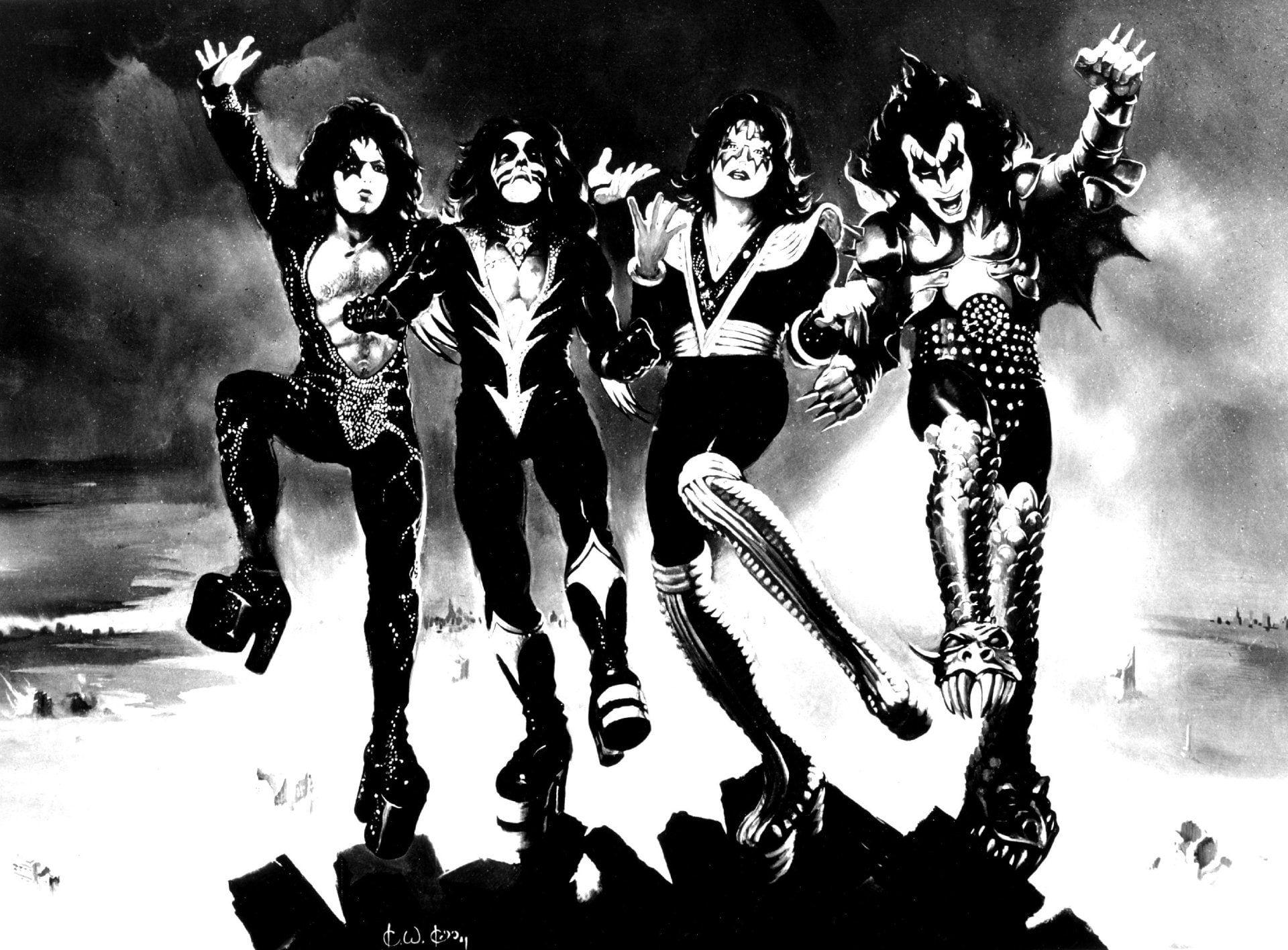
There are no reported connections between the band members choosing the name, KISS, and the acronym, the latter of which many state stands for Keep It Simple, Stupid, but has any rock band ever embodied that acronym better than KISS? 

The brief history of the acronym KISS is that it was developed by a lead naval engineer who instructed his team of engineers to design aircraft to keep the designs so simple that they could be repaired quickly on the battlefield. 

A Brief History of KISS 

Wicked Lester was the band Gene Simmons and Paul Stanley belonged in shortly before they decided to form their own band. Wicked Lester, according to Stanley and Simmons, was all over the map. I’ve never heard the music on Wicked Lester’s lone album, but those songs apparently involved keyboards and a flute. The two of them confessed that they didn’t know who they were back then, and they didn’t know what they wanted to do. They didn’t say that the music of Wicked Lester was too complicated and complex, but that was my takeaway. My takeaway is that they wanted to create a masterpiece in the manner all young artists want to create the next Dark Side of the MoonZoso, Sgt. Peppers, Exile on Main Street, or Aqualung. Whatever they were trying to do, they realized that it wasn’t them. They decided to tear it all down and create KISS (the acronym) tunes that young kids could enjoy and their grandparents wouldn’t find too offensive. They decided to play big songs that could be played in arenas.  

KISS ended up being the perfect band for “stupid” young, pre-teen boys who didn’t care about sophisticated complications of deep, moving music that could be defined and redefined with repeated listens. The KISS demographic, for most of my youth, was almost exclusively young and male. Some girls liked the song Beth, but they couldn’t believe the song came from KISS. (When I was young, I considered Beth a betrayal, as I considered KISS the only band that I could trust to avoid going soft. I never heard of AC/DC at that point.) KISS was fun, theatrical, arena rock that lifted you up on your feet, with a fist held high while you sang the lyrics with them. 

My neighborhood friends and I used to pretend that we were KISS-in-concert. I was The Spaceman, my best friend was The Demon, and his little brother was Catman. (Nobody wanted to be Starchild.) We would play air guitar and air drums in an area they called the basement. I would arch back like Ace did when he played his solos, because I thought that was one of the coolest things ever, and my friend waggled his tongue, spat blood, and pretended to blow fire with Gene. So, while the rest of you were listening to the important and vital music, we were having fun. 

KISS didn’t invent the terms arena rock, pomp rock, corporate rock, or anthemic songs, and the terms weren’t invented to describe them, but KISS is now one of the first bands that come to mind when we hear such terms. 

Who you Is?
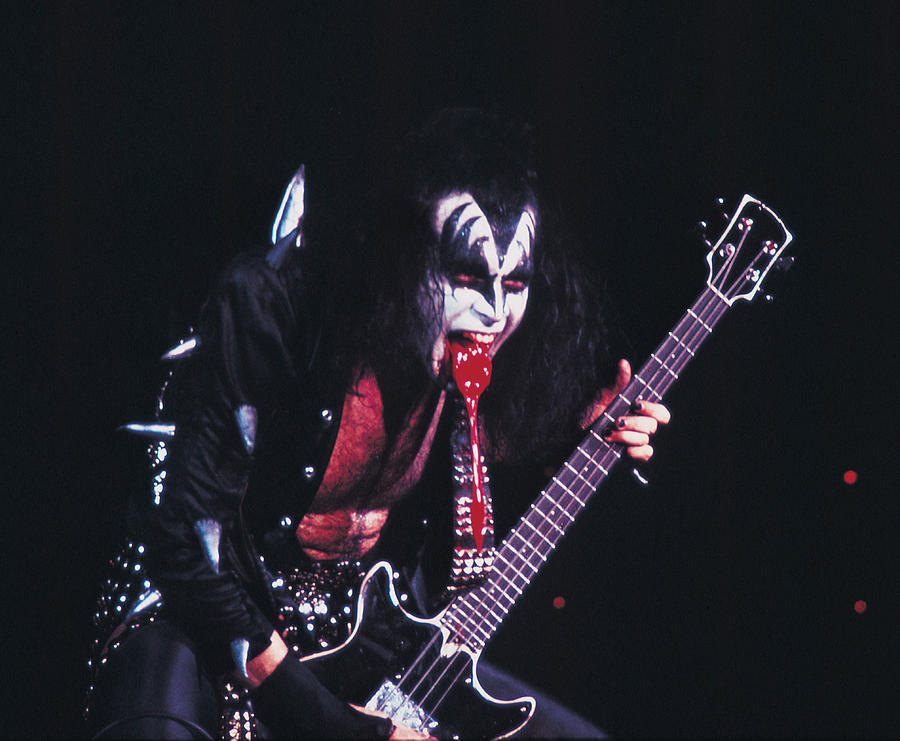
KISS albums were chock full of silly, simple songs that won’t move you spiritually or cause anyone to think of the philosophy of Epicurus, but as the aphorism that some attribute to Leonardo da Vinci says, “Simplicity is the ultimate sophistication.” If you consider it a stretch to attach anything KISS did to the term sophistication, I feel you, but how much effort goes into achieving complex sophistication, and how much restraint does it require to keep it as simple as possible?

Who is the better writer William Faulkner or Ernest Hemingway? Those who love Faulkner often talk about the beautiful language he used to paint an images in the mind. “It was powerful and provocative,” they say. Few would argue that Faulkner doesn’t deserve to be considered one of our greatest writers, but there was a feeling of “could we get to the point here” when reading him. Hemingway sought to paint with an economy of words, seeking picture perfect sentences to describe and characterize in the most succinct manner possible. One, it could be said, could not wait to show us what a great writer he was, and the other restrained such impulses to make his stories more readable to a wider audience. Both might suggest the other insults his audience in relative ways, and both might say theirs is the finer artform. Both audiences would claim sophistication in their own right and the sophistry of the other.  

The point is we all know who KISS were. All we have to do is look at them to know that subtlety and sophistication were not their driving force. The point is not to denigrate KISS, but to say they put together a package far different from the one employed by a Bob Dylan or a Radiohead. The point is we know who KISS are, yet message board contributors continue to take time out of their day to remind us how awful they were. “…But I like them.” “That’s because you have such poor taste in music.”   

Why does anyone feel the need to go to a message board to inform the world how awful YOU thought KISS were? “I can’t help it, I’m just so durn sophisticated.” That’s fantastic Papa Smurf 124, but you do realize that your precious anonymity means that no one really cares what you think?  

I used to denigrate people who listened to Whitney Houston and Celine Dion, in the manner people now denigrate the average KISS fan, but I realized the market is wide enough and divergent enough to welcome all. You can be a KISS fan, a Radiohead fan, or a Mariah Carey fan and know that no one is superior or inferior. They just enjoy listening to different types of music, and why do you care so much that they do? I choose Radiohead as an example of the complete opposite of KISS, on the musical spectrum, among mainstream acts. Radiohead writes complicated structures, with deep, provocative lyrics, and I am a huge fan. The question is do they write sophisticated material for the purpose of being sophisticated, so all their fans can prove their sophistication by saying that they enjoy listening to more sophisticated music? They get it, you don’t, because you’re a KISS fan, and they’ll spit the latter in the most condescending tone possible. KISS wrote simple, party music. Everyone knows who they are. Everyone knows they were a toe-tapping, foot stomping band who rarely tried to be something they weren’t (The Elder and Carnival of Souls excepted). 

Music is the tie that binds. It can be the only thing that you and your brothers share, the reason you fall in love, and the thing that helps you make friends from such divergent backgrounds. It, more than any other artistic medium, brings us all together. There’s a little something out there for everyone. For others, and they are in the minority, it can be the great divide. 

Andrew Wood: What Could’ve Been


Andrew Wood was 24-years-old when he died. He died weeks before the release of his group Mother Love Bone’s debut album Apple. Reports say he started seriously playing music when he was 14, but we have to imagine that that music was probably a mess, but if he died at 24, imagine what he could’ve done by 34. I’m biased, but I can’t imagine how anyone could listen to Apple and not hear the potential he had for so much more. If rock musicians tend to peak between the ages of 27-30, Andrew Wood probably would’ve helped create three incredible albums. 

There were some meaningful songs on the albums, but for the most part, this album was fun and funny. Here are some of the lyrics that his bandmates called Andrewisms: 

Stargazer: “She dance around my, my pretty little cable car.”

This is Shangrila: “I look bad in shorts
But most of us do
Don’t let that bother me.”

This is Shangrila: “Said the sheriff, he come too
With his little boys in blue
They’ve been looking for me child.”

Capricorn Sister: “Chartreuse regalia and Purple Pie Pete (Purple Pie Pete)
You dance Electra and the night becomes day.”

Mr. Danny Boy: “With your long black kitty and your funky hair
Why did I leave you there?”

Holy Roller: “I got somethin’ to say to you people out there
You gotta listen to me people, you gotta listen to me
Yeah, the Lord’s comin’ down people
Yeah He’s gonna take you whole, He’s gonna eat you whole people
Like a big grizzly bar comin’ out of the closet and eat you whole
Ya see the Lord’s gonna come and get you people and you gotta beware
Because the Mother Love Bone camp knows what to do about it

You see I been around I seen a lotta long haired freaks in my day
But those boys in Mother Love Bone
I’ll tell you they know what’s right for you
You know they’re like malt-o-meal for you, they’re good for you
They’re like soup, they’re like nothing bad, let me tell you that much
I tell you people, the Lord’s comin’, and if you don’t believe, and if you don’t believe in what can happen to you today people

I’ll tell you people love rock awaits you people
Yeah lo and behold, lo and behold

I don’t know if Andrew Wood wrote all of these lyrics, or how much of the music he wrote, but I give him most of the credit for the creative lyrics of these songs. There seems to be a consistency in the lyrics that the same members of Mother Love Bone didn’t display in Pearl Jam. When someone writes that lyrics speak to them, we naturally assume that they found those lyrics meaningful, spiritually fulfilling, and life-altering. They didn’t accomplish anything close to that for me, but I enjoyed them as much as I’ve enjoyed any silly, sophomoric lyrics. Most of these lyrics could’ve been written another way, a more serious way that would lead critics and industry types to take Andrew Wood more seriously. My bet is Wood had more than his share of detractors, behind-the-scenes, who didn’t take him seriously, and my bet is that numerous industry types informed him that if they were going to invest serious money in his project, he had to take his role as primary lyricist more seriously. My bet is the industry people said, “What is this lyric, and what does that mean?” His defenders obviously said, “It’s silly. He writes about some serious topics in admittedly silly ways, but it’s who he is. It’s what we call his Andrewisms, and it’s something that separates him from all the other lyricists who take their role so seriously.” The thing that numerous artists like Andrew Wood, Frank Zappa, Freddie Mercury and many others prove is that even weird and silly expression can be great. Yet, as everyone knows, that is an uphill battle for most. Most immediately disregard the silly and weird as just that, and they will never listen, read, or in any other way appreciate what they consider a silly, weird artist. 

Think: Useless and Trivial


@) If we could talk to the animals, my guess is that we’d find that, among others things, we’re the only being that finds flatulence and bowel movements funny.

“Why do you find them funny?” Dabbi the deer might ask.

“Because we find them disgusting,” we’d answer.

“What?”

“It’s complicated, but it’s further complicated by the fact that you don’t have a sense of humor.”

“I don’t have a sense of humor?” she asked. “I don’t? I’ll have you know that I share the same sense of humor with the rest of the human population. Our sense of humor generates ratings, box office sales, and album sales. You’re the freak of nature.”

&) We never call out dystopian productions from their all-too-near future predictions for being wrong. Young up-and-coming lyricists are forever in search of meaningful and important lyrics. They can’t write about Lord of the Rings anymore. Led Zeppelin been there done that. Silly Love Songs were Paul McCartney’s domain, and we can no longer write ‘baby’ lyrics, because the 70’s and 80’s bands drained that vestibule. The only avenue left is war, anti-war, and anti-military, but there hasn’t been a real war by first world countries in about 50 years. So, while all of the lyrics written in the interim are meaningful and important lyric, they’ve also been false, so far. “True, but they weren’t talking about today, they were talking the all-too-near future.” So, when do we say they’re wrong. “You don’t!”

$) So, how do young, inexperienced artists craft “meaningful and important” lyrics and dialogue when they know nothing about the real world? Is it more important to be meaningful and idealistic or knowledgeable and realistic?

#) If you’ve ever met a truly tough guy, you know they’ve already done it. They wear a “nothing left to prove” garb for the rest of their lives. We know how tough they are, when we meet the other guys, those who talk tough to show it.

*) If we ever catch up to Alien technology, will medical professionals finally learn that the key to physical and mental health lies in the anus?

^) Too much sports knowledge is trivial and useless. Watching sports on TV is supposed to be fun, but some of us get so tied up in good guys vs. bad guys that we forget this is basically a reality show. It’s the best one we’ve ever invented, but it’s still just a show. The next time we meet that guy who knows so much about sports that we’re slightly intimidated by his fact-based opinions, we should liberate him by saying, “Who cares?”

!) You’ll know you’re one of these guys if a lighthearted disagreement over useless and trivial information boils over into you deciding that you’re never speak to the other ever again. At that point, someone needs to step in and say, “Clark, no one cares. You think you’re right, and she thinks you’re wrong, but no one here really cares. We just want to go back to eating our turkey, watching football, and talking about Mary’s Jell-O. That’s all we want to do today.

?) What if she says that your favorite sports star is actually a pretty awful human being? We defend him, because we’re nerds who sit in an audience of millions, and he’s the good-looking, athlete who wouldn’t talk to us in high school. If we pick the right one (he who wins) we want everyone to know our vicarious association. “I’ve followed that guy since he was a five-star recruit. I know his high school stats and college stats by heart.”

“No one cares, Clark!”

%) To counter those who say, “Today’s music ain’t got the same soul,” I would like to introduce you to the noise coming out of Britain. black midi (lower case for whatever reason), Black Country, New Road (one band), Squid, and a band named Famous. These bands are genuinely creative and innovative souls coming out with music that might be as brilliant as the music of past decades, and my guess is they’re only going to get better. Other bands that are also making great noise are Thee Oh Osees (or Osees), and just about everything Ty Segall puts his name on. As with all innovative music, we shouldn’t expect the noise to grab in one blow, and we shouldn’t expect one song to deliver the knockout blow either. Although I think the music from black midi’s Welcome to Hell (not the 23-year-old’s definition of meaningful and important lyrics) might change your interiority by about the tenth listen.

Pitchfork has a few nuggets from black midi’s lead singer Gordie Greep to dispel the notion we have that he wants us to view him as deep, meaningful, and important.

“It’s just fun man,” Greep said. “We’re doing this this stupid thing and somehow making the semblance of a living.” This might be false modesty, as we can be sure he hopes we take his stupid stuff seriously.

Greep also drops a fascinating description of his writing style. “When you want to do something original…use something as a model or inspiration that you know you definitely can’t do,” Greep has said. “Your failure will be interesting.” He talks about Clint Eastwood’s failure to act like Marilyn Monroe, and Tom Waits attempt at the blues. He says they both failed by relative measures, but he says we found their attempts interesting. I found a similar attempt to write like James Joyce interesting.

So, he writes what he doesn’t know, just to see what falls out? What an interesting and perplexing method of writing. My guess, and I have a pretty decent track record in this regard, is that Gordie Greep (whether with black midi or not) is a craftsman who has a relatively bright future.

() I got off on Queen when I was younger. Queen almost single-handedly introduced me to the concept that different can be so beautiful in the right hands, and then I discovered David Bowie. Once I got passed Bowie’s pop songs, I thought he was the most experimental artist in the mainstream, until I discovered Mike Patton. Mike Patton did things I never heard before, and I thought he was the most adventurous artist I ever heard, and I still think that in many ways, but Omar Rodríguez-López (ORL) is just as adventurous in different ways.

Omar Rodríguez-López (ORL) is one of the most gifted artists and musicians on the scene today, and he has played some role, most often leading it in some creative manner, in over fifty albums. I purchased an At the Drive-In album, and I purchased a couple of Mars Volta albums, but for some reason they never appealed to me. If it hadn’t been for Ipecac Records releasing his solo recordings, I never would’ve discovered the genius (and I do not use that term lightly) behind the music of those previously mentioned bands.

AllMusic.com tries to succinctly capture this genius writing, “His multivalent body of work derives inspiration from punk rock, prog, metal, funk, traditional Latin music, blues, jazz, film music, and avant-garde composition.”

As with any mercurial genius, much of ORL’s solo albums will not appeal to most palettes, but the true music fan will probably go nuts over about twenty-four of the fifty albums. When I approached Omar Rodríguez-López music, I had no idea what to expect, but he violated those expectations in the most obscene manner possible. Such violations are not immediate, as they rarely are. My first love was Roman Lips. Anytime a friend invites me to listen to complicated, difficult music, I suggest he do so by starting their most accessible album. Roman Lips is probably the most accessible ORL album, followed by Blind Worms, Pious Swine. Beyond that, the ORL solo albums are impossible to categorize, list, or breakdown by category. Suffice it to say that I was wary that the genius behind At the Drive-In and Mars Volta would appeal to me. I was also wary of the Ipecac Recordings, as they release a lot of material that major recording studios won’t, and a number of their albums don’t appeal to me, but ORL.

As with all of the artists listed above, it’s difficult to believe that these individual artists, and Queen, are capable of such wide-ranging music. I love some of the more major, mainstream pop acts, but there is a comfortable thread that runs through most of them. Their fifth album might sound more advanced than their first in production value and matured writing, but we all know what kind of music they prefer. Listening to the albums put out by Bowie, Patton, and Omar Rodríguez-López, it’s hard to believe the same artist created all these incredible albums. ORL is definitely the most prolific of the three, and he’s not even fifty-years-old at the time of this article.