The Shocking, and Unconventional, Flaming Lips


In an attempt to top his never-ending parlor tricks, The Flaming Lips Wayne Coyne dressed in drag—an outfit that matched Stephen King’s Carrie, to be specific—in an appearance on Last Call with Carson Daly. It was a rerun of a 11/12/13 episode, and the Carrie costume was a Halloween costume that Coyne wore at a “Halloween Blood Bath” Flaming Lips tour stop at The Greek Theatre on Tuesday, Oct. 29, 2013, in Los Angeles. Some may call it a “tour-de-force” and “revolutionary” performance, but I ended up yawning a lot, and I eventually shut the performance off halfway through. I’ve seen my share of “revolutionary” and “tour-de-force” performances, from The Lips, and others, and this was just another one.

Lips“What did you expect from a group that has the word flaming in their name?” those that may think that I was turned off by the shock of a drag performance might ask. I didn’t expect anything different, I answer. Maybe that’s the point. Maybe it’s the point that our performance artists have so deluged us with shocking performances that we’re no longer shocked by them, and we’re all coming back to the point where we want the material back, and the shock and awe performances cause us all to yawn a little.

It may have something to do with the fact that I’m old, and I’ve witnessed “revolutionary” and “tour-de-force” moments from David Bowie, Marc Bolan, Alice Cooper, Kiss, Madonna, and Prince, and I now demand that “revolutionary” and “tour-de-force” material accompany “revolutionary” and “tour-de-force” performances. It may have something to do with the fact that The Lips, Of Montreal, Lady Ga Ga, Miley Cyrus, and Britney Spears aren’t trying to shock me, because I’ve already been shocked so often that my brains are scrambled, and I’m desensitized to it all, but one would think that the demographic they seek, the characteristically nonplussed young ones, aren’t easily shocked anymore either. They’ve grown up in an era of every artist playing king of the mountain in this shocking shell game, and they’re yawning and changing the channel on these performances as often as I am.

Those that have already found their formula for success in music, usually advise up and comers that the path to success has no pamphlet or road map. You simply have to carve a niche for yourself, they say. This doesn’t appear to be true in music. While there may not be a pamphlet, or road map, to success, there are advisers that have studied other paths to the top, and they advise those artists, of which they usually have a vested interest, to shock. If you don’t have the material —and most of those that make today’s headlines don’t— play with a snake on stage, wear a meat dress, insult America, tongue and twerk, or tell people that you hate America, Republicans, or you’re mom, and you will want to carve out sometime in your life for a stint in rehab … whether you actually need it or not. Unfortunate for most upcoming musical artists, this has all culminated in what most semi-talented artists should fear, the idea that something shocking will no longer be shocking to the yawners that are now turning their performance off halfway through.

The less flamboyant, creative peak of the Flaming Lips occurred somewhere around the Transmissions from the Satellite Heart and The Soft Bulletin era. There were some bright spots in the albums before and after these two albums, but few Lips’ aficionados would argue the fact that we are now on the downside of their creative peak. If that’s true, then Coyne and company appear to be doing whatever they have to do to remain viable. This isn’t to say that they’re making bad music, but those of us that were fans of the Lips prior to Transmissions, have such huge expectations. Each album appeared to be leading to that one great album, and The Lips delivered, giving us two seminal albums: one crunchy, weird, glam rock, and the other bleak and blissful. Each of them captured the range, that Lips’ aficionados saw glimpses of in all of the prior albums, but there’s something about being an aficionado that leads one to believe that these upward arcs will continue ad infinitum. They rarely do, and they didn’t in the case of The Flaming Lips.

Hard-core fans also don’t see an official end to that peak. Hard-core fans don’t read one book, watch one movie, or listen to one album and officially declare that it’s all over. They give that artist a chance in the future based on what they’ve done in the past, and they keep on doing this, until they begin to notice a trend with that artist. That trend is not immediately apparent either. It usually takes about three to four lackluster productions for their hope to begin to wane. Even hard-core fans know that these things end, but they’re not prepared to make it official, until they’ve exhausted all belief.

The “He’s dressed like Carrie!” introduction to the taped concert performance of The Flaming Lips brought an official end to the brilliantly creative era of The Flaiming Lips to my mind. Having never been introduced by a major talk show host, I don’t know it to be factually true that an artist has a hand in how they’re introduced, but I have to imagine that Carson Daily’s people went to The Lips people and asked them how they’d like to be introduced. If that’s true, it’s a sad statement that they didn’t want the brunt of their intro to call attention to the single they would be playing, or the album from which that single sprang. It’s a sad statement that they asked that the greater attention be paid to something superficial like Wayne Coyne’s outfit, regardless what that outfit was.

Anyone that has attended a Flaming Lips show knows that they are almost peerless in their presentation. The group goes balls out to provide their fans one of the best concerts currently available on the market. After three songs, at a music fair in Wisconsin, one guy turned to me and said, “This is the greatest show I’ve ever seen in my life.” I wasn’t sure if I was as deliriously impressed as he was, or if I was simply delirious from the contact high I received from other concert goers, but that Lips show elicited a sense of euphoria that this long-time concert goer had never experienced.

This concert combined shocking your sensibilities, and overturning conventions, with all of the great Flaming Lips material I have grown to love. The “He’s dressed like Carrie,” intro signaled to me that The Flaming Lips concentration is no longer focused on the material but shocking your sensibilities and overturning your conventions.

Kiss’ act, in the 70s, was full of parlor tricks, as was Queen’s, David Bowie’s, and Marc Bolan’s, but for the most part these groups shocked sensibilities, and overturned conventions, at the peak of their career. The Flaming Lips appear to be reaching a peak in their shock, with their creative peak long since passed. You can still attend an incredible concert from the Flaming Lips, as it will contain all their greatest hits to remind you of the diverse and impressive catalog they have, and you’ll get their unconventionally shocking moments, but you’ll probably be taking breaks from your delirious euphoria when they start playing their new stuff.
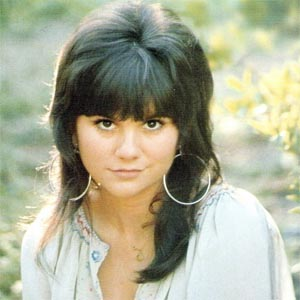
Linda Ronstadt rejects the need for more fame: The Hall of Fame


It’s not anything I’ve ever given a second thought to,” Linda Ronstadt says of being elected to Rock and Roll’s Hall of Fame,  “I never thought of myself as a rock ‘n’ roll singer.  I’ve thought of myself as a singer who sang rock ‘n’ roll, who sang this, who sang that.

“I remember one of the guys at my record company asked me once if I would induct somebody into the Rock and Roll Hall of Fame, and I said ‘I really don’t like going to things like that.’  And he said, ‘Linda, you have to do it if you ever want to get inducted yourself!’

“I said, ‘I don’t care if I ever get inducted,’” she said. “That was a long time ago—in the ‘80s, and that was the last I ever thought of it.”

Ronstadt‘Heretic!’ the rock and roll intelligentsia is probably screaming.  ‘She’s lying!  She’s a witch!!  Get her!!!’  Some, more reasonable Americans, are probably thinking that her ambivalence toward induction has something to do with the fact that she can’t sing anymore due to her Parkinson’s disease diagnosis.  Others might think that Ronstadt fears that she won’t match up to other inductees, under this most, scrutinizing spotlight, but most are thinking that it’s just not rational that a living, breathing human being would leave any amount of fame on the doorstop before entirely fading away into obscurity.

How could you not be intoxicated by the fame a Hall of Fame induction might bring you?  Isn’t it every person’s dream to be enshrined in such a manner.  Isn’t that why you did what you did.  Doesn’t it put a punctuation mark on your career?  Are you lying when you say that you don’t spend every moment of your existence remembering your glory years?  Don’t you want to have your legacy properly placed alongside your peers?

It’s not enough, for some, to simply have their songs still played on radio, it’s not enough for them to know that they have had some form of artistic impact on millions of lives.  They want more.  What is more?  What you got?

Even though the brunt of their careers are now thirty years past, most artists still want more.  They still have agents, and public relations guys, and they are immersed in this competitive desire to have more fame, more money, more recognition, or more of ‘what you got’ than their generation’s peers. We’re so accustomed to every artist clinging to their moment in the spotlight that when one artist steps forward and basically says, “Enough.  I’m ready to move on in life,” we consider them to be either dishonest, or driven by an unseen agenda that we have to unearth to reveal them as the freaks they have to be.

I think it hurt Linda that she didn’t write (her own songs),” said one longtime Hall of Fame voter who asked not to be identified.  “Unlike (others), (Ronstadt) was viewed as a popularizer of songs, which isn’t as valued in the rock tradition as the pop tradition.  She also was more pop in some ways than country or rock or soul, even though she incorporated touches of all that in her music.”

It could have a lot to do with that, say those of us that aren’t attempting to evaluate Ronstadt’s position with an agenda.  It could have something to do with the fact that Ronstadt can’t sing anymore, and all these retrospectives and celebrations bring her feelings of pain and sorrow.  Or, it could have something to do with the fact that (hold onto your bootstraps) she no longer has a desire for unnaturally prolonged fame.

She boils her career down to ‘I sang this, I sang that.’  She said that she didn’t want to be considered the Queen of Rock, when she was declared so in the 70’s, and that she has either lost, or given away, all of the awards she has received in her life.  She then furthered her heresy, by condemning the Rolling Stone (the magazine’s) effect on music when she said: “There was a puritanical attitude about music that reeked out of Rolling Stone: The attitude that only a certain kind of music is hip, that you have to be funky.  Where does that leave Jimmy Webb or Paul Simon or Kate & Anna McGarrigle or so many other great writers whose songs have nothing to do with whether they are hip or trendy or what they’re supposed to be doing this week? People write music from the most personal point of view, and that process endlessly renews itself.”

Music, she says, “Should be about processing your feelings and helping you get through life.”{1}

Taken at face value, most music is simplistically pure, she seems to be saying, but those outside the art form (Rolling Stone critics and writers) bring so many personal agendas, and personal interpretations, and attempts at self-aggrandizement, that what is actually simple becomes complicated with all of these establishment attachments added to it.

Would the Sex Pistols have achieved any fame at all, if Rolling Stone magazine had never existed?  Anyone that was so subjected to the Rolling Stone definition of cool that they actually bought a Sex Pistols album, knows that they were actually pretty terrible, but they achieved worldwide fame on the basis of attitude, and that attitude fit perfectly with the Rolling Stone ethos.  Anyone that bought a Ramones album, based on the never-ending plaudits that every Rolling Stone writer attached to them, to gain their bona fides as a rock critic, knows how limited the range of the Ramones catalogue was.  Ask any Rolling Stone writer about Tom Petty, and they’ll say he was great.  Ask these same people about a similar artist, from a similar era (say Billy Joel) and they’ll point their thumbs down with a raspberry to follow.  Petty was traditional, and Joel was more oriented towards pop music, which Rolling Stone generally rejects as bad.  Michael Jackson, bad, Prince good; traditional rock good, arena rock bad; and punk rock good, heavy metal bad.  It’s the Rolling Stone ethos.

Taste in music is relative, of course, and I’m sure that there are some that actually preferred Jim Morrison’s voice to Freddie Mercury’s, but how much of that preference was personally decided, and how much of it was spawned by the Rolling Stone’s declarations of good and bad?  How many of us dismissed Bohemian Rhapsody as unserious bubble gum pop, that therefore shouldn’t be held in the same category as the more important song The End by The Doors.  You can like Bohemian Rhapsody, in other words, but if you put it on the same level with The End, you’re unserious, and you should be dismissed as such.

The effect this magazine, and American Idol, have had on music is unquestioned, and this is what Ronstadt rejects: “This sort of competition has nothing to do with art.  It’s so counterproductive to put everybody in some kind of category.  That’s got nothing to do with anything.  I just don’t like it. I think competition is really good for horse races.”  She was speaking of the American Idol effect with this specific quote, but the feet of Rolling Stone’s writers can be held to some of the same fires.

In our teens, many of us were confused, on a daily basis, on what we could like and what we couldn’t.  Was it okay to like Michael Jackson back then?  That depends on the mood of the cool kid of the day.  Was it okay to like Kiss?  It usually wasn’t, but there were days when you could catch the right cool kid, on the right day, and find out it was.  Was it okay to like Cindy Lauper and Phil Collins?  That all depended on the motif you were trying to create.  Did  you want to be a kitschy, retro, nerd, or were you seeking good music?  If you truly wanted to be in the know, it was probably safer to put the Lauper CD back and pick up a Patty Smith, or Aretha Franklin CD.

The cool kids that I hung around—those that refused to join the Echo and the Bunnyman, Elvis Costello, and R.E.M, inner circle of Rolling Stone magazine cool kids—faced a quandary with Ozzy Osbourne.  Was he cool, or was he a kitschy cool, cartoon character on par with Kiss?  Most of the high school students I hung out with knew nothing of Black Sabbath, or anything that preceded the bat-biting heavy metal dude.  Once we found out the man had history, transcendental history, it was cool to love Ozzy again.  I was so confused.

I don’t know if the cool kid status, is as confusing today as it was back then, but I do know that for most adulthood allows those insecurities to slip away, like a snake shedding its skin.  I do know that most people start to like the music they like, because they like the music, and they eschew all of the personal, and establishment attachments that are placed on it.  I do know that most adults are confident enough that they don’t need the constant reinforcement that it appears most aging rock stars do when they have their Rolling Stone, classic rock bona fides redefined by the Hall, and they get to feel like cool kids again, until they are so overwhelmed that they are move to tears by it.  Very few of them appear to be so confident, or comfortable, that they are able to opt out of all this foolishness and say, “Okay, that’s enough, let’s all move on.  I’m in my sixties now, and I’m simply tired of reliving all those events that occurred thirty years ago.”  Linda Ronstadt appears to be the exception to the rule, and her public proclamation appears to have reflected so poorly on the others that they need some sort of explanation for this most personal affront.

[Editorial update] Linda Ronstadt was inducted into the Hall of Fame in April 2014.  In the dignified manner Ms. Ronstadt has conducted herself throughout her career, she said:  “I don’t want to seem ungracious, but I’ve refused all comment about this.”

{1} http://www.latimes.com/entertainment/music/posts/la-et-ms-linda-ronstadt-book-parkinsons-rock-hall-fame-simple-dreams-20130927,0,5027737.story

My Obsession with “The Elder”


It all began with a dream, an actual dream that involved me walking into the record store. I often walked into our local record store, and I did so in this dream. I then spotted it, the KISS album Music from “The Elder” (The Elder). I nearly froze with excitement. The record store clerk eventually made his way to me, and I said, “I’d like to purchase that.” I pointed to the cassette tape, he retrieved it with typical record store clerk dismissal (If you weren’t purchasing an artist favored by Rolling Stone magazine back then, 99% of record store clerks had no use for you). In this dream, I ran home and plugged the cassette tape into my Walkman, and as I listened to it for the first time, I knew that my life would probably not get much better than that moment. I woke with a peaceful and serene smile that my “not a morning person” personality didn’t often permit. For reasons I would only be able to properly collate later, as an adult, I became obsessed with the Music from the Elder.

“It ain’t no dream,” my friend said, his tone loaded with ridicule. “It’s real. The Music from The Elder is a real album, it’s out there, in stores, on actual shelves in those stores, and it sucks. You just have to find it, or if you can’t find it, have a store clerk order it for you.” He then turned to a third party to drill down on my humiliation, “He just had a dream about buying a KISS album last night.”

I deserved that ridicule. Dreaming of buying an album was an odd, bizarre dream, but it defined my desire for that album in ways that were otherwise hard for me to define as a teenager. I wasn’t so simple-minded that I thought The Elder would act as an elixir to all that ailed me, but this desire for something, somewhat out of my reach, said more about me, and that era, when juxtaposed with the modern era, than it did about the quality of music on The Elder. The Elder might have been a symbol for all things out of reach. I might have assigned magical, almost mystical qualities to this album based on its limited supply at this time, but I still enjoy a number of the songs on this album. 

As that last paragraph suggests, this piece is not so much a review of the quality of music on The Elder, as it is that special quality attached to a product through inexplicable and irrational desire, the rebellion to group thought, and the influence scarcity can have on a product. This piece is also about how the current lack of scarcity –abridged in the modern “on demand” world of MP3, file sharing, YouTube, etc.– may eventually cause music to be so much less prominent in our lives than it was for an 80’s kid who loved music so much that he felt an almost unquenchable desire for it.

For those who weren’t there, we 70’s and 80’s kids called into radio stations to request that they play “my song”, only to have those annoying DJs wait about an hour to play it? It was so exciting to hear that DJ finally played our favorite song and attach our names to it? “And now … as requested by Billy, in Millard, I give you Rhinestone Cowboy by Glenn Campbell.” We felt a special affinity with Glenn Campbell in the course of that effort? How many of us thought that a part of the success of Rhinestone Cowboy was a result of our continued requests? Is it just me, or did this association have a mystical attachment to it, that bred an irrational, and inexplicable, brand of loyalty, that cannot be touched in today’s MP3 world of “on demand” listening experiences. How many penniless young ones dreamed of one day living in an “on demand” world where we had more control of the when, where, and how we could hear our music that didn’t require assistance from DJs? How many of us would’ve loved to have a YouTube source where we could punch a song title into a search engine and hear it in two seconds? We all did, but now that it’s here, we have a “be careful what you wish for” warning for the world of music and music lovers.

No radio stations would play a song from The Elder, and there weren’t internet resources back then. I had to sit and stew in the bouillon of my desire. This scarcity was not intentional, and it was not a supply and demand tool put forth by KISS, or any of its associates, to increase demand for their product, but for one kid in Omaha, Nebraska, that’s exactly what it did. The scarcity was a result of the almost worldwide condemnation of the project. Critics and fans attached the word “flop” to The Elder, and they declared it KISS’s first commercial failure, after the near unprecedented levels of commercial viability they achieved with their previous albums.

The Elder proved to be such an embarrassment to the remaining members of KISS that guitarist Ace Frehley considered it emblematic of the new direction of KISS, and he quit the band as a result. Some of those involved in the project, adamantly refused to have their names listed in the liner notes of the album after hearing it. It embarrassed the remaining members of KISS so much that they decided not to tour in support of it, and by the time I began searching retail outlets for it, five years after its completion, I learned, firsthand, the economic concept of scarcity.

This scarcity resulted in a whole lot of self-imposed hype. It resulted in me briefly befriending those fortunate few lucky enough to have heard it. “What did you think of it?” I asked them, panting with anticipation. “What was so different about it?” I asked. “Why is it considered so horrible?”

“It just sucked!” was the consensus of those I knew who heard the album. When I would ask for a greater, more detailed explanation, they would dismiss me with, “I don’t know. I didn’t listen to it more than once. I just know it sucked!”

For reasons endemic to my personality, I only found this universal rejection of the album more compelling. I would later find the same level of intoxication –purposefully erected against group thought– with the comedy of Andy Kaufman, the infamous Crispin Glover appearance on David Letterman, U2’s Zooropa, and the other music of Mike Patton (other than Faith No More). I needed to know why the music on The Elder was so much worse than all the other KISS albums I adored. It was almost inevitable that I was either going to love the music on the album, or I would find that it was not as bad as my friends were telling me it was, for reasons native to my personality.

I would not say that the almost universal reaction to The Elder was my first experience with group thought. I knew about it, and I think I explored it on certain levels, but whenever you’re face to face with it, it feels like the first time. I’m also not going to pretend –as so many others do– that I’m impervious to group thought. I hear what other’s think, I read what critics think, but I’m more apt to force myself through such a hole if everyone dislikes something I decide I might like. I find intrigue in having an opinion that differs from group thought. I tend to find myself trying to have a converse relationship with it. Some believe that I do this to be difficult, or complicated, or artificially different, and that may be the case, but if it is, I’ve convinced myself of this lie so well that I now believe it. In the case of The Elder, however, my initial allure was such that I either never recovered from my desire to rebel against group thought, or the album wasn’t as bad as group thought suggested it was. I leave open the possibility for either in the case of The Elder.

In the space of the decades since its release, The Elder has spawned two camps: those who further their initial proclamation that it’s one of the worst albums ever made, and those who suggest that it now has a campy quality, similar to the movie Return of the Killer Tomatoes. Very few will suggest that it’s simply a good album with quality music on it. Q Magazine has ranked Music From “The Elder” 44th in their list of The 50 Worst Albums Ever. The same magazine ranked the album 6th in their list of 15 Albums Where Great Rock Acts Lost the Plot. The website Ultimate Classic Rock, quotes Paul Stanley saying that the Music from “The Elder” “Was pompous, contrived, self-important and fat.” “Critics pounced on the record and fans stayed away in droves.” The website KISS Elder Book states that Gene Simmons attached zero stars to it, and Stanley and Simmons have both admitted that they were “delusional” with the Bob Ezrin project. [Note the attempt to distance themselves from The Elder, by saying it was a Bob Ezrin project. A practice those who know their KISStory know all four members engage in when a project wasn’t well received. The album Destroyer was also a “Bob Ezrin project, but the four members climb all over each other to claim credit for it.] Ace Frehley said that he thought the idea of a Ezrin’s idea of concept album with The Elder “wasn’t a good idea to begin with.”

When almost everyone, including the band, crushes a brutha with group thought, the notions that we still like the album usually implode with “I don’t like it either” or “I like all of their albums, except The Elder” qualifiers that send shrapnel throughout the mind, until that person convinces themselves that their initial stance can no longer be maintained.

Maintaining such a stance can lead one to believe they are in the middle of a battlefield with friendly fire penetrating their belief. This lone soldier begins to believe they have no allies, especially when they cross the big four oh (forty years of age), and the idea that they still enjoy any KISS music proves to be a little embarrassing. At that point, a person has to qualify their affinity with words, sentences, and sometimes paragraphs that lead their friends and family to believe that they simply love the kitschy campiness of the act. By doing that, the soldier may gather some like-minded allies that say, “Well, I still like Duran Duran, Leo Sayer, or Michael Jackson, so I understand the attachment.” Saying that one still likes The Elder, however, will even cause like-minded KISS fans to strive for distance. “Sorry brotha, you’re on your own here,” they say to suggest that some loyalists are in too deep for them.

What makes defending The Music From The Elder so difficult is that I still don’t know why I love this album so much. I’m not sure if the reasons lie in those aspects of my personality that loves things other people don’t, or if I romanticized the album so much in my youth that I can’t defeat the feelings of nostalgia I feel for that time and place where I desired the album to the degree that it invaded my dreams one night. I also can’t determine if the music on the album simply appeals to me in that intangible manner that some music appeals to one person more than others, or if the album contains great music that people “won’t” like, because they fear the counter arguments (see ridicule) from their peers.

What I do know, or guess based upon my interactions with current, young music fans, is that this relationship with music may never happen again. It’s the human condition to want what you want, when you want it, but the reality of actually getting it “on demand” as many times as one wants it, often results in little satisfaction, no irrational, magical qualities that they can’t explain attached to it, and no loyalty. At some point in the process, songs become nothing more music. One song may be more creative than another and that may be why we like it, but we lose all personal attachments to it when we can listen to it hundreds of times, on our own time. It’s the want, the chase, and the desire, that ultimately defines the irrational love of the intangible.

This isn’t to say there isn’t demand for music anymore, but it pales in comparison to the youth-driven demand that caused young girls to swoon at Frank Sinatra, scream at Elvis and the Beatles, or fire up radio station, phone lines for the latest Hall and Oates song. We later experienced the magic of albums like, Appetite for Destruction, Nevermind, and Mellon Collie and the Infinite Sadness. Is that magic still there for young music lovers? It may be, brilliant music is still brilliant music, but that relatively unquenchable demand for songs that spawned loyalty may never happen again due to the ubiquitous availability of music on the internet today. I’m sure there are still “some” albums that are hard to find, but for the most part the “on demand ‘if you want it, you got it’” era of music that those of us once dreamed of, is now here in the form of MP3’s. If you can’t find it in the MP3 universe, you can go to file sharing sites, or YouTube. There’s no more want any more for a young kid who loves music, because the idea of scarcity is almost nonexistent, and as a result, there’s no such thing as hyping something up to the degree that you’re so consumed by it, that you dream about it one night, and you’re still somewhat embarrassed to be obsessed with it decades later.