Tedious. The guy is tedious. He doesn’t even know it. He thinks he’s hilarious. He thinks this is his big moment. He probably thinks this moment on stage is the big break he’s been waiting for his whole life. Shouldn’t we always think that? Yes, but he thinks this is a stepping stone to a bigger, better life. Someone probably told him he was funny. Was it his Aunt Clara, or his dad? Who told this guy he was so funny that he should step on a stage and try to make a career out of it? I’m not funny, so I’m probably not the best critic, but I know what I think is funny and this ain’t it. I know the plight of the unfunny, but this guy? The idea that this guy has a bright, gleaming smile on his face makes it obvious that he thinks this is his moment in the Sun. He thinks he’s doing it. He thinks this might be the best day of his life. “Except for the birth of my children,” he might add, “and the day I bought Herschel the Turtle at a pet store, and the day I met my wife.” He’d probably qualify that best-day-of-my-life assessment, so no one calls him out on it, but he’d probably say it was top-5 … if someone stopped him right there in the first quarter of his standup routine.
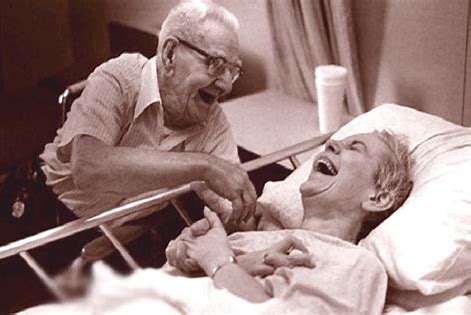 How many people can do this? I wonder, while trying to drum up some respect for this guy. What percentage of the population can stand up on a stage and try to make complete strangers laugh? I respect anyone who can do what I never could. He told us he traveled twelve hours to be here tonight. He traveled half-a-day to try to make a roomful of strangers laugh. That’s a level of commitment that most people don’t have. It’s one thing to try to make a table of four laugh, but a comedy club requires its patrons to pay a two-drink minimum to enter. How many people could stand up to try to make a roomful of demanding, paying customers laugh? I mentally applaud this guy for doing what he’s doing, but I can’t get past the fact that he’s just not funny.
The audience is receptive at first. At first, they’re laughing at everything he says. Why are they laughing? My bet is they’re aching for comedy. It’s why they’re here. Most of them probably bought their tickets weeks in advance, and they looked forward to it all week. They convinced their girlfriend, wife, brother, or friend that this would be an excellent idea for a Friday night. They bought the tickets for the headliner, but they’re more than willing to give this guy the benefit of the doubt, if he’s halfway decent. What if he did something edgy? What if his act involved nothing more than eating a bowl of Count Chokula? What if he performed a dramatic reading of Dr. Seuss’ ABC book or The Great Gatsby? Would they still be laughing? To us, he has a certain position of authority on humor, because he’s up there, and we’re not. We assume he’s played a number of cities before ours. We assume that he’s up there, because other people more knowledgeable than us put him up there, and he’s been thoroughly vetted. He’s doing something none of us could do sober, so we defer to his experience. Is that why they’re laughing, because I find this guy typical and tedious.
I was so immersed in these thoughts that I missed the audience turn. The laughter went from a throng to sparse. What are you laughing at? I thought to those few still laughing, this guy’s not funny. While I searched for the laughers, I failed to notice that they were some of the few who were still laughing, until they stopped too.
The standup comedian was baking under an uncomfortably bright spotlight when that silence took hold. The silence was deafening and a little claustrophobic. Prior to the turn, he informed us that he traveled half a day for the chance to make us laugh, and he added some typical, tedious notes to that, and everyone laughed. That was his attempt to build familiarity with the audience, and to infect them with the laughing bug so they might follow him into the unfamiliar. They didn’t.
In the now deafening silence, I thought about that twelve-hour drive, and how it must’ve been filled with such excitement. I figured he must have quickly clicked his cruise control in, because he knew his excitement would cause him to violate speed limits. He probably thought his appearance in our small city would kickstart his dream of being a standup comedian. I wonder if that trip involved any concerns about about how quickly the best day in your life can turn into your worst. Twelve hours is a long time to spend in a car, alone, with nothing but your thoughts, your excitement and your worst fears.
He resembles Weird Al without the looks. I see myself in this man. I see his observations. I know where they’re headed, but they don’t quite get there. There’s something wrong with his delivery, and his material. Members of the audience are now cringing at one another. They’re as uncomfortable as he is, I think. I chuckle. He drops another tedious joke, and I laugh harder. His material hasn’t changed, but his delivery has. He’s in pain now, and I’m close to guffawing.
He had a few self-deprecating jokes that hit home in the beginning. He opened with a few jokes about being unattractive and overweight. He joked about how grateful he was that a woman decided to become the wife of an overweight, unattractive man. They laughed. Little by little, joke by joke, silence began to rear its ugly head, until it became obvious the poor man was baking under the spotlight. I was one of the few not laughing in the beginning. Now I’m the only one who is. Various members of the audience began twisting around in their seats to see who is laughing.
I laughed because I saw him sweating. I laughed because I saw him trying so hard that he was trying too hard. I laughed because he was drowning, and he was not doing some kind of meta routine on failure. I laughed, because I realized I knew we were watching a man’s dreams come crashing down around him. I laughed because I knew I was witnessing one of the best days of his life turn into his worst nightmare. It was fascinating to watch. It was captivating.
“What’s the opposite of empathy and sympathy?” I asked a friend, in a discussion involving this peculiar morbid curiosity we have for enjoying other people’s pain. When he didn’t answer straight away, I added, “Sociopathic, psychopathic? Is it narcissism? Whatever it is, I have it.”
“It’s evil!” he said. “We’re not evil, but we have a little spot of evil in our hearts. You know how some people say they have a soft spot in their hearts for something about a person, place, or thing? Yeah, we have a hard spot in our hearts.”
That was such an insightful comment that I couldn’t help but think he put a lot of thought into it, but was it true? Kind-hearted, sympathetic and empathetic men do not enjoy watching another man squirm in pain. I don’t rubberneck on the interstate, hoping to see some guy screaming on a stretcher, and I don’t enjoy seeing other people cry, but I love watching the worst part of an otherwise healthy, normal man’s worst day. What’s wrong with me? Have I been conditioned by the comedians who almost appear to enjoy bombing? Andy Kaufman, David Letterman, and Norm MacDonald turned bombing into an art form. They almost appeared to get off on it. MacDonald said he didn’t care if an audience laughed or not, as long as it was a good joke. That was his charm. Chris Elliott personalized the Kaufman/Letterman element and created a career out of it, based on the idea that no one would purposely subject themselves to the level of self-deprecation and debasement he did that would result in ridicule and embarrassment. Did they plant seeds in my brain that anything embarrassing, uncomfortable, or cringeworthy is some form of lowbrow entertainment that is so low that it’s considered high art? I didn’t get that, until I did. Once it clicked that it’s schtick, it stuck. Once I got it, I couldn’t wait to proclaim to the world that I got it. I understood it, until I understood it to the point that I now consider it hilarious to watch another man squirm under the bright spotlight of a small city’s comedy club.
It’s not schtick for this man however. He worked hard on this material. We can feel it in his transitions that this isn’t some form of meta material with highbrow commentary on the plight of man. We can hear him nix some material, lose his place, and worry that he frontloaded all of his best material. We can hear him worry about his performance while he’s talking. He’s lost faith in his material, in himself, and his ability to turn this around. I laugh harder. I have the giggles. I can’t stop. People are staring. The other comedians in the comedy club are giving me looks. I compose myself, until I analyze the comedian’s face deeper. His pain is so obvious that I imagine this is what it might look like if I could see the expression of someone who just jumped off a building. I have the giggles again, but I’m controlling it better this time.
Mercifully, the comedian’s act ends. The crowd applauds politely, and the comedian surprises me by mouthing, “Thank you!” to me. I didn’t know it at the time, but my friends later tell me that he began directing his jokes at me toward the tail end of his act. I saw him looking at me, but I didn’t think he was looking at me. They said he was. He, presumably, thought I was the only audience member who got it. I felt bad, because I wasn’t laughing with him. I was laughing at him.
One excuse I could use to explain my behavior is that I find the unfunny hilarious. Perhaps I relate to this comedian, because I’ve been told that I have a decent pitch, and I know my beats, but my punchlines are so confusing that they’re not funny. Perhaps my laughter had something to do with the idea that I don’t enjoy traditional humor. I’ve watched too many comedies, sitcoms, and radio shows to appreciate what we call a traditional humor.
It’s Letterman’s fault. He started it all for me. Letterman turned squirming into an art form. Letterman left us wondering how we could help him, and he answered by saying there’s no help for me. It made us so uncomfortable it was almost painful and hilarious to watch. It’s the joy of witnessing other people’s pain (OPP), and it’s David Letterman’s fault. I’d love to say that I believe that. I’d love to say that watching him on NBC for all those years had such a profound effect on me that I’m now conditioned to find OPP hilarious. How many years did he cringe with us in uncomfortable pain? I’d love to say it’s all his fault, but my enjoyment of OPP predates him.
***
 In grade school, I just happened to have the perfect angle to catch Andy Parizek’s impact face, when he walked into a light pole. Some deep, dark part of me found his expression of pain so precious that I watched it over and over on an internal loop I developed in my brain. I wished I had some ability to draw, so I could create some product to memorialize this moment. Andy Parizek wore glasses, and the impact was so perfect that it broke his glasses in a clean break right down the middle. The pain was followed by a brief period of silence in which the good people around him tried not to laugh and further his pain. When those good people then moved in to comfort him, I tried to run away to a dark corner of the playground to laugh, but I didn’t quite make it.
“How come when we get hurt, it’s so funny to you,” Mike Amick said, “but when you get hurt, we’re supposed to take it serious?”
Is it evil to enjoy watching other people get hurt? Do we have a hard spot on our hearts for certain moments? We’re not evil, but is there something wrong with us if we enjoy it when another person cries during an argument? Is there a hard spot on the heart of someone who enjoys watching another’s dreams come crashing down around them? The fact that a grade school child’s assessment stays with me to this day should suggest that I’m still struggling with it.
When we discuss such things, some of us exaggerate the levels of pain involved. The incidents we’re talking about here are skinned knees, the guy who walked into a pole and broke his glasses in half, and a comedian who wasn’t able to make strangers laugh. Most of us have never seen anyone get truly hurt, and if we did, we probably wouldn’t laugh. Yet, it is a little deranged and morbid to enjoy watching another experience minor pain, regardless if that victim eventually finds a way to laugh about it.
I’m a grown man now who manages to display kindness in the face of tragedy. When someone dies, I join the good people who express compassion, and sympathy. If I ever saw someone truly get hurt, I don’t think I would find their excruciating pain enjoyable. I know all kinds of physical and emotional pain intimately now, and I empathize when anyone endures minor physical pain, but after I tend to their wounds and make sure their okay, I still rush to that dark corner of the room to laugh my tail off.
Conducting corporate meetings is not in the same league with standing on stage before paying customers, but they gave me a taste of what this comedian was going through. When you’re conducting a board meeting, your material sucks, but it’s important that the employees know the material. It doesn’t matter that the employees know that they’ll be caught with their pants down when the situation in which this material arises, they’re so bored they can’t take it anymore. I’ve been on both sides of corporate board meetings, and I know one in one hundred are in some way interesting. In the hundreds of board meetings I conducted, I thought I had an interesting one once. It was a special subject I knew inside and out, I got a great night sleep the night before, and I think I ate something healthy. I was on, and I knew it. I dropped two or three jokes that I thought were pertinent, and I looked out in the audience to gauge their reaction. Two people were asleep, and the rest of the eyes in the room were glossed over. I had a small taste for what this comedian was going through, but that didn’t make it any less funny to watch him squirm and implode.
Anyone who laughs at other people’s pain knows they’re going to get theirs, eventually. We’ve all experienced some levels of karma, but we know that ain’t it. There’s more to come. We know it’s going to get us, and it’s going to hurt. We know there will come a day when we’re old and decrepit, struggling to breathe one last breath, and someone will find that struggle hilarious. We’ll probably yell something like, “What are you laughing at? I’m dying here!” in the heat of the moment. When our emotional hysteria subsides, and we don’t have the strength to fight death anymore, we’ll either acknowledge that we deserve it after laughing at so many others during the worst days of their life, or we’ll find humor in it too.
 Rilaly