This is my letter to those of us who have an insatiable curiosity who haven’t achieved anything in the field yet. This is a letter to those who haven’t found their artistic voice just yet but know it’s somewhere between their favorite authors, and the thousands of other books they’ve read and them. Continue that search I say, and if you find it, follow it in any direction it leads you. The path through some odd rabbit holes and dark forests might not make much sense, but all paths eventually lead back to you. It might not make much sense why we a particularly obscure piece of literature by some obscure author interests us, but I advise you to purchase it and see if it pays some artistic dividends.
I didn’t know any of this when I started, but I ached to express myself in some way. I didn’t know how to express myself, but the desire to do so was enough to guide me passed the heartbreaking critiques I received. I was not the prodigy I thought I was when I first started in other words. I was not a gifted intellect who just needed a canvas, but I was a curious sort who loved processing the data I saw in my otherwise boring days into creative non-fiction. When I started this venture, I tried to hard to spin the stories I had into something gargantuan, but I found the truth, the whole truth, and nothing but the truth far more compelling. It took years to realize that I was never going to be Stephen King, Dean Koontz, or James Patterson, and it took me a little longer than that to be okay with that. Thanks to a couple of articles and books, I discovered that I was a creative non-fiction writer before being creative non-fiction was cool, who reported on the facts, as opposed to an out and out artist who could spin an organic web.
I knew I was different, yet I didn’t know how to service those variables in a constructive manner. My worldview was different too, but I had no idea how to create a vehicle for it. This mystique I created of being a writer also became counterproductive over time. I wanted to create this world without doing the work. Every time I wrote, I received more evidence that I probably wasn’t as good as I thought.
Some of the people around me were quite generous in supplying notices to bolster this notion I had that I probably wasn’t as skilled as I thought I was. The one key characteristic that carried me through all that was that I had/have an insatiable curiosity. This level of curiosity can be embarrassing at times, as it can override good sense. When I’m involved in a relatively unique experience my curiosity gets the best of me, and while I might know how and why things work, on a certain level, some odd part of me wants to “rework them” with you to understand how we all arrived at that conclusion. It can be embarrassing, because most people provide the A-Z mechanics answer with that “of course” tone. I then share the “of course” tone in my answer, and both of us consider me a little dumber in the process.
One element of the “of course” findings involved me wanting to be more interesting than I was, but I never quite made that leap. There is an A-Z checklist to being interesting, some have it, most don’t. How do you achieve it, in a room setting, at a Thanksgiving Day dinner? I compensated for my short comings by studying those around me. I developed a mental, A-Z checklist of those characteristics, but I was never able to employ them properly.
“Why did you talk about that instead of this?” I would ask scintillating conversationalists. “Why would you think anyone would want to know how you roll out a sleeping bag, in a tent, while on a camping expedition? Everyone considered it hilarious, I know, but why did you think anyone would? Why did you say the in the third sentence of your presentation, instead of the more common the? Is it all about how we tell such stories, or provide a hilarious retort? Why do we react differently to two people who say almost the exact same thing?” Some people might add to such a story, others might take a leap from that joke to add one of their own, but I would study and later interrogate the storyteller to try to understand the process of joke telling, storytelling, and what separated them from those who can’t tell a joke or a story as well. I understood it on a macro level, but those finite details of being interesting plagued me. What’s the difference between Jerry and Lou and Daniel and Ron? It’s obvious to anyone paying attention that Daniel has simply checked out. I don’t know what roads he’s been down, but somewhere along the way, he determined that no one is interested in what he has to say. He gave up ever trying to be engaging. He just knew he wasn’t, and for reasons inherent to his nature, he knew he never would. Most entertaining and engaging people don’t put a lot of thought into it, they just have fun, but others learn the process as they go. I am perpetually frustrated by my separation from those who are entertaining, and I discovered that in the process of trying to understand the “it” factor they have, I was trying to understand more about myself.
I didn’t do any of this for the purpose of developing high quality material, it’s more a byproduct of it. I am curious to a fault, and I write that word fault with the idea that some people who know me well consider me stupid, naive, and stupidly naive. When they explain it to me, I feel stupid and naive, because on some level I knew how it worked, but there is this sense that I want it reworked for me, so I can understand it again, more thoroughly, down to the grains of construction.
How deep is our sense of curiosity? How deep into the organic grain of construction are we? What do we do with the information we find? Most of it is not useful, in an artistic sense, but organic curiosity often leads to aimless fascination that just might produce a grain of inspiration.
It’s in these grains of construction that I discovered an individualistic interpretation of what it means to be a writer. A lot of new, and longtime, writers write, speak, and hypothesize about the process of writing. We speak about having post-it notes all around them to capture the ideas of the moment, or a moment, before they forget them. We talk about the tools we use to create, the mood we need for proper creation, the setting, the mindset, and everything that we’ve defined as the characteristics of being a writer, but how do we transport all of that into an interesting idea?
The best route to developing interesting ideas is to have the most boring childhood imaginable. I don’t know how boring someone else might view my childhood, but I can report that I spent vast amounts of hours doing nothing. With the advent of cell phones, this might be a thing of the past, but I spent those hours doing nothing but thinking about stuff. I rewrote and editing real conversations I had thousands of ways, and I spent so many hours fantasizing that I became the adult and the storyteller I am today.
Nothing replaces the human mind, it’s the best device for creative thought ever invented. We shouldn’t need post-it notes, recording devices, or anything more than a well-honed brain. We record that which is memorable, or noteworthy, material. If it is, in fact, noteworthy material, it will stick. It will gestate in your brain, until you have a completed idea of that which you have experienced. In the curiosity regarding the organic grain of construction, the creative mind will eventually understand as well as, if not better than, those who constructed it, for the purpose of rewriting, or reconstructing it with a creative spin.
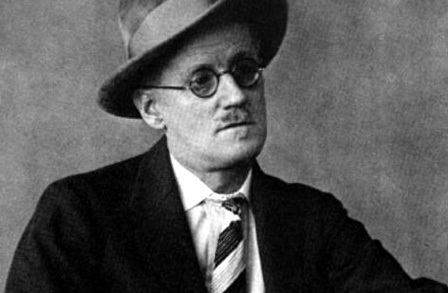 Are you Kerouac or Joyce? One style of writing that new writers, and complicated artistes, laud is the Jack Kerouac and James Joyce style of writing called stream-of-consciousness (SC) writing. SC writing is a style of writing that plays out exactly as it sounds: An author sits down and composes 300-700 pages of prose in a matter of months. The SC author does little to no editing and revising, because in the strictest definition of SC writing there are no mistakes in a contextual or conceptual sense. “One error is a mistake, two are jazz,” some say Miles Davis once said. Contextual mistakes, according to those who pursue this form of writing, and the painter Pablo Picasso, are subconscious leads. What could be seen as an errant stroke by some was something to build on for Picasso, Davis, and Joyce and Kerouac when it came to writing. They saw mistakes as the subconscious guiding them down a path they hadn’t consciously considered before. Both of these writers were forced to fight off editors and publishers in the belief that their works should remain as is.
 “I write to entertain myself,” those who adhere to the Joyce/Kerouac style say. “If anyone else is entertained, that’s gravy.” The reason we started writing in the first place was to see if we could take all of our influences and combine them with our inner voices, to achieve stories that would entertain us. Too much editing and revising takes the spontaneity right out of an artistic creation, and trying to make my pieces relatable to all is impossible, so why would I spend too much time trying to correct conceptual and contextual mistakes?
Have you ever read James Joyce’s Ulysses? How about Finnegans Wake? Most normal humans, of adequate intelligence, need a guide to help them understand all of the references and allusions Joyce makes in these works. All of Joyce’s jokes and provocations were “in-house” references that he understood, and that you can understand too…with a reference guide that’s almost as lengthy, but they’re not enjoyable books as a standalone. No one will know what the heck you’re talking about, in other words, when you write in Joyce’s SC manner. You will know, as Joyce and those that lived in Ireland at the time knew, but your reader won’t know. You will only frustrate them. “Can’t you see that A led to B, and C was the result?” Oh ok, they say, now I get it. As frustrated as you were with them, it wasn’t their fault that they didn’t get it. It was yours, and you need to edit and revise more.
Most new writers should be advised to follow the editing and revising school of thought for just this reason. This line of thought suggests that a story matures in the editing process. It suggests that the framework of a story can be borne in the stream-of-consciousness (SC) stage, but that the marrow of a story is created when we go back and live through the story again and again, until we reach the readability stage. This theory also suggests that editing and revising stories gives the author greater objectivity than he can achieve in the creation process. Objectivity gives the author the chance to attempt to read the story in the manner a reader may read their story. It gives the author some distance from the relatively narrow position one is in while creating the piece, and they can correct some of the errors of flow and characterization that may not be apparent in the creative process.
We “editing and revising” writers find it hard to believe that Kerouac and Joyce were able to develop their story, their characters, their pace, and their setting on the fly in the manner they suggest. It just doesn’t seem feasible—no matter how brilliant they may be—that they could make all of the connections, and all of the asides mesh well into a story on the fly, but if you believe the Kerouac myth—that Kerouac created—he wrote his classic On the Road in a drug-frenzied three weeks on a scroll of paper. How much of this myth is true should be left up to historians to debate. What cannot be debated, however, is the fact that Kerouac and Joyce submitted relatively raw pieces of work that achieved historical status. What also cannot be debated is that—if everything they’ve said about their process is true—they should be held out as the exception to the rule that editing and revising are the keys to achieving a complete and readable story.
Most of us are not a “Man of Golden Words”, to borrow a phrase from lyricist Andrew Wood. Most of us write stupid things, bad scenes, flat characters, sloppy sentences, too much setting, unnecessary asides, and our flow isn’t quite right the first time through. We also write “great scenes” that appear foolish in revision. Most of us need advice, a second reader, and a vocal read-through. Most of us are not spontaneous, artistic geniuses, and our work could use a lot of sprucing and pruning. In this refutation, I go back to the organic construction of the grain. I believe that writing a brilliant line, as Hemingway would, requires numerous rewrites, reworking, and shape shifting. If I rework a line seven different ways, I might eventually produce enough material to isolates the germ and protect the interiority of my idea. If you are an artistic genius—and I’m not one of those who claims that no one is, out of spite for not being one—God love you. I wish I was one who could spontaneously create something that appears so simple without having to work so hard at it.
Editing and revising are definitely not the fun part of artistic creation. They are, for the most part, tedious activities that require training and discipline, and training and discipline are not the artistic principles that complicated, non-writing writers want to endure when they think about, talk about, and write about the process of their creations. The Joyce/Kerouac process appeals to them, because it makes them feel more like an artistic genius. Writing should be about writing, they are likely to say. It should be spontaneous, so that it’s still fun, and when they can’t spontaneously create, they tell people they have writer’s block. Writer’s block is a fundamental element of the complicated, non-writer’s writing life, and they all have their processes to help them out of it. True writers, in this writer’s humble opinion, never experience writer’s block. They may have moments in which they are more inspired than others, but to be unable to think of anything to write just seems impossible to those of us who have written so much that we’re now disciplined enough—after hours of exhaustive training—to always write something.
Fruit and Flowers: On that note, for the rest of us who don’t receive divine inspiration for artistic creations, there is a cure: “Paint fruit and flowers!” Flipping through various collections of art, I was surprised to find so many mundane and simple creations by artistic geniuses. Flip through any Van Gogh collection, Picasso collection, or Matisse collection and you’ll find them—relatively boring and mundane paintings of the sky, shrubs, trees, fruit, and flowers. I was shocked at how many of these paintings there were in the anthologies of these artists. Why would such talented artists waste their time painting such seemingly benign and boring paintings? Answer: They were keeping their artistic muscles taut and honed. They were learning the art of using color and contrast, and prominence and shadowing. They were finessing their God-given talent. They were becoming artists, in other words, and they were getting better, and when divine inspiration eventually struck they would be ready for it. Some of the complicated, non-writing writers have this Hollywood image of writers that tells them they need to be inspired to write. These writers know that their best material will occur when the Danube River is just outside their hotel’s window sill at a time when the first storks make their appearance in Petrovaradin. These writers know they can’t be too happy, or too sad, and that they need the finest Colombian coffee scents in their nose to receive divine inspiration. A drafty writing room with Gatorade and Diet Sunkist is just not conducive to inspired writing. They’ll tell you that they have writer’s block, when you ask them what they’re writing. “Well,” I want to scream at them. “What are you doing about it? Try writing Fruit and Flower stories!”
“That’s easy for you to say,” will be the theme of the “complicated” writer’s reply, “but I can’t write when I’m not inspired.” If I were to see something they wrote that was at the artistic genius level, I would have no ammunition in these conversations, but they’re usually just boobs like me who want to purport some sort of artistic genius persona. They’re usually not writing anything at all. They’re usually just lazy, complicated, non-writing writers. “Write something stupid,” I want to say. “There are fruit and flowers everywhere. You don’t need to write Crime and Punishment every time out, but if you continue to write your Crime and Punishment may fall out from between the cracks.”
Therein lays the key to great writing, in my humble opinion, for if you continue to fertilize the seed with the dung of creating so many pieces that are not worthwhile, you might eventually create a flower. Others (most) will never produce a Ulysses, a World According to Garp or a Crime and Punishment style flower, and they may become so frustrated that they don’t want to continue. Those people probably shouldn’t continue. This isn’t for everyone. It’s for the incredibly talented individuals, and those with incredible amounts of perseverance.
This may seem antithetical to everything I’ve written over the course of these How to Succeed in Writing blogs, but the question is a vital component to writing fiction, non-fiction, creative non-fiction, and everything in between. Do you enjoy writing, expression, and artistic creation, or do you want to be famous? Have you created a number of good works, but none of them are of the highest quality? How do you handle that? Do you feel like an utter failure, or are you aching for more? If you’re a complicated artiste that hasn’t achieved the fame you believe you should’ve at this point, you may want to give up. Maybe you just weren’t meant to be a writer in the first place. It’s a very important crossroads for you. If you have the temerity to push ahead, there are a number of things that you can do to keep ‘it’ all shiny and honed until you receive divine inspiration.

 Rilaly