Ace Frehley has No Regrets. It’s the title of his book. He has no regrets, apparently, about wasting whatever God-given talent he was given, and he has no regrets about doing little-to-nothing to make his “right place right time” moment in history a little better. That’s great Ace, you stuck your middle finger right up into what Gene and Paul have been saying about you, but what about those young fans who defended your legacy for much of their young lives? Do you have No Regrets about all that?
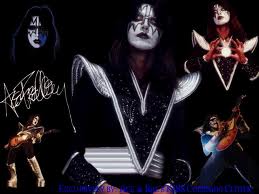 The author of this piece was a fan, a HUGE KISS fan, and more specifically an Ace Frehley fan. Like the Beatles’ fans of the 60s, we all had our favorite member of KISS, mine was Ace Frehley. Chicago Bears running back Walter Payton was my favorite person and Ace was number two. I still have a soft spot in my heart for the man, but Ace Frehley’s new book No Regrets has even tainted that.
Ace Frehley states that he is clean now, and like so many other rock bios that adorn the shelves of bookstores across America, Frehley takes the vantage point of an outsider commenting on his past debauchery. Alcohol and drugs were the way Frehley dealt with the ups and downs of stardom, but he has No Regrets about this. As comedians in the past (Pryor and Carlin) have done, Ace chooses to laugh at his lifestyle choices. He chooses the “now that I’m clean” theme to detail for us the hilarity of being so out of control that you don’t know what you’re doing. As a lifelong Ace Frehley fan, I found many of the Ace Frehley stories funny, troubling, and disenchanting, but Ace has No Regrets.
The “breath of fresh air” arrives when Ace details for us the tale of KISS. Ace is more honest and forthcoming about the formulation of KISS than any of the other members have been to this point. The reader begins to realize that Ace is going to be the first to tell the story of KISS without a marketing plan. There is no KISS mysticism attached to this version of the story, the KISStory, such as the stories faithful KISS readers have been inundated with by Paul and Gene. This is the KISS story as told by “the fun and spontaneous member”. This is the more “real” version of the story. Unfortunately, the more “real”, Ace Frehley version of the story substantiates many of the charges Stanley and Simmons made against Ace’s apathy and his poor work ethic. The No Regrets book also substantiates the charge that Ace wasn’t particularly elemental in the formulation of the eventual KISS product, that he was basically just along for the ride, and that he has No Regrets about any of this.
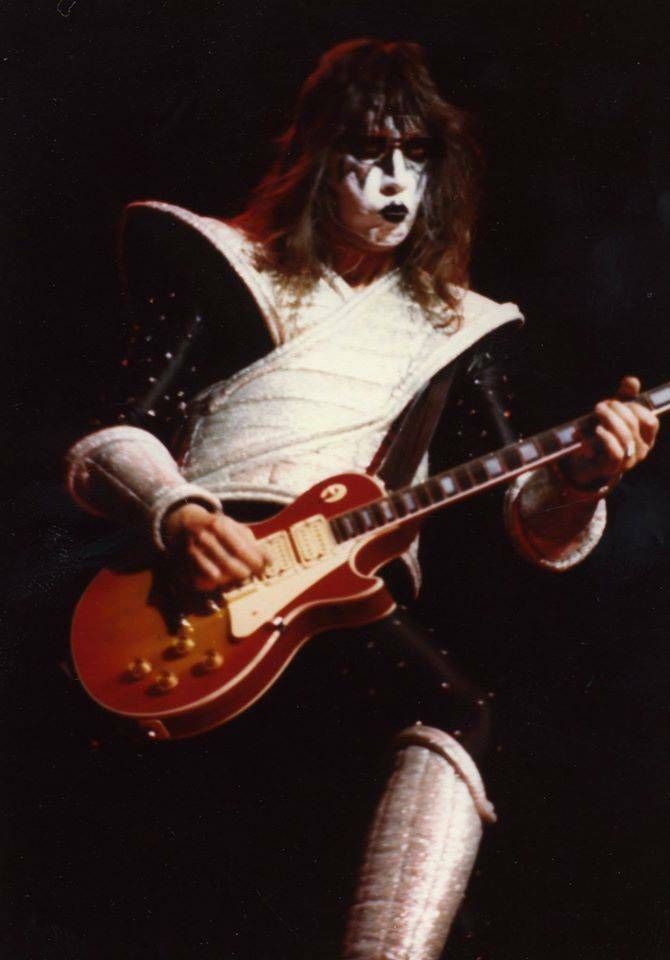 In one particular story, Ace says that the producer of the KISS album Destroyer, Bob Ezrin, began pushing Ace to come up with guitar solos for the songs on the album. Ace complains that Ezrin’s pushing proved counterproductive, because Ezrin didn’t understand the spontaneous nature of artistic creation. This, for me, is the most illustrative moment in the Ace Frehley story, because I understand the spontaneous nature of artistic creation, and I know how much downtime musicians have between albums. They might be touring, doing promo spots, and other forms of promotion, but there’s still a lot of time to sit around and fiddle with the guitar to create solos. If Ace entered the studio with around ten to twelve solos, it’s possible none of them would’ve fit the songs perfectly, and that’s where the whittling and tweaking come into play. To listen to Ezrin and Ace’s characterization of this confrontation, Ace walked into the studio with no solos, or any ideas for solos, and Ezrin expected him to come up with one to fulfill his contribution to the song.
At that point in his career, Ace Frehley was one of most revered guitar players, known for his creative solos. Ace’s lone contribution on a majority of the KISS songs was a brief solo between verses, and he couldn’t even come up with that by the time KISS’ Destroyer album came out? At this point in the story, I would’ve been mentally lambasting Gene and Paul for presumably leaving out some necessary details of the story. That’s not the case here of course. This is Ace telling the story. As I said, it’s all troubling and disenchanting, but he had No Regrets.
The question that this reader has for Ace, on this particular issue, is, “How much time, between albums, did you have to work on these spontaneous solos?” Spontaneity can be tough to generate on the spot, of course, but how much better would those solos be if by the time he entered the studio, he had a pallet from which to choose? Talented artists, of which I think Ace is one, know better than to do nothing for months and then expect some sort of divine inspiration to strike when they need it. Most who depend on spontaneity for a living know that they have to constantly hone the muscle. Artistic creations take time, devotion, and discipline.
I’m not a blind fan don’t get me wrong. I recognize KISS music for what it is. I don’t put it on par with Monet or Picasso in the world of art, but even KISS music takes a degree of involvement, work ethic, and commitment. Ace Frehley was a significant part of a group that put out products that many of us spent our allowance on, but Frehley thought Bob Ezrin pushed his artistic sensibilities a little too hard, because Ezrin didn’t understand the gentle process of artistic creation. In this gentleman’s disagreement, we have the artiste named Ace Frehley who many have charged, and Ace basically substantiated in his book, had a very poor work ethic and chose to party when he wasn’t in the studio versus Bob Ezrin. Ezrin, to that point, worked with Aerosmith, Alice Cooper, and Lou Reed. Ezrin also produced albums for a wide array of artists including: Pink Floyd, Hanoi Rocks, Deep Purple, and many others before and after Destroyer. Even fan boy here, who wants to take Ace’s side in this episode, cannot side with him. My educated guess, based on the characterization of Ace Frehley by others, and by Ace Frehley in this book, is that he arrived in the studio totally unprepared, and Bob Ezrin got mad at him for it. Ace then got mad at Ezrin for getting mad at him about it. Yet, Ace Frehley has No Regrets.
Few have questioned Frehley’s God-given gifts, but he apprently did little to formulate and finesse the gifts that were given to him. What were you doing between albums Ace, other than touring? The answer: Sex, drugs, and alcohol. No Regrets. You read Ace detail this portion of his story, and you realize that Ace may have been paying a little bit too much attention to his press clippings. He may have been listening to those adoring fans that put him on a pedestal. He may have thought there was a degree of mysticism to his art that couldn’t arise as a result of a request from a meager human, but it had to be waited for in the manner of some divine artiste. Say what you want about Gene and Paul, and many have (Ace does in this book in good ways and bad), but Gene and Paul knew there was nothing divine about what they were doing. They simply worked their tails off for the legacy they eventually achieved (and I cringe a little taking Simmons and Stanley’s side here).
Ace chastises the KISS bassist Gene Simmons throughout the book as a man who took the KISS product a little too seriously throughout the process of building it. Ace talks about how he couldn’t do it. The movie KISS Meets the Phantom is an example of the “KISStory” that Ace admits he basically sat out. He looks good in hindsight for having sat that one out, because the movie is generally considered a bomb. Ace talks about how he didn’t enjoy making the album “The Elder”, and how he generally sat that one out too. Ace then talks about how he wasn’t much of a part of the making of the album Destroyer either. The latter is a little more painful to him, as evidenced in his words, but this may be due to the fact that Destroyer is generally considered to be KISS’ best album. Hindsight shows Ace regretting that he wasn’t a greater part of the successes, but he doesn’t mind telling us he had little to nothing to do with that which is generally considered less successful artistically and financially. How convenient.
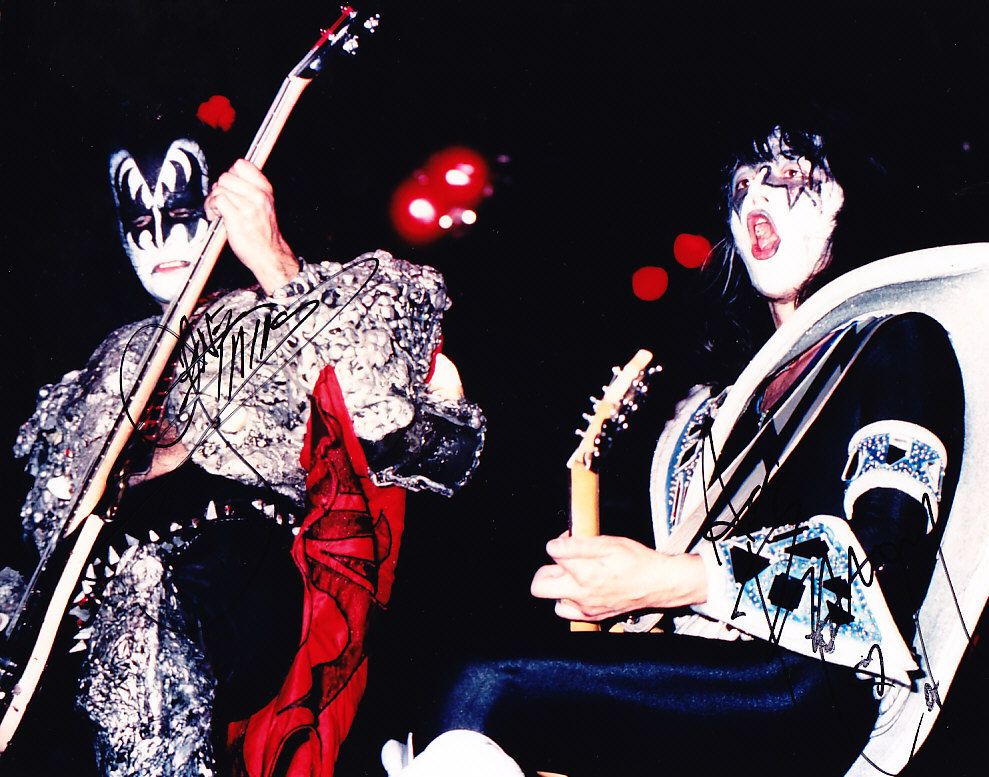 Ace condemns Gene as a business man who has no friends. He says Gene needs to cut loose and have a beer every once in a while. To be fair to Ace, he does thank Gene and Paul for everything they built, and he’s not as negative as I thought he would be. I read where Gene leveled Ace in many areas, and I expected the return fire to be explosive. He pounded home the point that Gene has no friends by saying that the Gene Simmons Roast only had comedians in it (and family members), but he doesn’t have as many negative things to say about Gene as this review and others may lead one to believe. The point he’s trying to make is Gene isn’t very fun, warm, or an extreme joy to be around. Ace knows Gene better than most, and he makes an informed analysis, but I don’t really care that much. I met Gene once, and he was very nice, but who cares? Gene could argue that he devoted his life to an enterprise that a lot of people really enjoyed. Whatever talents in life Gene was granted, he made the most he could out of them. When the final epitaphs are written, the idea that Ace had a ton of friends, and he was a fun-loving, good time rock-n-roll dude, sometimes at the expense of his dedication to his craft, will prove a testament to his character, but Gene’s dedication to his craft, at the apparent expense of human relationships, will prove just as vital to his legacy. As Ace once sang, it was, “Two sides of the coin, which one should I choose.” Thanks in part to No Regrets, many hardcore Ace Frehley fans now know which side he chose, and it did some damage to his legacy.
Those of us who were Ace Frehley loyalists for much of our life, have one quick question for Ace. The question is based on the fact that we defended Ace among our friends and those who informed us what Gene and Paul said about him. Why would you write this? Why would you tell the world that you didn’t have as much play in the formulation of this KISS product as we thought you had. Why would you tell your biggest fans that you were basically along for the ride, for much of the time? Why would you say that other than some minor artistic differences, there’s no real huge story to your departure? Or, that you simply got sick of it?’ We know nothing lasts forever, and some of the times good things need to die. Most of us would agree with you that KISS overstayed their time on stage, but your notes on how little it meant to you when it meant so much to us, when we were kids, was a little deflating.
Ace does mention the fact that he may not be alive if he were still in KISS, but it’s clear that that was totally on him by that point. The only one who encouraged Frehley into greater debauchery, Peter Criss, was long gone by the time he quit, and Paul and Gene were basically dry as stated time and again throughout the book. Did Ace envy the success Guns N’ Roses guitarist Slash had with his autobiography? Did he know that his story was similar, and he wanted a piece of that pie?
In a promotional interview for this book, Ace did on The Today Show, Ace talked about how proud he was to add published author to his list of accomplishments. That’s great, some of us thought, and it’s a laudable goal for any high school dropout. The question is what did you accomplish? What did you publish? Was it a novel, a short story collection, or a bio that detailed for the American public a dossier of artistic accomplishments? What this published author managed to have published was a tome of a wasted opportunity, a waste of talent, and a largely wasted life. My guess is that Frehley saw all of acclaim and sales that went to Guns N’ Roses guitarist Slash and realized that his story was similar. It’s as entertaining as Slash’s was, and it’s received as much praise, but at what price?
 The reader is left with the idea that Ace led a blessed and lucky life, but when it came to actually working, and finessing that gift to even greater heights, Ace got artificially turned on and tuned out. Ace will undoubtedly receive a lot more praise for being “more real” with his story, but those of us that considered ourselves true fans wish he had been a little less real to keep the myth of Ace Frehley alive. Don’t get me wrong, it’s a fun (and in spots a funny) read, stories of debauchery always are, but it’s also a little sad and disenchanting.


As a longstanding KISS fan…and member of the KISS Army I say BS to Mr Frehley and everything Gene said about you was TRUE…. Un reliable & Unemployable. Going on Tour and no missing a Date does not atone for the debauchery.
LikeLike