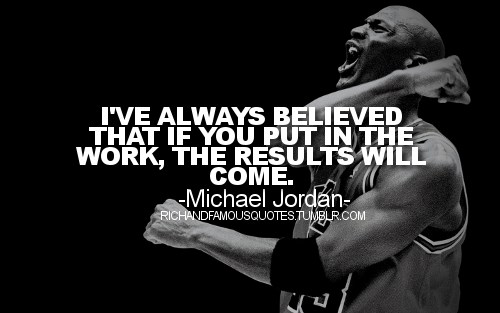
“He has a talent,” one person said of another. “I don’t know what it is,” she furthered, “but he has a real knack for taking photos.” The subject of that compliment beamed in the aftermath. The compliment was vague, but she used the ‘T’ word, and very few can avoid the gush that follows having a ‘T’ word thrown at them.
It was a nice photo (not the one pictured here), but the ‘T’ word? The compliment suggested that this photo was but one of a long line of photos that you had to see to believe, but it was still just a photo.
 Most of us reserve our use of the ‘T’ word for athletic and artistic accomplishments, but we know that many use it in broad terms. We know, for example, that an engineer can display a wide array of talents for his craft that others may not have, but we often say that that person is good at what he does, a master craftsman, or expertly skilled, but the use of the word talent is not often used in conjunction with most skills.
Some could say that a grown man’s ability to outdo his young peers in a game of hopscotch is a display of talent, but most fellow adults watching this man hop from square to square would suggest that he should consider finding a more constructive use of his abilities, if he wants others to consider him a talent.
Merriam-Webster defines talent as “a special ability that allows someone to do something well.”
Philosopher Ayn Rand steadfastly refused to recognize photography as art, but she did concede that it requires a skill, a technical skill, as opposed to a creative one.
We all know that definitions, such as these, can be broad, but most of us have personal definitions that fall on stricter lines. If the definition of talent is as broad as Merriam-Webster described, and photography requires some technical skill, then we should concede that taking a quality photograph does require some talent. One could also say that a talented photographer uses discretion and selectivity when he selects his shot, but could this ability to capture a moment be nothing more than a right place, right time decision? Some of them don’t even display that. They take ten to twenty photos and display the perfect one.
If one takes a hundred different photographs, and only one of them is of an exceptional quality, is that a display of the photographer’s skill? Yes it is, in a broad sense of the term. If that’s the case, we could say that if a man takes a hundred free throws and only makes one, he has a talent for shooting free throws, if that one free throw is so perfect that it barely touches the net.
If a photographer purchases a top of the line camera, and he uses the best photo-enhancing software available to produce evidence of his prowess, and he lays that photo down on a table next to the photo of another taken with a disposable Walmart camera, and no enhancements are permitted, does his superior photo reveal God-given talent on his part, or does it contribute to the lie that a skilled, talented photographer is artistically talented?
The Truly Talented
We’ve all witnessed the effect truly talented people can have on a room, and this effect often makes us a little sick. “He’s just a human being for God’s sakes!” is one of the snarky, coping mechanisms we’ve developed for dealing with “the gush” to adore the talented.
The adoration of talent varies with the skill required to accomplish the feat, of course, but if you’ve ever met a truly gifted people, you know that most of them are not interested in being better today than they were yesterday. Most of them enjoy the potential they have to be better more than they do the work involved in becoming better. “We’re talking about practice!”
Those that become obsessed with being better, and enjoy the benefits the rigors of practice can produce, often end up having their names etched into something by the time they’re finished. These few don’t necessarily bathe in adulation, they focus on one on one battles. When they get beat, and everyone gets beat, they do things that the overwhelming majority of us avoid to get better. For the overwhelming majority, sports, artistic endeavors, and all the venues that require talent involve moments. The talented enjoy those moments for what they are, when they happen, but the people who will have their names etched into something take it home with them. For these people, their talent is but a starting point and a gift that they end up honing to perfection, but even for these people talent can be a curse and a burden, and it can lead to acceptance, love, worship, and being scrutinized, ostracized, hated, and ridiculed. The idea of their talent, i.e. their potential, can also haunt them when they encounter its limitations.
An edition of 30 for 30 called Of Miracles and Men portrayed the other side of talent. It depicted the other side of the Miracle on Ice story that we all know of a ragtag group of American amateurs defeating the most talented Russian hockey team ever assembled. Some would argue that this Russian team might have been the greatest assemblage of hockey players ever to tie skates on their feet. This team had already won four Olympic gold medals in hockey, by the time they took to the ice against this American team, and some of them would go onto win a fifth after the 1980 defeat. To hear this group of talented men speak of their careers, the 1980 loss to a group of American amateurs, in a medal round, sits in their system like a kidney stone that will never pass. This Russian team beat an assemblage of Canada’s best that included probably the greatest hockey player that ever lived Wayne Gretzky. They also beat the 1980 American team in a match that preceded the 1980 medal round upset, and those two matches were not even close. This team was so dominant that they could not be beat, until they were.
Some would think that such an historic upset might serve to highlight the Russian team’s greatness, if one could say that one defeat in the midst of a record of total annihilation is a blip in the overall dominance this team displayed over the hockey world for two decades. Listening to these men speak, however, the listener gets a taste for the other side of talent when the only story anyone wants to hear from them involves the one time they didn’t succeed, and how that has haunted them since.
The point one could take from this 30 for 30 episode is that these men spent an excruciating amount of hours of their young lives in cold, dank gyms honing their God-given gifts, trying to improve on the smallest details of the game, only to fall to a bunch of ragtag Americans that may not have spent one-fifths the amount of time honing their gifts. Even with five gold medals (including the 1984 Olympics), the only thing we want to talk to them about is that one match they failed to win thirty-five years ago.
If you’re acknowledged as the most talented person anyone you know has ever met, and the only thing anyone wants to discuss is the one time you failed, why would you want to raise their expectations? Why would you want to endure the marathon practice sessions that focused on the minutiae your coach informed was going to be vital when you encountered the wall of your God-given abilities? Why would you want to invest more of your life becoming better at something other people hate you for being so good at? We’re talking about desire here.
We’re talking about the desire to be better today, than you were yesterday. “We’re talking about practice!” We’re talking about preparing for that day, that every talented person experiences, when they meet their personal wall.
The wall, for those that have never read about it, involves going up against other people that were the most talented people anyone they know had ever met. It involves seeing what the gifted person is made of when they encounter the another person loaded with so much talent that talent is afterthought.
To read the former NFL quarterback Kurt Warner’s examination of the natural talents that fail to succeed on the NFL level, it’s about having a coach, or mentor, early on that recognizes the person’s talent level, and challenges them in a brutal, heartless manner, to reach within themselves to find various other methods of succeeding beyond the talent level they’ve always known. This heartless mentor also helps the talented person in question determine if they have the desire to succeed on a level they may not have even considered to that point.
The Less Than Talented
“My talent has always been, and will always be, and it should be written with a capital ‘P’!” –Your Potential once said.
What if your talent has never taken you the places you thought it would, but you’ve always known you had the potential you had to succeed. What if your talent lays somewhere between being as talented as anyone that you’ve ever met, and perhaps more, but that untapped potential to be more has always remained at a frustrating distance?
We spoke of ‘the wall’ that every recognized talent experiences, but there is another wall that can be more formidable: the wall of self-imposed expectations. The talented might encounter this wall in moments considered inconsequential to other participants, and observers, but to the person that has lived with the idea that they’ve always had the potential to succeed it is but another example of their ineptitude. Most of them do not know that this is the source of their frustration, or if they do, they won’t acknowledge it.
As the Kurt Warner story informs us, the primary difference between those who will succeed and those that won’t occurs soon after they experience adversity. Moments of adversity can be large and small, but they all reveal who we are, and who we are going to be.
A young Kurt Warner may have dealt with moments of adversity throughout his largely undocumented young life, but we can guess that none of them would compare to the adversity that the adult Kurt Warner would experience in his adult life. The most talented person in his area received so few scholarship offers that he ended up playing quarterback for the University of Northern Iowa. The NFL draft did not draft him, following that college career, and the only team that gave him a try-out, cut him before the season even started. He ended up stocking shelves for a supermarket chain. He then played quarterback in the Arena Football League, and he had a stint in NFL Europe before an injury to a starter allowed him to start for a NFL team and lead them to a Super Bowl victory. He was MVP of that Super Bowl and MVP for the season. That Super Bowl team cut him a couple seasons later, and he went onto play for another NFL team for a couple of unproductive seasons, and he ended up with a team that he, again, guided to the Super Bowl. After Kurt Warner’s career concluded, he was considered to be the best undrafted free agent to ever play the game.
Kurt Warner’s story is one of not living up to his self-imposed expectations. It’s a story of what he did after failing to succeed on many levels. (After leading the St. Louis Rams to a Super Bowl victory, then a Super Bowl loss, he ended up on a New York Giants team that gave up on him in favor of future Hall of Fame starter Eli Manning. Warner then led the Arizona Cardinals to the Super Bowl.) It’s a story that should be held out as an example to talented people, but for most of those that are more talented than anyone they’ve ever met, talent and work have always been a zero-sum game: The more talent one has, the less work they think they have to do.
Warner states that most coaches and mentors coach to the talent, and they let the talent do what they do well in a manner that the coach hopes will reflect the coach’s ability to harness talent. They coach for the next game. They coach to keep the talent happy.
If we’re talking about practice, however, one of a coach’s duties should be to put talented people in uncomfortable positions to reveal to them what they must do when talent alone may not be enough get them out of moments of adversity.
It also allows those talented people –that have always used their talent as a picket sign to avoid the rigors of practice– to learn how to finesse the minutiae of their abilities and hone their desire.
As anyone who has displayed an ability to do anything knows, there is always a ceiling, and when one hits their head on that ceiling it can be humbling and humiliating. Some of the times, it’s more rewarding to hide in a cloud of potential. Those of us considered lesser-thans don’t understand what it must feel like to have so many consider us a true talent, and we never will, and that can provide the talented a comfortable space between the reality of their talent and the potential we believe they might have.
If you’ve ever witnessed a display of YouTube-worthy temper tantrum in a bowling alley, on a miniature golf course, or at a softball field, and you’ve wondered why a person would attempt to gouge their own eye out after missing a two-foot putt, I can tell you –as a former wild temper tantrum thrower– that there’s something more to it than the idea that the ball doesn’t always go where we want it to go. We thought we spotted something at a very young age, we thought we were going to be a somebody, a contender, and the obnoxious five-pin that will not fall no matter what we do is not just a configuration of rock maple wood to us, it is the eye of fate staring at us, mocking us for not being able to fulfill the potential we thought we saw.
These eye-catching temper tantrums are borne of an inability to deal with even the most inconsequential moments of adversity, because we never had a heartless mentor who cared enough not to care that we were tired, that our feelings were hurt by something they said, or that we wanted to quit the game because “it’s just not fun anymore”. One could read this post, and think it’s all about sports, until they witness a guy who has no capacity for dealing with the obnoxious five-pins of life, and in the moment that captures his frustration in life for all to see, he does something to the ball return that causes parents to shield their kids’ eyes. For an overwhelming majority of those who would have their names etched into something by the time their career is over, their mentors would spend countless hours teaching them how to deal with such adversity, how to overcome walls –self-imposed and otherwise– and how to become successful people, and yes, talented photographers, I guess.
 Rilaly