“We have two choices in our culture today,” the “theys” who appear on our devices tell us. “We can either feel guilty about doing what we do, or we can give ourselves permission to do them.” The only asterisk in this Faustian Dilemma is celebrital dispensation. Similar to Papal Dispensation, if a celebrity says, or more importantly wears, something on the red carpet, it gives us commoners the permission to be who we are, “who we really are.” To listen to the theys of celebrity adoration, celebrital dispensation is far more powerful than Papal Dispensation in that it doesn’t just offer a specific relaxation of rules in one particular case, it offers us a wholesale abrogation of rules of social decorum, social contracts, moral and ethical principles, and presumably constitutions and foundational documents. The theoretical extension of the rules and policies of celebrital dispensation are not clear, but from what the theys suggest, a song lyric, a line in a movie or show, and any dietary decision celebrities bestow upon us can lead us to the brink of a guilt-free life.
 In order for the celebrital dispensation to have power, however, we have to violate a special tenet permission-oriented types have embedded in their personal constitution: Thou shalt not grant another power over one’s life. Aren’t we all supposed to be self-empowered? Aren’t we all supposed to say, “I’m not going to give you that power over me.” Isn’t it all about autonomy, independence and strength to achieve comfort? It depends, and it’s conditional. If the celebrity is hot, superficially and/or professionally, they don’t just wield power in Billboard or the box office, they can influence our daily lives.
Is this all a collective wink-and-a-nod joke, I missed, or does the woman I see twerking on stage in a corseted bodysuit draped with strands of silver fabric, over-the-knee fringe boots wield as much power over her congregation as the Pope does his? How many successful albums, movies, and TV shows does a person have to have before they can start granting us permission on how to live our lives, and what happens if her next album doesn’t fare as well? Does her sway over the culture ebb and flow with sales, and do we need to keep a ledger on how much power a celebrity wields, before giving them permission to give us permission? How beautiful, handsome, funny, or serious do they have to be before they’re allowed to grant us permission to put a little cheese on our broccoli before eating it? What happens when they eventually age out of their beauty and/or handsomeness, do they grant us permission to age, or do their powers diminish? It probably depends on how gracefully they age. Is there a bottom line qualifier they must continually meet before we continue to grant them ourselves permission to grant them permission to grant us permission to do what we want to do?
***
“So, you don’t just do something or avoid doing it?” is a question I ask of those who seek and grant permission to themselves. “So, you don’t just do something or avoid doing it?” is a question I ask of those who seek and grant permission to themselves. “You add the extra step of asking yourself permission first before doing it?” If that’s the case, the logical conclusion is that there’s another part of us that grants permission. Is that other part of us ruling in a fair, objective, and unbiased manner? Are all of our rulings always reached with our best interests in mind? If you commit to a regular practice of asking yourself permission to do things, how often do you say no? Has your rejection ever surprised you? If so, how did you react? Did you disagree with the basis of your judgement so much that it frustrated you, because you thought you didn’t consider some of the mitigating factors in your request? Did you ever end up eating that piece of chocolate cake regardless of the judgment? We’ve all been subject to unfair, foul, and draconian rulings from the various authority figures in our lives, and we’ve all rebelled against them accordingly. Have you ever eaten that piece of chocolate cake regardless if permission was granted or not, and how did that affect your relationship with yourself going forward? Have you ever stopped asking yourself permission for a time and just did it, because you began to believe that you could be a bit of a tyrant at times, and do you adjust some of your behaviors in the hopes that you might notice a run of good behavior that deserved some reward? You know you’ve been good, but have you had this feeling that you didn’t notice it, and you feel that you should start rewarding yourself with some chocolate cake here and there, until you start acting up again?”
One definition of giving yourself permission involves the practice of allowing “You to disconnect WHO you are from your opinions, ideas and practices. Instead, placing that identity in your values. As long as you are acting in line with your core values, it opens up space to be wrong about decisions in the past, and how you will choose to translate your values in the future, without losing sight of your personal integrity or ability to be 100% whole and worthy.”
If I ever fall prey to this nonsense, I know my first series of layoffs will involve middle management, as I will know, without poring through the numbers, that I’m probably overstaffed.
***
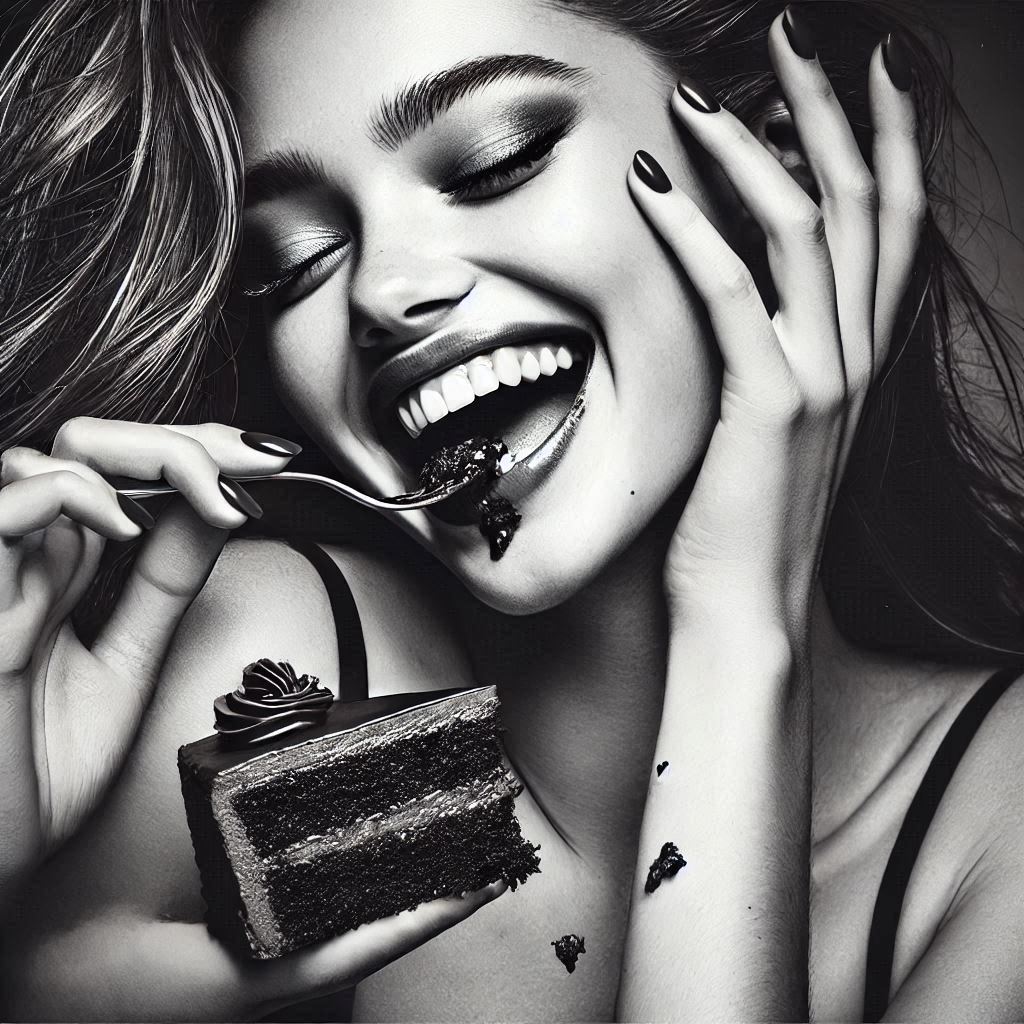 “I have so earned this,” we say as we lower onto a piece of soft and juicy chocolate cake, “and I deserve a reward.” Is a piece of chocolate cake ever that rewarding? How long does that sense of reward last? Do we go for another piece to reward ourselves more when we’ve been especially good? No, because that might prove punishing. The single piece of chocolate cake represents a reward at the end of the maze of good and healthy living, and we always announce our path to it? “I’ve been good.”
I guess I’m a stranger in a strange land, because I just eat the piece of chocolate cake, or I don’t. I make decisions without disconnecting WHO I am from my opinions, ideas and practices. There are no trumpets in my land, signaling a dietary path that has been a quality one up to this point, or one that is so bad that I don’t dare approach the bench.
We let our trumpets blare, because we want external validation and societal validation. Somewhere along the way, we glommed onto the complicated world of self-acceptance and self-actualization, and the rise of self-help literature, social media, and mental health awareness tangled and mangled this into people talking about their personal struggles and growth journeys, until we started seeking permission and granting it to ourselves based on past and present behaviors.
“I am refraining from eating that piece of soft and juicy chocolate, because I’m on a diet.” We say this even though no one brought it up, and some part of us knows that no one cares, one way or another, but we want someone else to validate our discipline. Even a lifted eyebrow will do. Eating that single piece of soft and juicy chocolate cake gives us a naughty violation to punctuate the streak of good and healthy living that no one cared about when it went live. These are all decisions and choices we make, and they’re all fine, but how many times have we gone a solid month without a slice of chocolate cake? “Yeah, I deserve a reward for that.” What’s the difference between deserve and earn? Who cares, let me have cake.
When we involve ourselves in the idea of granting permission to ourselves, I think there’s a super-secret part of us that kind of misses having a controlling authority in our lives. “I can’t wait until I’m an adult,” kids often say, “because I’ll then get to finally do everything I want to do.” We all know that there is a psychological push and pull to authority in our youth, as we push back on authoritative constraints, until they’re not there. When they’re not there, we feel the need for borders and guidance in a strange way that makes us feel uncomfortable. We didn’t miss it in our 20s, because we were all about luxuriating in the newfound powers of freedom of adulthood that can feel so fresh and liberating. When we hit our 30s, the idea of freedom became more established, routine, and a little boring, and if we lived to our 40s, we became the powers that be. No one notices when the idea of unadulterated freedom begins to wear off, but we eventually start to take it for granted, and we begin to miss the rewards and punishments that flowed from authoritarian control, so we began establishing our own.
The logical response to those who deserve a reward is do they ever punish themselves for bad living? Have you ever tried canned beets? If not, then you don’t truly know the extent of quality punishments. WebMD.com suggests that beets “Don’t just reduce inflammation, they also improve heart health. The nitrates in beets have been shown to reduce high blood pressure. Beets are also naturally low in cholesterol and fat, which makes them a good option for people concerned about heart disease or stroke.” Are beets a quality punishment we sentence we pass down for falling off track regarding good and healthy living? Why else would someone eat a beet? If someone told me that they granted themselves permission to eat a piece of chocolate cake, because “I deserve it,” I would ignore them as much as I ignore anyone who publicly grants themselves permission to do anything. If however, they added, “I just ate a whole can of those wet, slimy vegetables,” I might consider my own form of a one-time dispensation.
“Did they have that purplish color that comes from betalain pigments?”
“Yes.”
“Today, I tell you,” I would say with a permissive wave of my hand, “that you shall enjoy paradise.”
I realize that granting ourselves permission to do what we want to do is not some kind of new-age novelty, as the research suggests this practice has gone through a long and winding road. As a young ‘un who received unprecedented freedoms, unprecedented among my peers, perhaps I went through the traditional push and pull relationship with authority prematurely, but I don’t understand the unnecessarily complicated, and very public, steps some people include in their decision-making process. I don’t understand the process of inventing an imaginary, controlling authority to adhere to, abide by, and rebel against. Perhaps, it has something to do with filling a void that nature forced me to fill so early on that I don’t understand others struggle with it.
I also don’t understand turning to celebrities to grant us permission to do things, unless it’s an admission on our part that we don’t have the confidence necessary to fill that void, because we fear our rulings, on consequential, pressing matters, are not as objective as we previously thought. To fill that void, we turn to the uncommonly attractive types who attract fame and fortune for some kind of authority on the way to live. Yet, if we were to hold them to the same standard we hold ourselves, we’d find they’re just making it up as they go along too. They do look beautiful doing it though, and we cannot deny that, but does that give us permission to look beautiful while we’re doing it too? If that ever happens to, or for me, I hope someone will come along and explain to me what just happened.
 Rilaly