Those of us from an an agricultural area have all heard the tales about a parent, usually a mother, preparing a chicken for dinner. When we city-dwellers think of the preparations necessary for a chicken dinner, we think of the five-minute drive to the local supermarket, the time it takes to select the best frozen chicken, and choosing a batter (if it’s not pre-battered). We then sit down for our chicken dinner about a half hour later. That’s been the process for so long that most generations have never heard that for farming families, past and present, there are other steps involved that they’ve never heard about when mothers prepare a chicken dinner.
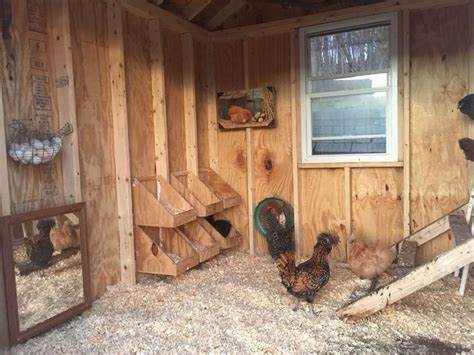 Disclaimer: Some might deem the following Not Safe for the Workplace, and if you are in anyway squeamish, I suggest you locate the ‘X’ in the upper righthand corner of this screen and exit stage right. Some might deem ‘the other steps’ violent and brutal, but they are a way of life on a farm. “It was just the way we did it,” they say. They way they did it, involved a mother entering a chicken coop to retrieve a chicken or rooster for that day’s meal. Once she catches it, she chops its head off and releases it to allow it to run around, headless, until the life runs out of the body, and it unceremoniously falls to the ground. It usually runs around, crashing and smashing into whatever is around it for about ten seconds without a head, until whatever nerves or final vestiges of their muscles finally run out of power. Some find this funny, others consider it sad, and still others find it so funny that it is kind of sad. Whatever the case is, the next time your mother says that you were “Running around like a chicken with its head cut off” you now know the origin of that phrase.
These chicken/rooster post-mortem displays prompt the question, do all animals do this? Do human bodies run around, crashing and smashing into things for ten seconds after the head gets chopped off, until the lifeforce drains out? There is no evidence that suggests human bodies run around in this manner, but there is some dubious evidence that suggests some consciousness remains in the head. The scientific data is about as far from conclusive as possible, but a researching physician in the French Revolution claimed, based on his observations, that a severed head could retain consciousness for 25 to 30 seconds.
As many times as I’ve heard these chicken preparation stories, over the decades, Ken’s version of this practice involved a twist I’ve never heard before. In his retelling, he remembers his mom stalking roosters in the coop. She would enter the chicken coop with a rooster in mind for their meal before she entered. We could write, “At one point, she caught the rooster,” but this does a disservice to the art of catching rooters, as they are notoriously difficult to catch. We could put them in the smallest of pens and coops, and they will still find ways to elude capture with exceptionally quick movements, tricky maneuvers, and some flying involved in their quest to escape. We could also write, right here, that they’re unusually crafty or surprisingly smart when it comes to eluding capture, but they’re not. They just have what athletes call quick-twitch muscles. As usual with animals at the bottom of the food chain, like the rabbit, roosters have quick-twitch muscles that allow them that first-step quickness and that quick change-of-direction speed and agility that athletes prize. These animals obviously need these abilities to avoid faster predators to sustain the species.
 Ken’s mother knew this all of this course, and she knew she wasn’t fleet of foot. She knew she wasn’t quick enough to catch a rooster, because no one is. She knew her only path to success involved a patient pursuit. She could have a rooster cornered several times, in corner after corner, and she knew he would continue to successfully escape until eventually he tired out. “She never grew frustrated by her inability to catch the rooster,” Ken said. “It’s very difficult to catch a rooster, and she knew that.”
It would prove a difficult chore even if it were just she and the rooster in the coop, but what makes it even harder are all of the other eight to ten chickens in the coop running around and flying in short bursts to try to avoid their own capture. As such, Ken’s mother would have to watch her step in pursuit, to avoid stepping on any chickens. We can also imagine that with the effort she put into the pursuit, combined with the heat outside, she would sweat profusely throughout her chase, which would lead to all of the feathers flying around the coop to stick to her face. We have to imagine that this would only add to the frustration and anger of even the most seasoned rooster stalker, but she never showed it. “She never grew frustrated or overly impatient,” Ken said. “She knew all that was just part of it.” There were probably occasions when she caught the rooster fairly quickly, but for the most part she had to engage in this patient pursuit, until the rooster eventually tired out, stood in place and fell asleep. At that point, she grabbed it and twisted its neck.
 This is the “Wait a second, what?” twist in story. When someone tells a story that is consistent with everything we’ve heard before, we tend to drift a little. We don’t mean to be rude, but we’ve heard this story so many times, and we all know how it ends. Every time I’d heard this story, it ended with an ax, a knife, or some other sharp instrument applied to the member of the fowl family. The entertaining part, if that’s what you want to call it, usually involves the portion of the tale that describes the rooster running around with its head cut off. So, when Ken added the following, the glaze over our eyes lifted, and we said, “Wait a second, what did you say?” to help the rest of our senses catch up.
“She would hold the rooster over her head, by the neck, and spin it, until she felt its neck snap,” Ken said. “She then released it and allowed it to run around the coop until the life drained out of it. Then she picked it up, stripped it of its feathers, put it in water, and took it inside to continue preparing it for our meal.”
“Wait a second, what did you say about spinning?” his open-mouthed audience asked. Ken repeated the bullet points of it. “Did she do that to be … theatrical?”
“My mom didn’t do anything to be theatrical. That was just the way she did it.” When asked if he considered her method in any way inhumane, violent, or brutal, Ken added, “Again, that was just the way she did it. My guess is that that’s probably the way her mother and her grandmother taught her to do it. If you asked her if she considered it theatrical, violent or brutal, she wouldn’t understand why you do. It was just the way it was done as far as she was concerned.
“All you need to do is give the neck a quick jerk,” Ken clarified. “Something to snap the bone. It’s really not as difficult or as violent as you might think.”
***
Flash forward, a couple years, and Ken is a teenager. Ken admits that he was a particularly naughty kid, in his youth, and he met the back of his parents’ hands “More times than I can count. My parents were never ones to spare the rod.” As a teenager, it had been a number of years since any of his punishments were physical, but he upped the ante on one particular occasion. “I can’t remember what I did, but it was above and beyond the typical teenage tests of parental patience.”
“I’m going to have to give you the switch for this one,” his mother informed him. “You have to learn your lesson.”
“That’s all well and good,” Ken said, “but I’m a teenager now mom, and I’m a lot faster than you now.”
“You do what you have to do, and I’m going to do what I have to do,” she said, “but we both know how this ends.”
 “We’ll see,” Ken said, as he eluded her and sped out of the house. Out on the farm, we can imagine that Ken found so many hiding places that he had a few favorites that he couldn’t wait to use on this day. He probably heard her calling out to him from his favorite hiding place on the farm, and he probably giggled when he heard the frustration in her voice, but she eventually found him. When she did, he managed to elude capture again, and he hid in another one of his time-tested hiding spots. When she found him again, he ran away and hid again. “I don’t know how long this lasted, but it lasted a pretty long time, hours I think, until I eventually got tired of running.
“I had it coming, and we both knew it. I didn’t fall asleep, like the rooster, but at some point, I just tired out. To be honest with you, I didn’t see the correlations between her patient pursuits of the roosters and me until much later in life, and when I did, I realized it was pretty funny. She never gave up, she was like a patient predator, and I saw it with the chickens and the roosters. She just never gave up. It was just her way.” Ken’s mother did not further Ken’s punishment by lifting him over her head and spinning him, but Ken never forgot that day with the switch. “It hurt like hell. I still remember how bad that hurt to this day, which was kind of the point. She only swatted me a couple of times, and she was done when she thought I learned my lesson.”
 Rilaly