Rilalities VI


Lucky is the man who does not secretly believe that every possibility is open to him.” — Walker Percy

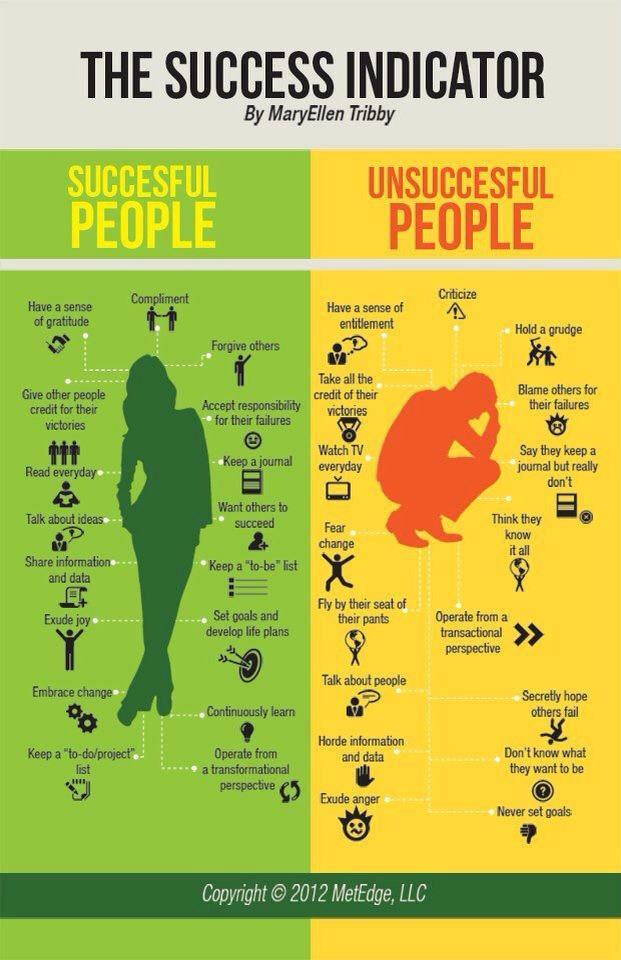
1) A Man on the Rise534382_543655018980917_1211806109_nWe all have a formula for success, but how flawed are they? How many inconsequential matters make it into our formula? I met a man who achieved a relative level of success in life. The only problem was he didn’t know how to set an alarm clock, so I showed him … numerous times. Frustrated and embarrassed by this revelation, he stopped me and said, “Just give me a damned wake up call!” He looked at me with a bemused smile that contained shades of embarrassment. The shades of embarrassment suggested that he knew he should know how to do this by this point in his life, if he wasn’t a senior citizen he was close. Beneath that subtle shade of embarrassment was a bold confidence that suggested this moment  didn’t bother him as much as I thought it should. I was so shocked that I could barely return a polite smile. I figured that someone, a mom, a wife, or a secretary obviously made sure his clocks ran on time. The man’s confidence, combined with this lack of knowledge, led me to share this moment with a number of people, until I finally ran into someone who knew who that feller was. “That man is the vice-president (VP) of one of the most prestigious companies in the world,” he said mentioning the name of the company in question.

It seemed unfair to me that a man who knows so much should achieve so little, while this near infant-of-a-man should rise to the upper reaches of our society. The difference between the two, life has taught me, is tunnel vision.

Long after meeting that VP, I met a man named Kelsey Anderson. As opposed to the specific knowledge that the VP gained, attained, and sustained, Kelsey was more of a generalist. “Okay, that man is just smart,” someone once said after spending some time in his company. “He is,” I said. “No doubt about that, but he has no direction. He’s never learned how to apply that knowledge in any productive way.” Kelsey and I spent about six months working next to each other in a big company, and my impression of him only strengthened over time.  

The question is who is smarter, who’s more successful, and who has the better game plan? The VP obviously focused his more limited resources in one particular area, until he eventually succeeded beyond 99 percent of most men. Kelsey was an impressive intellect who could’ve taken that alarm clock apart and rebuilt it. He was one of those guys who appears to know a surprising amount of something about everything, but he had no particular area of focus, no direction, and thus no arena in which to display his prowess. His potential to succeed was unbound, and we all knew it. He knew it. The vice-president had comparatively limited resources, but he obviously learned his limitations early on, and he learned how to hone those few strengths he had to become what we all deem successful.

We’ve all witnessed impressive people before, but how many people do we know that are so impressive that their listeners cannot contain themselves? Most people try to find the one thing that is not impressive about the impressive, so that they can feel more comfortable in their less than impressive lives. Most people do not say things like: “What’s he doing here?” … among us?

“If someone were to just give me half-a-(durned) chance … ” Kelsey would complain when I complimented him on his intelligence. The compliment I gave didn’t please him. It made him more angry about his station in life. “I just-I have so many ideas … ” he complained. He knew so much, about so much, that he was an intimidating force of a man, but he had learned so little in life that he never found out how to capitalize on it. Watching him, one was left to wonder how many learned men in history had so much trouble harnessing their ability that they were deemed a failure by those that knew them? And how many lesser men learned how to harness their limited ability, until they achieved a place in history we all know well?

Catchers and framing

2) Framing an Argument: Have you ever found out that an overwhelming number of people disagree with something you’ve believed in for so long that it’s now an ingrained truth to you? Is this issue something that you hold so close to your heart, that it pains you to learn that so many disagree with you? The disagreements you’ve heard aren’t simple disagreements either, they’re profound, substantive disagreements that cause you to question everything you once held dear.

The first question that your like-minded cohorts will ask you is what is wrong? Even moral issues are relative when looked at in a certain light. There are no absolutes, they will say. You may love that answer for it falls in line with your philosophy, but it doesn’t satisfy the internal dilemma you’re experiencing, because the contradictory information pouring in is penetrating.

You simply need a course in framing, your like-minded cohorts will say. The art of framing employs the soul of wit: brevity. If you can frame your issue in the form of a sound bite, a lyric, one frame of one cartoon, or a couple of pictures, the world will be your oyster. The particulars of the argument may damn you to the point of being wrong on this particular issue, but you need not worry about the particulars when you’re framing. Your goal, in this the age of 140 words, is to succinctly portray your position in a manner that can be repeated, and shared, until you’re as close to right as you can possibly be without saying the wrong thing, and your brokenhearted brethren will like you for it.

3) LANGUAGE: I’ve always had a passing interest in the French language. When it’s fluently spoken, it can sound so rhythmic and beautiful. I was so taken by the language that I decided to take a college course in French. It became clear to me (about a month in) how passing that fascination was. I still enjoyed hearing the language though, and I’ve even tried my hand at using some of the language’s more exotic words with all of the umlauts, graves, and aigues in place. It was my goal to speak the language in a manner absent the mundane, specific-to-America renderings. The French word for accessories, accouterments, got a hold of me once, and I began using it as often as I could. It made me feel exotic and a little worldly when my English speaking friends would say, “What?”

“It means accessories,” I would say with a subtle amount of smugness that bathed in the exotic juices of knowing a little French. I finally ran into a native French speaker some time later, and I couldn’t wait to give the word a test drive. I used it in proper context, and I thought I had my elocution down. I had also used the word for years at that point, so I felt confident in the idea that I could now say it without the effort those that had never heard the word used.

When my native French speaking friend said: “What?” I was a little taken aback.

“Isn’t that French for accessories?” I asked.

He asked me to repeat it, and when he was able to pick himself up off the floor, he informed me that most non-native French speakers should just stick with the American renderings.

elliwtch4) SELF-PROMOTION: Rarely will you read an author write, “I’d like to talk about myself now … ” They’re usually more creative than that, but some of them aren’t. Some of them should spend a little more time trying to creatively frame their indulgence a little better.

I recently put a book down that contained the words: “They don’t want Harlan Ellison messing around with that.” Speaking in the third person can be funny, and some of the times it can be an affectation of funny that leaves the reader thinking that they’re about to go down an unusually funny, self-defecating (sic) path, but this particular fork in the road was not a veiled attempt at humor, nor was it eventually self-deprecating. This was pure self-promotion. This was Harlan Ellison telling the reader that the establishment regards him as a dangerous rascal that keeps on mucking up the status quo to a point that they believe he must be constrained to maintain their precious military, industrial complex. They’re afraid of what Harlan Ellison might tell you, Harlan basically writes. They do not want Harlan speaking out, because they know that his powerful words can cause unrest. Harlan also wants you to know that the establishment, the man, doesn’t appreciate him speaking out, because they’re afraid of his thoughts, and he’s much more powerful than you know (or perhaps than he even knows), but the man knows, and they have tried to find some way of shutting him up. Either that, or the cynic in me believes, that Harlan wants you to feel like an outsider that doesn’t know how truly rascally Harlan can be, so you may want to buy more of his books to find out. When we buy a book, we do want to find out what an author thinks, and we’ve been tantalized by his thoughts through some other medium that led us to being so interested in his thoughts that we wanted to purchase a compendium of them, but when that author qualifies his thoughts in a manner that suggests that he believes that his thoughts are extravagantly provocative, some of us simply tune him out.

5) Quote: Recalling the fifty year anniversary of the legislation, George Will writes of President Lyndon B. Johnson’s Great Society: “In 1964, 76 percent of Americans trusted government to do the right thing just about always or most of the time. Today, 19 percent do. The former number is one reason Johnson did so much; the latter is one consequence of his doing so.”

Rilalities V: Challenges and Insecurities


The 6’5” Guy

“I’m six foot five,” a man named Joe said when I met him. He did not work this into his greeting, and he did not say it in the early minutes of our introduction but it hung over his sizable head until he acknowledged it.

Those fortunate enough to meet Joe will discover the reason we learn about his height soon after learning his first name. The natural inclination of most is to drop their last name soon after saying their first name. Some drop their last name soon after mentioning their first name as a matter of habit, and some do it because they’re so proud of their family and heritage. Others might mention their occupation soon after mentioning their first name. I didn’t learn any of that from Joe in the brief moments Joe and I spoke. I learned that Joe was 6’5”. Joe was more 6’5” than he was Joe, and those fortunate enough to have a conversation with him that extends beyond superficial pleasantries will learn how 6’5” he is. If the conversation we share with Joe evolves into a minutes-long discussion, and the listener doesn’t acknowledge his height in anyway, he’ll break the news to them:

“I’m six foot five!”

Although Joe and I spoke for a total of about three minutes, I had the impression that the man could’ve written a bestseller, won the Heisman Trophy, saved children from a fire, or discovered the cure for cancer, and his height would still be his greatest and worst attribute. No matter what happens to him in life, I think Joe will prefer to have “Here lies Joe. He was 6’5” chiseled into his gravestone.

Joe was an interesting guy. He appeared to be conversant on a wide range of topics, and he managed to tell some stories from his life in an impressively timely manner, but everything he spoke of kept coming back to that refrain of his life.

His height was the reason he had trouble finding chairs to sit in with comfort, the reason his 5’3” mother was always on him about stuff, and the reason he couldn’t be as particular as he wanted to be about the clothing he wore:

“You can’t be finicky about clothes when you’re 6’5” and built like me.”

Joe, we should also note, was broad-shouldered. This attribute, coupled with the idea that he was 6’5” was the reason he had trouble going door-to-door to talk to people.

“Would you be comfortable discussing politics, if a man my size came-a-knocking on your door?”

His height was also the reason, he informed me, that he had such trouble finding a decent woman. That subject matter may have shocked most people, or at least made them somewhat uncomfortable, as most people would deem such a discussion inordinately intimate for a conversation between two people meeting for the first time. I had a best friend in high school who was 6’7” however, so I was well versed in the travails of being an abnormally tall male in America today, and I was used to my friend going into such intimate details with people he just met. Joe and I did try, at various intervals, to move on to other topics, but he was unable to let the fact that he was 6’5” go as easily as I was.

What struck me as odd was that I never mentioned his height, and I don’t think I provided any verbal or physical cues that called attention to it. Was that the point though? I later wondered. Was my refusal to acknowledge his height such an aberration to his experience that until I acknowledged it in some way, he would not be able to move on until one of us did?

Being a tall man has numerous advantages, but it has almost as many disadvantages. As I wrote, I was well versed in the travails of being an abnormally tall man in America. I knew, for example, that a person’s height is the first thing people notice when another is taller than 6’3”, and the thing they talk about after the person leaves. “How would you like it if no matter what you said, ’Man he is a big fella ain’t he?’ is the only thing they have to say about you after you leave?” When you’re 6’5” people pester another about in malls. It’s the reason some guys won’t mess with you and the reason others do. It’s also the reason some women want to date you and others don’t. A 6’5” man could be the most charming person in the world, in other words, and most people will have preconceived notions about them based on their height.

With that in mind, one would think that an abnormally tall male, or a woman with abnormally large breasts, would find it refreshing when they’ve finally encountered someone who seems to be genuinely unconcerned with their attribute(s). One would think that they might find it refreshing when they’ve finally found a person who is willing to talk geopolitics with them without looking down their shirt, or saying, “How’s the weather up there?” One would think that someone who broke those patterns of human interaction would receive a bright smile as a reward, and maybe even something along the lines of, “Thank you. You may not even know why I’m thanking you, but thank you!” Yet, tall men and large-breasted women, just like all humans with exaggerated attributes, become so accustomed to these patterns of interaction that they feel compelled to draw your attention to them just to complete a line of dialogue comfortably.

Most people try to avoid talking about a trait they generally considered a negative, and they will do everything they can to avoid noticing it. When they consider that person’s attribute a positive, most people think you should feel privileged to have it, so they don’t mind drawing attention to it. “You’re tall Joe!” they will say, or “I wish I had those,” and they will add something along the lines of, “You should feel privileged.”

As my conversation with Joe continued, and he began to belabor the point of his height, I thought he was trying to assert some sort of dominance. I may have been wrong on that note, and it might have had more to do with everything I thought later, but I began to rebel against his theme by making a concerted effort to avoid the topic of his height. Our conversation ended soon thereafter, and we moved onto other people at the gathering.

“What did you say to Joe?” our mutual friend later asked. She thought Joe and I would have so much in common that we would hit it off.

“Why?” I asked.

“He says he doesn’t think you two hit it off.” When I asked her for more details, our mutual friend said, “He said he can’t put a finger on it, but he doesn’t like you as much as I thought he would.”

Without going into what I deem to be the unnecessary details of our otherwise innocuous conversation, I can tell you that the conversation I had with Joe involved no disagreements. To my mind, there were not even moments of subtle tension, and there certainly were no overt ones, but he didn’t like me. Now, I’m not one of those people who thinks every person has to like me, and if they don’t I think there has to be something wrong with them, but to my mind this conversation I had with Joe proved to be amicable if not pleasant. Joe and I also proved to be as like-minded on certain topics as our mutual friend thought we would be. The only thing I did, and that which I presume led Joe to state that I didn’t live up to the characteristics our mutual friend detailed for him, was refuse to acknowledge he was 6’5” in anyway, and I think he thought that if I was’t going to do that, I was probably a phony.

Going Clear—

Anytime I finish a book as fantastic as Lawrence Wright’s Going Clear, I wonder what I am going to do with my free time?  The book gives credence to Phillip Roth’s line about non-fiction being stranger than fiction.  A complaint that an Amazon.com reviewer posed was: “If everything Wright writes is factual, why would anyone want to join the Scientology religion?”  This reviewer stated that this was the only point, and a central point, that they found lacking in the book.  If I were this Amazon.com reviewer’s teacher, and I lived by the credo, there’s no such thing as a stupid question, I would simply require that student reread the book.

Kiss in Rolling Stone—

Anyone that thinks that being “king of the hill, top of the heap, and ‘A’ number one” means that you will be able control your press, should read the March 28, 2014, issue of Rolling Stone magazine.  Kiss may no longer be the band that sells platinum records every year, and they may be more about marketing than music at this point in their career, but this Rolling Stone article was supposed to be about their soon-to-occur induction into the Rock and Roll Hall of Fame.  To read this piece in the Rolling Stone, however, that fact means little-to-nothing.

This piece of rock journalism was so shockingly brutal that one has to imagine that Gene Simmons is still throwing some of his much detailed Kiss memorabilia at the wall when he thinks about it.  All four members of the band Kiss came under attack from the author of the piece, but the author reserved most of his unprofessional brutality for Gene.  This writer’s attacks were so petty and snarky that a regular reader of Rolling Stone would suspect that Gene was a Republican candidate running for office.  Yet, Gene’s not even a Republican voter, as he has made it public that he voted for both Barack Obama and Bill Clinton twice.

This article would also be an excellent read for journalism students seeking answers on what not to do with subjects they’re covering in an article.  Having never taken a journalism course, I would have to imagine that one of the primary rules discussed in a Journalism 101 class is: “The articles that you write are not about you.  No one will be reading your article to learn what you think, unless you’re writing an opinion piece.  If you’re covering a subject in a journalistic manner, however, remember that your readers are only reading your article to learn more about the subject.  It’s not about you.  Your readers won’t care about your opinion, your preferences, or what you think about the subject you’re covering, so be careful how you frame their answers.  If your subject says something stupid, infantile, or in any way revealing of their character, put that statement on the record, but do not comment, or frame, that quote in anyway.  That’s not your job.”  Judging by the course journalism has followed in the last generation, I’m quite sure that most journalism schools now include an asterisk with each of these rules that states: “Unless your subject is a Republican politician.”  As I wrote, however, Gene Simmons is not a Republican voter.

Inspiration—

“This guy sounds like a complete fraud,” a writer said of a fellow writer I was describing.  I wasn’t even done with my description of this fellow writer, when this writer interrupted me with her blunt characterization.  I wasn’t shocked by her assessment of this fellow writer.  She had said as much of other, more established writers, but it was apparent to me that this woman believed that by diminishing all other writers around her, her stature as a writer would somehow be fortified.  Had this been the first time I heard any writer say such a thing, I would’ve passed her comments off as flaws in her character, but I’ve heard a number of novices, and well-established writers, engage in the this practice.  If you’ve ever heard a U.F.O. chaser, a ghost hunter, or some fortune teller attempt to establish their bona fides by telling you that every other person engaged in their craft are fraudulent, then you have some idea what I’m detailing here.

Knowing how hard it is to come up with ideas, and execute those ideas to the point of proper completion, one would think that a writer would bend over backwards to extend professional courtesies to anyone trying to do the same.  If you think that, you’ve never sat down with a group of writers.

“You can say he’s a poor writer,” I said, “But are you saying he’s not a writer?”

“I’m saying he’s probably a hack,” she responded.  She didn’t arc her nose upward after saying that, but that’s how I now remember it.  It seemed like such a violation of the code, on so many levels, that it was hard to comprehend how she could be so brutal.

She cut me off before I could ask her what she meant by “hack”.  I know the general term applies to writers that write just to write, and churn out poor quality submissions for financial gain, but she had never read this person’s material.  She had never even met the man.  Yet, he was a hack in a manner that made her appear adept at using the word.

One essential component to avoid being called a hack, apparently, is to write so little that everything you write can be perceived as enlightened, or divine in nature.  If you want to avoid being a hack, you should never write what others might consider mundane.  Yet, those of us that truly love the minutiae involved in writing, believe that it’s only through exploring the mundane that moments of inspiration can be discovered.    

One key component to being in a position to level such a charge, and have that charge stick –I now know after reading her material— is to never allow those that hear you level it, read your material.  Your charge should remain an indefinable accusation that leaves you with the dignified, nose-in-the-air air about you.

Her material brought to mind the one key component of storytelling that every writer should focus on —be they a writer of vital, substantial material, or a hack— make sure it’s interesting.  Translation: You can be the most gifted writer the world has ever read, but if your material is not interesting, no one will care. 

In the face of the constructive comments (see negative) this woman received from our group, she said, “Perhaps, I’m a better editor, than I am a writer.”  Translation: I have little in the way of creative talent, but I am, indeed, gifted in the art of telling others how little they have. 

Brutal Honesty in the Age of Being Real


It was the best of times, it was the worst of times, it was the age of being real, it was the age of delusional thinking, it was the epoch of honesty, it was the epoch of lies, it was the season of transparency, it was the season of delusions, it was the spring of hope, it was the winter of despair, we had everything before us, we had nothing before us, we were going to achieve, what we had already achieved, what we would never achieve – in short, it was a period of time that needed to exist to rectify a period that may never have existed to the superlative degree of comparison that some of its noisiest authorities defined for the era.

As that paraphrase of Charles Dickens’ epic intro to A Tale of Two Cities suggests, reality TV did not the divide American culture in the manner some purported it would in the age of being real. The doyens and doyennes of our culture asked if reality TV was art imitating life, or if it was reflecting it? Others suggested reality TV represented such a small sample of the culture that the shows’ producers projected it out into the society as a measure of realness that wasn’t real to the superlative degree they portrayed? Others wondered if the culture used reality TV for what it was and dispensed of it in manner similar to the way a body puts out byproducts it can’t use?  Some people I knew, very real and intelligent people, acknowledged that while reality TV focused on a sample of a society none of us knew that didn’t mean it wasn’t real.

"Lars and The Real Girl"
“Lars and The Real Girl”

How many times in one episode did an actor say, “Hey, I’m just being real with ya” to assuage the guilt they might otherwise have while insulting another person? How many times did these show participants gain a certain degree of realness on the back of another? How many times was being real used as a confrontational device to belittle those who were less real, until the real proponent managed to gain some real definition on them?

Being real, in such instances, was nothing more than a cudgel used to diminish a person who wasn’t like the speaker. They used this device to make the unreal more like the real, and the viewer at home was supposed to accept all that as real thinking, if they ever hoped to gain real stature in the real world. Most of us now reflect back on the being real era, and see it as an intellectually dishonest era, designed to promote the position of the proselytizing speakers. 

Those of us who thought the age of being real was anything but, couldn’t deny the influence it had on the culture in general, and our friends and family. Otherwise kind and polite individuals who wouldn’t say an unkind word about anyone yesterday, started lobbing verbal grenades at us. “Hey,” we would say. 

“I’m just being real with ya,” they would respond. For word watchers in search of colloquialisms, it was mandatory for real people to use the less formal incarnation of the word you as a literary device to gain familiarity with the subject of their insults.   

“Why did you say that? That was not very nice.”

“We can do that now, in this era of being real.”

No one said that latter line, of course, but that was the import of the discussion. It didn’t happen in a day, and it didn’t happen this way, but friends and family felt they could say anything they wanted in this era, and they didn’t need to bother being conscientious, if they were just being real with ya. 

Those of us who experienced this era and studied it for what it was, learned it was based on the false premise that one could be real with ya without undergoing any substantive reflection of their own. Even those who may have watched a total of one hour of the more sophomoric shows of reality TV, could not escape its influence.

We thought the era of white lies were over. Even if being real had nothing more than a conjugal relationship with brutal honesty, and some of us used the nuggets of that message to put more brutal honesty in our presentation, regardless if anyone thought we were being real or not. In any repeated message of this type, there is a personal takeaway for some. Most of us didn’t believe the real characters in reality shows were being real, in other words, but the presentation affected us nonetheless. We changed our presentation to one that could be called brutal honesty, in regards to how we thought we should be perceived, and we encountered a number of surprising reactions.

The most surprising reaction we received was no reaction. We would detail our weaknesses for our audience and our trials and tribulations, and they would not say anything. We would finish our testimonial, and if someone didn’t say something to change the subject, the lunchroom table would go through a seven-second lull. Our audience presumably took it in stride, because they thought they were as honest with themselves as we purported to be. They lived with the idea that they were so honest that most people couldn’t handle their special brand of honesty. It didn’t dawn on them, however, that that interpretation of brutal honesty was limited to assessing others. Very few have the wherewithal to evaluate themselves honestly, and their particular brand of being real incorporated many of the elements the dictionary uses to define the word delusional. Those who attempt to help them be more real learn that it’s pointless, because the subject will attempt to be more real than you, with you, until the discussion devolves to something equivalent to the type of gunfight banter Hollywood writes into scripts to provide a tense setting for paragraphs of exposition.   

Those who have never made a concerted effort to be honest about themselves, might expect that being harshly critical of one’s self to be somewhat influential. The expectation I had was that others might “raise their game” in this regard, to be more honest. They didn’t, because, again, real people already think they are brutally honest.

Another surprising, and somewhat depressing, reaction to displaying brutal honesty, in the age of being real, was that our friends began to think less of us. In any other era, it might make sense to consider a person who provides us a laundry list of weaknesses a weak person. In the era of being real, we might fall prey to the belief that our friends and family might consider such brutal honesty refreshing, and that they might consider that moment the perfect time to be just as honest in return. No such luck. What often happens is that they join in on the discussion and add other weaknesses that the brutally honest person neglected to include.  

“How do you think you’d do in jail?” A Delusional Person asks Frank.

“Not well,” Frank replies with refreshing, brutal honesty.

When Frank provides a laundry list for why he probably wouldn’t do well in jail, the Delusional Person might laugh, because being this honest can be humorous when the recipient is allowed to bathe in the weaknesses of its purveyor. The Delusional Person will often agree with Frank’s frank assessment of himself, but they won’t assess themselves by the same measure.

“How do you think you would do?” Frank returns.

“I think I’d do all right,” the Delusional Person replies.

Even in the age of being real, most people fell prey to the idealized images they have of themselves. One of the more effective measures weight loss programs will employ are progress charting photos. They ask their clients to do this, because we can look in the mirror every day and fail to see our progress or regressions. We need a somewhat distant perspective to truly evaluate ourselves, and the same holds true with conversational scenarios such these.     

Most of us live with idealized images of ourselves, as if they happened yesterday for the rest of our lives. This particular Delusional Person was a championship-level wrestler in his teenage years. While on the wrestling team, he endured exhaustive workouts, and exercised levels of self-discipline, that most non-athletes will never know. This resulted in The Delusional Person being a finely crafted specimen who at that time may, indeed, have been capable of handling the hand-to-hand combat situations reported to occur within the confines of a cell block. When he answered Frank’s question, the Delusional Person remembered himself as finely tuned wrestler who won championships. The idea that lifted a weight or sprinted in fifteen years didn’t enter into his equation. A more brutally honest assessment of his stay in prison should have been, “I don’t know how I would so in jail, but I suspect that all of the years I’ve spent sitting behind a computer, and avoiding physical activity, would be exposed early on.”

We all picture ourselves in peak physical condition when we listen to others speak about how they have let themselves go. We laugh when others joke about those who have gained weight, conveniently forgetting that we just graduated to a thirty-six inch waist pair of pants last week. We’ll do this when we speak about the people we grew up with who “now look so old”, even though we’re now using hair-dye, wrinkle cream, and supplements to fight the aging process. We aren’t lying when we do this either, we’re projecting an idyllic image of ourselves into these scenarios that used to be able to lay out an entire prison yard when we were called upon to do so … in the movies.

Another surprising, and somewhat depressing, reaction I encountered was a kind, polite person who had no interest in being real, adding brutal honesty to my brutally honest presentation. 

“Are you sure that you’re capable of that?” she asked after I informed her that I threw my hat in the ring for a promotion that had everyone abuzz. The surprising element of this question was not that she asked it, for it could be said that she was looking out for me in her own way, but that she never asked that question of any of our other co-workers. With them, she expressed in what we could call a Hallmark card-style response to their desire to advance within the company. “Good luck!” she would say to them, or “I know you can do it.” She may have said those words to be polite, but she wasn’t polite with me. 

She asked me to reconsider whether I might be qualified. I told her that I had as many, if not more, qualifications than some of the others who applied for it. I assumed her question was borne of jealousy, but I didn’t say that. After processing her warning, I acknowledged that she was kind person, and I realized that her concerns were simple reactions to my presentations of brutal honesty. She didn’t want me to get hurt by the realities of my limits, limits that I had expressed in the course of being honest about my vulnerabilities, and she was just reacting to what I told her over the years.

Yet, people like my sweet, polite friend can inadvertently assist those striving for brutal honesty into a depressing state of their reality. The honest assessor realizes, about halfway down the spiral, that they’re doing this to themselves, and that they’re becoming too honest. Their friends aren’t helping, but their friends are just reacting to what they’ve heard us say, and they’re regurgitating our harsh and brutal opinions of us to us. Our friends are, in fact, greasing the skids to a form of depression. An honest assessor realizes, about halfway down this spiral, that they’ve become so realistic in their assessments that they’ve become brutally realistic.

We might start avoiding attempts to advance ourselves, because we’ve become so realistic in our abilities that we’re now asking ourselves so many brutally honest questions that we’re afraid to try and advance. As a result of such thorough examination, we’ve also become so realistic that we don’t think it’s realistic for any honest assessor to succeed. These could be called minor setbacks in the grand scheme of becoming more honest with one’s self, until we begin to see the Delusional People around us –some with half of our talent– begin to succeed beyond us. These Delusional People may even know that they’re lying to themselves, on some level, but they’re harmless little, white lies that everyone tells themselves in the quest for advancement, and if you can get all of them to add up just right, they may become a reality that no one can deny.

When the company selected Molly for this promotion, the confusion it created was almost painful. It wasn’t Armageddon, and no one was harmed by the company’s decision, but the aftermath of this tragedy left a proverbial wasteland of confusion. Those who devoted a large portion of their lives to this company felt that it could only be outweighed by familial or personal tragedies. The world moves on after political disasters, and religious hypocrisies can be overcome through personal devotion, but a seismic disaster on par with a person of Molly’s character, and work ethic, landing a top gig in their company can lead to reverberations that are felt throughout a person’s life. The company is where most people live most often. It’s a better indicator of how they’re living, as it’s the place where most people devote most of their resources. When matters in the workplace take a divergent path, different from all of the scenarios workers list in their head, it can lead to a company wide crisis.

“Part of an interview involves salesmanship,” those in the know tell the employees gathered in a team meeting, and that assessment was to remain within those closed doors, as off the record comments. This assessment was a “wink and a nod” attempt to assuage the confusion building around what many considered an absolute travesty. 

Those who have been in similar situations know the term “new reality”, as it becomes the theme of the many presentations that follow. If those in the know do comment on such a situation, they will say something along the lines of “You should be happy for Molly”. This leaves the suggestion that most of the confused, are confused about her promotion as a result of personal animus.

“We wouldn’t have a problem if Marsha, Kelly, or Dan received this promotion,” one person argued to reflect the general sentiment of the aggrieved, “but if Molly has any moral fiber, or conscience, she won’t be able to sleep at night.” No one cares. Molly has scoreboard. It’s the new reality. Deal with it. 

Amid the personal and professional confusion, one honest assessor, from the out of the loop sector, stepped forth and professed the harsh reality of the situation: “Molly simply fed into the leadership mystique of her superiors better than us.

“When we were concerned themselves with learning the inner machinations of the company’s system in a proficient manner they hoped might impress their superiors,“ the honest assessor added, “Molly was purchasing gift baskets for her bosses on boss day. When others were out volunteering for special projects to pad their resumé, and working untold amounts of overtime to put a smile on their bosses’ faces, Molly was at the bosses’ lunch tables laughing at their jokes, and when all of the applicants were drilling the interviewer with the bullet points of their resumé, Molly was feeding into whatever mystique they wanted to gain in that particular setting. This was Molly’s primary skill set.“

It was a bow atop the corporate basket of lies given to bosses, on boss day, in the age of being real. In the age of being real, employees began to demand more recognition for their accomplishments, and management responded, but in the end the employees realized that it was all part of a scripted, choreographed, and edited production designed to pacify their audience by mentioning their name in the credits that rolled out at the end of the day. When crunch time came, however, it was the Delusional People who had learned how to feed the mystique of those in the know that left everyone else feeling malnourished.

“Those who live in a dishonest manner will eventually get theirs,” our nuns told us in grade school. They also told us that, “Truth has a way of prevailing”. The company eventually discovered what everyone knew at the time, Molly was eventually discovered to be “not a good fit” for the position, but she was promoted up and out of the position, and out of the department, and the person who replaced her was yet another mystique feeder.

Those of us who lived and breathed corporate America heard all the stories about evil corporations, but we knew our corporate leadership board. They weren’t faceless corporate entities. They were people named Jeff and Sandy, and all the others who had kids and cats. We had one boss who was learning how to ride a motorcycle, and she drove one of her friend’s beloved Harleys into the ground, and it wasn’t funny, but it was. She was a real life, flawed individual who wasn’t afraid to show us her scars, literal and otherwise. When they speak in our corporate meetings, and our one on ones, we learn a little bit about their essence. We learned how they took their coffee, and what shows they went home to watch, and it all seemed so real, until they selected Molly for a big promotion.

We were all temporarily and permanently disillusioned. We thought our corporation was different, and that they hired and fired, and promoted and handed out raises based on merit. We believed that our corporation did not rise and fall based on the whims of faceless corporate entities. Ours was a real corporation comprised of people who knew us as well as we did them. We weren’t so delusion that we thought Jeff and Sandy knew us, but we thought some knowledge of our essence ascended from our bosses through the spider web, hierarchy, until we felt our efforts were recognized. 

The problem –those naïve enough to believe in the age of being real– discovered was not with Molly, but that Molly was emblematic of the problems inherent in a system that honest people once believed would find a way to provide rewards to those honest, hard working people who put their nose to the grindstone. The problem that seemed so complex to those of us who tried to wrestle with it, turned out to be so simple. The problem was that the various Jeffs and Sandys who controlled the spigots of reward for the hard working women and men in our company were humans themselves, and humans are inherently susceptible to flattery.

The nuns also provided their grade school students the proviso that if you’re living the honest life with the expectation of eventually receiving concretized recognition for it, you’re doing it for all the wrong reasons. We knew they were preaching gospel when they said this. Even if we didn’t know the depth of their statement, or how it might apply over time, some part of us knew that the rewards of living the honest life involve intangible, internal, and spiritual rewards. When the Delusional People begin to beat us to the more tangible goals in life, however, even the most honest assessors in a group will admit that it is difficult to avoid being affected by it, if they are being real with you.