Comfortably Vague 


“If you want to be hilarious, someone has to get hurt,” is something I used to say. “You can be slightly humorous with a knock-knock joke, and quick comebacks might earn you the title clever, but if you want to be truly hilarious, your goal should be offending people and grossing them out.” I used to think that, believe it, and say it all the time, because I thought it was provocative and so true, until I saw someone go after another. They were so savage that I realized causing someone actual pain was not as funny as the theoretical idea of it. I amended my theory by adding, “As long as you’re the victim, because there’s nothing better than a well-timed mean-spirited, self-deprecating joke.”

“And the comedy is in details,” I would add when I heard people keep their stories comfortably vague. “Why would you even tell me this great story about an embarrassing part of your life and leave out the details? That’s like going out to a restaurant and ordering potatoes with a side of broccoli. I like broccoli as much as the next guy, but what’s the difference between broccoli at a restaurant and broccoli at home? No one I know goes out on the town for a head of broccoli. We want the meat.”

When I say stories, I’m talking about those casual, fun stories that two fellas share while sitting in the stands at a baseball game. I’m talking about those tales that are so embarrassing that you may not know the comedic value of them until you say them out loud. They’re the funny ones that get the other fella laughing. Some of us leave out the details of those stories, because they reveal our vulnerabilities. Once we lay those tails out, and the other guy starts laughing his tail off, it can be strangely liberating. The two of us are there, mentally, picturing you in the moment while you remember all of the finer details of your truly embarrassing moment in life, and if you deprive us of those details, it’s the literary equivalent of slamming the door on the best room of your house as you give us a tour.

If you’re anything like me, and you’re in the midst of hearing one of these stories, we don’t want it to end, so we ask them leading questions. Not only do we want to be with them, in the moment, but we want to help them help us find their story entertaining. So, we ask leading questions, such as, “Really? What did you think of that?” or “How did that affect you?”

We ask specific, situational questions that specifically pertain to the other’s story, and some of us have asked these questions for so long that that’s just kind of who we are. We ask active listening questions that some might confuse with those from a psychotherapist, an investigator, or that incredibly annoying person who can’t let someone finish a story without asking five-to-ten questions while they’re trying to tell it. Unlike most quality professionals, however, we only ask such questions to serve the comedy of the story, as opposed to anything that serves a purpose. Were not tracking our subjects through the trials and tribulations of their life to help them find their core, so they might find their way back to greater mental health. We just want the funny.

If you’re anything like me, you crave funny tales about foibles and failures, because there’s something so interesting about a person who is not afraid to let their guard down and tell you who he really is. We do have to be careful, or if careful isn’t the right word, and it usually isn’t when it’s just two fellas telling each other what a foible he is, how about strategic. We need to qualify such questions by saying, “We’ve all done stupid stuff. Trust me, we’ve all done what it takes to go from idiot to a total idiot.” When we drop a line like that, and we mean it, we develop a temporary bond that can lead our storyteller to test the parameters of that line. 

The only thing I love better than a story full of failure and foibles, is an in-depth exploration of those failure and foibles, and if you’ve read any other articles on this site, you know that I’m not the type to just sit there and feed on another’s carcass. I lead the charge and set the template. In doing so, I make the other person feel more comfortable talking about their own failures and foibles.

Once the two of us lay the groundwork of our hilarious misadventures, we spend the rest of the evening trying to top the stories we’ve both told thus far, and neither party cares why we’re trying to do that as long as they’re funny. This builds until somewhere around the second inning, we start to make a thematic connection. Then, somewhere around the fourth inning, after the second beer is partially consumed, the stories become a little more personal as we become a little more vulnerable, and we achieve the next plane of funny together. Shortly after that second round, we’ve also established the idea that we’re not just good listeners, we’re actively engaged in the other’s stories. The two of us become so good at it that we breed a level of trust and confidence in one another, until the competitive desires set in, and we try to make the other guy laugh harder than we did before. We don’t care if the details prove somewhat embarrassing at this point, so we dig deep into our story bank to find the most entertaining nuggets of our life so far. When they laugh, we know we’re really onto something. Neither of us knows what that something is, but we know it’s something worth exploring.

As much fun as these baseball nights can be, age and experience has taught me levels of restraint. I offer some of the details that I require of others, but I refrain from offering details that could prove so embarrassing that the next day at work is a little uncomfortable, and I expect them to do the same. I get as caught up as anyone else in these moments, but experience has taught me that there are details and there are details. Details are funny, as I’ve written, and they’re crucial to the quality story, but some details provide irreversible images that our audience will remember the next time they see us.

I’ve also learned firsthand, the hard way, to avoid too much poking and prodding, because once we convince a fella how entertaining he can be, some of us have trouble stopping. They’re not accustomed to someone finding them so interesting and entertaining, and their competitive desire to top their last story, or ours, can lead them to taking a step off that comfortably vague cloud and accidentally imprint an irreversible image in our brains.

When I’m in one of those conversations with a fella, and he’s dropping details of his failures and foibles on me, I’m so engaged that great plays and key moments in the baseball game we’re attending only serve to interrupt our fascinating discussion.

Roy and I talked about personal details from our lives, but we kept our details comfortably vague, because that’s just what fellas do at a baseball game. No one wants to lay out detail-oriented, personal problems at a baseball game, because we know no one wants to hear about all that at a baseball game. No one wants to go so deep that they end up with tears in their eyes at a baseball game, because as Tom Hanks said, “There’s no crying in baseball.”

Yet, most people can’t stop themselves. They have no governors on content, in the manner automobiles have governors on speed to prevent the vehicle from accelerating faster than programmed thresholds. They dig for more provocative details, because provocative details aren’t just funny, they’re hilarious, and what’s more provocative, embarrassing, and hilarious than misadventures in the bathroom?

Some people just love a great story about what happened to them during the waste removal process. The moment I start to hear them go down this road, my stop sign reflexively pops us, in the manner a stop sign automatically pops us when a train bypasses an indicator in its destination. I instinctively stop poking and prodding, and I try to change the subject, because I’ve learned that some men have no problem discussing their gastrointestinal issues (GI), as long as they’re funny, and they’re always funny to some. “Oh, c’mon, it’s nature!” they say. “Deer poop, dogs poop, even your beloved octopus has to excrete what its body can’t use.”

“That’s true, undeniably true, but for most of us their byproducts are not the reason we hike through nature preserves and swim in oceans,” I return. I say most of us, because I’ve met the exceptions on more than one occasion. I don’t know if it’s a talent, skill, or a preoccupation, but some men are wired in such a way that they can take any topic and turn it into a discussion of misadventures with waste removal.

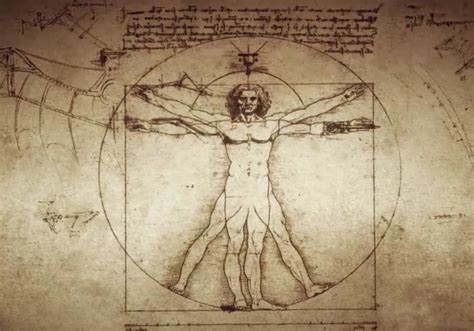
Tommy Spenceri proved to me how pervasive his talent in this arena was when he told me about the highlight of a relatively expensive whale spotting cruise he attended. These cruises have become so popular that they’ve become an industry in some locales, generating over $100 million a year, and creating thousands of jobs for locals. Some of these tourists are almost spiritually moved at the very sight of the beast, others find the geyser of misty spray bursting skyward from its blowhole an almost religious experience, but Tommy’s wiring led him to find the size of the whale’s excrement the most memorable experience of that vacation. “You should’ve seen it, it was larger than my whole body,” he said with restrained excitement. “I’m serious, I could’ve dove into it Vitruvian Man and still not touched its outer rims.”

As the son of a man with such wiring, Tommy and Roy’s unusually obsessive preoccupation with the products of our biological functions was not new to me, but that didn’t mean I wanted to hear about it. So, the moment these discussions pop up, my stop sign follows suit. I switch my active listening skills into the off position, and I put the picks and shovels of my poking and prodding away. 

I’ve been relatively successful in this endeavor over the years, unless I’m at a baseball game drinking beer, and when I talk about beer I’m not talking about the standard beer that everyone drinks just to tie a buzz on. I’m talking about the delicious craft beer designed by master craftsmen who are so good at what they do that the results of their brainstorming, testing, and hard work go down so smooth that we miss all of the indicators that tell us to stop.  

I wasn’t drunk when the generally unappealing discussion of food poisoning began, but those delicious craft beers dulled my senses just enough that I accidentally ushered him on with my laughter. In a completely sober state, I know that the food poisoning discussion is a war story. It spawns the competitive, “You think you had it bad? Well, get a load of what happened to me,” as the two of us try to top one another with our experiences. Two beers in, and a discussion of food poisoning becomes a part of the funny conversations two fellas have at a baseball game. In that moment, Roy introduced the food poisoning discussion with an innocuous, comfortably vague version of his worst case, but I made the mistake of topping him with my story of an eighteen-year-old, living on his own for the first time.

“I was on my own for the first time, and I knew nothing about the proper ways to preserve meat.” I said. “No one effectively warned me that meat is basically poison when you leave it uncovered in a fridge for a couple days. The meat had little white spots on it, but I thought that the gallon of milk I had a shelf higher sprung a leak again. That happened about a week earlier, with a different gallon, and I just thought it happened again. I basically poisoned myself. The pain I felt from that bout of food poisoning was something I never experienced before or since. Not only did I question whether I was going to live through this, I kind of questioned if I really wanted to.”

That was it from my end, comfortably vague. I could’ve gone into detail, embarrassingly specific detail, but I didn’t want to go down that road. I didn’t want to go down that road, because that’s not what you do when you’re talking to a fella, over beers, at a baseball game, during an otherwise beautiful Friday evening.

Roy saw my move, and he decided to checkmate me with his “You think you had it bad …?” plank. My guess is Roy thought that the best way to top a relatively entertaining story that remained comfortably vague was to go into detail. The humor, Roy must’ve thought, is in the details. Roy must’ve thought that my story was the culinary equivalent of a potato with a side of broccoli, and to top mine, he brought the meat.

“Mine was coming out both ends, you know what I’m saying?” he began. I knew what he was saying, and while the image I had in my head was cringe-worthy, it wasn’t completely irreversible. I don’t know if Roy was feeling ultra-competitive in the war story arena, but he decided that he needed to put an exclamation point on his story by adding one final, irreversibly disturbing nugget, “You know that point where you have to change your underpants three times in a day …”

I’m all for my storytellers telling me about their epic fails, but when this grown man told the tale of his inability to make it to a facility on time, I wasn’t sure how I could help him restore his credibility. To my mind, unless you’re medically declared incapable of doing so, failure to make it to the facility on time might be the most humiliating and embarrassing moment in a grown adult’s life. The one proviso is that if it happens, it happens behind a closed, locked door, and with some diligent effort devoted to the cause, we can destroy any and all evidence until no one will ever find out that our streak of not soiling ourselves since that embarrassing moment in second grade is now over. The only thing that can make that ultimately embarrassing and humiliating moment in life the second most humiliating moment in life is by going public with it.  

My new rule: if we’re having such a discussion, and we’re both grown adult males, at a BASEBALL GAME, keep it vague. I know that goes against everything I wrote earlier, and it goes against my personal constitution to say that, but everything is relative and situational. When we’re sitting at a baseball game, I don’t want to hear excruciating details about an emotional moment from your life that leaves tears rimming your eyes, and I don’t want to picture you, my adult, male friend, with dirty underpants around your ankles, and a look of shame and disgust on your face, as you bear witness to the consequences of your inability to make it to the facility on time. 

As a storyteller who values “The Funny” so much that I don’t care who gets hurt, as long as it’s me, I understand that it’s all about our vulnerabilities, and I understand that comedy is confessional, but we’re smashing some valuable signposts that warn us against going further. We do this, because our standup comedians, podcasters, and our Facebook friends are now saying some of the most awful, embarrassing and incriminating things about themselves. We laugh at/with these boundary smashing and taboo tweaking comedians, because they’re brand of funny feels so new that it feels transcendent, and  we all want to be the guy who tops the other guy and breaks on through to the other side of conventional storytelling and conventional comedy. Before we break through, though, I think we should all ask ourselves what we will look like on the other side? I might be an endangered species now for overthinking such matters, but Roy, Tommy, and my dad taught me that garnering intrigue, eliciting sympathy, and getting the laugh isn’t a gumbo that means so much to me that I’m going reveal an ultimate humiliation that contains irreversible imagery around my ankles. They’ve taught me that there’s nothing wrong with keeping it comfortably vague.

The Happiness of Physical Congruence


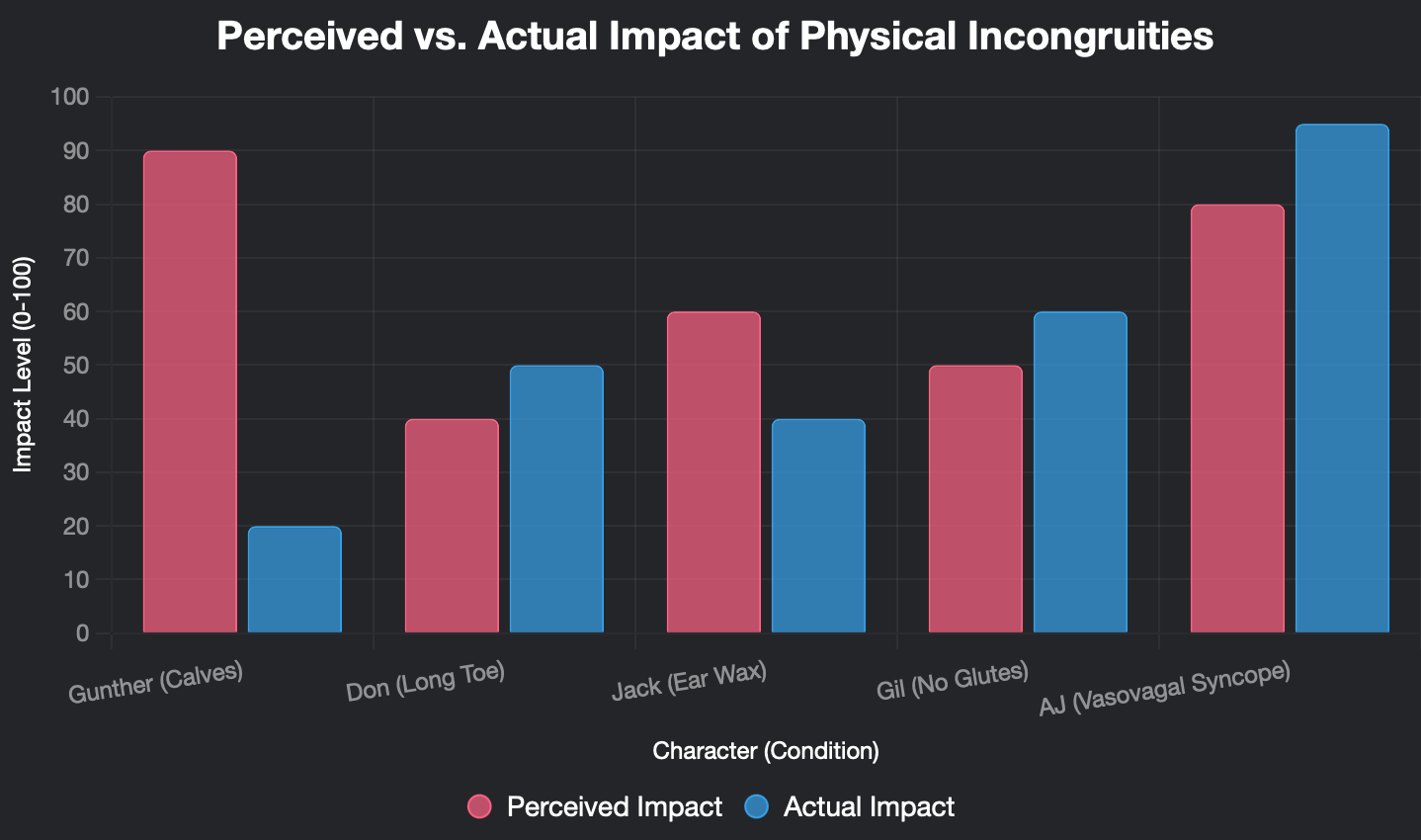
“You have some killer calves bra,” Gunther, the gym rat, said at the gym. I can’t remember if I said, ‘thanks’ or ‘SECURITY!’ but Gunther (pronounced Goon~thur as opposed to Gun~thur), sensed my awkwardness. “Seriously bro, you’ve done some good work. I’m thinking of getting mine done. Gonna get me some pumped up calves.” After some back and forth, he confirmed that meant he was thinking about having calf implants surgically inserted into his legs. “I do all of the calf raises, the farmer’s walk, the Box jumps, and jumping jacks, and look at me, I got nothing down there bro. Look at those puny things! Look at them compared to my thighs, they’re incongruent!”

You ever meet this guy, a guy who appears to have it all, and he obsesses over something so trivial that if I told you about it, you might say, “He was joking. He had to be.” I didn’t bother breaking it down with him to see if he was joking, because why would I? I was there, and I knew how serious he was. I did wonder what motivated this obvious obsession with anatomical perfection, and I wondered how deep it went. Did he think everyone was staring at his “puny calves” the minute he walked into a room? Did he refuse to wear shorts, to avoid exposing his humiliation? Did he blame his parents for giving him such awful genes “down there”. I wondered if he thought that by attaining “pumped up” calves, even if by artificial means, that he might be able to improve his perception by eradicating the inadequacies below his leg pits.

“Are you looking to get into a pageant?” I asked.

“First of all, they’re not called pageants,” he said. “They’re called bodybuilding competitions. And no, I’m not looking for any of that. I just think it’s unfair that I work ten to twenty times harder than people like you, no offense, and I get no results.”

Gunther, the gym guy, had so many admirable, and I’ll say it, enviable traits that if he commissioned a poll of a thousand casual observers, my bet is one in a thousand might notice his “puny calves”. If Gunther were asked to predict the outcome of that poll, however, he would probably predict that that figure to be somewhere around 999 out of a thousand who spot them. “How could they miss them?” he might ask.

I told him that if he hadn’t pointed them out to me, I never would’ve noticed them, and I added, “I doubt that anyone else would either.” He acknowledged that and waved it off, basically admitting that he kind of knew it was his issue.

The idea that he moisturized his skin was obvious, as was the idea that he used a wide variety of hair products to color and treat his hair. Gunther, the gym rat, worked hard to perfect every element of his physical presentation, and that included achieving what bodybuilders call the X-frame: broad shoulders, a narrow waist, and well-developed thighs. This shape creates what experts call a striking visual taper, proportion, balance, and a symmetrical emphasis that creates a harmonious and powerful aesthetic that all gym rats strive to achieve.” Yet, Gunther couldn’t do anything about his “puny calves”, so he contemplated letting a surgeon do it for him, because “it wasn’t fair” that he couldn’t.

My guess is if another perfectionist, Leonardo da Vinci, decided to give his Vitruvian Man “puny calves”, after studying the ideal proportions of the human form, none of us would notice. Da Vinci would, and Gunther would, because they were far more concerned with achieving anatomical perfection.

We can all understand and appreciate da Vinci’s drive to achieve an artistic representation of perfection, in other words, but there was something almost obnoxious about Gunther’s psychological drive to fix his “incongruity” that when he used that word it stuck with me. I never heard anyone, in the bodybuilding universe, or anywhere else, complain about their incongruity. It was almost as if he thought if he used a different, more creative term, it might exert some special kind of shame for those muscles, and they might finally respond to all of his efforts. And he did speak of these muscles as if they were disembodied entities. Then, he concluded his scorn by saying if they didn’t respond to his wishes, he would find someone (a surgeon) who would.

I don’t know if Gunther eventually purchased that unnecessary, cosmetic surgery, as that would be the last conversation I had with him. If he bought it, I wonder if it helped him feel more congruent. Our immediate guess would be no, as cosmetics only resolve superficial issues. That’s so true it’s almost a fact, but fixing what ails us, or what we think ails us, can have a placebo effect that helps us feel better about ourselves and solves so many other issues. As my science teacher once told me, our initial guesses are often correct, and my initial guess was that Gunther’s feelings of incongruence were so pervasive that the day, the week, or the month after that surgery, he’d find some other incongruity he considered a roadblock to happiness. 

***

Are we happy? Are we happier than we’ve ever been, right here, right now? We’re not as happy as we’ve been, but we’re pretty sure that once forces beyond our control align, we’re going to be happier in the future.

It’s difficult to avoid taking things for granted, but how many of us consider physical congruence an essential element of happiness? Before laughing that off as silly, we need to consider that physical beauty can lead to more confidence, and confidence can lead to greater happiness, and if the congruity of our face equates to beauty, how happy can we be with a big nose? We can get a nose job, but the minute that’s done, it makes our earlobes look flappy. If we lop those off, how congruent are our lips now, and what about our “too narrow” eyes? And, if we have too much forehead, how do we fix that? We often hear that we must accept what our Creator has given or withheld, but to what extent can absolute congruence align with our identity and eventually foster happiness?

We accuse one another of being superficial when we obsess over the physical beauty of others, but what would they think of us if they knew how superficial we are with our own? Good friends and a great family can provide an excellent support system, and making a boatload of money can help even the scales if we love what we’re doing for a living, but none of these elements of life last forever in intangible and tangible ways. Beauty doesn’t last forever either, of course, and we all know that, but instead of appreciating everything we have while we have it, we obsess over the qualities that prevent us from achieving our definition of perfection. 

I know this makes no sense to the healthy, but we should all take a moment to focus our mind’s eye internally, and appreciate how this incredibly efficient machine that we call our body, operates. We’re not talking about the big guys (heart, liver, lungs) that we all know, but the tiny mechanisms in our systems, the cogs, cranks, chains, and linkages that work in conjunction to keep us healthy and happy, because their quiet efficiencies don’t operate at optimum levels forever. And what’s the difference between internal congruence and superficial? Gunther probably wouldn’t even notice his calves if he had trouble breathing, he had heart problems, or some other internal incongruence that cried out for medical attention. His concerns with his calves were as a result of the luxury afforded to those who have achieved so many levels of optimum efficiency that they have to work their way down the list to find one that isn’t.

We’re talking about physical congruence here. We’re talking about how we should factor physical congruence into our huge, multifaceted happiness puzzle. We all know about how reducing stress and achieving emotional stability can lead to happiness, and we’ve all read how diet and exercise can affect mood stability and a general sense of satisfaction, but how many of us look down at our toes and thank our Creator for giving us foot appendages that grew in a congruent manner to provide the typical comfort we enjoy while standing, walking, or just fitting comfortably into a pair of socks?

***

Don Christie had a middle toe that grew too long for the comfort inherent in congruence. An elongated toe might not generate much sympathy from us because, “It’s a long toe! Who cares?” Compared to a person born with a physical abnormality on the face, or any of the truly sad stories we hear about what babies in prenatal units are forced to endure, it’s tough to do anything more than raise an eyebrow at an otherwise healthy man complaining about an abnormally long toe.

Don’s point was that that toe has affected his life in ways most of us take for granted. In order to find comfort standing and walking, Don has had to purchase shoes one size too large to accommodate the space that elongated toe requires. The toe and the shoes he requires, affect his gait pattern, and he has learned to give that toe some slack when he pulls his socks on. It was an annoying attribute when he was a child that grew to a frustration in adulthood, and it’s become a real painful problem, at times, in his senior years. Did it affect his overall sense of happiness? “A little bit, in the ways a toe can affect a day. I’ve adapted, of course, but every once in a while, it becomes a real, painful problem.”  

“If it’s that painful, or that big of a problem, why doesn’t he just have a surgeon lop the elongated portion of it off?” That falls under the “easy answer” umbrella, and the “easier said than done” one. That answer isn’t wrong, of course, but it’s still a toe. It’s an annoying toe at times, and it can prove painful, but it’s still his toe, and he’d obviously much rather deal with it than lop off part of his toe. 

***

Do your ears produce enough wax or too much? The incredibly complex and largely efficient machine we call the human body effectively clears out most excess wax most of the time, but some unlucky few experience a buildup that can lead to an annoying itch, tinnitus, and in some cases, vertigo that can significantly alter an otherwise pleasant Tuesday in June. 

Jack Radamacher was never what we would call a happy person, but he wasn’t miserable, until he started experiencing some hearing loss, a “muffled” sound, and occasional spells of dizziness. The latter was especially concerning to him, and it led him to experience what he considered one of the worst words in the English dictionary, dependent.

“I’d rather die than be dependent on others,” he often said as a younger man, and now, here he was. He didn’t need an arm to hold onto most of the time, but he never knew when a dizzy spell would hit. Prior to his visit to the ear, nose and throat doctor, Jack attributed his hearing loss, and those muffled sounds, to working in a loud machine shop for thirty-eight-years and his age, because he never heard that sometimes the ears neglect to clear out excess wax. Not only did he learn that some ears forget to clear excess wax, he learned that the muffled sounds and dizzy spells he experienced weren’t all age-related.

After the doctor went about cleaning his ears of excessive buildup, Jack experienced what was for him, a revelation.

“I feel cured!” he said when his sense of balance returned, and he no longer experienced muffled sounds. He experienced an odd sense of liberation that led to a greater sense of happiness, until the buildup began again weeks later. When it happened again, he learned about ear wax candles. No one, not even Jack himself, trusted him to do this himself. “The flames generated by the candle can get a little out of control,” his daughter-in-law warned him. So, he was somewhat still dependent on others, but he accepted that if it meant that he could “cure” himself at home on such a regular basis that he achieved a better quality of life as a result.

***

Do you have enough cushion to provide cushion? Some don’t, and we love going after them. “Gil, you got no butt!” we said with laughter. Gil knew that, and he’s known it his whole adult life. It’s why he carries a cushion to the employee cafeteria every day for lunch. “Those chairs are just so uncomfortable,” he said when we ask him about it.

“Huh, I never noticed how uncomfortable these chairs were,” we said. 

“Of course you didn’t,” Gil said in a dismissive manner, “because you have cushion back there.”

We called him “No butt Gil” and one person added, “He’s got back. A long ass back,” but it wasn’t a source of daily conversation.

So, when Gil said that about our biological cushions, seemingly out of nowhere, we didn’t know what he was talking about, until we thought about why he thought the cheap, plastic chairs were so uncomfortable, why he brought that cushion to lunch every day, why he had to wear suspenders, and how he always complained about lower back pain.

Gil thought the jokes were as funny as we did, but the fact remained that Gil had a physical incongruence that diminished his quality of life to some degree. Those of us who have never met a Gil, never placed the sensory delight of comfortable sitting in our happiness equation, because we never considered how the quantity or quality of bun could affect us after a hard day at work where sitting in a relatively comfortable chair provides a reward at the end of the day. Even sitting in cheap, plastic chairs in an employee cafeteria can provide some rewards to the hard worker, if they have sufficient gluteus maximus. We know this now because we know Gil, and we’ve seen him bring that cushion to the lunchroom area.  

Gil’s doctor prescribed that Gil get a gym membership and do certain workouts, with a particular focus on squats, so he could increase the muscle back there, but Gil didn’t have much to work with, and he knew his physical incongruence would prevent him from ever knowing the absolute joy of sitting in a chair, in a manner the rest of us take for granted.

***

“Have you ever had a bad back?” Imelda asked me at the gym. “It goes away, right? What if it didn’t? What if you experienced the worst back pain you’ve ever had, every day, for years? What would you do if you saw every expert, in every field you could think up, and they couldn’t help you? I am not a suicidal person, but I was in such horrible pain, for so long that I thought this was my life now. I just didn’t see how I could go on living like that.”

Imelda and I used to be great friends at our previous place of employment. When we switched jobs, our plan was to always keep in touch and keep connected in some way, but do we ever do that? No, we often leave those people behind. Sometimes, we don’t even remember who we left behind, until we randomly run into them, a decade later, at a gym.

The Imelda I knew back then was such a little thing, and she was someone I considered extremely attractive, because she hit all the bullet points of a small, attractive woman. The woman standing before me now had biceps, triceps, and her shoulders appeared so round and full. She almost looked like a different person, a big sister of the person I once knew. She was ripped, and I thought about all that in all of the complimentary and somewhat insulting ways. She lost all of her beautiful, feminine form, and replaced it with a form that suggested she was rugged and tough looking. She now looked like a person we probably shouldn’t mess with, and I meant that in complimentary and somewhat insulting ways.  

“I was in a car accident, and it really wasn’t even a bad one,” she said. “The woman hit me just right, in a manner that happened to knock me out of alignment.” Imelda went onto to talk about all of the doctors, chiropractors, and massage therapists she visited over the years. “Every time you enter one of these offices, you have hope, and you pray that they are going to be the ones who are going to end it all for you. Then you leave their office, almost in tears, thinking that if you follow their orders it will end it once and for all. They tried, all of them tried, but nothing helped. I was so desperate, at one point, that I accidentally became an addict, addicted to pain meds, the worst of the worst ones,” she said. “They all provided some, limited relief, but the pain, the excruciating pain of not even being able to pick yourself up off the floor, was never far behind the temporary relief those drugs provided.

“When I finally met my Helen Keller, my miracle worker, I thought she was the worst of all. She was a physical therapist who said, ‘There is only so much I can do to help you, and you have to do the rest.’ She was so honest that I considered asking for my money back. What do you mean you can’t help me? What am I doing here, then? Her prescription was working out.  

“Working out?” I said, “I can’t even get off the floor, and you’re telling me to workout?” It made no sense. I thought the massage therapist was an idiot who didn’t understand my level of pain, but I tried it. I did a couple of her low-stress workouts, and I had to admit I felt some relief, some relief as in a little. Then, I worked my way, through her slow, methodical, and prescribed progressions, until I felt even more relief. I told her about it on my next visit, and we cried together, because I thought she saved me, and she did, but it kept coming back. She suggested, after a time, and when she thought I was finally ready, a full-on powerlifting regimen, and I did it,” and here Imelda cried a little, right in front of me, “and she’s my savior now, and I tell her that, and thank her every time I see her.

“I might not be as attractive as I used to be,” she said, and I tried to dispel her of that notion, but she knew. “No, I know that I no longer look cute with all these muscles, but if you knew what I went through for those two long, excruciating years, you’d understand.”

After hearing Imelda’s testimonial, I thought of Gunther’s complaints about his incongruent calves. I thought about how biologists call the human body a marvel of engineering that is also structurally flawed in places, and in various cases. Some people might experience a flaw in their calves ability to respond to specific workouts, but those biologists also direct specific criticism at the structural flaws inherent in the back that make it prone to pain, injury, and dysfunction. Our rush to end our quadrupedal movement and achieve bipedalism is to blame, they say, and some suggest if we never want to have back pain again, we should revert back to the ways of our ancestors and crawl from space to space. Walking is what screwed us all up, because our rush to walk left little time for optimizing the spine’s ability to handle all of the new mechanical stresses bipedal movement caused. Our S-shaped spine enabled balance and flexibility, but it sacrificed some levels of stability when compared to the straighter spines of apes.

So, if Imelda’s testimony taught me nothing else, I learned to appreciate whatever temporary comfort I have, because this marvel of engineering we call our body has structural flaws that are vulnerable to tweaks, and there are no manufacturer’s warranties on these parts either. They’re as is. How was your back today? Good? So good that you didn’t even notice it? Notice it, mentally mark it down as a great day, and be grateful, because it is structurally flawed, and you might learn that one day, the hard way.  

***

“You experienced a vasovagal syncope episode,” the doctor informed AJ Pinter. 

“A vaso what?” AJ asked.

“A vasovagal syncope episode,” the doctor added. “When you were listening to popular podcast, your vagus nerve became overstimulated, causing blood vessels to dilate and pool in the lower body, reducing flow to the brain. Such an episode can also trigger a sudden drop in heart rate and blood pressure, often due to a reflexive response to stress, pain, or fear.”  

There are a number of results that can occur as a result of a vasovagal syncope episode, but in AJ’s experiences, it led him to faint. Most fainting spells are a reflexive response to a high level of stress, pain and fear. These episodes are usually brief, and recovery is quick, but those who study the effect suggest that the best way to experience such an episode, or recover from one, is to do so while lying down. This is impossible to do in most cases, as it’s almost impossible to predict when such episodes will occur.

AJ’s vasovagal syncope episode arrived when he was driving a delivery truck down the road. AJ had a documented history of fainting at the sight of blood, but that’s so common that documented research shows that 15% of the population faint at the sight of blood. What isn’t as common, and something an overwhelming majority of us have never heard of before, is that some hemophobia (the fear of blood) sufferers cannot maintain consciousness after hearing a discussion about blood. AJ’s case is so uncommon that some suggest that sufferers of those who lose consciousness as a result of hearing such a discussion could number under 1% of the population.

AJ experienced just such an episode while listening to a popular podcast containing an in-depth discussion of blood. When AJ felt the symptoms coming on, he tried to pull off to the side of road, while simultaneously trying to turn the podcast off, but he couldn’t manage to do either in time. He lost consciousness while driving and hit an oncoming truck head-on. AJ broke bones in both hips in his pelvic region. If AJ is now able to endure the arduous, lengthy, and painful rehab his doctors prescribed for him, he’ll relearn how to walk but he may never be able to walk without a noticeable limp, and he’ll likely experience moderate to extreme pain for the rest of his life.

“And this happened because he heard a discussion about blood?” we asked the informant detailing for us the catastrophic consequences of AJ’s obscure condition. We asked that a couple times with an ‘Are you sure you have that right?’ tone, because we never heard of a person passing out as a result of hearing another talk about blood. 

“AJ said it was an in-depth, detail-oriented discussion,” the man informed us, but that didn’t help us understand the matter any better. After working through the particulars of this discussion, we immediately thought about Gunther “the gym rat”, and how Gunther and AJ represented two ends of the spectrum of physical incongruities and their impact on personal happiness. Gunther chose to see an inadequacy that few would notice while failing to recognize the privilege of his otherwise healthy and fully-functional body. He chose to believe that it was “unfair” that he had such “puny calves”. AJ’s story, on the other hand, illustrates true unfairness: a random, obscure condition that upended his life in an instant. Gunther’s fixation is a choice to dwell on an issue most of us consider a non-issue, whereas AJ had no choice in the face of his medical condition. This contrast critiques Gunther’s lack of gratitude and perspective, suggesting that his pursuit of superficial congruence blinds him to the broader, more meaningful aspects of happiness—like the ability to walk, drive, or live without chronic pain. In that light, AJ’s tragedy illustrates the absurdity of Gunther’s self-imposed suffering, framing it as a cautionary tale about the dangers of obsessing over minor flaws at the expense of appreciating one’s overall well-being.

***

Some of us have knee-jerk, impulsive reactions to tales of the incongruent. “They’re weak!” some say. “How can a man survive, or thrive, if he cannot maintain consciousness during a discussion of blood?” Others react with sympathy and/or a sense of appreciation. Some might say that they’re put here, in our lives, to help us gain a renewed sense of appreciation for the idea of physical and mental congruence that we should cherish. 

We rarely think about how our relative levels of congruence produces happiness, until we meet the incongruent. An enlarged heart, prostate, shrunken kidneys, or brain atrophy are more common incongruences that elicit sympathy, but how much sympathy do we have for a man with an elongated toe? If a man was dumb enough to complain about a lack of gluteal muscles, and he did so in manner that suggested he was upset about it, would we be able to restrain our laughter long enough to express sympathy?

“The man can’t sit in most chairs comfortably,” we say to scorn those who cannot control their impulses. “And he experiences chronic back pain as a result.” It’s funny, and it’s not, because most of us don’t consider sitting in a chair or walking on a sidewalk without discomfort one of the luxuries of life, until we have our perspective altered. 

If we hear the terms congruent and incongruent, we often hear them in relation to social, psychological, physiological, philosophical, and spiritual concerns. We rarely talk about the physical, because it just feels so superficial. With all the problems in the world, both in general, and those we learn others experience, it almost feels narcissistic and trivial to complain about an apparent lack of buttocks, an elongated toe, or excessive wax build up. Yet, if we can’t walk or sit without some discomfort, it can affect our quality of life.

When we give thanks for all that we have, we often include good health, but we don’t really mean it. We say it, because that’s just something good people say. A part of us knows that good health can be fleeting, but it’s difficult to appreciate good health, or the incredible machine we have running life for us, until we hear others’ stories. We normally only appreciate such functions when we recover from deficiencies, pain, or some form of tragedy, but when we hear stories of poor health as a result of some odd physical incongruity, it renews our appreciation for even minor functions we currently have operating in peak form, because we know they’re not going to last forever.

Eradicating Boredom, Losing Creativity: The Double-Edged Sword of Digital Distraction


“I’ll never be bored again!” I said the day I purchased my first smartphone. I said that in reference to one of the very few games we play that has no winners: the waiting game. With a smartphone in hand, I thought I could finally resolve one of my biggest complaints about life: waiting.

“We’re not going to live forever,” we complain when someone is involved in the life and death struggles of a grocery store price check. Most of us don’t take out our life expectancy calculator to figure out how long we’re going to live, or to calculate how much of our lives we’ve wasted waiting in line, but we all love sharing that snarky joke about the guy complaining to the clerk that the price tag said asparagus cost $3.47 as opposed to the register’s reading of $3.97.

We’re all waiting for something, all the time, but what makes us angrier, waiting for something to happen, or doing nothing for long stretches of time? We’ve all experienced our frustrations inch their way over into anger, then boil over into rage, and we’ve all experienced that sense of helplessness when it happens to us. With a smartphone in hand, I correctly predicted that I could avoid falling into that trap of claustrophobic silence and inactivity by filling it with something, something to do with my hands, and something is always better than nothing in the waiting game.

Promptness is About Respect

The waiting game is not selective or discriminatory. Everyone from the most anonymous person on the planet to the most powerful has to wait for something, but there’s waiting and then there’s waiting. The waiting game is all about power and the lack thereof. When we’re stuck in line, at a restaurant, waiting for a seat, we experience a sense of powerlessness. We’re so accustomed to having power over our own life, as adults, that when we find out the wait time for that restaurant is forty-five minutes, we exert that power by walking away. When we find out every decent restaurant in town has a thirty-to-forty-five minute waiting time that sense of frustration sets in, and we eat at home. When someone we love leaves us sitting in that restaurant for a half an hour to forty-five minutes a sense of helplessness creeps in when we realize that we’ve accidentally put ourselves in a position of dependence yet again.

I don’t know if everyone feels this way, but I replay a Madonna quote in my head. “If you have to count on others for a good time, you’re not doing it right.” When I’m sitting in a restaurant with patrons passing me, looking at the vacant side of my table, I realize I’m counting on the wrong people in life, the narcissistic, irresponsible, and disrespectful people I count on for an enjoyable lunch. If they leave us there long enough, by ourselves, we’ll start to dream up all sorts of motives and agendas for their tardiness. That frustration can lead to anger and a level of teeth gritting and grinding that damages the expensive and painful dental work the impatient we’ve had done. 

I know that the search for what could tip me over into some form of mental illness is over when I am on the other end of the waiting game, and I eventually hear, “What is the big deal, I was only a couple minutes late, and I had to …” They usually fill that void with utter nonsense that we cannot disprove, so we just let it go. 

Life happens when we least expect it sometimes, and sometimes we’re going to be late. If we respect the other person, we call, text, or email us to inform them we’re going to be late, but that would be respectful on our part. That’s really what we’re talking about here, the respect or lack thereof, on their part. If we respect our employer, we show up on time. If we enjoy the company of someone we’re dating, we show up on time, or early. It’s about respect, the lack thereof, and narcissism. And when they show us this lack of respect, quality friendships can be tainted and temporarily damaged, and dissociations with associates end what could’ve become a friendship. We overreact to such slights, and we know it, but it all boils down to the fact promptness is all about respect.

The Eradication of Boredom

When we’re immersed in the maddening waiting game, the mosquito paradox comes to mind. Anyone who has ever had a beautiful day at the park ruined by a scourge of mosquitoes has asked why scientists don’t find some way to bioengineer an eradication of that relatively useless species? Biologists, with a specialty in mosquitoes, provide arguments for why we shouldn’t, but when we’re swatting, slapping, and running from the scourge, we develop seven counter arguments to every one of theirs. The only vague but true answer we’ll accept is “Anytime we mess with nature, there will be consequences.” We’ve all heard that in relation to the mosquito, but what about waiting and the resultant boredom? Boredom is a naturally occurring event. What could possibly be the consequences of eradicating boredom? We’re not talking about that simple, “I don’t know what to do to pass the time” boredom. We’re talking about levels of boredom that takes us to the edge of an abyss that stares back at us, until it roars to the surface and frightens everyone around us.

Some of us loathe the boredom inherent in the waiting game so much that it whispers some scary things about us to us, but when it’s all over, it dawns on us that something happens to us when we spend too much time in claustrophobic silence with nothing to do but think.

How many useless, pointless thoughts have we had in such moments? We flush most of those thoughts out of our mind after it’s over, as we will with that which our body cannot use, but some thoughts collect, mate, and mutate into ideas that we can use. How many of our more meaningful, somewhat productive thoughts had hundreds of useless, pointless parents conjugating during the waiting game? 

***

The child and I often talk a lot about how relatively boring things were when I was a kid. This involves me recalling for him what we did for fun, and how we thought those things were so much fun at the time. “We had to do these things,” I say when I see his face crinkle up, “because we were all so bored.” These complaints could be generational, as I often hear the previous generation describe their youth as “Such an incredible time to be a kid,” and they were raised on farms! I’ve been on farms, trapped there for huge chunks of my youth, and the only thing I found incredible about it was how incredibly boring it was. It takes a creative mind, more creative than mine, to believe that being raised on a farm is an “incredible” time.

“It’s all about perspective,” they say, and they’re right. If we don’t know any better, skipping stones in a pond and fishing can be a lot of fun. We rode our bikes around the block a gazillion times, and we thought that was an absolute blast, and then we played every game that involved a ball, but they all seem comparatively boring when compared to the things kids can do now. We could argue all day about the comparisons, but they do have better things to fill the empty spaces. Yet, what happened to us as a result of all those empty spaces, and what happens to them as a result of mostly being devoid of any?

How much of our youth did we spend sitting in chairs, looking out windows, waiting for something to happen? Some of us did something, anything, to pass the time until the event we were waiting for could happen, but there were other times when we just had to sit and wait. We’d sit in those chairs and think up useless and pointless crap that ended up being nothing more than useless and pointless crap, but how many bountiful farm fields require tons of useless and pointless crap per acre? 

We have cellphones and smartphones now. That’s our power. That’s how we eradicate boredom. “4.88 billion, or 60.42%, of the world population have cellphones, and the number [was] expected to reach 7.12 billion by the end of 2024. 276.14 million or 81.6% of Americans have cell phones.” We don’t ever have to be bored again. 

We have game consoles. “The Pew Research Center reported in 2008 that 97% of youths ages 12 to 17 played some type of video game, and that two-thirds of them played action and adventure games that tend to contain violent content.” These kids may never have to face the kind of boredom I did as a kid. We didn’t even have an Atari 2600 in our home when just about every kid we knew did, and it wasn’t because our dad wanted to prevent us from becoming gamers. He was just too cheap. So, we were forced to do nothing for long stretches of time.

When you’re as bored as we were, the mind provides the only playground. “Is there something on TV?” There never is, and I don’t care how many channels, streaming services, apps, and websites we have, an overwhelming amount of programming is just plain boring to kids. We could go out and play, but when you’re from a locale of unpredictable climates, you learn that that is not possible for large chunks of the year. The only thing we can do, when we’re that bored, is think about things to do. I invented things to do to pass the time, but they could get a little boring too.

Filling the Empty Spaces 

“You’re weird,” is something I’ve heard my whole life. I’ve also heard, “I’ve met some really weird fellas in my time, but you take the cake,” more than a few times. That’s what I did when I ran out of things to do. I sat around and got weird. Your first thought might be, “Well, I don’t want to be weird, and I don’t want anyone thinking my kid is weird either.” Understandable, but what is weird? Weird is different, it’s having divergent thoughts that no one has considered before, until they grew as bored as we did. Weird is rarely something that happens overnight. It takes decades of boredom, and it takes a rewind button of the mind, replaying the same thoughts over and over, until we’ve looked at the same situation so many different ways, on so many different days that we’ve developed some weird ideas and abnormal thoughts about people, places and things around us. This is what happens when we stare out windows too long, looking at nothing, wondering how the world might look different if it was weird, strange, or just plain different. It’s what happens when someone lives too long in the mind, and their peeps start worrying that they’re not doing it right. 

Some weird, strange, and just plain different thoughts led us to think about the difference between success and failure. Success is a short-term game that will mean nothing tomorrow if you’re not able to back it up, so you better enjoy it while it lasts, because if there’s one thing we know about success, it has a million parents and failure is an orphan. We also realize that, in those dark, quiet moments we spend alone, looking out the car window on the drive home, that failure does define us. Athletes and business people say, “Don’t let failure define you,” but it defines us. Some remember those moments, and some will never forget, but what we do shortly after failing will define us too. The thing that plagues us is, “Was that moment of failure an irreversible blemish?” and when we’re left staring out the window at nothing, it can feel like it is. Some will never forget, and we know who they are, because they always remind us who they are, but most forget. As any trained public speaker will inform us, an overwhelming number of people will forgive, forget, and dismiss errors. Most people aren’t paying near as much attention as we think, and most people aren’t dying to see others commit errors. When we’re left alone for long chunks of time, replaying moments over and over, we can make the mistake of thinking it’s the opposite. 

“Reach for the stars,” they say. “Become the next Albert Einstein, Vincent van Gogh, Isaac Newton, and Leonardo da Vinci, fill your empty spaces, and reshape your world.” It’s great advice, and we think about how we should try to be better today than we were yesterday, and we shouldn’t spend those dark, quiet moments obsessing about trivial notions we consider our limitations. As we sort through those famous names, we ask how bored were they, when they were kids? Those guys had nothing to do either, when they were kids. They didn’t have movies, TV, devices, or consoles to occupy their time. As boring as it could be to be a kid in our generation, we can only imagine those previous generations were just itching with boredom back in their day, and they were so bored that they dreamed up some things that laid the foundation for everything we find interesting now. We can imagine that most dismissed them as dreamers and daydreamers that wouldn’t amount to much, and they ended up conjugating all of those pointless and useless thoughts into something that ended up reshaping our world.    

No matter how much we daydream, or dream up interesting thoughts, most of us will never actually reach those stars. Yet, something happens to us when we’re so bored that we think up weird and interesting thoughts that will never amount to anything. We accidentally, incidentally, or just by the natural course of filling empty spaces become more interesting. Thinking so much that we think too much could lead us to divergent thoughts that some people find so weird, strange and just plain different, but that can lead them to ask us about matters that they consider trivial, relatively unimportant, to important. Our unique perspective often attracts people to us, and it could lead us to have more friends, which could be one of the primary reasons we should consider inserting more boredom into our kids’ lives. Our kids might not know who they are, or who they could be, if they find artificial ways to avoid ever sitting in front of a window with nothing to do but think about everything. Even if they never make it above the lower-to-middle stations in life, they might learn how to make life more interesting, and they might accidentally figure out how to enjoy their lives better, and in the process of being so bored, they might learn how to become happier, more interesting people.