An Intellectual Exercise in Exercising the Intellect


“There are no absolutes,” a friend of mine said in counterargument.  The snap response I had was to counter her counter with one of a number of witty responses I had built up over the years for this statement.  I decided, instead, to remain on topic, undeterred by her attempts to muddle the issue at hand, because I believe that for the most part this whole philosophy has been whittled down to a counterargument tactic for most people.

Whenever I hear the “No Absolutes” argument, I think of the initial stages of antimatter production.  In order to get the protons, neutrons, or electrons spinning fast enough, a physicist needs to use a Particle Accelerator to attempt the production of an atomic nuclei, otherwise known as antimatter.  The acceleration of these atoms occurs in a magnetic tube that leads them to a subject, upon which they smashed to produce this final product.  The process is a lot more intricate and complex than that, but for the purpose of this discussion this simplified description can be used as an analogy for the “There are No Absolutes” argument that is often introduced in an echo chamber of like-minded thinkers, until it is smashed upon a specific subject, and the subject matter at hand is then annihilated in a manner that produces intellectual antimatter in the mind of all parties concerned.

Tower of Babel
Tower of Babel

The “No Absolutes” argument is based on the post-structuralism idea that because we process, or experience, reality through language –and language can be declared unstable, inconsistent, and relative– then nothing that is said, learned, or known can be said to be 100% true.

This degree of logic could be the reason that a number of philosophers have spent so much time studying what rational adults would consider “Of Course!” truths.  One such example, is the idea of presentism.  Presentism, as presented by the philosopher John McTaggart Ellis McTaggart, could also be termed the philosophy of time. The central core of McTaggart’s thesis has it that the present is the lone timeframe that exists, and that the past, and the future cannot exist at the same time.  The past has happened, he states, and the future will happen, but they do not exist in the sense that the present does.  This philosophy is regarded in some circles (to the present day!) as so insightful that it is included in some compilations of brilliant philosophical ideas.

Anyone that is familiar with McTaggart’s philosophy, or will be by clicking here, can read through the description of the man’s theory a number of times without grasping what questions the man was answering.  His description of time is so elementary that the reader wonders more about the audience that needed that explained to them, than they do the philosophy of Mr. McTaggart.  Was McTaggart arguing against the linguists attempts to muddle the use of language, or was he attempting to argue for the reinforcement of agreed upon truths?  Regardless, the scientific community had problems with McTaggart’s statement, as depicted by the unnamed essayist writing in this article:

If the present is a point (in time) it has no existence, however, if it is thicker than a point then it is spread through time and must have a past and future and consequently can’t be classed as purely the present.  The present is immeasurable and indescribable” because it is, we readers can only assume, too finite to be called a point.”

Those that want to dig deep into the physicist’s definition of time, of which this unnamed essayist seems to be a party, will find that time is a measurement that humans have invented to aid them in their day-to-day lives, and that the essence of time cannot be measured.  Time is not linear, and it cannot be seen, felt or heard.  They will argue that there is nothing even close to an absolute truth regarding time.  Setting aside the physicists’ definition of time, however, humans do have an agreed upon truth of time that McTaggart appeared to want to bolster through elementary, agreed upon truths of time to thwart the confusion that sociolinguists, with a political orientation, introduced to susceptible minds.

There’s nothing wrong with a man of science, or math, challenging our notions, perceptions, and agreed upon truths.  Some of these challenges are fascinating, intoxicating, and provocative, but some have taken these challenges to another level, a “No Absolutes” level to this point of challenging our beliefs system that has resulted in damage to our discourse, our sense of self, free-will, and a philosophy we have built on facts and agreed upon truths in a manner that may lead some to question if everything they believe in is built on a house of cards that can be blown over by even the most subtle winds of variance.

There was a time when I believed that most of the self-referential, circuitous gimmicks of sociolinguistics –that ask you to question everything you and I hold dear– were little more than an intellectual exercise that professors offered their students to get them using their minds in a variety of ways.  After questioning the value of the subject of Geometry, my high school teacher informed me: “It is possible that you may never use any aspect of Geometry ever again, but in the course of your life you’ll be called upon to use your brain in ways you cannot now imagine.  Geometry could be called a training ground for those times when others will shake you out of your comfort zone and require a mode of thinking that you may have never considered before, or use again.” This Geometry professor’s sound logic left me vulnerable to the post-structuralist “No Absolutes” Philosophy professors I would encounter in college.  I had no idea what they were talking about, I saw no value in their lectures, and I thought that the ideas that I was being introduced to, such as those nihilistic ideas of Nietzsche, always seemed to end up in the same monotonous result, but I thought their courses were an exercise in using my brain in ways I otherwise wouldn’t.

Thus, when I first began hearing purveyors of the “No Absolutes” argument use it in everyday life, for the purpose of answering questions of reality, I wanted to inform them that this line of thought was just an intellectual exercise reserved for theoretical venues, like a classroom.  It, like Geometry, had little-to-no place in the real world.  I wanted to inform them that the “No Absolutes” form of logic wasn’t a search for truth, so much as it was a counterargument tactic to nullify truths, or an intellectual exercise devoted to exercising your intellect.  It is an excellent method of expanding your mind in dynamic ways, and for fortifying your thoughts, but if you’re introducing this concept to me as evidence for how you plan on answering real questions in life, I think you’re going to find it an exercise in futility over time.

Even when a debate between two truth seekers ends in the amicable agreement that neither party can sway the other to their truth, the art of pursuing the truth seems to me to be a worthwhile pursuit.  What would be the point of contention for two “No Absolutes” intellectuals engaging in a debate?  Would the crux of their argument focus on pursuing the other’s degree of error, or their own relative definition of truth?  If they pursued the latter, they would have to be careful not to proclaim their truths to be too true, for fear of being knocked back by the “There are No Absolutes,” “Go back to the beginning” square.  Or would their argument be based on percentages: “I know there are no absolutes, but my truth is true 67% of the time, while yours is true a mere 53% percent of the time.”  Or, would they argue that their pursuit of the truth is less true than their opponents, to therefore portray themselves as a true “No Absolutes” nihilist?

Some may argue that one of the most vital components of proving a theoretical truth in science, is the attempt to disprove it, and others might argue that this is the greatest virtue of the “No Absolutes” argument, and while we cannot dismiss this as a premise, purveyors of this line of thought appear to use it as nothing more than a counterargument to further a premise that neither party is correct.  Minds that appear most confused by the facts, find some relief in the idea that this argument allows them to introduce confusion to those minds that aren’t.  Those that are confused by meaning, or intimidated by those that have a unique take on meaning, may also find some comfort in furthering the notion that life has no meaning, and nothing matters.  They may also enjoy informing the informed that a more complete grasp on meaning requires one to have a firmer grasp on the totality of meaninglessness.  The question I’ve always had, when encountering a mind that has embraced the “ No Absolutes” philosophy is, are they pursuing a level of intelligence I’m not capable of attaining, or are they pursuing the appearance of it?
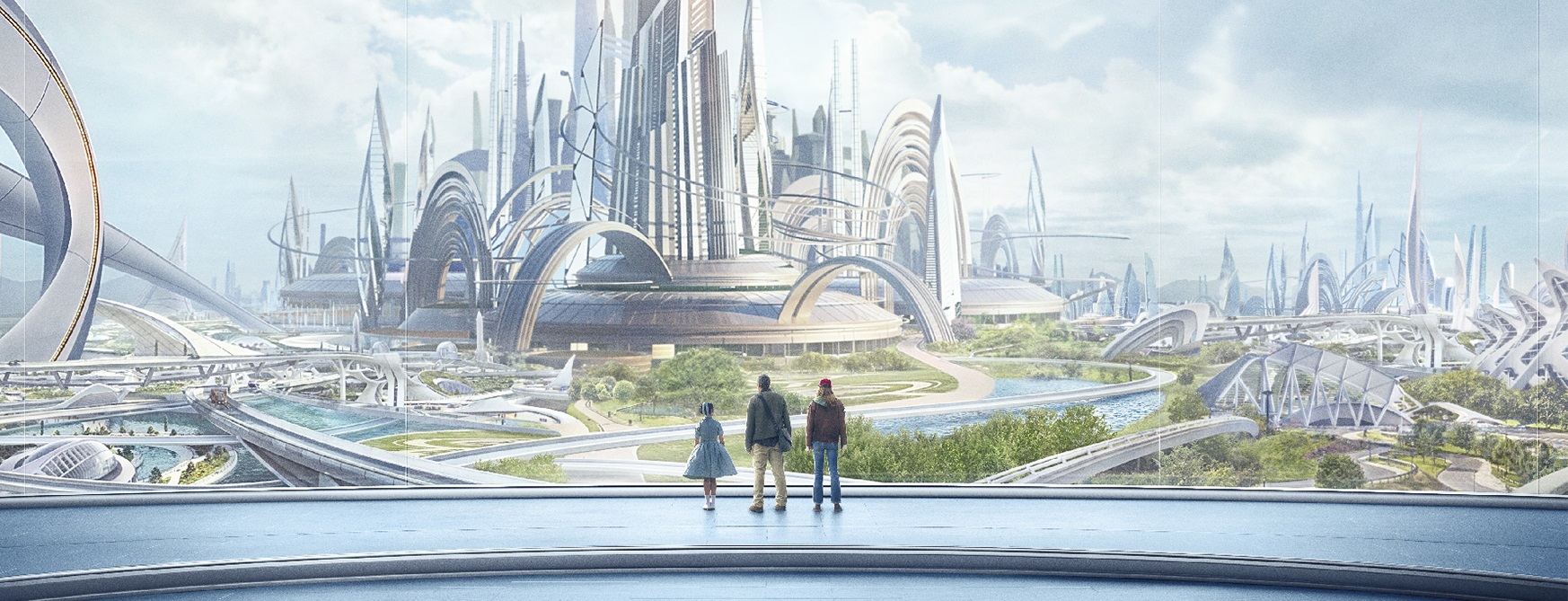
The Future of Sci-Fi Tropes and Dystopic Hopes


Roads will still exist in the future, but if the “figurative schemes of thought” of the architectural images of futuristic sci-fi movies are to be believed, they will be miles above the ground. These future sci-fi roads will sprout from an enormous, corporate monolith in the manner of an octopus. The import of this sci-fi trope is that we will no longer have cars in the incarnation we now know. These cars do not even require a runway, they lift off the ground, which begs the question why will we need roads? The unspoken answer is that while roads may no longer be constructed for human travel, they are necessary to provide a foundation of stability for the evil, corporate structure.

The corporation, in question, is often an intangible, ominous main character in the story, with an ominous name. This begs the question why would the founder choose such a name for his creation that potential clients might associate with evil? Answer: Corporations have no human origin. The corporation, is, was, and always will be, springing to life from some sort of primordial, evil ooze. The corporation did no originate from a they –those humans who sit on its corporate boards, and worked in its departments, and divisions– it evolved into a self-serving “It” that no longer has a need for employees, much less customers, or any goods and services. It no longer serves man, man serves it. 

TMLandThose few humans still serve the corporation are made all the less human by the corporation requiring them to be in full battle gear even while tasked with the most mundane chores, such as inputting data into a computer, and their prime directive (much like the drone bee) is to chase and/or kill anyone who dares to question It. And the It (as forecast by those that know) will find a way to progress into our neighborhoods, put us in pods –as opposed to suburban housing– take away our need for Puggles, and parakeets, and drain us of every vestige of humanity, until It can achieve an end game.

This end game often gets muddled in a loose group of references, but most sci-fi fans don’t require a great deal of detail regarding It’s evil plan. (This viewer also thinks the specifics of the corporation’s evil plan end up on the cutting room floor with a “too preachy” note from the monolithic, evil production chieftains from Hollywood.) The average sci-fi fan cares more about chase scenes anyway, the battle scenes, the CGI, and how the movies’ gorgeous heroes will overcome the final obstacle, the manifestation of It (often some monster who drools lot). The details of this plan would be redundant anyway, for as all sci-fi fans know the sole purpose of all corporations is to end humanity as we know it, so the corporation can franchise out to a chain that will exist for the sole purpose of being evil and ending humanity as we know it, unless our unassuming, swashbuckling, and gorgeous heroes can put a stop It.

The website The Millions states that the word trope has taken on a different incarnation through the years:

“‘Various scholars throughout history … have argued that a great deal of our conceptual experience, even the foundation of human consciousness, is based on figurative schemes of thought.’ The writer also notes that Tropes (in the sense of figures of speech) do not just provide a way for us to talk about how we think, reason, and imagine, they are also constitutive of our experience.’” Modern language has it that the word trope has come to mean: “a common or overused theme or device: cliché.”

The origin of the trope for the octopus road coming out of the monolith, corporate structure may have occurred long before The Jetsons, but most of us (of a certain age) saw it displayed there first. To our minds, therefore, when sci-fi movie makers feel compelled to add the octopus road, they are either paying some sort of tangential homage to The Jetsons, or they are attempting to appeal to our “figurative schemes of thought that are constitutive of our experience” of what the future will look like by way of The Jetsons, or the sci-fi novels and comic books that preceded it.

The unspoken reason behind these miles high roads, is based on the idea that we’ll run out of the space necessary for more traditional, ground bound roads. For some reason, however, pedestrians keep falling off these roads that are created miles above the terrestrial plain. We have roads and walkways that were constructed high off the ground in the present, but they’re often enclosed, or they have substantial guardrails to prevent people from falling. There is no apparent need for guardrails in our shared “figurative schemes of thought” of the future.

If guardrails become passé in the future, one has to wonder how the original architect of the evil monolith (often composed of shiny crystal) will manage to avoid federal and state zoning codes that governments throw at every producer prior to construction. If this architect is crafty enough to evade government intervention, or he has enough money to bribe government officials, one has to imagine that he will see financial ruin by way of personal injury lawyers looking to cash in on the mental duress their clients experience when thinking of falling from these roads, and from those families of the victims who do fall.

If this architect manages to develop some patented safety measures that thwart most of the personal injury lawsuits that hit him, and he manages to avoid getting bogged down in all of the bureaucratic red tape from government officials –expressing alarm for public safety with one hand pointing at the inherent danger and taking payoffs for their silence with the other– this architect will probably go broke as a result of litigation brought by patent lawyers scouring the finer details of the architect’s patent to help the lawyer’s clients siphon as much cash off the original architect as possible, until no future architects, seeking to create evil, corporate monoliths will follow the original architect into this minefield.

The future, as cynical, non-sci-fi fans see it, is not one of crystal cities, miles high roads, and constant innovation, but of government-mandated open spaces and wide open plains as far as the eye can see. One has to guess with the current path we’re on –of government officials and lawyers destroying creators’ plans and finances– that our current course dictates that the future will not be one of architectural brilliance and innovation, unless an ingenious mind comes along and discovers a way to bubble wrap the world and have gelatinous bubble guns at every portal to protect anyone from ever being harmed again.

Until that day arrives, a more realistic dystopian, sci-fi movie would depict our future being one of wide open plains and prairies that mirror Kansas and Nebraska where a screaming fall of a couple miles before one makes contact with terra firma –from an octopus road that sprouts from a monolithic corporation– becomes nothing more than a trip over a piece of loose soil. This movie would not provide us the stunning visuals our “figurative schemes of thought” have come to expect from big budget sci-fi movies that project our future, of course, but with the course we’re now on it would be a lot more realistic.

How to Succeed in Writing X: Blog Writing


Rule#1: If you have any respect for comedy, you should avoid trying to be funny. Comedy should almost be an accidental afterthought. It should be what happens in the course of numerous rewrites. A good one-liner is hard to find, and it usually falls in the lap of the unsuspecting. It’s rarely among those first thoughts that occur in a first draft. Those one-liners are often born and bred into you. It’s often what those who know your sense of humor find hilarious. It’s usually based on what you do for a living, and all of experiences you’ve had in life. Some of us may see where you’re headed, but most of us do not … not to the point of finding humor in it. Those jokes that you write that are more universally hilarious are probably either directly, or indirectly, ripped off from some other, more universally accepted vehicle. The path to the more honest, organic place of comedy is often found within a serious piece that takes twists and turns before that piece can be declared complete. It can also be found in bits that you add after rereading your completed, serious piece so often that the words bore you. It is also usually found the day after, the week after, the month after you’ve achieved the degree of objectivity necessary to land an honest and pure line that is funny in a more universal manner.

We all think we’re funny, but even the best of the best stand-up comedians will tell you that they rarely get it right in their first draft. They test their material before live audiences, and they shape, craft, and hone it based on the audience’s reactions. A writer usually does not have the luxury of a live audience, so they must trust their instincts, and as any experienced stand-up comedian will tell your instincts are almost always wrong. As a result, you need an audience, and if you’re unable to find one, the only substitute you have is an objective perspective that can only be gained through the amount of rewrites it takes to achieve it.

femisphere_mommy-bloggers1

Rule#2: If there any writers reading this blog in search of one useful nugget, let it be this: We don’t care about you, and we’re not interested in what you think. Your modus operandi (M.O.) from this point forward should be to manipulate your reader into believing that they’ve arrived at your opinions independently.

Uninteresting way: “I like fruit better than candy. Who doesn’t? You put a strawberry Twizzler in front of me, and a beautiful piece of nature’s own, and I’ll take the piece of fruit every time. It’s healthier, it’s succulent, and I would much rather support the strawberry growers association than some huge monolithic, candy corporation that doesn’t give a fig about my health.”

Interesting way: “Thanks to the innovations made in chemical enhancement, and the machinery on the production line adding a precise quantity of these chemicals to every licorice strip, every single Twizzler you eat is going to be perfect. Twizzlers, therefore, have the advantage of consistency, but what does this type of consistency achieve for the consumer? Is a twenty-seventh Twizzler licorice strip going to taste any better than the first one you eat? A strawberry, on the other hand, has a certain inconsistency inherent in Mother Nature, and that inconsistency may lead to a greater belief in the quality of its gems, through scarcity, but I find it hard to believe that anyone can eat a perfect strawberry without thinking it’s better than anything man has attempted to reproduce in a lab.”

Both of these versions contain variations of an opinion, of course, but one is so over-the-top that it does it little more than tell us what the writer thinks. The attempts to persuade are so loaded with an agenda that some readers may rebel, and those that agree will only have their biases confirmed. No reader will leave the piece believing that they have learned something new, or that the writer has used some ingenuity to express a point. By limiting the piece to what the writer thinks, they are telling us that don’t care what we think. The import some readers will have is that the writer is a wonderful person, and they’ve finally found a vehicle for spreading the word.

Rule#3: We are not interested in your process. “You may be wondering how I came about this brilliant blog … ”  We’re not. “A friend of mine asked what I thought about some take a famous person had on an extremely controversial topic, and I said this, and she said that, and this ingenious blog is my response to that.” Some people are curious about the creative process, I’ve seen them ask about it in various replies. Most aren’t. If you become famous, or you create a piece that generates a lot of interest, there may be some call for the minutiae regarding your process, until then try incorporating the delete button into your process a little more. It may help you get to the point a little quicker.

Rule#4: Try to be succinct. Though I’m sure that some may find it hilarious for me to tell anyone to be succinct, my M.O. is to express my thoughts as succinctly as possible. I do have trouble limiting the number of words in my pieces, and that may be my failing, but I do make that attempt. Venture out into the blogosphere and you’ll find numerous bloggers that do the opposite. They stretch a point out to the 1,500 word, universally agreed upon length of substantial pieces.

These blogs, make me think of that scene where a TV director signals the news anchor to stretch a segment out, with banter, to fill time until the next commercial break. Sports radio appears to have been founded on this concept. These venues attract people that can blather in such a seamless manner that the audience doesn’t even know they’re being blathered. One of the keys to being considered talented enough to fulfill such duties appears to involve being able to say the same thing over and over with varying inflections to keep the key demo watching through the twenty minutes of commercial breaks that occur in any given hour. Me thinks that some bloggers get caught up in this definition of talent, and they attempt to duplicate it with banter and blathering.

Rule#5: Be provocative. Some may read that word and believe that it is specifically devoted to shocking the reader into questioning their moral fiber, but I prefer to focus of the base of the word provoke. Provoke your reader into thought by leading them down a road that they may have never been down before. There’s two schools of thought on this. One is to come up with breathtakingly original material that no one has ever considered before, but this one is difficult if not impossible to do on a continual basis. The more opportune avenue is to take a relatively common idea and put a spin on it that few have considered before.

The most common avenue for achieving this is to take an event from one’s own life and attempt to provide a unique spin on it. If you are going to include your personal opinions of these events, you should do so within the context of the narrative. The best role I’ve found for the ‘I’ character in these pieces is that of the straight man looking out on the madness that surrounds. Your thoughts, if you feel the need to include them, should occur soon after the reader has arrived at that opinion. At that point, you can decorate with jokes of obviousness, or extreme analogies that exaggerate the already arrived at opinion. The latter should not be done from the new age, clever “I’m so dumb it’s entertaining” perspective that so many bloggers now obsess over.

We’ve all read those “A Day in the Life” blogs that are specifically not provocative, go nowhere, and contain nothing funny or substantial. Judging by the hundreds of replies that say nothing entertaining in return, they’re quite popular. I’ve often wondered why people read these blogs, but they have apparently tapped into some sort of universal appeal that I cannot. The basis for these otherwise mundane blogs is to set a base from which the author can make leaps into humor or ingenuity, but the reader has to click on the blog first, and they do, and the whole cycle proves that I may be so dumb that it’s entertaining, because I don’t understand why anyone would purposely click on the 101 things my cat did when they heard the can opener blogs.