Circa ’72: The Magical Musical Era


It’s been 50 years since the most seminal era of music. That’s a long time to remember, forget, and strategically distort some facts. I found that out as I started writing this article in my head, staring at the ceiling, unable to sleep. I am unable to sleep if I have a thought, any stray thought I can think up to keep sleep at bay for one more minute or hour as the case may be. This particular article haunted me, as I thought it was so good that I couldn’t, wouldn’t, or shouldn’t sleep, until it was done. It’s sort of a small, obsessive, and to my mind incurable, mental illness.  

(Now that I’m done with this article, and editing it, it’s not as great as I thought it would be, but read on.)

My original inspiration involved what I considered could be an award-winning title: 1972: The Magical Music Year. My inspiration involved telling you, my faithful reader, how many of our most beloved musical artists started in 1972, how many of the most influential bands of all time came out with their seminal works in 1972, and what an incredible year it was for the music industry. I was all ready to write about all of artists and bands from 1972 that would shape the music industry for decades, and in some small ways the world, for decades (50 year!) to come. I was ready to follow each entry with the words, “such and such did this in 1972 to further cement the notion that 1972 was, indeed, a magical year”, and I planned to write that line so often that the reader would grow sick of it. I found out I was wrong, somewhat, sort of. I found out that in some ways, and by some days, I was a little off. Instead of titling this piece 1972: The Magical Music Year, I edited the title to Circa 1972. The theme remains, but the word circa (approximately) gives me a three-year window, either way, to talk about one of the most incredible eras (as opposed to years) in music, and I also decided to continue writing this piece because I didn’t want to waste a night’s sleep for nothing.

22) Most of the folksy, Jim Croce music has not aged well, and he probably doesn’t make many “best of” lists, but my mom forced me to grow up listening to his tunes, and his 1972 You don’t Mess Around with Jim was one of the first albums, not created by Johnny Cash, that I heard top to bottom so often that it’s earned a place on this list. I heard it at my aunt’s house, when she wasn’t playing Johnny Cash, and I was heard it in my neighbors’ homes when they couldn’t find their Johnny Cash albums. As a result, I hated Croce (and Cash) for so many years, but when I hear this album now, I experience some nostalgia, remembering those years when I was so young that I had no control of the music they played in my vicinity.

21) As often as I was wrong about 1972, I was also right on the mark for some artists. Stevie Wonder, for example, wrote and released one of his many incredible albums in 1972, Talking Book.

20) Michael Jackson’s solo debut Got to Be There was released in 1972. This might not be his best album, but I dont think anyone would argue that it kicked off an incredibly influential solo career. 

19) Deep Purple did not form in 1972, but the album most argue their best Machine Headcame out in 1972.
18) Steely Dan’s debut Can’t Buy a Thrill was released in 1972, and two of their other more influential albums, Countdown to Ecstasy (1973) and Pretzel Logic (1974), were released during our arbitrary window.

17) Roxy Music’s debut was released in 1972. They also released four more of their best albums in this arbitrary window. All five of these albums contain singles that have made their way to various playlists I’ve created for decades.

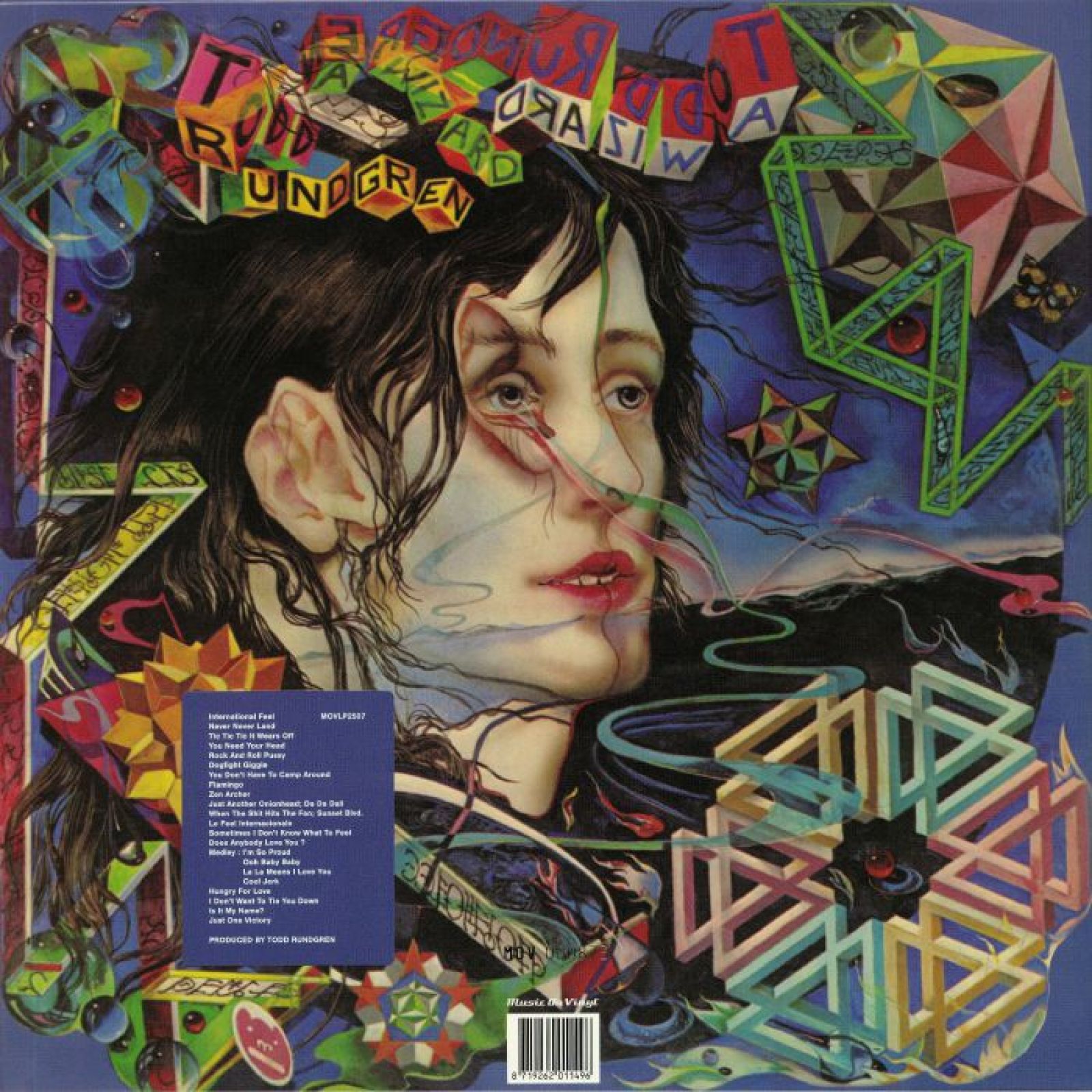
16) Todd Rungren’s weirdest and most creative album, A Wizard/ATrue Star, was created in 1972, as was his most popular album Something/Anything. As with most artists on this list, Rungren’s pre and post 1972 career is hit and miss, but I consider Wizard/A True Star his masterpiece.

15) Lou Reed put out his debut album, and the career defining album that David Bowie deserved a major assist on, Transformer in 1972.

14) Elton John and Bernie Taupin put together what Allmusic.com calls one of the most focused and accomplished set of songs they ever wrote in 1972, Honky Chateau.

13) I thought I heard somewhere that Billy Joel’s Piano Man came out in 1972, but it was 1973. His debut album came out in 1971, so to cement my conspiracy theory, Mr. Joel just happened to take 1972 off to make it seem like I wasted a night of insomnia for nothing. Are we supposed to believe that it just happened to happen that way? Are we supposed to believe that they didn’t get together to make me look foolish? I’ll leave that up to you.

12) The Rolling Stones did not start in 1972, of course, and some would argue that it wasn’t the beginning of their artistic peak, but the end. The Stones did put out an album in 1972 that many consider their best, and some consider one of the best albums ever made Exile on Main Street. The Stones would release better singles than anything on Exile on Main Street, in my opinion, but they never delivered a better album, top to bottom, than Exile. Sticky Fingersalso came out in 1971.

11) Queen loosely formed in 1970, John Deacon joined in 1971, and they recorded their debut album in 1973, but they wouldn’t reach their artistic peak until 1975 with their A Night at the Opera album.

10) KISS started in 1973, and they recorded their debut album in 1974, but they wouldn’t achieve worldwide stardom until the release of their Alive album in 1975.

9) Rush would form in 1968, but they were far from ready. They would experience lineup changes and several configurations before they became the band we know today. (Sidenote: I had no idea, until I began researching this piece that Alex Lifeson was the only remaining member from the original lineup. If I ever put any thought into it, I would’ve thought Lee or Peart was.) They didn’t release their debut album for six long years later in 1974, and they released Fly by Night in 1975.

8) Some of us argue that 1972 was the apex of Frank Zappa’s mainstream creativity, but Apostrophe (1974) and Over-Nite Sensation (1973) weren’t released for a couple years after that seminal year.

7) One of the greatest albums of all time, Pink Floyd’s Dark Side of the Moon, wasn’t released until March of 1973, but we can guess that the heart of this album was created in 1972, and most of the touch up, superficial tinkering work done on the album occurred in 1973. (I’m trying to keep a theme going here.)

6) I had it in my head that an album many arguably call Bob Dylan’s best Blood on the Tracks came out in in 1972, but it was 1975.

5) Likewise, Paul McCartney didn’t form Wings in 1971, and Band on the Run didn’t come out until December 1973. Due to the fact that McCartney normally writes so quickly, and so often, I suspect that he wrote Wing’s debut Wild Life in 1971, and he skipped 1972 before delivering Band on the Run just to mess with my theme here, and don’t tell me he couldn’t know I’d be writing this article 50 years later. He knew!

4) Aerosmith formed in 1970, but they didn’t release their debut album until 1973.

3) Led Zeppelin released their best album, IMHO, Physical Graffiti in 1974. The three-year window also includes Led Zeppelin IV (1971) and Houses of the Holy (1973). Notice the pattern of skipping 1972? You think that’s a coincidence?
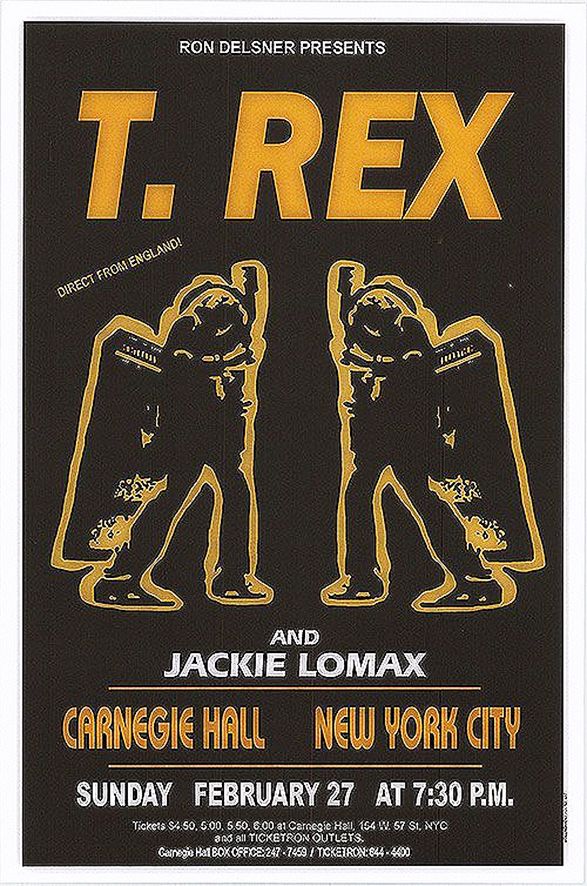
2) T. Rex’s most incredible album Electric Warrior was released in September of 1971, but the single from the album didn’t begin to chart until January of 1972. Marc Bolan’s second-best, stellar album Slider was released in ’72.  

1) And last but not least, we direct you to the reason I wrote this article in the first place, as I introduce you to a man that I consider one of greatest, most influential, prolific, and creative artists of all time. In 1972, David Bowie experienced what could be his most popular year, a year in which he produced what may not be his best record, but the one that had the most cultural impact. Before and after 1972, Mr. David Bowie created incredible music, but IMHO, he blew the damned doors open with his 1972 release Ziggy Stardust and the Spiders from Mars.

If you’re looking for a starting point on the otherwise daunting musical catalogue of one of music’s greatest artists, I can think of no album that initiates the uninitiated better than Ziggy.

We all go through phases with artists, songs, and albums, but I don’t think I listened to any album on this 1972 list more than Ziggy. In 1972, as the character Ziggy, David Bowie sat atop the world.

The album wasn’t adored by critics or fans at the time of its release (though it did peak at #5 in the U.K.), but after Bowie killed the rock star, he posthumously received accolades as Bowie’s breakthrough character, and one of the most important rock albums of all time.  

In this arbitrary window we’ve created here, Bowie also made Hunky Dory, Aladdin Sane,and Diamond Dogs. Bowie is one of the few on this list who didn’t peak in this arbitrary window of ‘72-‘75, as he created the ’77-’80 Berlin Trilogy, but ‘72-‘75 years were definitely one of his peaks.

Honorable mentions) Mott the Hoople, All the Young Dudes; Can Ege Bamyasi, Big Star #1 Record; Captain Beefheart, Clear Spot; Neil Young, Harvest.

I’m quite sure you just thought of about five-to-ten artists and albums I left out, but this is a list of artists who influenced my life the most, and though I was too young to listen to the music of 1972, when it came out, and I had no say in what music was played on record players and eight-track decks, I would eventually come to adore the music I thought they created in 1972.

Before reading on, go back and look at the list of emboldened names. Look at the names of the artists who either debuted between 1972 and 1975, or look at the albums these incredible artists created circa ‘72-’75 window. What kind of soup were they eating? What did they have in their water? If there was some sort of toxic substance with a byproduct of greater creativity, they probably would‘ve suffered long-term effects, but as far as we know they didn‘t, so how did this happen? 

Most of the artists of this era talk about one seminal moment, The Beatles appearance on The Ed Sullivan Show. Others talk about the other The Beatles albums that followed to inspire them to want to create a little magic of their own. Some also suggest that The Rolling Stones, Elvis, The Who, and Black Sabbath played seminal roles to influence their music careers. Whomever it was that inspired these guys, a window opened, circa 1972, for so many artists to take that influence to a different level that displayed a level of unique brilliance of their own. We can guess that some of them went to their mom’s garage, or whatever space they could find, and they started something that took years to develop after seeing The Beatles for the first time.

The artists on this list then created something that inspired those who followed to create their own influence. How many different algorithms can we create from the list of artists above who took their influence to another, completely different level? It‘s incredible to think how influential this small window in time was, and how it changed the musical landscape forever. It’s a window in time that I don’t think will ever recreate, duplicate, or defeat for sheer output, creativity, and intellectual brilliance. No matter how you square it, this year, and these three years, were some of the greatest, most creative three years in rock history.
The Creativity


Bill Cosby had a show called Kids say the Darndest Things, and they did say the darndest things on the show. We all did at that age, but we all knew that we would have to grow out of that if it was our goal to be taken serious. Those of us who wouldn’t, had to be institutionalized into the ways of human operations (i.e. school), if we ever hoped to mature properly. Some of us matured into good business assets, fathers, and occasional games men. For the most part, however, those fantastical ideas were required to be laid by the roadside in the pursuit of a quality, adult life.

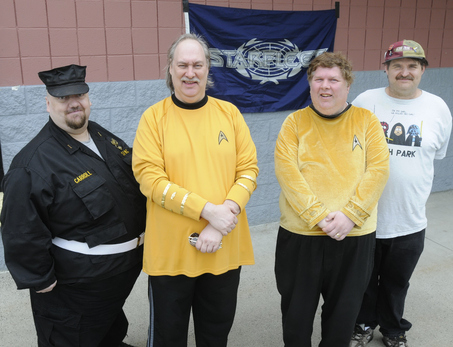
Some of us remain trapped in a fantastical mindset, and while we led a good life, and had a good wife, we haven’t matured to the point that we can meld a serious life with a fantastical mindset. We all know people who cling a little too much to fantasy, and while we try not to think less of them, it can prove difficult to take them serious. These people are apt to have an unhealthy addiction to gaming, science fiction, vampires, and now zombies. These people, depending on the progression of their fantastical mind, often have little to nothing to offer corporate America.

sct star trek.jpgOthers have all the foolishness of unconventional thinking, and fantasy, behind them early on. They are often children of ultra-serious parents who want their children devoid of foolish thinking. These people eventually get so locked in on serious, or conventional, ways of thinking that they end up neglecting that part of their brain that indulges in fantasy, art, and creativity for so long that they ignore a huge ingredient of what it means to be human. They eventually veer so far into the serious side of life that they become disgusted by creative thinkers. They “don’t have time” for such silliness. They have developed the tunnel vision necessary to compete in the corporate world, and they can’t understand people that don’t have a master plan. These people usually have a mathematical equation for life.

They prefer the absolutes inherent in the Superman story over the cloudy interpretations offered by the Batman character. They prefer the concrete absolutes of standard music over any creative music that messes with the formula, and they prefer the more standard comedy of Everybody Loves Raymond over the comedic study of intangibles on Seinfeld. These are bottom line people who will tell you all you need to know in life to succeed are two words: “Yes and sir!”

At some point, this type usually crashes and burn under the weight of all that seriousness. The purchases they’ve made to substantiate their status begins to lose their luster, the family no longer interests them in a substantial manner, and the career they’ve worked their whole lives for has suddenly become meaningless to them. When they reach that point, they either seek the fantasy of an adulterous affair, a job change, a move to another state, or all of the above. At some point, the master plan loses value, and they become perpetually unsatisfied with their direction. These people can be just as unhappy as the fantastically minded, and neurologists say that the only thing keeping them from utter insanity is the fantasy they experience in the dream world while sleeping. Everyone tells artists to have something to fall back on, in case their creative pursuits never come to fruition, but you rarely hear anything like this directed at conventional thinkers that succeed in conventional ways with nothing fulfilling the side of their brain that contains healthy ingredients of play and fantasy.

KidThe healthiest mindset, and the one probably most difficult to achieve is the matured, creative mind. The matured, creative mind is one that has progressed beyond the fantastical thoughts of youth to a more practical hybrid of conventionally unconventional thinking. The problem they generally have is how to make their unconventional thoughts productive, practical and profitable, for as anyone who has worked in a corporation knows it’s not exactly a conducive climate for unconventional thinkers. In this equation, of course, the onus is on the creative mind to make their talents know to their bosses.

Some, like CEO Steve Jobs suggests that anyone unable to reach their creative peak, should try hallucinogenics. This statement made some creative types think that Steve Jobs wasn’t as creative as we had all been led to believe. It made some of us think that he views creative types from the same, jealous distance conventional thinkers view creative types. How many times have we heard non-creative types assign drug usage to creative types? “They had to be on something to make that,” they say. “No normal human could create something like that, sober.” Those of us who have flirted with creative thought encounter epiphanies on a much lower scale, know that the mind can be mined with constant work, and it can produce incredibly creative thoughts without artificial aid. Jobs’ comment was such a shock from such a creative mind that we wondered how creative he was. If he were that creative, why would he feed into that cliché?

Those who know the story of Apple, know that Steve Wozniak was the creative genius behind the Apple I and II, and he had a major influence on the Apple Macintosh. We didn’t know the instrumental role Jonathon Ive played as the chief architect of the iPod, and that he was a part of a team that included: Jon Rubenstein, Scott Forstall, Michael Dhuey, and Tony Fadell. We learned that while Jobs may have overseen the project, but we had no idea these names were the creative types behind the final product we know today.

Jobs’ role in the insurgence, and resurgence, of Apple is unquestioned, but the undue credit he received (see took) for the iPod outraged those on the creative team who sweat blood over it. Jobs was the leader of the company at the time, and he changed the company’s culture to “think different”, and he eliminated distractions to provide more focus. He may have been overly demanding with the aesthetics, the processes and the machinations, and he may have remained stubbornly unsatisfied with what he termed “unfinished” products. He may have gotten more out of his creatives than anyone in his market, and in the end he was the “guy in charge” of the company that created products that were unmatched in its field, but Steve Jobs did not deserve the amount of creative credit he took for the products it produced. And some creative types were partial to the complaints his creative teams made, after Steve Jobs said all creative types should take drugs to increase their creativity.

The primary reason it bothered us is that it’s the typical charge that all conventional thinkers make about creative types that create something conventional thinkers consider inhumanly creative. I don’t know if this “They had to have been on some wild drugs” cliché began with The Beatles, but it does appear to be one of the origins of the charge. The other reason that it bothered creative types is that it allowed non-creative types to feel more comfortable in their serious, mathematical world: “Well, I could’ve created something like that too, if I decided to take all those drugs.”

When it first came out that Led Zeppelin sold their souls to the devil, that made sense to a number of my friends, because, “No one could come up with that many great songs on their own.” When these friends grew out of such fantastical notions, they changed their minds on the subject saying that “corporate guys, or unaccredited songwriters, must have stepped in there and changed, mixed, altered, or finessed the final product, because there’s no way Page and Plant wrote all those songs alone.” Or, they say, “They must’ve been stoned out of their minds to think up things like these.” It bothers creative minds, because we know it’s possible to reach unbelievably creative planes without artificial substances, and those who have tried some artificial substances don’t see how an altered state of consciousness can lend itself to productive creativity.

It’s possible that mind-altering drugs can introduce thoughts to a brain, but how many of those thoughts are absolute nonsense? It’s possible that they can lead the brain to “Think different”, but my guess is that it takes a sober brain to sort through those different thoughts to help them make sense. I wonder if we were the tamper with the timeline and The Beatles never touched a drug, how much different would their discography be? As with using ‘save your hair’ products, it’s almost impossible to know if the mind-altering drugs did it, or if the drugs gave the mind the perception that they were free to do something wildly different than they ever tried before. It could be that continued use of hallucinogenic drugs teaches one to finesse creativity in an altered state, but most truly creative minds only experiment with altered states, and most of them found that it didn’t enhance their creativity. Unfortunately, in the case of The Beatles, and Led Zeppelin, it appears as if they either created, or fed into, this misconception.

That cliché was born, in my opinion, based on the frustration that non-creative types have for those that are excessively creative. These people can accept that a bunch of fellas could sit around and write Back in Black, or Eliminator, but “You’re trying to tell me that three guys (John Paul Jones) came up with Led Zeppelin IIZosoand Physical Graffiti? Sober? With their souls still intact? Come on!? There’s just no way.”

Some non-creative types make the same charge with Albert Einstein. They state that the autopsy performed on Einstein’s body showed traces of LSD, as well as Dimethyl-triptimene in his system. They also state that his heart exploding could’ve easily have been caused by years of cocaine use. This led all non-creative types to almost leap with joy, as it confirmed for them the fact that no one man could think all that stuff up, not sober, with his soul intact. As we all know, these opiates were common, at the turn of the century in medicines and painkillers, so the fact that they were in his body, at the time of his death, doesn’t necessarily indicate that Einstein used them recreationally, or to enhance his creativity. “It was still in his system,” non-creative types would argue, “and whether he took these opiates for medicine or recreationally, it’s possible that it affected him.” It’s also possible that it didn’t.

EinsteinHow many people looked up to the stars and tried to figure out the ways of the universe prior to Einstein? How many of them ingested the same opiates, whether or not it was deemed medicinal? How many of those same people had all of the same information on the abstract concepts, and couldn’t make meaning of them in the categorical manner Einstein did by picturing himself riding a light ray bareback? “By picturing himself riding a light ray bareback, you say? Yeah, he had to be on some serious stuff to think like that. That ain’t normal.”

Einstein also said that playing the violin helped him make sense of the universe by helping him make a connection with sense-experiences. Is that something a drug-user would say? Perhaps, but here’s something that could blow your mind, so if you’re not prepared for it read no further, but it’s possible, possible that a person could indulge in different thoughts so often, that they produce creative ideas that are unimaginable to those who have never indulged in creative thinking.

“Insanity is doing the same thing over and over again and expecting different results,” Einstein once said to define insanity. 

Einstein thought differently, and he thought so differently, so often, that he was able to approach the problems from so many different angles that he ended up approaching these problems in ways conventional thinkers couldn’t fathom. They still can’t fathom it, so they suggest that it had to be drugs.

Those of us who routinely think different know where the mine is. In our experience, it’s not chock full of illustrative colors. It’s just a mine. If you’re anything like me, you’ve been surface mapping and sampling that mine your whole life, so you know exploring and exploiting the mine will be worthwhile, because you know the ore and minerals in there, all you have to do now is drill deep to start the discovery phase, the development stage, until we reach the production stage. It’s not simple or immediate, but the hard work we put into excavation will produce results.

The results for the reader will be the highlight reels of all of our effort, as we learn to edit and delete until the effort is removed. The excised material is the nonsense we developed in childhood, and the whimsical inanities we created on mind-altering substances, be they drugs, beer, or other stimulants. Most of the time, we just write poor sentences, be they littered with errors, or those not as engaging as we originally thought. We’ve all unearthed bizarre ideas, sober and otherwise. An overwhelming majority of them, about 99%, are cast aside, but there are some valuable nuggets in that mine that needed to be cultivated and cleaned up. We won’t have fans in the stands who “were there” when the star was born, because most artistic endeavors occur in quiet corners when no one else is around. Most of it is finessed, staring at a poor sentence, trying to approach it in multiple ways to make it make sense, and most of the finished product, an article, essay, or novel is an assemblage of highlight reels that appears inhumanly creative. 

It would be foolish to say that some brilliant creative types don’t find refuge in mind-altering substances from The Beatles to Edgar Allen Poe, but did their alteration of choice enhance the thoughts or form them? It’s the 100 monkeys on typewriters joke that suggests one of them could accidentally write Hamlet. Anyone could write Sergeant Peppers or The Raven on the right drug. Everyone could be creative, brilliantly creative, if they had the time and resources necessary to devote time to it. I don’t know if it’s jealousy, or if most people have no idea how hard it is to create something beautiful, but I think we should all drop our ideas about shortcuts regarding the creative process and just recognize brilliance for what it is.     

Most creative people came about their matured creativity naturally, for creativity cannot be taught. It can be workshopped, and it can be finessed day by day and interaction by interaction, but no one can teach another person how to be brilliantly creative. For that reason, and for all the reasons listed above, creativity remains a largely unexplained phenomenon, but those of us who have spent most of our lives honing the science and math parts of our minds would much rather think mind-altering substances spawn that which separates them from creative brilliance.

Groundhogs, Led Zeppelin, and Our Existential Existence


We love to define ourselves through artistic venues. We believe that listing off our current musical preferences provide a concise definition of who we are, and who we aim to be. Our preferences in all art forms define us in relative ways, but music appreciation appears to be the common denominator we use to define ourselves among other fans of music. Most adults continue to listen to the hit singles and albums they enjoyed back in that insecure, confusing period of our development that occurs roughly between age 15 and 25. I don’t know if it’s a sense of nostalgia we seek, or if we’re trying to relive an era of our lives we didn’t appreciate enough at the time, but most of us find ourselves trapped in that era when others defined good music for us on the sliding scale of cool. If others helped us define all of the variables inherent in the definition of cool music, and we regard our musical preferences as a concise definition of who we are, how much control did we have in shaping the people we’ve become? We might prefer to believe that we’ve left those mercurial teenage years behind us, as they become smaller and smaller in our rear-view mirrors, but some social scholars state high school is like a line from a hit single that preceded my era, but was nonetheless as ubiquitous in it, “You can check-out anytime you like, but you can never leave.”

What this means, to some, is that it is almost impossible to reach such a level of confidence regarding our identity. It is possible to know thyself to elevated degrees as we age, but remain forever susceptible to getting this definition slapped around by the prevailing winds of cool and uncool? This spawns another question: Do we ever reach a point where this dimension of our identity is absolute and true? Those of us who reflect on our life and analyze our actions believe we learn more about ourselves as we age, but others state that even though the core tenets of our personality mature as we age, our core identity forms in the early stages of life. How often was that core identity slapped around by the prevailing winds of cool and uncool? “You listen to who? Uncool man, uncool.” This spawns another question: Do we ever reach a point when this dimension of our identity is absolute and true? We all prefer to believe we’ve made individual choices regarding the music we listen to on a regular basis, but are those preferences ours, or were they shaped by group thought, rebellion to group thought, and/or rebellion to rebellious thoughts?

✽✽✽

Why do research scientists study other animals to get to the root of human psychology? Is it because the nature of the reactions other animals have are more primal? Humans are often more difficult to test, particularly in groups, because we tend to project idyllic images of who we prefer to be, rather than who we really are. Animals test much better because they remain closer to the primal state, because one animal might tell us more about our psychological base than hundreds of idyllic human test subjects can.

I understand the general point about the primal state, but I don’t understand how animals can teach us about the comparative complexities of the human mind. As far as we know, animals do not have the mental capacity to sit around and contemplate greater questions of individual identity. Most concepts of this nature are too foreign and complex for them, but how simple and primal are their brains? 

On nature shows, we witness groundhogs watch one of their own fall prey to a predator. We assume their desire to watch a predator eat one of their own is born of simplicity, but could it be more complex than we’ve ever imagined? Is the desire to watch similar to our complex desire to rubberneck an accident on the interstate, or is that a primal, base desire on our part?

Groundhogs screech and chatter when a predator eats one of their brethren. We assume these screams are a mechanism they use as a last ditch effort to try to save their brethren. We also assume that they are attempting to warn other groundhogs in the vicinity, but could these screeches be similar to those that we engage in during horror flicks when we scream while watching a predator slaughter one of our own in a slasher flick? Is their fascination with horror similar our own, in that they’re horrified, but they can’t look away? Do they chatter about the images they saw later, in the manner we do when walking out of a theater, and do they mourn the lives of former friends and relatives in the aftermath?

When humans die, we attempt to minimize the deceased so we can live better lives in the aftermath. “Richard was a great guy and all, but he was old,” we declare to minimize the pain and horror of his death. We might say something along the lines of, “He smoked,” or “he ran himself ragged for so long that it was bound to happen sooner rather than later.” One has to wonder if groundhogs have a similar need for detachment to help them achieve some sort of distance from the deceased, so they can deal with the complexities inherent in life and death better. Do they say, “Alfonso was great guy and all, but he was slow. He didn’t work out enough, and building and rebuilding his home was really one of the only forms of exercise he engaged in. I knew he was going to die, and to be frank, I say good riddance.”

Do groundhogs like and dislike other groundhogs based on personality traits? If this is the case, how far do they take it? Do they ostracize those who have strange growths on their head, or are they more accepting of differences than us? Do they castigate others based on work ethic, the obnoxious behavior of their pups, and would one groundhog ever exclude another from the cool kid, groundhog group based on a titty twister?

I used to give titty twisters all the time. If you were in my contingent, and I considered you a mentally stable male, I probably gave you a titty twister. I thought it was funny, and I considered it harmless. These titty twisters had no sexual motivations as far as I was concerned, and I didn’t do it to establish dominance over a twistee. I just considered it a funny thing to do to a guy standing there, doing nothing, and acting far too normal. I thought a good twist might shake them out of an otherwise boring, normal day. It’s who I was, and who I will probably always be. I don’t force people out of the norm with physical actions in that manner anymore. I prefer more subtle measures now.

When I gave a titty twister to this one guy, however, he punched me in the chest for it. I twisted his titty. He was being too normal. He had a normal expression on his face, and he didn’t say anything for a spell. I gave him a titty twister, because I thought he needed a random shake.

His reaction might have left me doubled over on a normal day, as I loved impulsive, obnoxious reactions, but his reaction carried a mean face with it. I assumed we were friends, but his mean face informed me that the punch sent a message that rejected everything I valued, and that our friendship was officially irretrievable. I’m sure groundhogs reject other groundhogs’ over over-the-top attempts at humor, but do they hold grudges? This guy told people he hated me after that, and he added an insulting characterization of my manhood.

Does a groundhog ever do anything to shake up the norm, or is their existence so primal that they’re simply happy to be alive for one more day? Does that attribute say more or less about human beings? Do we take life for granted to such a degree that we’re no longer happy just to be alive? Is this desire to shake our lives out of the norm a complex desire, or is it a simplistic, biological need to keep our brains firing at a rapid pace?

If a groundhog decided to perform an act of procreation in a different position, for example, would we document that decision as simple or complex? If the groundhog displayed a sense of listlessness prior to trying the new position, how would we document his actions? If the groundhog performed his act on other groundhogs when his selected mate wasn’t around, would we view the adulterous act as complex or simplistic? If we could see inside the groundhog’s brain and witness a dream of an army of aliens shackling him to a wall, while suckling on his reproductive organ for the semen nutrient they needed to survive, would we consider this a complex need for fantasy or a simplistic, base desire?

That former friend of mine, whom I titty twisted into an enemy was a heavy metal dude, and I was a heavy metal dude. I mistakenly assumed that commonality would serve as the glue to our lifelong bond.

Most of the people I grew up around were heavy metal dudes. We called all like-minded souls, hessians. I so badly wanted to be a hessian that I was willing to do just about anything to make it happen, but I had a tough time gaining entrance into their world. I didn’t like Rush or Iron Maiden, but I did like KISS. They regretted to inform me that my application to into the world of hessianism would require a rejection notification at this time, for KISS was too popular and mainstream. Feel free to reapply, they said, when your preferences evolve to more of an outlier group. If I stubbornly resisted Rush or Iron Maiden, they said, then I should feel free to explore the worlds of Slayer or Megadeth. “Sorry,” I said. I wanted to be a hessian, but I didn’t care for those musicians. Their album cover art was cooler than cool, with cool monsters and satanic imagery, but their music was beyond me. I wore the mandatory denim jacket and donned the requisite mullet, but for some reason I was on the outside looking in for most of my young life. It may have had something to do with the fact that I didn’t say the “Dude” but I didn’t give “a durn about nothing”, and I found authority figures laughable. I thought that should be enough.

One thing I learned in the beginning of my public square humiliation was that my practice of calling my grandma “My Nana” would be out, if I wanted to be a hessian. I didn’t have to hate her or anything she stood for, as that was a trait reserved for punkers, but I didn’t have to like her so much either. A hessian was to remain somewhat unimpressed by his grandmother’s entrance into a room. He might consider shaking her hand as an alternative to hugging her, and a “Hello ma’am” is a viable alternative to running across a room screaming, “Nana!” When the greeting reaches a conclusion, the hessian is then to go on about his business, as if he’s not concerned with her existence. Ignoring such staples could consign the music aficionado to the perception shared by Genesis and the B-52s listeners.

Genesis lovers valued simplicity over the adrenaline rush we found in the force of heavy metal, so we hated them, and hating things gained us a lot more mileage than any expression of love, adoration, or a fondness for anything or anyone. Hatred gave a hessian character and complexity. To the question, “Do you enjoy the music of Phil Collins?” one must answer, “No. I think he’s feminine.” Loving something subjects one to scorn and ridicule, and it gives a hessian the license to hate another. What you love is irrelevant be it KISS, Happy Days, or your Nana. Loving something is a weakness to poke and prod, until the recipient of such scorn is too embarrassed to love anything, unless it’s Metallica. One can say, “I love Metallica,” and their hessian membership card will remain unblemished, but that’s the extent of love in the hessian world.

If the scorned has never heard the music of Metallica, friends will instruct them to run out to the store tomorrow and buy Ride the Lightning, Master of Puppets, or And Justice for All…” If the listener stubbornly refuses to worship these three albums, after repeated listens, they run the risk of having a ‘poser’ label cast upon them. That person may as well take the denim jacket off, cut their mullet, and start calling their grandma “My Nana” again, because they’ll never gain entrance into the hallowed halls of the hessian.

Hessians can smile and laugh, but they need to reserve those reactions for moments of scorn and ridicule. A hessian can like KISS and Van Halen, but as I said that’s not enough. They cannot –I repeat cannot– like Poison, Cinderella, or Faster Pussycat. Doing so, will open up the floodgates for scorn and ridicule, granting all card-carrying hessians in attendance the smile and laugh allowance. I assume that social media forums have made life easier for teens in America by comparison, for a person can now block those who question their musical preferences.

This complex world of identity through music became a lot easier for me when I became a Zeppelin guy though. Prior to experiencing the sensorial, shocking world of Led Zeppelin, I assumed they could be lumped in with The Doobie Brothers, Foghat, and all the other relatively nondescript bands of seventies music. When I discovered how faulty that assumption was, I became a Zeppelin guy.

Most of the fellas I knew wanted to befriend Zeppelin guys. They wanted to talk with us, be like us, and accept us into their community. I could hang out with Zeppelin guys. We could talk for hours about the band’s iconography and folklore. I could even proselytize others into the Zeppelin world if I wanted another friend. I could just play the Led Zeppelin albums II and Zoso, and create a friend, complete with all the shared associations and memories that went along with it. After becoming a Zeppelin guy and creating more Zeppelin guys, I decided to progress from being just a Zoso and Zeppelin II guy to a Physical Graffiti and Zeppelin III guy. I learned every lyric and every beat on those two Zeppelin albums, and to some Zeppelin guys I progressed from being a Zeppelin guy to the Zeppelin guy. For loving those two albums as much as I did, other Zeppelin guys assigned complicated and mysterious Zeppelin guy characteristics to me.

“Yeah, II and Zoso are great,” I said to beginners, “but wait till you start listening to III and Fizzy Graph,” (Fizzy Graph was the nickname the Zeppelin guys gave to Physical Graffiti.) “I’ll lend them to you when you’re ready.”

It was a glorious world to enter into, a world of opportunity. In this world, Zeppelin girls existed, and one could taste forbidden fruits and still be one of the fellas. Hessians, punkers, and even some Genesis guys could stand side by side, in mutual admiration. This society involved musicians and music aficionados of all stripes. We could talk, laugh, and listen to the greatest music ever produced, for as all Zeppelin guys know, all music stems from Led Zeppelin.

Zeppelin guys felt like rule breakers, for who broke more rules than Jimmy, Robert, JPJ, and Bonzo? Rule breakers do have rules though, albeit unspoken ones. We Zeppelin guys still had to avoid giving a durn about most things, as being a Zeppelin guy wasn’t a cloak against being ostracized. We still had to despise Beverly Hills 90210, Michael Jackson songs, and Tom Cruise movies, and the fake, superficial, and artificial matters, they espoused. We also could not permit fellow Zep guys to call their grandma “My Nana” either, especially if they aspired to the Zep guy status.

We also had to fortify our Zeppelin guy status on a continual basis, then the Zeppelin guy status if we were lucky enough to achieve it. A Zeppelin guy still had to guard himself against complacency in the Zep guy world, or we could lose our status entirely. It was all right to enjoy the music on In Through the Out Door, for example, but a true Zeppelin guy could not love it, because the music on that album relied on synthesizers too much, and John Paul Jones had far too much influence on it. It lacked the raw Page/Plant magic of the first six albums, and every fella who wanted to maintain the Zeppelin guy status had to know that.

We all know that the brain of a groundhog is less complex than that the human brain, but we also know that even the most simplistic, primal minds react to music. If a groundhog listens to the same music, however, will he, over time, develop an affinity for it? Will certain groups of groundhogs break out of the pack and develop discerning taste? Will these groups begin to develop an affinity for Zeppelin over Genesis? Will they begin to ostracize Genesis lovers just to gain some cachet within their own groups? Will groundhogs reach a point when it is no longer about the music for them but the iconography and complexities they developed in their particular group in the groundhog community for the music they chose to love? Will their love for the music strengthen over time, and if it does, will it reach a point when one can characterize that love as complex, or will we simply deem it a simplistic desire to belong to that group of groundhogs who listened to the same music other groundhogs considered cool, and will the groundhogs ever begin to see the distinction for what it is?