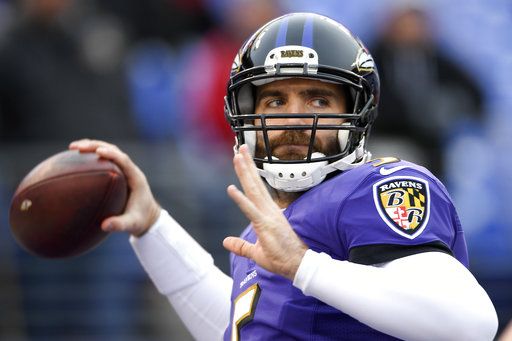
The Other Side of Talent


“He has a talent,” one person said of another. “I don’t know what it is,” she furthered, “but he has a real knack for taking photos.” The subject of that compliment beamed in the aftermath. The compliment was vague, but she used the ‘T’ word, and very few can avoid the gush that follows having a ‘T’ word thrown at them.

It was a nice photo (not the one pictured here), but the ‘T’ word? The compliment suggested that this photo was but one of a long line of photos that you had to see to believe, but it was still just a photo.

Most of us reserve our use of the ‘T’ word for athletic and artistic accomplishments, but we know that many use it in broad terms. We know, for example, that an engineer can display a wide array of talents for his craft that others may not have, but we often say that that person is good at what he does, a master craftsman, or expertly skilled, but the use of the word talent is not often used in conjunction with most skills.

Some could say that a grown man’s ability to outdo his young peers in a game of hopscotch is a display of talent, but most fellow adults watching this man hop from square to square would suggest that he should consider finding a more constructive use of his abilities, if he wants others to consider him a talent.

Merriam-Webster defines talent as “a special ability that allows someone to do something well.”

Philosopher Ayn Rand steadfastly refused to recognize photography as art, but she did concede that it requires a skill, a technical skill, as opposed to a creative one.

We all know that definitions, such as these, can be broad, but most of us have personal definitions that fall on stricter lines. If the definition of talent is as broad as Merriam-Webster described, and photography requires some technical skill, then we should concede that taking a quality photograph does require some talent. One could also say that a talented photographer uses discretion and selectivity when he selects his shot, but could this ability to capture a moment be nothing more than a right place, right time decision? Some of them don’t even display that. They take ten to twenty photos and display the perfect one.

If one takes a hundred different photographs, and only one of them is of an exceptional quality, is that a display of the photographer’s skill? Yes it is, in a broad sense of the term. If that’s the case, we could say that if a man takes a hundred free throws and only makes one, he has a talent for shooting free throws, if that one free throw is so perfect that it barely touches the net.

If a photographer purchases a top of the line camera, and he uses the best photo-enhancing software available to produce evidence of his prowess, and he lays that photo down on a table next to the photo of another taken with a disposable Walmart camera, and no enhancements are permitted, does his superior photo reveal God-given talent on his part, or does it contribute to the lie that a skilled, talented photographer is artistically talented?

The Truly Talented

We’ve all witnessed the effect truly talented people can have on a room, and this effect often makes us a little sick. “He’s just a human being for God’s sakes!” is one of the snarky, coping mechanisms we’ve developed for dealing with “the gush” to adore the talented.

The adoration of talent varies with the skill required to accomplish the feat, of course, but if you’ve ever met a truly gifted people, you know that most of them are not interested in being better today than they were yesterday. Most of them enjoy the potential they have to be better more than they do the work involved in becoming better. “We’re talking about practice!”

Those that become obsessed with being better, and enjoy the benefits the rigors of practice can produce, often end up having their names etched into something by the time they’re finished. These few don’t necessarily bathe in adulation, they focus on one on one battles. When they get beat, and everyone gets beat, they do things that the overwhelming majority of us avoid to get better. For the overwhelming majority, sports, artistic endeavors, and all the venues that require talent involve moments. The talented enjoy those moments for what they are, when they happen, but the people who will have their names etched into something take it home with them. For these people, their talent is but a starting point and a gift that they end up honing to perfection, but even for these people talent can be a curse and a burden, and it can lead to acceptance, love, worship, and being scrutinized, ostracized, hated, and ridiculed. The idea of their talent, i.e. their potential, can also haunt them when they encounter its limitations.

An edition of 30 for 30 called Of Miracles and Men portrayed the other side of talent. It depicted the other side of the Miracle on Ice story that we all know of a ragtag group of American amateurs defeating the most talented Russian hockey team ever assembled. Some would argue that this Russian team might have been the greatest assemblage of hockey players ever to tie skates on their feet. This team had already won four Olympic gold medals in hockey, by the time they took to the ice against this American team, and some of them would go onto win a fifth after the 1980 defeat. To hear this group of talented men speak of their careers, the 1980 loss to a group of American amateurs, in a medal round, sits in their system like a kidney stone that will never pass. This Russian team beat an assemblage of Canada’s best that included probably the greatest hockey player that ever lived Wayne Gretzky. They also beat the 1980 American team in a match that preceded the 1980 medal round upset, and those two matches were not even close. This team was so dominant that they could not be beat, until they were.

Some would think that such an historic upset might serve to highlight the Russian team’s greatness, if one could say that one defeat in the midst of a record of total annihilation is a blip in the overall dominance this team displayed over the hockey world for two decades. Listening to these men speak, however, the listener gets a taste for the other side of talent when the only story anyone wants to hear from them involves the one time they didn’t succeed, and how that has haunted them since.

The point one could take from this 30 for 30 episode is that these men spent an excruciating amount of hours of their young lives in cold, dank gyms honing their God-given gifts, trying to improve on the smallest details of the game, only to fall to a bunch of ragtag Americans that may not have spent one-fifths the amount of time honing their gifts. Even with five gold medals (including the 1984 Olympics), the only thing we want to talk to them about is that one match they failed to win thirty-five years ago.

If you’re acknowledged as the most talented person anyone you know has ever met, and the only thing anyone wants to discuss is the one time you failed, why would you want to raise their expectations? Why would you want to endure the marathon practice sessions that focused on the minutiae your coach informed was going to be vital when you encountered the wall of your God-given abilities? Why would you want to invest more of your life becoming better at something other people hate you for being so good at? We’re talking about desire here.

We’re talking about the desire to be better today, than you were yesterday. “We’re talking about practice!” We’re talking about preparing for that day, that every talented person experiences, when they meet their personal wall.

The wall, for those that have never read about it, involves going up against other people that were the most talented people anyone they know had ever met. It involves seeing what the gifted person is made of when they encounter the another person loaded with so much talent that talent is afterthought.

To read the former NFL quarterback Kurt Warner’s examination of the natural talents that fail to succeed on the NFL level, it’s about having a coach, or mentor, early on that recognizes the person’s talent level, and challenges them in a brutal, heartless manner, to reach within themselves to find various other methods of succeeding beyond the talent level they’ve always known. This heartless mentor also helps the talented person in question determine if they have the desire to succeed on a level they may not have even considered to that point.

The Less Than Talented

“My talent has always been, and will always be, and it should be written with a capital ‘P’!” –Your Potential once said.

What if your talent has never taken you the places you thought it would, but you’ve always known you had the potential you had to succeed. What if your talent lays somewhere between being as talented as anyone that you’ve ever met, and perhaps more, but that untapped potential to be more has always remained at a frustrating distance?

We spoke of ‘the wall’ that every recognized talent experiences, but there is another wall that can be more formidable: the wall of self-imposed expectations. The talented might encounter this wall in moments considered inconsequential to other participants, and observers, but to the person that has lived with the idea that they’ve always had the potential to succeed it is but another example of their ineptitude. Most of them do not know that this is the source of their frustration, or if they do, they won’t acknowledge it.

As the Kurt Warner story informs us, the primary difference between those who will succeed and those that won’t occurs soon after they experience adversity. Moments of adversity can be large and small, but they all reveal who we are, and who we are going to be.

A young Kurt Warner may have dealt with moments of adversity throughout his largely undocumented young life, but we can guess that none of them would compare to the adversity that the adult Kurt Warner would experience in his adult life. The most talented person in his area received so few scholarship offers that he ended up playing quarterback for the University of Northern Iowa. The NFL draft did not draft him, following that college career, and the only team that gave him a try-out, cut him before the season even started. He ended up stocking shelves for a supermarket chain. He then played quarterback in the Arena Football League, and he had a stint in NFL Europe before an injury to a starter allowed him to start for a NFL team and lead them to a Super Bowl victory. He was MVP of that Super Bowl and MVP for the season. That Super Bowl team cut him a couple seasons later, and he went onto play for another NFL team for a couple of unproductive seasons, and he ended up with a team that he, again, guided to the Super Bowl. After Kurt Warner’s career concluded, he was considered to be the best undrafted free agent to ever play the game.

Kurt Warner’s story is one of not living up to his self-imposed expectations. It’s a story of what he did after failing to succeed on many levels. (After leading the St. Louis Rams to a Super Bowl victory, then a Super Bowl loss, he ended up on a New York Giants team that gave up on him in favor of future Hall of Fame starter Eli Manning. Warner then led the Arizona Cardinals to the Super Bowl.) It’s a story that should be held out as an example to talented people, but for most of those that are more talented than anyone they’ve ever met, talent and work have always been a zero-sum game: The more talent one has, the less work they think they have to do.

Warner states that most coaches and mentors coach to the talent, and they let the talent do what they do well in a manner that the coach hopes will reflect the coach’s ability to harness talent. They coach for the next game. They coach to keep the talent happy.

If we’re talking about practice, however, one of a coach’s duties should be to put talented people in uncomfortable positions to reveal to them what they must do when talent alone may not be enough get them out of moments of adversity.

It also allows those talented people –that have always used their talent as a picket sign to avoid the rigors of practice– to learn how to finesse the minutiae of their abilities and hone their desire.

As anyone who has displayed an ability to do anything knows, there is always a ceiling, and when one hits their head on that ceiling it can be humbling and humiliating. Some of the times, it’s more rewarding to hide in a cloud of potential. Those of us considered lesser-thans don’t understand what it must feel like to have so many consider us a true talent, and we never will, and that can provide the talented a comfortable space between the reality of their talent and the potential we believe they might have.

If you’ve ever witnessed a display of YouTube-worthy temper tantrum in a bowling alley, on a miniature golf course, or at a softball field, and you’ve wondered why a person would attempt to gouge their own eye out after missing a two-foot putt, I can tell you –as a former wild temper tantrum thrower– that there’s something more to it than the idea that the ball doesn’t always go where we want it to go. We thought we spotted something at a very young age, we thought we were going to be a somebody, a contender, and the obnoxious five-pin that will not fall no matter what we do is not just a configuration of rock maple wood to us, it is the eye of fate staring at us, mocking us for not being able to fulfill the potential we thought we saw.

These eye-catching temper tantrums are borne of an inability to deal with even the most inconsequential moments of adversity, because we never had a heartless mentor who cared enough not to care that we were tired, that our feelings were hurt by something they said, or that we wanted to quit the game because “it’s just not fun anymore”. One could read this post, and think it’s all about sports, until they witness a guy who has no capacity for dealing with the obnoxious five-pins of life, and in the moment that captures his frustration in life for all to see, he does something to the ball return that causes parents to shield their kids’ eyes. For an overwhelming majority of those who would have their names etched into something by the time their career is over, their mentors would spend countless hours teaching them how to deal with such adversity, how to overcome walls –self-imposed and otherwise– and how to become successful people, and yes, talented photographers, I guess.

The Psychology of the Super Sports Fan


Sports are an institution in America today. If you are a male, you are almost required to be a sports fan. I’ve seen numerous males try to escape this fact of life in America, but I’ve seen very few pull it off. Those who are able to escape this super sport fan requirement deserve a hat-tip, in some ways, because they don’t have to endure the pain and sorrow watching sports can inflict on a person. It’s too late for me. I’ve had too many teams disappoint me to ever enjoy watching sports in the manner we all should. Super sports fans hate sports as much as we love it, but we’ve found no cure for this ailment other than more sports and other disappointments that help us forget the past ones.

In 2012, The Atlanta Falcons won their first playoff game in four years of unsuccessful attempts. As a fanatic Falcons fan, I’m prepared for the discussions that will follow. I know that the discussions will involve attacks that I’ll deem personal, as a result of my life-long affiliation with this team. If they lose in the next three weeks, I will be guilty by association. If they win, I will be permitted a temporary amount of basking, but I will soon have to reconfigure my psychology in preparation for the next game, and the next season. A super fan’s job is never over.

Falcon fan face painterImmersing one’s self in the world of sports’ super fandom can be stressful, for a super fan is required to be unsatisfied with their team’s progress, regardless how well they do. A super fan is never happy. A casual sports fan can enjoy a good tussle between two opponents, measuring one another’s physical abilities, but a super fan doesn’t enjoy a good game that involves their team, unless their team blows the other team out. Close games are stressful, and they suggest an obvious deficiency in their team that must be rectified before the next game. Unadulterated blowouts confirm superiority.

A coach says they’re not satisfied with their team’s accomplishments, and the team’s players echo this sentiment. The two factions echo this sentiment so many times that super fans have now incorporated it into their lexicon. I can understand a player, or a coach, issuing such statements, for they are always on trial, they are always pushing themselves to be better today than they were yesterday. It’s the very essence of sports for the participants to be unsatisfied. Why does this mentality also have to exist for those who aren’t participants, but spectators? A super sports fan doesn’t question why they have this mentality, they just have it.

Most normal people regard watching sports as a frivolity, a conversation piece to engage in with friends and family. To them, sporting events provide a simple event, or an excuse, to get together with friends and family. For these people, sports is little more than background noise that cover the lulls that may occur at get-togethers. They may keep up on some sport’s headlines, but they often do so to engage in superficial, meaningless conversations. They also use what little knowledge they have to needle the obnoxious diehards on their team’s loss.

There’s nothing wrong with this needling on the surface. Needling is what super sports fans do to one another, but in the world of super sports fans everyone has something on the line. When you mock a super sports fan’s team, you had better be ready to take as well as you give for a super sports fan will always come back ten times as hard. It’s as much a part of the super sports fan culture as watching the sport itself. For the non-sports fan, for whom sports is but a casual conversation piece, needling a super sports fan is revenge for all the years that super sports fans have ridiculed them for being non-sports fans, or if they haven’t been ridiculed, they have at least been ostracized from the all the conversations that revolve around sports, and they’ve built up some resentment for sports fans that comes out in these needling sessions. It also gives them great joy, when the conversation turns back on them, and the super fan says, “Who’s your favorite team?” that they don’t have one. The fact that they don’t have one gives them an immunity card against reprisals. It’s what they’ve dreamed of dating back to their pre-pubescent days when their peers ridiculed them for preferring Star Wars and Legos to sports.

In the world of the super fan, it is seen as a testament to their character that they remain unsatisfied with their team’s performance? Even a fan of a traditional doormat, such as the Atlanta Falcons, is informed that the best record in the regular season should mean nothing to them, and their first playoff victory in almost a decade should mean nothing to them. You want that ring. If we’re in any way happy with the progress they’ve made, we’re satisfied, and being satisfied equates to being weak, and soft, and everyone around us knows this, and they won’t have much time for us if we don’t demand perfection of your team.

I once heard that the reason the Chicago Cubs are perennial losers is that their fan base will turn out regardless how they perform. I’ve heard it said that they’re more concerned with beer than baseball, and that they enjoy the confines of Wrigley Field more than they do a winner. There is a certain amount of truth in this when one considers the actual attendance figures in Wrigley Field, of course, but are they saying that a Cubs’ General Manager is apt to forego a prized free agent signing, because he knows that the fans will show up anyway? Is a manager going to inform the organization that he is not going to call up a star prospect, because he knows that the fans will show up regardless if the team is better or not? Their job is on the line every year. Get in the playoffs or get out is the motto in most of professional sports, and I dare say this is no different in Chicago regardless of their team’s ‘lovable loser’ tradition.

The radio show host who said this about the Cubs was making a general point that there isn’t the sense of urgency in the Cubs organization that there is in the Yankee organization. Yankee fans are adamant that their team win the World Series every year, and they’re quite vocal with their displeasure when the organization puts anything less than a championship team on the field. I can’t say that this is without merit, but should this same requirement be made of the fan sitting in a bar discussing sports with a fellow super fan? Why is it elemental to the respect of his peers that the super fan maintain an unsatisfied persona to maintain the respect of his super fan friends?

Super fans who have listened to sports talk radio for far too long, have had it pounded into our head that there’s no glory in meaningless victories … if you don’t have that ring. If you were a Buffalo Bills fan, in the 90’s, and you were happy with an appearance in the Super Bowl for four straight years, you were soft, because those teams lost all of those Super Bowls. The super fan would’ve preferred that the Bills failed to make it to the playoffs in the face of all that losing. That was embarrassing. The Bills proved to be historic choke artists. Nothing more. It didn’t matter to the superfan that they were able to do something unprecedented when they made it to the Super Bowl after three consecutive losses. They lost the fourth one too! Bunch of choke artists is what they were.

Did it matter to anyone that the Atlanta Braves made it to the playoffs fourteen consecutive years in a span that stretched from the 90’s to the 00’s? It didn’t to the super fan. They grew tired of all that losing. Did it matter to the super fan that they made the NLCS nine out of ten years? It did not. Did it matter that they made it to the World Series in five of those years? If you’re a loser it did. They won one World Series throughout this stretch, and the super fan remained unsatisfied throughout.

“No one remembers the team that lost in the championship.” “One team wins, and the other team chokes.” These are some of the most common tropes of the language of the super fan that you’ll have to adopt, if you ever hope to garner the type of respect necessary to sit with super fans in bars discussing sports.

If our team loses, but we’re satisfied just to be there, that says something about our character. In these conversations, we are our team, and our team is us. If such conversations make us uncomfortable, the best way for us to retain our identity will be to distance yourself from our team by informing our friends that we disagreed with a move or a decision that they made, but often times this is not enough to leave us unscathed. Regardless what we say, we cannot avoid having them consider us a choke artist based on the fact that our team “choked” in the championship. We could switch teams, of course, but that is what super fans call a fair weather fan, and a fair weather fan is the lowest form of life in the world of super fandom, save for the needling non-fan. Our best bet is to just sit there and take it. Our friends will enjoy that a lot less than our struggle to stick up for our team.

Even if our team wins it all, we super fans will have no glory. We’re never satisfied, and winning it all for one year, just means that our concentration flips to next year. We don’t just want a championship, we want a dynasty. The true fan is the superfan, always seeking definition of their character through constant calls for perfection. Even if their team wins a championship, they didn’t win by much. Our team should’ve slaughtered that bunch. There is room for improvement, and we’ll scour the draft pool and the free agent list, to find that perfect component for next year’s run. If our team doesn’t do what we think they should do, we gain some distance by proclaiming that the team doesn’t know what they’re doing. We know this because we’re super fans, but most of us have never played the game, or had to deal with team play, salary caps, or prima donnas who generate excellent stats with no regard for the team.

The one thing that every fan, and every super fan, should be required to recite before every game is “You’re just a fan”. I don’t care if you wear your hat inside out and backwards, or you sit on half a cheek for a week, and you don’t speak of your team’s progress for fear of jinxing them, you’re just a fan. I don’t care if you have seven different jerseys for the seven days of the week, that you paint your face, or brave the cold and go shirtless. You’re just a fan. You’re no more instrumental in the way they play the game than the guy at the end of the bar who doesn’t care for sports. So, does this line of thought make it any easier to be a super fan? It does not, because as a super fan, we know that our reputation is on the line every time our team takes the field, court, diamond, or rink. We know that our friends are just dying to call our team (i.e. you) a loser, a choke-artist, and that can make it super stressful to be a super fan.

Consider the Lobster: A Review


Consider the Lobster starts out as most brilliant, pop psychology books do from an angle we may have never considered before. Since this book is a collection of divergent essays, it should be reviewed chapter by chapter and essay by essay. The first essay Big Red Son involves comedic talk of the porn industry. To be fair to the author, David Foster Wallace, this essay was first written in 1998, and some may conclude it unfair to declare it dated, but I didn’t read this until 2012, so I am forced to say that this material has been mined for all its worth at the time of my reading. (See Chuck Palahniuk’s Snuff.) The second chapter Some Remarks on Kafka’s funniness… whets the appetite. The general theme of this chapter “that humor is not very sophisticated today” has been mined by those of us obsessed with pop culture, but Wallace does get some points for listing the specific problems with the current sense of humor that doesn’t understand the sophisticated and subtle humor of author Franz Kafka. He says: “Kafka’s humor has almost none of the particular forms and codes of contemporary US amusement.” This launches the Wallace into a detailed list of complaints about contemporary humor brought to the homes of TV watchers.

David Foster Wallace

“Kafka’s humor has almost none of the particular forms and codes of contemporary U.S. amusement. There’s no recursive wordplay or verbal stunt-pilotry, little in the way of wisecracks or mordant lampoon. There is no body-function humor, nor sexual entendre, nor stylized attempts to rebel by offending convention. No slapstick with banana peels or rogue adenoids. There are none of the ba-bing ba-bang reversals of modern sitcoms; nor are there precocious children or profane grandparents or cynically insurgent coworkers. Perhaps most alien of all, Kafka’s authority figures are never just hollow buffoons to be ridiculed, but they are always absurd and scary and sad all at once.”

The point that Wallace attempts to make is that his students don’t understand Kafka’s absurdist wit, because they are more accustomed to being spoon-fed their entertainment. They’re not accustomed to having to think through something as complex as Kafka’s central joke:

“That the horrific struggle to establish a human self-results in a self whose humanity is inseparable from that horrific struggle. That our endless and impossible journey toward home is in fact our home.”

The chapter is worth reading not for its “When I was a kid, we had to walk ten miles to school” style of complaining about the youth of the day, but the illustrative manner in which Wallace complains about humor in general. A complaint this author laments may not be generational.

The fourth chapter may be the selling point for this book. In it, Wallace describes a war that has been occurring in the English language for a couple generations now. Wallace calls it a Usage War. The Usage War describes how one side, the more traditional side, AKA the prescriptive side, pleads for a return to traditional English. He talks of the other side, the more modern side that describes itself as a more scientific study of the language, updating our usage on a more inclusive plane. The latter, called the descriptive side, calls for more political correctness in its language. It calls for a more comprehensive list of words and usage that incorporates styles of language such as Ebonics and words that are more commonly used, such as “irregardless”. Previous to this reading, I heard that tired phrase “everything is political”, but I had no idea that that phrase could be extended to dictionaries. The author’s reporting on this subject is excellent. It is informative without being biased, and it is subjective with enough objectivity to present both viewpoints in a manner that allows you to decide which side is more conducive to progress in our language.

Wallace is not as unbiased in his John McCain chapter however. He makes sure, in the opening portions of an article –that was paid for by the unabashedly liberal periodical Rolling Stone— that his colleagues know that he is not a political animal (i.e. he is stridently liberal). He lets them know he voted for Bill Bradley. Other than the requisite need a writer of a Rolling Stone article feels to display their liberal bona fides, it’s not clear why Wallace included his opinion in a piece that purports to cover an election campaign. If I were granted the honor of being paid to cover a Nancy Pelosi campaign, for example, I would not begin this piece with a couple of paragraphs describing how I feel about her politics, but such is the state of journalism in America today…particularly in the halls of the unabashedly liberal Rolling Stone.

To have such an article begin with a political screed that is different than mine, would normally turn me off, but I’ve grown used to it. (I know, I know, there is no bias.) The real turn off occurs after the reader wades through the partisan name-calling, to the languid dissertation on the minutiae involved on a campaign bus. If you’re ever aching to know what goes on in a political campaign, I mean really aching to know, this is the chapter for you. I would say that most are curious about the machinations that occur behind the scenes, but I would say that most of those same people would have their curiosity tested by Wallace’s treatment here. He wrote that the editors at Rolling Stone edited the piece. He wrote that he always wanted to provide his loyal readers a director’s cut. After reading through the first twenty pages of this chapter, I was mentally screaming for that editor to step in and assist me through the piece. It’s not that his writing is poor, of course, nor that it’s entirely without merit, but you REALLY have to be one who aching to know the inner workings of a campaign. You have to want to know bathroom difficulties —such as keeping a bathroom door closed on a tour bus— you have to want to know what reporters eat, why they eat it, and when. You have to want your minutiae wrapped up in minutiae, until your eyes bleed with detail. I have a cardinal rule about never skipping passages. I live with the notion that I can learn something from just about everything an author I deem worthy writes, and I deem Wallace to be a quality writer with an adept and varying intellect, but I had to break my cardinal rule with this chapter. It was a painful slog.

As for the chapter on Tracy Austin, Wallace laments the fact that championship level athletes aren’t capable of achieving a degree of articulation that he wants when he purchases one of their autobiographies. Tracy Austin, for those who don’t know, was a championship level tennis player. Wallace purchased her autobiography hoping that, as an adult long since removed from the game of tennis, Austin would be able to elucidate the heart of a champion. He hoped that Austin would be able to describe for us what went through her mind at the moment when she achieved the pinnacle of her career, and he wanted to know what she thought about the accident that led to her premature retirement. He wasn’t just disappointed, he writes, in the manner that he is disappointed with sideline interviews that are loaded with “we give it 110%, one game at a time, and we rise and fall as a team” style clichés. He sums up his disappointment with the following:

“It may well be that we spectators, who are not divinely gifted as athletes, are the only ones able truly to see, articulate, and animate the experience of the gift we are denied. And that those who receive and act out the gift of athletic genius must (out of necessity) be blind and dumb about it—and not because blindness and dumbness are the price of the gift, but because they are its essence.”

imagesCAY91IXCWe talk about athletic accomplishment. They do it. We analyze and speculate about their prowess. They exhibit prowess. We concentrate on the arena of the mind, and their concentration lies in physical prowess. We, non-athlete types, think about the things they do, we fantasize about them, and they do them. We think about how glorious it would be to sink a championship winning basket over Bryon Russell, Michael Jordan just does it. We wonder what Michael might do if he missed that shot. Michael didn’t think about that. We think about, and write about, that incredibly perfect and physically impossible baseline shot of Tracy Austin just made. She just does it. We see the replays of their exploits endlessly repeated on Sportscenter, and we hear almost as many different analyses of them. We then think about these plays from all these varied angles that are provided, and we project ourselves onto that platform. We don’t think about all the rigorous hours a Jordan and Austin spent preparing for that moment, we simply think about that moment, and what it would mean to us to have conquered such a moment. So, when one of these athletes steps away from that stage to offer us a few words about that moment and those few words center around the “I just did it” meme, we are profoundly disappointed. To paraphrase Yoda, “They don’t think, they do, or they do not.” They use the force granted to them though spending a greater percentage of their lives in gyms, on tennis courts, and in weight rooms. They concentrate on muscle memory to prevent the mind from interfering with their eventual completion of the act. If we, non-athlete types, were in a similar situation, we might think about the significance of the history of the game, the profundity of the moment, and how this moment might affect the rest of our lives. We might also think about how many people are watching us, if Bryon is a better athlete than we are, and if he will block our shot. We think about what our peers are going to say about this play after the game, and we become so immersed in the enormity of the moment that we probably think too much to make the shot. The point is that they’ve made that shot so many times, in so many different ways, in practice and in games, that they simply rely on muscle memory to make the championship shot. They may think about that shot, as long as it takes them to project it, but once they step on the court, they go on auto-pilot and complete the mission. They would probably love to give Hemingway-esque descriptions of their game, that satisfy us all, because they know it might land them an announcer job of some sort, but there is a reason Joe Montana, Michael Jordan, and so many other top-shelf athletes that broadcasters would’ve paid millions for never ended up with a job in a booth. There’s a reason Larry Bird and Magic Johnson were two of the greatest of all time, but they weren’t great coaches. There’s also a reason, and a number of reasons why they could accomplish what we never could.

I used to wonder what announcers were talking about when they said, “He’s too young to understand what this means.” This kid, as you call him, has been playing this game his whole life for this game, and he’s lived the life of the championship level athlete, which means sacrificing the norms of daily life that his peers knew, and he’s done all that for “this” moment. What do you mean he doesn’t know what it means? It dawned on me, after a couple struggles with it, that this kid doesn’t know what this moment would mean to the announcer … and, subsequently, those of us at home watching. In that post-game interview, then, we’re looking for something, some little nugget with which we can identify. When we get phrases from the cliché vault, we’re so disappointed that they didn’t put more effort into helping us identify with their glory, or our sense of their glory. We’re frustrated that they couldn’t reach us on our level. Yet, as Wallace states, it is the essence of a championship level athlete to be “blind and dumb” during the moments that define them, and we all know this to one degree or another. We’ve all seen these championship level athletes being interviewed about their individual moments thousands of times, so why do we continue to be so frustrated with them, and does this continued sense of frustration begin to say more about them or us?