How do we know when we’ve watched too many movies? Do you know who dun it, before they dun tol’ you? Have you spotted tropes (recognizable storytelling patterns, familiar devices, themes, character types, or plot moves that audiences instantly understand because they’ve seen it many times before) in movies so often that you now scream “trope-a-lanche!” when the tropes begin to avalanche. Have you disabled the suspension of disbelief for others, because you dissected the filmmakers intent behind plot devices, characterizations, etc, and you accidentally ruined the movie for them. If you’ve done any of the above, you’ve probably watched too many movies.
I initially mistook the ability to track patterns and tropes for intelligence, until I learned that even the sharpest cinematic observation is in service of absolutely nothing. It was a mark I thought should’ve informed my audience that I was so observant, but all it really did was tell them that I’ve watched too many movies. In some social situations, it pays off to watch a ton of movies. When someone asks you if you’ve seen some obscure movie, and you say yes, it can lead to some conversations. “What was your favorite part?” “What did you think of the actor, the twist, or that one scene.” That gratification is fleeting and rare. I used to be quite proud of the totality of the library of movies I’ve watched, and I used to be quite competitive in that regard. If you try to compete with me over most movies watched now, I’m probably going to let you have that crown, because I consider it an odd brag to say I’ve wasted a bigger chunk of my life watching movies than you have.
A friend successfully bested me once saying: “I’ll bet I’ve watched more movies than you.”
“Okay,” I said. “I don’t know why you’d brag about that, but I’m going to guess you haven’t.”
“Do you watch porn?” he asked.
“No.”
“I win.”
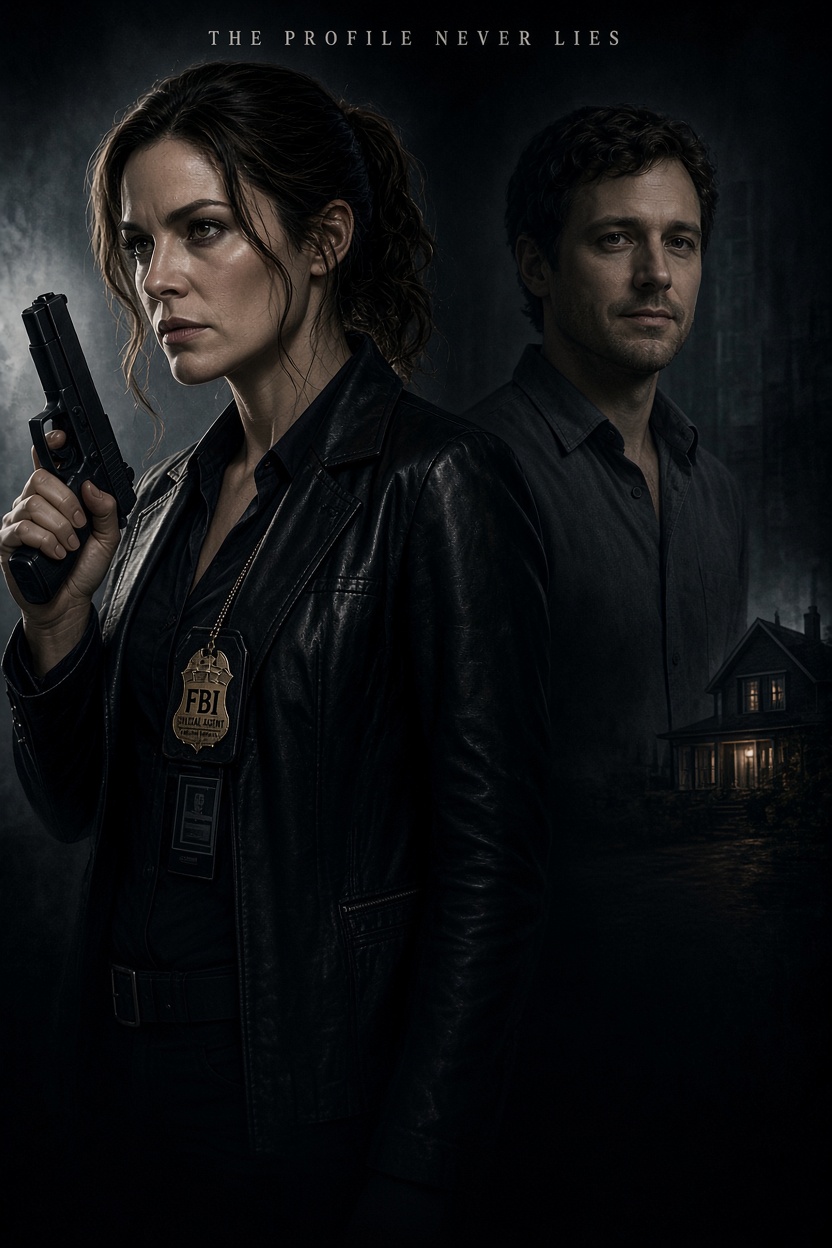 I try to apply the “Everything in moderation” recommendation to every thing in life, and I’ve found some success when it comes to nutrition, but I haven’t found near as much success with popcorn consumption or watching football and movies. The problem with watching too many movies, and obsessing over a subgenre like serial killer movies, is that at some point we’ll reach a tipping point where we’ll be able to characterize every character before they’re fully characterized, know the feng shui of the serial killer’s living room, the state of the abandoned warehouse where they’ll finally locate him, and pretty much how the final showdown will play out. Again, we don’t say this as a brag, as one of the consequences of watching too many movies is that we’ve damaged the joys of suspense and discovery.
The Serial Killer/Profiler Movie
Unless you’re counting Sherlock Holmes as a profiler, as opposed to a consulting detective, the first cinematic profiler was a character named Will Graham in Michael Mann’s Manhunter (1986), based on Thomas Harris’ Red Dragon. This wasn’t the first serial killer movie ever made, but it was the first one I saw. It was also the first movie to use the art of psychological profiling to catch a serial killer, as pioneered for the FBI by Mindhunter author and Silence of the Lambs consultant John Douglas and author of Whoever Fights Monsters, Robert Ressler. I loved Douglas’ Mindhunter so much that if there was a stock or ETF (Exchange Traded Fund) in 1995 that focused on serial killer vs. profiler movies and books, I probably would’ve bought a couple shares. I’d probably would be a rich man now too, because I now get a new profiler-chasing-serial killer movie listed on my streaming services so often that I won’t watch them anymore, because I know the template they use, the one laid out by Manhunter, Silence of the Lambs, and Mindhunter, so well that I know it too well.
“I need to get inside the head of the killer,” our archetypal Special Agent of the Behavioral Analysis Unit Rhonda Gunderson says. This rhetoric is one of the numerous tropes of the typical serial killer movie, and the process inherent in doing so will come at great personal and/or professional expense. When our archetypal profiler, Special Agent of the Behavioral Unit Rhonda Gunderson, finds the killer’s Rosetta Stone, she uses it to correctly point out who the killer’s next victim will be. Her fellow Law Enforcement Officials (LEOs) won’t believe Gunderson, until her premonitions turn out to be correct so often that they can no longer question her mindmeld.
 1) The serial killer, with a media-style nickname or moniker, is unusually brilliant, erudite, articulate, cultured, charming, and attractive. (The idea that an unattractive piece of trash who didn’t graduate from high school might impulsively slaughter a bunch of people just isn’t as interesting to us anymore.) We want the horror conducted by our serial killer familiar, so filmmakers make them as clean, neat, and organized as we are. We also love the idea that the serial killer could be that quiet neighbor who seemed so nice and neighborly.
 2) The killer will develop an intricate pattern, theme, or a highly sophisticated puzzle that calls upon the investigators to know their arcane and erudite literary or religious references well enough to compete with his unusually brilliant mind. The investigators must decode his message, puzzle, or worldview to prevent another killing, and one of the LEOs, usually our profiler, will have intimate knowledge of the arcane and erudite reference. At some point, in this period of discovery, one of the LEOs will characterize this as, “A race against time.”
3) The killer will introduce a philosophical concept regarding the blurring of lines that detail a hypocrisy in society, that Special Agent Gunderson has a flaw he characterizes as similar to the killer’s, or the killer will pound home a vulnerability that speaks to society’s moral relativism. “Well, he’s right about that,” someone in the audience will say.
4) The cat-and-mouse structure will involve a psychological duel as opposed to a physical one. At some point, Special Agent Gunderson will state that she is maddeningly close to “getting inside the head” of the killer, but she will not be able to tap into that level of evil. She will need to find another unusually brilliant genius serial killer who is still bloodthirsty but incarcerated, to give her insight into the mind of the active killer.
The Final Showdown
A) When they finally track the killer down, he won’t be home, but Gunderson and the LEOs around her will enter his home. The serial killer’s home will be a meticulously curated horror show of his warped, damaged, and “unusually brilliant” psyche.
B) The lighting inside the home will contain insufficient natural light, and it will be so dark that it will require one of the LEOs to flip a light bulb on, but no one will. They will use flashlights to scour the walls completely covered in newspaper clippings of the murders, Polaroids or stolen photos of the victims (alive and dead). The killer will then label each picture with a sharpie to allow the LEOs to know which body part belongs to which victim.
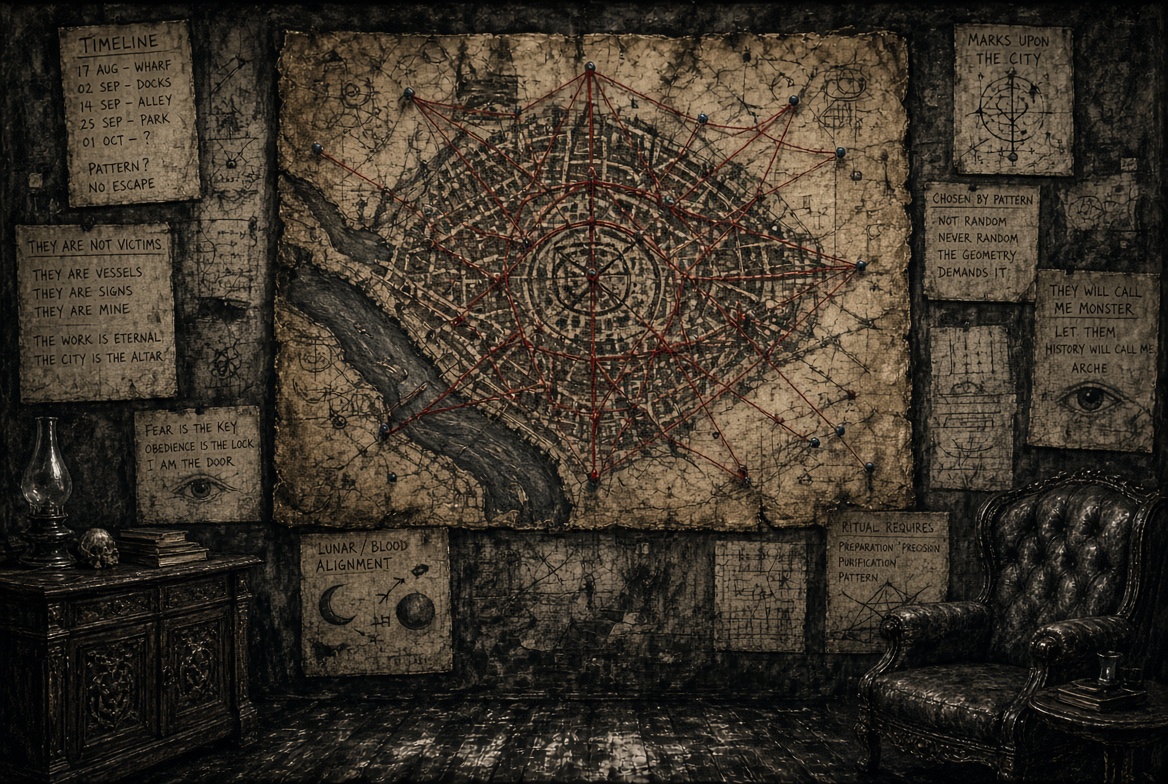 C) To further incriminate himself, the killer will provide an enlarged, elaborate map of the city with multicolored pins and red yarn connecting crime scenes, timelines, and obsessive diagrams. (There was one serial killer movie that used yellow yarn as opposed to red. I was like “What the heck? How does yellow illustrate an obsessive need for blood?” My guess is either the filmmakers couldn’t find red yarn, or they didn’t think anyone would notice.) The configuration of the red yarn hooked around the multicolored pins will form a pentagram, or some image the audience will associate with evil.
D) The killer will have a trophy collection on the dresser filled with personal souvenirs—locks of hair, jewelry, driver’s licenses, underwear, lipstick, or they will have extreme keepsakes in jars in a freezer that contain fingers, teeth, or body parts carefully preserved.
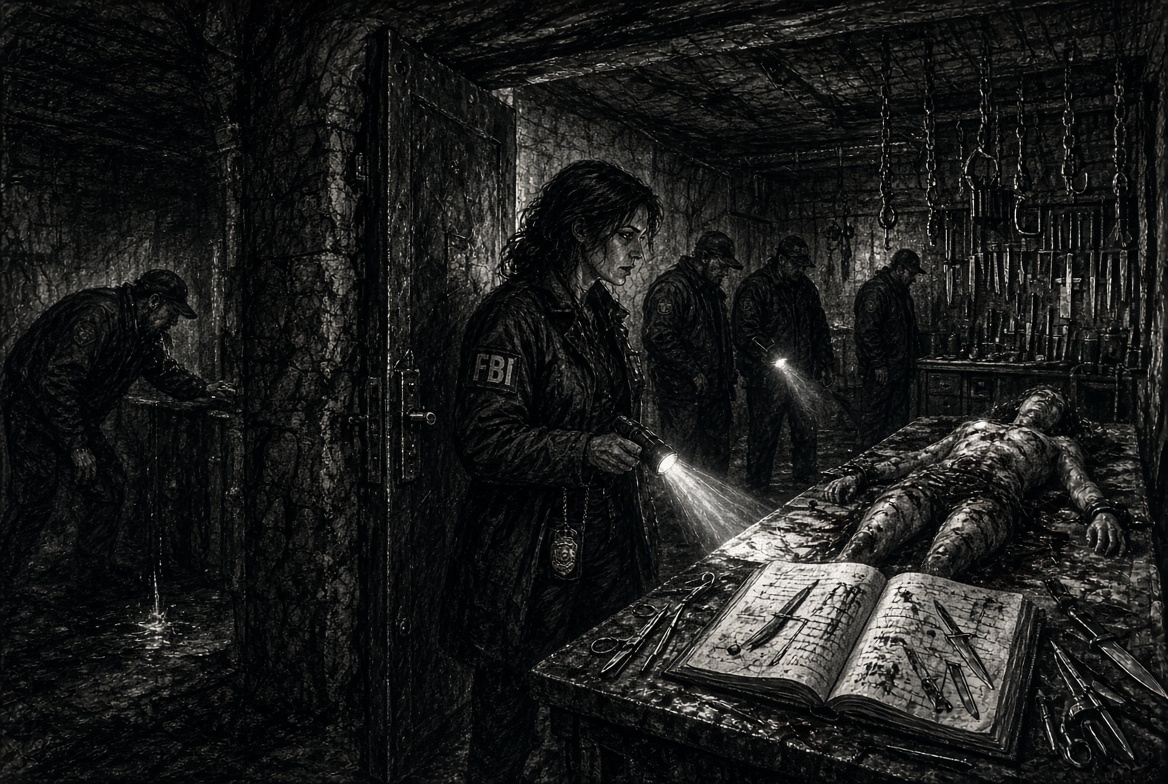
E) When the LEOs and Gunderson leave the serial killer’s living room, they will find a torture cellar or hidden room that real estate agents sell as a “must have” for all prospective serial killers. (How many of us have multi-room, cavernous areas carved out of our basement?) Inside his torture room, the law enforcement officials find various restraints in their workshop, knives, surgical tools, “how-to” books regarding surgery, a bloodstained table and a captive/victim who is barely clinging to life.
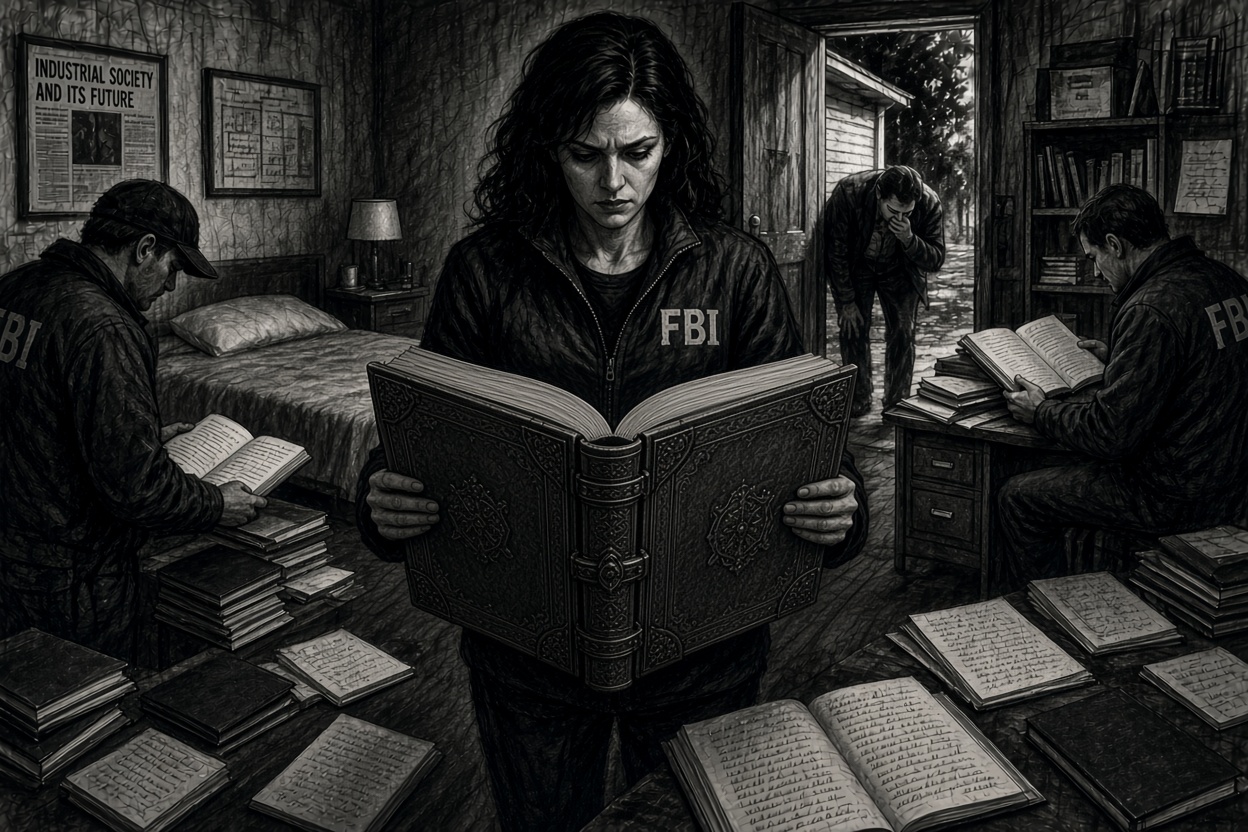
 F) In his bedroom, Gunderson and the LEOs find an incredibly incriminating journal with stacks of handwritten notebooks or a single massive ledger filled with detailed accounts of the crimes, philosophical justifications based on literary or religious references, lists of future targets, or pure delusional stream-of-consciousness, Unabomber-style writings. As busy as this room will appear to the naked eye, it be unusually clean, and extraordinary in its tidy, organized manner. One movie even went so far to suggest that its serial killer went to the trouble of developing an almost aseptic quality of sterility. “Why would an impulsive killer worry that much about spreading germs?” we ask. Depending on the over-the-top quality of the production, the serial killer might adorn his room with mannequins posed in victims’ clothes, taxidermy, religious icons mixed with occult symbols, or a bedroom that looks like a shrine. The answer to our previous question will arrive here, as Gunderson suggests that the tidy, organized manner of this man’s rooms illustrate a love/hate relationship the killer has with his domineering mother.
G) The LEOs will also note a chemical smell, usually bleach or formaldehyde mixed with the smell of human decay. To illustrate the smell those of us in the audience cannot smell, one of the LEOs will leave the house to vomit.
H) Finally, one of the LEOs will say, “You’ll want to see this” to Special Agent Gunderson. The LEOs will all be standing around a board, and they will make room for Special Agent Gunderson. On this board, she will see amateurish photos taken from an amateurish camera. These pictures will be purposefully amateurish with odd angles. After she methodically walks past them, she will finger the last one and whisper, “He’s been watching us all along.”
As noted, the house will empty, save for a victim clinging to life. The killer will either be on the run, hunting his next victim, or about to return at the worst possible moment, but the house overflowing with proof that the profile the incredibly brilliant and talented Special Agent Gunderson created was right all along.
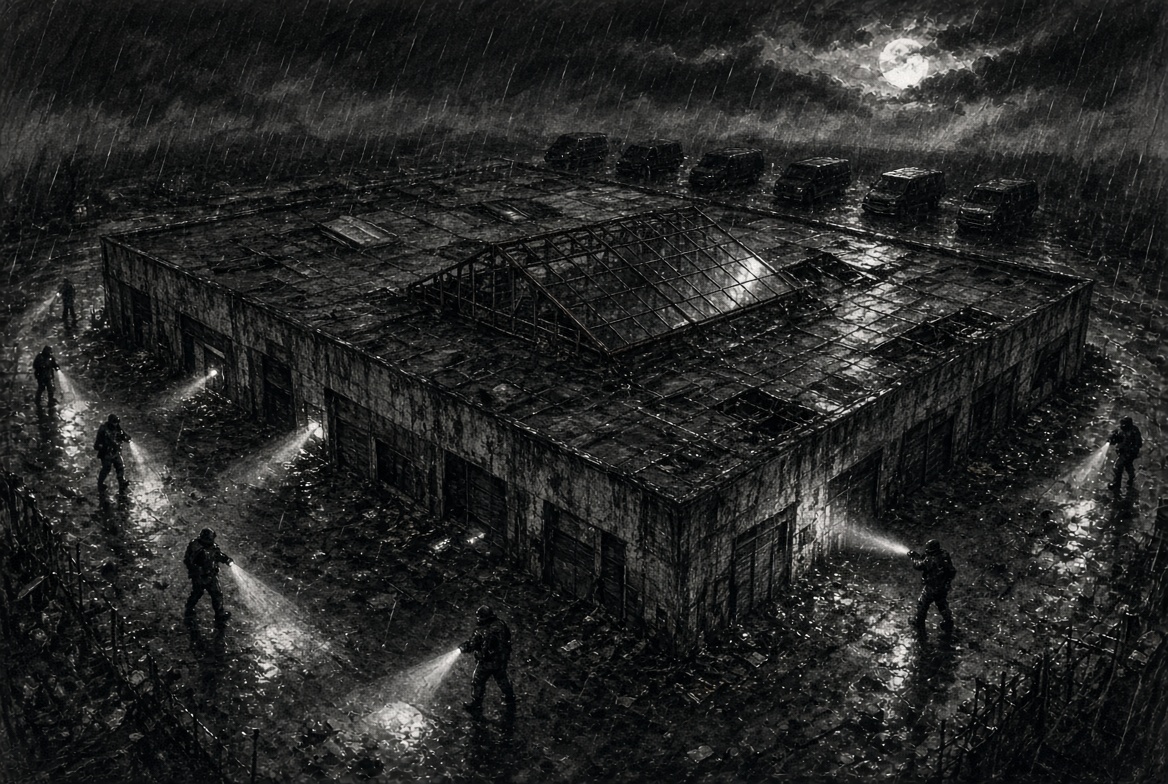
I) An eye-witness account suggests that the serial killer is in an abandoned warehouse. When Gunderson and the LEOs approach, it’s dark out, and there is heavy rain that soaks everything but actors’ hair. When Gunderson and the members of the LEO team she trusts approach the warehouse, black SUVs and SWAT vans roll up quietly. Guns are drawn. Flashlights cut through the darkness. Someone whispers over the radio: “We’ve confirmed his presence. He’s in there. Proceed with extreme caution. We’re on high alert for the possibility of booby traps.” Gunderson will shut off her radio, and she’ll encourage her team to go to radio silence, as they approach the entrance of the warehouse.
The warehouse is entirely empty when they enter, and the natural light shining from the abandoned warehouse roof is broken by the shadows of beams and the occasional bird flying from beam to beam. To break up the spooky silence, a bird will fly too close to Gunderson to provide a jump scare as she walks through the warehouse with her gun poised. At some point in her walk through the warehouse, Special Agent Gunderson becomes separated from her team, as the LEOs begin clearing the various rooms in the warehouse. She will enter the most incriminating room that has evidence in the form of more wall clippings, trophies, and that same lingering chemical smell. She will put the back of her hand to her nose and scrunch her face to illustrate for us how bad this smell is.
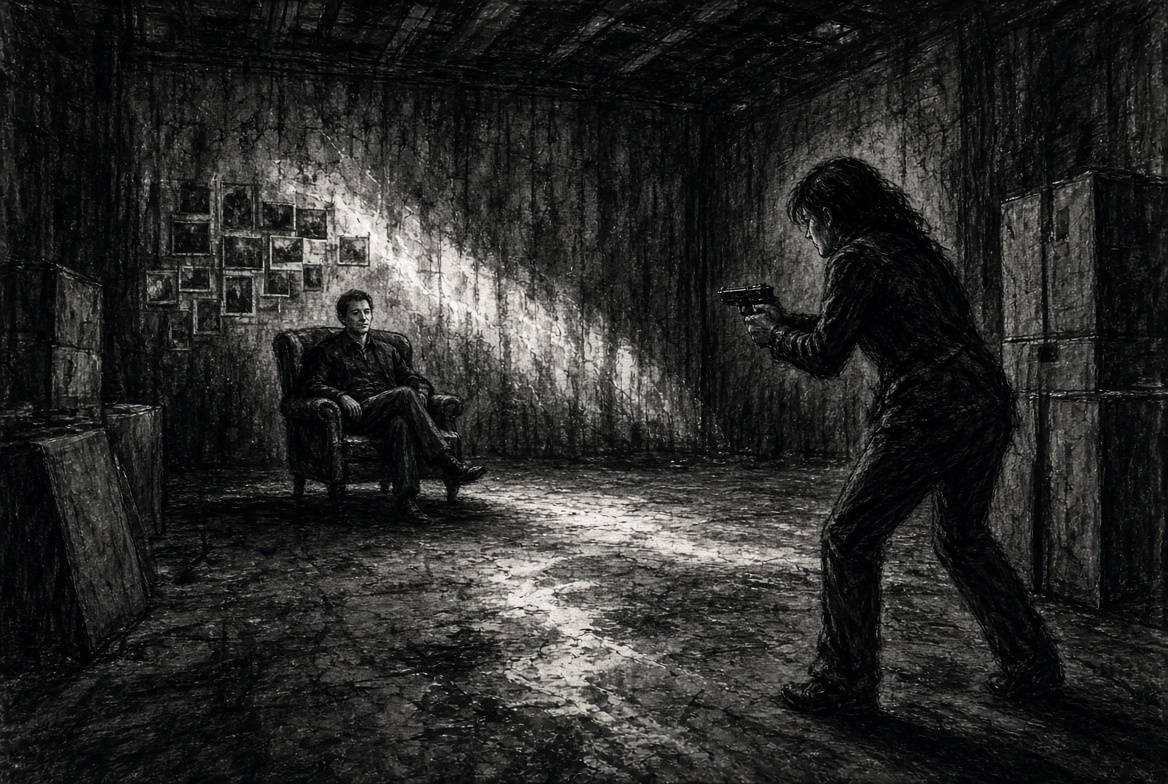 J) The killer appears in the dark corner of this room. He is sitting in a walnut brown Baxton studio Billie side chair. He is not surprised when Gunderson enters. He’s been waiting for her. (I would love to see a scene where one of the LEOs locates him first, and he says, “What, wait a second, who are you? Go get Special Agent Gunderson, and tell her to be taken aback by my calm yet authoritative stance.”) The media monikered serial killer is in a dark room, lit only by limited natural light and occasional flashes of lightning. (In some movies, his face remains in shadow for another beat.) He congratulates Gunderson for displaying her incredible and unprecedented talent and intelligence by finding him, and he further compliments her by saying that only she could understand him well enough to develop the profile she did. He also states that as incredibly brilliant and intelligent and talented as she is, Special Agent Gunderson couldn’t have arrived at such knowledge of him if she didn’t have intimate or familiar knowledge. “No one else can understand us,” he says, explaining how elements of her past leads her to understand his methodology better.
“I’m nothing like you,” the incredibly brilliant and incredibly talented Special Agent Gunderson says.
“We’re more alike than you know,” he says with a smile.
K) The media monikered serial killer will then drop a lengthy exposition regarding his methodology, and once that’s complete, we will hear the sounds of boots stomping on the stairs and radios crackling as the LEOs join Gunderson in the abandoned warehouse room. “Hands where I can see them!” they will shout with weapons drawn behind her. The lighting will become more dramatic, as all of the flashlights light the room (or the lightning flashes become more frequent), as the serial killer and Gunderson begin exchanging words (Sometimes they shout, sometimes they whisper. This is one of the few points in the typical serial killer movie where the filmmaker has some discretion.) When Special Agent Gunderson finally reaches her “nothing to lose here” point, she will seek to take action, but the serial killer will stop her in her tracks by revealing the final victim (Either the initial victim that caught Gunderson’s attention, her daughter, or some young girl to whom she’s developed some form of affection) to raise the stakes.
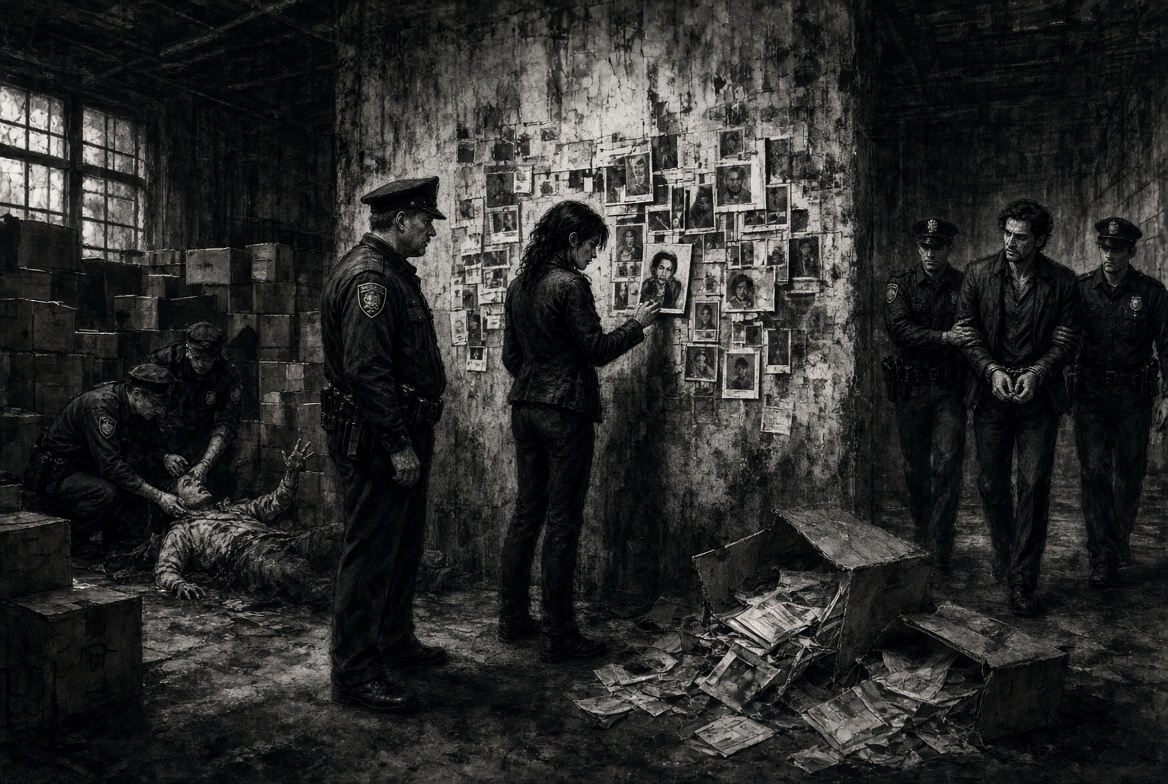 L) A struggle breaks out: a brief, brutal fight in a confined space, knives flashing, a gun sliding across the floor, and Gunderson will begin look around the abandoned warehouse to use something in the warehouse against him. When she finds something elaborate that triggers an elaborate something else that won’t harm the female victim, the killer becomes separated from the victim, and the serial killer is tackled, slammed against a wall or the floor, and cuffed by one of the LEOs. He will smirk an evil little smirk while they’re apprehending him, and he’ll whisper one final line to Gunderson while being taken away, something like, “Society will never truly understand us.”
M) The scene ends with the killer being led away in the rain under harsh floodlights. Gunderson will remain in the room of the abandoned warehouse for a beat, staring at the wall of evidence or the trophies, looking hollowed-out rather than triumphant. Rainwater drips from the ceiling, and one of the LEOs will congratulate her on doing what he considered impossible. “You are an incredibly brilliant, intelligent, and talented woman,” one of her subtly yet unmistakably misogynist detractors will say. “And I can’t believe you did it, but you did. It’s over, it’s finally over.”
“I wish I could believe that,” Special Agent Gunderson whispers, glaring at something poignant in the serial killer’s display. “I wish I could believe that,” she says fingering it. The camera zeroes in on that poignant artifact that foreshadows the future horror this episode could portend, which everyone who watches too many movies knows is the sequel(s).
Long before I learned about “movie tropes”, my friends and I talked about movie tropes all the time without using a term we had never heard before. We watched so many movies that we could spot the tropes before the movies delivered them. We never turned it into a drinking game. If we had, our brains would be more damaged than they already are, because each genre, and subgenre has an algorithm that one movie maker created to set a precedent. Once that precedent was set, the filmmakers, the studio execs, the investors, and all of the players involved demanded that the creatives involved in the movie follow the same blueprint that the precedent setter set to prevent confusion for the audience.
Based on the ubiquity of current profiler-chases-serial killer movies, we can guess that they make a lot of money now, but they also cost a lot of money to make. There are low-budget, independent movies of course, but most movies cost a lot to make. Those movies require big budgets, and big budgets require approval from the hierarchy or the greenlight authority to get through the chain of gatekeepers that wield different kinds of power. The director and screenwriter have to answer to all of them if they want to make it to the next stage, and from what I hear these gatekeepers are very generous with notes on how the directors and screenwriters can make their project less confusing for the audience. Filmmakers have been subjected to this process long before I was born, and it will continue to work this way long after I’m gone. Some screenwriters and directors refuse to concede to these notes, and we call them two things: auteurs and unemployed screenwriters and directors. The auteur is an artist whose personal creative vision is strong and distinctive that he might be able to tell the gatekeepers what they can do with their notes. Most auteurs are not welcome in most genre movies, because genre film fans grow accustomed to certain rhythms, rhetoric, and patterns, or what we now call tropes. When one of the auteurs is so talented and brilliant that they find a way to make a decently budgeted movie without conceding to “the notes” those I know and love say, “I just found it confusing. I don’t know why, but it confused me, and I didn’t like it.” Those of us who watched too many movies strive to find movies from auteurs who break the system by refusing to kowtow to notes from production studios and investors. Yet, we know that most movies are so expensive to make that the artistic vision screenwriters and directors prize often gets so diluted by those who know far more than I do about how to appeal to audiences and make a lot of money in the process, but it does tend to make movies very similar to those of us who watch too many of them.
 Rilaly