How do you know when you’ve watched too many movies? Some of us know the patterns and themes so well that the joy of discovery in most films is so gone that we probably won’t be able to thoroughly enjoy another movie until dementia kicks in.
 The only thing we love more than puzzles and patterns is being able to figure them out. Our favorite classic and mainstream rock songs follow a A,A,B,A,B,C,B, and B verse-chorus song structure where A = verse, B = chorus, C = guitar solo. Steve Martin once said that three beats are funnier than four. Those of us who are not in these industries usually don’t see these patterns and structures for what they are, but we love knowing what will happen next. When it happens the way we predict, we richly reward those who make us feel smart, so they keep following the patterns that we enjoy following. When we reach a point where we watch too many movies, however, we know those beats, patterns and structures so well that the joy of discovery diminishes.
We all have past times, and I spent my youth trying to watch every movie ever made, and the VHS movie rental stores in just about every strip mall in my big town/small city came very close to helping me achieve that. In the 80s and 90s, we could A) grab our groceries on the way home from work, B) buy a pizza, and C) rent a movie without walking a block. We selected D) all of the above on weekends and some weekdays. It was so convenient that it was a little too convenient. It wasn’t as convenient as clicking a mouse, but you get the point.
We had cable TV back then, and about forty different channels, but there was “nothing on!” so often that we rented movies to fill the gap. We ended up watching so many movies that we watched too many, and I can now look at the year a movie was made, its genre, and the superficial characteristics of the actors involved to tell you who is going to be the good guy, the most no nonsense, yet incredibly intelligent member of the crew, and who will end up being the bad guy. I can also pretty much tell you what rhetorical devices they’ll use to progress the plot, the tropes (i.e. recurrent themes, literary devices, and cliche) they’ll drop, and its conclusion. When we reach this point of watching too many movies, a genre such as the heist film, becomes so formulaic that our pleasure of discovery evaporates.
Heist Films
“We don’t do this for the money,” is a trope that the typical, archetype character who masterminds a bank robberies issues to his naive apprentice who doesn’t understand why the money they stole is now a secondary concern.
Heist movies fall under the action genre, so no one expects the complexities inherent in a James Joyce novel, or a plot as rich as Oedipus Rex or The Alchemist. We want action, a whole lot of fun, and some semblance of contextual logic. And that’s where they lose me, the logic, because if I were to rob a bank, I would do it to grab as much money as I could in the precious few moments I have. Then, once I had that money, I would secure it, guard it, and try to find some way to help it mature in the manner a mother might her child. Movie bank robbers take the money, to complete the action sequence, but once the bank robbery scene is over, the money becomes a secondary concern to them for the rest of the film.
“It’s not about the money,” the Joker said in The Dark Knight (2008) while burning a massive pile of cash. “It’s about sending a message.” Most screenwriters don’t have the characters in their script say this specific line, but they send the message through various scenes.
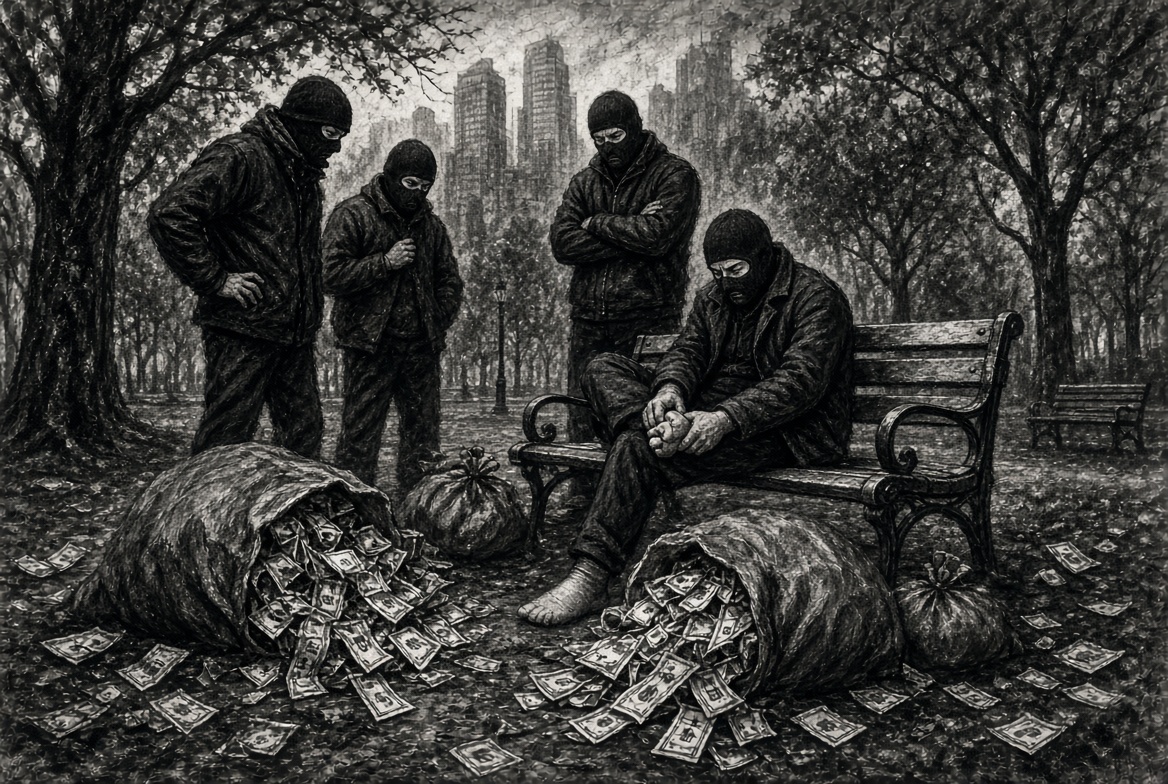 Soon after the bank robbers celebrate their successful theft, they abandon the money when something else happens. If, for example, one of their fellow crew members is wounded or captured, they abandon the money to cater to their crew member’s wounds. “That’s neat and all, but can’t they help their crew member AND keep the money?” I whisper to my fellow movie goers. “It’s not all about the money, Larry,” someone will invariably whisper back. It isn’t, and I get that, but these guys just risked their lives, their livelihood, and their freedom to steal this money. Label me with whatever pejorative you choose, but if one of my crew stubs his toe, I will cater to his needs AFTER placing the money in a very secure place that I can easily access later.
If a romantic interest is endangered, or a personal code is tested, all of that money is left behind without reservation. Just about every movie ever made contains a love interest, and what kind of man would worry about their money when their love interest is in danger? If the filmmaker doesn’t have the mastermind do something, like throw all of his money off a bridge to save her, they’ll lose about 75% of the audience. I get that too, but again, can’t he find a way to save her AND the money?
The money is a literary device, a MacGuffin, that filmmakers employ to define the character of their characters, and the virtuousness thereof, but the paradox is that real life bank robbers only resort to robbing banks as a desperate effort to get money. The movie depicts these characters as clean cut, intellectual types who have a lot going on in life, and they just happened to choose rob banks on the side. Either that, or we’re asked to believe that instead of choosing to become an electrician, a plumber, or a bus driver, they decided to become bank robbers. Yet, even though they’re not as desperate as the typical bank robber, we’re talking about a lot of money, and my guess is most crews would experience a lot of dissent when the mastermind instructed them to give it all up.
The primary reason movies about bank robbers are not about money is because we’re not about the money, and we find the pursuit of money icky. Movie bank robberies are about loyalty to our fellow man, the excitement of the plan to defeat a federal bank’s high tech security system, and the chase that follows. The money they make is nice of course, but heist movie filmmakers depict those who seek to quietly enjoy it, or use it to secure a comfortable retirement as suckers, squares, and rubes who believe in the power of the almighty dollar.
The greater sentiment is that these nuanced and virtuous fellas are not about living materialistic lives, and they find the thought of living like Bill Gates or Mark Zuckerberg repugnant, because Capitalism is soulless. This is made abundantly clear throughout the movie, but the crew could used some of the money they successfully stole to afford themselves a decent lifestyle while planning their next heist. “That’s not what this is all about!”
These movies are about the slick and smooth mastermind, and his ability to research the details of the bank’s security system and locate its primary weakness. They’re about the mastermind and his crew executing that plan, but it’s mostly about the crew members, and how he assembled them for this one, last big hit. One of the crew members, the getaway driver, knows how to drive cars fast, and when I write fast, I mean fast. Another crew member knows how to handle himself in stressful situations, but he can be a little trigger happy, and the mastermind takes a moment out of the planning stage to virtue signal to the audience that he doesn’t want anyone hurt. He does this by cautioning his trigger-happy friend about controlling his violent impulses during this heist. The final, missing piece is Schmitty the long-since retired safe cracker who is the only one who knows how to crack the otherwise uncrackable safe that this bank has.
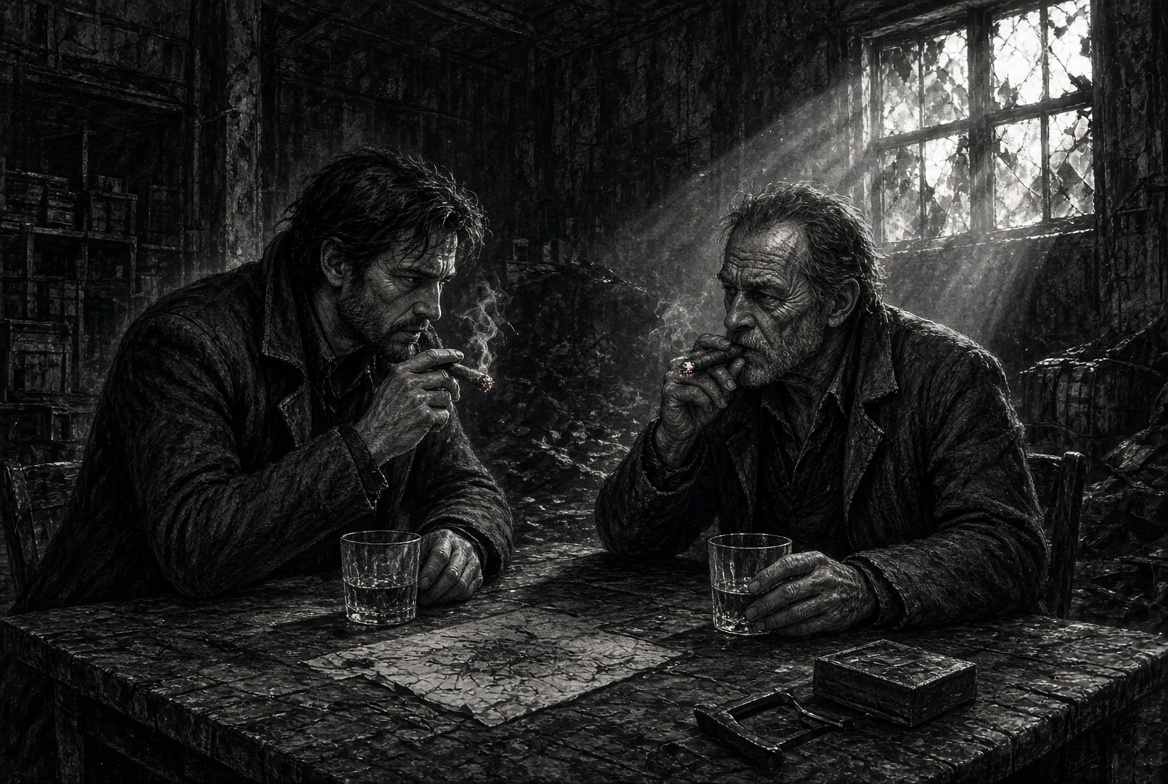 The mastermind and Schmitty sit in an abandoned warehouse smoking cigars, drinking whiskey, and talking and laughing about old times, when the mastermind turns to him, “Do you think you can do Minneapolis again?” the mastermind asks.
“That was a lifetime ago, MacDavid,” Schmitty confesses. “I’m retired, and I have grandkids. I’m old is what I’m saying, and the ears ain’t what they used to be.”
“We could really use you here, Schmitty!” the mastermind replies. “If you have one more in you, we could really use you.” The scene closes with no definitive answer from Schmitty, but he reappears later, to dramatically announce his decision with a leather-crackling bro hug.
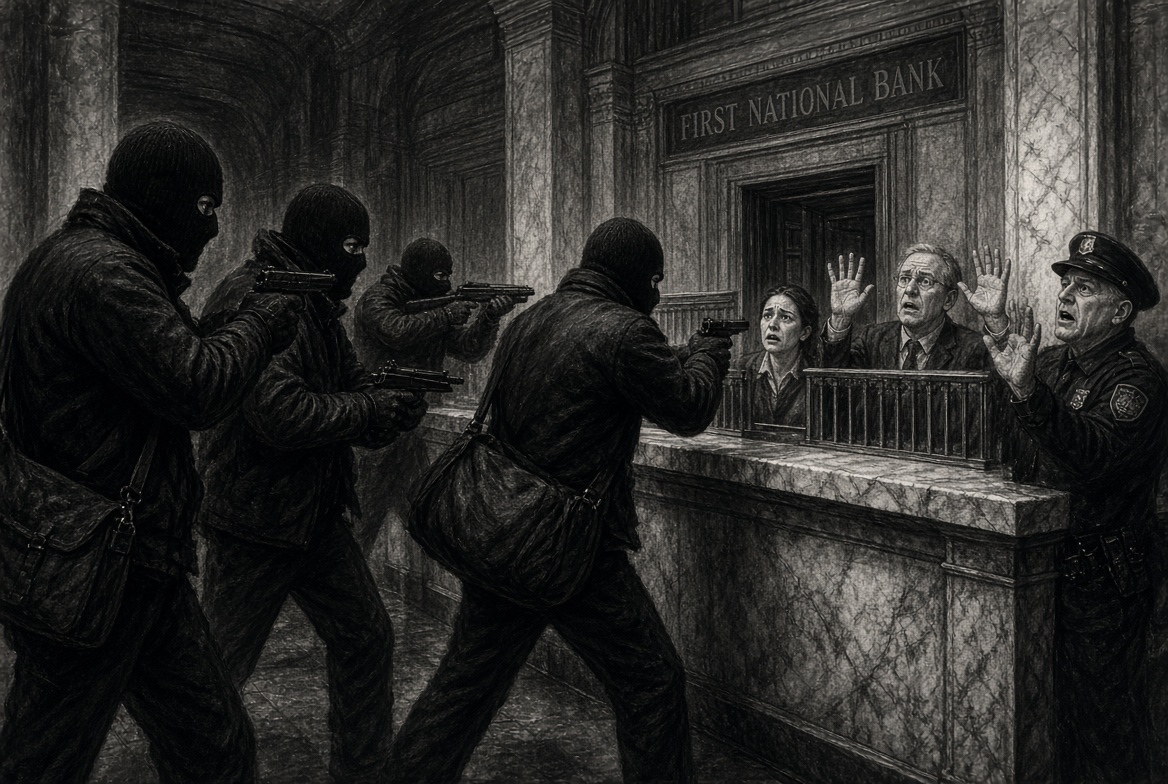 Depending on the gritty nature of the heist film, no one gets hurt during the robbery, and as all heist movie fans know by now, most of the money the bank holds is FDIC insured (It’s not. The Federal Deposit Insurance Corporation insures against various forms of bank failure, not bank robberies.) With that misinformation, those of us in the audience think bank robberies are the perfect crime, and we wonder why we don’t rob banks often. It seems like such a victimless crime.
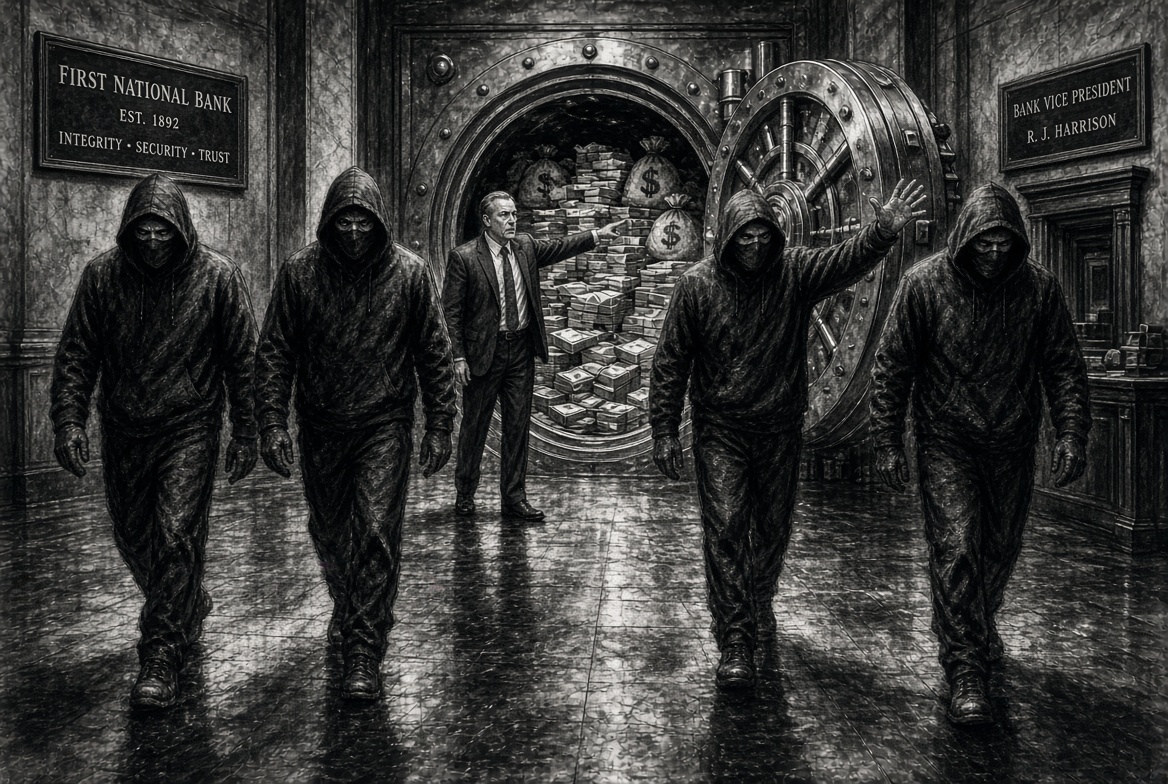 As we’re nearing the close of this heist pic, we’ve spent the last eighty minutes trying to keep our mind in the off position, because we know it’s about action and fun, but that contextual logic keeps nipping at our heels like a Chihuaua. They’ve pounded this idea that it’s not about the money so often that we ask, why did they take it then? Why didn’t they just live their virtuous lives without the distasteful need for money? That’s just snarky, you say, and I agree. How about the movie makers have their characters run into the bank guns-a-blazing, point their guns at people in a menacing manner, and scream, “Everybody down. Everyone on the floor!” If they don’t have a Schmitty, they can find the vice president of the bank and force him to open the vault, and then once they have all of those piles of money sitting right in front of them, they walk away. They walk away without touching that money! Message achieved! Virtue unlocked! Take that! materialistic, greedhead who thinks it’s all about the money! By filming the scene this way, the filmmakers could provide a a culturally relevant statement against the system and the man who tries to convince us that it’s all about the money.
“Why did we go through all that again?” the naive, unsophisticated young lad asks the wily, veteran bank robber who just masterminded a non-monetary robbery.
“Because it’s not about the money, Chet,” the mastermind says with a squinty-eyed look and a grimace of disdain. “It’s never been about the money, and if you can’t see that at this point, get out of my car!”
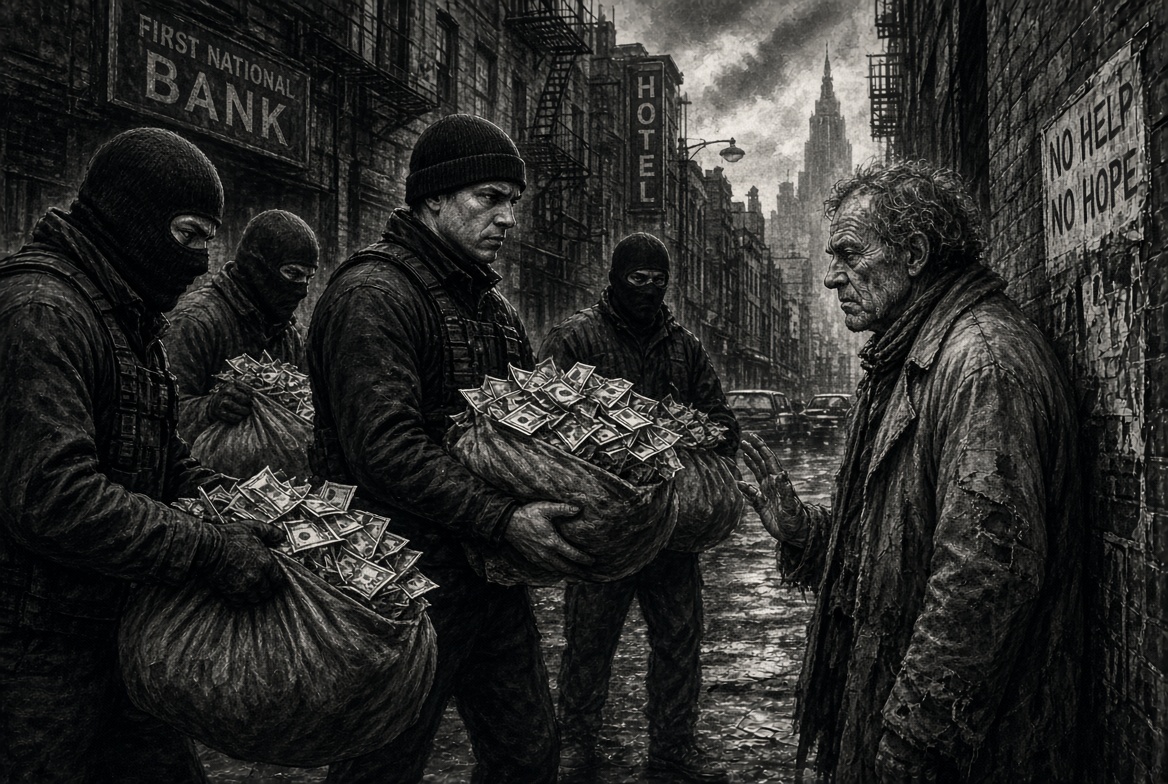 I could see writers and directors creating a character who disabuses the notion that his decision to become an animal husbandman was not about the money. “It’s not about the money, Chet. It’s about them,” he says with a loving gaze sent out to his cattle, “and if you can’t see that, get out of my barn!” I can see movies about individuals in various medical fields, areas of law, and even those involved in selling insurance saying it’s not about the money as much as helping people, but the idea that a bunch of bank robbers are somehow more interested in righting cultural wrongs, civility, and the plight of their fellow man over money just doesn’t square with me. And if you’re going to argue with me about movie makers sending important messages out to the greater culture, I won’t hear it, because I want a contextual alternative delivered by one of the characters in the movie. I don’t want subtext, meaningful omissions, or the slick, cool guy mastermind shaking his head saying, “You just don’t get it, Chet, and you probably never will.” I want an alternative specifically stated, but I know that no movie maker will answer that question, because there is no viable alternative that an audience will buy.
And that, fellow heist film fans, is the core of the “It’s not about the money” heist film philosophy. We don’t want our heist films to be simplistic, of course, and a dirt bag robbing a bank just for the desperate need for more money would be too simplistic for us to watch and too simplistic for a screenwriter to write. Screenwriters want it complicated, they love twists, complicated, conflicted characters, and a deep, rich plot they consider a reflection of them. The other, less complicated reason is that we don’t want to spend our hard-earned money watching a movie that is all about the money, and the moviemakers want to appeal to our worldview that the simplistic pursuit of money is just plain icky. The final, idealized statement that it’s not about the money is supposed to make us go, “Awww!” with a heartfelt smile. We could call the movie production studio’s writers and directors illogical, ideological, or even pathological for continuing to perpetuate this trope, but we’re the ones who rent, buy, and now click on their movies so often that they continue to create them with this heartfelt premise in it … for the money.

